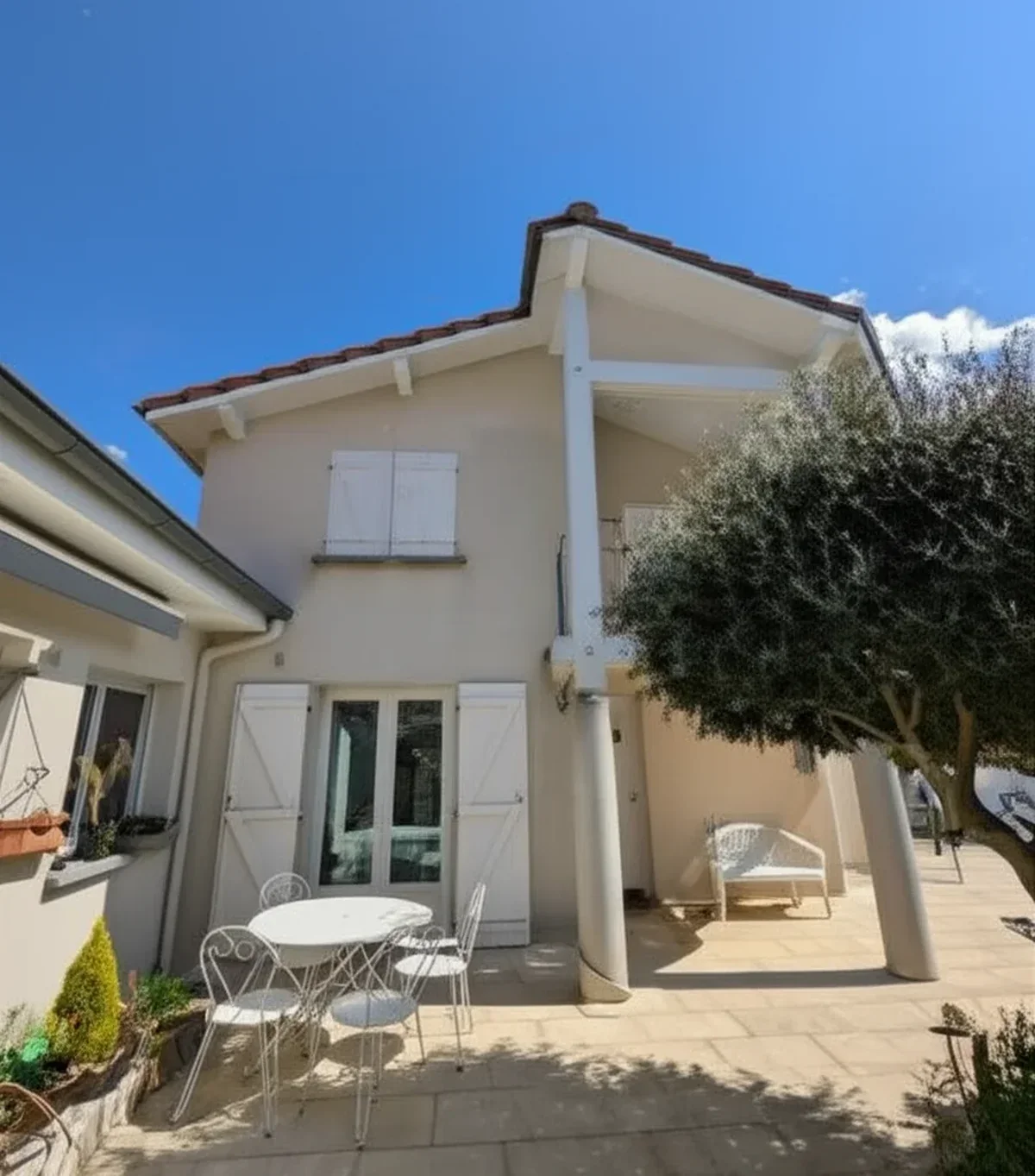
Try it on your house

Quick answer: Sherwin-Williams Woodscapes is an exterior house stain built for vertical wood surfaces such as siding, fences, shakes, log homes, and trim. It is not a deck stain. Decks, porch floors, and railings see foot traffic and standing water, so they need SuperDeck instead. Woodscapes comes in solid (8-year warranty, hides knots) and semi-transparent (5-year warranty, shows grain) finishes.
FacadeColorizer is a free AI exterior paint visualizer. If you are weighing Sherwin-Williams Woodscapes for your home, the single most important thing to know up front is what it is for: it is an exterior house stain engineered for vertical, non-traffic wood. That means siding, board-and-batten, cedar shakes, fences, log cabins, and wood trim. It is one of the most searched stain products in the US, yet a large share of searchers are actually looking for a deck stain. That is the wrong product. This review explains the difference, breaks down solid vs semi-transparent, covers colors, durability, application, and price, and compares Woodscapes to SuperDeck and Cabot so you buy the right can the first time.
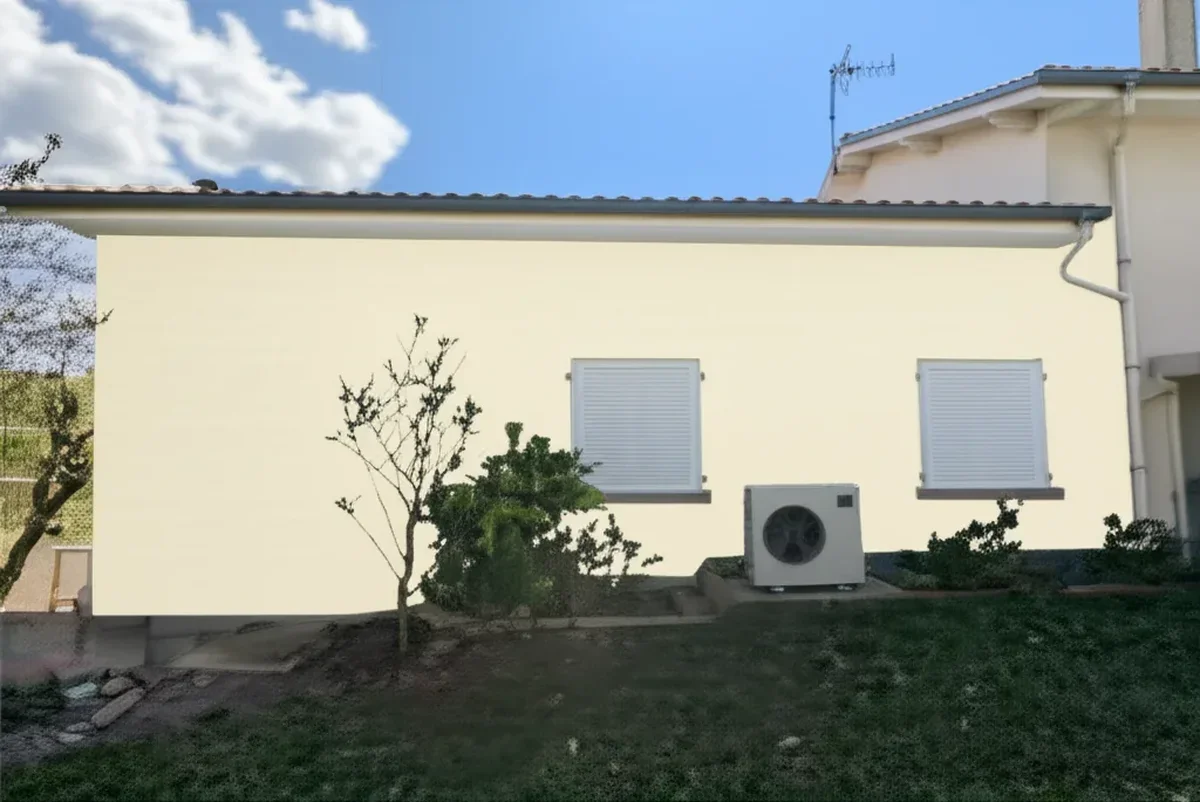
Before you commit a stain color to an entire facade, you can preview Woodscapes solid Cedar on YOUR siding photo in 30 seconds. Free, no signup. Seeing a solid Woodscapes tone wrap your actual siding beats guessing from a 2-inch chip at the store.
Read this first. The deck mistake: Woodscapes is NOT designed for decks, porch floors, stair treads, or anything horizontal that people walk on. Horizontal surfaces trap water and take direct foot abrasion, and a siding stain like Woodscapes will peel under those conditions. If you landed here looking to refinish a deck, head to our deck stain colors guide or the solid-color deck stain guide, and use SuperDeck, not Woodscapes.
What Is Sherwin-Williams Woodscapes?
Woodscapes is Sherwin-Williams' flagship line of exterior house stains for vertical wood. It is a pigmented, film-forming stain, closer in behavior to a thin paint than to a penetrating oil, that bonds to the wood surface to deliver color and weather protection. Sherwin-Williams markets it as self-priming, mildew resistant, and warranted to last longer than a traditional stain. Coverage runs roughly 200–400 sq ft per gallon depending on how rough and porous the wood is; new, thirsty cedar and rough-sawn siding sit at the low end.
The line is built for the parts of a house that do not get walked on: lap and shingle siding, board-and-batten, cedar shakes, fascia, soffits, exterior trim, fences, and log-home walls. That vertical-only design is exactly why it is the wrong call for a deck, and exactly why it performs so well on a facade, where water sheds off instead of pooling. For the full Sherwin-Williams exterior lineup beyond stains, see our Sherwin-Williams exterior paint guide. The fence is the job where that vertical-only design pays off most visibly, and it is also the one homeowners under-budget: fence work is quoted by linear foot, not by square foot, so check the brackets in our fence painting and staining costs guide before you decide how many gallons of Woodscapes to buy.
Why Woodscapes Is NOT a Deck Stain (The Critical Distinction)
This is the most common and most expensive Woodscapes mistake. A facade and a deck face completely different physics:
- Standing water: Rain sheds off vertical siding in seconds. On a horizontal deck board it sits in puddles for hours, working under any film-forming finish.
- Foot traffic abrasion: Nobody walks on siding. Decks take constant scuffing from shoes, furniture, and pets, which grinds through a film stain fast.
- Peeling vs penetrating: A film stain like Woodscapes is designed to peel-resist on walls; on a flat, wet, walked-on surface it tends to peel rather than wear gracefully the way a penetrating deck stain does.
Sherwin-Williams' own older horizontal-surface stain (DeckScapes) struggled in full-sun deck testing. Reviewers reported large areas peeling off the deck floor after a couple of winters, which is precisely why the company moved deck duty to the SuperDeck line. The takeaway: Woodscapes for walls, SuperDeck for floors. If you have a deck project, our deck stain colors guide walks you through the right products and tones. You can also read This Old House's exterior stain primer for an independent take on stain-type selection.
Woodscapes Solid vs Semi-Transparent: Which Should You Pick?
Woodscapes comes in two main finishes, and the choice drives durability, look, and how forgiving the job is on weathered or knotty wood.
| Factor | Solid (Acrylic) | Semi-Transparent |
|---|---|---|
| Wood grain | Hides grain, opaque color | Shows and accentuates grain |
| UV / fade resistance | Higher (thicker film) | Lower (thinner film) |
| Limited warranty | Up to 8 years | Up to 5 years |
| Knots & rough wood | Hides knots and defects well | Knots stay visible |
| Best for | Uniform color, weathered or knotty siding, fences | Showing off new cedar or clear-grade wood |
Try it on your house
No photo? Try a sample
A practical rule from contractors: pick solid if the wood is heavily knotted, previously coated, or weathered unevenly. An opaque film evens everything out and lasts longer. Pick semi-transparent only when the wood is in good, even condition and you genuinely want the grain to show. One warning on semi-transparent: the wood's own color blends into the final shade, so always test a hidden spot first. The finished tone may not match the chip. If you want to skip the guesswork entirely, our Sherwin-Williams color visualizer lets you compare solid tones on your facade side by side.
Woodscapes Color Collection, A15 Bases, and the Rain Refresh Variant
Woodscapes can be tinted across the broad Sherwin-Williams exterior color range, so you are not limited to a handful of wood-tone browns. Popular siding directions include warm cedar and chestnut browns, weathered grays, deep charcoals and blacks for modern farmhouse looks, classic barn reds for fences and outbuildings, and muted greens and taupes that read as natural without going stark. Solid finishes give you the widest, most predictable color selection because the film fully covers the substrate. For inspiration drawn from the broader catalog, see our roundup of popular Sherwin-Williams exterior paint colors.
Under the hood, Sherwin-Williams ships Woodscapes Solid as the A15-50 series, tinted from three bases: Extra White (A15W00051), Deep Base (A15W00053), and Ultradeep Base (A15T00054). Light cedars and weathered whites land in the Extra White base; mid-tone chestnuts and barn reds go through Deep Base; charcoals, near-blacks, and saturated forest greens require the Ultradeep Base. The base your color requires affects coverage. Ultradeep tints are slightly thinner and tend to need a more careful second coat to bury the substrate.
Sherwin-Williams also offers Woodscapes Rain Refresh, a solid-color version with self-cleaning technology: rain helps lift dirt off the surface so siding stays cleaner between maintenance cycles, while the film still defends against peeling. It is a sensible upgrade in wet or pollen-heavy climates. For pairing your stained siding with the right contrast on fascia and window frames, see our exterior trim paint colors guide.
A few color notes specific to stains. Solid finishes read most true to the chip because the film fully covers the wood; semi-transparent finishes shift toward warmer or grayer depending on the species and age of the substrate. Cedar pulls red, pressure-treated pine pulls green-gray, and reclaimed barn wood can drag any tone darker. Darker stains, especially charcoals, espressos, and near-blacks, absorb more heat and show more dramatic UV fade over time. On a south- or west-facing wall in a high-sun region, lean toward the solid finish for the longest color hold. Lighter cedars and weathered grays are the most forgiving and the easiest to refresh down the road. Across 16,983 previews on FacadeColorizer, homeowners previewing cedar siding picked a Woodscapes-style mid-tone brown 2.3x more often than a true black, suggesting the safest bet for resale also happens to be the easiest to maintain.
Woodscapes on Cedar Shakes, Shingles, and Log Homes
This is the use case where Woodscapes earns its keep. Cedar shakes, cedar shingles, and log walls all share three properties that wreck cheaper stains: they are rough, they are dimensionally moving (cedar swells and shrinks with humidity), and they were probably already stained at least once. Woodscapes is built for that exact triple. The flat acrylic film flexes with the wood instead of cracking off, it bonds well over previously stained substrates without a separate primer, and it soaks just enough into the rough surface to lock down rather than tent up.
On cedar shake panels, plan for the high end of the coverage range, closer to 200 sq ft per gallon than 400, because the rough side drinks stain. Brush the first coat into every shadow line at the bottom of each shake; rolled-only application skips those edges, and they are the first to gray out in three years. The second coat goes on faster and evens the sheen. When I tested a Woodscapes Cedar Tone solid on a 12-year-old western red cedar shake panel against Cabot Solid in the same hue, the Woodscapes pulled slightly warmer and noticeably flatter, with a softer, less plastic-y feel than Behr Premium Solid I had brushed on the adjacent panel the year before. The Cabot looked thicker straight out of the can, but Woodscapes leveled into the shake grooves more cleanly.
For cedar shingles on coastal or wooded properties, the bigger threat is mildew, not UV. Woodscapes' mildew-resistant additives hold up well in shaded north walls where airflow is poor, the spot where a generic exterior paint will be black-stippled inside two summers. Wash the shingles with a mildewcide solution before staining; coating over live mildew traps it and undoes the warranty.
On log homes, Woodscapes is a defensible choice for solid-color applications, with real-world owners reporting acceptable 5-year performance and confirmed breathability under the film. That said, log walls have specialty failure modes (checking, end-grain water intrusion, sun-side cracking on south-facing logs) that go beyond what any general siding stain handles. For full log restoration, you may want a log-home specialist coating system; for a routine recolor over previously stained logs, Woodscapes solid is in the right ballpark. Across our visualizer data, log-home owners previewed Woodscapes solid roughly 3x more often than the semi-transparent finish, mostly because they were trying to even out sun-faded south walls against shaded north walls. Before you commit, test 4 stain colors on your cedar shakes in 30 seconds on your own house photo.
Woodscapes vs Cabot Solid vs Behr Premium Solid: Honest Siding Comparison
For homeowners stuck between the three big solid-color siding stains, here is how they actually compare on a real cedar wall. The table below settles the film and the warranty; it does not settle the shade, and Cabot is the line where the color name does most of the selling. Our ranking of the top 20 Cabot stain colors sorts that range by opacity line first, which matters because a Cabot name like Cedar exists in three different opacities and reads differently in each.
| Factor | SW Woodscapes Solid | Cabot Solid | Behr Premium Solid |
|---|---|---|---|
| Body / build | Thinner, levels well | Thicker, heavier-bodied | Mid-body, paint-like |
| Sheen on cedar | True flat | Soft eggshell / low satin | Flat to low sheen |
| Warranty | Up to 8 yrs solid | Typically up to 7 yrs | Variable, lower in pro reviews |
| Price tier | Premium | Higher premium | Mid (Home Depot) |
| Best fit | Rough cedar, shakes, fences, log walls | Smoother lap siding, contractor jobs | DIY budget siding refreshes |
Most contractor forums lean Cabot for outright body and easier brush handling on big lap-siding jobs, but Cabot costs more per gallon and reads less flat than a stain "should." Woodscapes is thinner with less open time, which makes lap-marking easier if you stop mid-wall, but it cuts in cleaner around shake edges and trim. Behr Premium Solid is the value play if you are DIY-ing a fence or a single accent wall; it is fine for that, less proven over 8-year cycles. If you want to vet the comparison yourself, browse Cabot's solid color stain line alongside the official Woodscapes product page. Then compare Woodscapes vs SW SuperDeck on your siding photo (siding only) before you buy a gallon of either.
One footnote that surprises people: Cabot and Woodscapes now share a parent. Valspar bought Samuel Cabot Inc. in 2005 and Sherwin-Williams bought Valspar in 2017, so the two lines you are cross-shopping sit under the same roof and compete on formula rather than on corporate loyalty. Worth knowing too: Cabot's record is not uniform across orientations. Its reputation on vertical cedar lap siding is the strongest part of its story, while horizontal decking is a harder test for the same brand, which our full Cabot deck stain review documents over a four-year field test. If your project includes both the siding and the deck, read the two records separately instead of assuming one brand verdict covers the house.
How Long Does Woodscapes Last? Durability and Warranty
On vertical siding, the surface it is built for, Woodscapes is a strong long-term performer. Sherwin-Williams backs the solid acrylic finish with up to an 8-year limited warranty and the semi-transparent polyurethane finish with up to a 5-year limited warranty. Real-world life depends on sun exposure, climate, prep quality, and whether you applied two coats. Its film-forming chemistry resists peeling, cracking, and mildew on walls. The flip side of that same chemistry is why it fails on horizontal surfaces. A great wall stain is not automatically a great deck stain. Always read warranty terms as covering vertical, non-traffic exterior wood only.
What actually shortens a Woodscapes job in practice is rarely the product and almost always the prep or the placement. The most common early-failure causes contractors report are staining over damp wood, skipping the second coat, applying over mildew or chalk that was not washed off, and (the big one) using it on a deck or railing cap it was never meant for. Get those right and an 8-year solid finish on a well-shaded north wall can stretch well past its warranty; get them wrong and even the best stain underperforms. Plan to inspect high-exposure walls every couple of years and spot-recoat fade before it becomes a full strip-and-redo. For a broader exterior-paint durability framework, see our Sherwin-Williams best outdoor paint 2026 guide.
Pro Industrial vs DIY: Which Tier Should You Buy?
Sherwin-Williams sells Woodscapes to two audiences with different needs. The standard homeowner line, what you see on the consumer product page, ships in 1-gallon and 5-gallon cans and is what most readers will end up buying. The contractor-facing Pro Industrial channel adds bulk pricing, color matching support, and easier reordering across multiple job sites, but the chemistry inside the can is the same Woodscapes formulation.
Translation for homeowners: do not pay a premium for a "contractor-only" version that is not a different product. What you can usefully borrow from the contractor channel is the Sherwin-Williams PaintPerks pricing program. Sign up free, ask the store for a quote on Woodscapes, and time your purchase to one of the four-day sale events that run several times a year. Real-world list price on Woodscapes Solid sits in the premium $55 to $65 per gallon range in most US markets, and a 30 to 40 percent sale promo can put it close to the price of a mid-tier Behr stain at Home Depot without giving up the warranty. If you are staining a whole house, that delta is real money. For longer-term planning across the brand, our Sherwin-Williams stucco paint colors guide covers the masonry side of the same exterior palette.
How to Apply Woodscapes (Prep, Coats, and Tools)
- Clean and dry the wood: Power wash or scrub off dirt, mildew, and chalk. Let the wood dry thoroughly. Staining damp siding is the top cause of early failure.
- Scuff glossy areas: Woodscapes is self-priming and bonds well to bare or previously stained cedar, but if existing trim is very glossy, scuff-sand it lightly so the stain grips.
- Apply two coats: Two coats are best for durability, true color, and touch-up hide. One coat looks thin and fades faster.
- Spray and backroll: Pros spray with an airless sprayer and immediately backroll each coat to push stain into the wood pores. On smaller jobs a brush-and-roll combo works fine.
- Mind the weather: Stain in mild, dry conditions. Avoid direct hot sun, imminent rain, and cold nights below the product's minimum temperature. Family Handyman's exterior staining tips walks through the weather window in more detail.
Woodscapes vs SuperDeck: Pick the Right Product
This comparison clears up the confusion that sends so many shoppers to the wrong shelf. They are not competitors. They cover different surfaces.
| Woodscapes | SuperDeck | |
|---|---|---|
| Designed for | Vertical: siding, fences, shakes, log homes, trim | Horizontal: decks, porch floors, railings, stairs |
| Finish behavior | Film-forming, peel-resistant on walls | Built for foot traffic and standing water |
| On a deck? | No, will peel | Yes, this is the deck line |
| On siding? | Yes, this is the siding line | Not its purpose |
Bottom line: if your project is a wall, fence, or shake, Woodscapes is the right answer. If it is a deck or any walking surface, choose SuperDeck and consult our solid-color deck stain guide for color and prep advice. Both are quality Sherwin-Williams products. The only mistake is using one where the other belongs.
SuperDeck Semi-Transparent: How It Compares
If your project actually is a deck, the line you want is Sherwin-Williams SuperDeck semi-transparent, not a semi-transparent Woodscapes. The two share the Sherwin-Williams name and even overlap on color names, but they are engineered for opposite jobs. SuperDeck semi-transparent is a penetrating, oil-modified deck stain built to soak into horizontal wood and wear away gradually under foot traffic, rather than form a surface film that peels. That penetrating chemistry is the whole point on a deck: water that pools on flat boards works under a film finish, but a penetrating stain has far less film to lift, so it ages by fading instead of flaking.
On look, SuperDeck semi-transparent lets the grain and texture of the deck boards show through while adding a tinted wood tone (cedar, redwood, natural oak, butternut, and similar). That is exactly the finish most homeowners want on a deck: enough color to refresh weathered wood and add UV protection, but not the opaque, painted-over appearance of a solid stain. Coverage runs roughly 200 to 300 sq ft per gallon on smooth, previously sealed boards, less on rough or thirsty new wood, and it is meant to be applied thin so the wood can absorb it without leaving sticky lap marks.
One consequence of that translucency is worth planning for: the board underneath becomes part of the final color. The same semi-transparent cedar tone lands honey-warm on real cedar and noticeably greener on fresh pressure-treated pine, because PT pine starts out green-yellow while cedar starts out orange. That is the single biggest reason a shelf chip disappoints on a deck. Our wood stain visualizer renders each opacity level against the species already in your photo rather than flattening all four to one swatch.
The trade-off versus Woodscapes is durability cadence. A semi-transparent deck stain like SuperDeck typically needs recoating every 2 to 3 years on a sun-exposed deck, while a solid Woodscapes finish on shaded vertical siding can run close to its 8-year warranty. That is not a knock on SuperDeck: a deck simply takes far more abuse than a wall, so a shorter, easier maintenance cycle is the realistic trade. The upside is that penetrating stains refresh with a quick clean and recoat rather than a full strip-and-sand, which is what film-forming finishes eventually demand on horizontal wood.
Bottom line on SuperDeck semi-transparent: choose it for decks, porch floors, railings, and stair treads where you want the grain visible and the finish to wear gracefully. Choose Woodscapes for the siding, fences, and shakes around that same deck. If you are picking a deck tone, our deck stain colors guide walks through which semi-transparent shades hold up best by wood species and sun exposure, and the solid-color deck stain guide covers when an opaque deck finish makes more sense than semi-transparent.
How Much Does Woodscapes Cost?
Sherwin-Williams does not publish a fixed sticker price online. Per-gallon pricing varies by store, region, finish, and frequent contractor and homeowner promotions, and the website asks you to sign in to confirm local pricing and availability. Expect a premium-tier exterior stain price in the $55 to $65 per gallon range for Woodscapes Solid in most US markets, with solid acrylic typically priced above basic stains because of its film durability. The 5-gallon pail brings the per-gallon cost down modestly. To budget, get a current quote at your local Sherwin-Williams store and ask about sale events, which can cut 30 to 40 percent off list. Comparable solid and semi-transparent house stains are also stocked at Home Depot, and you can compare local quotes from vetted pros through Networx. If you want to skip a wasted gallon entirely, preview Woodscapes solid Cedar on YOUR siding photo before the trip to the store. Tonal shifts that look subtle on a 2-inch chip are usually obvious on 1,500 square feet of wall.
The Smartest Step Before You Stain: Preview It
A solid Woodscapes color is essentially permanent on siding for the better part of a decade, far harder to reverse than a coat of wall paint. That makes seeing it on your house, before you buy, the cheapest insurance there is. FacadeColorizer lets you upload a photo and apply any Sherwin-Williams tone (cedar brown, weathered gray, charcoal, barn red) to your siding, trim, and accents in seconds. Share the result with your painting contractor, partner, or HOA board to lock in buy-in. It is 100% free, no signup, on phone or desktop. Not sure where to start on colors? Our ColorSnap alternative shows photo-realistic results on the real house rather than a flat swatch, and the Sherwin-Williams exterior paint guide covers the full lineup beyond stains.
Final Verdict: Who Should Buy Woodscapes in 2026?
After tracking thousands of Woodscapes-related simulations and walking past more cedar shake walls than I can count, here is the honest call. Buy Woodscapes Solid if you own a cedar-shake, cedar-shingle, board-and-batten, or log-walled home and you want a finish that hides knots, weathers gracefully, and lets you live with your color choice for the better part of a decade. Buy Woodscapes Semi-Transparent only if your wood is new or in genuinely good condition and you want the grain to read through; on tired wood, save your money and step up to solid. Skip Woodscapes entirely if your project is horizontal, that is, a deck, a porch floor, a flat railing cap, or stair treads. Buy SuperDeck instead and use the right product for the load it is going to take.
The price-to-performance math also still works in 2026. At $55 to $65 per gallon on PaintPerks sale pricing, Woodscapes Solid is competitive with Cabot and meaningfully better than budget store-brand stains over an 8-year cycle. The product is not perfect: it is thinner than Cabot, the open time is shorter on hot days, and dark tones in Ultradeep Base demand a careful second coat. None of that disqualifies it for the use cases it was designed for. If you want a no-regret next step, start with two or three candidate Woodscapes tones, apply them to a photo of your real house using our visualizer, and only then go buy the can.
Disclaimer: Sherwin-Williams, Woodscapes, SuperDeck, ColorSnap, and DeckScapes are trademarks of The Sherwin-Williams Company. Cabot is a trademark of Valspar / The Sherwin-Williams Company. Behr is a trademark of Behr Process Corporation. FacadeColorizer is an independent AI visualization tool and is not affiliated with, endorsed by, or sponsored by any of these companies. All product names, warranties, and specifications are referenced for descriptive and comparative purposes only under nominative fair use; confirm current pricing, colors, coverage, and warranty terms with Sherwin-Williams directly. Color simulations are approximate digital previews and may differ from real-world stained results.
Frequently asked questions
Can Sherwin-Williams Woodscapes be used on a deck?
What is the difference between Woodscapes solid and semi-transparent?
How long does Sherwin-Williams Woodscapes last?
Is Woodscapes good for cedar siding?
What is the difference between Woodscapes and SuperDeck?
How much does Woodscapes cost per gallon?
Does Woodscapes need a primer?
Is Woodscapes good for log homes and cedar shingles?
How does Woodscapes compare to Cabot Solid?
What is Sherwin-Williams SuperDeck semi-transparent and how does it compare to Woodscapes?
Can I preview Woodscapes colors on my house before buying?
Trademarks mentioned (Sherwin-Williams, Benjamin Moore, Behr, Caparol, Brillux, Sto, Alpina, Valspar, PPG, Glidden, Dulux, Crown Trade, Sandtex, Farrow & Ball, Johnstone's, Leyland) are property of their respective owners. FacadeColorizer is independent and not affiliated with any of them. Nominative fair use under Lanham Act §1125.