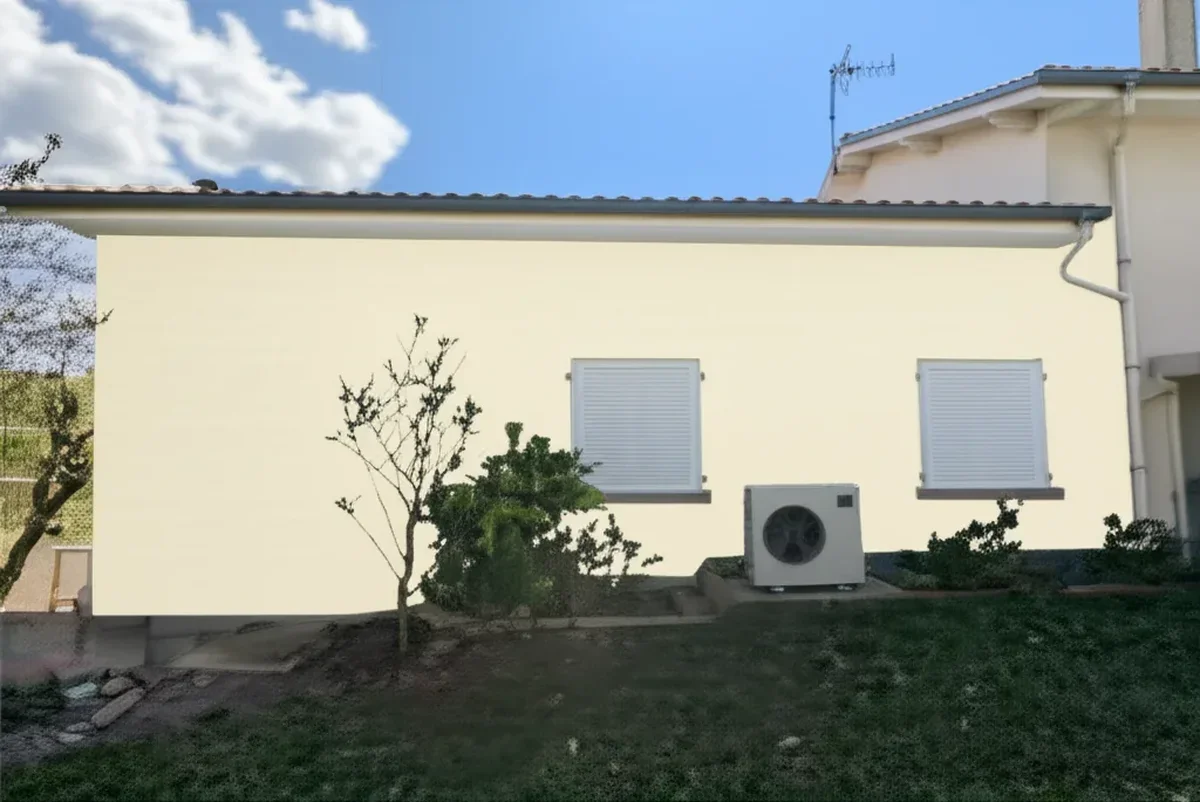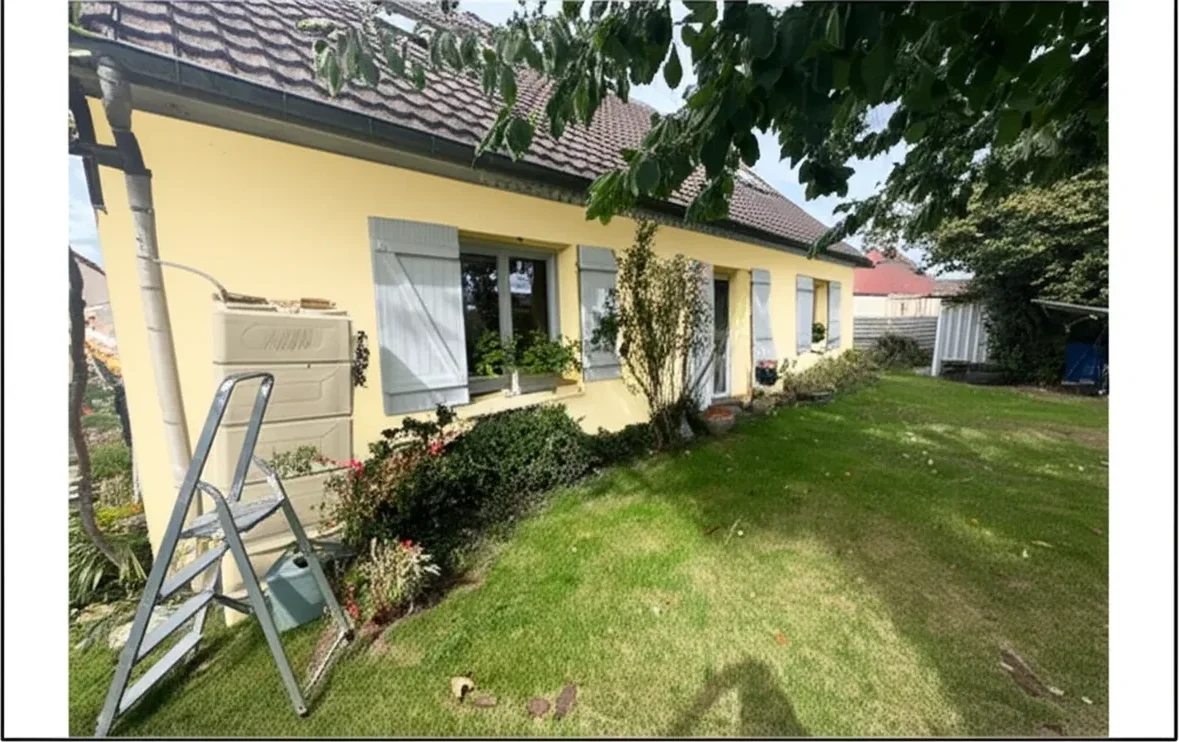
Try it on your house

Quick answer: Sherwin-Williams SuperPaint (~$55 to $70/gal) is the best-selling value tier that lasts 8 to 12 years on a properly prepped exterior; Emerald (~$80 to $95/gal) is the top tier that holds color and sheen 15 to 20 years. Pick SuperPaint for sheds, garages, north-facing low-sun walls, or any budget-conscious repaint. Pick Emerald for humid or coastal climates, dark/saturated body colors, and homes you plan to keep long term.
FacadeColorizer is a free AI exterior paint visualizer. The two lines that drive the most questions from homeowners pricing a 2026 repaint are SW SuperPaint vs Emerald – and the answer is not "just buy the expensive one." This guide walks through real price per gallon, MPI rating, warranty, color palette access, and what the product data sheets and painters' reports say about how the two films weather, with a dedicated section on Duration, the middle tier most people end up cross-shopping. By the end you will know which one fits your house, your climate, and your timeline.
That is why we wrote this comparison as a sibling to the full Sherwin-Williams Exterior Paint Guide 2026 – once your color is locked, the line is the next decision. To compare the two together with Duration, Resilience and A-100 in one chart, see our Sherwin-Williams best outdoor paint 2026 overview.
Sherwin-Williams SuperPaint: The Value-Tier Best-Seller
SuperPaint Exterior Acrylic Latex is Sherwin-Williams' value workhorse and the line most homeowners actually buy. At roughly $55 to $70 per gallon at a Sherwin-Williams store (often less during the 30 to 40% off sales the chain runs several times a year), it sits in the sweet spot between the budget A-100 line and the premium tiers. It is rated MPI #10 (exterior latex flat) and MPI #11 (low-sheen/satin), covers 250 to 350 sq ft per gallon on smooth surfaces, and carries a limited lifetime warranty for the original residential homeowner.
What you get for the money: VinylSafe technology lets SuperPaint be tinted in darker colors on vinyl siding without warping; Advanced Resin chemistry improves dirt-pickup and fade resistance versus the prior formula; and its cold-weather formulation allows application down to about 35°F, useful for late-fall touch-ups. The trade-offs versus Emerald are real but manageable – the film is slightly less elastic, dirt resistance is a notch lower, and it does not have built-in self-cleaning behavior. For most US homes with average sun exposure and a planned 8 to 12 year repaint cycle, SuperPaint is genuinely "good enough" – test any SuperPaint shade on your house photo before you commit.
Sherwin-Williams Emerald: The Top-Tier Flagship
Emerald Exterior Acrylic Latex is Sherwin-Williams' flagship and the most durable exterior paint they make. At $80 to $95 per gallon, it cures to a tighter, harder film than SuperPaint, with class-leading dirt-pickup resistance, advanced fade resistance, and built-in mildew defense. It is rated MPI #10/#11 with premium-tier performance markers, covers 250 to 400 sq ft per gallon, and is backed by a limited lifetime warranty. The variant most buyers want is Emerald Rain Refresh, which adds a self-cleaning hydrophobic finish that uses rainfall to rinse dirt and resist algae.
Emerald earns its premium in three measurable ways. First, color retention: Sherwin-Williams positions Emerald on resistance to fading and dirt pickup, and painters' side-by-side reports describe deep navy, charcoal, and forest green holding their saturation years longer on Emerald than on mid-tier films, which chalk visibly on dark colors first. Second, moisture defense: the engineered permeability lets walls breathe without letting bulk water in, key in humid Southeast and Pacific Northwest climates. Third, full-spectrum color access – Emerald accepts every Sherwin-Williams shade including ultra-deep base colors that other lines cannot tint cleanly. For a richer walkthrough of the entire flagship line, see our deep-dive guide on Sherwin-Williams Emerald Exterior 2026, or try an Emerald color on your house photo right now.
SuperPaint vs Emerald: Direct Comparison Table
Here is how the two lines stack up head-to-head on the six factors that matter most when you are writing the check. Prices reflect 2026 Sherwin-Williams store retail; expect 30 to 40% off during the seasonal sales the chain runs in spring and fall.
| Factor | SuperPaint Exterior | Emerald Exterior |
|---|---|---|
| Price / gallon (2026) | ~$55 to $70 | ~$80 to $95 |
| MPI rating | #10 / #11 (standard) | #10 / #11 (premium-tier) |
| Warranty | Limited lifetime | Limited lifetime |
| Expected lifespan | 8 to 12 years | 15 to 20 years |
| Coverage / gallon | 250 to 350 sq ft | 250 to 400 sq ft |
| Self-priming | No (primer needed on bare wood) | Yes (most surfaces) |
| Mildew & algae resistance | Good | Excellent (Rain Refresh self-cleans) |
| Dark color access | Most colors; some deep bases limited | Full palette including ultra-deep bases |
| Application temperature | Down to ~35°F | Down to ~35°F |
| Best for | Budget repaints, sheds, low-sun walls | Forever homes, humid/coastal, dark colors |
Try it on your house
No photo? Try a sample
The biggest single difference is durability: in painters' side-by-side reports and in the manufacturer's positioning, Emerald holds gloss and color saturation markedly longer than SuperPaint, which is why we quote 15 to 20 years against 8 to 12. Whether that 2x is worth the ~40% sticker premium depends entirely on your house, climate, and how long you plan to own it – covered below.
One tier is missing from most comparisons because it replaced a name people still search for: Sherwin-Williams Latitude took over from Resilience in 2021 and is built on ClimateFlex, with an application window of 35°F to 120°F and rain resistance in about 30 minutes.
Below SuperPaint sits one more rung, A-100: a 100 percent acrylic topcoat with a 15-year limited warranty for peeling and blistering only, lower volume solids, no high-gloss sheen and no self-priming claim. Our A-100 exterior review reads the warranty word for word and explains when the budget line is the rational buy.
SuperPaint vs Duration vs Emerald: where the middle tier fits
Most homeowners who search "SuperPaint vs Emerald" end up with a third quote in hand: Duration Exterior. It sits between the two on price and on the Sherwin-Williams ladder, and it is the line the chain's own stores most often recommend for a straightforward repaint. Here is what separates it from both neighbors, taken from the Duration Exterior product page, the Emerald Exterior product page, and two painters' comparisons cited below.
| Factor | SuperPaint | Duration | Emerald |
|---|---|---|---|
| Headline technology | Advanced resin, VinylSafe | PermaLast technology with acrylic co-polymers; the film is thicker by design | Premium paint and primer in one; tight, hard cure |
| Self-priming | Primer needed on bare substrates | Yes; SW states one coat for repaints, two coats for new work | Yes, self-priming with a smooth, uniform appearance |
| Film character | Standard acrylic film | Softer, more flexible film that levels and forgives lap marks; can show faint chalking on deep colors after a few years | Harder, tighter film that stays cleaner and holds sheen longer |
| Resistance claims (SW) | Dirt pickup, fade, mildew-resistant coating | Cracking, peeling and blistering; flash-rust and tannin-bleed resistance; mildew-resistant coating | Blistering, peeling, fading and dirt pickup; mildew-resistant coating |
| Application temperature | Down to about 35°F | Down to 35°F (stated by SW) | Down to about 35°F |
| Sheens | Flat, satin, gloss | Flat, low lustre, satin, gloss | Flat, satin, gloss |
| Dark colors | Most colors; some deep bases limited | VinylSafe palette of 100 colors incl. a limited selection of darker colors for vinyl | Full palette incl. Deep and Ultradeep bases |
| Warranty | Limited lifetime | Lifetime limited (peeling or blistering: replacement product or refund) | Lifetime limited |
| Price per gallon | ~$55 to $70 list | $72 to $78 list (Prudent Reviews); contractor pricing about $50 to $55 (Paintwerks) | ~$80 to $95 list; $60 to $65 contractor (Paintwerks) |
Sources: Sherwin-Williams product pages for Duration and Emerald Exterior (features, sheens, warranty, temperature); Prudent Reviews, Duration vs Emerald (PermaLast, list prices, recoat); Paintwerks, Duration vs Emerald Exterior (film behavior, contractor prices, coverage). Prices vary by region, sheen and sale.
Duration vs Emerald. The two share a lot: both are self-priming, both carry a lifetime limited warranty, both spread about 350 square feet per gallon on smooth siding at the recommended film thickness, and both recoat in about 4 hours at 77°F according to the Paintwerks comparison. The difference is the cured film. Duration's PermaLast formula builds a thicker, softer, more flexible film, which is why it forgives lap marks, moves with siding that swells and shrinks through big temperature swings, and is the line painters reach for on damp climates and older wood. Emerald cures tighter and harder, so it holds sheen longer, picks up less dirt and resists the faint powdery chalking that Duration can show on deep blues and charcoals after a few years. Kind Home Painting sums it up the same way: Duration keeps a softer film, Emerald cures harder and cleans easier.
SuperPaint vs Duration. The step up from SuperPaint buys you self-priming (one coat on a sound repaint per Sherwin-Williams, where SuperPaint needs primer on bare spots and two coats), a thicker film with stated protection against cracking, peeling and blistering, and better flash-rust and tannin-bleed resistance on nail heads and cedar. What it does not buy is Emerald's color depth: Duration's VinylSafe palette is 100 colors including a limited set of darker shades, so an ultradeep body color still points you to Emerald.
- Choose Duration for light and mid-tone colors on a standard repaint, for wood siding in humid or freeze-thaw climates where a flexible film matters, and when one-coat coverage on a sound surface is worth the extra $15 to $20 a gallon over SuperPaint.
- Choose Emerald for deep, saturated body colors on south and west exposures, for trim where sheen retention shows against the body, and for a home you plan to keep past the ten-year mark.
- Stay with SuperPaint on sheds, garages, shaded north walls and any repaint budgeted for an 8 to 12 year cycle, as the next section explains.
For the full four-tier chart including Resilience and A-100, see our Sherwin-Williams best outdoor paint 2026 overview; the moisture-and-temperature specialist in the lineup has its own Resilience Exterior review.
When SuperPaint Is "Good Enough" (Don't Overspend)
There is a real temptation to upsell yourself into the flagship. Resist it for the following situations – SuperPaint will do the job for less and you will not see meaningful added value from Emerald.
- Low-sun and north-facing walls: Walls that get less than 4 hours of direct sun per day age slowly. UV is the #1 driver of fade and chalking, so on shaded elevations SuperPaint's good-but-not-premium UV package is plenty.
- Sheds, detached garages, outbuildings: If you would not lose sleep over repainting it in year 9, SuperPaint is the smart choice. Save the budget for the primary house.
- Light to mid-tone body colors: Soft whites, light grays, beiges, and pastels fade slowly because they reflect heat and UV. The lifespan gap between SuperPaint and Emerald narrows when colors are light.
- Older homes (40+ years) with breathable substrates: Cedar siding, lap siding on plaster sheathing, and other older materials can blister under thicker premium films that trap vapor. SuperPaint's slightly more permeable film often performs better here.
- Short ownership horizon: If you plan to sell within 5 years, you will get every dollar of curb appeal benefit from a fresh SuperPaint coat without paying for durability you will never enjoy.
For more on how surface texture and prep affect the right choice between lines, the Sherwin-Williams Exterior Paint Guide 2026 covers substrate-specific recommendations in depth.
When Emerald Is Worth Every Extra Dollar
Color is the cleanest tie-breaker: a mid-tone body holds in SuperPaint for years, while a dark like Urbane Bronze (LRV 8.121 on the official Sherwin-Williams page) on a sunny elevation is the case for Emerald. Our Urbane Bronze exterior guide explains why dark colors ask more of the binder.
Emerald earns its premium decisively in these scenarios. If two or more apply to your house, the cost difference will pay back before your next repaint.
- Humid or coastal climates: Florida, Gulf Coast, Pacific Northwest, Carolinas. The combination of salt-air, persistent moisture, and algae growth chews through mid-tier paint. Emerald Rain Refresh is engineered for exactly this.
- Dark or saturated body colors: Navy, charcoal, deep green, black, oxblood. Dark colors absorb the most heat and UV; only Emerald's premium pigment and resin package holds them without chalking. See our dark exterior paint colors guide for the durability implications of going dark.
- Premium curb appeal & resale priority: If you are prepping to sell into a market that rewards a flawless exterior – or just want the cleanest possible look – Emerald's tighter cure and longer gloss retention look noticeably crisper at year 3 to 5.
- Forever homes: Plan to keep the house 15+ years? Emerald's 15 to 20 year life means one less repaint cycle, which alone outweighs the gallon premium given labor cost.
- Difficult-to-access elevations: Three-story walls, dormers, or anything requiring lift equipment – the labor cost of a do-over dwarfs the gallon savings of stepping down to SuperPaint.
The Value Math: 8 to 12 Years SuperPaint vs 15 to 20 Years Emerald
Here is the calculation that decides most homeowner debates. Take a 2,000 sq ft two-story home with about 2,000 sq ft of paintable wall, needing ~10 gallons per coat at two coats:
- SuperPaint: 20 gallons × $62 average = $1,240 in paint. With $4,500 to $7,000 in labor + prep, the all-in job is roughly $5,700 to $8,200. Expected repaint in 10 years.
- Emerald: 20 gallons × $87 average = $1,740 in paint. Same prep + labor, all-in is $6,200 to $8,700. Expected repaint in 17 years.
Over a 20-year horizon, the SuperPaint house repaints twice (~$13,000 total), the Emerald house repaints once and is overdue for the next (~$7,500). Even if you add inflation to that second labor cost, Emerald wins by $3,000 to $5,000 – not counting the years of better curb appeal in between. The math flips only if you sell before year 10 or if your climate is mild and your colors light. It also does not transfer indoors: an interior wall gets repainted because it was scuffed, washed thin, or you changed the color, not because the film failed on schedule, so the premium tier has to justify itself on washability rather than on a repaint interval. Our review of Emerald interior paint runs that version of the calculation, including the rooms where a cheaper line does the same job. For a full breakdown of paint vs labor proportions, see our exterior paint cost 2026 complete guide. Considering Resilience for a humid climate instead? Our forthcoming Sherwin-Williams Resilience Exterior 2026 review compares it directly to Emerald for moisture-heavy regions.
DIY vs Pro Application: How Each Paint Behaves
Both lines are formulated for residential exterior application, but they behave noticeably differently under a brush, roller, and sprayer.
- SuperPaint – DIY-friendly: Thinner viscosity, brushes and rolls smoothly with minimal lap marks. Forgiving open-time for amateurs who back-roll behind the brush. The cold-weather formula tolerates cooler mornings, which matters when DIYers paint on weekends. Recommended for the home-improvement homeowner with patience.
- Emerald – rewards prep and skill: Thicker, higher-solids film with shorter wet edge. Lays down beautifully under a pro sprayer (HVLP or airless 0.013 to 0.017 tip) but can show lap marks if a beginner rolls slowly. Most pros love it; first-time DIYers should practice on a side wall or step down to SuperPaint.
- Prep matters more for Emerald: Because the film cures so hard, any surface defects beneath it (raised grain, dirt, mildew) will show. Plan on power-wash + scrape + spot-prime + caulk before applying. SuperPaint hides minor sins slightly better.
If you are weighing the labor side of this decision, our sprayer vs roller comparison covers application choice in depth. And if you want a side-by-side with the other major US brand, our guide comparing Sherwin-Williams and Benjamin Moore outdoors stacks Emerald against Benjamin Moore's Aura and Regal Select.
Where Emerald pulls away: UV exposure
Spec sheets aside, the difference between the two lines shows up where the UV load is highest. On south- and west-facing walls, Emerald's resin holds sheen and color saturation longer and starts chalking later; on shaded north walls the two films age at a similar pace for the first years, because the lower UV load does not stress either one. That matches what the chemistry predicts and is the practical reason to spend the premium on the elevations that take direct sun rather than on the whole house.
Test the Right Color Before You Buy – Free in 30 Seconds
Whichever line you pick, the color matters more to your daily satisfaction than the resin technology. FacadeColorizer's Sherwin-Williams visualizer lets you upload one photo of your home and apply any SW shade to your siding, trim, fascia, and front door – in about 30 seconds, free and no signup. Test 3 to 5 shades, save the comparison, share it with your contractor, and avoid the most expensive mistake in any repaint: buying 12 gallons of the wrong color. If you want help benchmarking the SW palette against alternatives, our 2026 visualizer comparison rates the major tools side by side.
More exterior paint face-offs
Cross-shopping other brands before you lock in Sherwin-Williams? A few sibling reviews run the same value-versus-flagship logic on the competition. Home Depot shoppers can size up Glidden Essentials versus Fundamentals, the pro-favorite matchup lives in PPG Timeless versus Permanizer, and for the Lowes aisle we break down Valspar Duramax versus Reserve.
See how the finish color reads on your own siding before you commit.
Sources and references
- Sherwin-Williams : SuperPaint Exterior Acrylic Latex product page
- Sherwin-Williams : Emerald Exterior Acrylic Latex product page
- Sherwin-Williams : Duration Exterior Acrylic Latex product page (PermaLast, self-priming, one coat for repaints, 35°F application, sheens, VinylSafe) and its Lifetime Limited Warranty.
- Prudent Reviews : Sherwin-Williams Duration vs Emerald (technologies, list prices, sheens, recoat times).
- Paintwerks : Duration vs Emerald Exterior (film hardness, chalking on dark colors, coverage, contractor prices).
- Kind Home Painting : the difference between Duration and Emerald.
- Consumer Reports : Exterior Paints & Stains Buying Guide
Methodology and trust: this comparison cross-references the official Sherwin-Williams product pages and warranty documents with published painters' comparisons listed above; lifespan ranges are the ranges those sources and the manufacturer's positioning support, not FacadeColorizer measurements. Color-shift terminology follows ASTM D2244. Last updated 2026-09-16.
Disclaimer: SHERWIN-WILLIAMS, SUPERPAINT, EMERALD, RAIN REFRESH, VINYLSAFE, A-100, DURATION, RESILIENCE, and COLORSNAP are registered trademarks of The Sherwin-Williams Company. BEHR is a registered trademark of Behr Process Corporation. BENJAMIN MOORE is a registered trademark of Benjamin Moore & Co. HOME DEPOT is a registered trademark of Home Depot Product Authority, LLC. VALSPAR is a registered trademark of The Valspar Corporation. FacadeColorizer is an independent service and is not affiliated with, endorsed by, or sponsored by these companies. All product names, trademarks, prices and specifications are used for identification, comparison and commentary purposes only under nominative fair use (Lanham Act, 15 U.S.C. §1125). Prices, warranties, MPI ratings and product availability are approximate, vary by region and finish, and are subject to change; confirm current details with the manufacturer or retailer before purchase.
Frequently asked questions
Is Sherwin-Williams Emerald worth twice the cost of SuperPaint?
How long does Sherwin-Williams SuperPaint last on an exterior?
Can I use SuperPaint on vinyl siding?
Does Sherwin-Williams Emerald really last 20 years?
Can I mix SuperPaint and Emerald on the same house?
Do I need primer with Sherwin-Williams Emerald?
Where can I buy SuperPaint and Emerald in 2026?
What is the price per gallon of SuperPaint vs Emerald in 2026?
Trademarks mentioned (Sherwin-Williams, Benjamin Moore, Behr, Caparol, Brillux, Sto, Alpina, Valspar, PPG, Glidden, Dulux, Crown Trade, Sandtex, Farrow & Ball, Johnstone's, Leyland) are property of their respective owners. FacadeColorizer is independent and not affiliated with any of them. Nominative fair use under Lanham Act §1125.