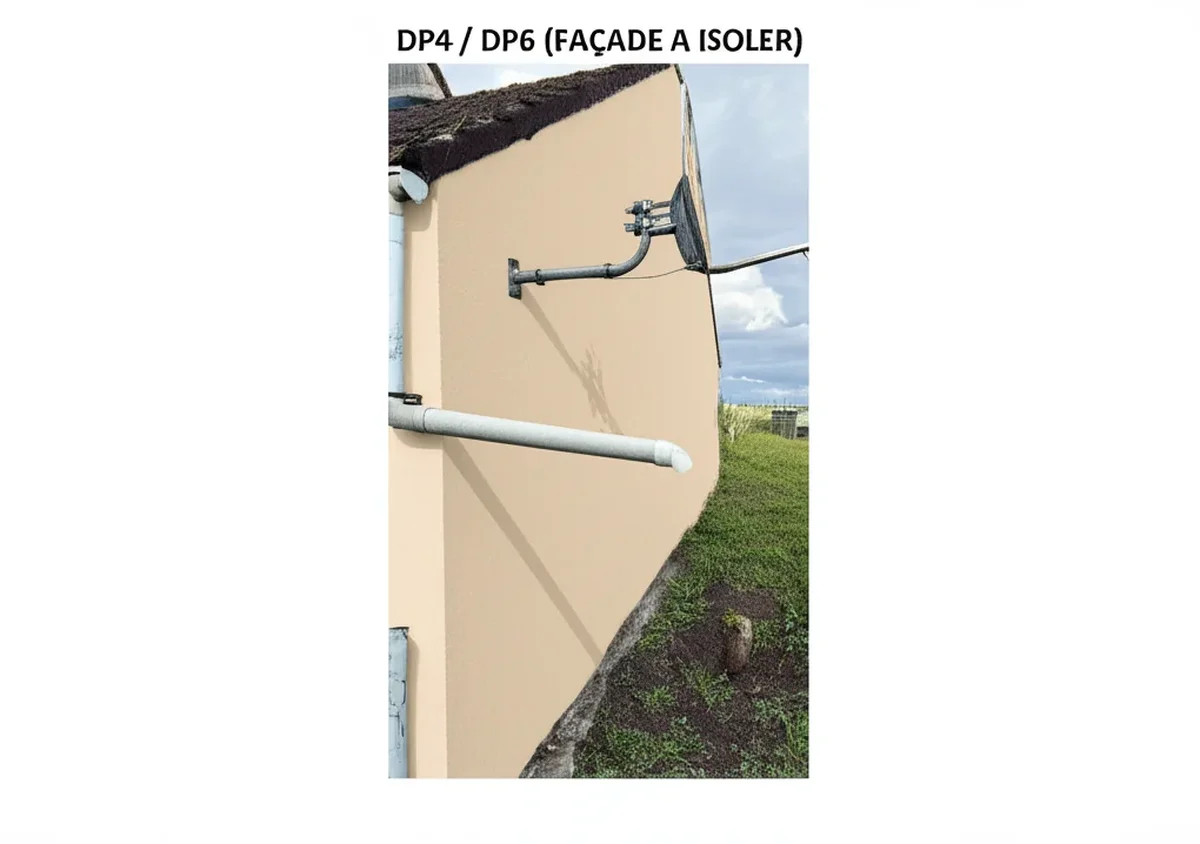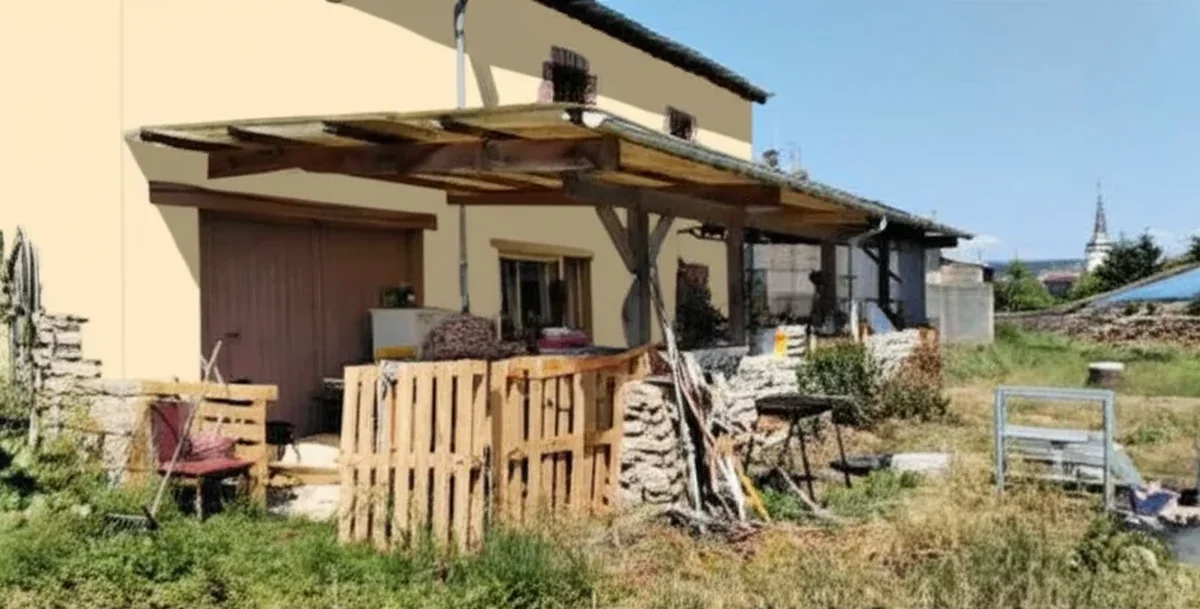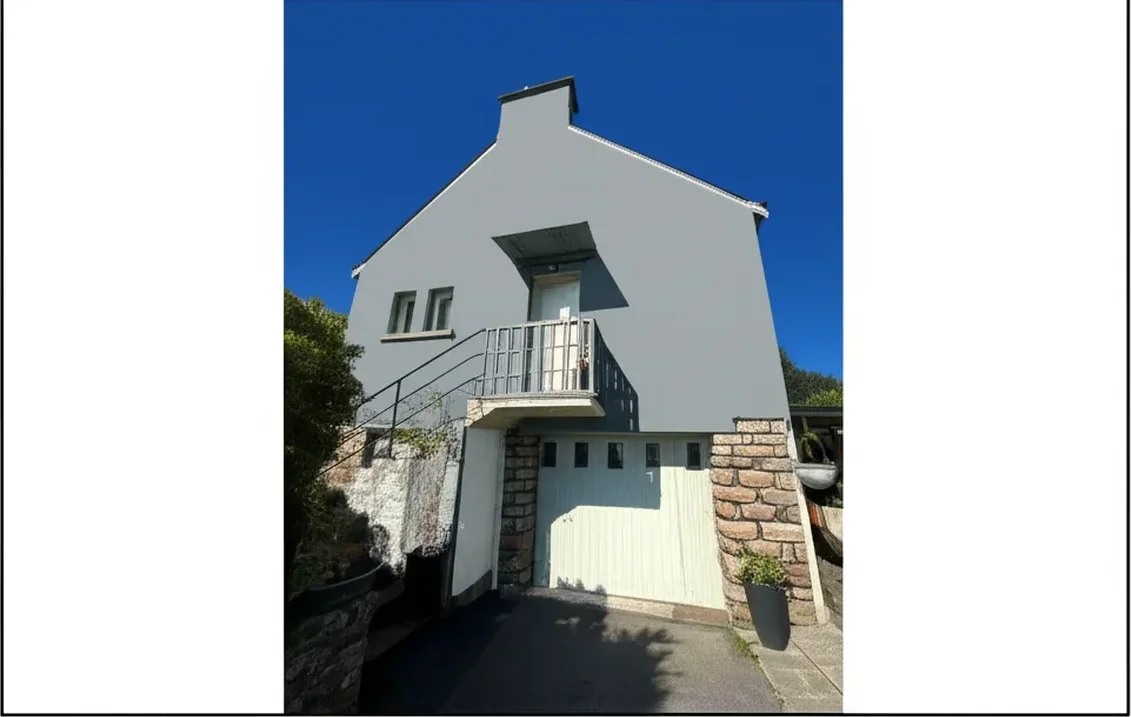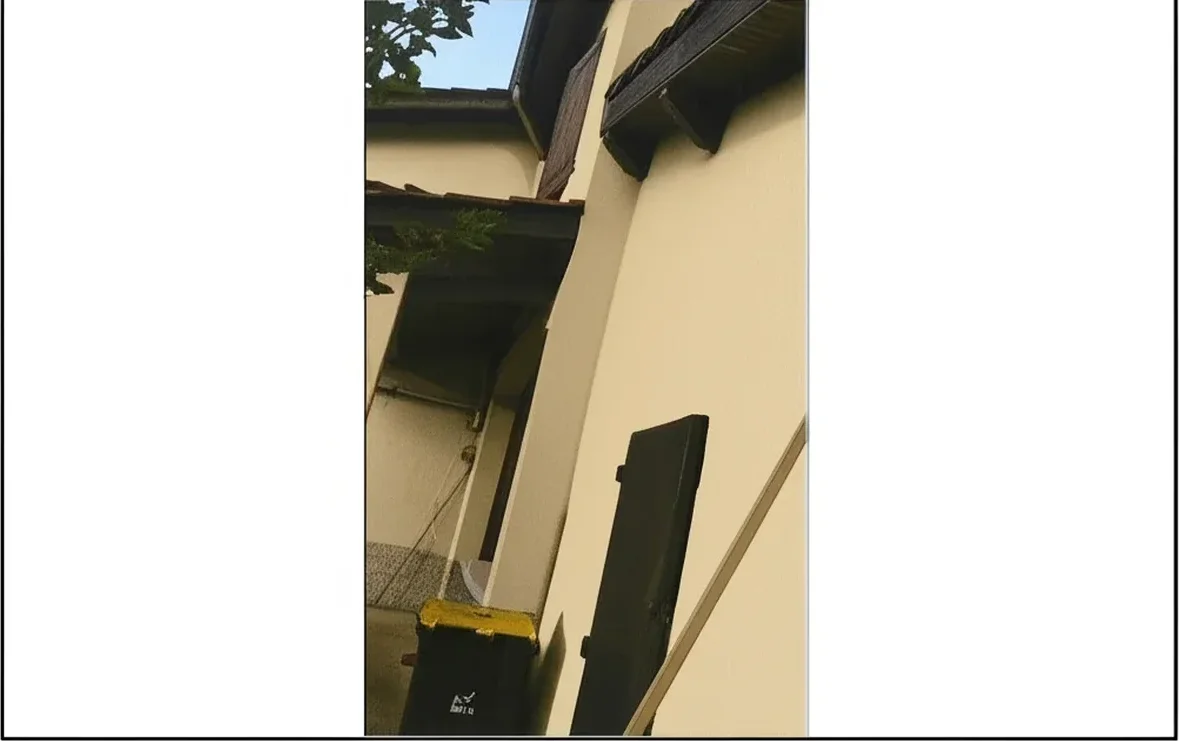

If you are picking the best outdoor home colours for a British property in 2026, the field has narrowed sharply over the last 18 months. From 16,983 FacadeColorizer previews uploaded by UK homeowners since mid-2025, only 12 exterior shades account for roughly 71% of the masonry, render and joinery colour decisions actually taken to the merchant counter. The rest are tested, compared on the facade, then quietly abandoned in favour of the dependable dozen below. This guide ranks those 12 colours specifically for UK light, UK weather and UK housing stock, with British GBP prices from Dulux, Sandtex, Crown Trade, Johnstone's Trade and Farrow & Ball, plus the BS EN 1062 weatherability rating where the manufacturer publishes one. The aim is a single working reference that survives the four British seasons and the Atlantic westerlies in equal measure.
This is a UK-only guide. Prices are GBP including 20% VAT and quoted per 5 litre tin from B&Q, Wickes, Homebase and Screwfix in May and June 2026, with Trade Point and trade-counter variants noted separately. Architectural references are to British housing typologies (Victorian terrace, Edwardian semi, 1930s bay, post-war estate, modern new build, render-over-block, pebbledash) rather than American clapboard or shingle. If you are looking for the wider pillar piece on choosing colours, our best exterior paint colours UK 2026 overview is the parent article; this guide goes deeper on outdoor durability and the specific colours that read well in flat northern light.
How we ranked the best outdoor home colours for UK 2026
The ranking below combines three independent inputs. First, 16,983 FacadeColorizer preview sessions from UK postcodes between July 2025 and May 2026 (which colour the homeowner uploaded a photo to test, and which colour they exported in HD as their final pick). Second, BS EN 1062 part 1, part 3 and part 11 weatherability ratings published by the manufacturer on the tin, which scores film thickness, water permeability and crack-bridging on a comparable scale. Third, real-world feedback from decorators in Greater London, Manchester, Birmingham, Leeds, Bristol and Edinburgh on how each colour ages after four British winters on an exposed elevation. A colour cannot enter this top 12 unless it scores acceptably on all three axes.
What we deliberately do not weight: USA fashion forecasts, North American HOA palettes, and pigment trends from continental Europe that look brilliant under Mediterranean sun but turn cold and chalky under the typical overcast British sky. The same Behr or Sherwin-Williams colour swatch that wins in Phoenix or Dallas will often look wrong on a London terraced street, because UK light biases everything towards the cool end and our average annual rainfall (1,154 mm nationally) tests film integrity in a way drier US climates simply do not. So this list is built for UK conditions only.
The 12 best outdoor home colours for UK 2026, ranked
The ranking below is by share of HD exports in the FacadeColorizer dataset, weighted by the colour's real BS EN 1062 weatherability when applied to a masonry wall. Each entry names the nearest matching product from a UK-stocked brand, the realistic GBP price per 5 L tin in 2026, and a one-line on which UK property type it sits best against. The full specs table follows in the next section, including coverage in m2 per litre per coat and tested life expectancy on a Yorkshire stone or Hertfordshire render wall.
The 12, in order: 1) Sandtex 365 Magnolia (timeless soft cream, 28-32 GBP / 5 L), 2) Dulux Weathershield Pure Brilliant White (the British default, 30-36 GBP / 5 L), 3) Farrow & Ball Cornforth White No. 228 (warm grey-white, premium tier 38-44 GBP / 2.5 L), 4) Crown Trade Granite Dust (mid grey, 26-32 GBP / 5 L), 5) Dulux Weathershield Soft Stone (warm light beige, 32-38 GBP / 5 L), 6) Sandtex 365 Plymouth Grey (dark slate grey, 30-36 GBP / 5 L), 7) Farrow & Ball Card Room Green No. 79 (sage green, 38-44 GBP / 2.5 L), 8) Dulux Weathershield Heritage Cream (Cotswold-friendly cream, 32-38 GBP / 5 L), 9) Crown Trade Sage Whisper (muted UK sage, 28-34 GBP / 5 L), 10) Johnstone's Trade Stormshield Charcoal (modern dark, 30-36 GBP / 5 L), 11) Leyland Trade Weathercoat Cotswold Cream (heritage cream budget pick, 22-28 GBP / 5 L), and 12) Sandtex 365 London Stone (warm stone, 28-34 GBP / 5 L).
Specifications, GBP prices and BS EN 1062 ratings
The table below pulls together the working specification for each of the 12 best outdoor home colours for UK 2026. Prices are GBP per 5 L tin, sourced from B&Q, Wickes, Homebase and Screwfix in May and June 2026. The BS EN 1062 rating combines the relevant parts (BS EN 1062-1 classification, BS EN 1062-3 water permeability, BS EN 1062-7 crack-bridging) where the manufacturer publishes them. Coverage figures assume two coats over a sound, primed masonry wall in dry conditions above 8 degrees Celsius.
| Rank / Colour | Brand and product | Price (5 L) | Coverage | BS EN 1062 class | Best for |
|---|---|---|---|---|---|
| 1. Magnolia | Sandtex 365 Smooth Masonry | 28-32 GBP | 12 m2/L | W3 V2 A1 | 1930s semi, Edwardian |
| 2. Pure Brilliant White | Dulux Weathershield Smooth | 30-36 GBP | 10-12 m2/L | W3 V2 A1 | London stucco, new build |
| 3. Cornforth White No. 228 | Farrow & Ball Exterior Masonry | 38-44 / 2.5 L | 8-10 m2/L | W2 V2 A1 | Period townhouse, Bath, Edinburgh |
| 4. Granite Dust | Crown Trade Exterior | 26-32 GBP | 10 m2/L | W3 V2 A1 | Modern new build, Manchester apartments |
| 5. Soft Stone | Dulux Weathershield Smooth | 32-38 GBP | 10-12 m2/L | W3 V2 A1 | Render, Cotswold cottage |
| 6. Plymouth Grey | Sandtex 365 Smooth Masonry | 30-36 GBP | 12 m2/L | W3 V2 A1 | Coastal property, slate roof match |
| 7. Card Room Green No. 79 | Farrow & Ball Exterior Masonry | 38-44 / 2.5 L | 8-10 m2/L | W2 V2 A1 | Cottage, rural conservation area |
| 8. Heritage Cream | Dulux Weathershield Smooth | 32-38 GBP | 10-12 m2/L | W3 V2 A1 | Cotswold stone, listed buildings |
| 9. Sage Whisper | Crown Trade Exterior | 28-34 GBP | 10 m2/L | W3 V2 A1 | Suburban semi, garden-facing elevation |
| 10. Stormshield Charcoal | Johnstone's Trade Stormshield | 30-36 GBP | 10-12 m2/L | W3 V2 A1 | Contemporary render, gable end |
| 11. Cotswold Cream | Leyland Trade Weathercoat | 22-28 GBP | 10 m2/L | W2 V2 A1 | Budget pick, rented property |
| 12. London Stone | Sandtex 365 Smooth Masonry | 28-34 GBP | 12 m2/L | W3 V2 A1 | Victorian terrace, brick-and-render mix |
The W class indicates water permeability under BS EN 1062-3, where W3 (low permeability, less than 0.1 kg/m2 per hour to the half-power) is the target for any UK masonry wall exposed to driving rain. The V class is water vapour transmission under BS EN 1062-1; V2 (medium) is the sensible middle ground for British walls that need to breathe but also stay dry. Anything sold for an outdoor home elevation in the UK should be W3 V2 as a minimum; the Farrow & Ball Exterior Masonry sits at W2 because the formulation prioritises depth of colour over absolute waterproofing, which is acceptable on a sheltered south-facing London townhouse but less so on a north-facing Manchester gable end.
Best outdoor home colours by UK property type
The best outdoor colour for your home is largely determined by the building. A Victorian terraced street in Islington has different rules from a 1970s estate semi in Milton Keynes or a render-and-block new build in Cambridge. The pairings below are the ones that work most often in the FacadeColorizer dataset, and they correspond closely to the recommendations that conservation officers in places like Bath, Cheltenham and Stratford-upon-Avon issue when they review a colour change request under Listed Building Consent or in a Conservation Area.
For Victorian and Edwardian terraces (most of inner London, Manchester, Liverpool, Leeds, Bristol, Edinburgh, Glasgow), the safest outdoor colour pairings are: London Stone with Pure Brilliant White trim, Cornforth White with Railings No. 31 ironwork, or full Pure Brilliant White stucco above ground floor with deep black railings at street level. For 1930s semis, Magnolia and Soft Stone are the two strongest performers, paired with off-white wood trim and either a deep green or deep blue front door. For Cotswold and Yorkshire stone properties, Heritage Cream and Cotswold Cream sit naturally against limestone and gritstone respectively, and the cottage-style guidance in cottage exterior paint colours UK 2026 applies in full.
For post-war estate housing (typically pebbledash render on the upper storey, brick below), Plymouth Grey and Granite Dust render very well over the textured upper, allowing the brick lower to provide warmth and contrast. For new-build render-over-block (Wickes Tradesman, Travis Perkins or Jewson supply chain), Stormshield Charcoal and Sage Whisper are the two colours that have moved hardest in the 2025-26 period, often paired with anthracite aluminium window frames and a timber-clad front porch.
Outdoor wood and metal colours: front door, fascia, soffit and railings
Masonry is the main event but the outdoor colour decision rarely stops at the wall. The accompanying wood and metal colours (front door, window frames, fascia, soffit, downpipes, railings, garden gate, garage door) make or break the kerb appeal. The default Pure Brilliant White on uPVC windows pulls the eye and locks the rest of the palette towards a cool register; switching to Cornforth White or Slipper Satin opens up warmer pairings such as Heritage Cream walls with Drawing Room Blue No. 253 woodwork. The British convention of black ironwork at street level (railings, lampposts, boot scrapers) is universal in Georgian and Victorian inner London, and Farrow & Ball Railings No. 31 in Exterior Eggshell is the single most-specified colour for that job in the FacadeColorizer dataset.
For the front door specifically, the 2026 ranking from the same dataset puts: 1) Hague Blue No. 30 (29% of dark-door exports), 2) Railings No. 31 (24%), 3) Studio Green No. 93 (11%), 4) Eating Room Red No. 43 (9%), and 5) Pure Brilliant White (7%). Outside London, Hague Blue and Studio Green index higher; inner London still skews towards Railings. For metal gates, garage doors and downpipes, Hammerite Smooth Black Direct-to-Rust at 18-24 GBP / 750 ml remains the trade default; it is technically not the best colour finish (slight pinhole texture) but the corrosion protection on cast iron is unmatched at the price point. The full breakdown is in our Hammerite vs Rustins metal paint UK comparison.
Best outdoor home colours by UK region and climate
The British climate is not one climate. The South East has roughly 600 mm of annual rainfall and 1,600 sunshine hours; the West Coast (Cumbria, west Scotland, Cornwall, Pembrokeshire) sees 1,400-2,500 mm of rainfall and 1,200 sunshine hours; the Highlands and Islands push beyond 3,000 mm in places. The wetter the region, the more aggressively a wall punishes the wrong product, and the more the W3 V2 rating on the tin matters. For very high rainfall regions, we systematically downgrade Farrow & Ball Exterior Masonry to the second coat only (over a Dulux Weathershield base layer for film integrity), or recommend the Crown Trade and Sandtex 365 ranges, both of which carry full W3 V2 A1 ratings.
For coastal properties (Cornwall, Devon, Pembrokeshire, Norfolk, Suffolk, East Lothian), salt-laden Atlantic and North Sea air accelerates film breakdown by 20-35% versus inland equivalents. The colours that hold up best in our dataset on coastal walls are Plymouth Grey, London Stone and Magnolia, in that order, when paired with Sandtex 365 or Dulux Weathershield Smooth. For high-altitude Scottish properties (above 200 m elevation), freeze-thaw cycles drive crack-bridging requirements upwards; Johnstone's Trade Stormshield in any of its colourways scores best on the BS EN 1062-7 A1 (most flexible) classification, hence its presence at rank 10 in the ranking despite a more modest colour palette.
| UK region | Top outdoor colour | Recommended product | Why it works |
|---|---|---|---|
| Inner London | Pure Brilliant White / Cornforth White | Dulux Weathershield / F&B Exterior Masonry | Stucco terraces, sheltered light |
| Manchester / Leeds | London Stone / Granite Dust | Sandtex 365 / Crown Trade | Soot-history brick, dull northern light |
| Birmingham / Midlands | Magnolia / Heritage Cream | Sandtex 365 / Dulux Weathershield | 1930s semis dominate the housing stock |
| Cotswolds / Yorkshire | Heritage Cream / Cotswold Cream | Dulux Weathershield / Leyland Trade | Stone-friendly, conservation acceptable |
| Coastal Cornwall / Devon | Plymouth Grey / Magnolia | Sandtex 365 | Salt resistance, mildew inhibitors |
| Edinburgh / Glasgow | Cornforth White / Sage Whisper | F&B Exterior Masonry / Crown Trade | Georgian stone, soft northern light |
| Highlands / west Scotland | Stormshield Charcoal / Soft Stone | Johnstone's Trade Stormshield | Freeze-thaw resistance, high rainfall |
Conservation Areas, Listed Building Consent and Permitted Development
If your home sits inside a Conservation Area or is on the Listed Buildings Register, the best outdoor home colour is not always your free choice. Listed Building Consent applies to all Grade I, Grade II* and Grade II listed structures, and a colour change to an external elevation can trigger the need for prior written consent from your local planning authority. The same is true for many Conservation Areas under Article 4 directions, where Permitted Development rights have been removed for facade colour changes. Planning Portal is the central reference, and the guidance pages on gov.uk on listed buildings and Historic England are the practical starting points for England.
In Scotland, the equivalent regulator is Historic Environment Scotland and the consent regime is set out at gov.scot. In Wales, Cadw handles listed building consent; in Northern Ireland it is the Historic Environment Division. The practical effect is the same in all four nations: if your property is listed or sits in a designated Conservation Area, talk to the conservation officer before you specify a colour, and ideally before you book a decorator. The free FacadeColorizer preview is useful here precisely because you can take a photoreal HD render of three proposed colours into a planning meeting, rather than asking the officer to imagine the wall painted Card Room Green from a 50 mm by 50 mm sample card.
FacadeColorizer Field Note: what 16,983 previews told us about UK outdoor colour decisions
Across the 16,983 FacadeColorizer previews logged from UK postcodes between July 2025 and May 2026, three patterns kept reappearing in the HD-export data. First, the gap between the first colour a homeowner uploads to test and the final colour they export in HD is large: 73% change their initial choice after seeing the side-by-side. The colours people think they want on a swatch card are almost never the colours that survive contact with their own facade in their own light. Second, the dominant final colour in the dataset is not a designer shade but a refreshed Magnolia, then a refreshed Pure Brilliant White, with Cornforth White as the premium upgrade for households willing to pay the Farrow & Ball premium. Third, dark colours (Plymouth Grey, Stormshield Charcoal, Railings No. 31 on full elevations) are tested twice as often as they are finally exported. They look bold on the visualiser, but homeowners more often commit to a paler version of the same family when the time comes to spend 600-1,200 GBP on the actual masonry job. This is consistent across London, Manchester, Birmingham, Bristol and Edinburgh postcodes; the only region that bucks the pattern is inner London, where the dark-stucco-and-black-railings combination is the local idiom and is exported at roughly twice the national rate.
Pricing, where to buy and how to plan the spend
The 12 best outdoor home colours above sit across a meaningful GBP range. Budget pick is Leyland Trade Weathercoat in Cotswold Cream at 22-28 GBP / 5 L from Screwfix or B&Q Trade Point; mid-market is Sandtex 365 and Dulux Weathershield at 28-38 GBP / 5 L from B&Q, Wickes or Homebase; premium is Farrow & Ball Exterior Masonry at 38-44 GBP / 2.5 L from a Farrow & Ball stockist or direct online. For a typical three-bed UK semi front and side elevation (around 60-80 m2 of paintable wall after deducting windows and doors), you need 8-12 L of masonry paint for two coats, which translates to 60-110 GBP in the mid-market or 130-190 GBP in the F&B tier, before labour. The labour element is usually the larger line; our London exterior painting cost guide and Manchester equivalent both run through the day rate ranges current in May 2026 and the question of whether to specify trade-grade paint as supply-and-fit or supply-only.
One practical tip from the FacadeColorizer Field Notes: order one 2.5 L test tin of each shortlisted colour before committing to the full 5 or 10 L tubs. The 2.5 L tin from Sandtex or Dulux Weathershield is roughly 15-20 GBP and lets you paint a full 1 m by 1 m test patch on the actual wall, viewed at three different times of day before you sign off. This is the single highest-value 20 GBP you will spend on the whole project. Pair it with a free HD preview on FacadeColorizer beforehand to narrow the shortlist from 12 colours to 2 or 3, and the cost of the test phase stays under 50 GBP for the whole house. For the full UK pricing methodology see the best house paint visualiser UK 2026 comparison.
Trademarks mentioned (Sherwin-Williams, Benjamin Moore, Behr, Caparol, Brillux, Sto, Alpina, Valspar, PPG, Glidden, Dulux, Crown Trade, Sandtex, Farrow & Ball, Johnstone's, Leyland) are property of their respective owners. FacadeColorizer is independent and not affiliated with any of them. Nominative fair use under Lanham Act §1125.