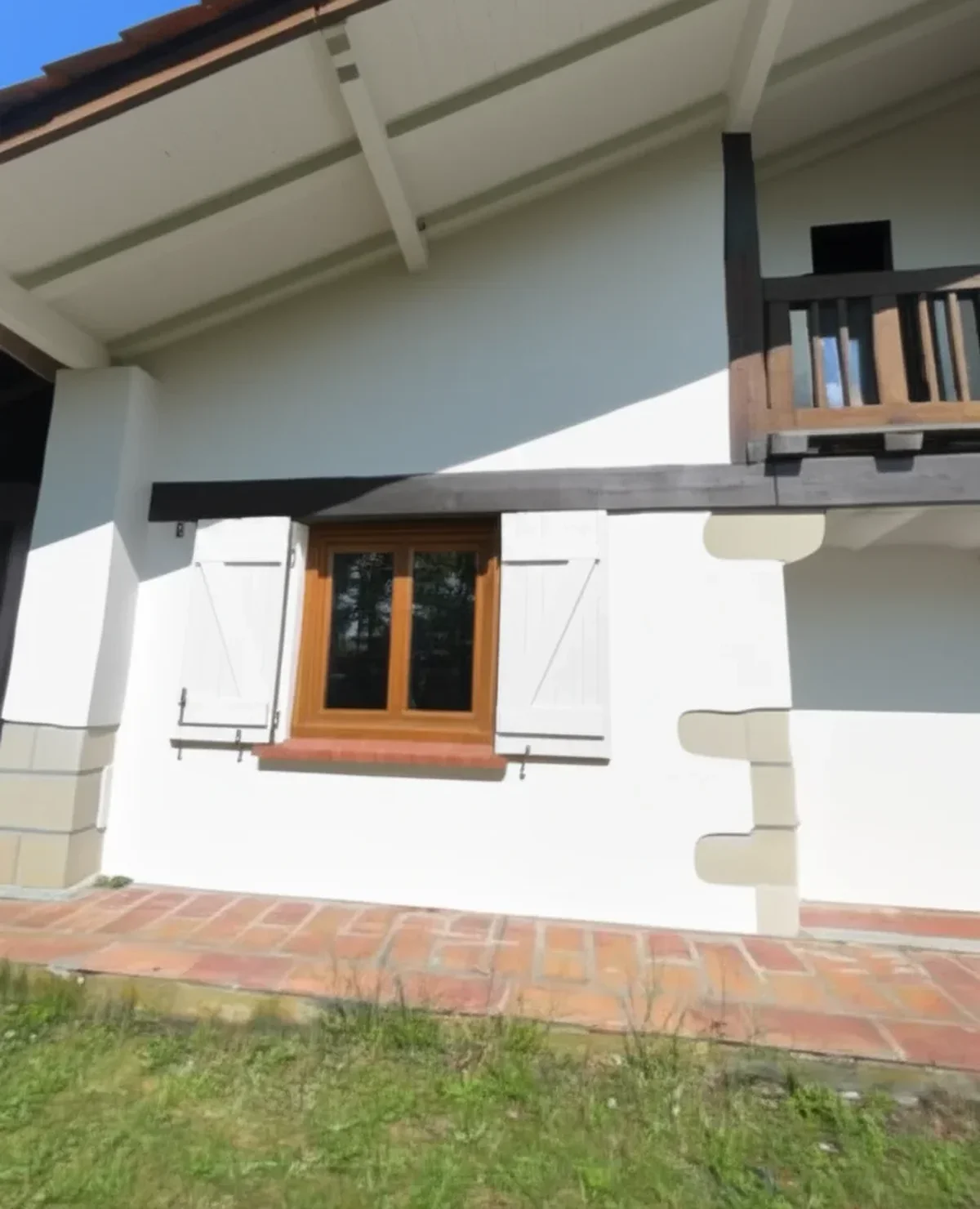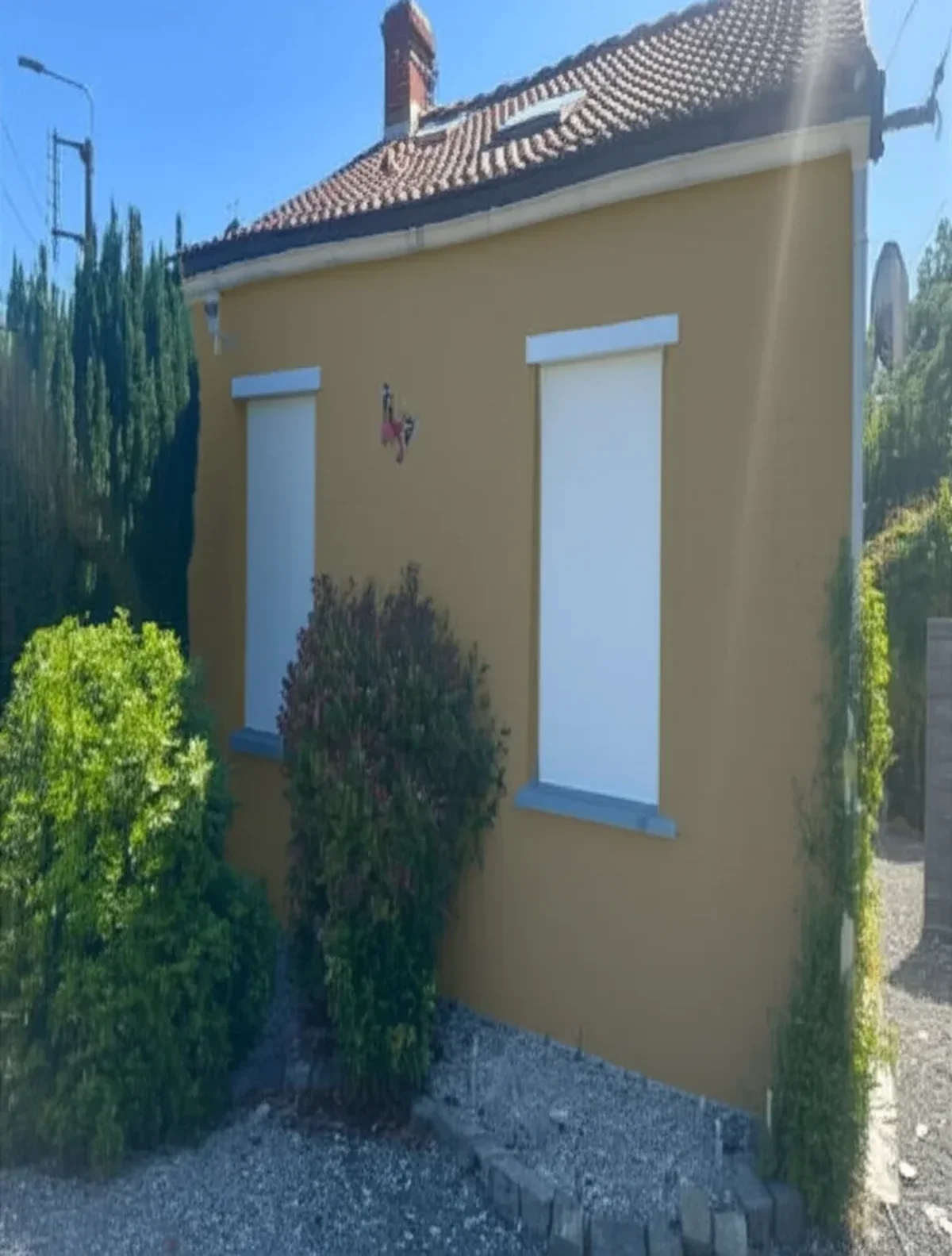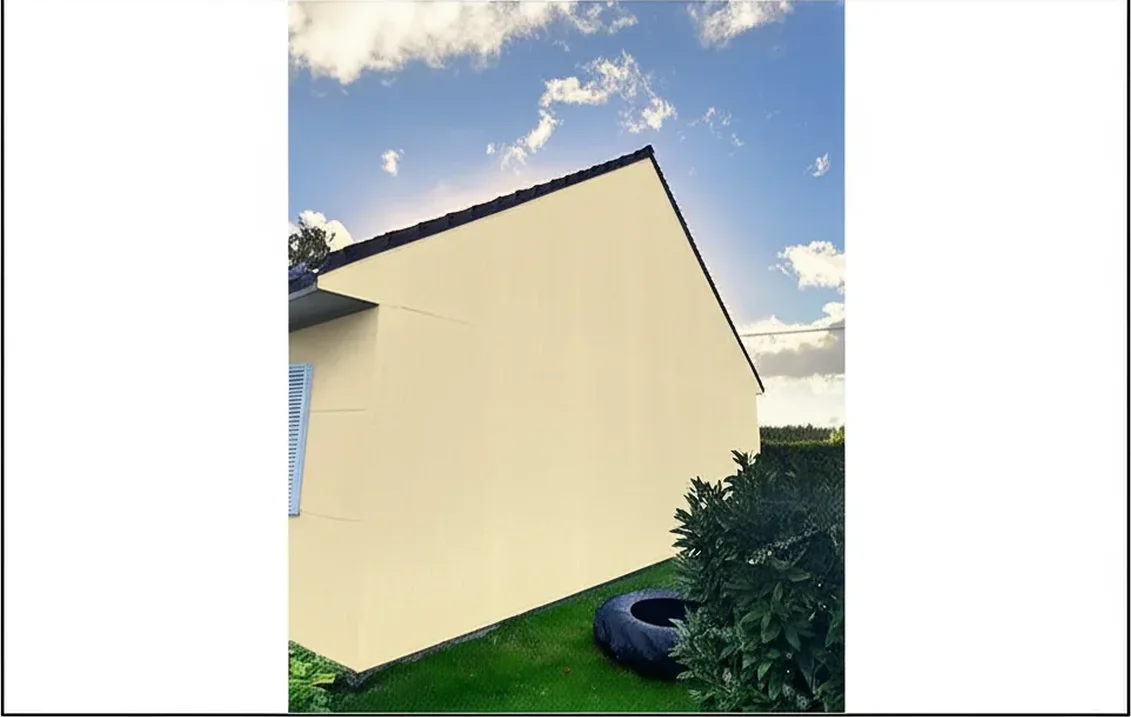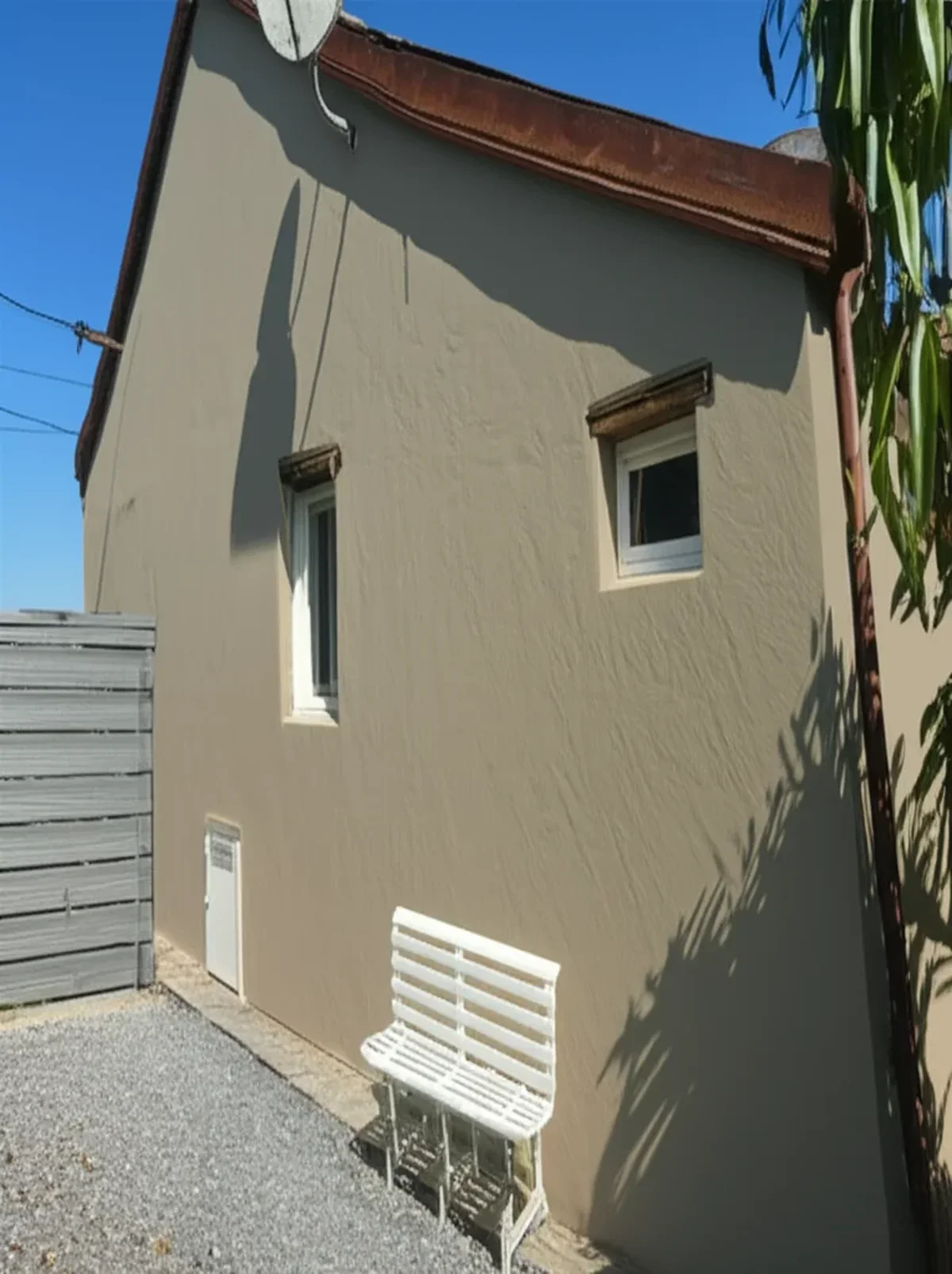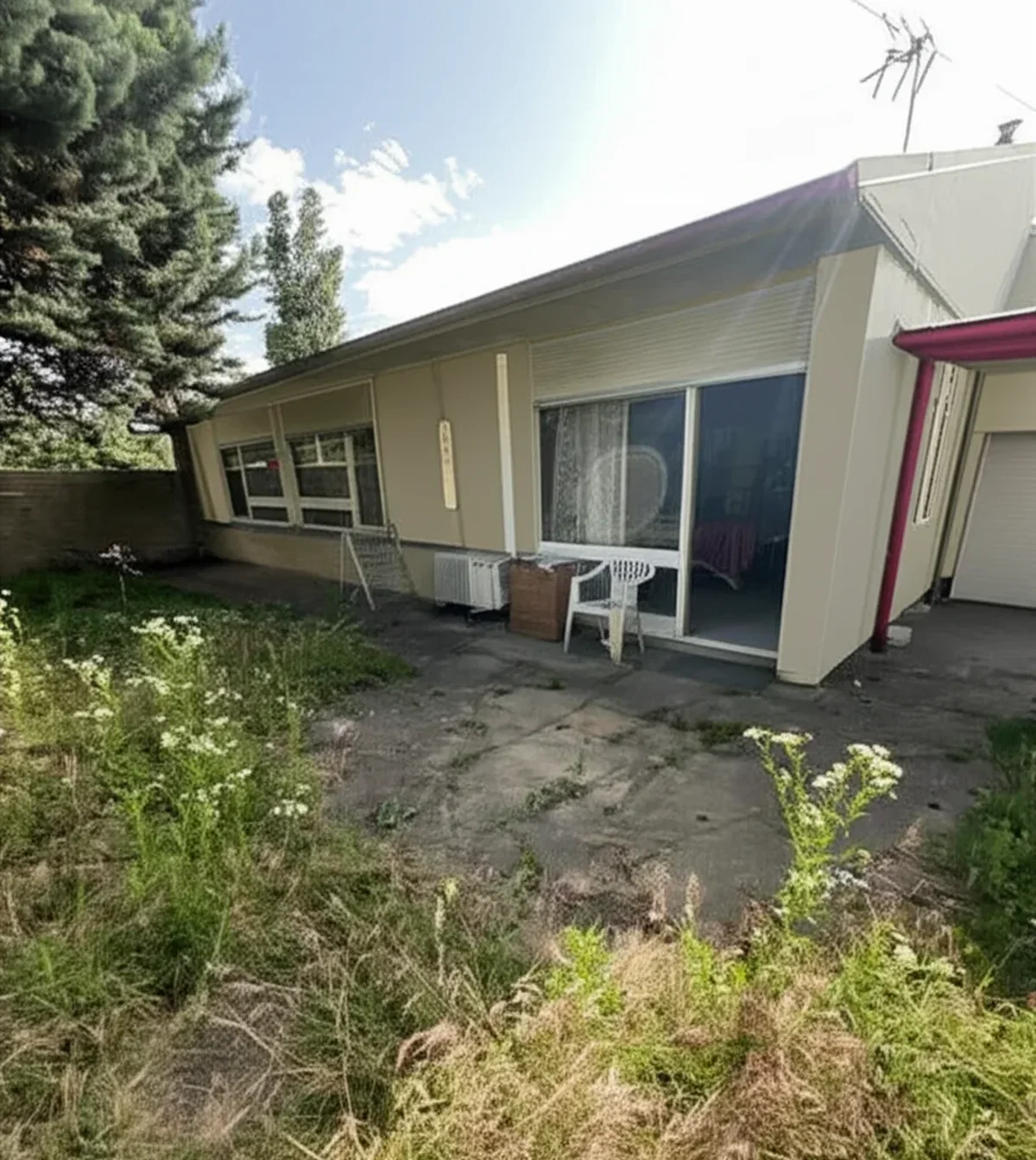
Try it on your house

External wall insulation (EWI) is one of the most effective ways to cut heat loss through solid wall properties in the UK. Around 35% of all heat escapes through uninsulated external walls, and for pre-1920s homes without a cavity wall, the figure is even higher. In 2026, a typical EWI installation costs between £90 and £170 per m², or £8,000–£15,000 for a three-bedroom semi-detached house. Unlike internal wall insulation, which reduces room sizes, EWI wraps the building from the outside, preserving floor area while transforming the facade. This guide breaks down every cost factor, insulation materials, render finishes, scaffolding, grant funding, and building regulations, so you can budget with confidence.
Wondering how your freshly insulated facade will look? Try our free AI colour visualiser, upload a photo of your home and preview silicone render, K Rend, and masonry paint finishes from Dulux, Weber, and Sandtex in seconds.
What Does External Wall Insulation Cost in 2026?
EWI costs depend on property size, insulation type, chosen render system, access requirements, and your region. London and the South East typically carry a 10–20% premium on labour compared with the Midlands or the North. Below are average installed costs including materials, labour, and scaffolding.
| Property Type | Approx. Wall Area | EWI Cost Range | Average Total |
|---|---|---|---|
| Mid-terrace (2–3 bed) | 40–60 m² | £4,500 – £9,000 | £6,500 |
| Semi-detached (3 bed) | 70–100 m² | £8,000 – £15,000 | £10,500 |
| Detached (4 bed) | 110–160 m² | £15,000 – £25,000 | £18,000 |
| Bungalow | 50–80 m² | £5,500 – £12,000 | £8,000 |
Try it on your house
No photo? Try a sample
Costs include a complete system: insulation boards fixed mechanically and adhesively, render mesh base coat, and a decorative top-coat render. Budget an additional £1,000–£2,500 for scaffolding hire on two-storey properties, though most quotes include this. If your home suffers from damp, rising damp, or penetrating damp, a damp survey and remediation work should be completed before EWI is installed.
EWI Insulation Materials Compared: EPS, Mineral Wool & Phenolic Foam
The insulation board you choose affects cost, thickness, and thermal performance. The table below compares the three main systems used in UK retrofit projects, measured against the Part L target U-value of 0.30 W/m²K.
| Insulation Type | Thermal Conductivity (λ) | Thickness for U=0.30 | Cost per m² (installed) | Fire Rating | Breathability |
|---|---|---|---|---|---|
| EPS (Expanded Polystyrene) | 0.032–0.038 W/mK | 90 mm | £90 – £120/m² | Euroclass E (with fire barriers) | Low |
| Mineral Wool (Rockwool) | 0.035–0.040 W/mK | 100–110 mm | £100 – £140/m² | Euroclass A1 (non-combustible) | Excellent |
| Phenolic Foam (Kingspan K5) | 0.021–0.023 W/mK | 60 mm | £120 – £170/m² | Euroclass C | Moderate |
EPS is the most popular choice for UK EWI projects thanks to its low cost per m² and proven track record across thousands of ECO scheme installations. Mineral wool is preferred for properties that need a breathable render system, particularly older solid wall homes prone to condensation or moisture issues. Phenolic foam boards from manufacturers such as Kingspan deliver the thinnest profile, ideal where space is tight or you want to minimise the visual impact on window reveals. All three systems must hold a valid BBA certificate and meet current building regulations.
Render Finishes for External Wall Insulation
Once the insulation boards are fixed and the base coat with render mesh is applied, you choose a decorative finish. The render protects the system from weather and largely determines the final appearance of your facade. Here are the main options:
- Silicone render, The most popular EWI finish in the UK. Brands like K Rend and Weber offer self-coloured, hydrophobic finishes that repel water and resist algae growth. Highly breathable, low maintenance, 20–25-year lifespan. Cost: £30–£50/m².
- Acrylic render, Excellent colour retention and crack resistance thanks to synthetic resin binders. Less breathable than silicone, so best paired with EPS rather than mineral wool. Cost: £25–£45/m².
- Mineral render, Cement-based, highly breathable, and quick-drying. Ideal for solid wall properties and colder climates where ventilation matters. Often finished with a masonry paint from Dulux or Sandtex. Cost: £20–£40/m².
- Monocouche render, A single-coat, through-coloured system that combines base and finish. Fast to apply and available in a wide colour range. Popular on new builds but equally suitable for EWI retrofit. Cost: £25–£45/m².
- Lime render, The go-to for listed building and conservation area projects. Fully breathable, allowing moisture to escape from older masonry. Requires specialist application. Cost: £40–£70/m².
ECO4 and GBIS Grants for External Wall Insulation
Two government-backed schemes can significantly reduce, or even eliminate, the cost of EWI for qualifying households. Following the closure of the Green Homes Grant voucher scheme, both the ECO scheme (ECO4) and the Great British Insulation Scheme (GBIS) now include external wall insulation as an eligible measure, with funding prioritised for solid wall homes with poor energy ratings.
- ECO4, Targets low-income households on qualifying benefits (Universal Credit, Pension Credit, Housing Benefit). Properties must have an EPC rating of D–G. Full funding is available, meaning £0 customer contribution in many cases. The scheme runs until March 2026.
- GBIS, Open to homeowners with a gross household income of £31,000 or below and an EPC of D or below. Council Tax bands A–D (England) or A–E (Scotland/Wales) qualify. GBIS covers 75–100% of insulation costs depending on circumstances. Also scheduled to run until March 2026, with successor schemes expected.
- Local authority grants, Many councils offer top-up funding alongside ECO4/GBIS, particularly for fuel-poor areas. Check with your local energy efficiency team or a damp specialist installer who handles grant applications on your behalf.
Even if you do not qualify for full funding, partial grants of £3,000–£6,000 can substantially reduce your outlay. Your installer should be BBA-approved and registered with TrustMark to ensure the guarantee is backed by a government-endorsed framework. For more on how insulation interacts with damp, read our cavity wall insulation cost guide.
Building Regulations and EPC Impact
Any EWI installation in England and Wales must comply with Part L of the Building Regulations, which governs the conservation of fuel and power. The key requirement is achieving a U-value of 0.30 W/m²K or better on the upgraded wall. A building notice must be submitted to your local building control body before work begins, and the completed installation is subject to inspection.
Beyond Part L, fire safety regulations apply, particularly for buildings above 18 metres, where only non-combustible insulation (mineral wool) is permitted. Moisture control measures, ventilation around air bricks, and detailing around windows, doors, and soffits must all meet current standards.
In terms of EPC improvement, installing EWI on a poorly insulated solid wall home can raise the energy rating by one to three bands. A property rated E or F could realistically reach C or even B, depending on other factors such as the heating system, glazing, and roof insulation. With the government targeting a minimum EPC C for all rental properties by 2028–2030, EWI is one of the fastest routes to compliance. The Energy Saving Trust estimates annual heating bill savings of £400–£800 for a typical semi-detached home after EWI installation, reducing thermal bridging and eliminating cold spots that cause condensation, mould, and black mould.
Planning Permission for EWI: Conservation Areas and Listed Buildings
In most cases, external wall insulation falls under permitted development and does not require planning permission, provided the finished appearance uses materials similar to the existing facade. However, there are important exceptions:
- Conservation area, You will almost certainly need full planning permission before installing EWI. Any external cladding with render, stone, or insulation requires approval to protect the character of the area.
- Listed building, Listed building consent is required in addition to planning permission. A heritage statement and detailed methodology for the installation must be submitted. Historic England (or Cadw in Wales, Historic Environment Scotland in Scotland) may need to be consulted.
- Article 4 Direction, Some local authorities remove permitted development rights via Article 4 Directions, meaning even standard EWI projects need approval.
- Flats and maisonettes, EWI on a flat typically requires planning permission as it alters the external appearance of the building.
Always check with your local planning authority before committing to a contract. A property survey and pre-application enquiry (£50–£150) can save thousands in abortive costs if permission is refused. For period properties, a lime render or breathable render system is usually required to satisfy heritage officers.
How to Choose the Right EWI System for Your Home
Selecting the correct EWI system is not just about price, it depends on your wall construction, local climate, and aesthetic preferences. Follow these steps:
- Commission a damp survey, Use a moisture meter and salt analysis to identify rising damp, penetrating damp, or condensation. Resolve any damp proof course (DPC) failures, drainage issues, or tanking requirements before insulating.
- Assess wall type, Solid wall homes (typically pre-1920) benefit most from EWI. If you have a cavity wall that cannot be filled (e.g., due to penetrating damp or failed fill), EWI is a viable alternative.
- Choose insulation thickness, Your installer will calculate the required thickness to meet the U-value target of 0.30 W/m²K under Part L. Thinner phenolic boards minimise the projection from window reveals.
- Pick a render finish, Silicone render for most modern homes; lime render for period properties; mineral render where maximum breathability is needed. Use our AI colour visualiser to preview finishes on your actual home before work starts.
- Check accreditation, Insist on a TrustMark-registered, BBA-approved installer who provides a minimum 25-year guarantee on the system. Products should carry BBA certification and meet building regulations.
Permagard and Sovereign are well-known UK suppliers of damp proof membrane and waterproofing products if remedial damp work is needed before insulation. For the insulation itself, Weber and K Rend systems dominate the professional market. Combined with a breathable render and properly maintained ventilation, including unblocked air bricks and a working extractor fan in wet rooms, your EWI system will perform efficiently for decades.
Ready to visualise your new facade? Whether you are choosing between silicone render and monocouche, or selecting a colour from the K Rend or Weber palette, our free tool makes it simple. Upload a photo of your home now and see the transformation before committing to a quote.
Frequently asked questions
How much does external wall insulation cost in the UK in 2026?
Can I get free external wall insulation through ECO4 or GBIS?
Do I need planning permission for external wall insulation?
Which insulation material is best for EWI: EPS, mineral wool, or phenolic foam?
How much can external wall insulation improve my EPC rating?
Trademarks mentioned (Sherwin-Williams, Benjamin Moore, Behr, Caparol, Brillux, Sto, Alpina, Valspar, PPG, Glidden, Dulux, Crown Trade, Sandtex, Farrow & Ball, Johnstone's, Leyland) are property of their respective owners. FacadeColorizer is independent and not affiliated with any of them. Nominative fair use under Lanham Act §1125.