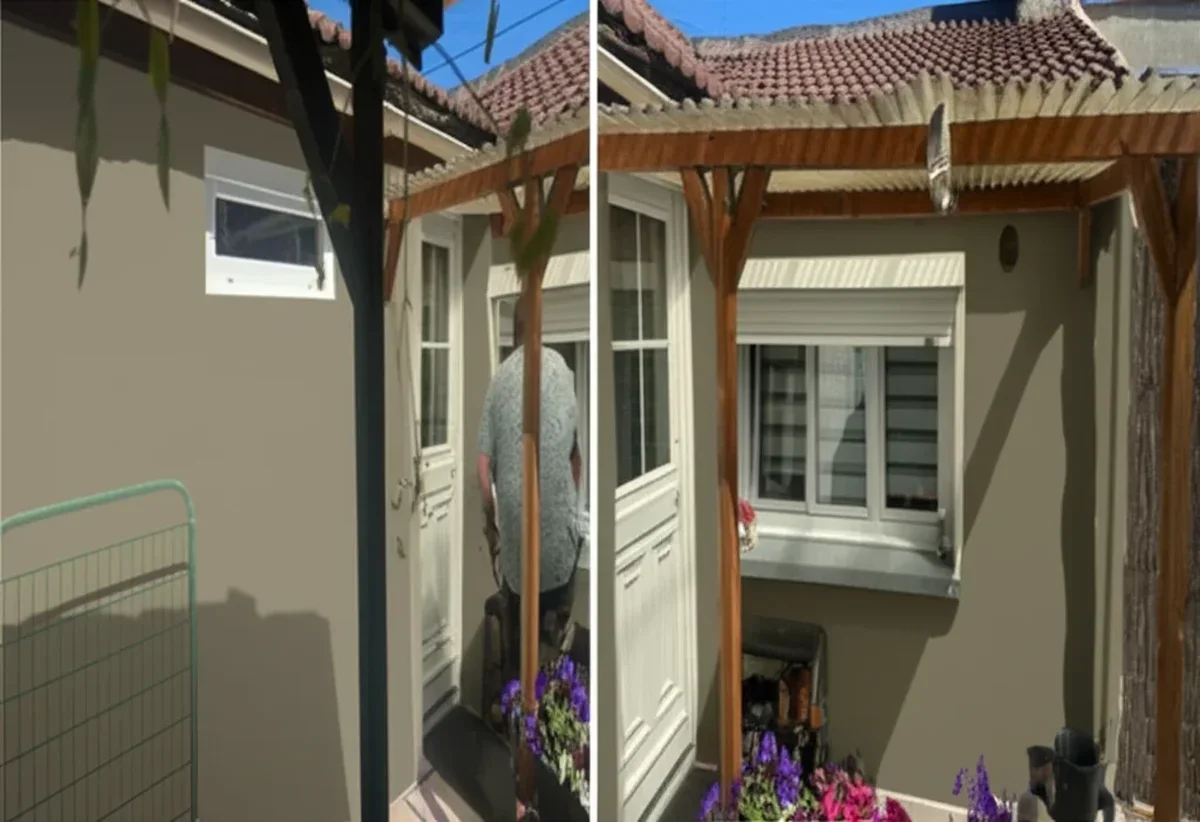
Try it on your house

An uninsulated loft allows up to 25% of your home’s heat to escape straight through the roof, and with UK energy prices remaining high in 2026, that translates into hundreds of pounds wasted every year. Loft insulation is one of the most cost-effective energy efficiency upgrades available, yet many homeowners are unsure about which material to choose, what it should cost, or whether they qualify for a free installation under the ECO scheme or GBIS. This guide covers mineral wool, spray foam, and rigid board prices per m², current building regulations under Part L, EPC energy rating improvements, and the grants that could make the whole project free. If your home also needs external wall insulation (EWI) or a new breathable render, try FacadeColorizer to preview how a finished silicone render or lime render will look, free and instant.
How Much Does Loft Insulation Cost in 2026?
The total cost per m² depends primarily on the material and whether you are laying insulation from scratch or topping up an existing layer. Labour averages around £200–£300 per day, but most standard mineral wool loft jobs are completed within a single day. Below is a detailed breakdown of 2026 UK loft insulation prices including materials and installation.
| Insulation Type | Cost per m² (installed) | Typical 3-Bed Semi (∼50 m²) | Lifespan |
|---|---|---|---|
| Mineral wool (glass/rock wool rolls) | £5–£25 | £250–£600 | 40+ years |
| Loose-fill (cellulose or mineral fibre) | £8–£15 | £400–£750 | 20–30 years |
| Rigid board (PIR / phenolic) | £30–£45 | £1,500–£2,250 | 50+ years |
| Spray foam (open-cell / closed-cell) | £30–£50 | £1,500–£2,500 | 25+ years |
Try it on your house
No photo? Try a sample
Mineral wool rolls remain the go-to choice for a standard cold loft with accessible joists. The material is cheap, non-combustible, and straightforward enough for confident DIYers to install themselves, saving on labour entirely. Rigid board insulation (PIR panels such as Kingspan or Celotex) offers superior thermal performance per millimetre, making it ideal where headroom is limited. Spray foam is fast to apply but carries caveats, many mortgage lenders remain cautious about properties with spray foam in the roof space, and it can conceal roof-timber defects that a damp survey might otherwise catch.
Building Regulations and Part L Requirements
Building regulations in England and Wales require loft insulation work to meet the standards set out in Part L (Conservation of Fuel and Power). For existing homes, the target U-value is 0.16 W/m²K, which equates to approximately 270 mm of mineral wool laid between and across the ceiling joists. New-build lofts must achieve a tighter U-value of 0.11 W/m²K, demanding thicker coverage or a higher-performance material.
If you are simply topping up existing insulation to the 270 mm standard, building regulations approval is usually not required. However, if you are converting the loft into a habitable room, you will need Building Control sign-off covering insulation between rafters, fire safety, structural loading, and ventilation. A 50 mm air gap between insulation and the underside of the roof covering must always be maintained to prevent condensation and mould. In Scotland, Scottish Building Standards set similar thermal targets, and in Wales the requirements mirror those of England under Part L. Regardless of nation, all insulation products should carry BBA certification or equivalent third-party approval.
ECO4 and GBIS: Free Loft Insulation Grants
Two government-backed schemes can cover the full cost of loft insulation for eligible households in 2026:
- ECO4 (Energy Company Obligation 4), runs until December 2026 and targets low-income and vulnerable households. To qualify, you typically need to receive qualifying benefits (such as Universal Credit, Pension Credit, or Child Tax Credit) and live in a property with an EPC energy rating of D to G.
- GBIS (Great British Insulation Scheme), open to a broader pool of households in council tax bands A–D, often without a benefits requirement. If your existing loft insulation is less than 100 mm thick, you are very likely eligible for a free top-up or full installation.
Under both schemes, you will not qualify if you already have more than 100 mm of loft insulation, if there is no loft hatch or the hatch is smaller than 400 mm, or if headroom is below 1.2 metres. Applications are made through approved installers, your energy supplier can direct you to one, or you can search via the ECO scheme supplier directory. For homes that also need cavity wall insulation or external wall insulation, grants often cover multiple measures in a single visit. Read our detailed guide on cavity wall insulation costs for more.
EPC Improvements and Annual Energy Savings
Upgrading from little or no insulation to the full 270 mm standard can boost your EPC energy rating by approximately 5–10 points, enough to push a property from band D into band C. Combined with cavity wall insulation, the improvement can be as much as 25–30 points. Since the UK government has signalled that all rental properties must reach EPC band C by 2030, landlords in particular should prioritise this upgrade.
| Scenario | Estimated Annual Saving | Typical EPC Uplift |
|---|---|---|
| No insulation → 270 mm mineral wool | £250–£355/year | +8–12 points |
| 100 mm top-up → 270 mm | £100–£200/year | +4–6 points |
| Loft + cavity wall combined | £400–£590/year | +20–30 points |
At current energy prices, mineral wool loft insulation for a typical 3-bed semi pays for itself within two to three years, or immediately if installed free via the ECO scheme or GBIS. Reducing roof heat loss by up to 90% also improves comfort: bedrooms stay warmer in winter and cooler in summer, and condensation on cold ceilings is dramatically reduced.
Choosing the Right Insulation Material
The best material for your loft depends on the type of loft space, your budget, and whether you plan to use the loft for storage or conversion:
- Mineral wool (glass wool or rock wool), the most popular and affordable option. It fits between and over ceiling joists, achieving 270 mm with two layers. Products from Knauf, Superglass, and Rockwool are widely available at builders’ merchants and DIY stores. Non-combustible and breathable, it allows moisture vapour to pass through, reducing condensation risk when paired with adequate ventilation via air bricks or soffit vents.
- Rigid PIR board, brands like Kingspan and Celotex deliver the same thermal performance in roughly 120 mm of thickness. Ideal for warm-loft or loft-conversion projects where you insulate between the rafters. More expensive per m² but essential where headroom is limited.
- Loose-fill, blown cellulose or mineral fibre, machine-applied to fill awkward spaces. Useful for lofts with irregular joist spacing or many obstructions such as pipes and wiring. Must be topped up periodically as it settles over time.
- Spray foam, expands to fill gaps and bonds to surfaces. Open-cell foam is breathable; closed-cell acts as a vapour barrier. Beware that many mortgage lenders will not lend on properties with spray foam applied directly to roof tiles or timbers. Always use a BBA-certified installer if you choose this route.
Whichever material you choose, never block ventilation at the eaves. Maintain the 50 mm gap to the roof underlay and ensure air bricks or soffit vents remain clear. Poor airflow leads to condensation, black mould, and in severe cases, timber rot, the very problems insulation is meant to help prevent. If your home suffers from penetrating damp or a failed damp proof course (DPC), those issues must be resolved first; adding insulation on top of existing damp simply traps moisture and accelerates decay. Consider adding mechanical extractor fans in kitchens and bathrooms to reduce moisture levels further. If you suspect existing damp or rising damp, arrange a professional damp survey with a moisture meter and salt analysis before laying any insulation, damp specialist firms such as Permagard and Sovereign offer nationwide assessments. Our guide on rising damp treatment costs explains what to look for and how much remedial work costs.
DIY vs Professional Installation
Laying mineral wool rolls in a cold loft is one of the few insulation jobs that a confident homeowner can tackle as a DIY project. Materials for a 50 m² loft cost roughly £150–£300 from builders’ merchants. You will need a dust mask (FFP3), gloves, a sharp knife, and a board to kneel on across the joists. The key steps are:
- Clear the loft and check for any damp, leaks, or damaged timbers.
- Lay the first layer of mineral wool (100 mm) between the joists, cutting snugly around pipes and cables.
- Lay the second layer (170 mm) perpendicular across the top of the joists to eliminate thermal bridging.
- Ensure ventilation gaps at the eaves are kept clear, fit eaves ventilators if necessary.
- Insulate and lag any water tanks and pipes in the loft, as the space will now be colder.
For spray foam, rigid board between rafters, or loose-fill blown insulation, professional installation is strongly recommended. A qualified installer will carry out a damp survey, confirm ventilation is adequate, and issue a guarantee, typically 25 years for spray foam and lifetime for mineral wool. Scaffolding is not required for standard loft insulation (unlike external wall insulation), so access costs are minimal. Check that any installer you engage is BBA-certified or a member of a recognised competent-person scheme approved by TrustMark.
Visualise Your Exterior Upgrade: Free
If your energy-efficiency upgrade extends beyond the loft, perhaps adding EWI finished in K Rend, Weber silicone render, or a traditional lime render, you will want to see how the new finish looks before committing. FacadeColorizer lets you upload a photo of your property and preview render colours from Dulux, Sandtex, Farrow & Ball, and more in seconds. It is 100% free, requires no signup, and works on phone or desktop. For homeowners combining a loft top-up with a full retrofit, previewing exterior finishes alongside insulation decisions ensures a cohesive, cost-effective renovation. For a wider view of wall insulation options, see our solid wall insulation cost guide. Preview render colours on YOUR home, free.
See breathable masonry paint on your wall. 30 seconds, no signup.
Try it free on my photoFrequently asked questions
How much does loft insulation cost in the UK in 2026?
Can I get free loft insulation in the UK?
What thickness of loft insulation do I need to meet building regulations?
How much can loft insulation save on energy bills?
Is spray foam loft insulation a good idea?
Trademarks mentioned (Sherwin-Williams, Benjamin Moore, Behr, Caparol, Brillux, Sto, Alpina, Valspar, PPG, Glidden, Dulux, Crown Trade, Sandtex, Farrow & Ball, Johnstone's, Leyland) are property of their respective owners. FacadeColorizer is independent and not affiliated with any of them. Nominative fair use under Lanham Act §1125.