Try it on your house

Penetrating damp is the most common form of lateral moisture ingress in UK properties. Unlike rising damp, which travels upward through masonry by capillary action, penetrating damp moves horizontally through solid wall and cavity wall construction when water is driven in by rain, wind pressure or defective external details. Left untreated, it causes mould and black mould growth, plaster deterioration, timber decay and structural damage, and can reduce your property's market value by 5–15%. The good news is that most penetrating damp problems are entirely fixable once you identify and address the root cause on the outside of the building.
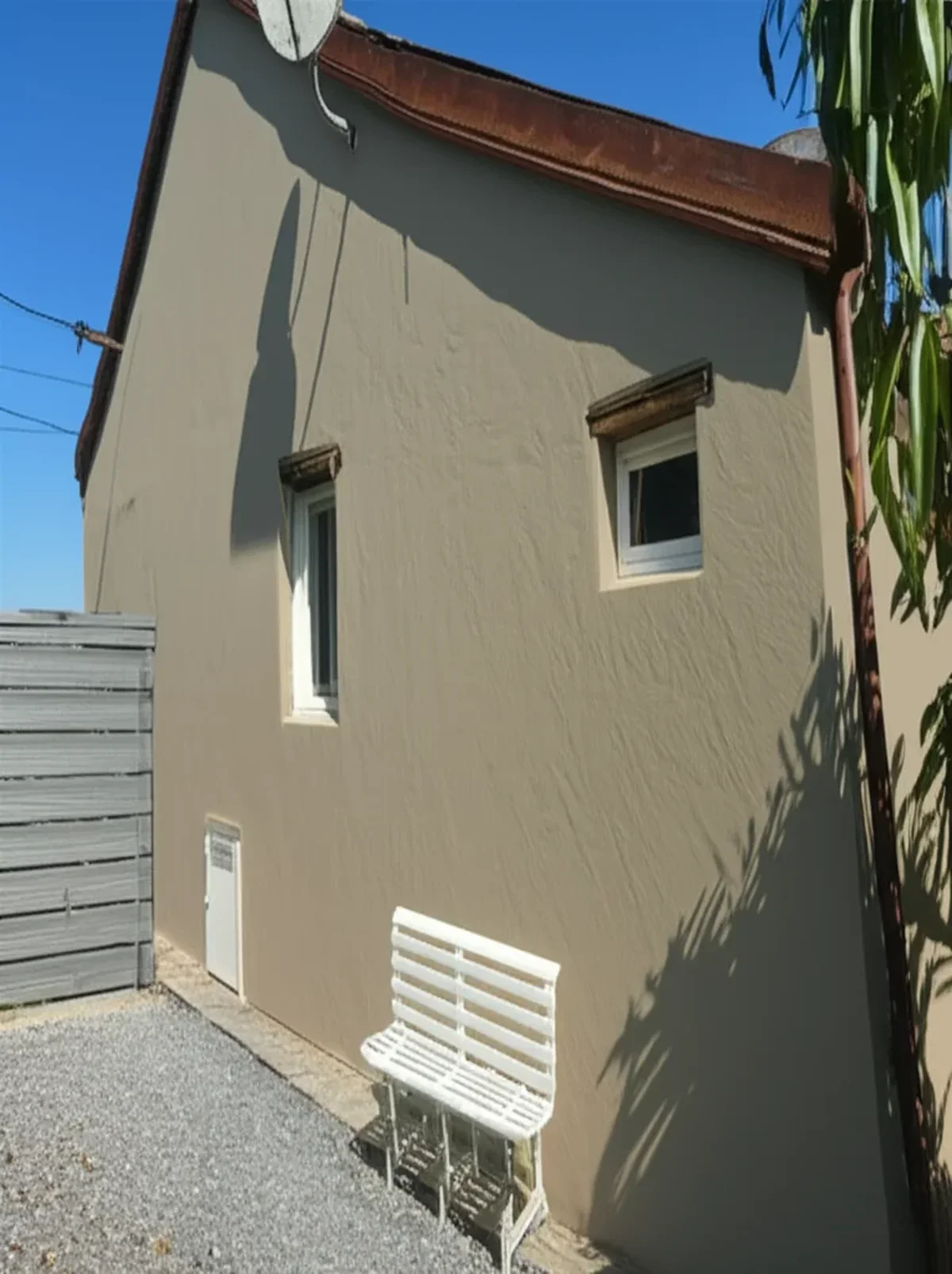
Before you commission a damp survey, try our free AI facade visualiser, upload a photo of your property and preview how repointing, fresh render or external wall insulation (EWI) will look before you spend a penny on repairs.
What Causes Penetrating Damp?
Penetrating damp always starts with a defect on the building envelope that lets rainwater reach the inner leaf or plaster line. A damp specialist will typically check the following causes during a damp survey using a moisture meter and, in more complex cases, salt analysis or thermal imaging:
- Failed pointing, crumbling mortar joints in brickwork or stonework allow rain to soak through the bed joints. Older lime render and lime mortar properties are particularly vulnerable after decades of weathering.
- Cracked or defective render, hairline cracks in cement render, silicone render or breathable render open a direct path for water. Even small render cracks on an exposed elevation can saturate the wall behind.
- Damaged gutters and downpipes, blocked, misaligned or cracked drainage is the single most common cause. Overflowing gutters pour water down the facade, soaking the masonry below.
- Defective window and door seals, failed caulking, rotten timber frames or missing drip mouldings direct water into the wall around openings.
- Bridged cavity, mortar droppings or debris inside a cavity wall can create a bridge that carries water from the outer leaf to the inner leaf.
- Missing or damaged flashing, lead, zinc or felt flashings at roof junctions, chimney stacks and parapet walls deteriorate over time, allowing rainwater in behind the masonry.
Identifying the precise cause is critical, because the treatment, and cost, varies enormously. A blocked gutter might cost under £100 to clear, while full repointing of a three-bed semi could run to several thousand pounds. For a broader overview of all damp types, including condensation and rising damp, see our complete guide to damp proofing exterior walls in the UK.
Penetrating Damp Treatment Costs: Full 2026 Breakdown
The table below summarises typical 2026 prices quoted by BBA-accredited contractors across England, Scotland and Wales. All figures include labour and materials but exclude scaffolding unless stated. Costs in London and the South East are typically 20–35% higher than the national average.
| Treatment | Typical Cost | Notes |
|---|---|---|
| Damp survey | £150–£500 | Moisture meter + visual; thermal imaging adds £50–£100 |
| Repointing (cement mortar) | £40–£75 per m² | Raking out old mortar included; lime mortar adds 30–50% |
| Re-rendering (sand & cement) | £40–£60 per m² | Hack off existing, apply scratch coat + top coat |
| Silicone render (K Rend / Weber) | £70–£120 per m² | Self-coloured, low maintenance; breathable render |
| Silicone injection DPC | £70–£100 per linear metre | Drill, inject cream, re-plaster; Permagard / Sovereign |
| External waterproofing coating | £15–£35 per m² | Silicone-based cream; apply to clean, sound masonry |
| Tanking (internal basement) | £80–£150 per m² | Slurry or membrane system; guarantee 10–20 years |
| Gutter repair / replacement | £100–£450 | Per elevation; uPVC standard |
| Scaffolding (average semi) | £1,200–£2,800 | Erect + dismantle + 2–4 week hire |
| Full penetrating damp repair (typical semi) | £1,500–£5,000+ | Source repair + internal replastering + redecoration |
Try it on your house
No photo? Try a sample
The single biggest variable is the root cause. Clearing a blocked downpipe and applying an external waterproofing cream to a small area might cost under £300, while stripping and re-rendering an entire gable end with premium silicone render plus scaffolding could exceed £6,000. Always obtain at least three written quotes that itemise the cost per m² for each element.
Damp Survey: What to Expect and How Much It Costs
A professional damp survey is the essential first step. A damp specialist will visit your property, take moisture meter readings across all affected walls, and may carry out salt analysis to distinguish penetrating damp from rising damp or condensation. A basic survey for a two- or three-bed house typically costs £150–£350, while a comprehensive inspection with thermal imaging and a detailed written report runs to £250–£500. In London and the South East, expect to pay towards the upper end. Some contractors, including Permagard and Sovereign, offer free surveys if you proceed with their recommended treatment, though independent surveys from BBA-registered specialists tend to be more impartial.
The survey report should clearly identify whether the issue is penetrating damp, rising damp (which requires a damp proof course or DPC, see our rising damp treatment cost guide), or condensation caused by poor ventilation. Misdiagnosis is common and can lead to expensive, unnecessary work such as injecting a chemical DPC when the real problem is a leaking gutter.
DIY vs Professional Treatment: When to Call a Specialist
Some penetrating damp repairs are well within reach of a competent DIYer and can save up to 50% on labour costs. Clearing gutters and downpipes, replacing a cracked section of uPVC guttering, re-sealing around windows with exterior-grade silicone, and applying a silicone-based waterproofing cream to porous brickwork are all jobs most homeowners can tackle over a weekend for under £200 in materials.
Professional help is strongly recommended when the affected area covers more than a few square metres, when repointing or re-rendering is required at height (needing scaffolding), when internal plaster needs stripping and replacing with a salt-retardant specification, or when you suspect a bridged cavity wall or defective damp proof membrane. A BBA-accredited damp specialist will provide a written guarantee, typically 10–20 years, which is essential for mortgage valuations, property survey reports and resale.
If you are considering external wall insulation (EWI) or cavity wall insulation as part of a wider energy-efficiency upgrade under the ECO scheme or Green Homes Grant, always resolve any penetrating damp issues first. Insulating over a damp wall traps moisture, accelerates mould growth and can void the insulation guarantee.
How Penetrating Damp Affects Property Value
Untreated damp is one of the biggest red flags for mortgage surveyors and buyers. A property survey that notes moisture ingress typically knocks 7–12% off the agreed sale price, and up to 75% of buyers will withdraw their offer entirely when significant damp is reported. In more severe cases, structural timber decay, widespread black mould or compromised insulation, the reduction can exceed 20%.
The flip side is that professionally treated penetrating damp, backed by a transferable insurance-backed guarantee, before-and-after moisture meter readings and clear documentation, recovers almost all lost value. The EPC energy rating may also improve if the treatment includes upgraded breathable render, better ventilation (such as replacing blocked air brick vents or adding an extractor fan) or an EWI system that reduces the U-value and eliminates thermal bridging. Under current building regulations (Part L), any major external wall work must meet minimum thermal-performance standards, giving you an opportunity to combine damp repair with a retrofit energy efficiency upgrade.
Choosing the Right Treatment Method
The correct treatment depends on the diagnosed cause and the type of wall construction:
- Repointing, best for solid wall brick or stone properties with degraded mortar joints. Use lime mortar on pre-1919 buildings to maintain breathability. Budget £40–£75 per m² (cement) or £60–£100 per m² (lime).
- Re-rendering, required when the existing render has widespread cracking or delamination. Modern silicone render from K Rend, Weber or Dulux Trade systems provides a self-coloured, breathable render finish that resists water penetration while allowing ventilation of moisture vapour from inside.
- External waterproofing cream, a cost-effective option (£15–£35 per m²) for porous but otherwise sound masonry. Silicone-based creams penetrate 5–10 mm into the brick face, creating a hydrophobic barrier while remaining breathable.
- Internal wall insulation and tanking, a last resort for basements or walls where external access is impossible. Costs are higher (£80–£150 per m²) and the system must incorporate a damp proof membrane and adequate drainage.
Once the cause is fixed and the wall is dry, the finish matters as much as the repair. A breathable damp proof exterior paint sheds driving rain without trapping vapour, and if the render is being replaced you can compare systems and rates in our exterior rendering cost guide.
Frequently Asked Questions
How much does it cost to treat penetrating damp in the UK?
The total cost depends on the root cause. Minor repairs such as gutter clearance and localised waterproofing cost £150–£500. More extensive work, full repointing, re-rendering or scaffolded external repairs, typically ranges from £1,500 to £5,000 or more for an average semi-detached house.
What is the difference between penetrating damp and rising damp?
Penetrating damp enters walls horizontally through defects such as cracked render, failed pointing or damaged gutters. Rising damp travels vertically from the ground up through masonry that lacks an effective damp proof course (DPC). A professional damp survey with moisture meter readings and salt analysis can distinguish between the two.
Can I treat penetrating damp myself?
Simple fixes such as clearing gutters, resealing windows and applying an external waterproofing cream are suitable DIY tasks. However, repointing at height, re-rendering, cavity wall repairs and internal replastering should be carried out by a qualified damp specialist with a written guarantee.
How long does penetrating damp treatment take?
Most penetrating damp repairs take one to five days depending on the scope of work. A simple gutter repair and waterproofing coat can be completed in a day, while full repointing or re-rendering of an entire elevation, including scaffold erection, may take three to five working days.
Does penetrating damp reduce property value?
Yes. Untreated damp typically reduces the sale price by 7–12 per cent. Severe cases with structural damage can result in reductions exceeding 20 per cent. However, professionally treated damp with an insurance-backed guarantee and documented moisture readings recovers almost all lost value.
Ready to visualise how your property will look after exterior repairs? Upload a photo to our free AI facade visualiser and preview new render colours, repointing finishes and insulation cladding in seconds, no signup required.
Trademarks mentioned (Sherwin-Williams, Benjamin Moore, Behr, Caparol, Brillux, Sto, Alpina, Valspar, PPG, Glidden, Dulux, Crown Trade, Sandtex, Farrow & Ball, Johnstone's, Leyland) are property of their respective owners. FacadeColorizer is independent and not affiliated with any of them. Nominative fair use under Lanham Act §1125.