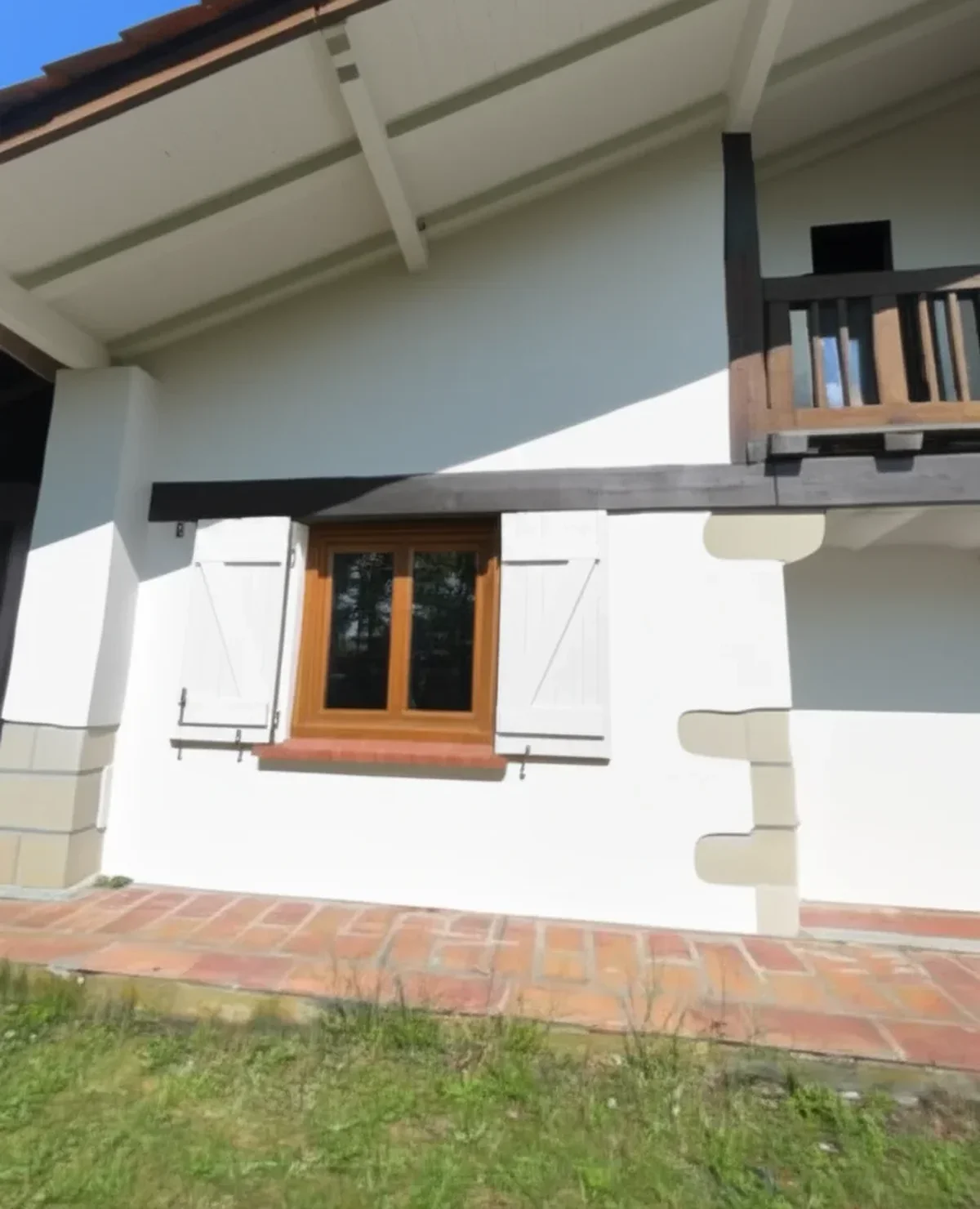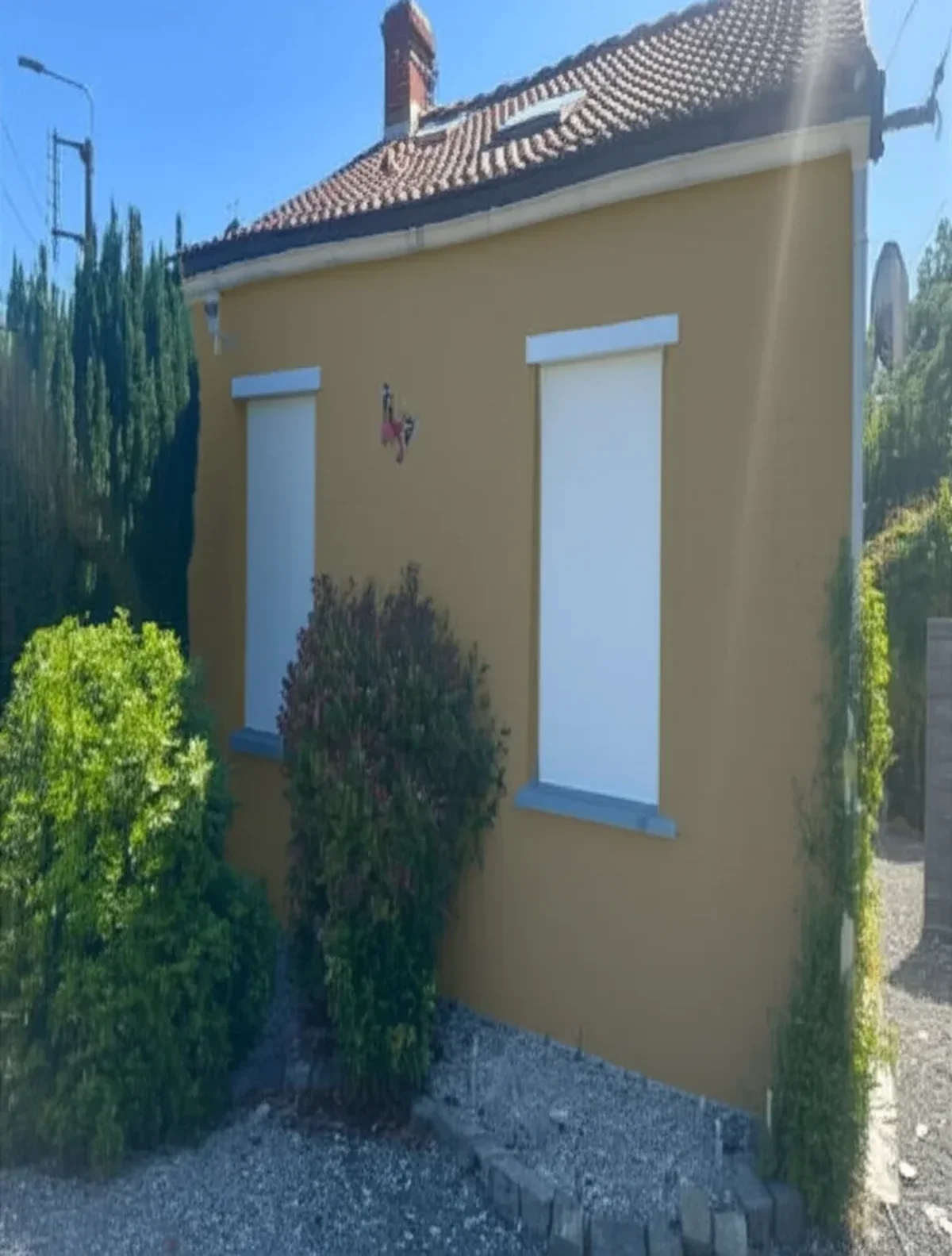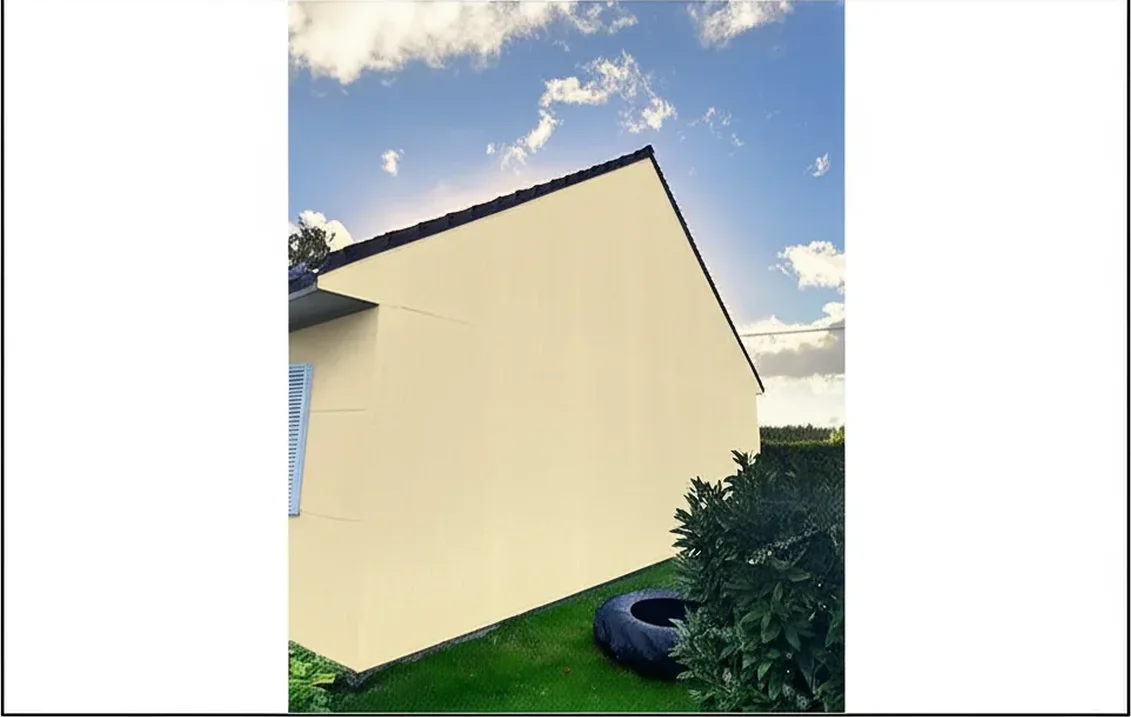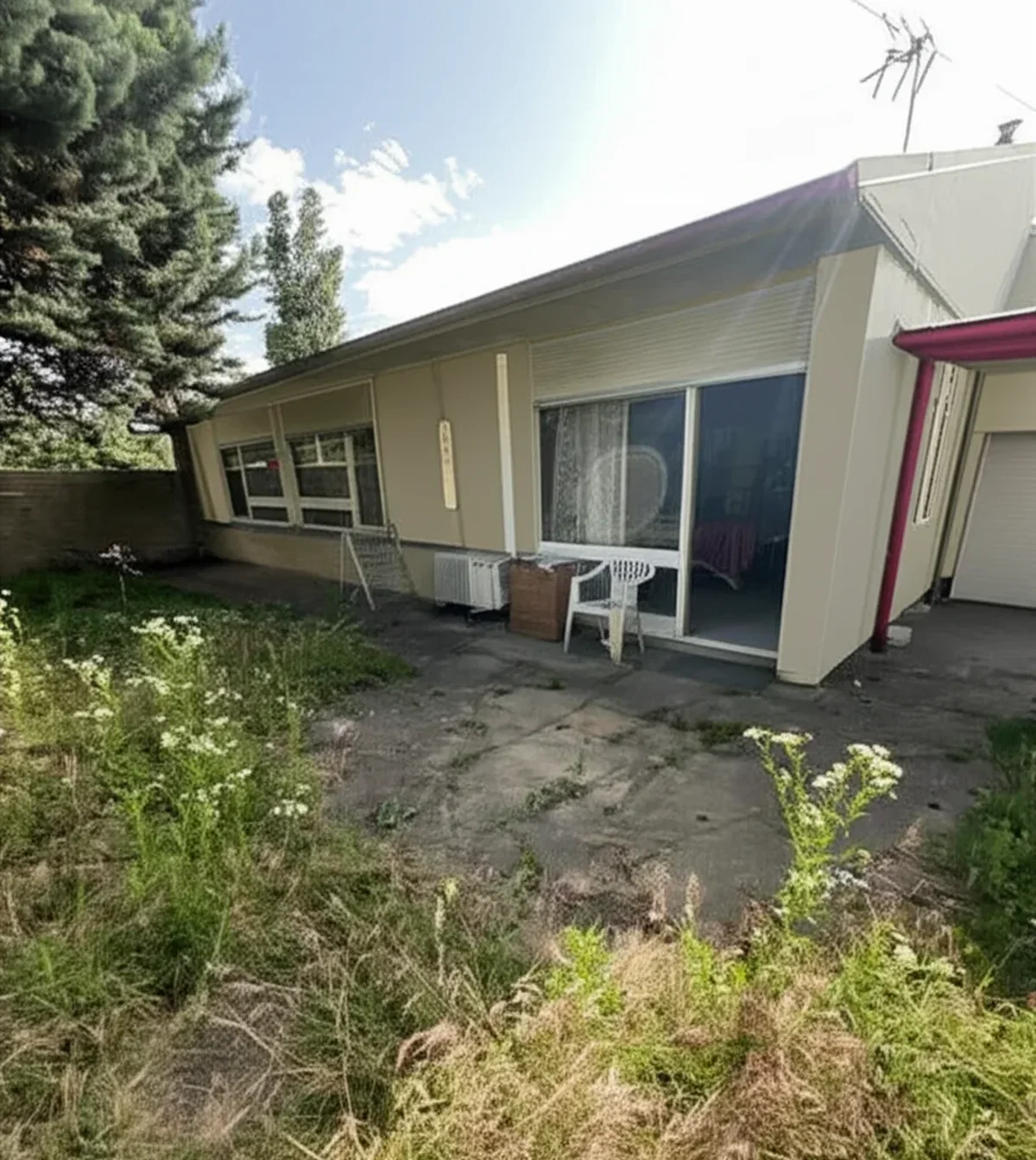
Try it on your house

Looking for a reliable window condensation fix? Condensation on windows is the most common damp problem in UK homes, affecting an estimated 1 in 3 properties. Left untreated, it leads to black mould, peeling paint, rotting window frames, and health issues. The good news: most condensation problems can be solved with straightforward improvements to ventilation, heating, and insulation. This guide explains the causes, compares solutions (from extractor fans to double glazing and dehumidifiers), and provides costs for each approach. Visualise exterior improvements on your home with our free AI colour visualiser.
Why condensation forms on UK windows
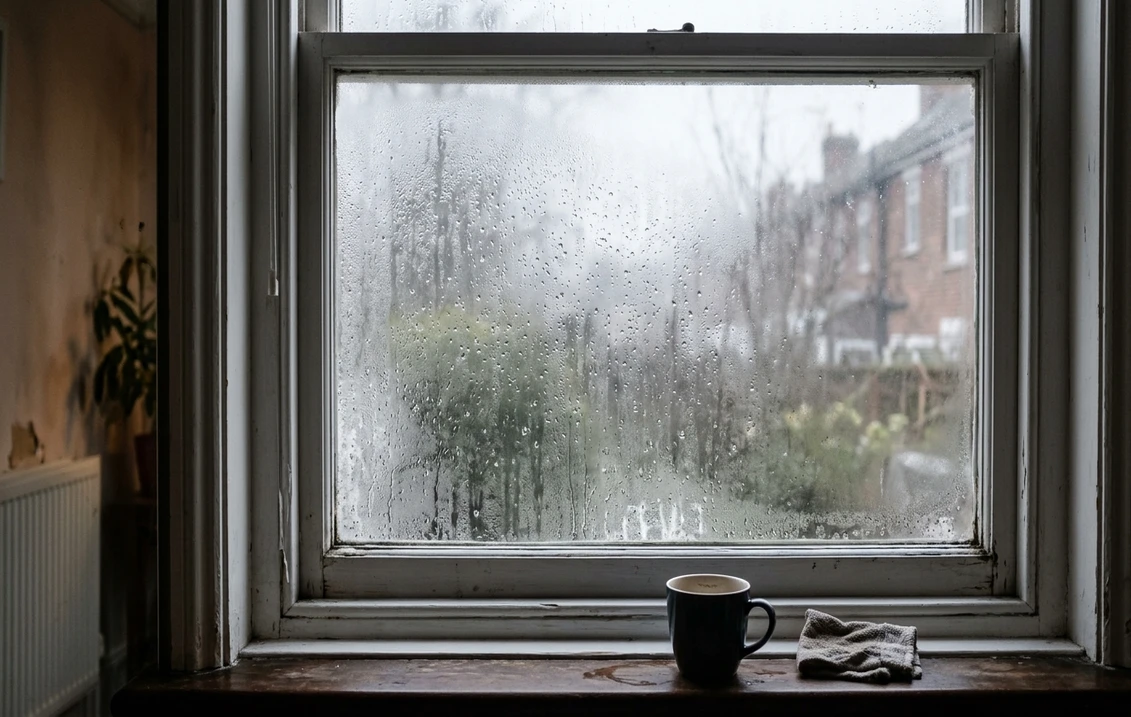
Condensation occurs when warm, moisture-laden air contacts a cold surface. In UK homes, single-glazed windows and poorly insulated solid walls create cold spots where warm indoor air dumps its moisture. Cooking, showering, drying clothes indoors, and even breathing produce 10-15 litres of moisture per day in a typical household. When ventilation is inadequate, common in draught-proofed or sealed homes, this moisture has nowhere to go except onto the coldest surface: your windows.
The problem is worse in cavity wall homes with failed cavity wall insulation (which traps moisture instead of preventing it) and in older properties with solid walls that lack any insulation. Penetrating damp and rising damp compound the issue by adding moisture from outside. A damp survey with a moisture meter and salt analysis can distinguish between condensation, penetrating damp, and rising damp, each requiring a different fix.
Window condensation fix: solutions compared
| Solution | Cost | Effectiveness | Best For |
|---|---|---|---|
| Extractor fans (kitchen/bathroom) | £150 – £400 | High | Wet rooms, targeted ventilation |
| Trickle vents / air bricks | £50 – £150 per unit | Moderate | Background ventilation |
| PIV system (Positive Input Ventilation) | £500 – £1,200 | Very high | Whole-house condensation |
| Double glazing upgrade | £350 – £700 per window | Very high | Single-glazed homes |
| Secondary glazing | £100 – £350 per window | High | Listed buildings, sash windows |
| Dehumidifier | £150 – £400 | Moderate | Quick fix, rented properties |
| External wall insulation (EWI) | £80 – £150 per m² | Very high | Solid wall homes, long-term fix |
Try it on your house
No photo? Try a sample
Ventilation: the first line of defence
Improving ventilation is the most cost-effective window condensation fix. Humidistat-controlled extractor fans in kitchens and bathrooms activate automatically when moisture levels rise. Trickle vents fitted to window frames provide continuous background ventilation without significant heat loss. Air bricks in external walls ventilate suspended timber floors and prevent moisture build-up beneath the DPC (damp proof course). For severe whole-house condensation, a Positive Input Ventilation (PIV) system gently pressurises the home with filtered air, pushing stale, moist air out through natural leakage points.
Double glazing and secondary glazing
Replacing single glazing with double glazing raises the inner glass temperature, dramatically reducing condensation. Modern double glazing achieves U-values of 1.2–1.4 W/m²K compared to 5.8 for single glazing. This eliminates the cold surface problem. For listed buildings and conservation areas where external alterations need planning permission, secondary glazing offers a similar benefit without changing the building's appearance. Both options improve energy efficiency and reduce heating bills, positively impacting your EPC rating.
External wall insulation to prevent condensation
For solid wall properties (common in pre-1930 UK homes), EWI (external wall insulation) is the most comprehensive long-term window condensation fix. By wrapping the building in insulation, wall temperatures rise above the dew point, eliminating condensation on both walls and windows. Breathable render systems like K Rend silicone render or Weber lime render allow moisture vapour to escape while keeping rain out. EWI also addresses thermal bridging, improving your EPC energy rating by 1-2 bands.
Funding is available through the ECO scheme and Green Homes Grant successors. A damp specialist should inspect for rising damp or penetrating damp before installing EWI, as trapped moisture behind insulation causes worse problems. Building regulations (Part L) require minimum thermal performance standards for any retrofit work. Costs range from £80 to £150 per m² including scaffolding, with a typical semi-detached house costing £8,000–£15,000. The guarantee should cover at least 25 years.
Preventing mould from condensation
Black mould thrives in damp, poorly ventilated areas. Once condensation is addressed, treat existing mould with a fungicidal wash, allow surfaces to dry completely, then apply a mould-resistant primer before repainting. Dulux Trade and Permagard produce specialist anti-mould paints. Sovereign damp-proofing products are widely available through builders' merchants. For persistent problems, commission a full damp survey from a BBA-certified damp specialist.
For related guides, see damp proofing exterior walls UK guide, interior decorator cost UK, and painter decorator costs.
BS EN 1062 Compliance for Render Repairs Around Windows
Window condensation is rarely just a glazing problem. Cold bridges around reveals, sills and lintels often play a bigger role, and any render repair work in these locations must specify a coating compliant with BS EN 1062. The European standard classifies water vapour transmission (V1 high, V2 medium, V3 low), liquid water permeability (W1 to W3) and crack-bridging (A0 to A5). For window reveals on a UK solid-wall property, the right specification is V2 W3 A2: vapour permeable enough to release internal moisture without trapping it, yet hydrophobic enough to shed driving rain. Specifying V3 (low permeability) acrylic paint around a window reveal traps condensation behind the coating and accelerates the very problem you're trying to solve. The BBA certificate for each product names the BS EN 1062 class, never assume from marketing copy alone. Cross-reference with BS 6262 (glazing standards) for the window frame interface and BS 5250 for condensation risk analysis on the assembled detail.
The Planning Portal publishes guidance notes for Part L and Part F (ventilation) which must be read together when assessing window condensation. The BBA assessment database is the independent source of truth on coating performance, far more reliable than manufacturer brochures.
Monocouche vs Scratch Coat: When Window Detailing Matters
If your condensation strategy includes EWI or a render refresh, the choice between monocouche (single-coat self-coloured render) and a traditional scratch coat plus top coat system affects how well the finish handles thermal movement around windows. Monocouche renders such as K Rend Monocouche, Weber pral M and Parex Maite are applied as a single 15 to 20 mm coat with through-colour, eliminating the maintenance burden of masonry paint. They achieve BS EN 1062 V2 W3 A2 ratings and accommodate minor thermal movement around window openings via embedded fibreglass mesh. However, monocouche is unforgiving on poorly prepared substrates: any movement crack telegraphs through the finish coat within 18 months. Pricing across the UK runs 52 to 78 GBP per m squared installed.
A traditional scratch coat plus top coat system (sand-cement undercoat at 8 to 12 mm, rendering top coat at 6 to 10 mm) gives the installer more control over thermal expansion joints and bell-cast detailing at sills. It is the right choice when window apertures need significant make-good, or when the substrate is mixed (brick plus concrete lintel plus stone reveal). Expect 38 to 60 GBP per m squared for the render alone, plus 18 to 30 GBP per m squared for a quality masonry paint top coat (Sandtex Ultra Smooth, Dulux Weathershield, Crown Weatherproof Smooth, Johnstone's Stormshield). The trade-off: total system thickness reaches 14 to 22 mm and the painted finish needs refreshing at year 8 to 12 versus year 25 to 35 for monocouche.
Breathable Render Systems for Older UK Buildings
On pre-1919 solid-wall homes, particularly listed terraces and properties in conservation areas, modern impermeable renders around windows actively cause the condensation problem. The wall cannot dry inward through a sealed coating, so moisture accumulates at the cold reveals and condenses on glass. The fix is a lime render repair using natural hydraulic lime (NHL 3.5) from Cornish Lime, Anglia Lime or Lime Green, at 75 to 110 GBP per m squared. Lime render achieves vapour transmission rates of 0.4 to 0.6 g per m squared per day, roughly 10 times the figure for sand-cement, and seasonal drying eliminates the cold spot that drives window condensation.
For listed buildings, Listed Building Consent is mandatory before any window or reveal work. Conservation officers consistently approve lime render and silicate or limewash finishes, but reject acrylic and plastic-bound systems. The Society for the Protection of Ancient Buildings publishes free technical pamphlets on breathable retrofits. For details on compatible silicone or silicate finish coats, consult the manufacturer pages at k-rend.co.uk which now list a heritage-friendly silicone silicate range.
How to test it on your own home before you buy
No third-party report replaces your own walls: the same colour reads differently on a north elevation and a south one, next to red brick or a grey roof, under morning and evening light. Take a daylight photo, upload it to the free AI paint visualiser, and run two or three candidates on the same image so the comparison is fair. Keep the one or two that survive the side-by-side, buy a tester pot of each, and brush them out on the actual surface in the actual light before you order the full quantity.
GBP Render Cost Comparison: 2026 Installed Prices
If your condensation strategy includes a render upgrade alongside ventilation and glazing work, here are 2026 installed costs for the five most common UK render systems:
| Render System | Cost per m squared (GBP) | Lifespan | Condensation Performance |
|---|---|---|---|
| Monocouche (K Rend, Weber) | 52 to 78 | 25 to 35 yrs | Good, V2 vapour open |
| Silicone (K Rend HPX, Weber) | 65 to 95 | 30 to 40 yrs | Excellent, hydrophobic + V2 |
| Lime (Cornish, Anglia, Lime Green) | 75 to 110 | 50 plus yrs | Best for solid wall, V1 |
| Acrylic (Sto, Wetherby, Webertherm) | 55 to 80 | 20 to 30 yrs | Average, V2 with care |
| Scratch coat plus top coat | 38 to 60 | 15 to 25 yrs | Variable, depends on top coat |
Sources: Checkatrade Cost Guide 2026, NHBC published rate books, Federation of Master Builders regional data. Scaffolding adds 8 to 18 GBP per m squared on two-storey UK homes.
UK Retailers and Trade Suppliers for Window and Render Finishes
Masonry paint and breathable wall finishes for window-area condensation strategies are widely stocked across UK retail. Dulux Weathershield, Sandtex Ultra Smooth, Crown Weatherproof Smooth and Johnstone's Stormshield are all stocked by B and Q, Wickes, Homebase and Screwfix at 32 to 48 GBP for 5 litre tins. Farrow & Ball Exterior Masonry and Dulux Heritage are available at Brewers Decorator Centres and selected B and Q stores at 75 to 110 GBP per 5 litre tin. Leyland Trade is supplied through Trade Decorators, Brewers and selected Wickes branches at 28 to 38 GBP for 5 litre tins. Trickle vents and air bricks are available at Toolstation, Screwfix and Selco at 12 to 35 GBP per unit. PIV systems (Nuaire Drimaster Eco, EnviroVent Filterex) are sold through plumbers' and electricians' merchants at 450 to 850 GBP installed, with optional humidistat upgrades.
Listed Building and Conservation Area Implications
For listed buildings, Listed Building Consent is mandatory before replacing windows or changing any exterior finish, even if the changes appear technically minor. Conservation officers consistently approve secondary glazing (Storm Windows, Selectaglaze, Granada) at 100 to 350 GBP per window for sash and casement retrofits, but reject most full uPVC replacement. Within a Conservation Area, replacement double glazing in original opening sizes is usually permitted development, but Article 4 directions can withdraw these rights. The Planning Portal publishes free guidance notes on conservation area consent and listed building approval pathways. Always check with the local planning authority before signing a contract: enforcement notices on unauthorised window changes in listed buildings can attract fines of up to 20,000 GBP plus reinstatement costs.
Visualise exterior improvements
Planning EWI or a render upgrade to fix condensation? Upload a photo of your home and preview different render finishes and colours instantly. Our AI colour visualiser shows exactly how silicone render, lime render, or masonry paint will look on your property. Try it free at FacadeColorizer.com/en, the smart first step to a warmer, drier home.
See breathable masonry paint on your wall. 30 seconds, no signup.
Try it free on my photoFrequently asked questions
What is the best window condensation fix?
Why do my windows get condensation?
Does double glazing stop condensation?
How much does it cost to fix window condensation in the UK?
Will a dehumidifier fix window condensation?
Trademarks mentioned (Sherwin-Williams, Benjamin Moore, Behr, Caparol, Brillux, Sto, Alpina, Valspar, PPG, Glidden, Dulux, Crown Trade, Sandtex, Farrow & Ball, Johnstone's, Leyland) are property of their respective owners. FacadeColorizer is independent and not affiliated with any of them. Nominative fair use under Lanham Act §1125.