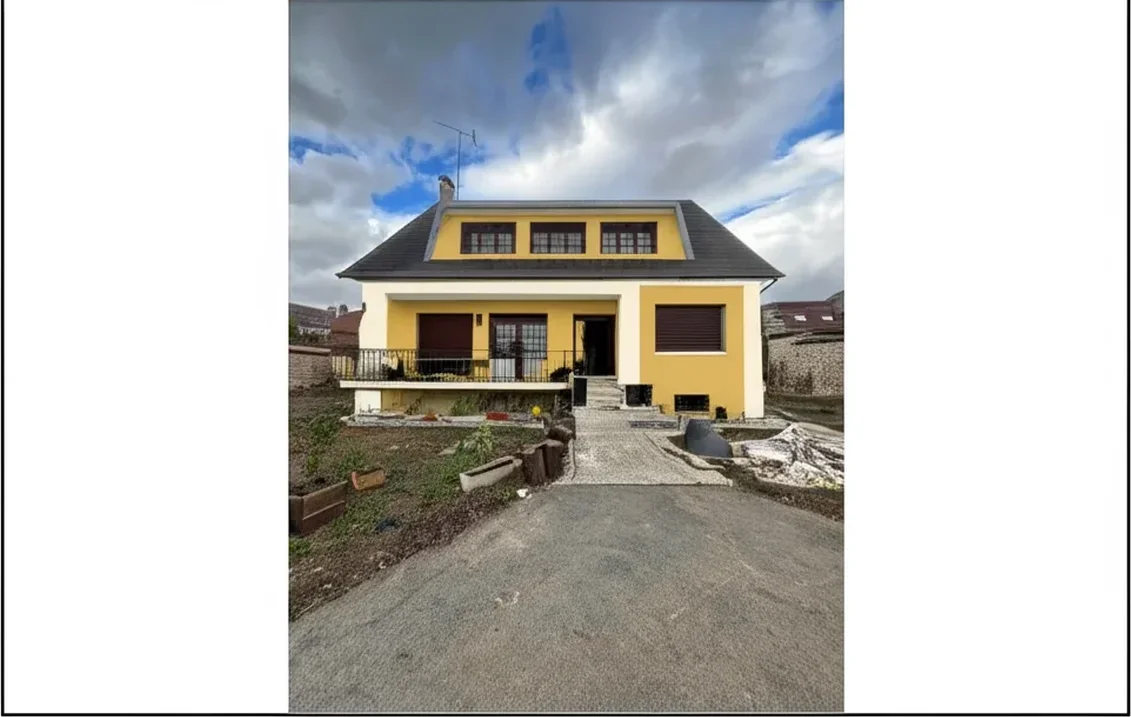
Try it on your house

Condensation is the most common cause of damp in UK homes, affecting an estimated 1 in 5 properties. Yet it is frequently misdiagnosed as rising damp or penetrating damp, leading to expensive and unnecessary treatments. Understanding which type of damp you have is the first step to solving the problem effectively and protecting your home from black mould and structural damage. This guide explains the differences, 2026 treatment costs, and proven solutions, from improved ventilation to external wall insulation (EWI). For exterior improvements, preview your options at FacadeColorizer.
Condensation vs Rising Damp vs Penetrating Damp
| Feature | Condensation | Rising Damp | Penetrating Damp |
|---|---|---|---|
| Location on wall | Anywhere, esp. cold surfaces | Bottom 1.2m of ground floor walls | Any height, often around openings |
| Tide mark | No | Yes, visible salt deposits | No |
| Seasonal pattern | Worst in winter | Year-round | Worse during heavy rain |
| Mould type | Black mould on surfaces | White salt crystals | Green/white mould patches |
| Moisture meter reading | Surface moisture only | Deep wall moisture | Localised deep moisture |
| Salt analysis | Negative | Positive (nitrates, chlorides) | Usually negative |
| Main cause | Poor ventilation, cold surfaces | Failed DPC/damp proof membrane | Cracked render, failed pointing, drainage |
Try it on your house
No photo? Try a sample
A professional damp survey using a calibrated moisture meter and salt analysis is the only reliable way to distinguish between the three types. Many damp specialists offer free initial assessments. Insist on a BBA-certified or Sovereign-accredited surveyor for an independent diagnosis. For further detail on each type, see our rising damp treatment guide and penetrating damp treatment guide.
What Causes Condensation in UK Homes?
Condensation forms when warm, moisture-laden air meets a cold surface, typically single-glazed windows, uninsulated external walls (solid wall or cavity wall without cavity wall insulation), and cold corners where thermal bridging occurs. A typical family of four generates 10–15 litres of moisture per day through breathing, cooking, bathing, and drying clothes. Without adequate ventilation via air bricks, trickle vents, and extractor fans, this moisture has nowhere to go. Modern airtight homes and blocked-up air bricks compound the problem. The UK’s housing stock, with millions of pre-1920 solid wall properties, is particularly vulnerable due to poor U-values and lack of energy efficiency measures.
Health Risks: Black Mould and Respiratory Problems
Persistent condensation leads to black mould (Stachybotrys chartarum and Aspergillus niger), which releases spores linked to respiratory infections, asthma attacks, allergic reactions, and immune suppression. The NHS estimates that living in a damp, mouldy home increases the risk of respiratory problems by 30–50%. Children, the elderly, and immunocompromised individuals are most at risk. Addressing condensation is not just a property issue, it is a health imperative.
Proven Solutions and 2026 Treatment Costs
The most effective condensation treatments target the root causes: improving ventilation, reducing moisture production, and insulating cold surfaces. Extractor fans in kitchens and bathrooms (£150–£400 installed) are the first line of defence. Positive Input Ventilation (PIV) units (£500–£1,200 installed) gently pressurise the home with filtered, tempered air, pushing stale moist air out. For solid wall properties, internal wall insulation (£40–£80/m²) or EWI (external wall insulation, £90–£170/m²) eliminates cold surfaces where condensation forms. Breathable render systems from K Rend or silicone render from Weber allow moisture vapour to escape while keeping rain out.
Cavity wall insulation (£500–£2,500 for a semi-detached) improves the U-value and reduces thermal bridging. Applying anti-condensation paint (Dulux Trade or Permagard ranges) on affected walls provides a temporary barrier but does not solve the underlying issue. For long-term results, combine ventilation improvements with insulation, this also boosts your EPC energy rating by 1–2 bands, improving energy efficiency and qualifying for ECO scheme grants (formerly Green Homes Grant). Building regulations Part L may require insulation upgrades when undertaking significant retrofit work. Ensure any damp proof course or damp proof membrane work is carried out by a BBA-certified installer with a written guarantee of at least 10 years.
When to Call a Damp Specialist
If improving ventilation and wiping down surfaces doesn’t solve the problem within 2–4 weeks, or if you notice persistent wet patches, mould returning after cleaning, or musty odours, book a professional damp survey. A qualified damp specialist will use a moisture meter, salt analysis, and thermal imaging to identify whether you have condensation, rising damp, or penetrating damp. Look for Sovereign-accredited or PCA (Property Care Association) members for independent diagnosis. Costs for a survey range from £150–£400 depending on property size, often deductible from treatment costs if you proceed. Tanking and waterproofing solutions may be needed for basements with persistent damp issues. For improving your property’s exterior protection, explore our damp proofing exterior walls guide and see our cavity wall insulation cost guide. Installing scaffolding may be required for EWI or lime render application on upper floors, adding £10–£20/m² to the project cost per m2.
BS EN 1062 Compliance for Wall Finishes That Manage Condensation
Render and masonry-paint specification has a direct effect on internal condensation. The European standard BS EN 1062 classifies exterior wall coatings across vapour transmission (V1 high, V2 medium, V3 low), liquid water permeability (W1 to W3) and crack-bridging (A0 to A5). For UK solid-wall homes, the right specification is V2 W3 A2: permeable enough to release internal moisture seasonally, hydrophobic enough to shed driving rain. Specifying a V3 (low permeability) acrylic coating on a Victorian or Edwardian solid wall traps moisture inside the wall fabric, where it migrates internally and increases relative humidity, which is the precursor to condensation on cold surfaces. The BBA certificate for each render product names the BS EN 1062 class, always check this before signing a contract. Cross-reference with BS 5250:2021 (condensation risk analysis) and BS 6262 (glazing standards) where the render details meet the window frame.
The Planning Portal publishes Part L (energy efficiency), Part C (moisture) and Part F (ventilation) guidance which must be read together for any retrofit insulation or render project. Independent verification of coating performance is available through the BBA assessment database, far more reliable than manufacturer marketing copy. For listed buildings, Listed Building Consent is mandatory before any change of exterior finish, and conservation officers will reject coatings that do not meet the V1 or V2 vapour permeability threshold required for heritage walls.
Monocouche vs Scratch Coat: Which Helps Condensation More?
If your damp survey points to wall coldness as a condensation driver, the choice of render system meaningfully changes the outcome. Monocouche renders (K Rend Monocouche, Weber pral M, Parex Maite) at 52 to 78 GBP per m squared are applied as a single 15 to 20 mm through-coloured coat with embedded fibreglass mesh. They achieve V2 W3 A2 BS EN 1062 ratings, eliminate masonry paint maintenance, and integrate naturally with EWI build-ups when the substrate is uniform. The thermal mass benefit is modest but the consistency of finish and the vapour-open class help to keep wall surfaces above the dew point in tempered UK homes.
A traditional scratch coat plus top coat system (sand-cement undercoat at 8 to 12 mm, render top coat at 6 to 10 mm) at 38 to 60 GBP per m squared plus 18 to 30 GBP per m squared for masonry paint, gives more thickness and slightly more thermal lag, but the long-term condensation outcome depends critically on the top-coat specification. Sandtex Ultra Smooth, Dulux Weathershield, Crown Weatherproof Smooth and Johnstone's Stormshield are the four most commonly specified UK paints; all carry V2 W3 BS EN 1062 ratings. The trade-off versus monocouche: total wall thickness reaches 14 to 22 mm and the painted finish needs refreshing every 8 to 12 years versus 25 to 35 for through-coloured monocouche.
Breathable Systems for Older UK Buildings
Pre-1919 solid-wall properties suffer disproportionately from condensation when modern impermeable coatings have been applied. The wall cannot dry inward, so seasonal moisture cycles accumulate internal humidity and saturate cold surfaces. The fix is to specify lime render using natural hydraulic lime (NHL 3.5) from Cornish Lime, Anglia Lime or Lime Green, at 75 to 110 GBP per m squared. Lime render achieves vapour transmission rates of 0.4 to 0.6 g per m squared per day, roughly 10 times the figure for sand-cement, and its seasonal drying cycle helps stabilise internal relative humidity. For non-listed pre-1919 walls, a silicone silicate render (K Rend HPX, Weber Silicone Silicate) at 65 to 95 GBP per m squared offers similar breathability with modern application convenience.
Top-coat finishes for breathable systems include limewash, silicate paint (Keim, Beeck, Earthborn Silicate) and breathable mineral paint. These finishes cost 45 to 75 GBP per 5 litre tin at specialist suppliers, more than mass-market masonry paint, but achieve 95 to 98 per cent vapour transmission. Manufacturer pages at k-rend.co.uk document the heritage silicone silicate range; for traditional limewash, the Society for the Protection of Ancient Buildings publishes free guidance pamphlets.
How to test it on your own home before you buy
No third-party report replaces your own walls: the same colour reads differently on a north elevation and a south one, next to red brick or a grey roof, under morning and evening light. Take a daylight photo, upload it to the free AI paint visualiser, and run two or three candidates on the same image so the comparison is fair. Keep the one or two that survive the side-by-side, buy a tester pot of each, and brush them out on the actual surface in the actual light before you order the full quantity.
GBP Cost Comparison: Render Systems for Condensation Strategies
If your survey recommends a full render replacement as part of the condensation strategy, here are typical 2026 installed costs across the five UK render system categories:
| Render System | Cost per m squared (GBP) | BS EN 1062 Class | Condensation Performance |
|---|---|---|---|
| Monocouche (K Rend, Weber, Parex) | 52 to 78 | V2 W3 A2 | Good, modern cavity walls |
| Silicone (K Rend HPX) | 65 to 95 | V2 W3 A3 | Excellent, damp prone walls |
| Lime (Cornish, Anglia) | 75 to 110 | V1 W2 (breathable) | Best for solid wall, listed |
| Acrylic (Sto, Wetherby) | 55 to 80 | V2 W3 A2 | Average, EWI top coat |
| Scratch coat plus top coat | 38 to 60 | V3 W2 A1 | Variable, depends on top coat |
Sources: Checkatrade Cost Guide 2026, NHBC rate books, Federation of Master Builders regional 2026 averages. Add 8 to 18 GBP per m squared for scaffolding on two-storey properties. Conservation areas and Listed Building consent may add 4 to 12 weeks to the timeline.
Preview Exterior Improvements
If you’re considering EWI, breathable render, or repainting as part of your damp treatment strategy, visualise the result first. Upload a photo of your property to FacadeColorizer and preview different render finishes and colours in seconds, free and without obligation.
See breathable masonry paint on your wall. 30 seconds, no signup.
Try it free on my photoFrequently asked questions
How do I tell if I have condensation or rising damp?
How much does it cost to fix condensation in a UK home?
Is black mould from condensation dangerous?
Can I get a grant to fix condensation problems?
Will painting over condensation damp solve the problem?
Trademarks mentioned (Sherwin-Williams, Benjamin Moore, Behr, Caparol, Brillux, Sto, Alpina, Valspar, PPG, Glidden, Dulux, Crown Trade, Sandtex, Farrow & Ball, Johnstone's, Leyland) are property of their respective owners. FacadeColorizer is independent and not affiliated with any of them. Nominative fair use under Lanham Act §1125.