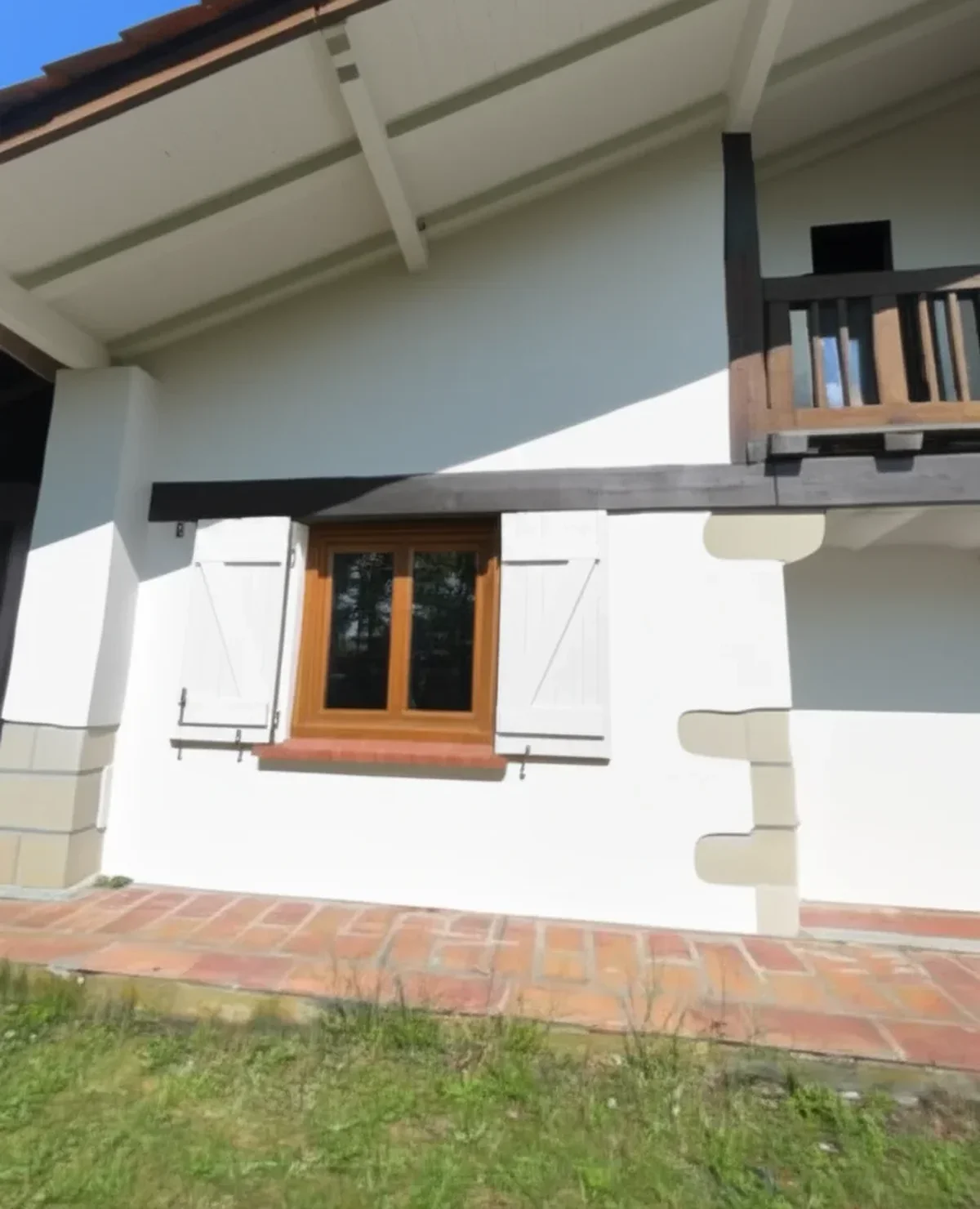
Try it on your house

Damp is one of the most destructive and most misdiagnosed problems in UK housing. Whether you are battling rising damp creeping up through Victorian brickwork, penetrating damp breaching a solid wall during heavy rain, or condensation breeding black mould on cold internal surfaces, each type demands a different solution - and a very different budget. This guide cuts through the confusion: real 2026 costs per m², the full range of treatments from damp proof course injection to external wall insulation, government grants, and building regulations you must know before work starts.
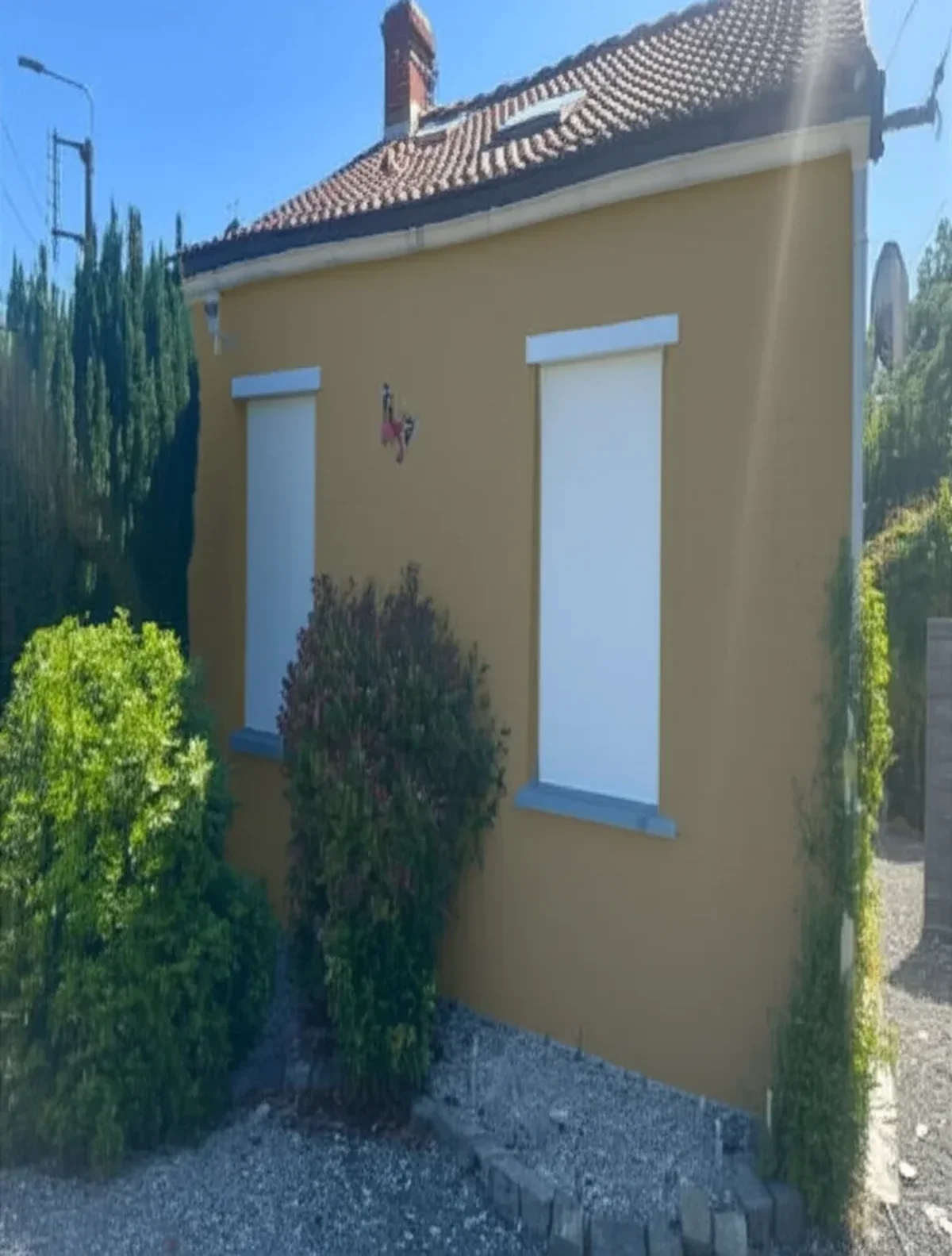
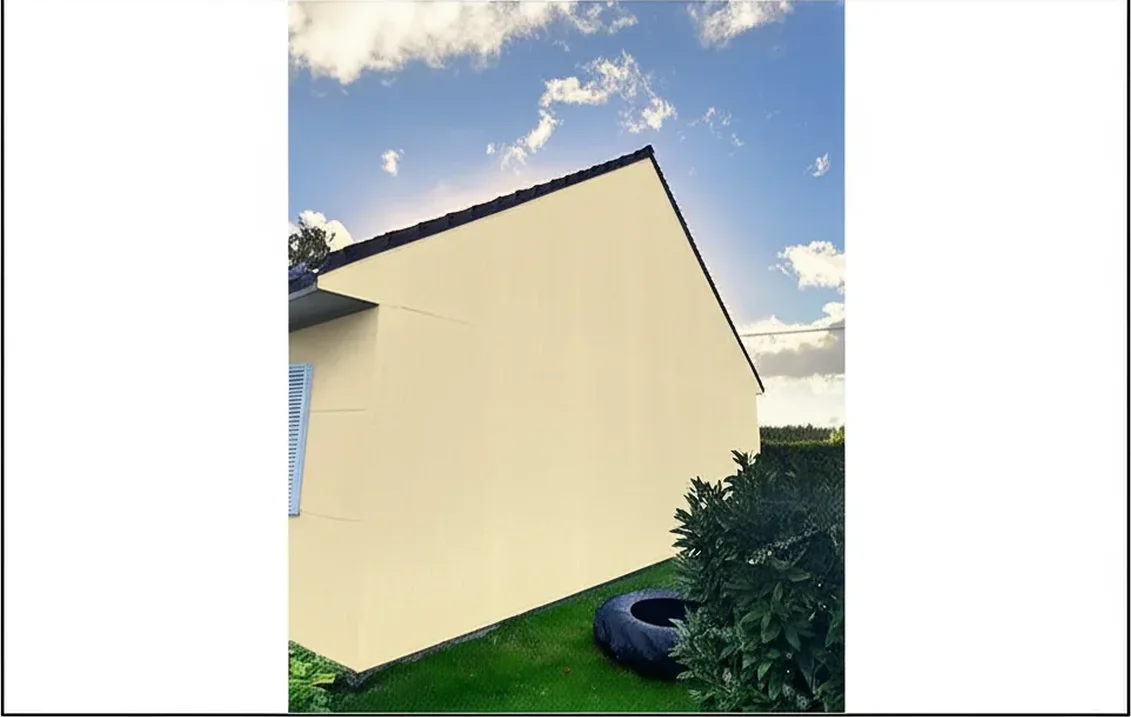
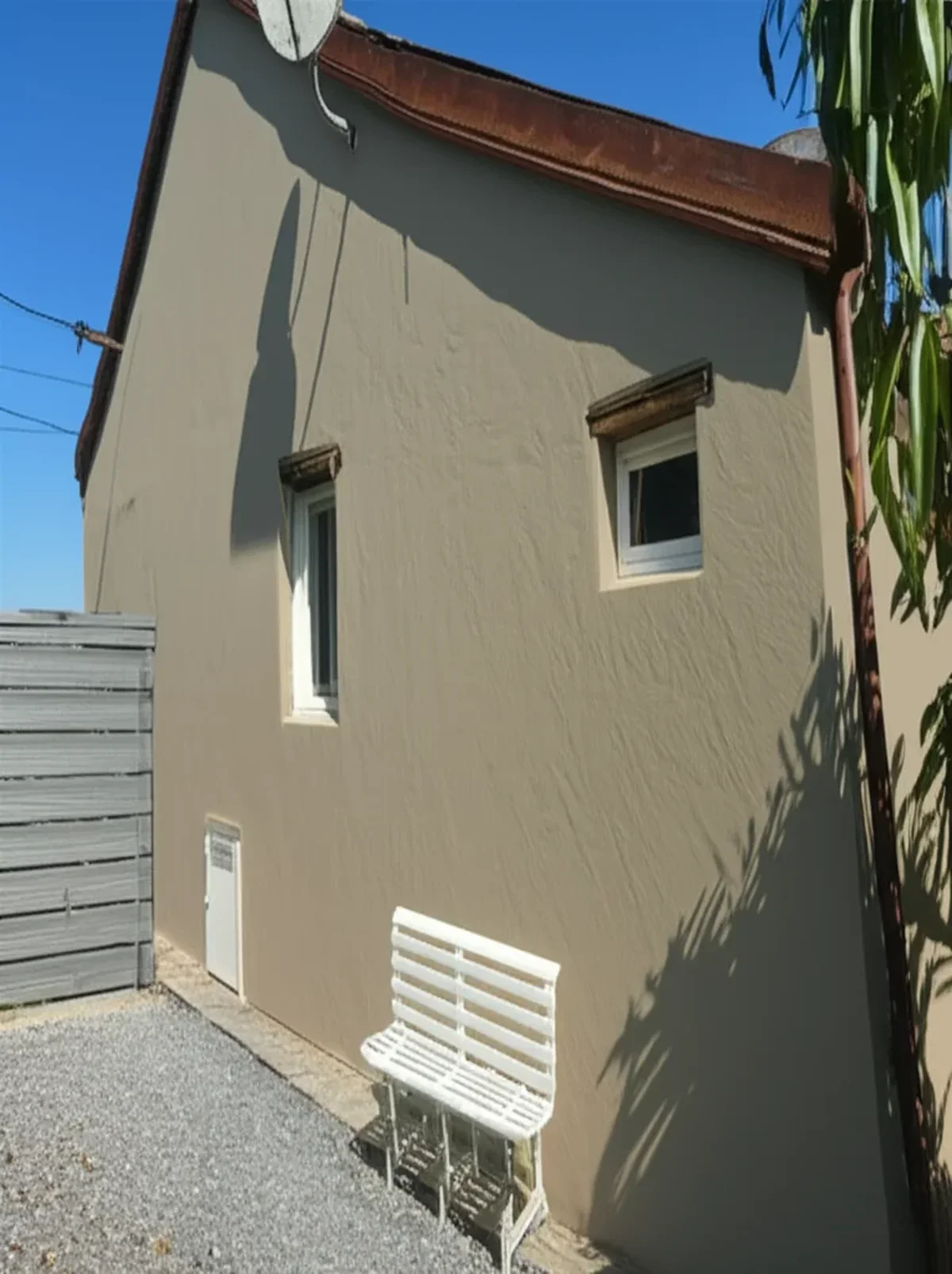
Once your walls are treated and re-rendered, see how new render colours look on your property, free AI visualiser before committing to a colour.
Understanding the Three Types of Damp
A professional damp survey uses a moisture meter and, where necessary, salt analysis to distinguish between the three main types. Misdiagnosis is common, and expensive.
1. Rising Damp
Rising damp occurs when groundwater travels upward through capillary action in masonry, typically halting at 1–1.2 m above floor level. Classic signs include a tide mark, peeling plaster, white salt deposits (efflorescence), and a musty smell at low level. It most commonly affects older properties where the original damp proof course (DPC) - a layer of slate, bitumen, or engineering brick, has failed, bridged, or is absent entirely. A damp specialist will confirm rising damp with salt analysis: hygroscopic salts (nitrates and chlorides) are the tell-tale marker that differentiates genuine rising damp from simple condensation, which contains no such salts. Treatment involves installing a chemical damp proof course (injected silicone cream) and re-plastering with a damp proof membrane or renovation plaster.
2. Penetrating Damp
Penetrating damp enters horizontally through walls, roofs, or around window and door frames. On solid wall properties - anything built before around 1920, porous brickwork or failed mortar joints allow rain to soak straight through. On cavity wall properties, penetrating damp often results from wall ties corroding and bridging the cavity, or from incorrectly installed cavity wall insulation creating a moisture pathway. Treatment ranges from applying a silicone water repellent (£10–£15/m²) to full external wall insulation (EWI) with a breathable render finish. Waterproofing and tanking are reserved for below-ground structures such as basements.
3. Condensation
Condensation is the most common form of damp in UK homes and the most frequently confused with rising damp. Warm, moist air hits a cold surface, often an external wall, window reveal, or cold bridge at a joist end, and deposits water. Left untreated, mould and black mould follow within days. The root cause is inadequate ventilation combined with poor thermal performance. Solutions include fitting extractor fans in kitchens and bathrooms, clearing blocked air bricks, and improving the wall's thermal performance with insulation to eliminate thermal bridging and raise the surface temperature above the dew point. Improving your U-value is often the most effective long-term fix.
Damp Proofing Methods & 2026 Costs
Costs vary widely by property type, severity, and region. The table below shows indicative 2026 UK prices; London and the South East typically run 15–20% higher.
| Solution | Cost per m² | Typical Job Cost | Effectiveness | Guarantee |
|---|---|---|---|---|
| Chemical DPC injection (rising damp) | £20–£30 | £500–£2,500 | High for genuine rising damp | 20–30 years (PCA-backed) |
| Silicone water repellent (penetrating damp) | £10–£15 | £300–£1,500 | Good for porous brickwork | 5–10 years |
| Breathable / silicone render (penetrating damp) | £50–£90 | £4,000–£9,000 | Excellent; repels water & allows vapour escape | 25–30 years |
| Tanking / waterproofing (basement / below ground) | £30–£60 | £2,000–£6,000 | Very high for below-ground water ingress | 10–20 years |
| External wall insulation (EWI) (condensation & penetrating damp) | £85–£130 | £8,000–£25,000 | Outstanding; eliminates thermal bridging, raises U-value | 25–30 years (BBA certified systems) |
| Cavity wall insulation (condensation) | £15–£35 | £1,600–£3,000 | Good; improves thermal performance | 25 years (CIGA guarantee) |
| Improved drainage / ground lowering (rising damp prevention) | N/A | £450–£2,000+ per metre run | Essential where ground exceeds DPC level | Permanent if well maintained |
Try it on your house
No photo? Try a sample
Key Tip
Always commission an independent damp survey before accepting a quote. Some contractors diagnose rising damp where only condensation exists, then charge for unnecessary DPC injection. An independent survey using a moisture meter and salt analysis costs £200–£400 and could save you thousands.
External Wall Insulation (EWI): Costs & Benefits in 2026
External wall insulation (EWI) is the most comprehensive solution for solid wall properties suffering from penetrating damp and poor energy efficiency. It bonds an insulation board, typically mineral wool, expanded polystyrene (EPS), or phenolic foam, to the outside of the wall, then finishes with a breathable render, silicone render, or cladding system. The result dramatically reduces thermal bridging, improves the wall's U-value from a typical solid wall figure of 2.1 W/m²K to around 0.25–0.30 W/m²K (meeting Part L targets for retrofit), and creates a continuous weatherproof outer skin.
In 2026, EWI costs £85–£130 per m² for a complete system including scaffolding. For a typical 3-bedroom semi-detached house, budget £8,000–£12,000; a larger detached property can reach £20,000–£25,000. Scaffolding alone accounts for 15–30% of the project cost. The payback comes through energy savings of £300–£600 per year for an average semi, and a significant uplift in EPC rating, often two or three bands. BBA-certified systems from suppliers such as Weber, K Rend, and Permagard carry a 25–30 year system guarantee.
Cavity Wall Insulation: What You Need to Know
Most UK homes built between the 1920s and 1995 have a cavity wall, two leaves of brickwork or blockwork separated by a 50–100 mm air gap. If the cavity is unfilled, heat escapes rapidly and cold internal surfaces encourage condensation and mould growth. Cavity wall insulation is injected or blown into the cavity through small holes drilled in the mortar joints. Materials include mineral fibre (£15–£20/m²), EPS bead (£20–£28/m²), and polyurethane foam (£25–£35/m²). For a standard semi-detached house, total costs sit at £1,600–£2,200 in 2026.
A critical caveat: cavity wall insulation is only appropriate where the cavity is clean, dry, and at least 50 mm wide, and where the outer leaf is in sound condition. Installing insulation in a wall already affected by penetrating damp can bridge moisture across to the inner leaf, making the problem significantly worse. Always have a damp specialist inspect the wall before installation. The Cavity Insulation Guarantee Agency (CIGA) issues a 25-year guarantee on approved installations, which is worth insisting upon.
Breathable Renders: Silicone, Lime, & Silicone Render Compared
For solid-wall properties where the masonry itself is porous, applying a breathable render is one of the most effective ways to stop penetrating damp while allowing trapped moisture to escape outward. There are three main options in 2026:
- Silicone render (e.g. K Rend Silicone TC, Weber Sil): costs £50–£90/m² installed. Highly water-repellent yet vapour-permeable, self-cleaning, and available in a wide colour range. The best all-round choice for most UK climates. Sovereign and Weber both supply BBA-approved silicone systems with a 25-year guarantee.
- Lime render: costs £80–£140/m² due to the specialist skills required. The most breathable render available, absorbs and releases moisture naturally, making it the only appropriate choice for pre-1919 solid-wall buildings and properties in conservation areas or with listed status. Lime render positively aids damp management by allowing walls to "breathe". Compatible with Dulux masonry paints formulated for breathable substrates.
- Cement render (sand and cement): costs £30–£60/m². The cheapest option, but low breathability can trap damp behind the surface. Only suitable where the wall is confirmed dry. Requires Permagard or similar waterproofing admixture if used on a damp-prone elevation.
All render systems on EWI must also include adequate drainage detailing at base level to prevent ground splash-back, and all penetrations (pipes, cables, window heads) must be sealed to prevent localised water ingress.
Government Grants & Funding in 2026
Several government schemes can substantially reduce the cost of external wall insulation and cavity wall insulation for eligible households.
ECO4 Scheme
The ECO scheme (Energy Company Obligation, currently ECO4) runs until 31 December 2026. It obliges large energy suppliers to fund insulation and heating improvements in lower-income and fuel-poor homes. To qualify, your property generally needs an EPC energy rating of D, E, F, or G, and you must receive a qualifying benefit (such as Universal Credit, Pension Credit, or Child Benefit) or have a low household income (typically below £31,000). ECO4 can cover the full cost of cavity wall insulation and contribute substantially to EWI costs for eligible households. Most funding is now nearing allocation, so apply without delay through a registered installer or via the Simple Energy Advice helpline (0800 444 202).
Great British Insulation Scheme (GBIS)
The Green Homes Grant successor, GBIS, closed to new applicants in October 2025, but existing approved projects are still being completed. Check with your local authority for any residual local area upgrade funding available through the Social Housing Decarbonisation Fund or other energy efficiency programmes running into 2026.
VAT Relief
As of 2026, energy efficiency measures including EWI, cavity wall insulation, and associated breathable render finishes attract a zero rate of VAT (0%) when supplied and installed by a VAT-registered contractor in a residential property. This alone saves 20% on your installation bill compared to standard-rated work, confirm eligibility with your contractor before signing.
Building Regulations & Part L
Any retrofit insulation work on an existing dwelling is subject to building regulations, primarily Part L (Conservation of Fuel and Power). The 2021 Part L uplift, which came into force in England in June 2022, sets minimum U-value targets for retrofit elements:
- External walls (EWI or IWI): target U-value of 0.30 W/m²K (or as close as practically achievable for solid walls).
- Cavity wall insulation: should achieve 0.55 W/m²K or better, depending on cavity width.
- Thermal bridging must be minimised; a linear thermal bridging calculation (Ψ-value) is increasingly expected at building control submission stage.
For most domestic EWI and cavity wall projects, a Competent Person Scheme installer (such as a BRE or CIGA-registered contractor) can self-certify compliance without a separate building control application. However, if the property is a listed building or in a conservation area, planning consent may be required before any external works begin - check with your local planning authority first, as unauthorised external cladding can result in an enforcement notice. Drainage details at the base of EWI systems must also comply with Part H (Drainage and Waste Disposal).
Choosing a Damp & Insulation Specialist
Damp treatment is an unregulated trade, which unfortunately attracts some unscrupulous operators. Follow these steps to protect yourself:
- Seek PCA membership: the Property Care Association (PCA) sets minimum standards for damp specialists. Members are trained in moisture meter interpretation and salt analysis, and their guarantee is backed by an insurance bond, so it survives company failure.
- For EWI, use a BBA-approved installer: the BBA (British Board of Agrément) certifies both the EWI system (Weber, K Rend, Sovereign, Permagard) and the installer. Using a non-approved installer voids the system guarantee.
- For cavity wall insulation: insist on a CIGA-registered installer and a CIGA 25-year guarantee certificate on completion.
- Get three written quotes: each should specify the type of damp, the treatment method, materials (including brand and product reference), scaffolding costs, and the duration and scope of the guarantee.
- Verify insurance: public liability insurance of at least £2 million is essential. For EWI work requiring scaffolding, confirm the contractor holds specific scaffold erection cover.
- Check reviews: use Checkatrade, MyBuilder, or Which? Trusted Traders. Look for specialists with substantial experience of your wall type, solid-wall damp treatment differs significantly from cavity wall work.
Free Energy Advice
The Simple Energy Advice service (0800 444 202, energysavingtrust.org.uk) provides free, impartial guidance on ECO scheme eligibility, cavity wall insulation grants, and approved installers in your area. Use it before agreeing to any work.
Visualise Your Property After Render & Treatment
Damp treatment and new breathable render or silicone render present the perfect opportunity to refresh your property's appearance. Before committing to a colour, see how new render colours look on your property, free AI visualiser. Upload a photo and test any shade in seconds, ideal when choosing between K Rend silicone finishes or Weber monocouche colours.
Frequently Asked Questions
How much does damp proofing exterior walls cost in the UK in 2026?
Costs depend heavily on the type of damp and the treatment required. A chemical damp proof course (DPC) injection for rising damp costs £500–£2,500 for a typical terraced or semi-detached house. Treating penetrating damp with a silicone render or breathable render costs £4,000–£9,000 for an average property. Full external wall insulation (EWI), the most comprehensive solution, runs £8,000–£25,000. Always commission an independent damp survey first (£200–£400) to confirm the diagnosis and avoid unnecessary expenditure.
What is the difference between rising damp, penetrating damp, and condensation?
Rising damp travels upward from the ground through masonry capillary action when the damp proof course (DPC) has failed; it produces a distinctive tide mark and hygroscopic salts identifiable by salt analysis. Penetrating damp enters horizontally through porous masonry, failed mortar joints, or bridged cavity walls, and is worst on exposed elevations during driving rain. Condensation forms on cold surfaces when warm moist air hits them, and is confirmed by a moisture meter reading that drops in dry weather and worsens in winter, there are no hygroscopic salts. Each type needs a different treatment; misdiagnosis is extremely common.
Can I get a free grant for external wall insulation or cavity wall insulation in 2026?
Possibly, through the ECO scheme (ECO4), which runs until 31 December 2026. Eligible households, those with an EPC rating of D–G and a qualifying benefit or household income below £31,000, may receive fully funded cavity wall insulation or a significant contribution toward EWI costs. The Great British Insulation Scheme (successor to the Green Homes Grant) closed to new applicants in October 2025. All eligible householders should apply for ECO4 urgently as remaining funding is limited. Contact the Simple Energy Advice service (0800 444 202) for a free eligibility check.
Is a breathable render or lime render better for damp walls?
Both are far superior to cement render on a damp or solid wall. Silicone render (e.g. K Rend, Weber Sil) is the best choice for most modern properties: highly water-repellent, breathable render that repels rain yet allows internal moisture vapour to escape, at £50–£90/m². Lime render is essential for pre-1919 buildings and listed or conservation-area properties where the original fabric must breathe freely; it costs more (£80–£140/m²) due to specialist skills required but can last 30–50+ years. Avoid standard cement render on any wall with active damp, it traps moisture and accelerates deterioration. Permagard and Sovereign supply specialist render admixtures and membranes for damp-prone substrates.
Does external wall insulation need building regulations approval?
Yes. External wall insulation (EWI) is notifiable under building regulations Part L (Conservation of Fuel and Power). However, an installer registered with a Competent Person Scheme (such as CIGA or BRE) can self-certify compliance, avoiding the need for a formal building control application. The installed system must achieve a target U-value of 0.30 W/m²K or better, and address thermal bridging at junctions. If your property is in a conservation area or is a listed building, planning permission is also required separately before work starts, adding external cladding without consent is a criminal offence. Scaffolding must comply with the Work at Height Regulations 2005 and be erected by a CISRS-trained operative.
Trademarks mentioned (Sherwin-Williams, Benjamin Moore, Behr, Caparol, Brillux, Sto, Alpina, Valspar, PPG, Glidden, Dulux, Crown Trade, Sandtex, Farrow & Ball, Johnstone's, Leyland) are property of their respective owners. FacadeColorizer is independent and not affiliated with any of them. Nominative fair use under Lanham Act §1125.