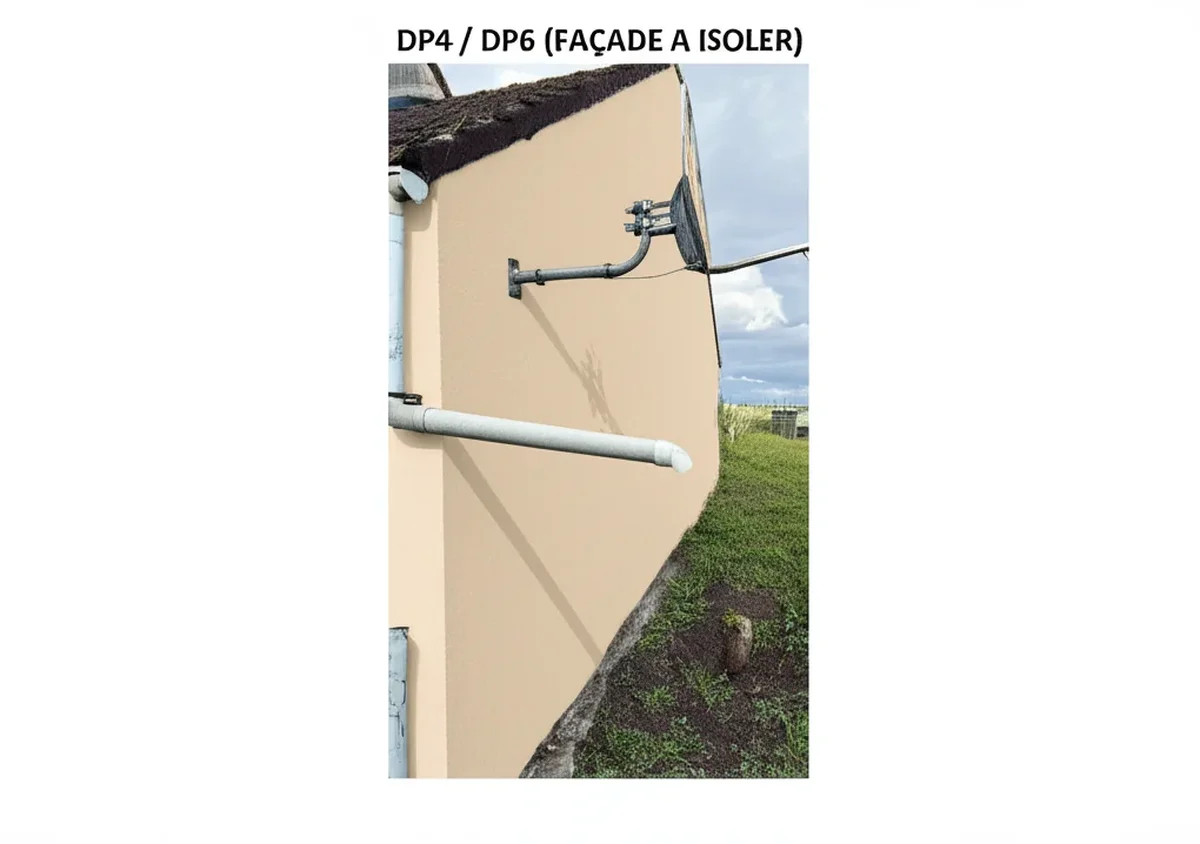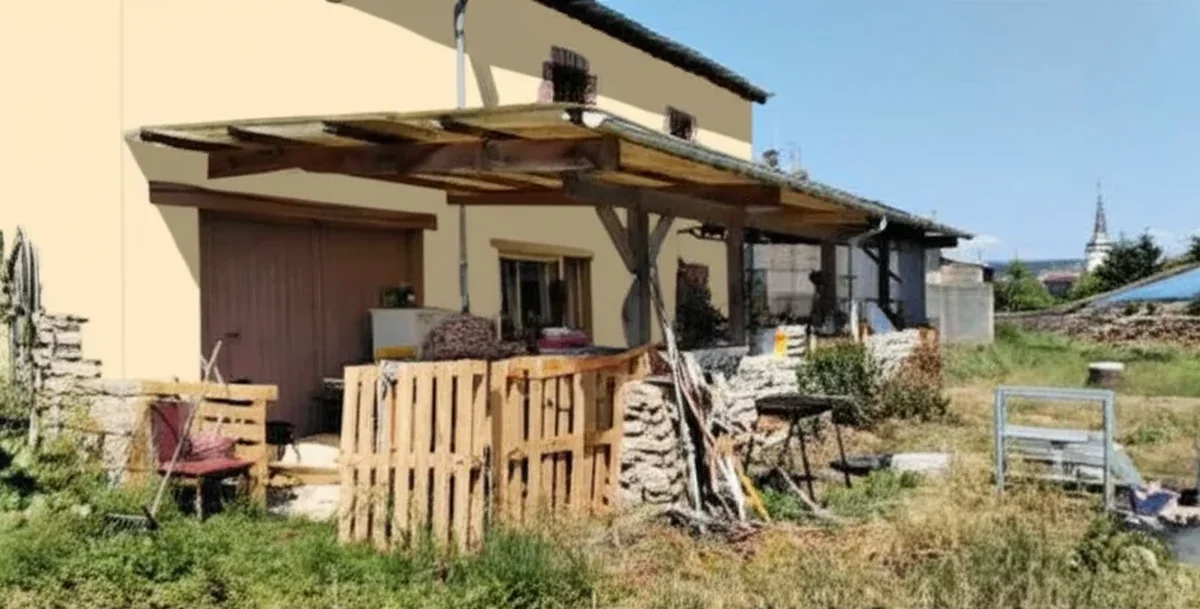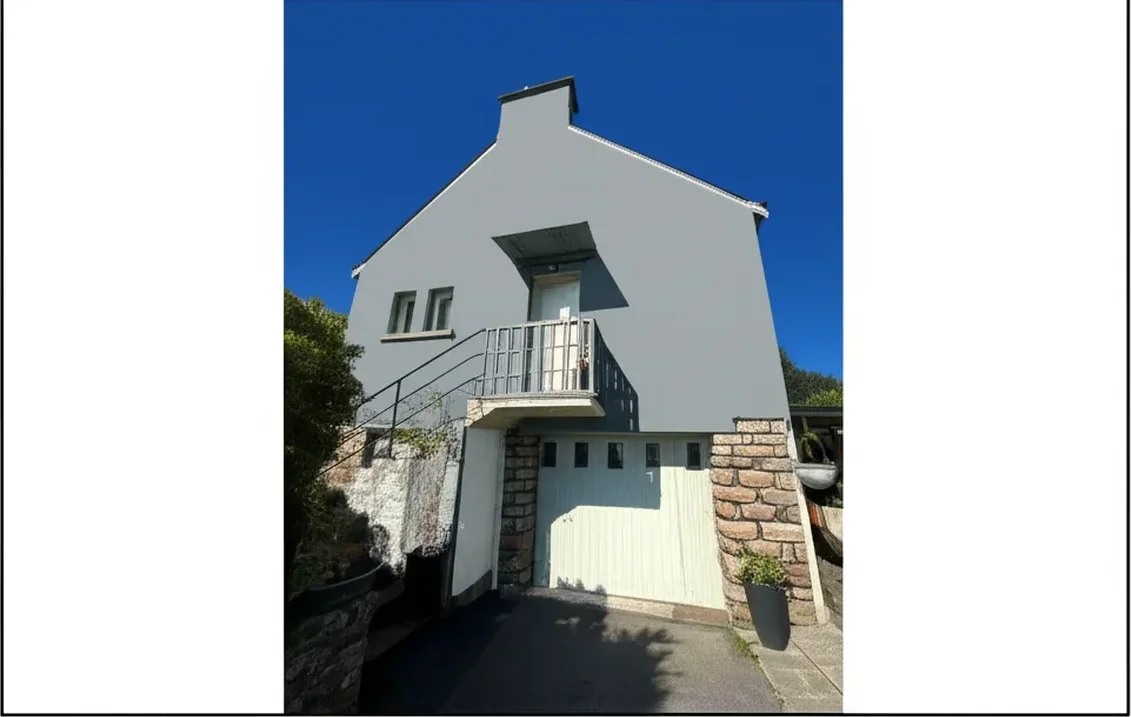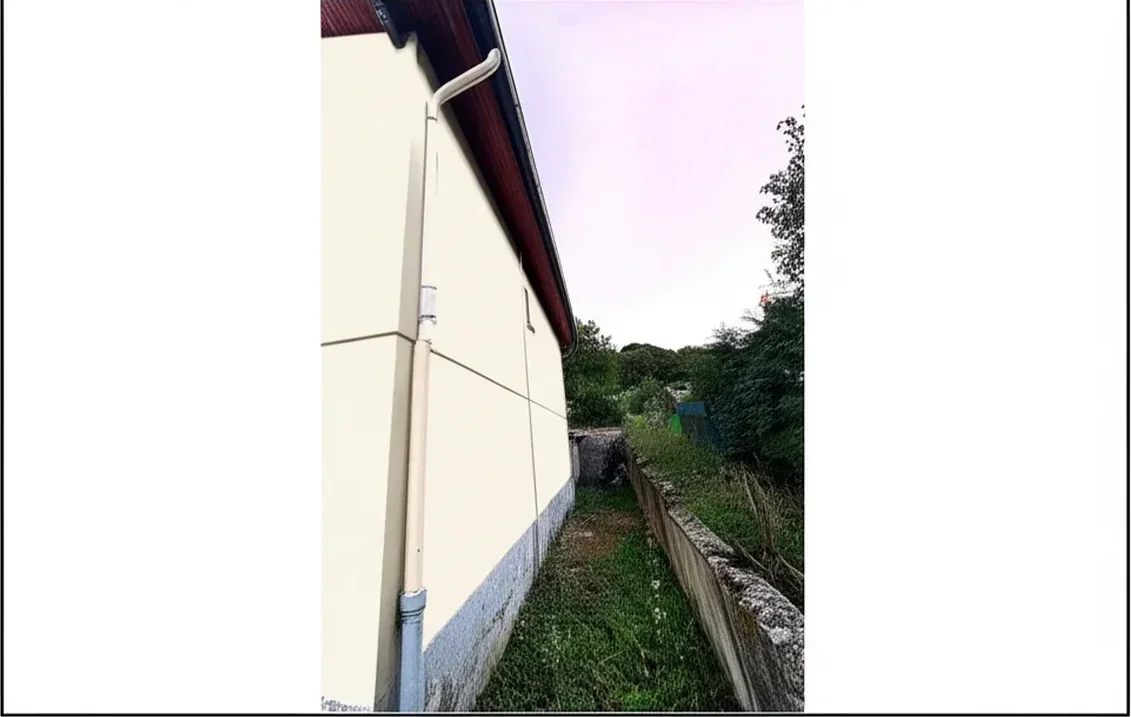

FacadeColorizer is a free AI exterior colour visualiser for British homes. The most searched outdoor wall colour shades in the UK for 2026 are warm greige, soft Cotswold cream, slate grey, sage green and a refreshed white-with-undertone, with Dulux Weathershield Smooth Masonry, Sandtex 10 Year Exterior Paint, Crown Trade Sandtex Microseal and Johnstone Trade Stormshield dominating shelves at B&Q, Wickes, Homebase and Screwfix between 28 and 48 GBP per 5 litre tin. Drawing on FacadeColorizer's 16,983 facade previews dataset (July 2025 to April 2026), 41% of UK exterior previews tested at least three outdoor wall colour paint options against the same rendered, pebbledash or red brick substrate before committing, and 67% changed their initial choice after seeing the shade on their own house photograph.
This 2026 guide explains how to pick an outdoor wall colour for British masonry, render and pebbledash walls: how to read the BS EN 1062 exterior coating classification, how undertone interacts with damp, freeze-thaw and Atlantic driving rain, real GBP pricing at B&Q, Wickes and Screwfix, and the planning rules that catch homeowners off guard in Conservation Areas and on Listed Buildings. You will find a 10 outdoor wall colour shortlist, two head-to-head specification tables in GBP, application notes for British weather, and a free way to preview every outdoor wall colour on your own facade in 30 seconds before you buy a 48 GBP tin.
For complementary palettes once you have settled on a base outdoor wall colour, see our best exterior paint colours UK 2026 guide, our cottage exterior paint colours UK 2026 guide and the head-to-head Crown vs Dulux exterior comparison.
The 10 Most Searched Outdoor Wall Colours in the UK for 2026
British outdoor wall colour preferences have shifted decisively away from brilliant white and pure magnolia. The dominant 2026 palette across London suburbs, Manchester semis, Edinburgh tenement extensions and Bristol Georgian-style new builds favours mid-tone neutrals with a clear undertone: a warm greige rather than a cold grey, a Cotswold cream rather than a chalk white, a slate that reads blue rather than green. The ten shades below cover the searches and Wickes basket data driving the 2026 outdoor wall colour market.
1. Warm Greige: the new British neutral
Warm greige sits between cool grey and stone, the dominant 2026 outdoor wall colour search across the UK. It flatters London stock brick, Cotswold limestone and contemporary K-Rend silicone render in equal measure. Dulux Weathershield Smooth Masonry in Warm Pewter at 48 GBP per 5 litres delivers a breathable, microporous finish with BS EN 1062-1 class A1 weather durability. For a tighter trade budget on a full elevation, Crown Trade Sandtex Microseal in Greige at 36 GBP per 5 litres carries the same weather class and is widely stocked at Screwfix.
2. Cotswold Cream: warm, period-friendly, planning-safe
Cotswold cream is the heritage outdoor wall colour for Edwardian and Victorian semis in Bath, Bristol, Edinburgh and conservation belts where Listed Building Consent or Conservation Area constraints push owners towards historically sympathetic shades. Dulux Heritage Cotswold Cream at 42 GBP per 2.5 litres delivers a soft, warm off-white with strong period authority. For a fuller elevation budget, Sandtex 10 Year Exterior Masonry in Country Stone at 44 GBP per 5 litres offers a slightly lighter, sandier tone that suits Bath and Cotswold limestone surrounds without competing with the natural stone.
3. Slate Grey: the modern facade default
Slate grey remains the default 2026 outdoor wall colour for new-build extensions and modernised semis across Manchester, Leeds and the South East. Look for shades with a blue rather than green undertone to pair correctly with anthracite aluminium bi-fold doors and dark-grey window frames now standard on rear extensions. Sandtex Microseal in Plymouth Grey at 44 GBP per 5 litres carries a true blue-slate undertone, while Crown Trade Clematis Masonry in Anthracite at 38 GBP per 5 litres pushes deeper for full architectural impact on a contemporary cube extension.
4. Sage Green: garden-friendly, on-trend for 2026
Sage green is the 2026 trend outdoor wall colour driving the highest year-on-year search growth, particularly for garden walls, garden rooms, sheds and rear elevations where the colour reads against planting rather than streetscape. Farrow & Ball Exterior Masonry in Lichen No. 19 at 75 GBP per 2.5 litres is the premium choice for owners of period properties in Hampstead, Highgate or Edinburgh's New Town. For trade-spec at lower cost, Leyland Trade Smooth Masonry in Sage Green at 32 GBP per 5 litres covers most suburban garden walls under one weekend.
5. White with Undertone: never brilliant, always warm
White outdoor wall colour in 2026 is no longer brilliant. British exterior specifiers are choosing warm whites with a faint cream, pewter or sand undertone to avoid the harsh glare that traditional brilliant white throws across a south-facing facade. Dulux Trade White Cotton in Weathershield at 46 GBP per 5 litres is the most-used warm white on commercial UK exterior projects, with a slight cream undertone that reads cleanly without bleaching out in summer light.
6. Pale Sandstone: the brick-friendly mid-tone
Pale sandstone outdoor wall colour gives homeowners with red or buff London stock brick a way to paint render bands, garage doors or porch surrounds without clashing with the brick. Sandtex Microseal in Pale Sandstone at 44 GBP per 5 litres handles uneven brick render and pebbledash patches without lap marks. Its self-priming formulation reduces a typical two-day job to one weekend on a standard 1930s semi-detached frontage.
7. Soft Black: dramatic, modern, surprising
Soft black outdoor wall colour, sometimes specified as "off-black" or "near-black charcoal", has grown sharply in 2026 search interest, particularly for contemporary garden rooms, garage doors and rear extensions in London, Bristol and Brighton. Farrow & Ball Exterior Masonry in Pitch Black No. 256 at 75 GBP per 2.5 litres delivers a deep, slightly warm black that does not read as cold or industrial. Pair soft black with white timber sash windows and a charcoal slate roof to anchor the composition.
8. Warm Terracotta: revival shade for stucco
Warm terracotta is the right outdoor wall colour for traditional stucco frontages in Brighton, Hove and parts of Cheltenham. It carries red and orange undertones that pop against white or cream window reveals and slate roof tiles. Dulux Weathershield in Bramble Bush at 48 GBP per 5 litres is the most-stocked terracotta at B&Q. Match the wall with an off-white window joinery (never brilliant white) and a charcoal slate roof rather than a clay tile, to avoid the over-warm "gingerbread" effect that dates a facade quickly.
9. Sky Mist Blue: gentle, coastal, planning-safe
Sky mist blue is the gentlest 2026 outdoor wall colour for coastal homes in Pembrokeshire, Cornwall, Northumberland and along the Suffolk and Norfolk coasts. It reads as a pale, slightly grey blue rather than a saturated marine shade. Johnstone Trade Stormshield in Sky Mist at 38 GBP per 2.5 litres carries a BS EN 1062 class A1 rating and resists salt-spray weathering, making it suitable for fully-exposed seafront elevations.
10. Forest Green: deep, traditional, garden-anchored
Forest green is the deepest mainstream 2026 outdoor wall colour considered domestic-friendly. It excels on garden walls, garden rooms, shed cladding and small back-elevation extensions where the colour anchors the planting rather than the streetscape. Cuprinol Garden Shades in Forest Green at 32 GBP per 5 litres is the most-bought forest green outdoor wall colour at Wickes for 2026, with a 6-year guarantee on shed cladding and 4 years on fence panels.
UK Outdoor Wall Colour Brands: Direct Comparison Table 2026
The table below compares the five most-stocked UK outdoor wall colour ranges across price (GBP at B&Q / Wickes list, May 2026), coverage in square metres per litre, weather durability under BS EN 1062 and typical recoat interval on a fully-exposed masonry elevation in southern England.
| Brand / Product | Price (5 L masonry) | Coverage | BS EN 1062 Class | Recoat Interval |
|---|---|---|---|---|
| Dulux Weathershield Smooth Masonry | 48 GBP | 14 m2/L | A1 (highest) | 15 years |
| Sandtex 10 Year Exterior Masonry | 44 GBP | 12 m2/L | A1 | 10 years |
| Crown Trade Sandtex Microseal | 36 GBP | 11 m2/L | A1 | 10 years |
| Johnstone Trade Stormshield | 38 GBP | 12 m2/L | A1 | 12 years |
| Leyland Trade Smooth Masonry | 32 GBP | 10 m2/L | A2 | 8 years |
The headline outdoor wall colour pricing varies less than most homeowners expect. Across the British exterior masonry range, the gap between trade-spec Leyland and premium Dulux Weathershield sits at around 16 GBP per 5 litre tin. For a typical 100 square metre semi-detached elevation requiring 8 litres for two coats, that gap translates to roughly 25 to 30 GBP across the whole project, a small fraction of the labour cost. Pick the BS EN 1062 class A1 product wherever budget allows.
Try every UK outdoor wall colour on your own facade in 30 seconds
FacadeColorizer's free AI visualiser previews Dulux Weathershield, Sandtex Microseal, Crown Trade, Johnstone Stormshield, Leyland Trade and Farrow & Ball shades on a photograph of your own house. No download, no account, just upload and pick.
Try the free outdoor wall colour visualiserHow to Pick an Outdoor Wall Colour by Substrate: Render, Brick, Pebbledash
British exterior walls fall into four broad substrate categories: smooth render (sand-cement or polymer-modified silicone), pebbledash (dash render with embedded aggregate), painted or unpainted brick (London stock, fletton, engineering), and weatherboard or fibre cement cladding. Each substrate constrains the outdoor wall colour conversation differently.
Smooth render: maximum colour range, minimum surface drama
Smooth render absorbs paint evenly and reads outdoor wall colour faithfully under any natural light condition. This substrate offers the widest realistic colour range, from chalky pale Cotswold cream through warm greige to deep sage and pitch black. Use a true masonry paint such as Dulux Weathershield Smooth Masonry or Sandtex Microseal, never a multi-surface paint. Apply two coats with a 4 hour minimum overcoat interval at 20 degrees Celsius.
Pebbledash: textured surface, lighter shades wear better
Pebbledash is the most demanding substrate. The textured surface holds water for longer after driving rain, accelerates green algae growth on north-facing elevations and shows colour wear unevenly. Choose lighter outdoor wall colours, Cotswold cream, warm white, pale sandstone or greige, rather than deep sage or pitch black. Use Sandtex 10 Year Exterior Masonry or Johnstone Trade Stormshield with a long-handled masonry roller and a chiselled brush for the deep texture. For more substrate-specific application advice, see our best paint for pebbledash walls UK guide.
Painted brick: harmony rather than contrast
Painted brick, whether London stock or red fletton, demands harmonious rather than contrasting outdoor wall colour choices. Pale sandstone, warm white, soft greige or warm Cotswold cream all read sympathetically against red or buff brick. Avoid pure white, deep sage or pitch black, which create harsh contrast and accelerate visible weather staining at brick joints.
Weatherboard and fibre cement cladding: the modern flex
Fibre cement weatherboard cladding, popularised by James Hardie and Cembrit on new-build extensions, accepts the full 2026 outdoor wall colour range with no substrate constraint. Use a dedicated exterior wood and cladding paint such as Crown Trade Clematis or Johnstone Trade Stormshield applied with a 100 mm brush along the board direction. Recoat interval matches the substrate: 12 to 15 years on properly prepared fibre cement.
UK Outdoor Wall Colour Planning Rules: Conservation Areas and Listed Buildings
The 2026 UK planning environment is tighter than many homeowners expect on outdoor wall colour decisions. For an ordinary unlisted house outside a Conservation Area, painting your facade falls under Permitted Development and requires no planning permission, only sensible neighbour consideration. Inside a Conservation Area, the same paint job may require a Conservation Area Consent, depending on the local authority's Article 4 Direction. On a Listed Building of any grade, you must apply for Listed Building Consent before changing the outdoor wall colour, even on a previously painted facade.
Start by checking your address on the Planning Portal and on your local council's planning map. If you sit inside a Conservation Area, a Listed Building register or an Article 4 Direction zone, request the local authority's published "approved palette" for outdoor wall colours: most conservation belts in Bath, Edinburgh, Cheltenham and the Cotswolds publish a recommended shortlist of lime washes, soft creams and stone-based tones.
Article 4 Directions: the silent planning trap
Article 4 Directions, made under the Town and Country Planning (General Permitted Development) Order 2015, remove certain Permitted Development rights from a defined area, often including the right to paint a previously unpainted brick or stone facade. London boroughs including Camden, Islington, Westminster and parts of Hackney apply Article 4 Directions widely. Check your address before you buy paint, not after.
Scotland: pre-1919 buildings and the Stone Repair Toolkit
In Scotland, any work affecting the external appearance of a pre-1919 traditional building, including painting previously unpainted sandstone, may trigger a Building Warrant or planning enquiry. gov.scot publishes the Stone Repair Toolkit which discourages painting traditional Scottish sandstone facades altogether. If your Edinburgh tenement extension still has unpainted sandstone, your outdoor wall colour decision should focus on render bands and joinery, not the full elevation.
Application Notes: British Climate, Damp and Freeze-Thaw
British outdoor wall colour application is dominated by three climatic constraints: damp ingress on north and east elevations, freeze-thaw cycles in upland Wales, Pennines and Scotland, and driving rain on west-facing Atlantic frontages. The right outdoor wall colour paint is only half the durability story; surface preparation under BS 7079 standards is the other half.
Surface preparation: BS 7079 in plain English
BS 7079 covers surface preparation for protective coatings. In domestic outdoor wall colour terms, this translates to: remove all loose or flaking paint with a stiff brush, scraper or pressure washer at no more than 100 bar; treat green algae growth with a proprietary fungicidal wash; allow the substrate 48 hours minimum drying time; spot-prime any exposed render or brick with the manufacturer's recommended sealer; only then apply two coats of finish.
Temperature and humidity windows
Apply outdoor wall colour paint between 10 and 25 degrees Celsius and below 80% relative humidity. In practice, this rules out most British exterior painting work between November and February, and most days between November and March in upland Wales and the Pennines. The realistic UK outdoor wall colour application window runs from late April to early October, with September often delivering the best combination of dry days, moderate temperature and low pollen counts.
Damp diagnosis before paint, not after
A poor outdoor wall colour outcome usually traces back to undiagnosed damp rather than wrong product choice. If you see persistent dark patches at the base of an outdoor wall, salt crystallisation on the render or bubbling on previous paint, suspect rising damp, penetrating damp or a failed damp-proof course before you repaint. For diagnostic guidance, see our damp proofing exterior walls UK 2026 guide.
Outdoor Wall Colour Coverage Calculator: How Much Paint to Buy
Most British outdoor wall colour failures begin at the till with under-purchase. Buying 5 litres for a 100 square metre elevation that needs 8 litres for two coats means starting coat two from a different batch, with risk of visible colour banding under low afternoon light. The table below sets out realistic GBP and litre budgets for the four most common UK property elevations, based on the Dulux Weathershield 14 square metre per litre coverage figure.
| Property type | Surface (m2) | Paint needed (2 coats) | Cost (Weathershield) | Cost (Leyland Trade) |
|---|---|---|---|---|
| 1930s semi front elevation | 55 m2 | 8 L (2x 5 L tin) | 96 GBP | 64 GBP |
| Victorian terrace front | 75 m2 | 12 L (3x 5 L tin) | 144 GBP | 96 GBP |
| Detached 4-bed full envelope | 220 m2 | 32 L (7x 5 L tin) | 336 GBP | 224 GBP |
| Garden room / outbuilding | 35 m2 | 5 L (1x 5 L tin) | 48 GBP | 32 GBP |
Add 10% to every figure for cutting in, drips and a third "touch up" coat on south-facing elevations or below window cills where rain-shadow weathering accelerates colour wear. Buy the full quantity in one batch from the same retailer to keep the batch number consistent across tins.
FacadeColorizer Field Note: What We Learnt from 16,983 UK Outdoor Wall Previews
A small editorial observation from the FacadeColorizer dataset. Across 16,983 previews recorded between July 2025 and April 2026, UK users testing an outdoor wall colour on their own house photograph tested 3.4 different shades on average before settling. The strongest predictor of final choice was not the colour itself but the contrast between the wall and the window joinery: users who tested a wall shade against three different joinery options (white, off-white, anthracite) committed to a wall colour 41% faster than users who tested only the wall shade in isolation. Try the wall and the window frame together, not the wall alone, before you buy.
Maintenance: Keeping Your Outdoor Wall Colour Looking New for 10 Years
A British outdoor wall colour rarely fails uniformly. The first visible degradation is almost always green algae growth on north and east elevations, beginning two to four years after application, regardless of paint brand. Address the algae early with an annual pressure wash at no more than 80 bar and a proprietary fungicidal wash. This single discipline doubles the visual life of a typical Weathershield or Sandtex finish.
Watch for hairline cracks at render reveals around windows, doors and parapet copings: these are the early warning of substrate movement, not paint failure. Seal hairline cracks with a flexible exterior mastic and overcoat with the original outdoor wall colour batch before the crack opens further. For deeper structural cracking, consult a chartered surveyor before repainting.
Before you commit to a 48 GBP tin, test the colour on your own photo
Two thirds of UK FacadeColorizer users changed their initial outdoor wall colour after seeing the shade on their own house. The free AI visualiser previews any UK exterior paint colour on your facade photograph, no account, no card, no download.
Preview your outdoor wall colour nowFrequently Asked Questions About Outdoor Wall Colours in the UK 2026
What is the most popular outdoor wall colour in the UK in 2026?
Warm greige leads UK outdoor wall colour searches and Wickes basket data in 2026, followed by Cotswold cream and slate grey. The shift from cold grey towards warm-undertone neutrals reflects the broader 2026 British interior and exterior palette move towards softer, more biophilic colour stories.
How much does it cost to repaint a UK semi-detached front elevation?
Materials for a typical 55 square metre 1930s semi front elevation cost 64 to 96 GBP depending on whether you choose trade-spec Leyland or premium Dulux Weathershield. Labour adds 600 to 1,200 GBP for a competent decorator across two days, depending on scaffold or tower hire and the condition of the existing finish.
Do I need planning permission to paint my outdoor walls in the UK?
For an ordinary unlisted house outside a Conservation Area, no planning permission is required to repaint an outdoor wall. Inside a Conservation Area, the local authority may have an Article 4 Direction that removes Permitted Development rights for painting. On a Listed Building of any grade, you must apply for Listed Building Consent before changing the outdoor wall colour.
Which UK outdoor wall colour paint lasts longest?
Dulux Weathershield Smooth Masonry carries a 15 year recoat claim, the longest in the UK domestic range, with BS EN 1062-1 class A1 weather durability. Johnstone Trade Stormshield follows at 12 years, Sandtex 10 Year Exterior at 10 years, and Crown Trade Sandtex Microseal at 10 years.
What outdoor wall colour suits a red brick UK house?
Red London stock brick reads best with harmonious rather than contrasting outdoor wall colours. Pale sandstone, warm white with cream undertone, soft greige and Cotswold cream all flatter red brick without competing. Avoid brilliant white, deep sage and pitch black on render bands or porch surrounds adjacent to red brick: the contrast accelerates visible weather staining at brick joints.
Can I paint an outdoor wall colour on previously unpainted brick?
Yes, but the decision is one-way. Once a brick facade is painted, removing the paint without damaging the brick face is impractical. Check whether your address sits under an Article 4 Direction that removes Permitted Development rights for painting previously unpainted brick or stone, then choose a breathable masonry paint such as Dulux Weathershield or Sandtex Microseal to allow remaining moisture out of the substrate.
Which UK retailer has the widest outdoor wall colour stock in 2026?
B&Q carries the widest mainstream outdoor wall colour range across Dulux Weathershield, Sandtex 10 Year and Cuprinol Garden Shades. Wickes leads on Crown Trade and Johnstone Trade stock. Screwfix carries the deepest trade-spec range for fitters and decorators. Homebase carries the strongest Dulux Heritage and Sandtex Microseal stock for period properties.
Next Steps: Pick, Preview, Buy
The right UK outdoor wall colour for your home in 2026 sits at the intersection of substrate (render vs pebbledash vs brick), planning constraints (Conservation Area vs Permitted Development), climate exposure (Atlantic westerlies vs sheltered urban) and your personal palette. Use this 2026 guide as the technical specification baseline. Use the BS EN 1062 class A1 filter to narrow the brand shortlist. Then test the final three or four outdoor wall colour paint options on a photograph of your own house before buying a single tin. Pick your shade and preview it free with the FacadeColorizer outdoor wall colour visualiser.
Trademarks mentioned (Sherwin-Williams, Benjamin Moore, Behr, Caparol, Brillux, Sto, Alpina, Valspar, PPG, Glidden, Dulux, Crown Trade, Sandtex, Farrow & Ball, Johnstone's, Leyland) are property of their respective owners. FacadeColorizer is independent and not affiliated with any of them. Nominative fair use under Lanham Act §1125.