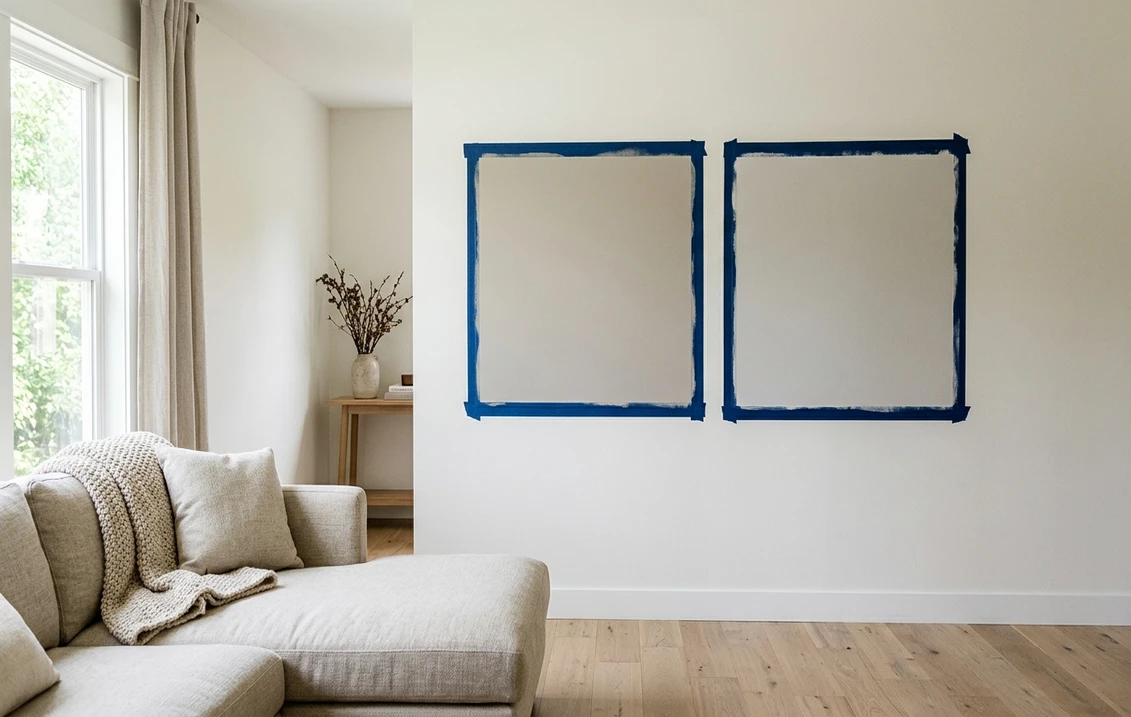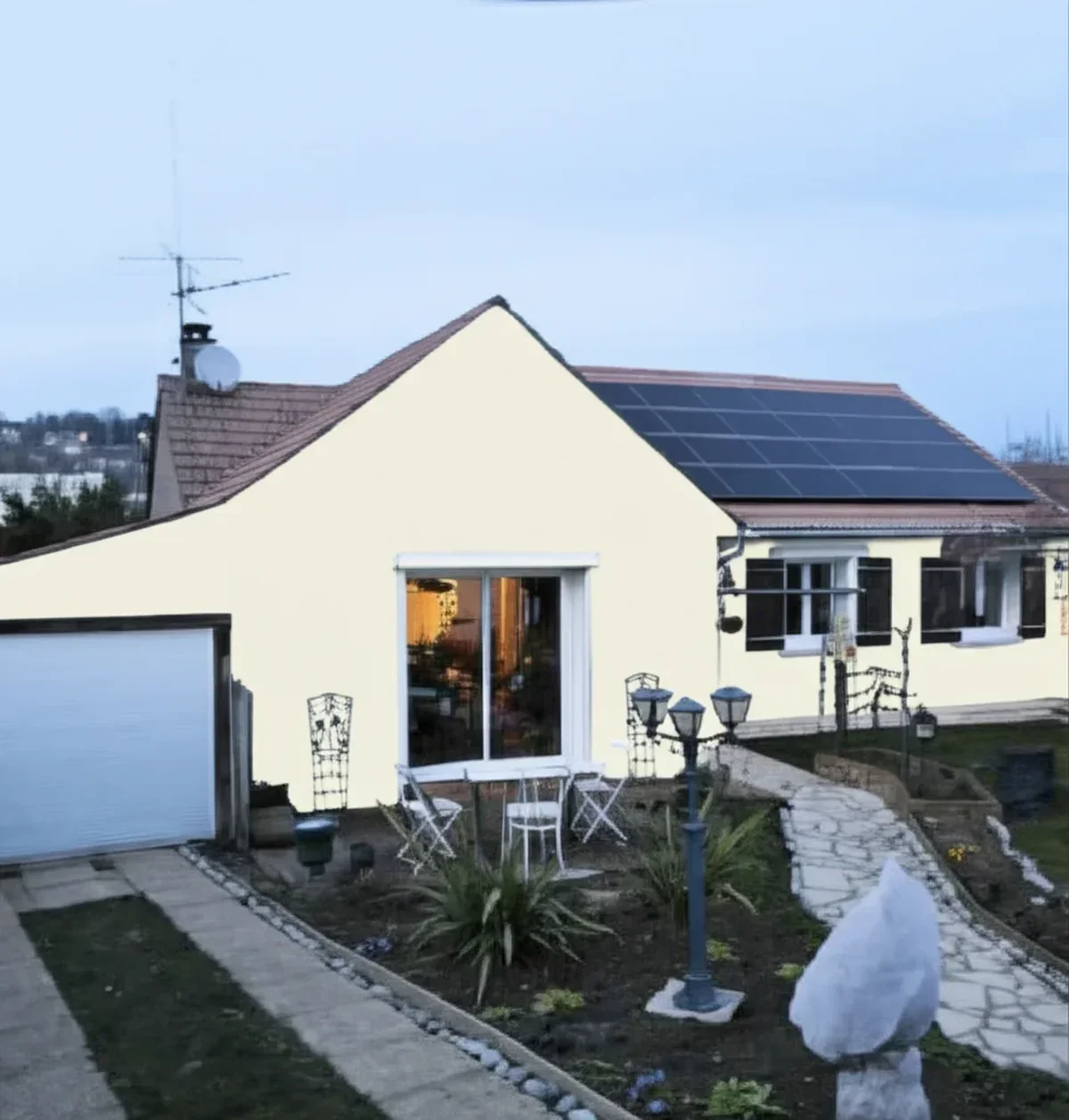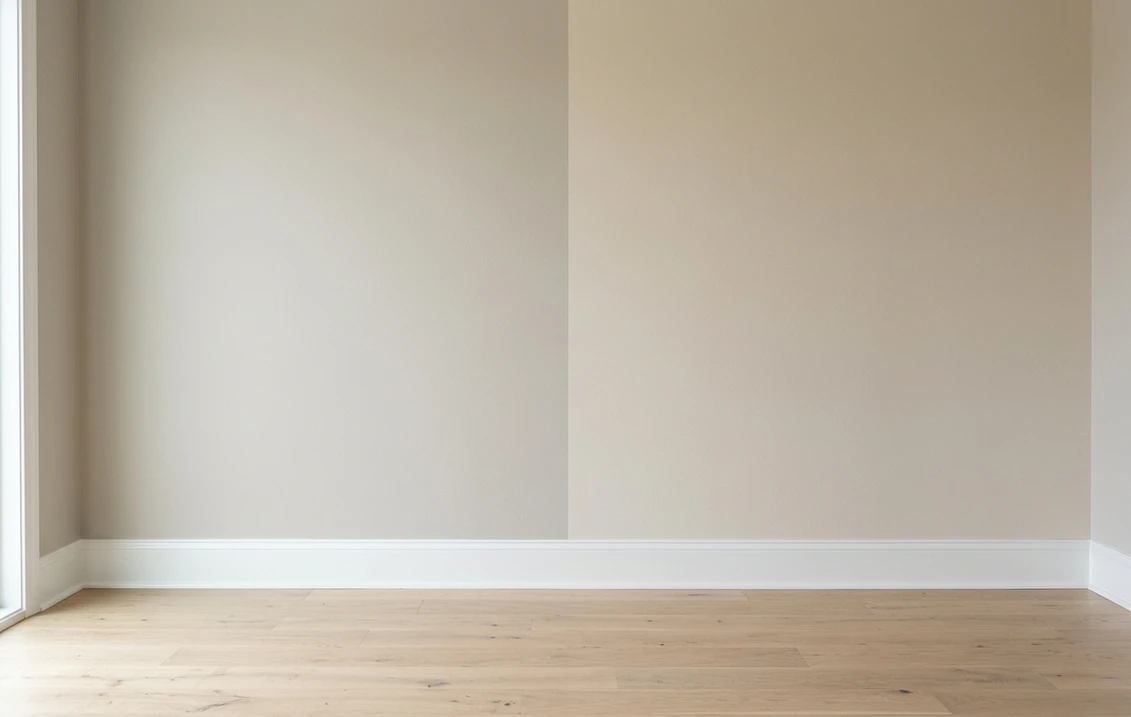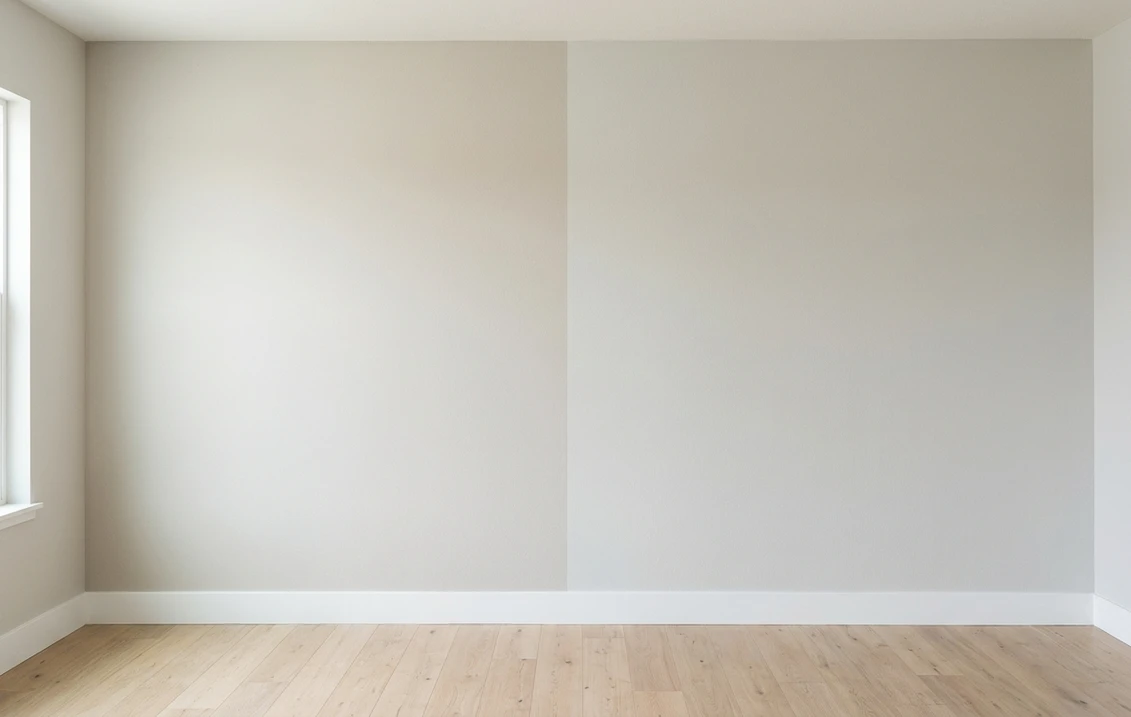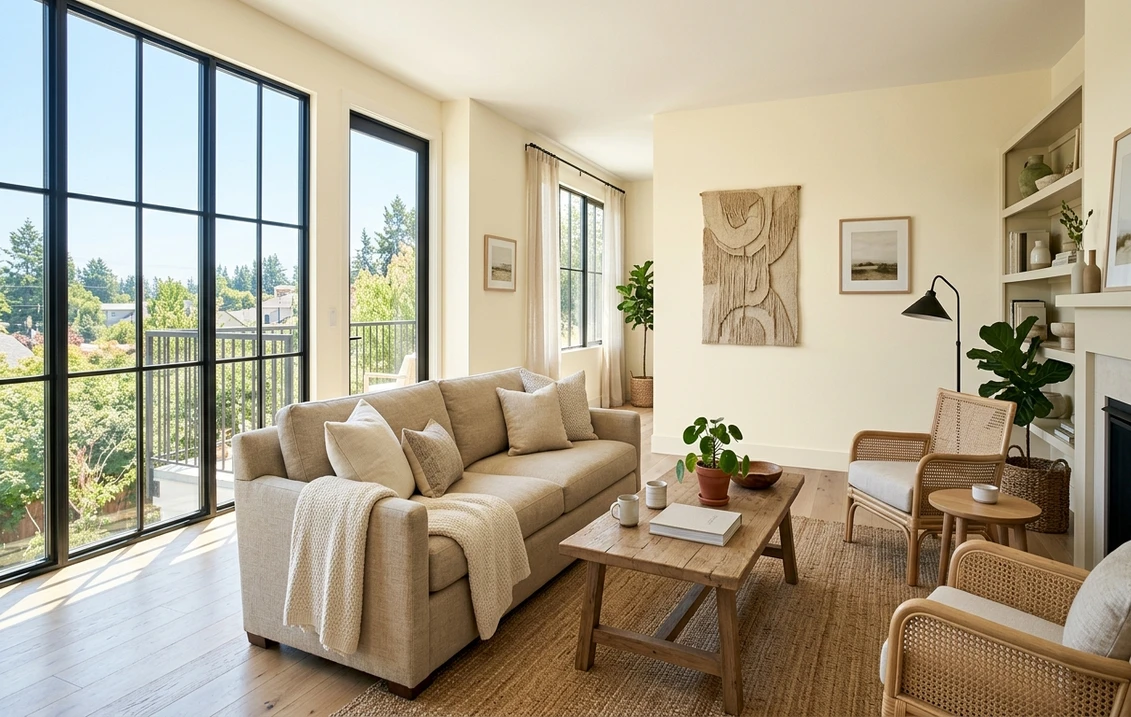
Try it on your house

Creamy SW 7012 is the warmer, creamier soft white, with an LRV of 81 and an inviting yellow warmth.
White Dove OC-17 is the slightly lighter, softer warm white, with an LRV of about 85 and a gray base that keeps it from yellowing.
They are cross-brand (Sherwin-Williams versus Benjamin Moore) warm whites, so the tiebreaker is a small depth gap and the creamier-versus-cleaner lean, not a big undertone split. Test both on a photo of your space before you commit.
Creamy and White Dove are the two warm soft whites that come up when a homeowner wants a white with warmth but not yellow, and is comparing Sherwin-Williams and Benjamin Moore. They are close in family, but the lean differs: Creamy runs warmer and more truly cream, while White Dove runs softer and cleaner thanks to a gray base. This is our side-by-side method for comparing paint colors applied to the two warm whites that bridge the two biggest US brands.
The numbers side by side
| Attribute | Creamy SW 7012 | White Dove OC-17 |
|---|---|---|
| Family | Warm soft white, cream | Warm soft white, gray in base |
| LRV | 81 | About 85 |
| Approximate hex | #EFE9D4 | #EFEEE5 |
| Undertone | Warm, creamy, yellow lean | Warm, soft, gray keeps it from yellowing |
| Loves | Warm, soft, inviting, warm wood | Trim, cabinets, timeless soft warm white |
| Watch out for | Reading yellow in warm light | Clashing next to stark cool whites |
| Overall vibe | Warm, soft, creamy | Soft, warm, timeless |
Try it on your house
No photo? Try a sample
LRV figures are the published values from each brand. Hex values are approximate digital renderings only, and screens vary; the authoritative reference is always a physical paint chip from the retailer.
Upload one photo, get a photorealistic render, then swap to White Dove in one click. Free, no signup.
Room by room, exposure by exposure
| Situation | Usual winner | Why |
|---|---|---|
| North-facing, cool light | White Dove | Its gray base handles cool light; Creamy can look too yellow here. |
| Bright south, warm light | Creamy | Warm light flatters its cream and reads inviting. |
| Kitchen cabinets | White Dove | The Benjamin Moore star for cabinets: soft, warm, and not yellow. |
| Trim and whole house | White Dove | The LRV 85 and gray base read timeless and soft across trim and doors. |
| Pairing with warm wood | Creamy | The cream lean harmonizes with warm wood; White Dove pairs better with cool marble. |
| Pairing with cool whites or marble | White Dove | The gray base bridges cool stone; Creamy's warmth can fight it. |
Because both sit around LRV 81 to 85, depth is a small factor and the creamier-versus-cleaner lean does most of the work. Creamy wins wherever you want a true, inviting cream and the room has warm light or warm wood. White Dove wins wherever you want a soft, timeless warm white that will not yellow, especially on trim, cabinets, and next to cool stone. They are close enough that in some lights they nearly merge, so the only reliable way to tell them apart is on your own wall.
When to choose Creamy
- You want a true, warm cream with an inviting yellow lean, not a soft white.
- Your room gets warm light or pairs with warm wood, where the cream harmonizes.
- You like a soft white that reads cozy and inviting rather than crisp and clean.
- You want a warm wall white with presence, not a barely-there trim white. For the full breakdown, see our Creamy undertones and best rooms guide.
When to choose White Dove
- You want a soft, timeless warm white that will not read yellow, thanks to its gray base.
- You are painting trim, doors, or kitchen cabinets and want the Benjamin Moore star.
- Your room gets cool north light or pairs with cool marble, where Creamy would look too yellow.
- You like a soft warm white that reads clean and crisp enough for trim. For more on this white, see our White Dove review and best rooms guide, and for a same-brand matchup, our Alabaster vs White Dove duel.
Same wall, both warm whites, your actual light. Free render in about 30 seconds.
Frequently asked questions
What is the difference between Creamy and White Dove?
The main difference is the lean, with a small depth gap. Creamy SW 7012 has an LRV of 81 and a yellow, creamy cast, so it reads as a true cream. White Dove OC-17 has an LRV of about 85 and a gray base, so it reads as a softer, cleaner warm white that will not yellow. They are cross-brand (Sherwin-Williams versus Benjamin Moore) warm whites, so the choice comes down to creamier versus cleaner.
Which is lighter, Creamy or White Dove?
White Dove is a touch lighter. Its LRV is about 85, compared with 81 for Creamy. That 4-point gap is small but visible on the wall: White Dove reads a touch brighter and cleaner, while Creamy reads warmer and creamier. Both are soft whites, so pick the lean that fits your light and finishes, not the lighter one.
Do Creamy and White Dove have the same undertones?
They are in the same warm white family, but they lean differently. Creamy runs warmer with a clear yellow, creamy lean. White Dove has a gray base that keeps it soft and keeps the yellow asleep. They can nearly merge in some lights, which is why sampling both on your wall is the only reliable way to tell them apart.
Can I see both colors on my own wall before I buy paint?
Yes. Upload one photo of your room to FacadeColorizer, get a photorealistic render in Creamy, then swap to White Dove in one click. Because both sit around LRV 81 to 85, you are judging the creamier-versus-cleaner lean on your actual wall, in your actual light, which is the only honest way to settle this duel. The first HD render and three color variations are free.
1 HD render plus 3 free color variations. Start with Creamy, swap to White Dove in one click.
Trademark notice. Sherwin-Williams and Creamy are trademarks of The Sherwin-Williams Company. Benjamin Moore and White Dove are trademarks of Benjamin Moore & Co. FacadeColorizer is not affiliated with, endorsed by, or sponsored by these companies. Brand and color names are used descriptively (nominative fair use). Hex and RGB values are approximate digital renderings; the only authoritative reference is a physical paint sample.
Trademarks mentioned (Sherwin-Williams, Benjamin Moore, Behr, Caparol, Brillux, Sto, Alpina, Valspar, PPG, Glidden, Dulux, Crown Trade, Sandtex, Farrow & Ball, Johnstone's, Leyland) are property of their respective owners. FacadeColorizer is independent and not affiliated with any of them. Nominative fair use under Lanham Act §1125.