Try it on your house

Quick answer: To make a room look bigger, choose high-LRV colors that reflect light and soften the edges of the space. The strongest picks are BM Chantilly Lace OC-65 (approx LRV 90) for a crisp cool white, SW Pure White SW 7005 (LRV 84) for a soft near-neutral white, and a pale greige such as SW Eider White SW 7014 (LRV 73) when you want a little warmth without closing the room in. Paint the trim and ceiling close in value to the walls so the boundaries seem to disappear.
A cramped room is rarely a paint problem on its own, but the wrong color can make four close walls feel even closer, while the right one pushes them back and lifts the ceiling. Color cannot add a single square foot, yet lightness, contrast, and undertone decide how open a space reads. The same shade also behaves differently depending on how much daylight a room gets and which way it faces, so it pays to start with the fundamentals in our guide to paint colors by room orientation and then use the picks below to visually open up the space.
Why a small room changes how you pick paint color
Three things make a room feel larger than it is: light, low contrast, and cool receding color. Light comes down to how much of it a surface bounces back, which is measured by light reflectance value (LRV), a 0 to 100 scale printed on most fan-deck chips. The higher the number, the more light the wall returns to the room, and the more air the space seems to have. For a room you want to feel bigger, aim high: LRV in the 70s and 80s for the main event, and rarely below the mid-60s on the walls.
Contrast is the second lever, and it is the one most people miss. When the trim, ceiling, and walls sit close together in value, the eye stops registering where one plane ends and the next begins, so the corners read as soft edges rather than hard boundaries. That is why a monochrome scheme (walls, trim, and ceiling in the same color or within a few LRV points) makes a room feel like one continuous, larger volume. Cool undertones help too: soft cool whites and pale gray-greiges appear to recede, while warm, saturated colors advance toward you and shrink the room. A light ceiling, ideally lighter than the walls, then lifts the eye upward and adds a sense of height.
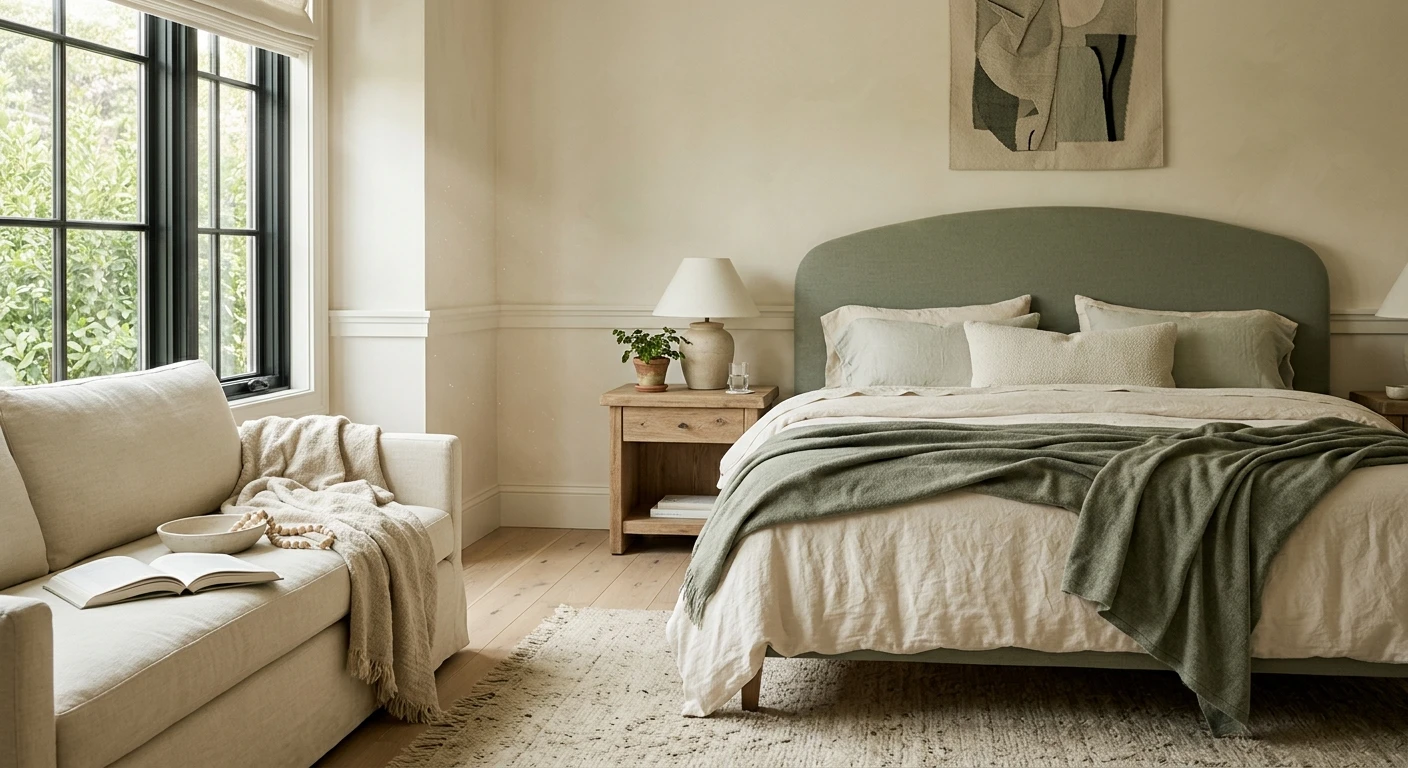
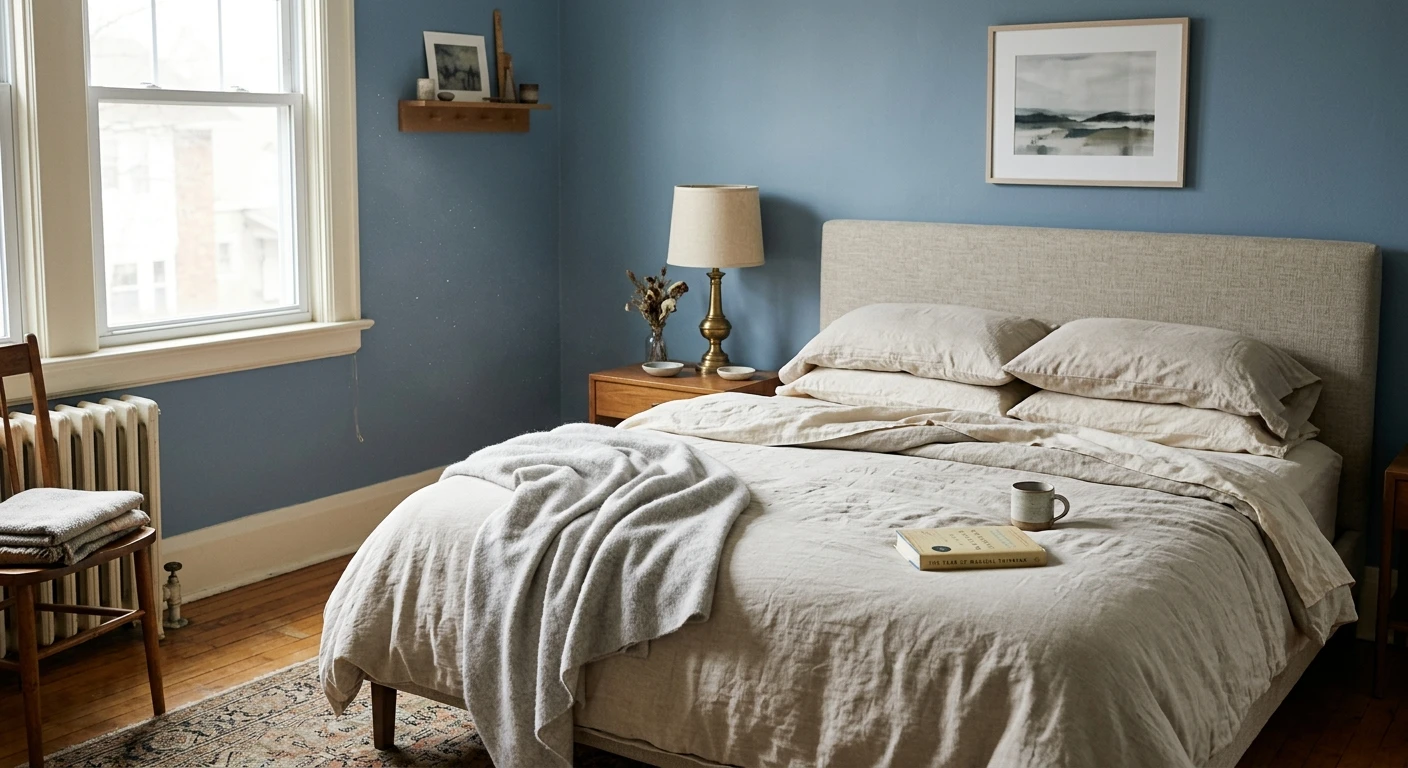
A small bedroom is where all three levers get tested hardest, because the bed takes a share of the floor no other room's furniture claims, and the wall behind the headboard is the one plane that will never reflect anything back into the room. Our shortlist of light paint colors for small bedrooms applies the same LRV logic to that case, split between the whites at LRV 82 to 90 and the soft tints that trade a few points of reflectance for a hint of color.
The best colors to make a room look bigger
These are real, widely documented colors with published LRV figures. The whites do the heavy lifting on brightness, while the pale greiges give you a slightly softer, warmer version of the same trick. Every one of them stays light enough to keep walls receding rather than pressing in.
| Color | Brand + code | Approx LRV | Why it works here |
|---|---|---|---|
| Chantilly Lace | BM OC-65 | 90 | The brightest, cleanest cool white here; reflects the most light and makes walls and ceiling recede for maximum openness |
| Pure White | SW 7005 | 84 | Soft near-neutral white with the barest warmth; bright and expansive without the clinical edge of a true stark white |
| Alabaster | SW 7008 | 82 | Warm soft white that keeps a room feeling cozy but still open; ideal when a cool white feels too cold for the space |
| Eider White | SW 7014 | 73 | Pale greige that stays light and neutral; a touch of color on the walls with enough LRV to keep the room airy |
| Classic Gray | BM OC-23 | 74 | Very pale warm greige that reads almost white in good light; expands a room while adding a whisper of softness |
| Gray Owl | BM OC-52 | 65 | Pale cool gray that recedes; the lowest LRV on this list, best in bright rooms or run monochrome on walls and trim |
Try it on your house
No photo? Try a sample
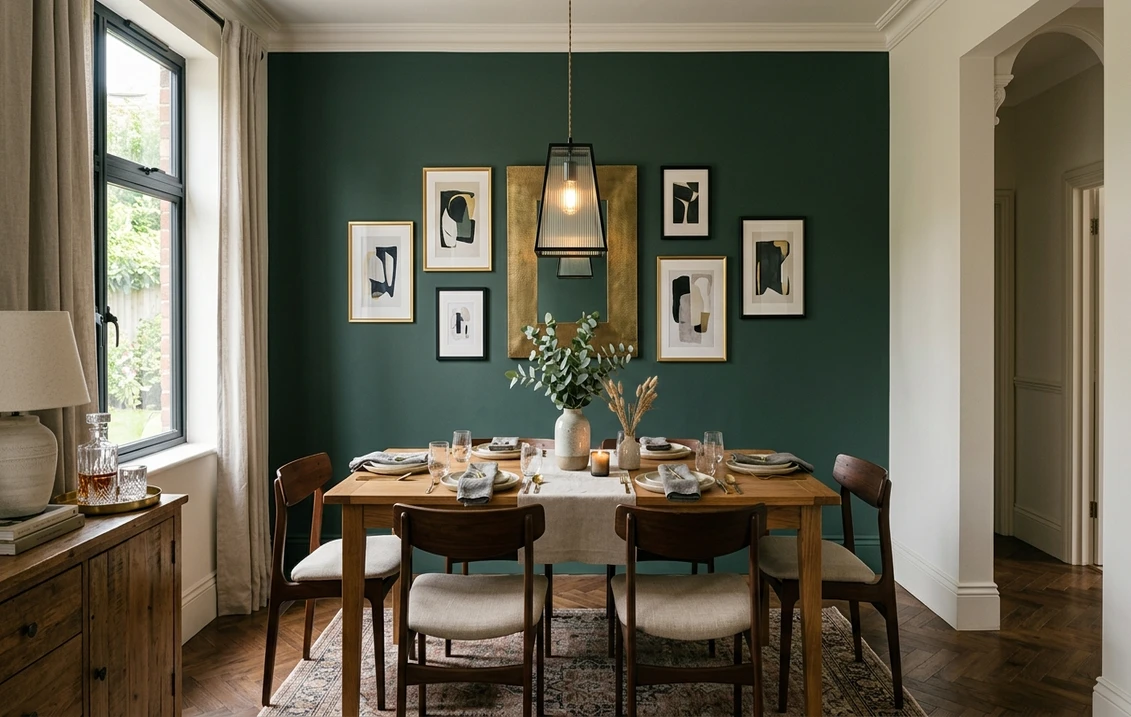
The move that beats any single color is to carry your pick onto the trim and up to the ceiling. Painting baseboards, casings, and crown in the same white as the walls (just a step up in sheen) erases the frames that visually chop a room into pieces, and a ceiling in the same or a slightly lighter tone lifts the whole space. If you want depth rather than a flat box, you can still add one deliberate dark accent, a single feature wall or an alcove in a deep shade, which recedes into shadow and tricks the eye into reading extra distance behind it. Used once and on purpose, a dark accent adds dimension; used everywhere, it closes the room in.
Upload one photo and preview the shortlist on your actual walls in your actual light. Free, no signup.
Colors to avoid
If the goal is more perceived space, a few choices work against you almost every time:
- Deep, saturated wall colors (low LRV). Charcoals, navies, forest greens, and rich terracottas absorb light and pull the walls inward. They can be beautiful, but they make a small room read smaller.
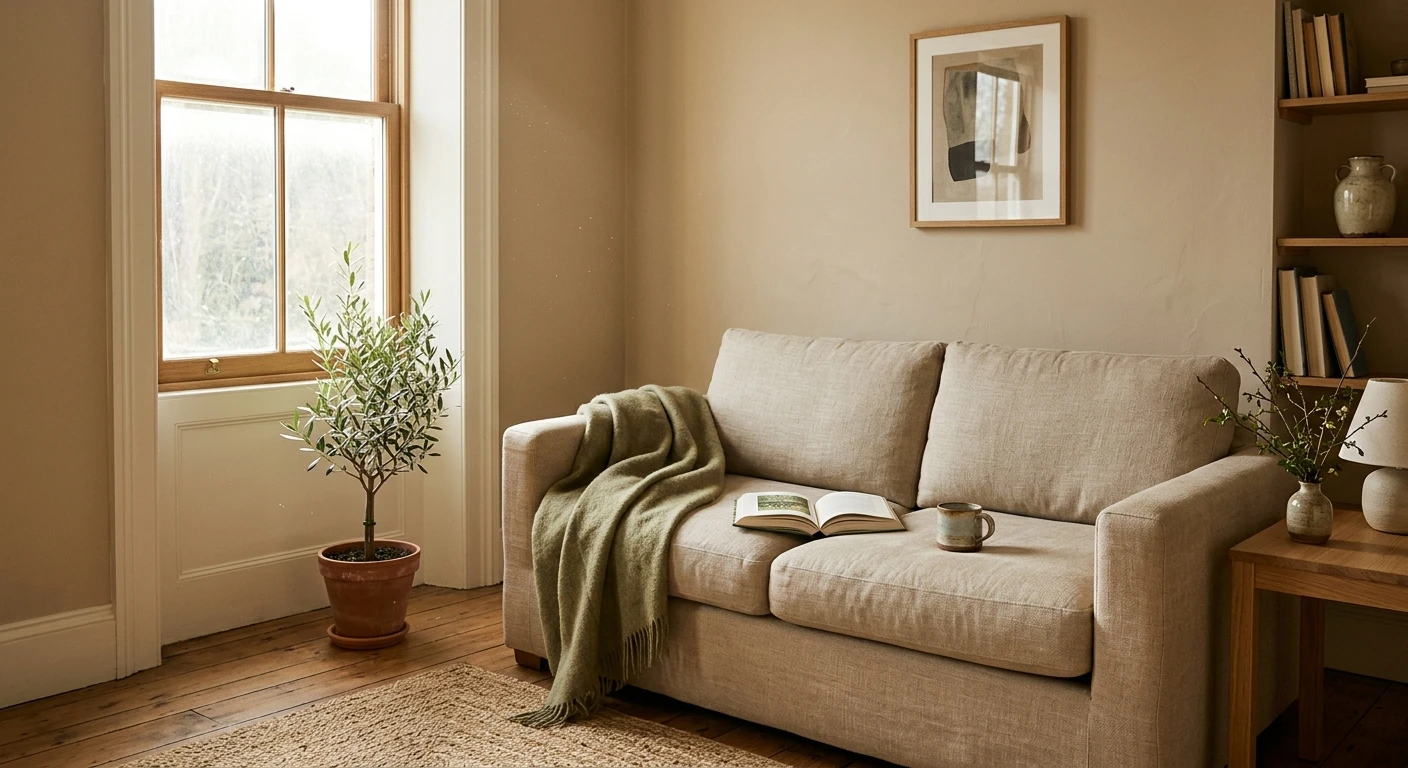
- Warm, heavy earth tones on every wall. Warm colors advance toward the eye, so a room wrapped in a deep beige, gold, or brown feels closer and lower than the same room in a cool pale shade.
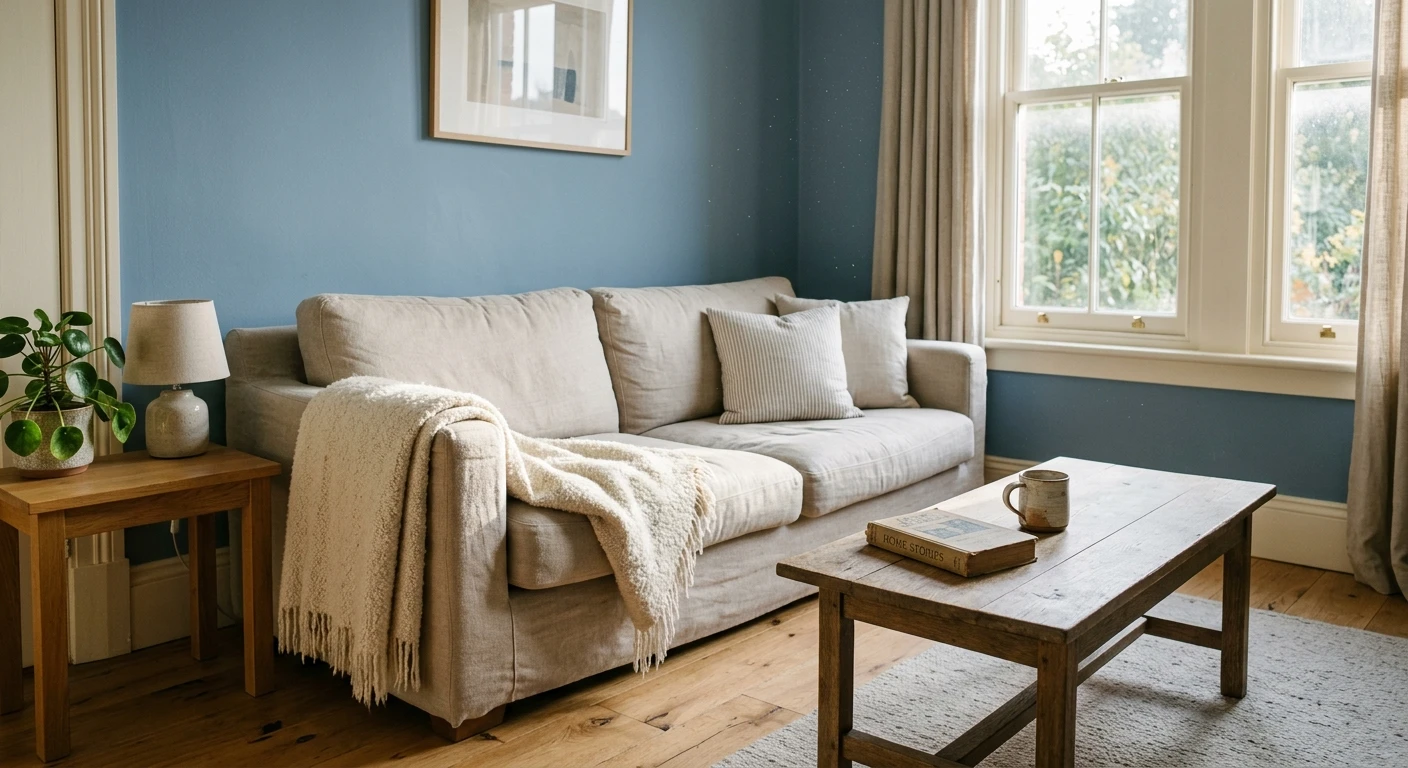
- High-contrast bright white trim against colored walls. A hard line between wall and trim advertises exactly where the room ends. In a space you want to feel bigger, keep that contrast low.
- A ceiling darker than the walls. A darker ceiling presses down and shortens the room. Keep the ceiling equal to or lighter than the walls.
- Very high-gloss finishes on large wall areas. Heavy sheen creates glare and hot spots that draw attention to the surface and its imperfections instead of letting it quietly recede.
The honest caveat with all of this: light is unpredictable. Two rooms painted the same white can look nothing alike because of exposure, bulbs, floor color, and the reflected light bouncing in from outside, so no chip and no LRV number can promise you a result. Before you commit a gallon, preview your shortlist on a photo of your own space with our interior paint visualizer, and if brightness is really the goal, pair this with our reads on paint colors that make a room look brighter and the best paint colors for dark rooms.
Frequently asked questions
What paint color makes a room look bigger?
A high-LRV, low-contrast color makes a room look bigger because it reflects more light and softens the edges of the space. Crisp cool whites like BM Chantilly Lace OC-65 (approx LRV 90) and soft whites like SW Pure White SW 7005 (LRV 84) work best, with pale cool greiges such as SW Eider White SW 7014 (LRV 73) as a slightly warmer alternative. Carrying the same color onto the trim and ceiling adds the most to the effect.
Should the ceiling be the same color as the walls to make a room look bigger?
Matching or nearly matching the ceiling to the walls helps a room feel bigger because it removes the visual line where the wall stops and the ceiling starts, so the space reads as one continuous volume. A ceiling that is the same tone or a step lighter than the walls also lifts the eye and adds a sense of height. Avoid a ceiling darker than the walls, which presses the room down.
Do light gray paint colors make a room look bigger?
Pale cool grays and greiges can make a room look bigger as long as their LRV stays high, roughly 65 and up, because they still reflect plenty of light while their cool undertone helps the walls recede. SW Eider White SW 7014 (LRV 73), BM Classic Gray OC-23 (approx LRV 74), and BM Gray Owl OC-52 (approx LRV 65) are good examples. Darker, moodier grays do the opposite and close a small room in.
Can a dark accent wall make a small room look bigger?
One deliberate dark accent wall can add a sense of depth because the deep color recedes into shadow, and the eye reads extra distance behind it. The key is restraint: use it on a single wall or an alcove, keep the other three walls light and low-contrast, and treat it as an accent rather than the main color. Wrapping a small room in dark paint on every side makes it feel smaller, not larger.
1 HD render plus 3 free color variations.
Color names and codes are trademarks of their respective owners (Sherwin-Williams, Benjamin Moore, Behr). FacadeColorizer is an independent AI visualization tool and is not affiliated with them. LRV and hex values are approximate; the authoritative reference is a physical paint sample viewed in your own light.
Trademarks mentioned (Sherwin-Williams, Benjamin Moore, Behr, Caparol, Brillux, Sto, Alpina, Valspar, PPG, Glidden, Dulux, Crown Trade, Sandtex, Farrow & Ball, Johnstone's, Leyland) are property of their respective owners. FacadeColorizer is independent and not affiliated with any of them. Nominative fair use under Lanham Act §1125.