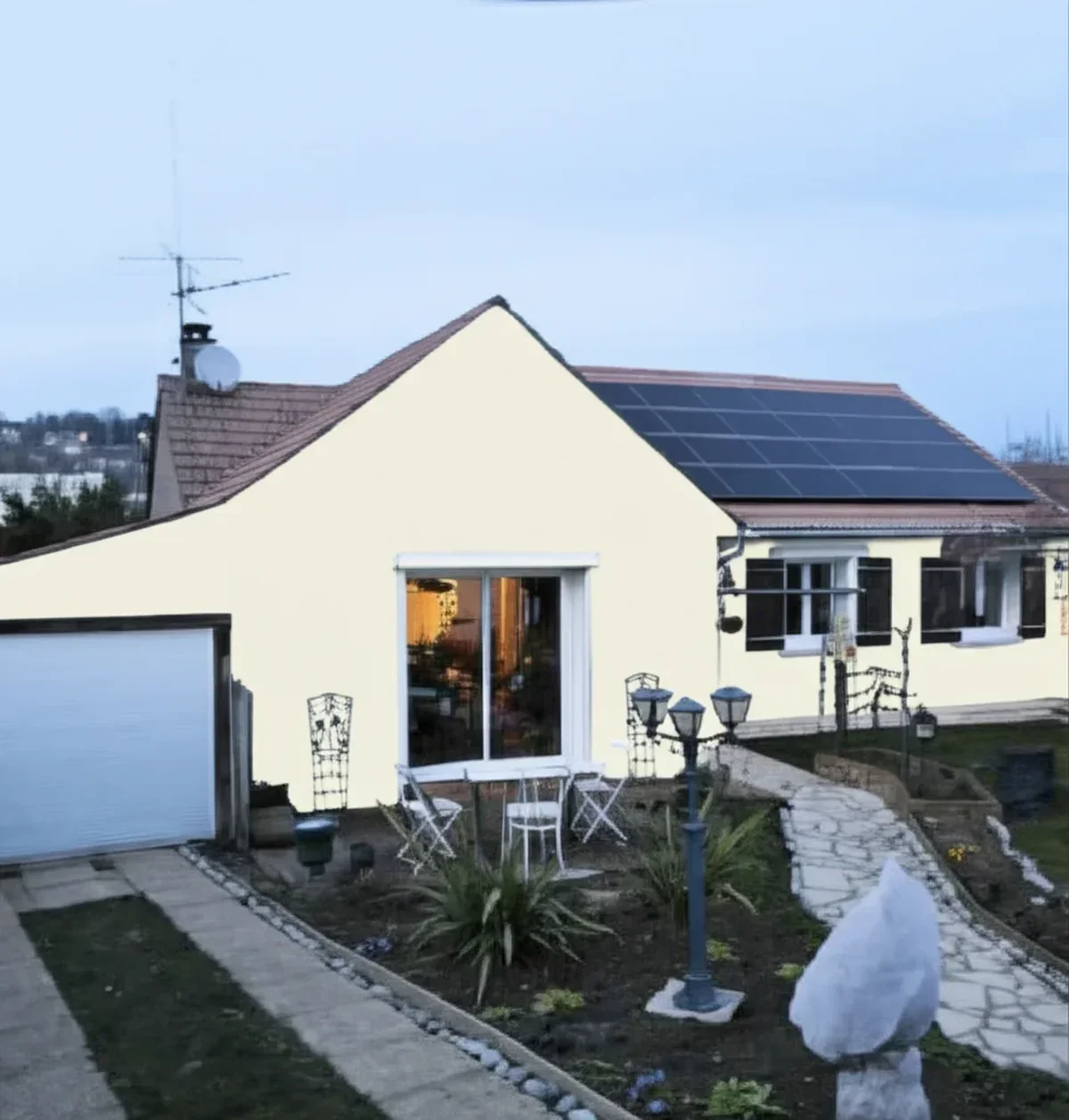
Try it on your house

Alabaster SW 7008 is the warmer, creamier white, with an LRV of 82 and a soft greige-tinged warmth that made it Sherwin-Williams' 2016 Color of the Year.
Simply White OC-117 is the brighter, cleaner warm white, with an LRV of 89.5 and a faint yellow undertone that reads as fresh and luminous.
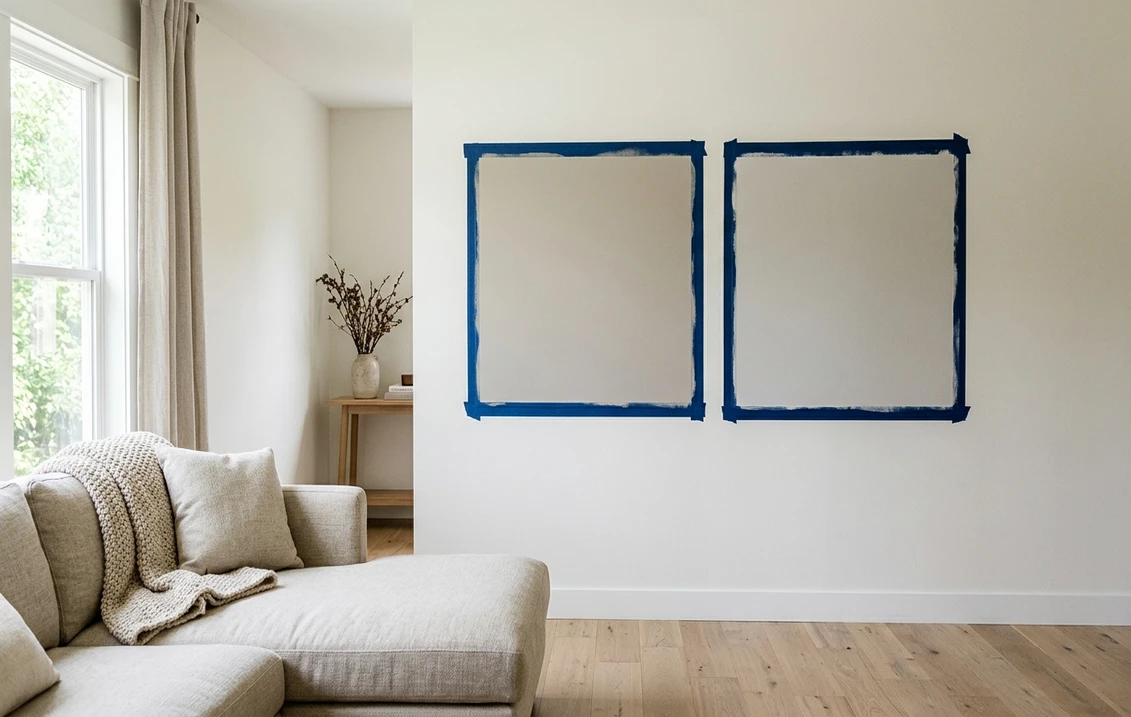
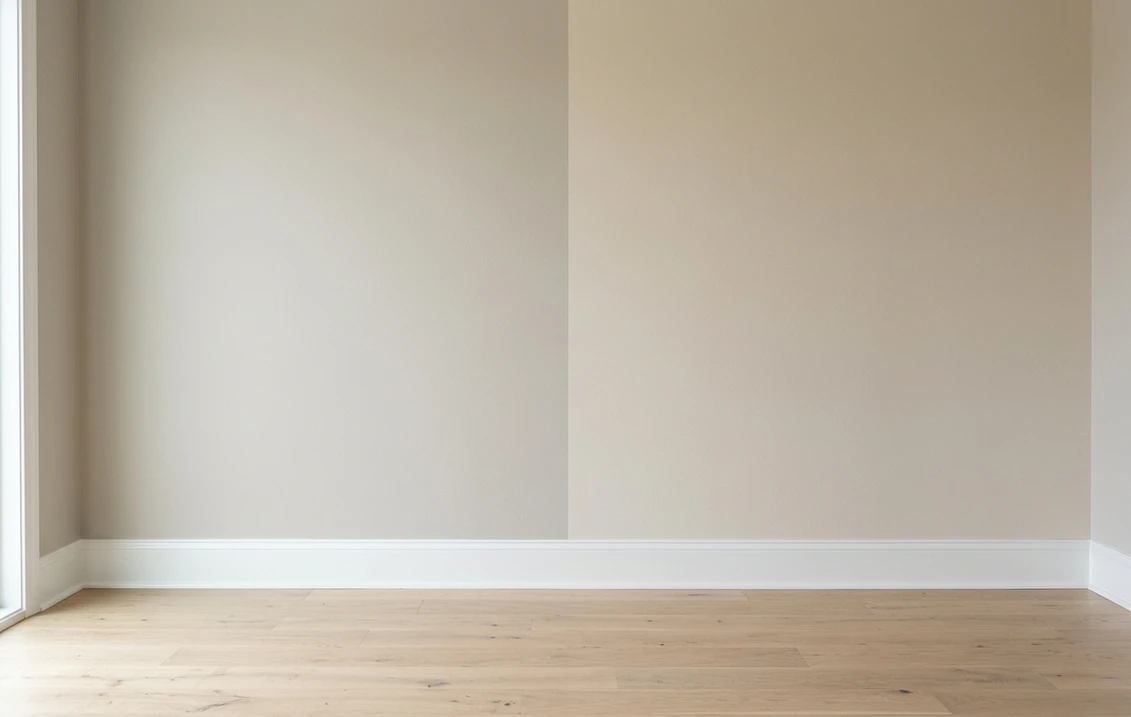
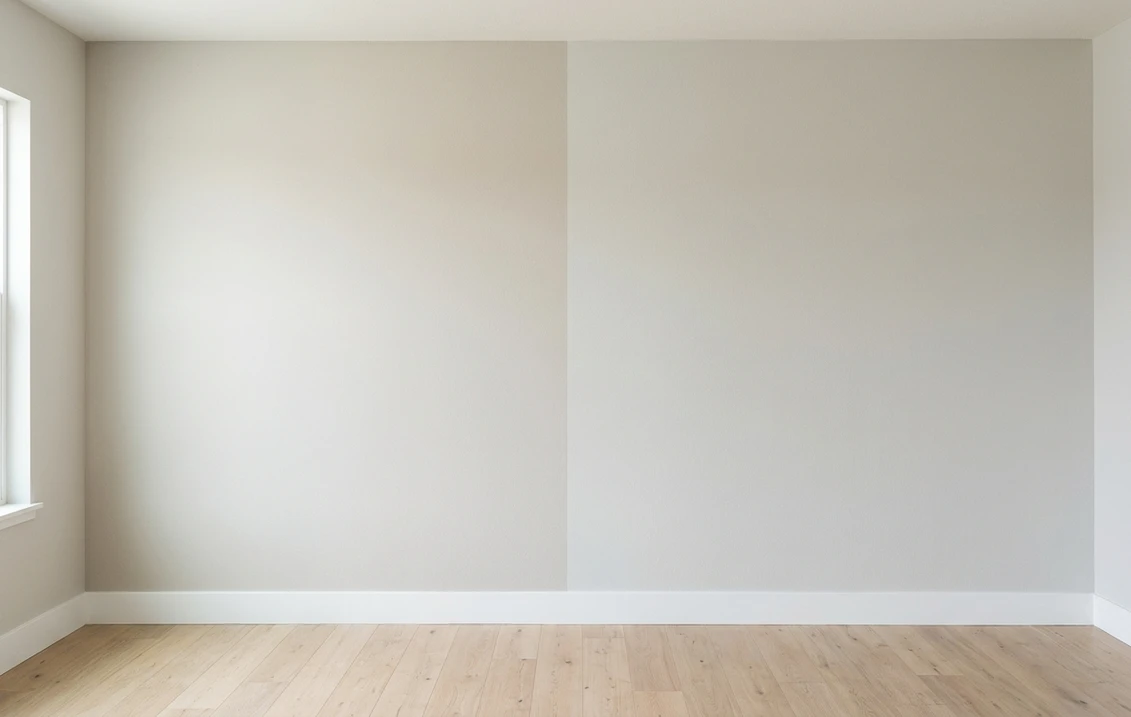
They are cross-brand (Sherwin-Williams versus Benjamin Moore) and two white paints that homeowners sample side by side. Alabaster is creamier and more muted; Simply White is brighter and cleaner. The 7.5-point LRV gap is visible on the wall. Sample both on a photo of your room before you buy a gallon.
Alabaster and Simply White are two whites that homeowners cross-shop side by side in the US paint market. Alabaster (SW 7008) was Sherwin-Williams' 2016 Color of the Year and remains a go-to white. Simply White (OC-117) was Benjamin Moore's 2016 Color of the Year and holds the same status for BM. Homeowners comparing the two brands often sample these two whites side by side. This is our side-by-side method for comparing paint colors applied to the two most important whites in American paint.
The numbers side by side
| Attribute | Alabaster SW 7008 | Simply White OC-117 |
|---|---|---|
| Family | Warm cream white, greige whisper | Warm bright white, faint yellow |
| LRV | 82 | 89.5 |
| Approximate hex | #F2EBDD | #F0EDE1 |
| Undertone | Soft greige, cream, muted warmth | Faint yellow, clean, luminous |
| Loves | Whole-home white, trim, walls, cabinets | Bright interiors, ceilings, clean palettes |
| Watch out for | Reading too creamy beside stark whites | Reading too clean beside warm whites |
| Overall vibe | Warm, creamy, approachable | Bright, clean, fresh |
Try it on your house
No photo? Try a sample
The LRV values above are the brands' published figures. Hex and RGB are approximate screen renderings that vary by display; always confirm with a physical sample before buying.
Upload one photo, get a photorealistic render, then swap to Simply White in one click. Free, no signup.
Room by room, exposure by exposure
| Situation | Usual winner | Why |
|---|---|---|
| North-facing room | Simply White | The higher LRV (89.5) keeps the room bright; Alabaster at 82 can read flat cream in cool light. |
| Bright south room | Alabaster | Strong sun warms the greige whisper into a soft cream; Simply White can wash toward stark. |
| Kitchen cabinets | Simply White | The clean, bright white keeps cabinets looking fresh and modern. |
| Living room walls | Alabaster | The creamy warmth wraps the room in softness; Simply White can feel a bit stark on all four walls. |
| Open main floor | Alabaster | The LRV 82 flows well across connected spaces without feeling too bright or too heavy. |
| Ceilings and trim | Simply White | The bright, clean white pops against walls and creates crisp architectural lines. |
Alabaster and Simply White are both warm whites, but Alabaster carries a muted creaminess while Simply White goes for brightness. The difference is about how much warmth and muting you want. For more on Alabaster, see our Alabaster vs White Dove guide, and for Simply White, see White Dove vs Simply White.
When to choose Alabaster
- You want a warm, creamy white with a soft greige whisper that feels approachable and soft.
- Your room gets strong natural light where the creaminess reads as warm, not heavy.
- You are painting living room walls or a whole-home white that should feel cozy.
- You prefer muted warmth over bright, clean white. For the full breakdown, see our Alabaster vs Greek Villa guide.
When to choose Simply White
- You want a bright, clean warm white with a faint yellow undertone that looks fresh and luminous.
- Your room is dim or north-facing and you need a white that reflects maximum light.
- You are painting cabinets, ceilings, or trim where crisp brightness matters.
- You prefer a clean, modern white over a creamy one. For more, see Simply White vs Chantilly Lace.
One photo, two colors, your actual lighting. Free and takes about 30 seconds.
Frequently asked questions
What is the difference between Alabaster and Simply White?
The main difference is warmth and brightness. Alabaster SW 7008 has an LRV of 82 with a cream-greige undertone, reading as a warm, muted creamy white. Simply White OC-117 has an LRV of 89.5 with a faint yellow undertone, reading as a bright, clean warm white. Both were 2016 Colors of the Year for their respective brands.
Which is lighter, Alabaster or Simply White?
Simply White is lighter. Its LRV is 89.5, compared with 82 for Alabaster. That 7.5-point gap is visible on the wall: Simply White bounces noticeably more light and reads cleaner, while Alabaster reads as a warmer, creamier white.
Do Alabaster and Simply White have the same undertones?
Both are warm whites, but with different undertones. Alabaster has a soft greige whisper that mutes the warmth and keeps it from yellowing. Simply White has a faint yellow undertone that reads as clean and luminous. Alabaster is often described as creamy; Simply White as bright.
Can I see both colors on my own wall before I buy paint?
Yes. Upload one photo of your room to FacadeColorizer, get a photorealistic render in Alabaster, then swap to Simply White in one click. You will see the cream-vs-bright difference on your actual wall. The first HD render and three color variations are free.
Your first HD render and 3 color swaps are free. Try Alabaster first, then Simply White.
Trademark notice. Benjamin Moore and Simply White are trademarks of Benjamin Moore & Co. Sherwin-Williams and Alabaster are trademarks of The Sherwin-Williams Company. FacadeColorizer is not affiliated with, endorsed by, or sponsored by these companies. Brand and color names are used descriptively (nominative fair use). Hex and RGB values are approximate digital renderings; the only authoritative reference is a physical paint sample.
Trademarks mentioned (Sherwin-Williams, Benjamin Moore, Behr, Caparol, Brillux, Sto, Alpina, Valspar, PPG, Glidden, Dulux, Crown Trade, Sandtex, Farrow & Ball, Johnstone's, Leyland) are property of their respective owners. FacadeColorizer is independent and not affiliated with any of them. Nominative fair use under Lanham Act §1125.