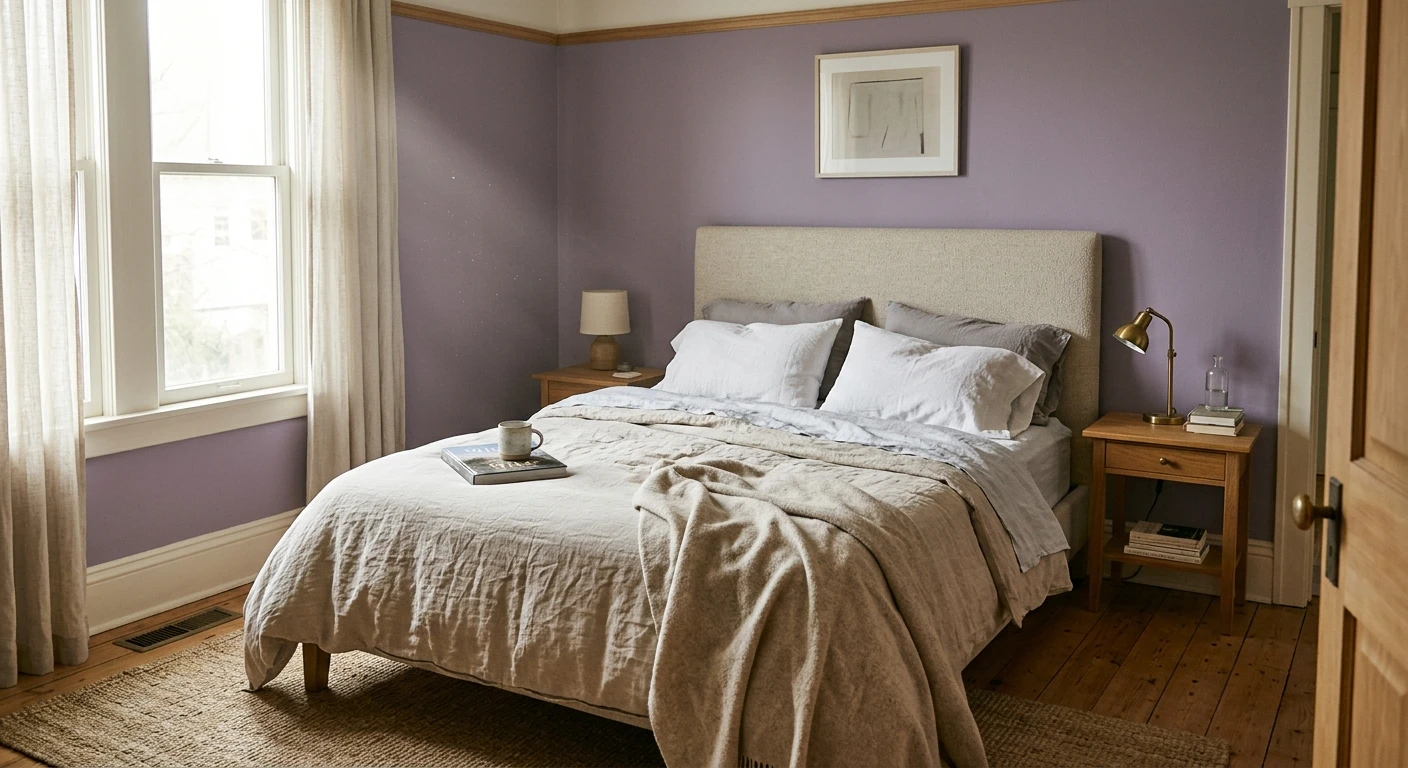
Try it on your room

Quick answer: For a blush pink bedroom that reads grown-up rather than juvenile, start with three warm, soft blushes: Benjamin Moore First Light 2102-70 (a barely-there gray-blush, LRV about 77), Benjamin Moore Pink Damask 2078-60 (a soft rose with visible color, LRV about 70), and Sherwin-Williams Malted Milk SW 6057 (a warm pink-greige, LRV about 60) when you want something more grounded. Pair any of them with warm white trim, brass, natural wood, and a touch of sage green.
A blush pink bedroom sounds like a gamble and turns out to be one of the calmest, most flattering rooms in the house. The secret is the shade: a soft, warm blush with a little gray or brown in it reads like early light on the wall, not a scoop of strawberry, and it flatters skin tones under lamplight, which is exactly what you want in a room you wake up in. This is the bedroom-specific chapter of our room-by-room paint color ideas. If you want every bedroom color family lined up side by side, browse the wider bedroom color schemes and palettes first, then come back here, because this page stays tightly on one thing: blush pink in a bedroom, the shades to use, and how to make them look grown-up.
Best blush pink shades for a bedroom
Blush covers a lot of ground, from a whisper you can barely name to a soft rose you can clearly read across the room. For a bedroom I stay in the warm, gentle, slightly grayed lane. Here are five shades I trust, ordered from the most barely-there to the most grounded. Treat the codes as starting points and always sample, because screens and chips both lie about pink.
| Color | Brand + code | Approx LRV | Why it works in a bedroom |
|---|---|---|---|
| Feather Down | Behr Feather Down | ~80 | A soft warm blush-white, the most restrained pick. Feels like a warm white with a rosy glow, for anyone who wants just a whisper of pink on all four walls. |
| First Light | BM 2102-70 | 77 | A cool gray-blush that reads almost neutral by day and warms under lamps. The safest whole-room blush and the one I reach for first. |
| Pink Bliss | BM 2093-70 | 76 | A warm pale blush, a touch softer and rosier than First Light. Cozy and gentle on every wall in a room with good warm light. |
| Pink Damask | BM 2078-60 | 70 | A soft, slightly cool rose with real but gentle color. This is whole-room blush for when you actually want to see the pink. |
| Malted Milk | SW 6057 | 60 | A warm pink-greige, the most grounded option. Reads like a sophisticated neutral with a rosy warmth, lovely all-over or on a single headboard wall. |
Try it on your house
No photo? Try a sample
LRV figures are approximate, rounded from manufacturer data. Behr Feather Down is on the light end and its exact value can vary by can, so confirm the number and a physical sample at the paint counter.
Upload one photo and preview these shades on your actual bedroom. Free, no signup.
How to use blush pink in a bedroom
The lighter blushes here, roughly LRV 70 and up, are safe on all four walls and keep a bedroom feeling open and soft. Feather Down, First Light, Pink Bliss, and Pink Damask all work whole-room. The more grounded Malted Milk can go all-over too, but it also makes a beautiful headboard or accent wall if you want a little contrast against a paler blush or a warm white. For a cocooning primary bedroom, try color-drenching: take one soft blush across the walls, trim, and ceiling for a seamless, enveloping effect that reads far more intentional than a bright white ceiling floating over pink walls.
Trim is what decides whether blush looks expensive or cheap. Reach for a warm white first: Benjamin Moore White Dove OC-17 or Sherwin-Williams Alabaster both let a blush stay warm and calm. The single most common mistake is pairing a warm blush with a stark blue-white trim, which pushes the pink toward peach and exposes any thinness in the color. If your trim is already a cool white you cannot change, lean toward a blush with more body, like Pink Damask or Malted Milk, so the contrast stays soft instead of sharp.
Light changes blush more than almost any other color, so plan for the hours you actually use the room. Warm 2700K bulbs deepen it and bring out the rosiness, which is why blush bedrooms glow at night. Cool 4000K LEDs do the opposite: they drain the warmth and can leave a pale blush looking gray or, worse, like a flesh tone. Daylight matters just as much. In bright south or west rooms the barely-there blushes come alive on their own, while in a cooler north-facing room you are better off with a blush that carries visible color, such as Pink Damask, or adding warm bulbs to put the pink back. There is a third option worth knowing about, because it solves the north-facing case from the other direction: stop fighting the cool cast and pick a color built around it. A muted mauve is a dusty rose-violet with a brown-pink base, so it holds the same softness as a blush but stays put when the light goes cool instead of draining to gray. Our purple bedroom paint ideas cover that neighboring band.
For accents, keep the room warm and natural. Brass hardware and lighting, natural oak or walnut furniture, and cream or oatmeal linen all flatter blush and keep it from reading sweet. A single sage green note, a headboard, a throw, or a chair, is the detail that makes a blush bedroom look designed rather than girly, because green sits opposite pink on the wheel and quietly balances its softness. That combination of blush, warm white, wood, brass, and a little sage is what separates a grown-up blush bedroom from a nursery.
Mistakes to avoid
A blush bedroom goes wrong in a handful of predictable ways. Sidestep these and you are most of the way there:
- Judging pink off a tiny chip under store fluorescents. Blush shifts a lot between the showroom and your bedroom light, so never commit from the fan deck alone.
- Pairing warm blush with a stark, blue-white trim. It is the fastest way to make a nice blush read peachy and cheap. Use a warm white instead.
- Choosing a clean, high-chroma bubblegum pink. That is the shade that reads juvenile. Stay with the warm, slightly grayed blushes above.
- Drenching a dark north room in the deepest blush under cool bulbs. Either add warm 2700K light or move to a shade with more visible color.
- Matching everything: pink walls, pink bedding, pink curtains. Let warm white, wood, and brass break it up so the blush stays the accent, not the whole story.
When you have narrowed it to two or three blushes, the fastest way to choose is to see them on your actual walls. Upload a photo of your bedroom to our interior paint visualizer and preview First Light, Pink Damask, and Malted Milk side by side under your own light before you buy a single sample pot. And if blush turns out not to be the mood you are after, two calmer directions worth a look are a deep, restful navy blue bedroom or a warm, easy beige bedroom.
Frequently asked questions
What is the best blush pink paint for a bedroom?
For most bedrooms the safest blush is a soft, warm one with a little gray in it. Benjamin Moore First Light 2102-70 (LRV about 77) is the barely-there favorite: it reads almost neutral by day and warms under lamps. If you want the pink to actually show, Pink Damask 2078-60 (LRV about 70) keeps real but gentle color, and Sherwin-Williams Malted Milk SW 6057 (LRV about 60) is the grounded, grown-up option when you want something closer to a warm greige.
Does a blush pink bedroom look childish?
It does not have to. The shades that read juvenile are the clean, high-chroma bubblegum pinks. The grown-up blushes are warm and slightly grayed or brown-based, and they get their maturity from what sits next to them: warm white trim, brass hardware, natural oak or walnut, and cream linen. Add a sage green accent and a blush bedroom reads calm and romantic, not like a nursery.
What colors go with blush pink bedroom walls?
Warm white trim (Benjamin Moore White Dove or Sherwin-Williams Alabaster) is the safest partner and keeps blush from going peachy or cheap. Sage green is blush's best friend because it sits opposite pink on the wheel and steadies the sweetness. Natural wood, brass, and cream or oatmeal textiles all flatter it. Avoid stark blue-white trim next to a warm blush, which pushes it toward a flesh tone.
Does blush pink work in a north-facing bedroom?
Yes, but choose the shade for the light. North light is cool and can wash a barely-there blush out to gray, so in a north room pick a blush with visible color like Pink Damask 2078-60, or add warm 2700K bulbs to put the rosiness back. In bright south or west light, the palest blushes such as First Light glow on their own and need no help.
1 HD render plus 3 free color variations.
Color names and codes are trademarks of their respective owners (Sherwin-Williams, Benjamin Moore, Behr). FacadeColorizer is an independent AI visualization tool and is not affiliated with them. LRV and hex values are approximate; the authoritative reference is a physical paint sample in your own light.
Trademarks mentioned (Sherwin-Williams, Benjamin Moore, Behr, Caparol, Brillux, Sto, Alpina, Valspar, PPG, Glidden, Dulux, Crown Trade, Sandtex, Farrow & Ball, Johnstone's, Leyland) are property of their respective owners. FacadeColorizer is independent and not affiliated with any of them. Nominative fair use under Lanham Act §1125.