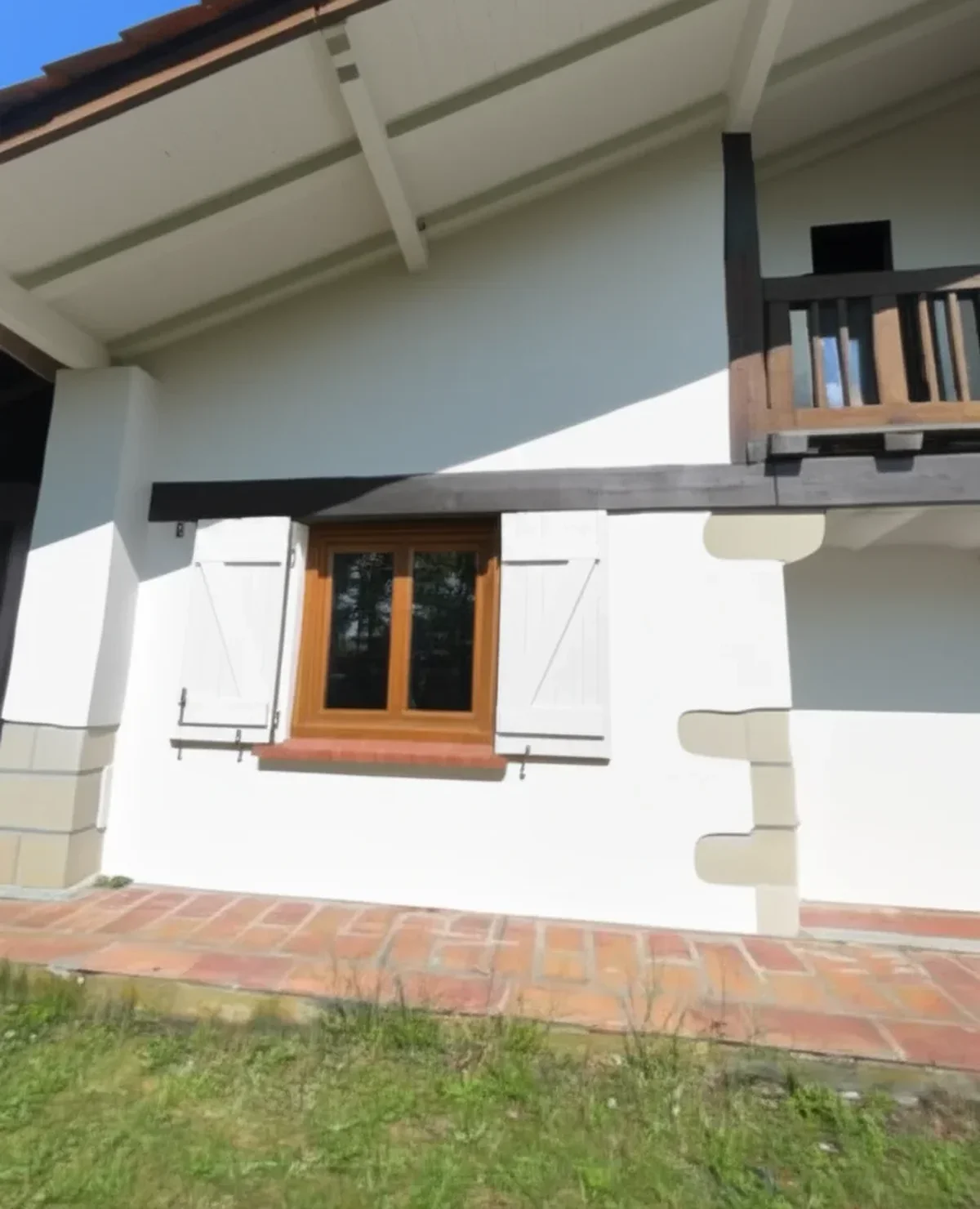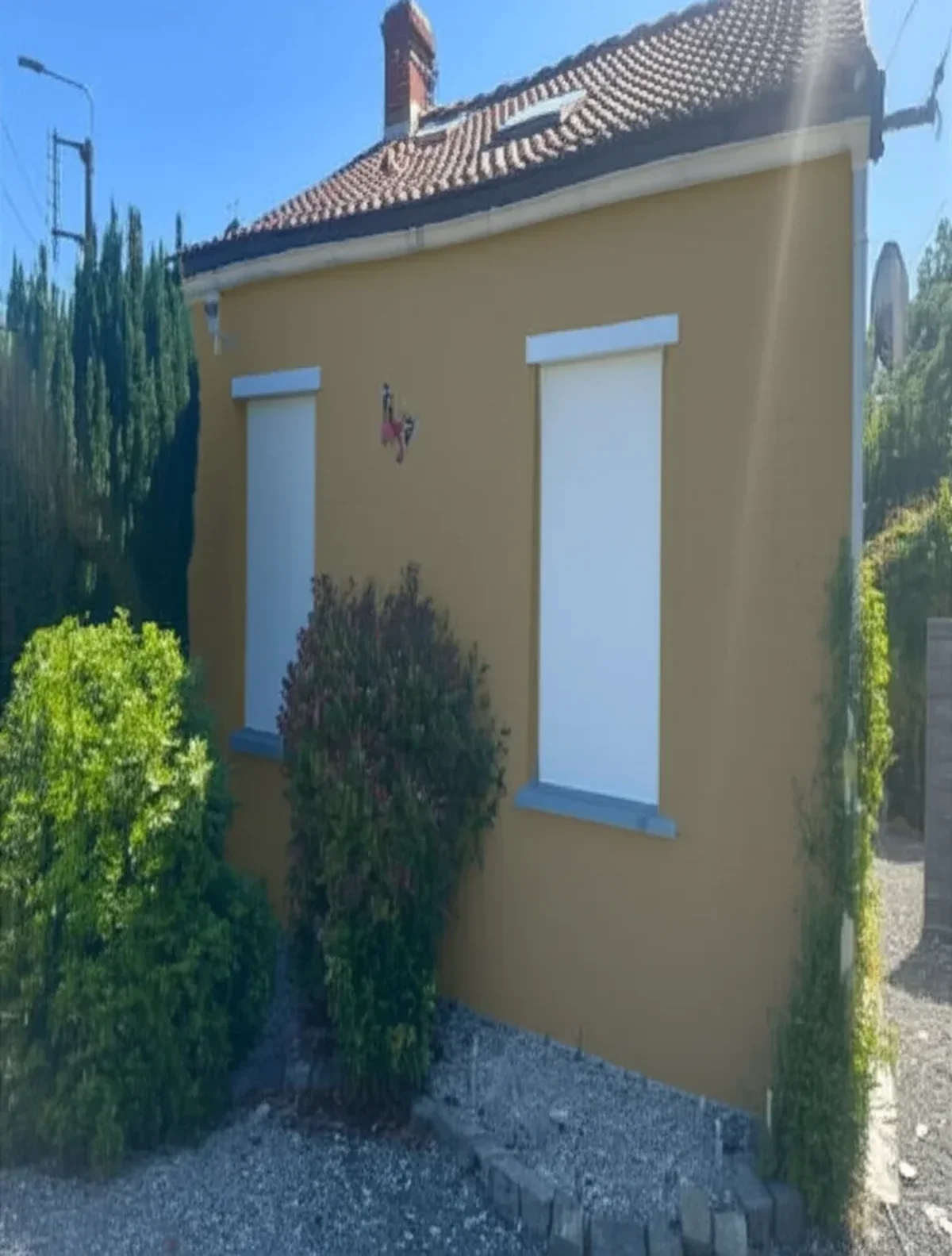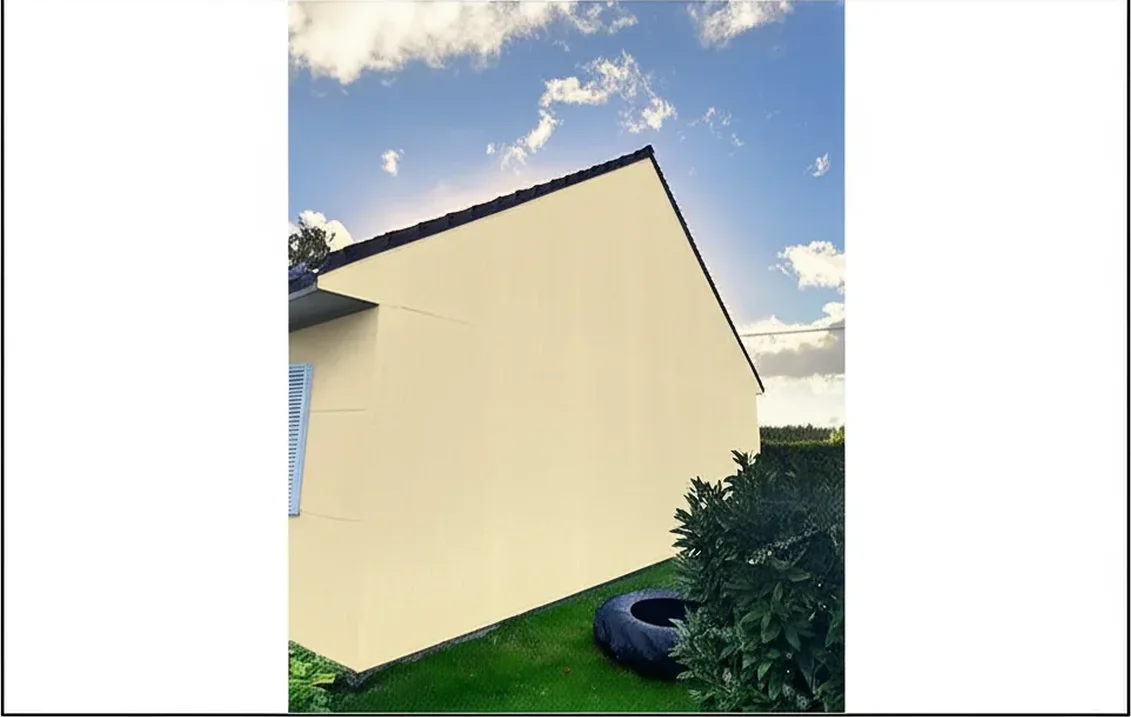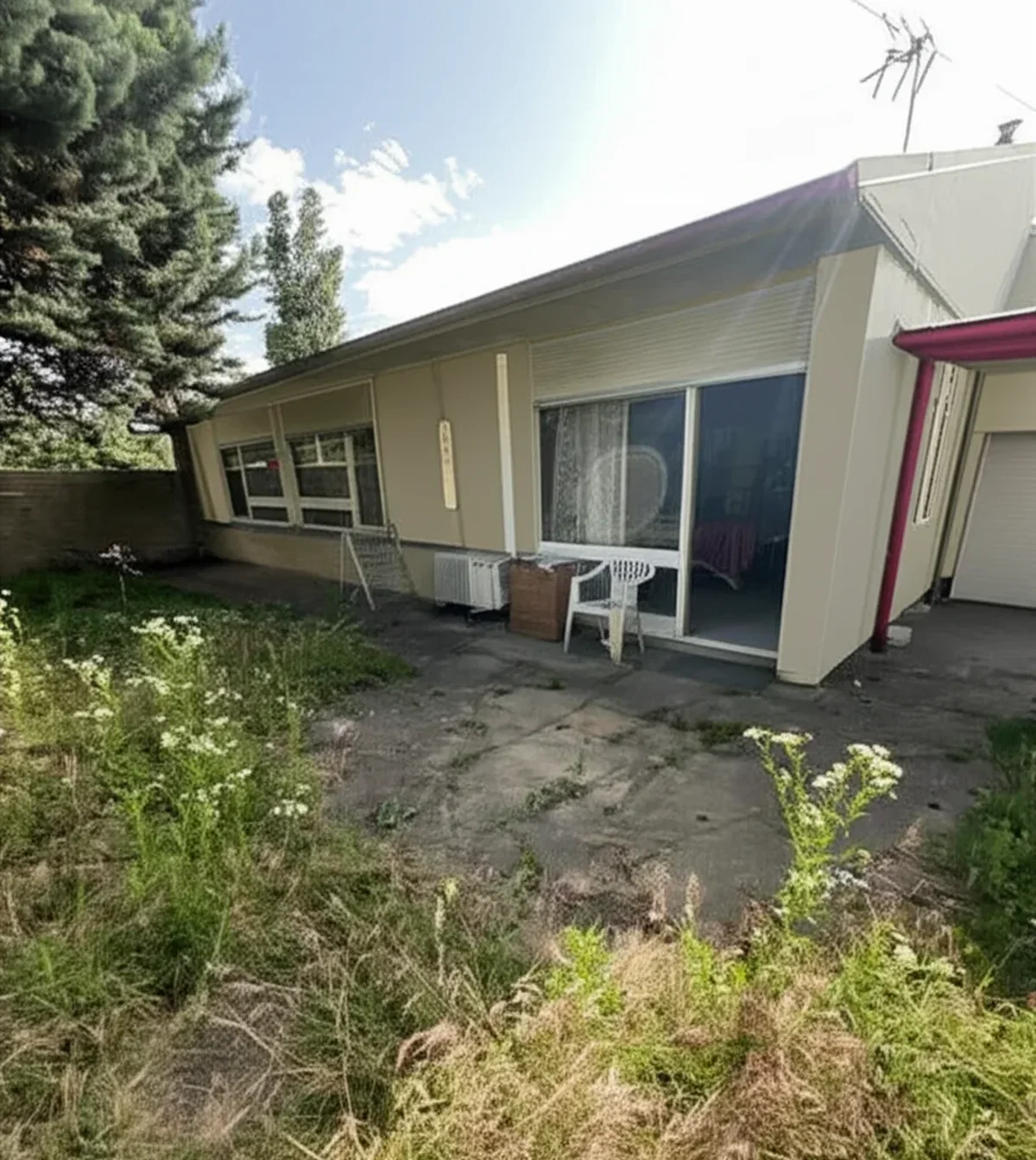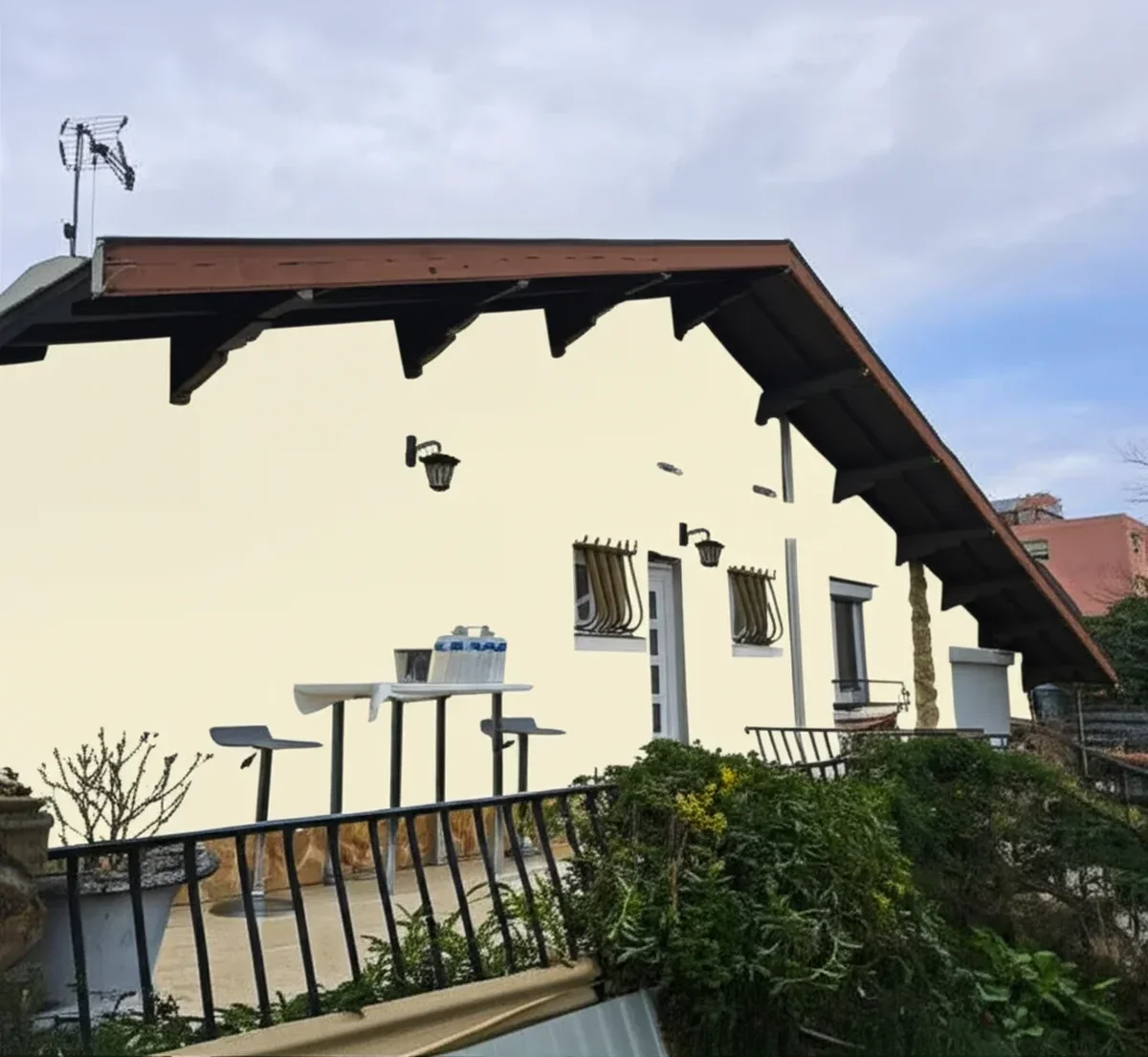
Try it on your house

Damp patches on exterior walls are one of the most common complaints from UK homeowners, and one of the most misunderstood. Not every damp problem can be solved with paint, but for penetrating damp caused by porous masonry, the right exterior coating can make a genuine difference. Here's what actually works in 2026, what doesn't, and which products are worth the money.
Try our free colour visualiser to see how a breathable masonry paint will look on your damp-prone wall before buying.
When damp-proof paint works (and when it doesn't)
Let's be clear upfront: damp-proof exterior paint is designed for penetrating damp, rain driving through porous brickwork, render, or stone. It does NOT fix rising damp (which requires a physical damp-proof course) or condensation damp (which is a ventilation issue). If your damp survey shows rising damp or condensation, paint alone won't solve the problem.
For penetrating damp on exposed elevations, particularly west-facing walls that take the brunt of prevailing weather, a quality waterproof exterior coating can reduce moisture ingress by 90-95%, according to tests by the BRE (Building Research Establishment). The key word is "quality": cheap masonry paint provides almost no waterproofing.
Product comparison: the top 5 in 2026
| Product | Type | Price (5L) | Coverage | Best for |
|---|---|---|---|---|
| Zinsser Watertite | Cementitious waterproofer | 55-65 GBP | 4-5 m2/L | Basements, retaining walls |
| Ronseal All Weather Protection | Flexible masonry paint | 35-42 GBP | 6-8 m2/L | General exterior walls |
| Sandtex Ultra Smooth | Microporous masonry paint | 30-38 GBP | 8-10 m2/L | Smooth render, good coverage |
| Dulux Weathershield | Flexible masonry paint | 32-40 GBP | 7-9 m2/L | All-round, wide colour range |
| Stormdry Masonry Protection Cream | Colourless water repellent | 70-85 GBP | 3-5 m2/L | Bare brick you want to keep visible |
Try it on your house
No photo? Try a sample
Prices: Screwfix/Toolstation average, April 2026. Coverage depends on surface porosity.
Application: getting it right
The preparation is more important than the product. Follow these steps for any damp-proof exterior coating:
- Wait for dry weather, the wall needs to be dry to the touch for at least 48 hours before application. Check the forecast for at least 24 hours of dry weather after painting.
- Clean thoroughly, use a fungicidal wash (Ronseal, HG, or Bostik) on any areas with algae, lichen, or mould. Allow 24 hours to dry after washing.
- Repair cracks first, no paint can bridge a crack wider than 1mm. Fill with flexible exterior filler (Everbuild 335 or similar) and allow 24 hours to cure.
- Apply a stabilising primer on powdery or friable surfaces. Zinsser Gardz or Dulux Weathershield Stabilising Primer both work well.
- Two full coats minimum, one coat is never enough for waterproofing. Apply the second coat within the recoat window (typically 4-6 hours).
- Use a proper masonry brush, an interior emulsion brush cannot carry enough of a thick BS EN 1062 coating to build a continuous film on textured surfaces. A masonry block brush holds 30-40% more paint per dip: 150 mm with stiff filament for pebbledash and tyrolean render, 100 mm for smooth render. Our comparison of UK masonry paint brushes lists sizes and GBP prices by wall finish.
The Stormdry option: when you want to keep bare brick
If your home has attractive face brickwork that you don't want to cover with paint, Stormdry Masonry Protection Cream is the standout product. It's a colourless silicone-based cream that penetrates 5-10mm into the brick and creates a water-repellent barrier while remaining fully breathable. The BBA (British Board of Agrement) has certified it for a 25-year lifespan, far longer than any painted finish.
At 70-85 GBP for 5 litres, it's expensive, but you only need one coat and it lasts a quarter century. For a typical semi-detached front elevation of 40 m2, you'll need about 10 litres, roughly 160 GBP in product. Not bad for 25 years of protection.
Choosing your colour
If you're going with a coloured masonry paint (Ronseal, Sandtex, or Dulux), take the time to test the colour before committing to 20 litres. Use our free colour visualiser to see how different shades look on your own home, it's far cheaper than buying three tester pots at 8 GBP each.
BS EN 1062 Compliance: What Class Should Your Coating Be?
The European standard BS EN 1062 defines the performance characteristics of exterior masonry coatings across five technical properties. Three of these matter most for damp-proof selection: water vapour transmission (V1 high, V2 medium, V3 low), liquid water permeability (W1 high, W2 medium, W3 low) and crack-bridging (A0 to A5). The optimum specification for penetrating damp on UK solid walls is V2 W3 A2, meaning the coating is highly water repellent yet still vapour permeable enough to release trapped moisture. Sandtex Ultra Smooth, Dulux Weathershield and Ronseal All Weather Protection all carry V2 W3 classifications. Stormdry Masonry Protection Cream achieves V1 W3, the gold standard for bare-brick projects.
Specifying a V3 (low permeability) coating on a solid-wall pre-1919 home is one of the most common mistakes UK homeowners make. The wall cannot dry inward through the impermeable membrane, so moisture migrates internally and damages plaster, skirtings and floor timbers. The BBA assessment certificate for each product lists its BS EN 1062 classification, always check this before purchase. BS 6262 (companion standard for glazing) and BS 7079 (steel substrate preparation) also reference 1062 where mixed materials are present. The British Standards Institution maintains the current text via the Planning Portal linked guidance for Building Control submissions.
Breathable Systems for Older UK Buildings
Pre-1919 properties were built without a damp-proof course and rely on the wall's natural ability to absorb and release moisture seasonally. Applying a modern impermeable masonry paint over solid brickwork creates the conditions for accelerated decay. For genuine breathability on heritage walls, specify a silicate mineral paint (Keim Soldalit, Beeck Renosil, Earthborn Silicate) or a traditional limewash. These chemically bond with the substrate rather than forming a film, allowing 95 to 98 per cent vapour transmission while still shedding driving rain. Silicate paints cost 45 to 75 GBP per 5 litre tin at specialist suppliers, more than mass-market masonry paint, but their 15 to 20 year lifespan and zero failure rate on heritage walls justify the spend.
For listed buildings, Listed Building Consent is required before any change of exterior finish. Conservation officers across the UK consistently approve limewash and silicate paints in heritage colour palettes, but reject acrylic and plastic-bound coatings. The Society for the Protection of Ancient Buildings publishes free technical pamphlets on appropriate finishes for solid-wall homes. Pair the coating with sympathetic lime render repair (Cornish Lime, Anglia Lime, Lime Green) at 75 to 110 GBP per m squared rather than patching with sand-cement, which would trap moisture and undermine the entire damp strategy.
How to test it on your own home before you buy
No third-party report replaces your own walls: the same colour reads differently on a north elevation and a south one, next to red brick or a grey roof, under morning and evening light. Take a daylight photo, upload it to the free AI paint visualiser, and run two or three candidates on the same image so the comparison is fair. Keep the one or two that survive the side-by-side, buy a tester pot of each, and brush them out on the actual surface in the actual light before you order the full quantity.
GBP Cost Comparison: Render and Coating Systems by Type
If your damp survey recommends a full render replacement rather than a paint-only fix, expect the following 2026 installed costs in the UK. These include materials, labour and a standard 2-storey scaffold for a semi-detached home:
| System | Cost per m squared (GBP) | BS EN 1062 Class | Best For |
|---|---|---|---|
| Monocouche (K Rend, Weber) | 52 to 78 | V2 W3 A2 | Cavity walls, modern extensions |
| Silicone (K Rend HPX, Weber) | 65 to 95 | V2 W3 A3 | Coastal, damp prone walls |
| Lime render (Cornish Lime) | 75 to 110 | V1 W2 (breathable) | Pre-1919 solid wall, listed |
| Acrylic (Sto, Wetherby) | 55 to 80 | V2 W3 A2 | EWI top coat, smooth finish |
| Scratch coat plus top coat | 38 to 60 | V3 W2 A1 | Budget, garages, outbuildings |
Sources: Checkatrade 2026, NHBC rate books, manufacturer technical data at k-rend.co.uk. Scaffolding adds 8 to 18 GBP per m squared on two-storey properties.
One decision the table hides: the monocouche and silicone systems are self-coloured, the pigment is mixed through the material rather than painted on top, so the shade is locked in at specification and there is no cheap repaint five years later. Painted render (Dulux, Sandtex, Crown) is the opposite trade-off: it needs refreshing every 5 to 8 years, but you can change your mind. If your damp survey points to a full re-render, settle the colour before the scaffold goes up: our guide to render colours trending on UK homes in 2026 covers the shades actually being specified, from Sandtex Plymouth Grey to K Rend Ivory White, with the orientation notes that matter on the north and west elevations where damp shows up first.
UK Retailers and Trade Suppliers
Damp-proof and breathable exterior paints are widely stocked across UK retail and trade outlets. Dulux Weathershield, Sandtex Ultra Smooth, Crown Weatherproof Smooth and Johnstone's Stormshield are all stocked by B and Q, Wickes, Homebase and Screwfix at 32 to 48 GBP for 5 litre tins, with online order options and click-and-collect available across most UK postcodes. Farrow & Ball Exterior Masonry and Dulux Heritage are stocked by Brewers Decorator Centres and selected B and Q stores at 75 to 110 GBP per 5 litre tin. Leyland Trade is supplied through Trade Decorators, Brewers and selected Wickes branches at 28 to 38 GBP for 5 litre tins. Toolstation stocks Zinsser Watertite (55 to 65 GBP per 5 litre) and Bostik fungicidal wash (12 to 18 GBP per litre). Stormdry Masonry Protection Cream (70 to 85 GBP per 5 litre) is supplied direct from Safeguard Europe via plumbers' and builders' merchants.
For specialist breathable silicate and limewash finishes, Mike Wye and Sons, Lime Green Products, Ty Mawr Lime and Earthborn Paints are the recognised UK trade suppliers. Keim Soldalit and Beeck Renosil are available at 65 to 85 GBP per 5 litre via specialist decorator centres. Always verify the BS EN 1062 classification on the product datasheet, V2 W3 A2 is the right minimum for damp-proof masonry paint on UK solid-wall homes, V1 W2 for heritage breathable systems on listed buildings. Independent verification of all coating performance is available through the BBA assessment database.
Listed Building and Conservation Area Considerations
For listed buildings, Listed Building Consent is mandatory before any change of exterior finish, even like-for-like repaints. Conservation officers consistently approve limewash and silicate paints in heritage colour palettes (Farrow & Ball Heritage, Dulux Heritage, BS 4800 references), but reject acrylic and plastic-bound coatings. Within a Conservation Area, repainting an existing painted finish in a similar colour is usually permitted development, but changing from natural brick to a painted finish requires Planning Permission. The Planning Portal publishes free guidance notes on conservation area consent and listed building approval pathways. Always check with the local planning authority before signing a contract: enforcement notices on unauthorised works can require removal at the owner's expense plus fines of up to 20,000 GBP for listed building works without consent.
Preview Zinsser, Ronseal, Sandtex or Dulux Weathershield on your damp-prone wall before buying, free, 30 seconds.
Preview on my wallFrequently asked questions
Does damp-proof paint actually work?
What is the best exterior damp-proof paint in the UK?
How much does it cost to damp-proof an exterior wall with paint?
How long does damp-proof exterior paint last?
Trademarks mentioned (Sherwin-Williams, Benjamin Moore, Behr, Caparol, Brillux, Sto, Alpina, Valspar, PPG, Glidden, Dulux, Crown Trade, Sandtex, Farrow & Ball, Johnstone's, Leyland) are property of their respective owners. FacadeColorizer is independent and not affiliated with any of them. Nominative fair use under Lanham Act §1125.