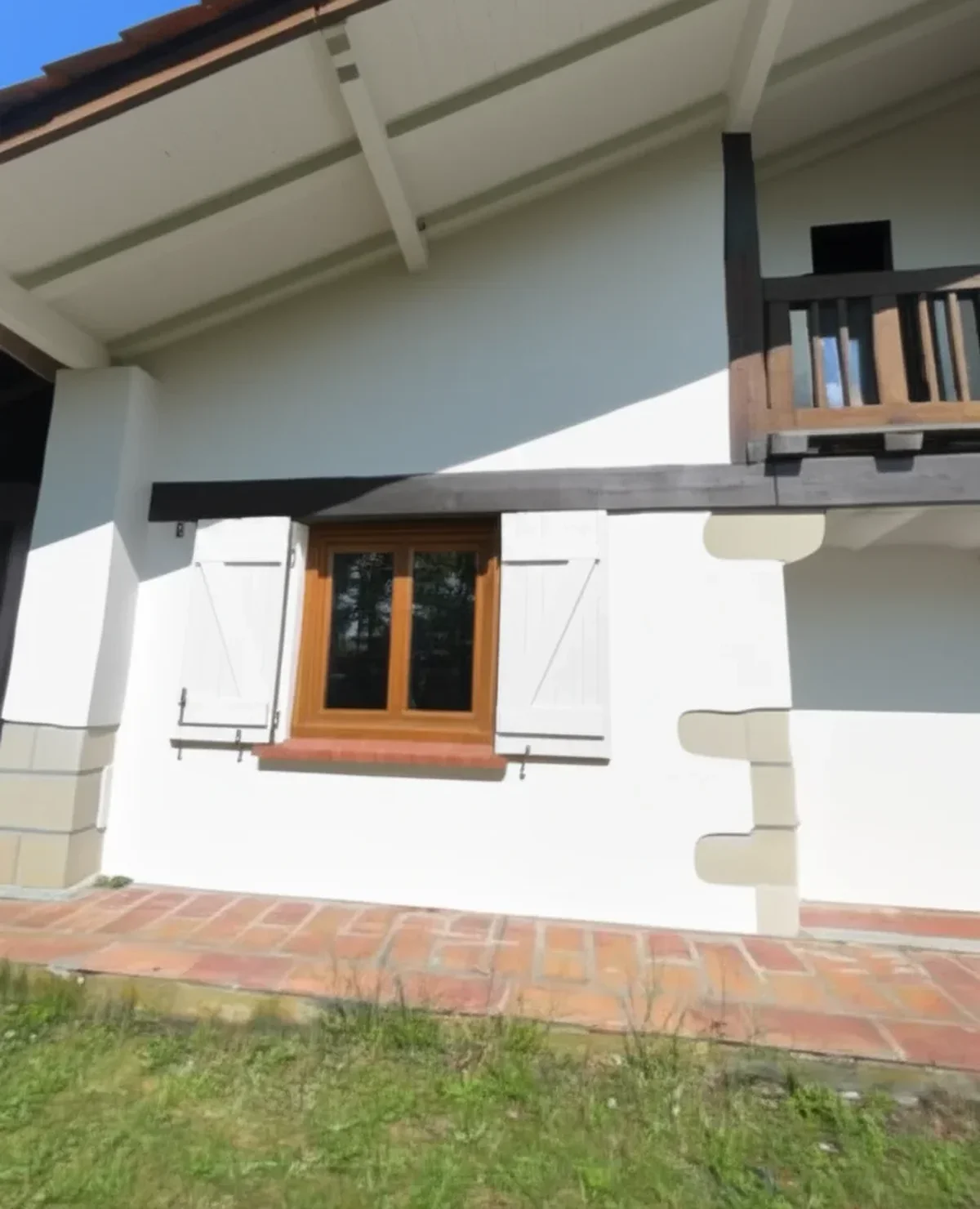
Try it on your house

What does flat roof insulation cost UK homeowners in 2026? Flat roofs are common on extensions, garages, and modern builds across Britain, but without proper insulation they are a major source of heat loss, accounting for up to 25% of a home's energy wastage. Whether you're replacing an existing flat roof or upgrading insulation on a kitchen extension, this guide covers the current costs, the three main insulation methods, Building Regulations requirements, and available grants. Visualise your exterior renovation with our free colour visualiser.
Flat Roof Insulation Cost UK: 2026 Prices
The cost of flat roof insulation in the UK depends on the system used, the size of the roof, accessibility, and whether the existing roof covering needs replacement. Warm deck insulation (placed above the deck) is the most popular and recommended method for UK flat roofs. Cold deck insulation (below the deck) is cheaper but carries a higher risk of condensation problems. Inverted (upside-down) roofs place insulation on top of the waterproof membrane and are ideal for green roofs.
| Insulation Method | Cost per m² (installed) | Typical 20 m² Extension | U-Value Achievable |
|---|---|---|---|
| Warm deck (PIR board) | £50 – £90/m² | £1,000 – £1,800 | 0.18 W/m²K |
| Cold deck (mineral wool) | £25 – £50/m² | £500 – £1,000 | 0.20 W/m²K |
| Inverted (XPS board) | £60 – £110/m² | £1,200 – £2,200 | 0.18 W/m²K |
| Full roof replacement + insulation | £80 – £150/m² | £1,600 – £3,000 | 0.15 – 0.18 W/m²K |
| Spray foam (internal) | £30 – £60/m² | £600 – £1,200 | 0.20 W/m²K |
Try it on your house
No photo? Try a sample
Building Regulations for Flat Roof Insulation
Under Part L of the Building Regulations (England and Wales), any flat roof replacement or major renovation must achieve a U-value of 0.18 W/m²K or better. This typically requires 120–150 mm of PIR insulation (Kingspan, Celotex, or Recticel). Scotland's regulations are slightly stricter at 0.15 W/m²K. If you're simply adding insulation without altering the roof structure, you may not need Building Control approval, but it's advisable to notify your local authority regardless. The Approved Document L 2025 update reinforces these standards.
Condensation risk is a key concern with flat roof insulation. Warm deck systems avoid condensation by keeping the deck warm, while cold deck systems require careful vapour barrier installation on the warm side. Your installer should perform a condensation risk analysis to BS 5250 standards. Using poor-quality or incorrectly installed vapour barriers can lead to damp, mould, and timber decay, exactly the problems insulation should prevent.
Grants and Funding for Flat Roof Insulation
Several grants can help offset the cost of flat roof insulation in the UK. The Great British Insulation Scheme (GBIS) provides free or heavily subsidised insulation for eligible households. The ECO4 scheme targets fuel-poor homes and can fund full flat roof insulation. In Wales, the Nest scheme offers free energy efficiency improvements including insulation. The Boiler Upgrade Scheme doesn't cover insulation directly, but pairing insulation with a heat pump installation maximises your EPC rating improvement and overall savings.
Warm Deck vs. Cold Deck: Which Is Best?
For most UK homeowners, a warm deck system is the best choice. It eliminates condensation risk, achieves excellent U-values, and is compatible with all flat roof coverings (EPDM, GRP fibreglass, felt). Cold deck insulation is only suitable where headroom is limited and should always include a high-performance vapour control layer. Dulux Weathershield and Farrow & Ball Exterior Masonry paint can then be applied to surrounding walls for a complete exterior refresh.
BS EN 1062 Compliance and Vapour Permeability
While BS EN 1062 is best known as the standard for exterior masonry coatings, its vapour permeability classifications (V1 high, V2 medium, V3 low) apply directly to flat roof systems where the perimeter wall meets the parapet. A flat roof retrofit that ignores the wall coating class will trap moisture at the junction, exactly where most failures begin. For a warm deck system the perimeter coating should be V2 or higher to allow controlled drying out, particularly on solid wall properties common across UK Victorian and Edwardian housing. The Building Research Establishment recommends pairing PIR boards (Kingspan TR27, Celotex XR4000, Recticel Powerdeck F) with a Class V2 silicone or silicate finish on the perimeter to maintain breathability without sacrificing weather resistance.
The condensation risk analysis under BS 5250:2021 (referenced from BS EN 1062 Annex C) calculates dew point migration through the build-up. Your installer should provide a written WUFI or Glaser report showing zero interstitial condensation across the assembly. The Planning Portal publishes guidance notes on Part L and Part C compliance for flat roof retrofits. Always cross-check that the chosen PIR board carries a BBA Agrement certificate, which independently verifies thermal conductivity, fire performance and 25-year durability claims. Without BBA cover, mortgage lenders and insurers may decline a property with a recent flat roof retrofit.
Breathable Systems for Older UK Buildings
Pre-1919 properties with parapet walls and solid masonry construction require a different approach to standard PIR warm decks. Trapped moisture behind impermeable membranes is the single biggest cause of timber decay in heritage flat roofs across UK terraces and mansion blocks. For these buildings, specify a wood fibre insulation system (Steico Flex, Pavatex Diffutherm, Gutex Thermoflat) combined with a vapour-open EPDM or breathable membrane. Wood fibre offers thermal conductivity of 0.038 to 0.042 W/mK, sufficient to meet the 0.18 W/m squared K Part L target with 180 to 200 mm thickness. Crucially, it buffers humidity and dries out through the wall finish rather than trapping condensate against the deck.
The Society for the Protection of Ancient Buildings publishes detailed guidance on retrofit flat roofs for listed terraces. For grade II listed properties, Listed Building Consent is mandatory before any flat roof work, even like-for-like replacement. Conservation officers typically reject foil-faced PIR on visible parapets but approve wood fibre with a sympathetic finish. Pair the breathable build-up with a lime render finish on adjoining elevations (Cornish Lime, Anglia Lime, Lime Green) at 75 to 110 GBP per m squared, far better suited than monocouche or sand-cement to the moisture dynamics of a heritage wall.
Compatible Wall Render Systems: 2026 GBP Cost Comparison
When you upgrade a flat roof, the surrounding wall finish often needs a refresh too. Here are typical 2026 installed costs for the five render systems most commonly used on UK homes, including scaffolding allowance for a standard semi-detached property:
| Render System | Cost per m squared (GBP) | Lifespan (years) | Best Use Case |
|---|---|---|---|
| Monocouche (K Rend, Weber, Parex) | 52 to 78 | 25 to 35 | Modern cavity walls, new build extensions |
| Silicone (K Rend HPX, Weber Silicone) | 65 to 95 | 30 to 40 | Coastal, damp prone, low maintenance |
| Lime (Cornish Lime, Anglia Lime) | 75 to 110 | 50 plus | Pre-1919 solid wall, listed buildings |
| Acrylic (Sto, Wetherby, Webertherm) | 55 to 80 | 20 to 30 | Smooth finishes, EWI top coat |
| Scratch coat plus top coat (sand cement) | 38 to 60 | 15 to 25 | Budget renovations, garage walls |
Sources: Checkatrade Cost Guide 2026, NHBC published rates, Federation of Master Builders regional averages. Add 8 to 18 GBP per m squared for scaffolding on two-storey properties.
How to test it on your own home before you buy
No third-party report replaces your own walls: the same colour reads differently on a north elevation and a south one, next to red brick or a grey roof, under morning and evening light. Take a daylight photo, upload it to the free AI paint visualiser, and run two or three candidates on the same image so the comparison is fair. Keep the one or two that survive the side-by-side, buy a tester pot of each, and brush them out on the actual surface in the actual light before you order the full quantity.
UK Retailers and Trade Suppliers for Flat Roof Insulation
For self-build, extension and small commercial flat roof projects, the major UK trade suppliers offer competitive pricing on Kingspan TR27, Celotex XR4000 and Recticel Powerdeck F PIR boards. Trade counter prices at Travis Perkins, Jewson, Selco and SIG Insulation typically run 28 to 42 GBP per board for 100 mm thickness depending on volume and account status. B and Q, Wickes, Homebase and Screwfix stock smaller-quantity PIR boards at 32 to 48 GBP each for DIY projects, with online order and click-and-collect available across most UK postcodes. Specialist breathable wood fibre boards (Steico Flex, Pavatex Diffutherm, Gutex Thermoflat) are stocked by Mike Wye and Sons, Lime Green Products and Ty Mawr Lime, typically 65 to 95 GBP per m squared at 100 mm thickness. Always verify the chosen board carries a BBA Agrement certificate and matches the U-value required by your local Building Control submission.
Masonry paint compatible with breathable wall systems is available across UK retail at distinct price points. Dulux Weathershield, Sandtex Ultra Smooth, Crown Weatherproof Smooth and Johnstone's Stormshield are all stocked by B and Q, Wickes, Homebase and Screwfix at 32 to 48 GBP for 5 litre tins, with online order options. Farrow & Ball Exterior Masonry and Dulux Heritage are stocked by Brewers Decorator Centres and selected B and Q stores at 75 to 110 GBP per 5 litre tin. Leyland Trade is supplied through Trade Decorators, Brewers and selected Wickes branches at 28 to 38 GBP for 5 litre tins. Always check the BS EN 1062 vapour permeability class before purchase, V2 W3 is the right minimum for warm-deck perimeter coatings on UK semi-detached homes.
Listed Building and Conservation Area Considerations
For listed buildings, Listed Building Consent is mandatory before any flat roof work, including like-for-like replacement of an existing covering. Conservation officers across the UK consistently approve EPDM and breathable single-ply membranes where the parapet line is concealed, but reject foil-faced PIR on visible parapet detail. For Grade I and Grade II* properties, conservation officers will often specify natural slate or lead detailing at the verge and parapet rather than modern alternatives. Within a Conservation Area, like-for-like replacement is usually permitted development, but Article 4 directions can withdraw these rights in sensitive locations. Planning Permission is generally required when the new flat roof projects above the existing eaves line or alters the visible appearance from the street. The Planning Portal publishes free guidance and most councils offer pre-application advice for sensitive sites. Enforcement notices on unauthorised works can attract fines of up to 20,000 GBP plus reinstatement costs.
Plan Your Exterior Renovation
Combining flat roof insulation with a fresh exterior finish maximises your home's kerb appeal and energy efficiency. Test exterior colour options on your own property with our free AI colour visualiser. Upload a photo and see photorealistic results in seconds. Try the free colour visualiser →
See breathable masonry paint on your wall. 30 seconds, no signup.
Try it free on my photoFrequently asked questions
How much does flat roof insulation cost in the UK in 2026?
What U-value is required for flat roof insulation in the UK?
Is warm deck or cold deck insulation better for a flat roof?
Can I get a grant for flat roof insulation in the UK?
Trademarks mentioned (Sherwin-Williams, Benjamin Moore, Behr, Caparol, Brillux, Sto, Alpina, Valspar, PPG, Glidden, Dulux, Crown Trade, Sandtex, Farrow & Ball, Johnstone's, Leyland) are property of their respective owners. FacadeColorizer is independent and not affiliated with any of them. Nominative fair use under Lanham Act §1125.