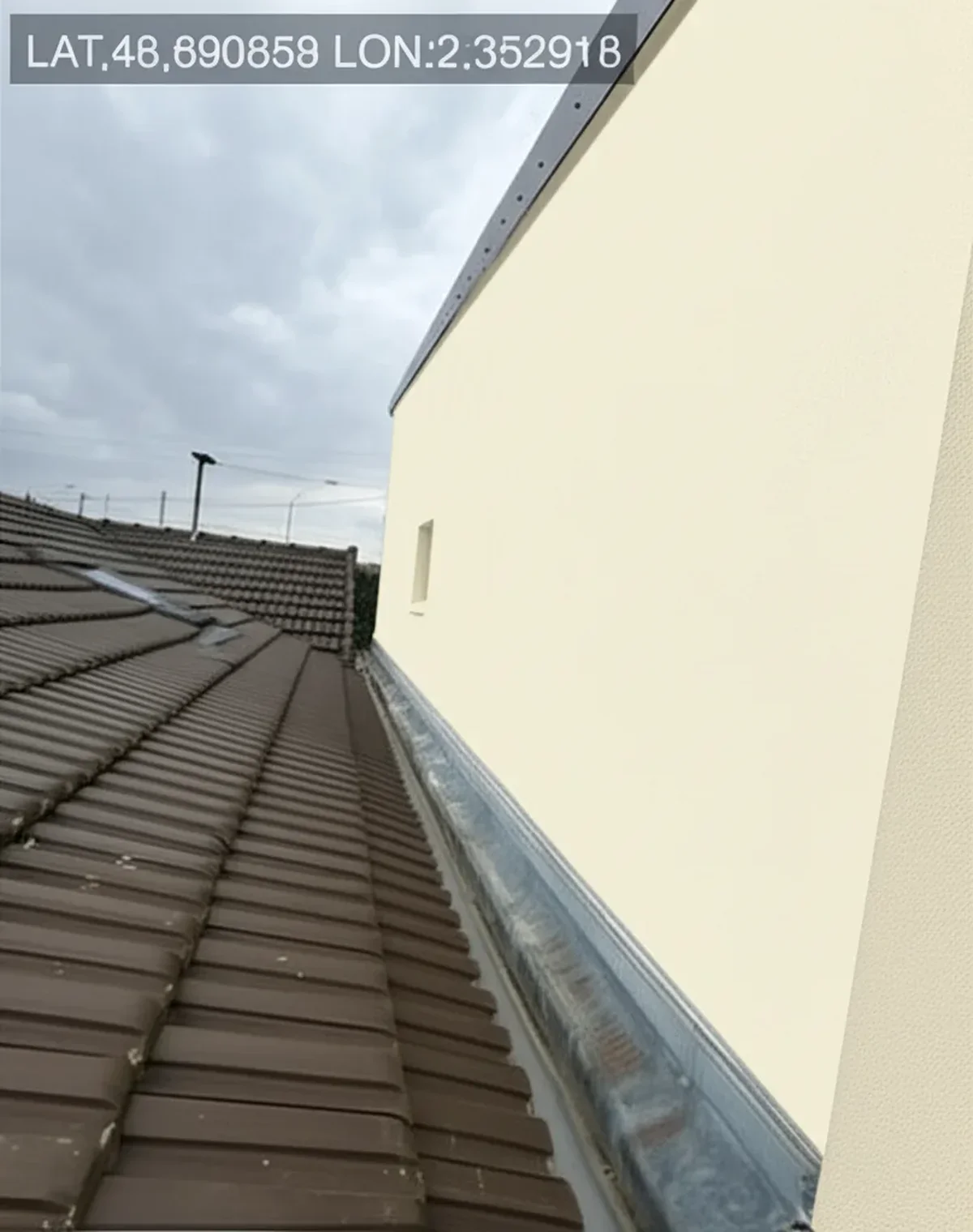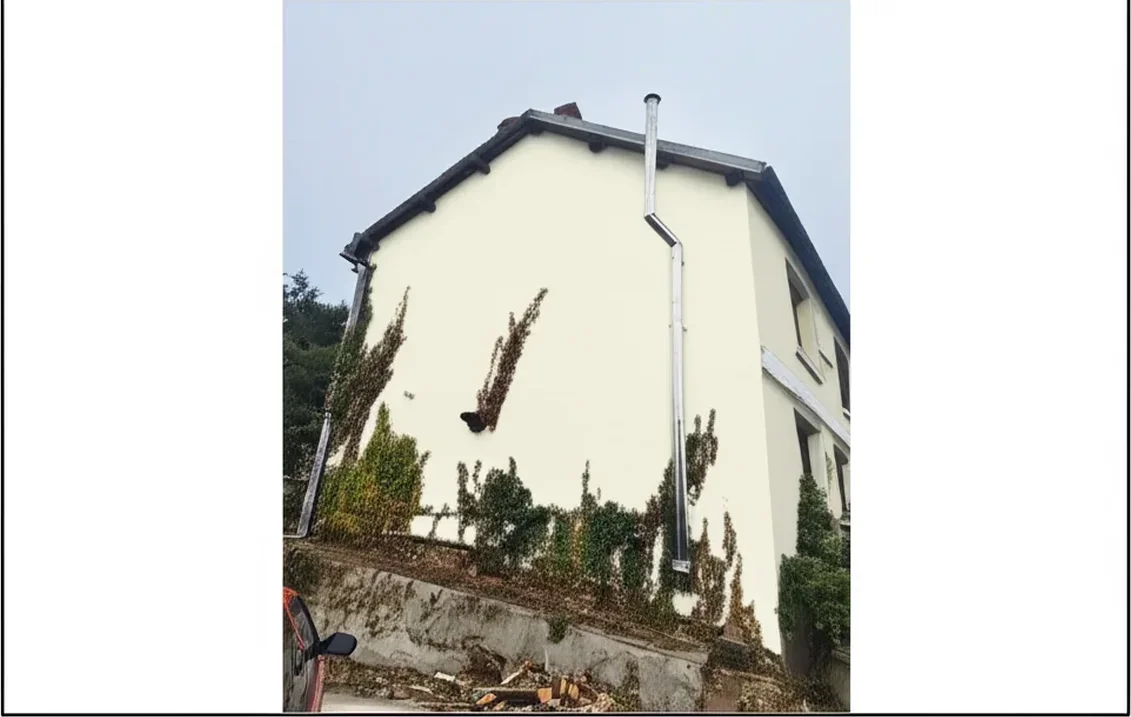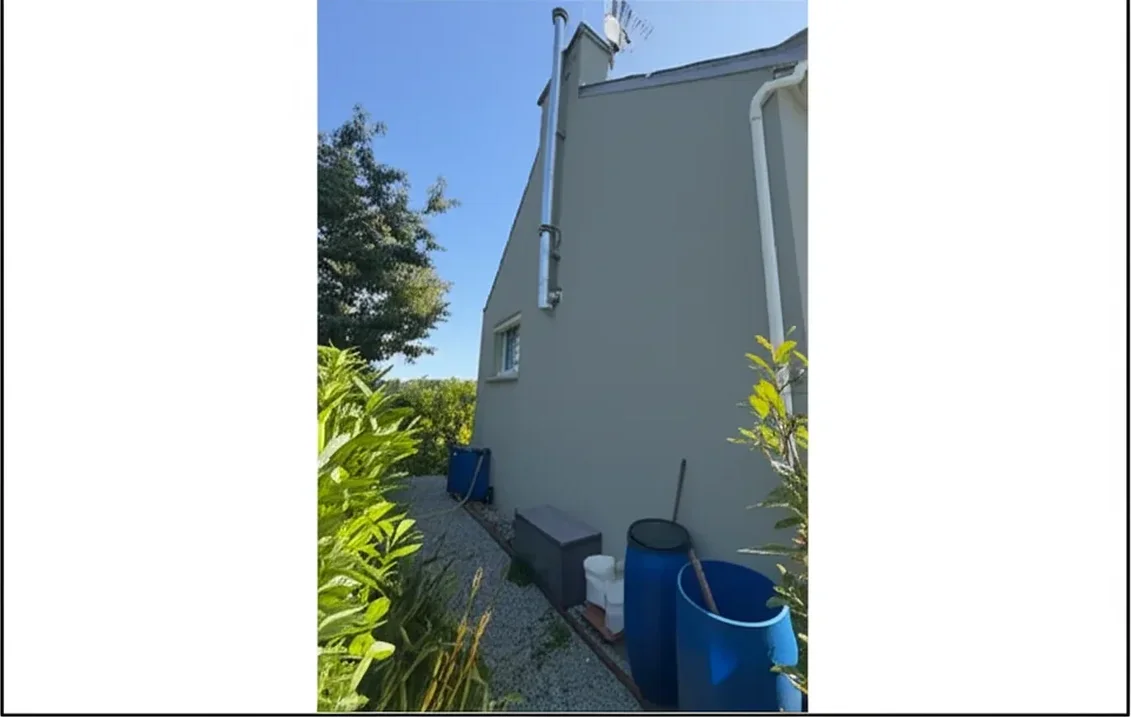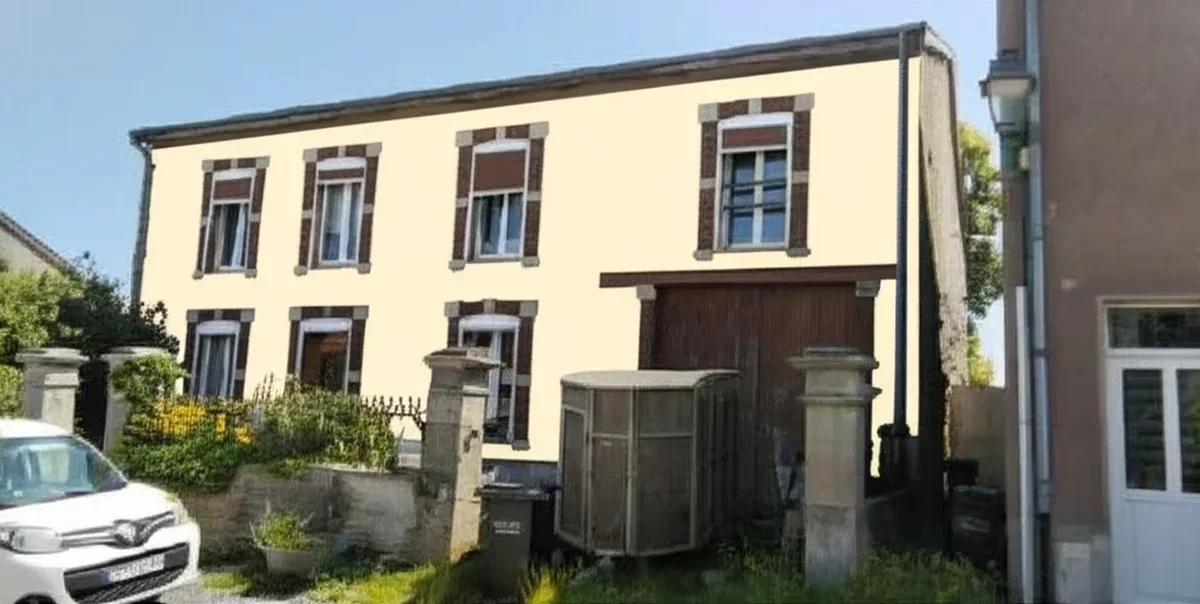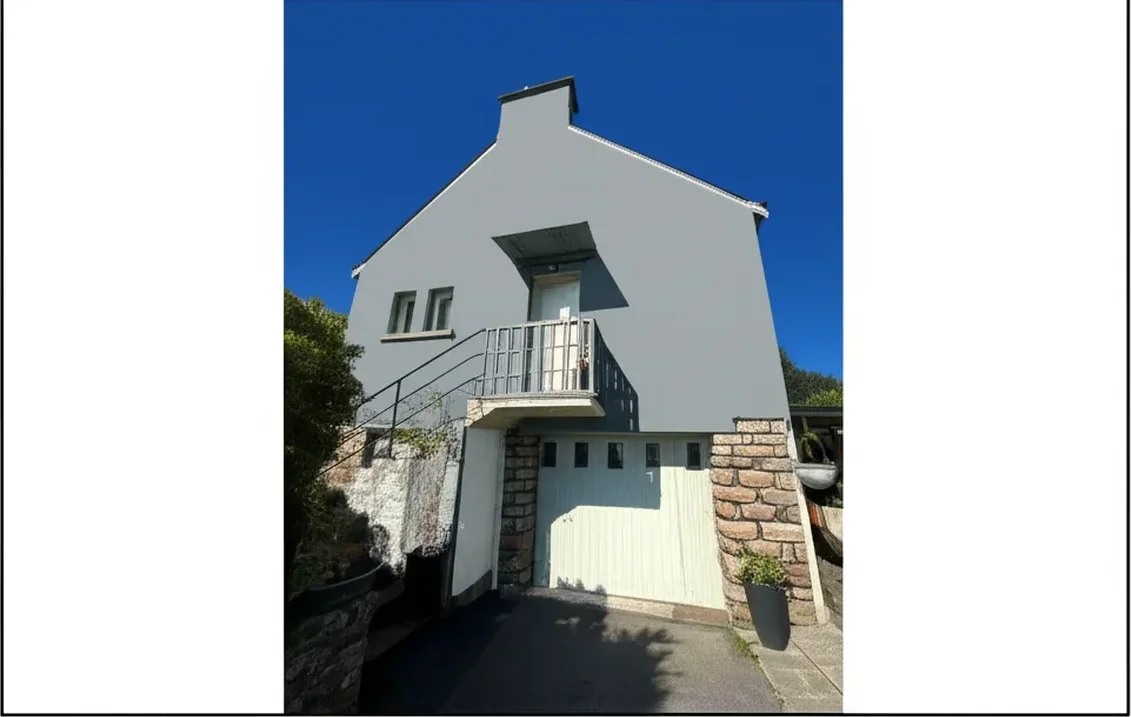
Try it on your house

K-Rend silicone render is one of the most specified exterior finishes on British self-builds and high-end refurbishments, prized for its through-coloured factory finish, self-cleaning silicone surface and 25-year design life. The catch: once the bags arrive on site and the renderer trowels the wrong shade onto your 120 m² gable, changing your mind is not a weekend job. This 2026 guide walks UK homeowners through the two realistic routes for changing a K-Rend colour, painting over with a silicone-compatible masonry paint at £800 to £2,000 for a 3 bed semi, or a full re-render at £4,000 to £8,000, plus the biological growth treatment most properties need first and a way to preview 8 popular shades on your actual house before you commit.
Before you ring a renderer or buy a tin, upload one photo to our free AI colour visualiser and test the eight most popular UK K-Rend replacement shades on your real facade in 30 seconds.
What is K-Rend silicone render?
K-Rend is a Northern Ireland based manufacturer (Kilwaughter Minerals) whose silicone thin-coat render dominates the UK new-build and renovation market. Unlike traditional sand-and-cement render that is painted on site, K-Rend Silicone TC and K1 Spray products are factory-coloured: pigment is mixed with the dry binder at the plant, so colour runs all the way through the 6 to 8 mm finish coat. Trowel a hairline scratch and the same shade shows underneath.
Three properties define the K-Rend finish, and all three are relevant the moment you start thinking about a colour change:
- Self-cleaning silicone surface. The silicone resin makes the surface hydrophobic. Rainwater beads and rolls off, carrying surface dirt with it. Painting over breaks this property.
- Vapour-permeable (breathable). Walls can release internal moisture outward. A non-breathable acrylic paint film traps that moisture and causes blistering within 18 to 36 months.
- Premium specification. Material cost alone is typically £18 to £28 per m², so a typical 100 m² semi has roughly £2,200 of K-Rend material on the wall before labour. That is part of why ripping it off feels painful.
Why painting over K-Rend is a contested choice
Search any British rendering forum and you will find a fault line: half the contributors say "never paint K-Rend, you buy through-colour for a reason", the other half say "the colour was wrong, painting cost a quarter of re-rendering, end of debate". Both are correct for different homeowners. Here is what painting actually costs you in performance terms.
- You lose the self-cleaning property. Once a paint film sits on the silicone, rainwater no longer beads on the original resin. The new paint will need its own anti-algae chemistry to stay clean.
- You can compromise breathability. A standard acrylic masonry paint (cheap supermarket masonry) has a vapour permeability around 5 to 10 g/m²/day. K-Rend itself sits at 200+ g/m²/day. Use the wrong paint and the wall stops breathing. Result: blistering, peeling, sometimes mortar damage behind.
- Manufacturer warranty position. K-Rend's own technical sheets state that overcoating a K-Rend system with non-approved coatings may invalidate the colour warranty. Their approved route is their own K-Rend Cleaner and Colour System, or a silicone-modified masonry paint applied to a clean, dry, sound substrate.
- It is cheaper. The blunt counter-argument: painting a 3 bed semi at £800 to £2,000 is one quarter to one fifth of re-rendering. If your colour is wrong and your render is otherwise sound, the maths often wins.
Decision shortcut
If the K-Rend is structurally sound (no cracking, no blown patches, no failed beads) and you simply dislike the colour, painting with a silicone-compatible masonry paint is the rational answer. If the render is cracked, blown, badly stained or you plan to stay 10+ years, re-rendering pays back in maintenance saved.
Option A, paint over K-Rend: £800 to £2,000 for a 3 bed semi
For an 80 to 100 m² rendered semi, painting over existing K-Rend with a silicone-compatible masonry paint costs roughly £800 to £2,000 all-in in 2026. The spread reflects scaffold hire, the brand of paint chosen and whether algae treatment is needed first.
| Item | Cost (3 bed semi, 90 m²) | Notes |
|---|---|---|
| Pressure wash and prep | £120 to £250 | Removes loose dirt, opens pores for paint adhesion |
| Silicone-compatible masonry paint, 25 to 30 L | £220 to £380 | Sandtex Silicone, K-Rend Silicone Paint or Dulux Weathershield Silicone |
| Scaffold or tower hire (1 week) | £400 to £800 | Two-storey gable end usually needs scaffold |
| Decorator labour (3 to 4 days) | £600 to £1,100 | Solo decorator at £180 to £280/day |
| Total (no algae treatment) | £1,340 to £2,530 | DIY trims £500 to £900 off labour |
Try it on your house
No photo? Try a sample
The DIY path (you hire the scaffold and roll on the paint yourself) brings the figure down to roughly £800 to £1,300 for the same 3 bed semi. Saving the labour line is the single biggest lever.
The three silicone-compatible paints to ask for
- Sandtex Silicone Microseal Smooth Masonry. Roughly £48 to £58 per 5 L. Silicone-resin based, vapour-permeable, water-repellent and explicitly recommended by Sandtex for use over silicone thin-coat renders. The strongest off-the-shelf pick for a K-Rend colour change.
- K-Rend Silicone Paint (KSP). K-Rend's own coating, sold by builders' merchants in 15 L tubs. Designed to be chemically identical to the silicone resin in the original render, so adhesion and breathability are guaranteed. Around £120 to £160 per 15 L.
- Dulux Weathershield Silicone. Released as part of the Weathershield range to compete with Sandtex Microseal. Around £48 to £58 per 5 L. Full Dulux colour-matching service through Trade Centres, which Sandtex cannot match for bespoke shades.
Painting over K-Rend, the pros
- One quarter to one fifth the cost of re-rendering.
- Project finishes in 4 to 7 days rather than 2 to 3 weeks.
- Opens up the full Dulux or Sandtex colour palette, including bespoke matches K-Rend's own range does not stock.
- Reversible at the next repaint cycle (8 to 12 years) rather than a structural commitment.
Painting over K-Rend, the cons
- Self-cleaning property is lost, expect to repaint or refresh in 8 to 12 years.
- Wrong paint chemistry can blister within 18 to 36 months.
- K-Rend colour warranty position is ambiguous once a third-party coating is applied.
- Texture of the original render reads slightly softer once paint sits in the surface.
Option B, full re-render: £4,000 to £8,000 for a 3 bed semi
The proper solution, and the one K-Rend's own technical advice line suggests if you ring them, is to remove the existing finish coat and apply a fresh K-Rend or competing silicone render in the new colour. For an 80 to 100 m² semi this typically runs £4,000 to £8,000 in 2026, including materials, labour and scaffold.
| Item | Cost (3 bed semi, 90 m²) | Notes |
|---|---|---|
| Remove existing render finish coat | £500 to £900 | Mechanical removal, skip hire, dust sheets |
| K-Rend or competing silicone render material | £1,600 to £2,800 | £18 to £28/m² in factory shade |
| Renderer labour (2 specialists, 7 to 10 days) | £1,400 to £2,800 | Specialist day rates £200 to £280 each |
| Full scaffold (2 to 3 weeks) | £800 to £1,400 | Required for spray application |
| Total | £4,300 to £7,900 | Larger detached homes can reach £10,000+ |
The case for re-rendering is mostly long-term. You restore the through-colour finish (no future repaints), you restore the self-cleaning silicone surface, and you reset the 20 to 25 year clock on the cladding system. If you plan to stay in the property 10+ years, re-rendering usually pays back versus two cycles of painting and refreshing. If you plan to sell within 5 years, painting is the rational choice every time.
Re-rendering, what to expect on site
- Mess. Removing the old finish creates dust, render debris and skip waste. Drives, gardens and neighbour fences need protecting.
- Time. Plan on 2 to 3 weeks from scaffold up to scaffold down on a typical semi. Weather delays in October to March can stretch this to 4 weeks.
- Disruption. The property is liveable but you will have spray rendering work happening close to windows and entrance doors.
- Finish. Done well, the new render looks factory-perfect for 15+ years before any meaningful weathering shows.
Biological growth: treat green streaks BEFORE you do anything else
This is the single most overlooked step on K-Rend colour-change jobs. Silicone render's hydrophobic surface is brilliant at shedding rain, but on north-facing walls and shaded gables, microscopic spores of algae (typically Trentepohlia or Chlorella) take hold in the surface texture. By year 3 to 5 you see green or pink streaks bleeding from gutters and string courses.
If you paint or re-render over biological growth without killing it first, the spores survive under the new finish. Within 12 months the green streaks reappear, bleeding through the new colour. The work has to be done twice, and the second time often costs more because the new film is partly damaged.
| Treatment step | Method | Typical cost (90 m²) |
|---|---|---|
| Soft wash (specialist contractor) | Low-pressure biocide application, dwell time 24 to 48 hours | £250 to £500 |
| Pressure rinse | Domestic pressure washer at 100 to 130 bar, 30 cm from wall | £0 (DIY) to £200 |
| Residual biocide coat | K-Rend Cleaner or Sandtex Algae Killer, applied before painting | £150 to £300 |
| Total biocidal treatment | Adds 1 to 2 days to project | £400 to £800 |
That £400 to £800 is the cheapest insurance you will buy on the whole project. Skip it and you risk a complete repaint within 12 months, which costs far more.
The shade people most often want to change to is also the most constrained: anthracite reflects only about 8 per cent of light, and silicone render manufacturers set light-reflectance limits for dark colours, particularly over insulated boards, so a charcoal that is available on one render may be unavailable on another. K Rend's own datasheet describes a finish that lets water vapour pass freely, which overpainting with an ordinary masonry paint changes. Our guide to anthracite and dark grey masonry paint sets out the rule and the brands.
8 popular UK K-Rend colour shades for 2026
These are the eight shades British homeowners most often switch to when they redo a K-Rend facade.
- 1. K-Rend White (KR001). The classic crisp white. Most popular on contemporary new-builds, but reads cold on north-facing gables in winter. Pairs well with anthracite window frames and slate roofs.
- 2. K-Rend Beige (KR036). A soft warm beige with a slight pink undertone. Forgiving on south-facing elevations and one of the safest "neighbour-friendly" choices for terraced and semi rows.
- 3. K-Rend Sandstone (KR043). A golden-buff inspired by Cotswold and Bath stone. Excellent on cottages and rural extensions. Reads as warmer than Beige and richer than Cream.
- 4. K-Rend Pebble Grey (KR026). Light cool grey that has replaced White as the default modern choice on the south coast. Works beautifully with timber cladding accents.
- 5. K-Rend Mid Grey (KR031). The mid-tone grey that became dominant on 2018 to 2025 self-builds. Saturated enough to read as a deliberate design choice rather than washed concrete.
- 6. K-Rend Anthracite (KR033). Deep near-black grey. Popular on architect-designed homes and contemporary extensions. Stunning visually, but the dark surface absorbs more solar heat and shows dust faster.
- 7. K-Rend Cream (KR012). A buttery cream with yellow warmth. Traditional, suits 1930s semis and cottages. Replaces Magnolia for homeowners who want a softer, more current take.
- 8. K-Rend Off-White (KR007). A warm not-quite-white. Reads cleaner than Cream but warmer than KR001 White. Often the "compromise" shade when a couple is split between White and Beige.
Preview these 8 K-Rend colour changes on YOUR house, free
A K-Rend colour change is a four to five figure decision. Test pots are nearly useless on rendered facades, you cannot see how 1 m² of paint will look across 90 m² in overcast British light. FacadeColorizer uses a state-of-the-art proprietary AI visualiser to preview any of the 8 shades above (and 1,000+ other colours) on a real photo of your house.
Upload one straight-on photo of your rendered facade. Pick K-Rend Pebble Grey, Anthracite, Sandstone or any other shade. Get a full HD render in roughly 30 seconds. Compare options side by side before you ring a decorator or renderer for a quote. Free tier includes 1 HD render plus 3 free previews, no card details, no sign-up barrier.
Many UK homeowners use the visualiser before deciding whether to paint over (£800 to £2,000) or re-render (£4,000 to £8,000). Seeing the new shade in context often shifts the decision, sometimes the existing colour reads better than expected once paired with new windows or landscaping, and the cheaper paint route makes sense; sometimes the new shade is so much stronger that a full re-render is clearly justified.
Frequently asked questions
Does painting over K-Rend void the warranty?
K-Rend's technical guidance states that the through-colour warranty applies to the factory-coloured product as supplied. Applying a third-party coating means K-Rend cannot guarantee colour stability of the original render beneath that coating. Practically, the colour warranty becomes moot the moment you decide to paint, because you no longer rely on the original shade. The structural warranty on the render system itself (adhesion, crack resistance) generally remains, provided the paint applied is vapour-permeable and silicone-compatible.
How often do you need to repaint silicone masonry paint?
Sandtex Silicone Microseal and K-Rend Silicone Paint both quote a service life of 10 to 15 years on a properly prepared substrate. Real-world British performance is closer to 8 to 12 years on south and west elevations, 12 to 15 years on north-facing walls. Standard non-silicone masonry paints (acrylic Weathershield, Sandtex 365) last 6 to 10 years on top of K-Rend, slightly shorter than they would on a normal painted render because the underlying silicone surface accelerates film breakdown.
Can you change K-Rend colour without painting or re-rendering?
Not meaningfully, no. Some homeowners try a deep clean and biocide treatment hoping the original colour will "lift" back to its showroom appearance. That works if the discolouration is just surface dirt or algae, in which case a soft wash at £250 to £500 restores the factory shade beautifully. But it cannot change the through-colour itself. The pigment is fixed in the render. To change the actual colour you must paint over or re-render.
What is the best silicone masonry paint UK 2026?
For UK conditions, three silicone-modified masonry paints lead the trade counters in 2026: Sandtex Silicone Microseal Smooth Masonry (around £48 to £58 per 5 L) for general K-Rend overcoating; K-Rend Silicone Paint (KSP) (around £120 to £160 per 15 L) for chemical compatibility with the original render; and Dulux Weathershield Silicone (around £48 to £58 per 5 L) when you need a bespoke colour match from the wider Dulux palette. All three are vapour-permeable, water-repellent and explicitly designed for silicone thin-coat renders.
K-Rend vs Weber render, what is the difference?
Both are leading UK silicone thin-coat render systems and both are factory-coloured. K-Rend (Kilwaughter Minerals, Northern Ireland) tends to dominate the residential self-build market with a slightly wider standard colour range (60+ shades) and a strong distributor network through builders' merchants. Weber (Saint-Gobain) has more commercial-grade specifications and is often specified on larger residential developments and apartment blocks. From a colour-change perspective the same logic applies: paint with a silicone-compatible masonry paint for £800 to £2,000, or full re-render for £4,000 to £8,000.
Can I spray paint over K-Rend instead of brush and roller?
Yes, and many specialists prefer it for K-Rend because the textured silicone surface accepts spray application well. Airless spray (Graco or Wagner) gives a more even coat than brush and roller, particularly on the dashed K1 finish. Expect roughly the same total cost (the time saved on application is offset by masking time and equipment hire). DIY spray is not recommended unless you have prior experience, the masking and overspray management are demanding.
Related reading
Trademarks mentioned (Sherwin-Williams, Benjamin Moore, Behr, Caparol, Brillux, Sto, Alpina, Valspar, PPG, Glidden, Dulux, Crown Trade, Sandtex, Farrow & Ball, Johnstone's, Leyland) are property of their respective owners. FacadeColorizer is independent and not affiliated with any of them. Nominative fair use under Lanham Act §1125.