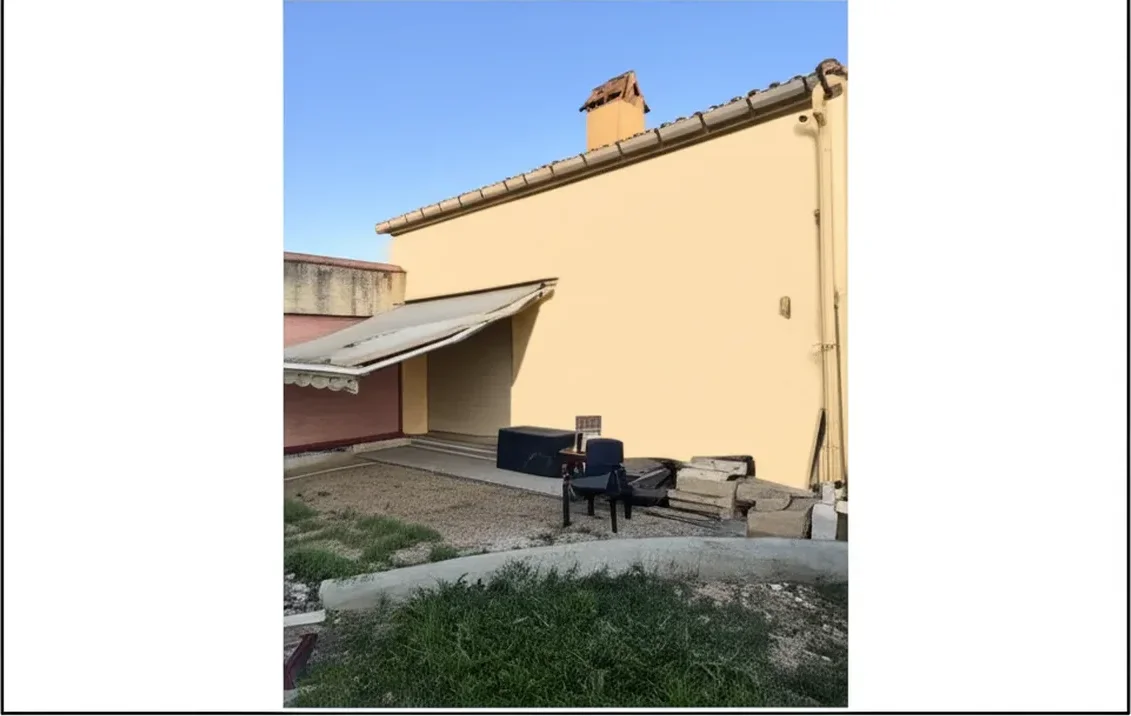
Try it on your house

Pebbledash hides nothing. Where smooth render forgives a misjudged shade, the dashed surface throws shadows into every dimple, exaggerates the green tint of biological growth, and drinks paint at almost twice the rate of a flat masonry wall. Get the colour wrong on your semi or terrace and you are not buying another tester pot, you are paying £2,000 to £5,000 for a full repaint, scaffold included. This 2026 guide walks through twelve UK colour schemes that work on real British pebbledash, organised by undertone, with the lighting traps and conservation rules that decide whether your finish still looks right in five years.
Why pebbledash is the hardest exterior to paint
Pebbledash was the default British exterior finish from roughly 1920 to 1985, applied as a wet sand and cement base coat with small stones flung into it while soft. The result has roughly 30 to 50% more surface area than a smooth rendered wall, and every pebble face throws a tiny shadow. Those shadow lines pool together visually and amplify any imperfection: a slightly uneven coat, a missed cavity, a patch where the original render was repaired with mismatched sand. Smooth render hides a multitude of sins. Pebbledash hides none of them.
Biological growth is the second problem. The dashed texture traps moisture between pebbles, and north-facing or shaded elevations develop visible green algae within three to five years of any repaint. Whites and pale creams telegraph that growth most aggressively. Mid-tone greys and warm stones disguise the early stages, which is one reason British decorators have steadily moved the pebbledash palette away from brilliant white over the last decade.
The irregular surface also absorbs paint unevenly. Older pebbledash develops a chalky cement binder on south and west elevations after twenty years of UV exposure, while north-facing pebbledash stays denser. A single tin of masonry paint can read slightly different on each elevation of the same house unless you prime the chalky walls with a stabilising sealer first. That difference is invisible on a tester pot the size of a postcard, and brutally obvious on a finished gable.
The cost reality of a pebbledash repaint in 2026
A typical three bed pebbledash semi runs £2,000 to £3,500 for a full professional repaint in 2026. A detached four bed at 130 to 150 m² of façade typically lands at £3,500 to £5,000. The breakdown explains why getting the colour wrong is so expensive to undo.
| Line item | 3 bed semi | 4 bed detached |
|---|---|---|
| Stabilising sealer (15 to 30 L) | £80 to £120 | £150 to £200 |
| Masonry topcoat (25 to 45 L) | £100 to £200 | £200 to £350 |
| Fungicidal wash + sundries | £40 to £60 | £60 to £90 |
| Scaffold hire (1 to 2 weeks) | £600 to £1,000 | £1,000 to £1,600 |
| Labour (3 to 6 days, 1 to 2 decorators) | £1,000 to £1,800 | £1,800 to £2,800 |
| Total typical range | £2,000 to £3,500 | £3,500 to £5,000 |
Try it on your house
No photo? Try a sample
The trap is that a wrong colour decision rarely shows up until the scaffold comes down. A shade that looked perfect on a tester pot in October cloud light can read as bilious yellow on a south wall in July, or muddy grey on a north gable in February. Repainting then means hiring scaffold again, buying another full set of materials, and paying another three to six days of decorator time. The all-in cost of a colour reversal is typically 80 to 90% of the original spend. There is no cheap way back.
The 12 pebbledash schemes that work, organised by undertone
These twelve schemes are the ones British decorators recommend most often for pebbledash in 2026, drawn from Sandtex, Dulux Weathershield, Crown Trade and Farrow & Ball Exterior Masonry. Each is grouped by undertone because that, not brand, decides whether the shade flatters or fights the texture.
Whites and off-whites (three schemes)
Pure brilliant white is a trap on pebbledash: it amplifies every pebble shadow and reads chalky within two winters. Off-whites with a hint of warm or green undertone perform far better.
- 1. Crown Mellow Sage White. A soft off-white with a green-grey undertone that reads clean in southern English daylight without going stark. Excellent on inter-war semis with red brick plinths. Holds biological staining at bay better than a true white because the green undertone visually blends with early algae rather than fighting it.
- 2. Dulux Weathershield White Cotton. A barely-warm off-white that flatters Edwardian and 1930s pebbledash where original timber detailing is still in place. Pairs naturally with cream gloss windows and a black or charcoal front door. Avoid on shaded north elevations where it can read flat.
- 3. Farrow & Ball Wimborne White (Exterior Masonry). A soft chalky white with the faintest yellow undertone. Used carefully on Cotswold and South-West coastal pebbledash where the surrounding limestone or sand-coloured stone benefits from a warm partner. Custom mixed to Dulux Weathershield or Sandtex base for the masonry guarantee.
Warm neutrals (three schemes)
Warm neutrals are the workhorses of British pebbledash. They mask the shadow lines between pebbles, hide the early stages of biological growth, and age gracefully under UK overcast skies.
- 4. Sandtex Sandstone. A pale warm beige with a sand undertone. Universally flattering on 1930s and 1950s pebbledash semis. Reads modern without going trendy, ages well over the typical 15 year masonry repaint cycle. Pairs with brown or anthracite window frames.
- 5. Dulux Weathershield Almond White. Warmer than White Cotton, with an oat-coloured undertone. Particularly forgiving on south-facing walls where pure white would bleach to yellow over time. A safe choice for a first repaint where you want a measurable lift from the original magnolia without a dramatic shift.
- 6. Crown Trade Putty. A muted stone-grey with warm undertones, sometimes called "greige". Reads as contemporary and pairs equally well with black or sage green window surrounds. The most popular pebbledash shade in suburban London and the Home Counties in 2026 trade counter data.
Greys (three schemes)
Grey has been the dominant pebbledash repaint colour since around 2018. The trick is to stay in mid-tone territory because very pale grey reads as dirty white once the texture breaks light up, and very dark grey absorbs heat and fades faster.
- 7. Sandtex Ash Grey. A medium cool grey with the faintest blue undertone. Modern but not stark. Pairs with white or grey timber and PVC windows. Best on red-brick streets where a cool grey provides contrast without clashing.
- 8. Crown Pebble Grey. Slightly warmer than Sandtex Ash Grey, with a soft taupe undertone. Designed specifically for textured masonry, named after the pebbles in pebbledash itself. Forgiving on uneven substrates where pure cool grey would show patch differences.
- 9. Dulux Weathershield Goose Down. A warm pale grey with a beige undertone. Reads as off-white on bright June days and as soft grey on overcast January days, which is exactly the dual reading most homeowners want from a UK exterior shade. Avoid on heavily shaded north walls where it can drift towards lavender.
Bold accents and coastal (three schemes)
Pure bold colour rarely works as the main pebbledash field because the texture muddies high-saturation pigments. Used as an accent on bays, porches and rendered first-floor sections, however, bold shades can lift a tired semi dramatically. Coastal homes have more latitude because salt air bleaches pigment quickly, so a stronger starting shade fades into balance.
- 10. Farrow & Ball Hague Blue (Exterior Masonry, accent only). A deep slate blue used on porch returns, bay window cheeks or a single rendered first-floor band against a paler pebbledash field. Custom mixed to a Sandtex or Dulux base for the masonry guarantee. Strong enough to read against the dashed texture, restrained enough to age well.
- 11. Crown Brewer Street green. A muted heritage olive green, modelled on the colours of late Georgian shopfronts. Works on cottage-style pebbledash bungalows with leaded windows and a deep porch. Pairs with cream or off-white window surrounds. Best on rural and semi-rural settings where the surrounding planting echoes the green.
- 12. Dulux Weathershield Buttermilk Cream (coastal). A warm pale yellow-cream that bleaches gracefully on coastal pebbledash where salt and UV exposure accelerate fading. Used heavily on south-coast Sussex, Dorset and Devon seaside homes. Stay on the soft side: anything close to true yellow turns bilious in two summers.
If anthracite is on your shortlist, read the dark-colour rules first: RAL 7016 reflects about 8 per cent of light, which is fine on a thick traditional render over brick and a problem on a thin insulated system, where render manufacturers publish light-reflectance limits. On old pebbledash the colour also exaggerates repairs. Our guide to anthracite and dark grey masonry paint covers the brands that sell it ready-mixed, the render rule, breathability and planning.
How UK weather shifts pebbledash colours over time
The UK averages roughly 200 overcast days a year, with daylight colour temperature drifting between 5,500 and 7,500 Kelvin. That cool blue-tinted overcast light pushes warm yellows and creams in a green-yellow direction visually, which is why a buttercup tester pot in autumn can read bilious by spring. Pick your warm shades two notches softer than feels right indoors and they will land correctly on the wall.
Dark colours fade faster than pale colours under British UV, despite the relatively low sun angle. The reason is heat absorption: dark masonry hits surface temperatures of 35 to 45°C on south-facing walls in July, and the resulting thermal cycling breaks down the paint binder. A Hague Blue accent that holds true on a sheltered porch return can shift towards washed-out indigo within six to eight years on a fully exposed south gable. Plan accent placement around shade lines, not just visual composition.
Coastal homes face an additional problem: salt-laden air accelerates oxidation of the paint film, particularly on the darker end of the spectrum. South-coast properties in Sussex, Dorset, Devon, Cornwall and the western Welsh and Scottish coasts typically need a refresh every 8 to 10 years rather than the 12 to 15 year mainland average. Choosing a shade one to two tones lighter than your inland preference gives the paint room to fade gracefully without becoming patchy.
North-facing pebbledash receives almost no direct UV in the UK, which sounds positive but creates its own problem. Without sun-driven drying, biological growth (algae, lichen, mildew) builds up faster, and pale shades on north elevations can look green-tinted within two to three years. Mid-tone greys and warm taupes mask early biological staining far better than whites or creams.
Preview pebbledash colours on YOUR house with FacadeColorizer
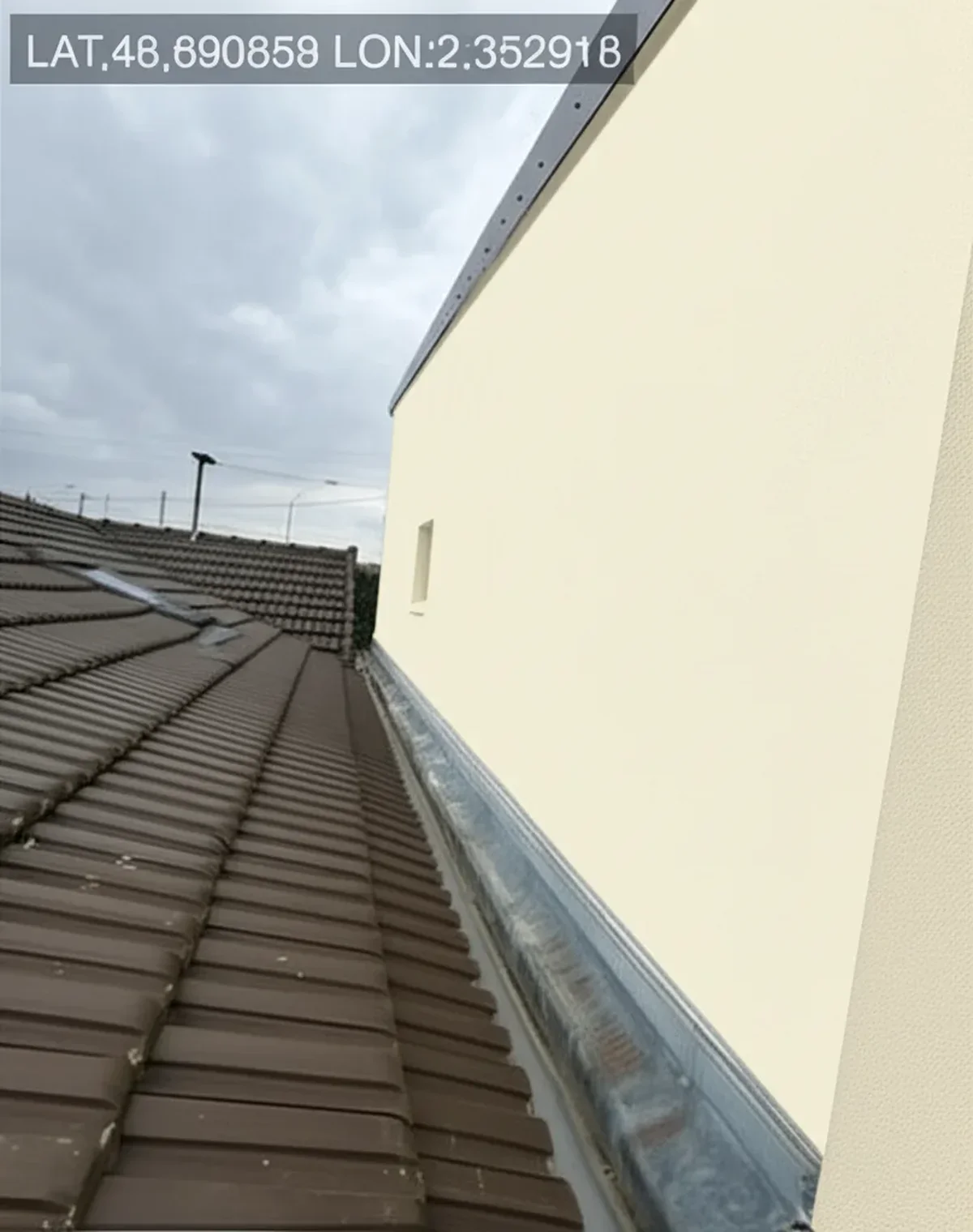
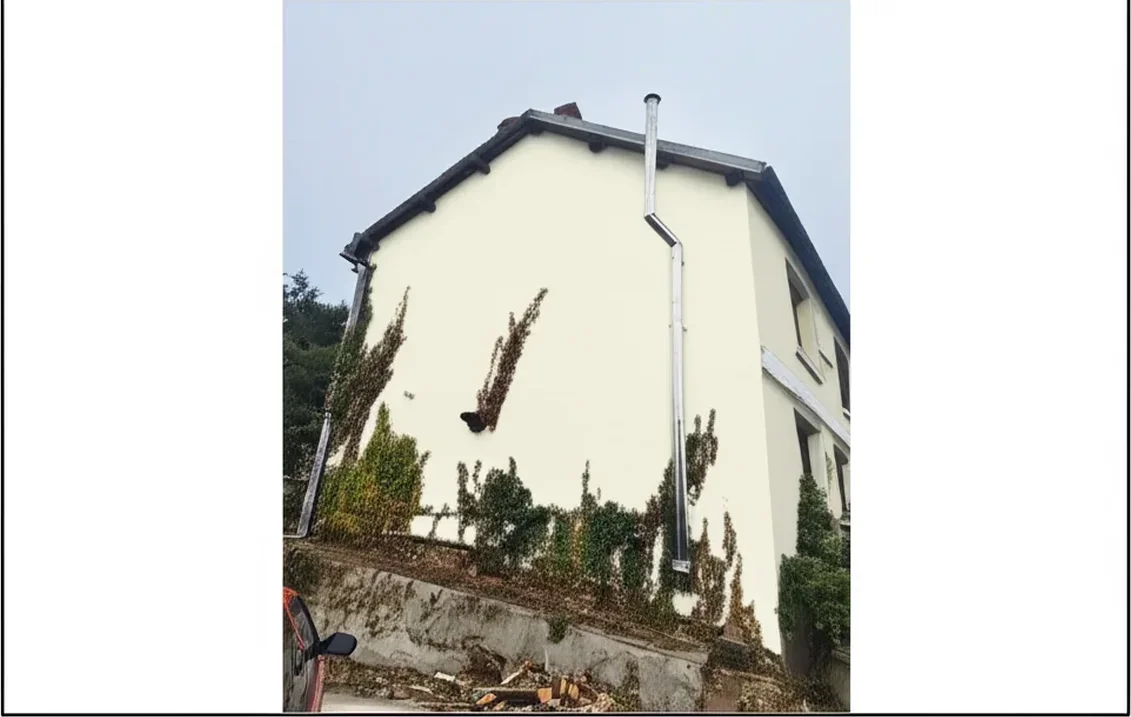
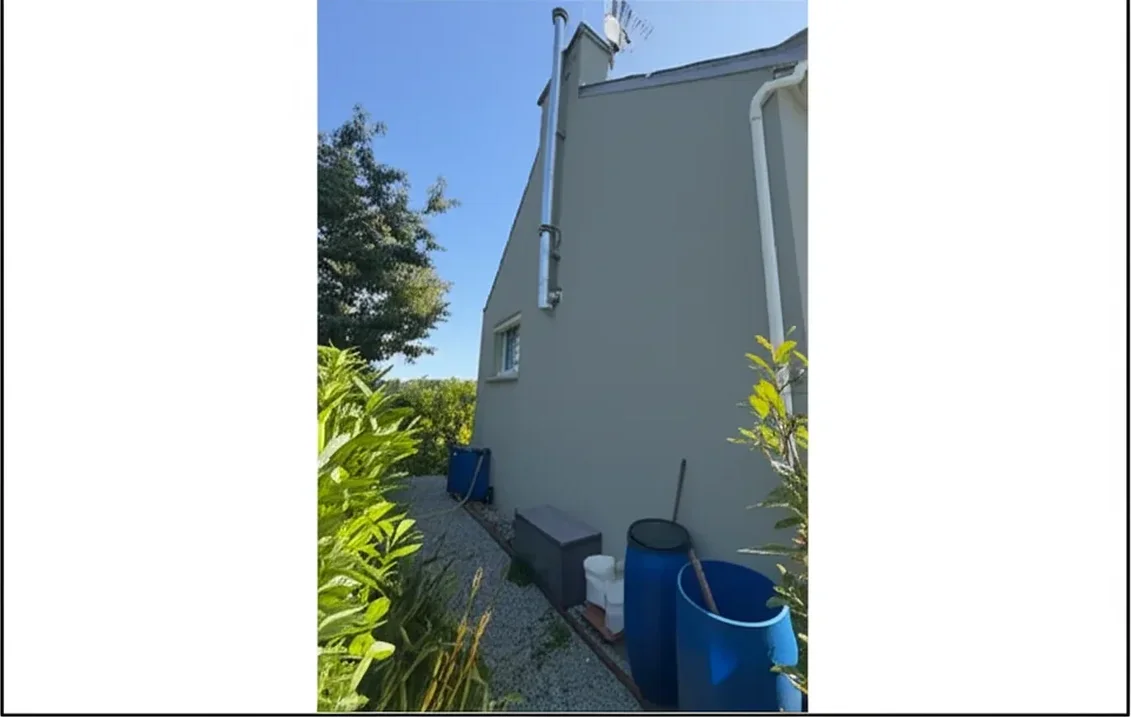
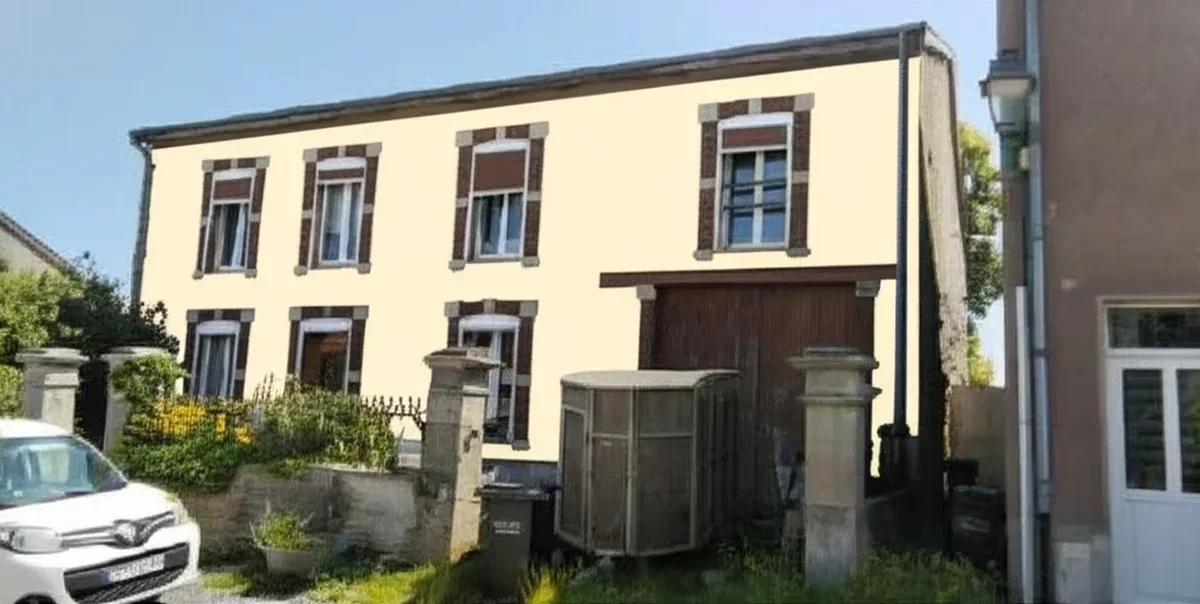
The single best way to avoid a £2,000 to £5,000 colour mistake is to see the proposed shade applied to a photograph of your actual house before any paint is bought. FacadeColorizer is a state-of-the-art proprietary AI exterior visualiser trained on British pebbledash, monocouche render, K Rend silicone, traditional lime render and brick. Upload one straight-on photograph of your elevation and the tool applies any masonry shade you specify directly to the dashed texture, preserving windows, doors and rainwater goods.
The free tier requires no credit card and produces one HD preview plus three free comparisons, which is enough to shortlist three or four shades from this guide on your own house in 15 minutes. The tool is brand-agnostic, so you can compare a Crown Mellow Sage White against a Dulux Almond White against a Farrow & Ball Wimborne White against a Sandtex Sandstone on the same photograph, side by side, without leaving the page. Most paint brand visualisers are locked to a single manufacturer's palette, which is fine for loyalty but useless for genuine comparison.
If you prefer to compare against the major UK brand tools first, see our Dulux Visualiser alternative comparison. For interior previewing where pebbledash continues into a porch or rendered hallway, see the interior paint visualiser guide.
Always test a 1 m² patch (and check Article 4 first)
A digital preview shortlists; a tester patch confirms. Once you have narrowed to two or three shades on screen, paint a 1 m² patch on each elevation of your house: one south, one north, one east or west. Pebbledash absorbs and reflects light differently on each face, and a shade that flatters the south gable in July sun can read flat on the north return in January overcast.
Observe each patch at three points during 48 hours: morning overcast, midday direct sun (or brightest available light), and late afternoon. The shade that holds up across all three readings is the one to commit to. Most colour reversals come from homeowners who tested only at one time of day, usually a bright Saturday afternoon when the showroom feels exciting and the brain skips the dull January reading.
Conservation Area and Article 4 check
Before any colour decision, check whether your house sits within a Conservation Area with an Article 4 Direction. Article 4 Directions remove permitted development rights for changes to the external appearance of dwellings, which can include masonry repainting in a colour that materially differs from the existing scheme. The penalty for unauthorised work is an enforcement notice requiring you to repaint to the council-approved shade, on top of the cost you already paid. Our Conservation Area painting rules guide covers the council checks in detail.
Listed Building status (Grade I, II* or II in England and Wales, Category A, B or C in Scotland) adds Listed Building Consent on top of Conservation Area rules. Around 4% of UK housing stock is listed. A pebbledash semi built in 1932 is unlikely to be listed individually, but it may sit within a listed terrace or a designated heritage row, particularly in market towns and seaside resorts. Your local council planning portal lists every designation; check before commissioning scaffold.
Frequently asked questions
Can you paint pebbledash at all?
Yes, and most British pebbledash houses are now repainted rather than re-rendered. The texture requires a stabilising sealer first coat, a long-pile 20 to 25 mm roller for the topcoats, and a fungicidal wash if biological growth is visible. Skipping the sealer is the most common reason DIY pebbledash repaints fail within two winters. Full prep and application detail is in our best paint for pebbledash walls UK guide.
How long does masonry paint last on pebbledash?
Sandtex 365, Dulux Weathershield, Crown Trade and Johnstone's Stormshield all carry a 15 year written guarantee when applied over a stabilising sealer in two topcoats. In real-world UK conditions, expect 12 to 15 years inland and 8 to 10 years on the coast before a refresh becomes visibly necessary. Premium silicone resin paints such as Emperor Masonry Creme extend that to a 25 year written guarantee at roughly three times the litre price.
Does a dark colour fade faster on pebbledash?
Yes, on south and west elevations particularly. Dark masonry absorbs heat, hitting 35 to 45°C surface temperature in July, which accelerates thermal breakdown of the paint binder. Dark blues, charcoals and forest greens used as the main field colour on a fully exposed south wall typically need a refresh every 8 to 10 years rather than the 12 to 15 year average for mid-tone neutrals. Use dark shades as accents on porches and shaded returns rather than across the main field.
Sandtex vs Dulux Weathershield: which is better for pebbledash?
Both carry a 15 year guarantee and cover 6 to 8 m² per litre on pebbledash. The practical differences: Sandtex 365 flows into the dashed texture slightly more easily with a long-pile roller, which matters on a three-day scaffold job. Dulux Weathershield offers a wider custom colour matching range (1,000+ shades via Dulux Decorator Centre) and slightly better colour retention on south-facing walls. For most British pebbledash repaints either is a defensible choice. See the full head-to-head in our Sandtex vs Dulux Weathershield comparison.
Is changing render or pebbledash colour permitted in a Conservation Area?
Not always. In a Conservation Area without an Article 4 Direction, repainting in a similar shade to the existing colour is typically permitted development and does not need planning permission. With an Article 4 Direction in force, the council can require you to apply for permission before changing the external appearance, including masonry colour. A dramatic shift from cream to charcoal would normally trigger an Article 4 review even if the underlying Conservation Area would not. Always check the council planning portal before scaffold goes up.
What is the cheapest way to repaint pebbledash if I am on a tight budget?
The single biggest cost lever is scaffold versus tower. A scaffold for a typical semi runs £600 to £1,000 for a week; a mobile aluminium tower hired by the day from HSS or Speedy Hire runs £60 to £100 a day. A confident DIYer can complete a semi in a long weekend over two dry weekends using a tower, halving the project cost. Materials run £180 to £230 regardless. Save on labour, not on paint quality: budget brands without a 15 year guarantee almost always need a refresh within 5 to 7 years, doubling the lifetime cost.
Related reading
Trademarks mentioned (Sherwin-Williams, Benjamin Moore, Behr, Caparol, Brillux, Sto, Alpina, Valspar, PPG, Glidden, Dulux, Crown Trade, Sandtex, Farrow & Ball, Johnstone's, Leyland) are property of their respective owners. FacadeColorizer is independent and not affiliated with any of them. Nominative fair use under Lanham Act §1125.