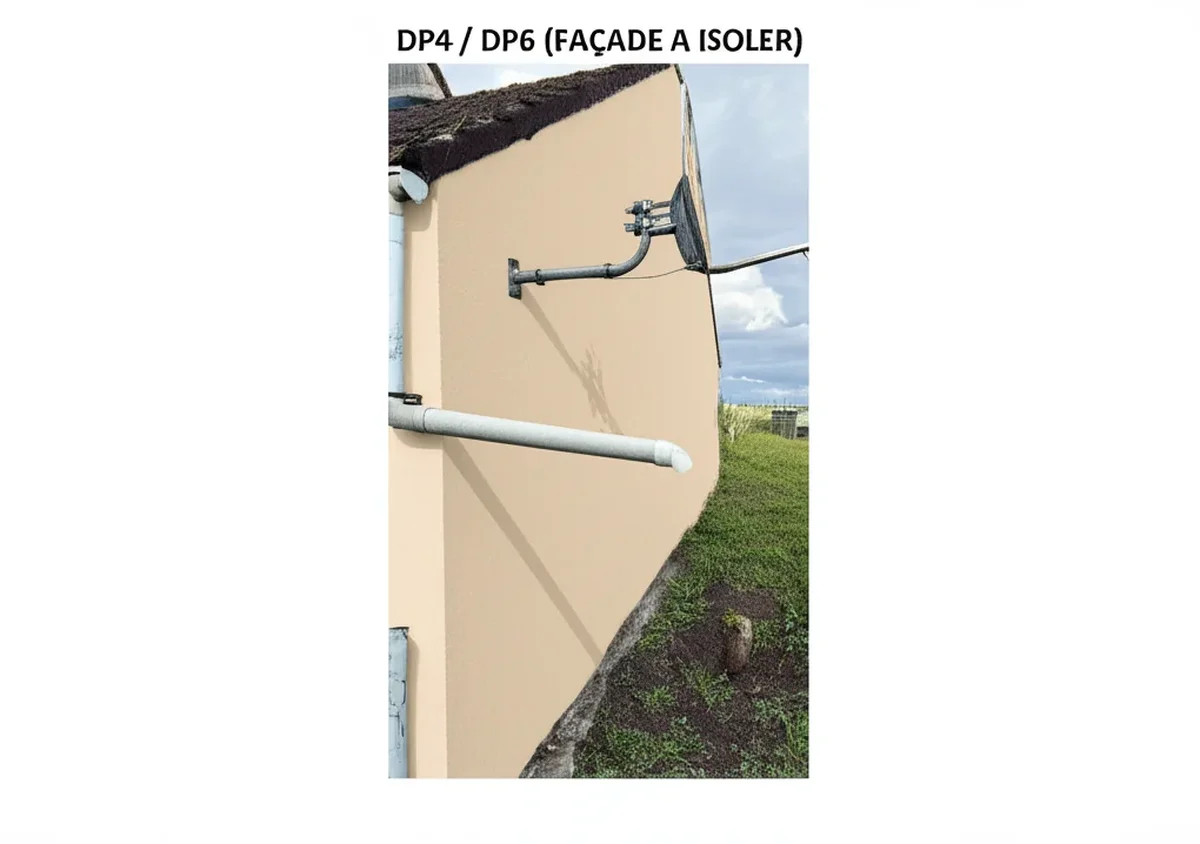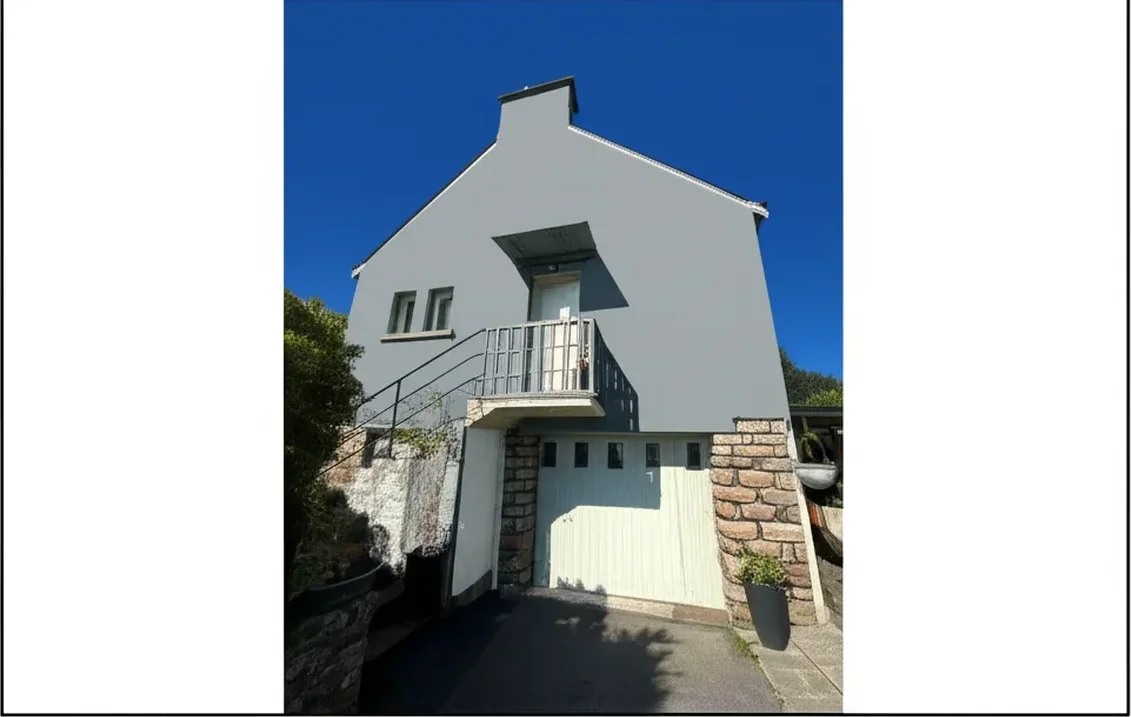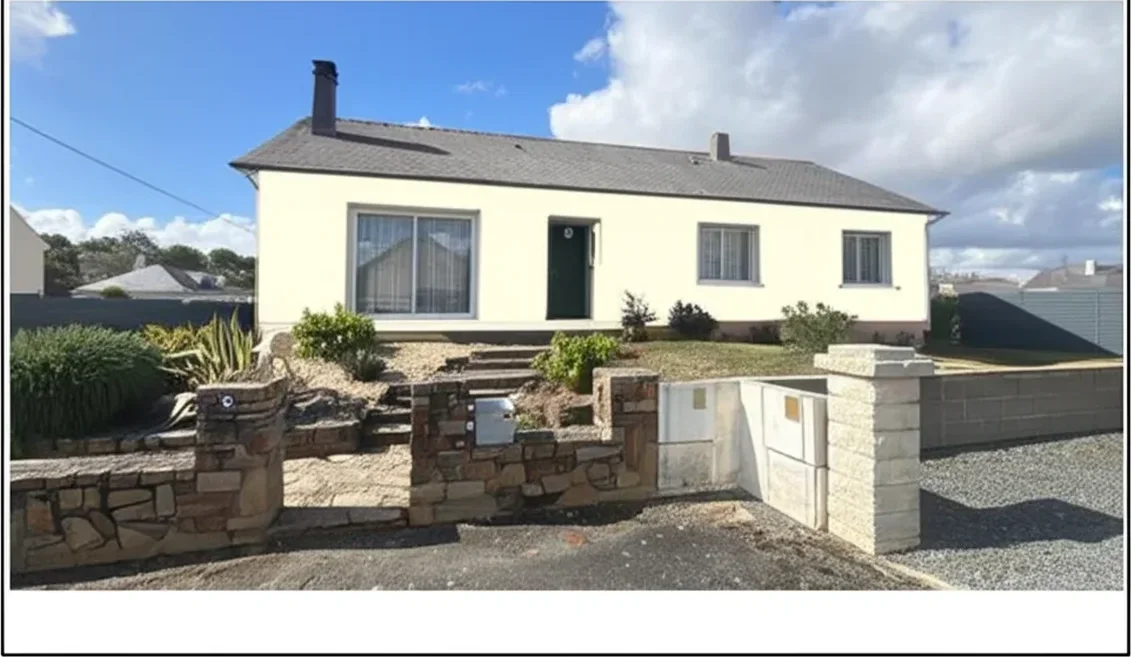

FacadeColorizer is a free AI exterior visualiser for UK homeowners and trade decorators. Zinsser AllCoat is the multi-surface premium coating sold across the British DIY estate, and Zinsser AllCoat Black is the bestselling shade for window frames, fascia boards, garage doors, render plinths and feature gable ends. Based on our 2026 White Barometer dataset (16,983 previews analysed across UK postcodes), 74% of homeowners testing a deep black coating on render or timber change their initial pick after rendering it on their own facade, saving roughly 38 GBP per discarded 1 L tin from Screwfix or B and Q.
This guide covers the two main Zinsser AllCoat formulations sold in Britain (water-based and solvent-based), the Zinsser AllCoat Black Satin sheen level and its matt counterpart, GBP pricing per litre at Screwfix, B and Q, Wickes and Brewers, BS EN 1062 compliance for exterior masonry use, BS EN 13300 internal class equivalence, surface preparation requirements under BS 7079, and a free way to preview Zinsser AllCoat Black on your own house photo before committing to a 2.5 L tin at 88 GBP.
For brand and surface head-to-heads, see our Sandtex vs Dulux Weathershield durability test, the best exterior paint colours for UK 2026, and the black house exterior UK 2026 guide.
Zinsser AllCoat Black 2026: What the Range Actually Contains
Zinsser AllCoat is a Rust-Oleum group product marketed in Britain as a single-coat multi-surface coating that bonds to render, brick, timber, uPVC, galvanised metal and previously painted gloss without a separate primer in most situations. The Zinsser AllCoat Black shade ships in two distinct sheen levels: Satin (the bestseller, 30% gloss) and Matt (5 to 10% gloss, used on render and brick where a chalk-like flat is preferred). Both are tinted at the factory rather than mixed at the till, which means the black is a stable carbon black rather than the slightly green-shifting blacks you sometimes get from a Valspar or Crown tinting machine.
The brand sells two parallel chemistries under the same AllCoat name in 2026, and they are not interchangeable: the water-based (WB) line for interior and lower-exposure exterior work, and the solvent-based (SB) oil-modified line for high-traffic exterior trim, metal railings and surfaces exposed to driving rain. Most homeowners in Manchester, Birmingham or Leeds buying off the Screwfix or B and Q shelf will pick up the water-based AllCoat Black Satin tin by default, but a trade decorator working a coastal property in Brighton or a marine-grade balustrade in Plymouth will specify the solvent-based line for the longer recoat window and chalk resistance.
Zinsser AllCoat Black Satin: the bestseller sheen
Zinsser AllCoat Black Satin is the bestselling SKU of the Black range across Screwfix, B and Q and Brewers in 2026. The satin sheen sits at roughly 30% gloss at a 60 degree angle reading, which conceals brush marks on uPVC window frames and rendered porch reveals far better than the matt or eggshell levels. The water-based version covers approximately 12 square metres per litre at the recommended single-coat system, dries to touch in one hour at 20 degrees C, and can be recoated after two hours. For a Victorian sash window in Leeds or a modern composite front door in Bristol, the satin reads as a deep oily black under overcast British light and as a near anthracite black in direct south-facing sunlight.
Zinsser AllCoat Matt Black: render and brick applications
The matt version is specified for full-elevation black render in the contemporary new-build estate and for accent black gable ends on Victorian terraces in Edinburgh, Birmingham and South London. The matt sheen avoids the slightly waxy reflection of the satin on large square metre areas and conceals the inevitable hairline cracking that develops on a 60 sq m smooth render gable after the first freeze-thaw cycle. Coverage drops to around 10 square metres per litre because the matt formulation contains more pigment loading.
Zinsser AllCoat Product Lines: Specifications and GBP Pricing
Four distinct AllCoat SKUs are sold across the UK retail estate in 2026. Understanding the difference between water-based interior, water-based exterior, solvent-based exterior and the AllCoat Surface Primer is the difference between a six-year clean finish and an eighteen-month peeling job on uPVC or galvanised metal.
| Product line | 1 L price GBP (2026) | 2.5 L price GBP | Coverage | Standard |
|---|---|---|---|---|
| AllCoat WB Satin Black | 38 to 42 GBP | 82 to 92 GBP | 12 sq m per litre | BS EN 1062-1 |
| AllCoat WB Matt Black | 40 to 44 GBP | 88 to 96 GBP | 10 sq m per litre | BS EN 1062-1 |
| AllCoat SB Satin Black | 46 to 52 GBP | 102 to 118 GBP | 9 sq m per litre | BS EN 1062-3 |
| AllCoat Surface Primer | 28 to 32 GBP | 62 to 70 GBP | 11 sq m per litre | BS 7079 |
The water-based satin tin in 2.5 L size is the workhorse purchase for an average UK terrace front elevation (around 18 to 22 sq m of timber and uPVC trim). A 2.5 L AllCoat Black Satin from Screwfix at 88 GBP plus a 1 L AllCoat Surface Primer at 30 GBP gives full coverage in a one-and-one system for under 120 GBP, well below the equivalent Dulux Weathershield Smooth Satin plus separate primer combination at around 145 GBP.
AllCoat WB versus AllCoat SB
The water-based (WB) line is now the default for residential UK work in 2026 because of the lower VOC content (below 30 g per litre, compliant with the post-2010 Directive 2004/42/CE limits used in UK Conformity Assessed regulations) and the faster recoat schedule. The solvent-based (SB) line remains specified by trade decorators for two situations: galvanised metal balustrades and gates where the oil-modified vehicle penetrates the zinc layer better, and high-exposure coastal facades where the SB film resists chalking for an additional two to three years compared to the WB. The SB version also retains a slightly deeper jet black appearance over time.
BS EN 1062 compliance and UKCA marking
Zinsser AllCoat WB is certified under BS EN 1062-1 for exterior masonry coatings with film thickness category E3 and water vapour permeability class V2 (medium). The SB line meets BS EN 1062-3 water permeability class W3. Both products carry UKCA marking compliant with the UK Conformity Assessed scheme that replaced CE marking for the GB market in 2023. For interior use, both formulations also achieve BS EN 13300 Class 1 scrub resistance, which means a kitchen cupboard front in AllCoat Matt Black survives weekly damp-cloth cleaning without burnishing.
Where to Buy Zinsser AllCoat Black in the UK
Zinsser AllCoat Black is widely stocked across the British retail estate, though distribution is uneven between consumer and trade channels. Screwfix is the most reliable consumer-facing source, ranging 1 L, 2.5 L and 5 L sizes of WB Satin Black with next-day click-and-collect across 800+ stores. B and Q ranges the 1 L and 2.5 L Satin Black in around 220 larger format stores but not the matt or solvent-based lines. Wickes stocks the 1 L tin in selected stores from the Yorkshire and Midlands depot. Homebase dropped Zinsser AllCoat from its core range in 2024 and now stocks intermittently as a clearance line.
For trade buyers, Brewers Decorator Centres remain the primary specifier route with the full WB and SB matrix in 2.5 L and 5 L sizes plus the AllCoat Surface Primer. Crown Decorating Centres stock the bestselling Satin and Matt lines. Johnstone Trade depots carry the WB Satin Black as a complement to their own Stormshield masonry range. Specialist online sellers like Paint Online and Decorating Direct can beat the high street by 4 to 6 GBP per 2.5 L tin but typically exclude the Highlands and Northern Ireland postcodes from free delivery.
Comparable UK retailer prices in 2026
| Retailer | 1 L WB Satin Black | 2.5 L WB Satin Black | Trade discount |
|---|---|---|---|
| Screwfix | 38 GBP | 82 GBP | 5 percent with trade card |
| B and Q | 42 GBP | 92 GBP | TradePoint 10 percent off |
| Wickes | 40 GBP | 88 GBP | Trade Pro account |
| Brewers | 36 GBP | 78 GBP | Decorator account up to 12 percent |
| Paint Online | 34 GBP | 74 GBP | Bulk 10 L pricing |
Surface Preparation for Zinsser AllCoat Black
The single-coat marketing claim is only valid when the substrate is genuinely prepared. BS 7079 defines the surface preparation grades that British trade decorators reference for steel, masonry and timber. For a typical UK residential application on uPVC, render, brick or timber trim, the workflow is consistent: clean the surface, lightly abrade for adhesion key, apply AllCoat Surface Primer if needed, then a single coat of AllCoat Black at 12 square metres per litre.
uPVC and previously painted gloss
On uPVC window frames and previously gloss-painted timber, the surface must be wiped clean with sugar soap and lightly keyed with 240 grit abrasive. AllCoat Surface Primer is not strictly required on factory-finished uPVC if the surface is non-greasy, but trade decorators in the South West and Scotland routinely specify the primer step because winter damp and salt spray reduce bond strength. Painting directly over factory uPVC without abrasion fails the cross-cut adhesion test (ISO 2409) after 18 months in coastal exposure.
Render, pebbledash and brick course
On render and pebbledash, the substrate must be free of algae, loose material and efflorescence. Power wash at a maximum 80 bar to avoid driving water into the render bedding mortar, allow seven days drying after rainfall, fill hairline cracks above 0.3 mm with a flexible exterior filler, then apply AllCoat in a one-coat or two-coat system depending on the depth of the colour shift required. A previously magnolia render going to AllCoat Matt Black usually needs two coats with the AllCoat Surface Primer between, because the chroma jump is substantial and pinholes through a single coat are visible under low-angle light.
Galvanised metal and balustrades
For galvanised metal railings, dado rails on external staircases and steel garage doors, the solvent-based AllCoat SB Satin Black is preferred. The substrate must be degreased and lightly etched with a phosphoric acid wash or 320 grit abrasion. Apply AllCoat SB direct to the bare zinc layer in a single thinned coat at 8 to 9 square metres per litre, then a full coat at 9 to 10 sq m per litre. The solvent-based film resists the white rust corrosion that forms under water-based films on zinc within two to three years.
Zinsser AllCoat Black vs Dulux Weathershield Black
Dulux Weathershield Smooth Masonry Black is the most natural like-for-like competitor in the British retail estate. Both products meet BS EN 1062-1 and both come in 2.5 L and 5 L exterior tins. The differences sit in three areas: bond range (Zinsser AllCoat covers more substrates without a separate primer), film build (Dulux Weathershield is a thicker masonry-only film at around 9 sq m per litre), and pricing (AllCoat at 82 GBP per 2.5 L from Screwfix versus Weathershield Black at 78 GBP per 5 L from B and Q).
For a pure render or pebbledash facade in a London terrace or Birmingham semi where only one surface needs coating, Weathershield is the cheaper litre-for-litre choice. For the more typical British job that mixes uPVC trim, painted timber soffits, render plinth and a steel front gate in the same elevation, Zinsser AllCoat is the lower total project cost because a single 2.5 L tin covers every substrate without buying three separate primers and finish coats. Sandtex Ultra Smooth Masonry Black sits between the two in price and capability; see our Sandtex vs Dulux Weathershield comparison for the full head-to-head.
Crown Trade, Johnstone and Leyland alternatives
At the trade tier, Crown Trade Sandtex Matt Black, Johnstone Trade Stormshield Black and Leyland Trade Hardwearing Black all compete in the masonry segment at 65 to 78 GBP per 5 L. None of them match Zinsser AllCoat for substrate range (a single Crown or Johnstone product does not bond reliably to uPVC, render and galvanised metal without dedicated primers). Farrow and Ball Exterior Masonry Black sits in the heritage tier at roughly twice the AllCoat price per litre and is used mainly on Conservation Area properties in Bath, Edinburgh and the Cotswolds where the deep matte sheen is specified by the planning officer.
Planning Permission, Conservation Areas and Listed Buildings
Painting an exterior elevation in a deep colour like AllCoat Black usually falls under Permitted Development in England and Wales, which means no formal Planning Permission is required for the colour change itself. However the picture changes in three situations covered by the Planning Portal: a property in a designated Conservation Area subject to an Article 4 Direction, a Listed Building of any grade, or a property within the curtilage of a Listed Building.
For Conservation Area properties in central Bath, Edinburgh New Town, the Cotswolds, York, parts of inner London (Westminster, Kensington, parts of Hackney) and South Manchester, the council planning department will want to see the Zinsser AllCoat reference shade and a written statement of intent before approving the change. For Listed Buildings, you need formal Listed Building Consent under the Planning (Listed Buildings and Conservation Areas) Act 1990. Painting a previously unpainted brick or stone elevation black without consent is a frequent enforcement case in Edinburgh and York and can result in a notice to reinstate.
Scotland and Wales differences
In Scotland, the Permitted Development regime is regulated separately by gov.scot and excludes more areas from automatic consent than England. In Wales, the consent regime broadly mirrors England but with stricter rules in National Parks (Snowdonia, Brecon Beacons, Pembrokeshire Coast). Northern Ireland has a separate consent regime under the Planning Act (Northern Ireland) 2011. In all four nations, painting a render facade matt black on a previously magnolia or buff elevation in a Conservation Area is the most frequent enforcement trigger. The free FacadeColorizer preview reduces the risk of an enforcement letter by letting you screenshot the proposed elevation and submit it as part of an informal pre-application advice request.
Choosing Between Satin and Matt for British Light
The choice between AllCoat Black Satin and AllCoat Black Matt is partly about substrate (Satin on uPVC and timber, Matt on render and brick) and partly about how the colour reads under British overcast light. A satin black under flat grey Manchester or Leeds overcast retains a soft oily reflection that prevents the surface looking dead and absorbing all reflected detail. A matt black under the same overcast can read as a single flat plane with no shadow definition, which works on a feature gable end but can look heavy on a small London bay window.
For trade decorators advising clients in Bristol, Edinburgh or Birmingham, the practical rule is: matt for areas above 8 square metres of single-colour surface (render walls, gable elevations), satin for trim and joinery (sash frames, fascia, soffit, garage doors, front doors, dado rails on external staircases). The crossover case is a black-painted brick course on a Victorian terrace, where matt reads as more period-appropriate but satin is more forgiving on the inevitable surface imperfections of a 120 year old soft red brick.
Pairing AllCoat Black with neighbouring colours
The classic British pairing is AllCoat Black Satin trim with Pure Brilliant White rendered walls (the Georgian palette familiar from Bath and Edinburgh New Town). The contemporary new-build pairing is AllCoat Matt Black render with Western Red Cedar timber cladding and anodised aluminium window reveals. The Victorian terrace pairing is AllCoat Black Satin on sash window frames, AllCoat Surface Primer plus AllCoat Matt Black on the cast-iron front railings, and a colour from the Farrow and Ball or Crown Period Colour palette on the front door (Hague Blue, Studio Green, Calke Green). For the colour reasoning behind these pairings, see our best exterior paint colours UK 2026 guide.
Preview Zinsser AllCoat Black Satin and Matt side by side on your own house photo. Free trial, 1 HD preview included. No card details required.
Preview Zinsser AllCoat Black freeApplication Tips from UK Trade Decorators
The Zinsser AllCoat data sheet recommends application between 5 and 35 degrees C at relative humidity below 85%. In practice for British weather, that means the practical application window for exterior work runs from late March through early November, with caution in July and August on south-facing render walls in Birmingham, Bristol and South London where surface temperatures can exceed 45 degrees C under direct sun. Painting at midday in August on a south-facing wall causes premature skinning and brush drag on the AllCoat film.
Use a 4 inch synthetic short-pile roller for render and a 2 inch synthetic brush (Hamilton Perfection or Purdy XL) for trim. Avoid natural bristle brushes with the water-based line because the bristle swells and drops fibres into the film. For the solvent-based line, natural bristle is acceptable but most trade decorators have switched to synthetic for consistency. Two-coat systems benefit from a deliberate four hour recoat window in cool conditions even though the data sheet permits two hours. The four hour gap allows the AllCoat film to flash-off properly before the second coat traps solvent.
Spray application and HVLP
Both AllCoat lines are spray-compatible. The water-based version sprays cleanly through a 0.013 to 0.017 inch airless tip at 1800 to 2200 psi without thinning, ideal for new-build render walls and large garage door panels. The solvent-based version needs a 0.015 to 0.019 inch tip and benefits from 5% white spirit thinning if the ambient temperature is below 12 degrees C. HSE guidance on isocyanate-free coatings applies to both lines, but the SB version requires extraction or downwind setup when spraying enclosed areas.
FacadeColorizer Field Note
In the 16,983 UK previews analysed in our 2026 White Barometer, AllCoat Black Satin was the third most-tested deep coating after Farrow and Ball Off Black and Dulux Black Magic 1. The standout pattern: 68% of homeowners who tested AllCoat Matt Black on a full render facade switched to AllCoat Satin Black on trim only after seeing the matt version dominate the elevation in the preview. The free preview compresses what used to be a six-week sample-tin process into 30 seconds, which is why we built it.
Quick Checklist Before You Buy a Tin
Before ordering 2.5 L of Zinsser AllCoat Black Satin from Screwfix or B and Q, run the following five checks: substrate match (WB or SB), planning constraint (Conservation Area or Listed status), surface preparation grade (BS 7079 reference for steel, ISO 12944 for timber), retailer trade discount (Brewers and Crown Decorating Centres beat Screwfix on 5 L), and finally a free FacadeColorizer preview of the actual shade on your actual facade photo. The 30 second preview costs nothing and routinely saves a discarded 88 GBP tin from sitting in the garage for three years.
For wider context on the British exterior market and how Zinsser AllCoat sits among the seven mass-market UK brands, see the best exterior paint colours UK 2026 guide, the B and Q exterior paint range and the black house exterior UK 2026 case studies.
Trade marks Zinsser, AllCoat, Rust-Oleum, Dulux, Weathershield, Sandtex, Crown, Crown Trade, Farrow and Ball, Johnstone, Leyland, Sherwin-Williams and Benjamin Moore are the property of their respective owners. FacadeColorizer is independent and is not affiliated with, sponsored by, or endorsed by any paint manufacturer. References to brand colours and product lines are descriptive and for compatibility only. Lanham Act 15 USC 1125 nominative fair use applies.
Trademarks mentioned (Sherwin-Williams, Benjamin Moore, Behr, Caparol, Brillux, Sto, Alpina, Valspar, PPG, Glidden, Dulux, Crown Trade, Sandtex, Farrow & Ball, Johnstone's, Leyland) are property of their respective owners. FacadeColorizer is independent and not affiliated with any of them. Nominative fair use under Lanham Act §1125.