Try it on your house

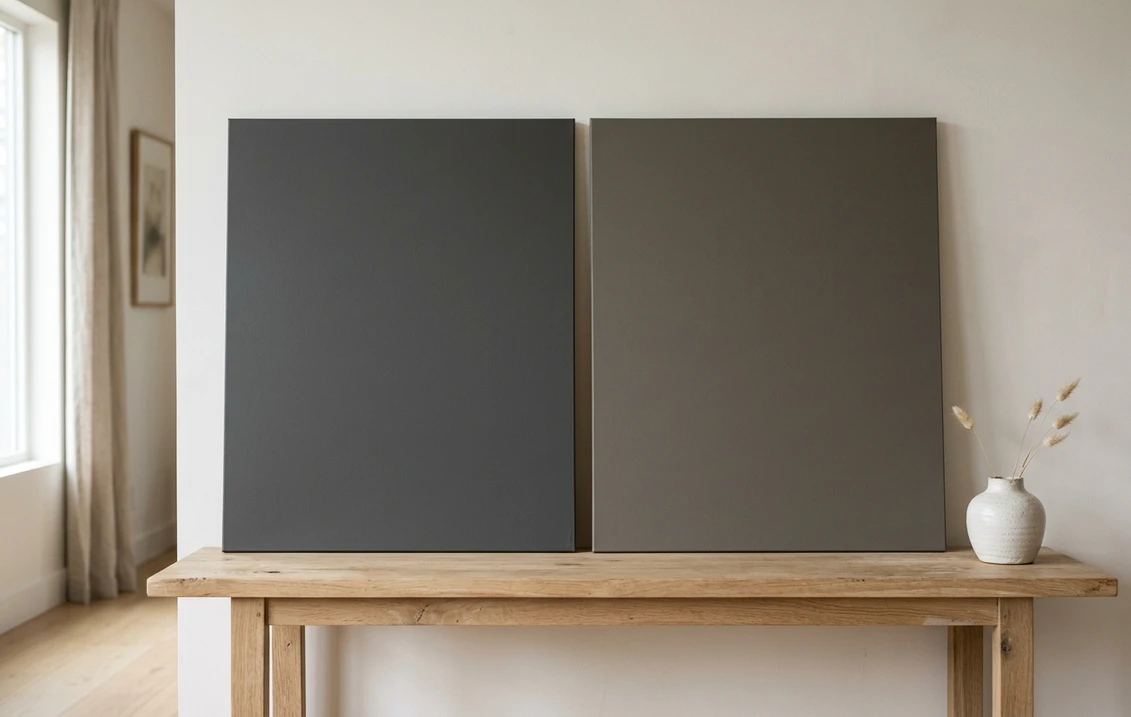
Iron Ore SW 7069 is the darker, near-black charcoal, with an LRV of 6 and a warm green-brown undertone that keeps it from reading flat.
Kendall Charcoal HC-166 is the lighter warm charcoal, with an LRV of 12 and a green-brown undertone that comes across as a true charcoal rather than a near-black.
They are cross-brand (Sherwin-Williams versus Benjamin Moore) and share the same warm green-brown undertone, but the 6-point LRV gap means Iron Ore feels dark while Kendall Charcoal reads as a proper charcoal. Test both on a photo of your space before you commit.
Iron Ore and Kendall Charcoal are two warm charcoals that homeowners cross-shop side by side from the two biggest brands. Iron Ore (SW 7069) is Sherwin-Williams' go-to near-black, a warm dark that looks almost black on the wall. Kendall Charcoal (HC-166) is Benjamin Moore's go-to warm charcoal, a step lighter at LRV 12 with the same green-brown warmth. This is our side-by-side method for comparing paint colors applied to these two warm charcoals.
The numbers side by side
| Attribute | Iron Ore SW 7069 | Kendall Charcoal HC-166 |
|---|---|---|
| Family | Warm near-black charcoal | Warm charcoal, green-brown |
| LRV | 6 | 12 |
| Approximate hex | #434446 | #605D55 |
| Undertone | Green-brown, warm, almost black | Green-brown, warm, true charcoal |
| Loves | Modern interiors, accent walls, cabinets | Exterior trim, living rooms, offices |
| Watch out for | Reading flat black in low light | Reading faded in bright sun |
| Overall vibe | Warm near-black, moody | Warm charcoal, approachable |
Try it on your house
No photo? Try a sample
LRV figures are the published values from each brand. Hex values are approximate digital renderings only, and screens vary; the authoritative reference is always a physical paint chip from the retailer.
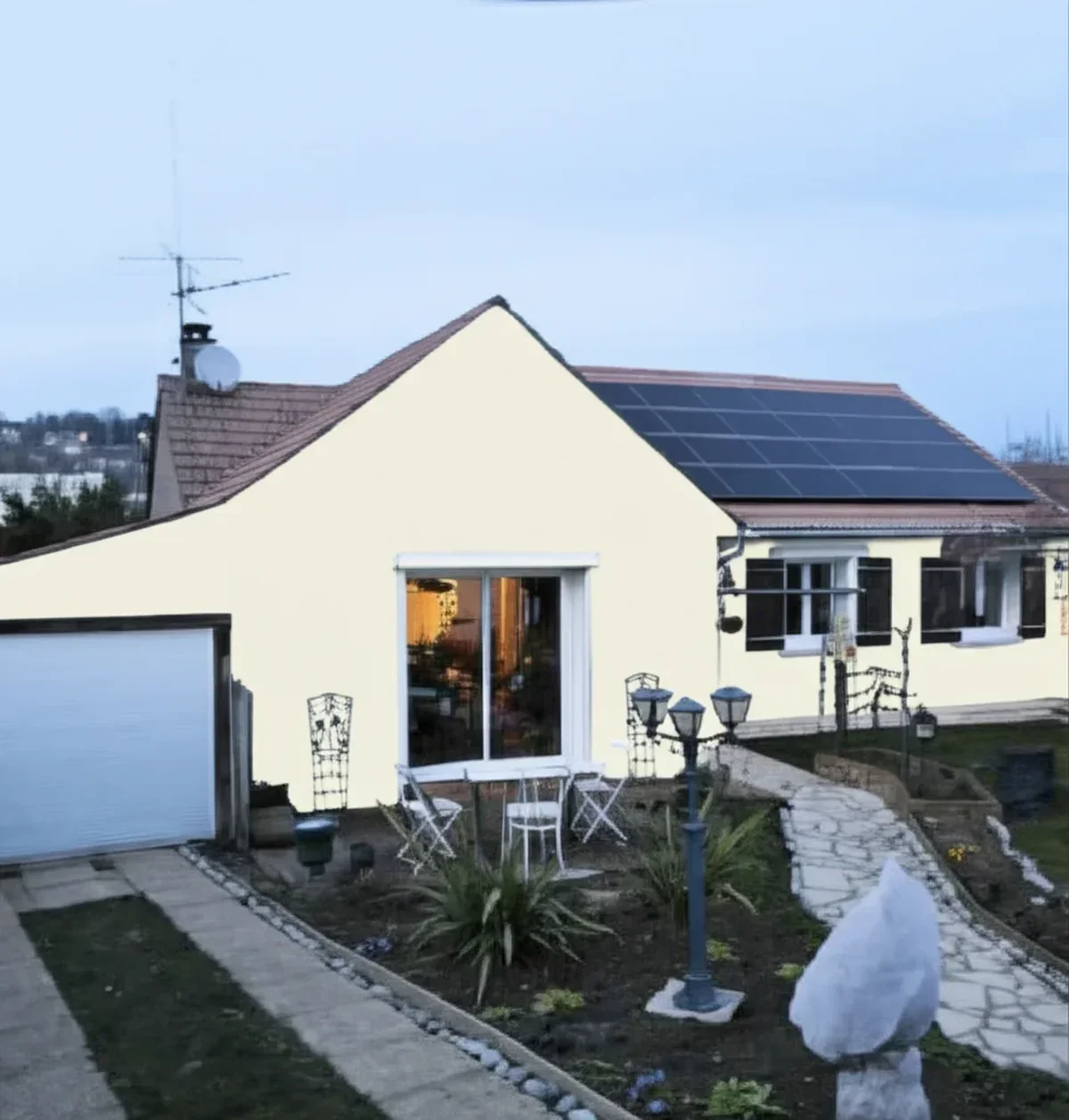
Upload one photo, get a photorealistic render, then swap to Kendall Charcoal in one click. Free, no signup.
Room by room, exposure by exposure
| Situation | Usual winner | Why |
|---|---|---|
| Accent wall | Iron Ore | The LRV 6 reads as a moody near-black that anchors the room without feeling like a black hole. |
| Exterior siding or shutters | Kendall Charcoal | The LRV 12 keeps enough depth to read as charcoal in direct sun without fading to dark gray. |
| Kitchen cabinets | Iron Ore | The warm near-black makes a bold cabinet statement that reads almost black but not flat black. |
| Living room walls | Kendall Charcoal | The LRV 12 is dark enough for drama but light enough to keep the room from closing in. |
| Front door | Iron Ore | The warm near-black reads as a sophisticated almost-black that stands out without being Tricorn Black. |
| Small accent piece | Kendall Charcoal | The lighter LRV shows more dimension and is more forgiving on furniture or smaller objects. |
Iron Ore and Kendall Charcoal share a warm green-brown undertone, but Iron Ore is a near-black and Kendall Charcoal is a true charcoal. The 6-point LRV gap is the deciding factor. For more on Iron Ore, see our Iron Ore vs Tricorn Black guide, and for Kendall Charcoal, see Wrought Iron vs Kendall Charcoal.
When to choose Iron Ore
- You want a warm near-black that reads almost black but has a green-brown depth.
- You are painting an accent wall, kitchen island, or modern cabinetry where drama matters.
- You like the look of black but want a touch of warmth in the undertone.
- You are designing a moody, modern interior. For more, see our Iron Ore vs Peppercorn comparison.
When to choose Kendall Charcoal
- You want a warm charcoal that reads as charcoal, not near-black.
- You are painting exterior elements where a lighter LRV holds its depth in sun.
- You want a dark wall color that adds drama without making the room feel like a cave.
- You prefer a charcoal that shows its warmth and dimension clearly. For the full breakdown, see Kendall Charcoal vs Chelsea Gray.
Same wall, both charcoals, your actual light. Free render in about 30 seconds.
Frequently asked questions
What is the difference between Iron Ore and Kendall Charcoal?
The main difference is depth. Iron Ore SW 7069 has an LRV of 6, making it a warm near-black with a green-brown undertone. Kendall Charcoal HC-166 has an LRV of 12, making it a true warm charcoal with the same green-brown undertone. They share the same undertone family but serve different depth needs.
Which is darker, Iron Ore or Kendall Charcoal?
Iron Ore is darker. Its LRV is 6, compared with 12 for Kendall Charcoal. That 6-point gap is clearly visible: Iron Ore reads as a near-black while Kendall Charcoal reads as a true charcoal with visible depth.
Do Iron Ore and Kendall Charcoal have the same undertones?
Yes, they share the same warm green-brown undertone. Both read as warm dark neutrals rather than cool blacks. If you like the warmth of one, you will like the warmth of the other. The only question is depth.
Can I see both colors on my own wall before I buy paint?
Yes. Upload one photo of your room to FacadeColorizer, get a photorealistic render in Iron Ore, then swap to Kendall Charcoal in one click. You will see the depth difference on your actual wall. The first HD render and three color variations are free.
1 HD render plus 3 free color variations. Start with Iron Ore, swap to Kendall Charcoal in one click.
Trademark notice. Benjamin Moore and Kendall Charcoal are trademarks of Benjamin Moore & Co. Sherwin-Williams and Iron Ore are trademarks of The Sherwin-Williams Company. FacadeColorizer is not affiliated with, endorsed by, or sponsored by these companies. Brand and color names are used descriptively (nominative fair use). Hex and RGB values are approximate digital renderings; the only authoritative reference is a physical paint sample.
Trademarks mentioned (Sherwin-Williams, Benjamin Moore, Behr, Caparol, Brillux, Sto, Alpina, Valspar, PPG, Glidden, Dulux, Crown Trade, Sandtex, Farrow & Ball, Johnstone's, Leyland) are property of their respective owners. FacadeColorizer is independent and not affiliated with any of them. Nominative fair use under Lanham Act §1125.