Exterior painters near me in Tucson, Arizona
Before you call a Tucson painter, upload one photo and preview real Sherwin-Williams, Benjamin Moore or Behr colors on your own facade in about 30 seconds. Free, no account, no obligation.
- No sign-up
- No card
- Result in ~30s
Your photo is private, used only to create your preview, never sold. You keep full ownership.
✓ No sign-up ✓ Result in ~30s
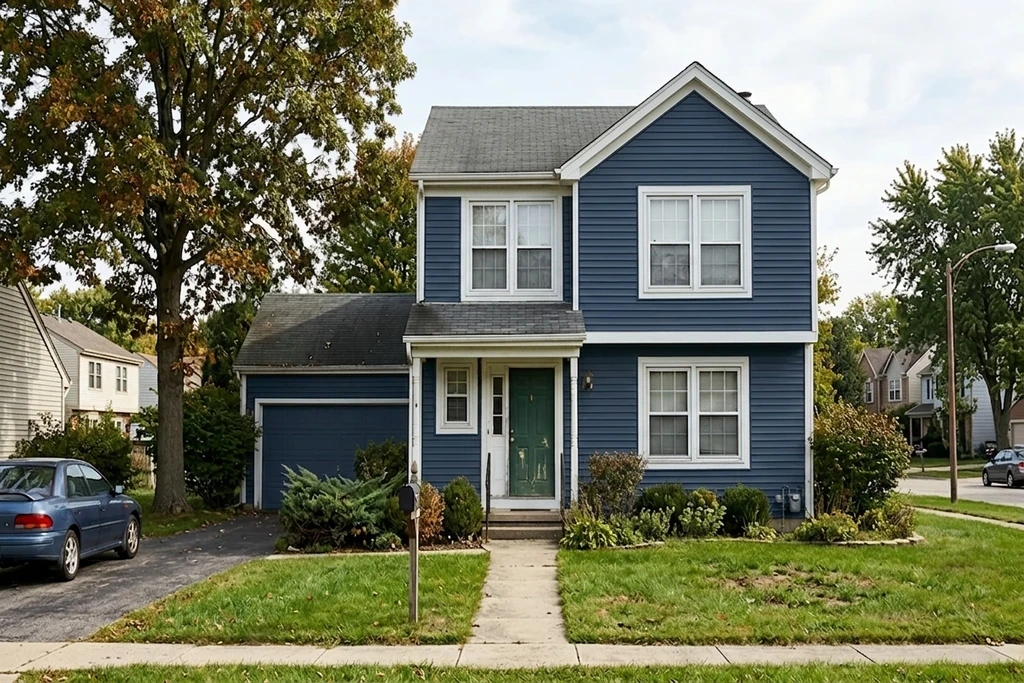
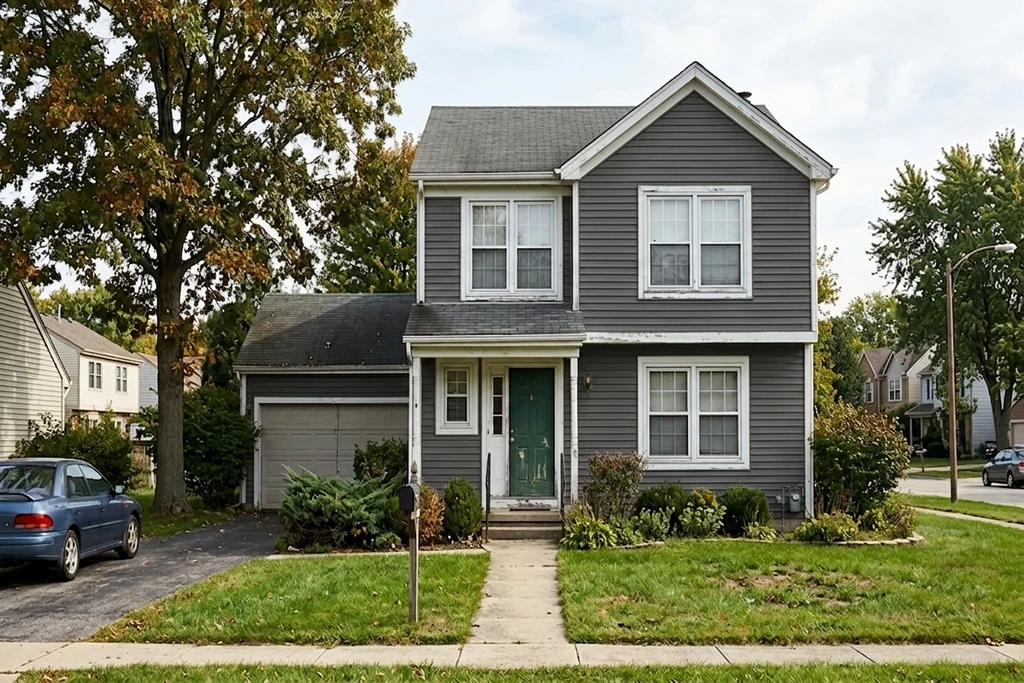
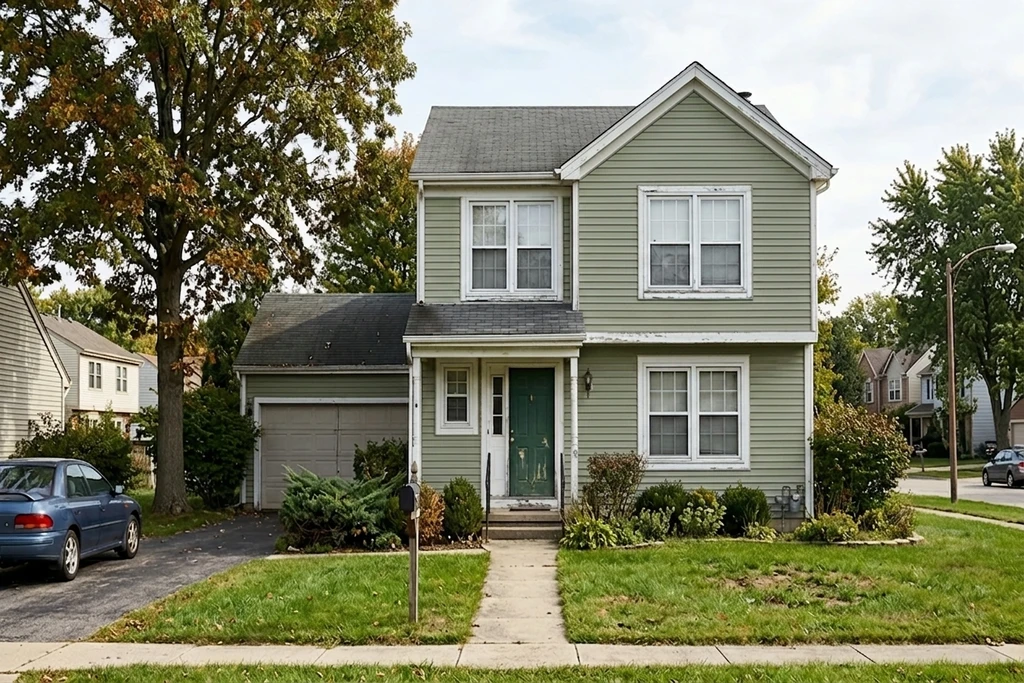
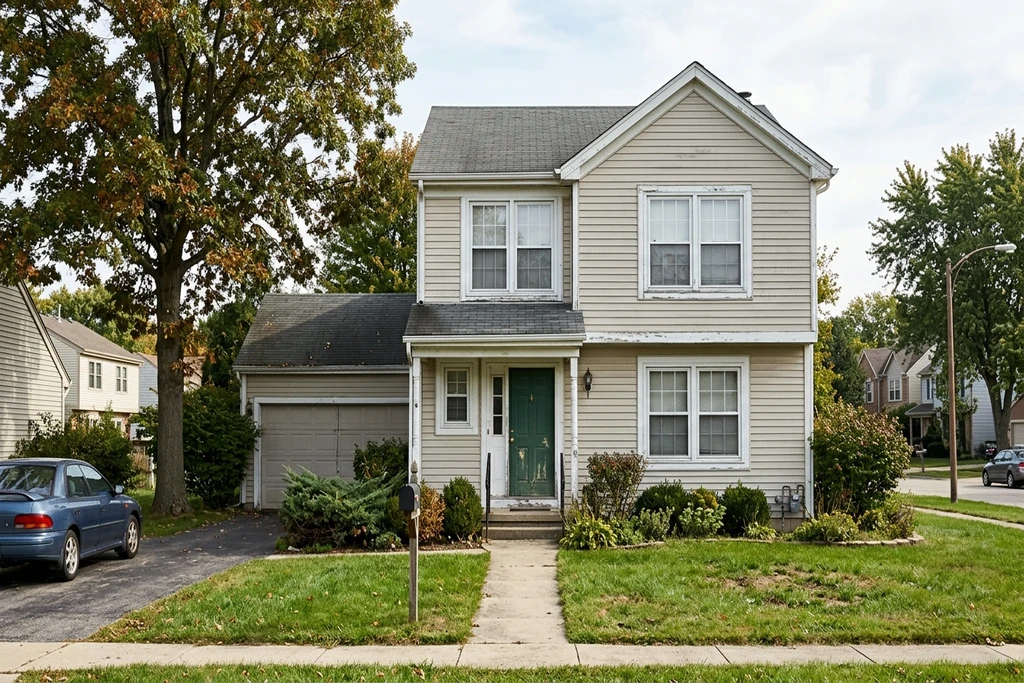
Real AI renders, your own photo, any shade
Try it on your house
No photo? Try a sample
Tucson painter wages and labor data (BLS, 2024)
Source: US Bureau of Labor Statistics, Occupational Employment and Wage Statistics (OEWS), May 2024. Wage figures are for the state as a whole; Tucson metro pricing typically tracks at or above the state mean.
Tucson climate and what it does to exterior paint
Hot semi-arid Sonoran climate (BSh) at roughly 2,400 ft elevation, with about 286 sunny days, near 12 in of annual precipitation, and cool desert nights that swing 30 deg F off the daytime high. The summer UV index reaches 11 from May through August, and the North American monsoon runs July through September.
Tucson sits higher and a touch cooler than Phoenix, so wall temperatures peak slightly lower, but the wide day-to-night temperature swing means coatings expand and contract every 24 hours, which fatigues a stiff film and opens hairline cracks at stucco control joints. Burnt-adobe and slump-block walls wick ground moisture and mineral salt up from caliche soils, so efflorescence and bond failure at the base course are the local signature defect. Monsoon dust and blowing grit from July through September settle into wet film, which is why Tucson crews track dew point and wind, skip late-afternoon spraying in storm season, and favor breathable mineral or high-grade acrylic systems that let trapped moisture escape rather than blister.
Source: NOAA National Centers for Environmental Information, climate normals 1991 to 2020.
What Exterior Painting Actually Costs in Tucson in 2026
Tucson labor sits below the coastal benchmarks because the statewide painter mean wage reported by the Bureau of Labor Statistics is $22.91 an hour against a national figure north of $24, yet the bid you sign is shaped far more by substrate and prep than by the hourly rate. A typical single-story Sonoran-stucco residence between 1,800 and 2,400 finished square feet lands in the $3,600 to $11,000 range for a quality two-coat acrylic system, while burnt-adobe ranch houses in the central midtown corridor and two-story builds up in the Catalina Foothills push toward the top of that band once joint repair, base-course salt treatment, and trim detailing are folded in. The per-square-foot figure most local crews quote runs $1.75 to $4.25, and where you sit inside that spread depends almost entirely on three line items: the condition of the existing finish, whether the wall needs efflorescence remediation at grade, and the grade of product specified for high-UV exposure. Pay attention to the prep breakdown rather than the headline number, because two bids at the same dollar figure can buy radically different durability once the desert sun goes to work on the binder.
High-Desert Sun, Cool Nights, and the 24-Hour Temperature Swing
Tucson logs roughly 286 days of sunshine a year, but the detail that separates it from Phoenix is elevation. The city sits near 2,400 feet, a few degrees cooler by day and noticeably cooler after dark, which produces a daily temperature swing that frequently exceeds 30 degrees between the afternoon peak and the pre-dawn low. That swing is the quiet enemy of exterior coatings: a wall heats, expands, then sheds heat fast into the thin desert air at night and contracts, and a brittle low-grade film fatigues at that rhythm until it micro-cracks along stucco control joints and window returns. Annual precipitation is light at about twelve inches, most of it arriving in the violent late-summer storms of the North American monsoon between July and September. The National Weather Service office in Tucson tracks a summer ultraviolet index that reaches 11, among the highest sustained UV loads of any United States metro, and that radiation is what bleaches the color out of cheap pigment on south and west elevations long before the film itself wears through. A coating spec written for Tucson has to answer two questions at once: can it ride the daily thermal swing without cracking, and does it carry enough titanium-dioxide and UV-stable resin to hold its color for a decade in that relentless sun.
Burnt Adobe, Slump Block, and Sonoran Stucco: the Tucson Substrate Mix
Tucson wears a substrate palette you will not find in coastal California or even consistently in Phoenix. Traditional cement stucco over wood or block framing covers most subdivision stock from the 1980s onward, but the older and architecturally beloved neighborhoods carry true masonry: burnt-adobe brick, slump block, and unstabilized adobe in the historic barrios and the bungalows around Sam Hughes near the university. These masonry walls are porous and they breathe, drawing ground moisture and dissolved mineral salt up from the caliche-laden desert soil that underlies the basin. When that moisture migrates outward and evaporates at the surface, it leaves the white crystalline bloom called efflorescence and, worse, it can push a non-breathable film off the wall in sheets near grade. A competent Tucson painter treats burnt-adobe and slump-block differently from cement stucco: a breathable mineral silicate or a high-permeability acrylic that lets vapor escape, a base-course flush and neutralizing wash where salt has bloomed, and patience to let a freshly washed masonry wall dry to a stable moisture content before the first coat. Spraying a cheap elastomeric over damp adobe is the single most common way a Tucson repaint fails inside two seasons, so ask any bidder how they will identify your wall type and what product they will spec for it by name.
HOA and Dark-Sky Color Rules in Rancho Vistoso, Dove Mountain, and the Foothills
Color is rarely a free choice in the master-planned belt that rings the city. The Vistoso Community Association governs the sprawling Rancho Vistoso development in Oro Valley, where dozens of sub-neighborhoods sit under a desert earth-tone palette and an architectural review committee that wants body, trim, and accent submitted together. Dove Mountain up in Marana, anchored by its resort and gated enclaves, enforces a tightly curated Sonoran palette built to disappear into the foothills backdrop rather than stand out from it. Rita Ranch on the southeast side runs its own approved-color list through the Rita Ranch Community Association. Beyond the HOAs, the Catalina Foothills and unincorporated Pima County enforce dark-sky lighting standards and grading rules that interact with paint: very light or high-gloss exterior finishes that throw glare or reflect security lighting can draw scrutiny in viewshed-protected hillside zones. The practical move is the same everywhere here: submit your finalist colors with a realistic rendering on a photo of your own house, not just fan-deck chips, because reviewers approve far faster when they can read the body and trim against your actual roof and the desert landscape behind it.
Hiring a Licensed Tucson Painter: ROC R-34, CR-34, Bonded, and Insured
Arizona regulates painting contractors through the Registrar of Contractors, and the licensing line is drawn at $1,000: once a job exceeds that figure in combined labor and materials, or whenever a building permit is required, the contractor must hold a license. For painting work the relevant classifications are the residential R-34, the commercial C-34, and the dual CR-34 Painting and Wall Covering license. Every quote you gather in Tucson should list a current ROC number, and you should verify it and its complaint history at roc.az.gov before signing, confirm the contractor bond is in force, and ask for a workers compensation certificate that names your property. A serious Tucson painter will go further than the paperwork: they will identify your wall as cement stucco, burnt adobe, or slump block, spec a breathable system by product line for that substrate, name the dew-point and surface-temperature thresholds they refuse to spray past, and put a written five to ten year workmanship guarantee on the job that scales with the grade of product. Anyone who cannot name your substrate or quotes the same elastomeric for every wall in the valley is guessing with your money.
When to Paint in Tucson: the Spring and Fall Windows Around Monsoon
The Tucson painting calendar has two sweet spots and one stretch to plan around. The prime windows are mid-March through May and again mid-September through November, when daytime highs sit comfortably inside product spec, overnight lows stay above the cure-temperature floor, and the air is dry and still. The monsoon from early July through September is the period that demands respect rather than outright avoidance: storms build in the afternoon and arrive with blowing dust and gusty outflow winds that will pit and contaminate wet film, so monsoon-season crews work the calm morning hours, watch the radar and the dew point, and shut down spraying when the sky stacks up. Deep summer outside the storms is workable for early-morning application before walls heat past 95 degrees, after which a competent crew pauses and returns for trim and detail work in the cooler evening. Winter is mild and very paintable here, far gentler than the snowbound metros, though the long cool nights can stretch recoat times on north-facing walls. Booking in the shoulder windows usually buys both better weather and a calmer contractor calendar than the October rush.
Two-Story Foothills Homes, Saltillo Trim, and Access Surcharges
A meaningful share of Tucson value sits up against the mountains, where the Catalina Foothills and the Tortolita foothills near Dove Mountain hold larger two-story and split-level homes on graded hillside lots. Those jobs carry a real surcharge over the flat-lot cost-per-square-foot band, because sloped sites complicate ladder footing and scaffolding, and crews often have to rig fall protection and stage equipment on terrain that simply takes longer to work safely. Expect a hillside two-story scope to add meaningfully to the bid for access alone. Tucson architecture also brings detail work that flat-rate quotes tend to underestimate: deep-set windows in thick masonry walls, exposed wood vigas and beam ends on Pueblo and Santa Fe style homes that need their own oil-primer-and-stain cycle, wrought-iron security grilles and gates that should be wire-brushed and treated for rust, and Saltillo-tile accents and burnt-adobe parapets that demand careful cut-in and masking rather than fast spraying. Ask any Foothills bid how the crew will reach the upper gables without walking tile or trampling protected desert landscaping, and how viga ends and ironwork are scoped, because those line items are where a too-cheap quote quietly leaves the hardest work undone.
Top Tucson HOAs with exterior color approval rules
Before painting, confirm your HOA palette and submit your color selections to the architectural review committee. Most Tucson HOAs respond within 14 to 21 days.
Paint stores near Tucson
Painter licensing in Arizona
Arizona requires a license from the Registrar of Contractors (AZ ROC) once a job exceeds $1,000 in combined labor and materials, or whenever a building permit is pulled. For painting, that means a residential R-34, commercial C-34, or dual CR-34 Painting and Wall Covering license. Verify the ROC number and its status at roc.az.gov before you sign, and confirm the contractor bond is current.
Frequently asked questions about Tucson exterior painting
How much does it cost to paint a house exterior in Tucson in 2026?
Most Tucson single-family homes run $1.75 to $4.25 per square foot for a two-coat acrylic system, with an 1,800 to 2,400 sq ft home landing in the $3,600 to $11,000 band. Burnt-adobe salt remediation, two-story Foothills access, and breathable masonry systems push pricing toward the high end.
Do Tucson painters need a license?
Yes, once a job exceeds $1,000 in combined labor and materials or requires a building permit. Arizona issues the residential R-34, commercial C-34, and dual CR-34 Painting and Wall Covering classifications through the Registrar of Contractors. Verify the ROC number at roc.az.gov before signing.
What is the best time of year to paint a house exterior in Tucson?
Mid-March through May and mid-September through November are the prime windows, with dry, still air and mild temperatures. Crews still work the monsoon months of July through September but only in the calm morning hours, shutting down spraying when afternoon dust storms and gusty winds build.
Why does paint fail near the bottom of adobe and block walls in Tucson?
Burnt-adobe, slump-block, and older masonry wick ground moisture and mineral salt up from the caliche desert soil. As that moisture evaporates at the surface it leaves white efflorescence and can push a non-breathable film off the wall near grade, which is why local crews neutralize the salt and use breathable mineral or high-permeability acrylic coatings on those substrates.
Want a deeper cost breakdown? Read our 2026 Tucson cost guide .
House painters in nearby metros
Popular exterior colors for Tucson homes
In Tucson's hot, sun-intense climate, heat-reflective whites and desert-warm tones keep exteriors cooler and resist UV fade.
Browse painting costs in other metros: all US city guides.