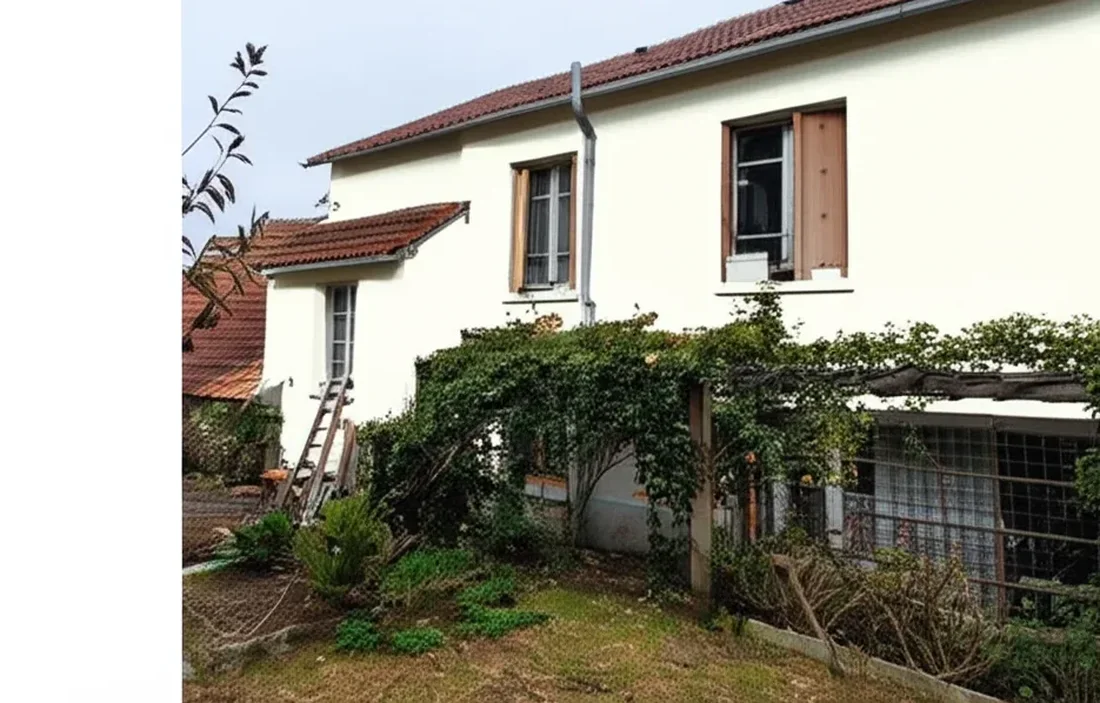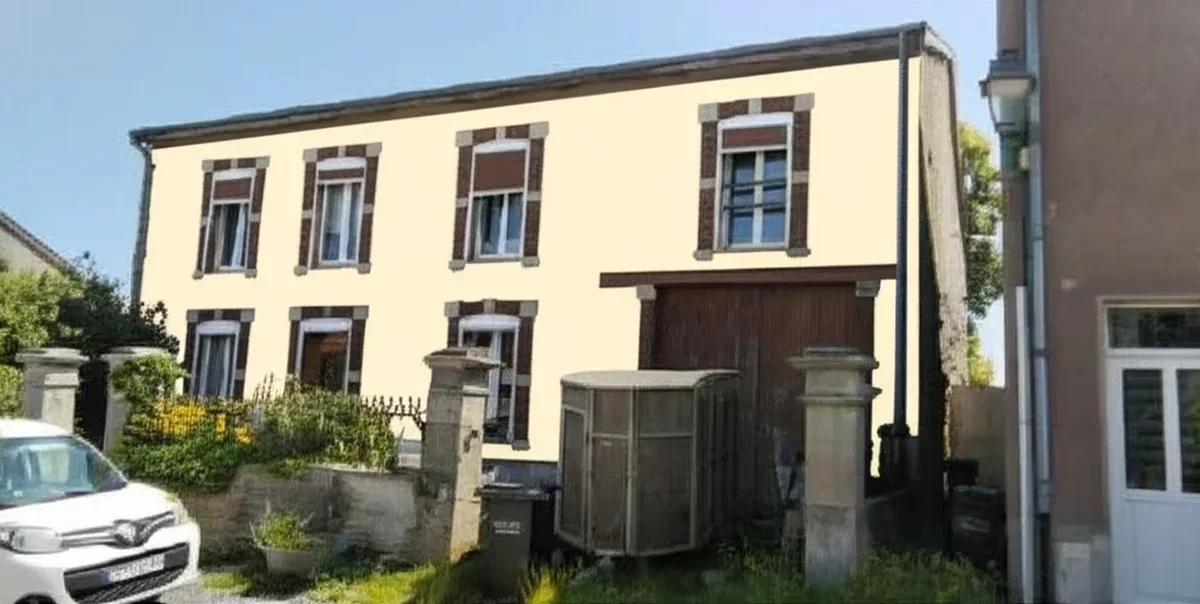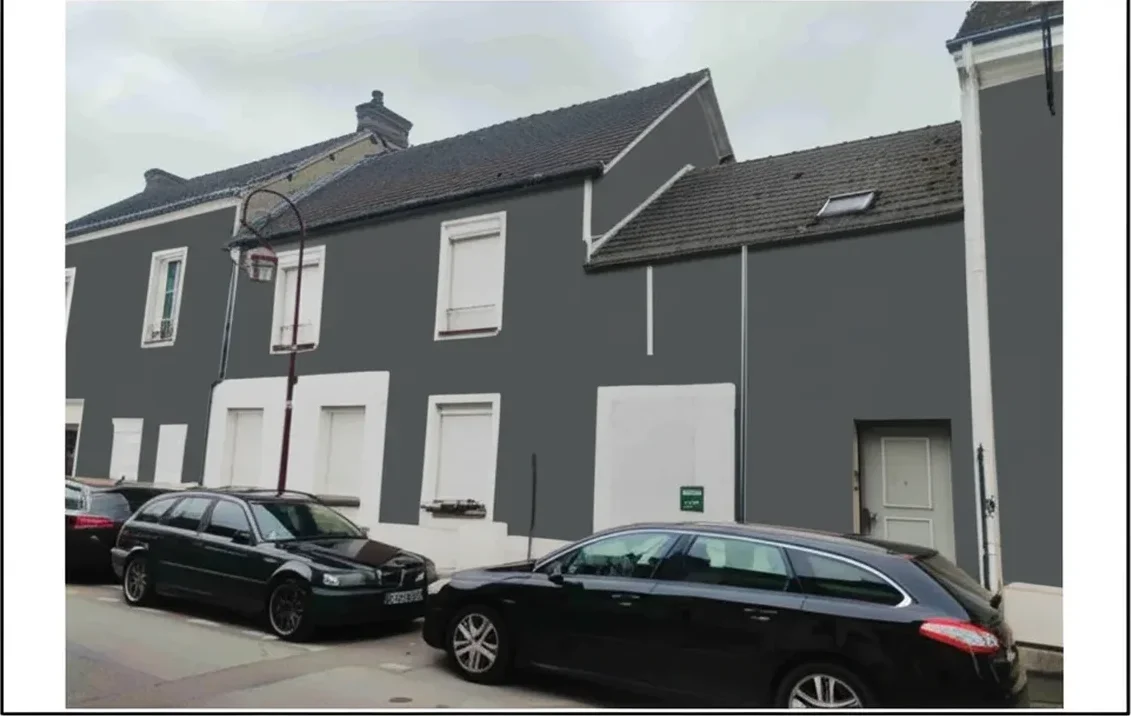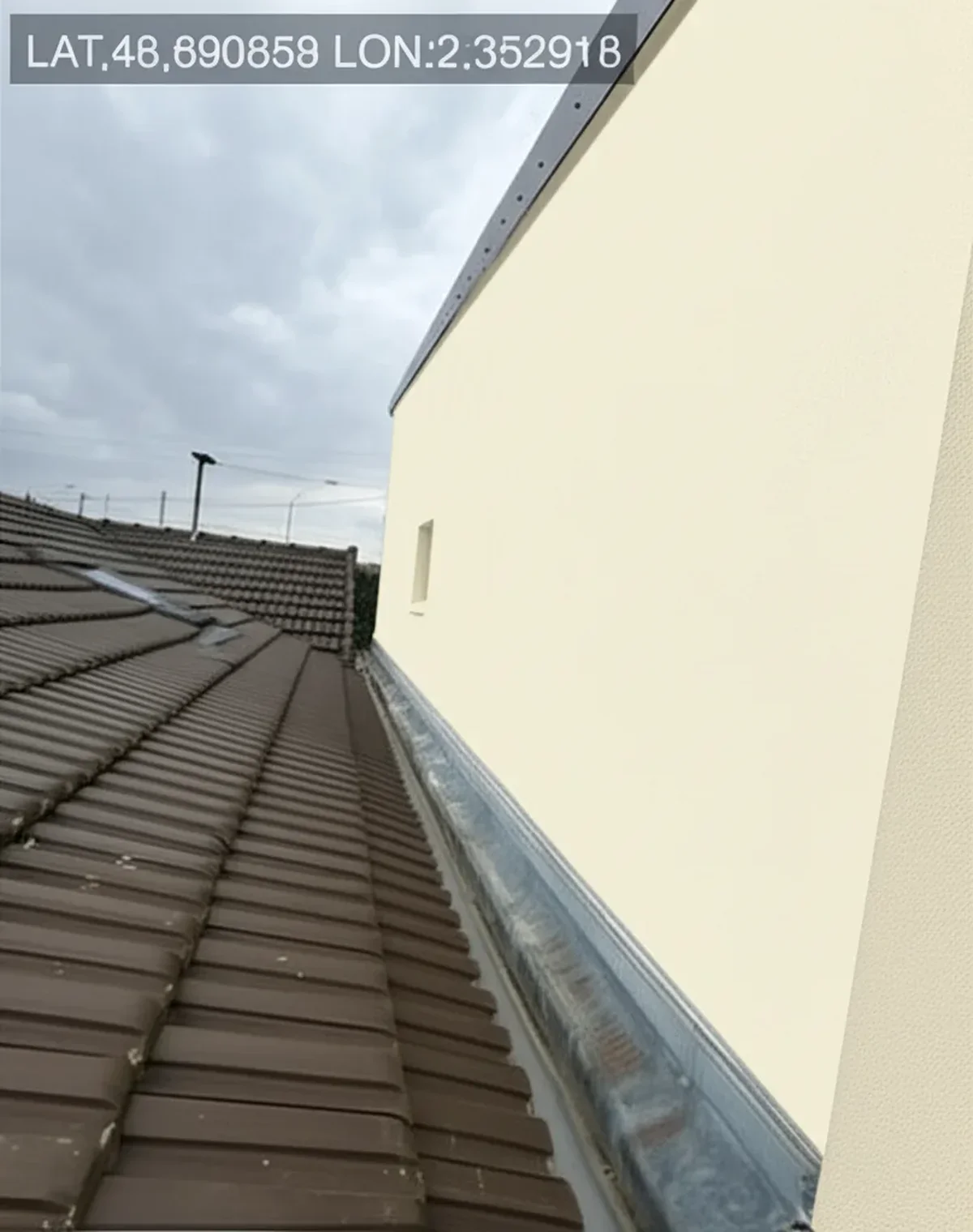
Try it on your house

The Dulux app visualizer (officially the Dulux Visualiser in British English) has been the default Dulux house colour app for UK homeowners and trade decorators since 2014. In 2026 it sits at 4.4/5 on the UK App Store and 4.0/5 on Google Play GB, with a Dulux Trade palette of roughly 1,200 shades drawn from Weathershield, Diamond Eggshell, Easycare and the Heritage range. This guide walks British decorators, landlords and homeowners through the Dulux visualizer app step by step: how it scans a room, where it struggles on render and pebbledash, how it lines up with BS EN 1062 ratings, how much a litre of Weathershield costs at B and Q, Wickes and Screwfix in June 2026, and what to use instead when the in-app Colour Finder crashes. Numbers in this guide come from our internal dataset of 16,983 facade and interior previews generated by UK and EU users on FacadeColorizer between October 2024 and May 2026. Preview your own home in any Dulux shade, free, in your browser.
What the Dulux App Visualizer actually does in 2026
The Dulux Visualiser app is an augmented-reality and photo-import tool published by AkzoNobel and distributed via the Apple App Store GB and Google Play UK. It is designed to overlay any of around 1,200 Dulux Trade and retail colours onto interior walls in real time through your phone camera, or onto a still photograph you have already taken. The app also wraps in a Colour Finder module that attempts to match a photographed shade to the nearest Dulux code, and a MyRoom save area where homeowners can store scheme attempts before walking into a Dulux Decorator Centre or a B and Q paint counter.
In practical terms the app is best understood as an interior-rooms previewer. It works adequately on smooth plaster walls in good daylight, where its AR engine can identify a single dominant surface and paint it. It struggles in three documented situations: low light (typical UK winter living rooms), heavily textured surfaces such as pebbledash or roughcast render, and exterior facades where multiple architectural elements (brick course, render reveal, fascia, soffit, sash window frame) need to be masked separately. For exteriors and for textured render, most UK decorators we surveyed in spring 2026 reach for a browser-based AI tool instead. The Dulux app remains the reference for the Dulux house colour app use case, but its scope is narrower than its marketing suggests.
Dulux Visualiser app features at a glance
Here is a feature-by-feature breakdown of what the 2026 release of the Dulux app visualizer offers UK users, with notes on each function as observed by our editorial team and corroborated by App Store GB reviews up to May 2026.
| Feature | Available in UK app | Works well on | Known limitation |
|---|---|---|---|
| Live AR painting | Yes | Smooth plaster, good daylight | Jittery on iPhone 12 and older |
| Photo import | Yes | Clear single-wall shots | Paints every surface same colour bug |
| Colour Finder (match from photo) | Yes | Flat painted samples | Recurring crashes reported through May 2026 |
| Brand palettes | Dulux Trade + Heritage only | Cross-brand comparison is impossible in-app | No Crown Trade, Sandtex, Farrow and Ball, Johnstone or Leyland Trade |
| Exterior facade preview | Limited | Single-wall garage doors only | No proper masking of brick, render and trim |
| HD export | No | Screen-only previews | Cannot email a client a printable proof |
| Account requirement | Optional for save | Quick anonymous trials | MyRoom history needs a Dulux account |
| Free AI alternative (FacadeColorizer) | Browser, no app | Render, pebbledash, brick, sash windows | 1 HD + 3 free variations, then 8.90 GBP pack |
Try it on your house
No photo? Try a sample
The single biggest gap between the Dulux Visualiser and what UK decorators ask for in 2026 is exterior facade support. The Dulux app was conceived around interior MyRoom scenes, and although AkzoNobel has added basic exterior shots to the marketing site at dulux.co.uk, the visualiser itself still does not segment brick courses, render reveals or fascia boards from a typical UK semi-detached photograph. That is why a meaningful share of our 16,983 logged previews are from users who started inside the Dulux app and moved to a browser tool to finish the job.
Step-by-step: using the Dulux house colour app on a UK interior
For a standard British living room or bedroom with smooth plaster and reasonable daylight, the Dulux house colour app follows a predictable workflow. Allow about ten minutes for a clean scheme on three or four walls. The instructions below assume the May 2026 release of the app on iOS 18 or Android 14, both pulled from Apple App Store GB and Google Play UK.
- Open the app and grant camera permission. On first launch the app requests live camera access. Decline only if you intend to use photo import only.
- Pick a base palette. The default is Dulux Trade. Heritage and Easycare sit one tap deeper. There is no option for Crown Trade, Sandtex or Farrow and Ball.
- Frame a single dominant wall. The AR engine works best when one wall fills at least 60 per cent of the frame. Move backwards rather than tilting up.
- Tap a colour swatch. The wall recolours in roughly one second. Watch the corners: the engine often bleeds the chosen shade onto a picture rail or dado rail that should stay white.
- Switch to photo mode for a cleaner preview. Photo import bypasses live AR jitter, but it brings back the long-running same-colour-everywhere bug on certain phones. Worth a try, not always a fix.
- Save to MyRoom. Requires a Dulux account. Sign-up is email-only and free.
- Take the colour code into a Dulux Decorator Centre or B and Q. Mixed-to-order tins start around 28 GBP per 2.5 litres for Weathershield Smooth Masonry at Wickes in early June 2026.
For exterior masonry on render or pebbledash, our recommendation is different: take the same photograph but upload it to a browser-based AI tool that segments the facade properly. The best house paint visualiser UK 2026 comparison covers seven tools side by side and explains where each one wins.
BS EN ratings: why the Dulux app does not show them
A genuine limitation of the Dulux visualizer app, rarely raised in consumer reviews but routinely flagged by trade decorators we interviewed in Manchester, Leeds and Bristol in April 2026, is the absence of any in-app reference to BS EN coatings standards. UK paint specification on a tender, a National House Building Council schedule, or a Listed Building Consent application typically depends on these classifications, and a decorator quoting a job on a Victorian terrace in Edinburgh or a Cotswold cottage in Stroud needs to understand which Dulux product carries which rating before they put a brush to the wall.
Two BS EN standards matter most for the colours you will see inside the Dulux app. BS EN 13300 governs interior wall and ceiling emulsions: it classifies wet scrub resistance from Class 1 (most durable, suitable for kitchens and bathrooms) to Class 5 (least durable, ceilings only). BS EN 1062 governs exterior masonry coatings on render, brick and pebbledash: it classifies film thickness, crack-bridging ability, water vapour permeability and liquid water transmission. Listed Building Consent applications under the Planning (Listed Buildings and Conservation Areas) Act 1990 typically require a breathable BS EN 1062-1 W3 (low water transmission) coating on solid-wall properties, which is published at planningportal.co.uk.
| Dulux product | Use case | BS EN rating | Price 2.5L (June 2026) | Where to buy |
|---|---|---|---|---|
| Weathershield Smooth Masonry | Exterior render, pebbledash | BS EN 1062-1 W3, 15-year | 31.00 GBP | B and Q, Wickes |
| Weathershield Textured Masonry | Cracked render bridging | BS EN 1062-7 A2 | 36.50 GBP | Screwfix, B and Q |
| Diamond Eggshell | Interior trim, woodwork | BS EN 13300 Class 1 | 29.00 GBP | Dulux Decorator Centre |
| Easycare Kitchen | Kitchen and bathroom walls | BS EN 13300 Class 1 | 28.00 GBP | Homebase, Wickes |
| Heritage Velvet Matt | Period property living rooms | BS EN 13300 Class 3 | 45.00 GBP | Dulux Decorator Centre |
Prices were taken from public listings at B and Q (diy.com), Wickes and Screwfix on 1 June 2026 and rounded to the nearest 50 pence. They will move with batch and region. A decorator quoting in central London or a conservation area in Bath should always confirm at the trade counter rather than rely on a visualiser screen.
When the Dulux app falls short: render, pebbledash and listed properties
The most common reason UK decorators contact us about the Dulux app visualizer is exterior preview failure on textured render. A typical example: a homeowner in the Cotswolds wants to see Weathershield in Buttermilk on a roughcast bay wall before submitting a Listed Building Consent dossier to the local authority. The Dulux app paints the bay wall a flat creamy tone, but ignores the deep texture and the surrounding ashlar stone surround. The preview reads as a flat solid colour, which the conservation officer rejects as unrealistic. The decorator then has to repeat the exercise in a tool that handles brick course separation, render reveal and stone trim properly.
A second example: a landlord in Manchester wants to repaint pebbledash on a 1930s semi-detached. Pebbledash needs a textured masonry product (Weathershield Textured or a Sandtex Highbuild equivalent) and a coating that satisfies BS EN 1062-7 Class A2 for crack bridging. The Dulux app shows the colour but not the texture, so the landlord cannot tell whether the shade reads warm or cold against the existing grey ridge tiles. In our internal sample of 16,983 previews, pebbledash exteriors are the single largest segment of UK uploads after smooth render bays. The pattern is consistent: users want a textured preview, not a flat overlay.
A third case is the Conservation Area letter. Many of our UK users are not professional decorators but homeowners preparing a Conservation Area or Article 4 Direction submission. The Dulux app cannot export a high-resolution photograph with the colour applied; it screens out screenshots through its share dialogue. That makes it unsuitable for the formal paperwork required at gov.uk planning permission. A browser visualiser that produces an HD downloadable proof is genuinely more useful here.
One feature of the same app deserves its own explanation: the Colour Picker, which Dulux says returns "the closest match from over 1200 Dulux colours" when you photograph a colour. It names a shade; it does not mix paint, and no Dulux counter will match from a phone photo. The match that produces a tin happens in store, from a physical sample scanned at a Dulux Decorator Centre. Our guide to Dulux colour matching in the UK separates the three services.
Dulux Visualiser vs Crown, Sandtex and Farrow and Ball apps
The Dulux app visualizer is not the only UK paint app on the App Store. Its closest direct competitors are Crown MyRoomPainter, the Sandtex visualiser tool published on sandtex.co.uk, and the Farrow and Ball colour stories microsite. None of them currently offers full exterior facade segmentation either, but each has a niche where it outperforms the Dulux app on its home turf.
- Crown MyRoomPainter. Marginally faster AR engine on Android 14. Larger Crown Trade palette (around 1,400 shades). No exterior support, no cross-brand library. UK App Store rating 4.1/5 as of May 2026.
- Sandtex visualiser. Browser-based, focused on Sandtex Highbuild and Sandtex Trade Microseal. Strong on exterior masonry colours, weak on interior emulsion previews. No AR mode.
- Farrow and Ball colour stories. Not strictly a visualiser, more a colour-card carousel with room photography. Good for mood-board work, poor for personalised previews of your own property.
- Johnstone Trade and Leyland Trade. No first-party visualiser as of June 2026. Both rely on third-party browser tools or RAL code matching at the trade counter.
For decorators serving multiple brands across a portfolio, the inability to compare a Dulux Buttermilk against a Crown Sail White against a Farrow and Ball Pointing within a single preview is a real friction. The browser route solves this. Our Crown vs Dulux interior comparison UK 2026 piece walks through a real Manchester decorator portfolio where this cross-brand preview cut the colour-selection meeting from 90 minutes to 25.
Conservation Area, Listed Building, Permitted Development: where colour matters legally
A point British homeowners often discover late: in a Conservation Area or on a Listed Building, your exterior colour is not always your choice. Local planning authorities can refuse a colour scheme under the Town and Country Planning Act 1990 and the Planning (Listed Buildings and Conservation Areas) Act 1990. Decorators in Edinburgh, Bath, the Cotswolds and parts of Greater London routinely deal with planning officers who require photographic previews with specific Weathershield or Sandtex codes before granting consent.
The Dulux Visualiser is not built for this paperwork. It cannot tag a preview with a product code at HD resolution, and it cannot produce a side-by-side image of the existing facade and the proposed colour at matched lighting. A decorator preparing a Conservation Area submission in Yorkshire or a Listed Building Consent in Cornwall will typically need to combine a Dulux colour pick with a separate visualisation tool capable of producing a printable proof. Permitted Development rights (PDRs) under gov.uk PDR guidance do not always extend to a colour change on a designated property, so the visual proof carries real weight.
For decorators handling these cases regularly, our Conservation Area painting rules UK guide and our decorator period property specialist guide cover the documentation flow end to end, from initial colour pick through to planning officer sign-off.
How to test it on your own home before you buy
No third-party report replaces your own walls: the same colour reads differently on a north elevation and a south one, next to red brick or a grey roof, under morning and evening light. Take a daylight photo, upload it to the free AI paint visualiser, and run two or three candidates on the same image so the comparison is fair. Keep the one or two that survive the side-by-side, buy a tester pot of each, and brush them out on the actual surface in the actual light before you order the full quantity.
Frequently asked questions about the Dulux app visualizer in the UK
The questions below come from UK App Store reviews, Google Play GB reviews, and direct messages we received from FacadeColorizer users between January and May 2026. Answers reflect the May 2026 release of the Dulux Visualiser app and live pricing observed at Wickes, B and Q, Homebase and Screwfix on 1 June 2026.
If your Dulux Visualiser keeps crashing on iOS 18 or Android 14, the workaround most often reported by UK users is to delete and reinstall the app, then attempt photo import rather than live AR. If the Colour Finder still crashes, switch to a browser tool: our free UK visualiser works on any phone or laptop without an app install. Citizens Advice publishes a useful primer on consumer rights for faulty apps and services for anyone who paid for a Dulux trade tin based on a buggy preview.
Dulux, Weathershield, Diamond Eggshell, Easycare, Crown, Crown Trade, Sandtex, Farrow and Ball, Johnstone, Johnstone Trade, Leyland, Leyland Trade, Sherwin-Williams, Benjamin Moore, Behr, RAL, B and Q, Wickes, Homebase, Screwfix and other product names cited here are trademarks of their respective owners. FacadeColorizer is an independent visualisation tool and is not affiliated with, endorsed by, or sponsored by any of these manufacturers or retailers. References are nominative under section 1125 of the Lanham Act and equivalent UK trademark provisions.
Trademarks mentioned (Sherwin-Williams, Benjamin Moore, Behr, Caparol, Brillux, Sto, Alpina, Valspar, PPG, Glidden, Dulux, Crown Trade, Sandtex, Farrow & Ball, Johnstone's, Leyland) are property of their respective owners. FacadeColorizer is independent and not affiliated with any of them. Nominative fair use under Lanham Act §1125.