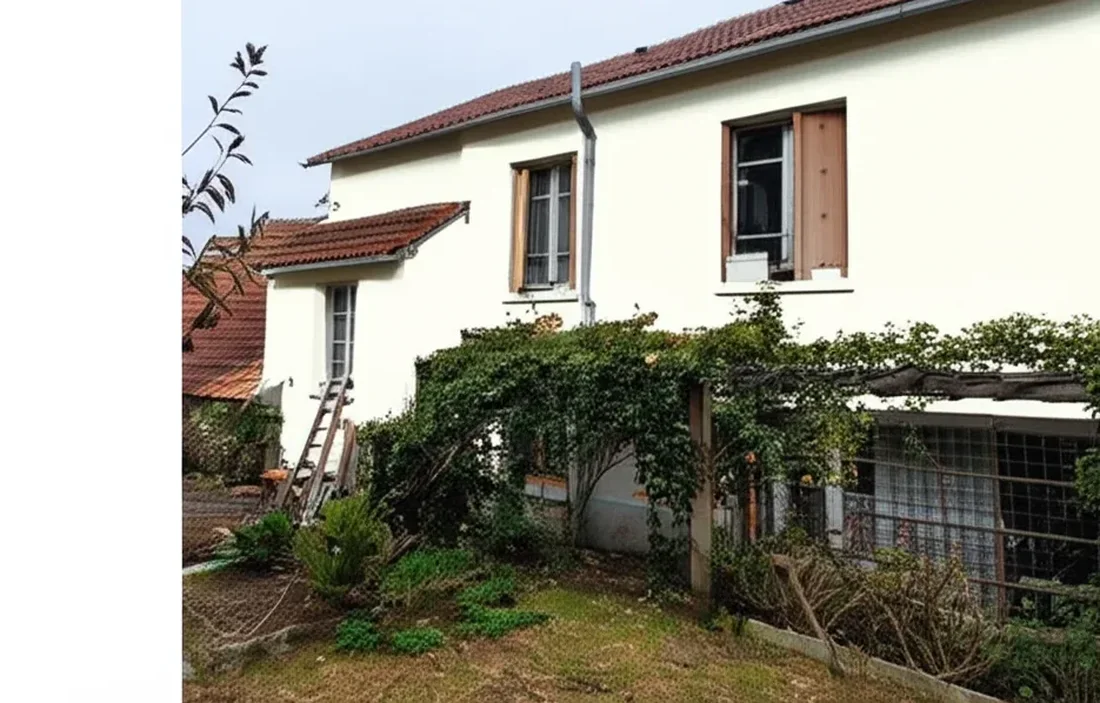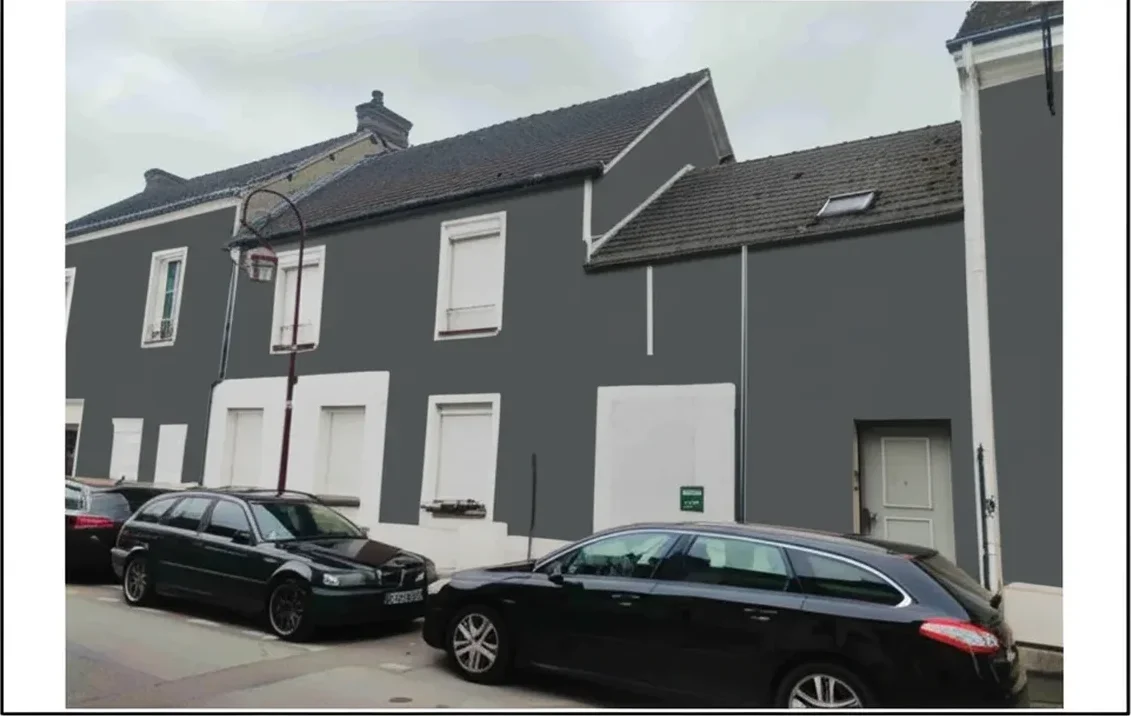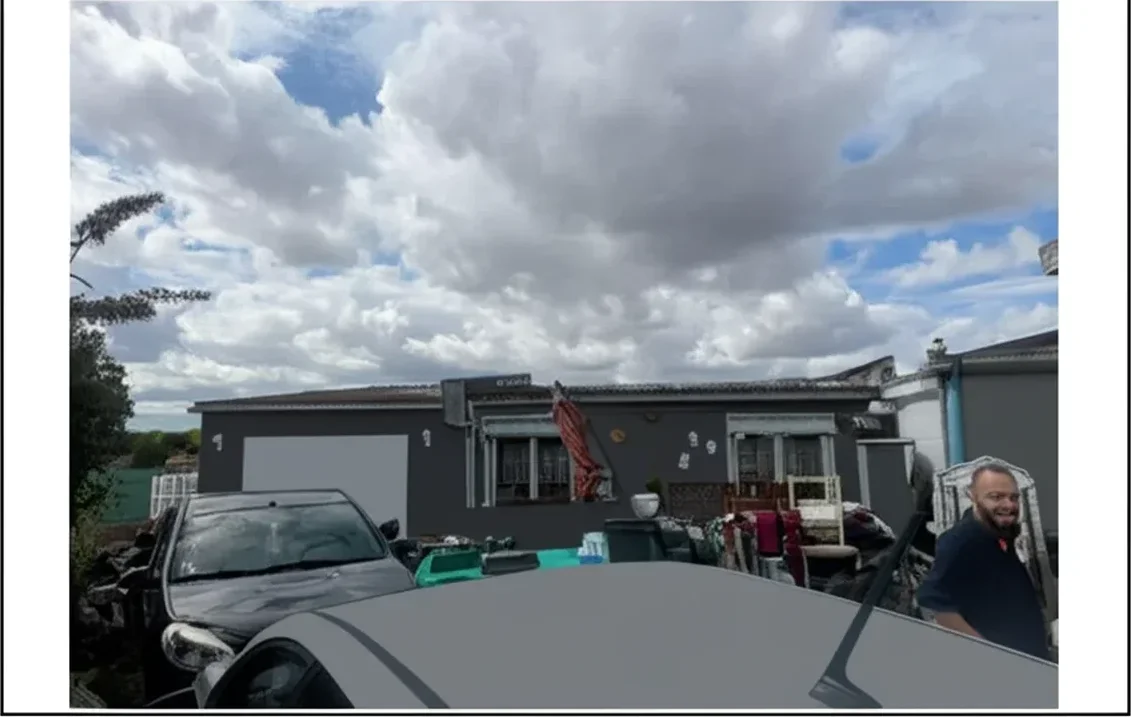
Try it on your house

A paint colour visualiser compresses the most expensive decision a UK homeowner makes in a decade - choosing the wrong shade for a living room, a kitchen, a bedroom or a full facade - into a thirty second preview on a phone or laptop. FacadeColorizer has processed 16,983 real previews in its 2026 dataset across British semis, Victorian terraces, Edwardian villas, Cotswold cottages, post-war rendered houses and modern new-build estates from Greenwich to Glasgow. This complete 2026 guide is written for the UK householder who wants one practical, step-by-step walkthrough of how a paint colour visualizer actually works on a British property, what it does well, where it still misleads, and how to pair it with a credible specification under BS EN 13300 for interior emulsions and BS EN 1062 for exterior masonry coatings.
Most of the comparison and review pieces written for the UK market in 2026 focus on which tool ranks first against which - useful, but not what you need at 9pm on a Sunday when you are staring at four colour chips on the dining room wall and cannot decide. This guide takes the opposite angle. It walks one project from beginning to end: the photograph, the upload, the brand chip choice, the preview, the cross-check against a daylight sample, the order at B and Q, Wickes, Homebase or Screwfix, and the regulatory gate at Planning Portal for Conservation Areas and Listed Buildings. Pricing is in pounds sterling, units are metric (square metres, litres, millimetres) and the spelling is British throughout - colour, neighbourhood, mould, fibre, grey, kerb.
Authoritative reference points used in this guide are linked directly: dulux.co.uk for the UK market leader palette, sandtex.co.uk for masonry coatings, planningportal.co.uk for Conservation Area and Listed Building consent rules, and hse.gov.uk for lead-paint safety on properties built before 1992. Try the free preview at any point on the FacadeColorizer Visualiser - one HD render plus three previews are free, Pack Colour adds full HD bulk for 8.90 GBP.
What a paint colour visualiser actually does on a British property
A paint colour visualizer takes a photograph of a wall, a room or a full facade and re-tints the painted surfaces to a different shade, leaving woodwork, glass, brick or stone in their original tone. The good ones segment the photograph with computer vision - separating the rendered front, the brick course, the soffit and the fascia, or in interiors the wall, the ceiling, the skirting and the dado rail - and apply the new colour only where it belongs. Cheap or rushed visualisers flood-fill the entire frame and the result looks like a sticker. The acid test on a UK terrace is simple: ask the tool to paint the render Farrow and Ball Hague Blue and see whether the sash windows remain white or turn blue too.
For a room paint visualiser the segmentation challenge is different. The tool must distinguish wall from cornicing, picture rail from architrave, ceiling from soffit, and skirting from floor. British rooms are full of these mouldings - a 1900 to 1939 Edwardian or interwar semi typically carries a 75 mm to 125 mm timber skirting, a picture rail at 1.95 m height, a plaster cornice, and a panelled door surround. A home colour visualiser that cannot hold these edges produces an output that looks fake and convinces nobody. Test by uploading a clear daylight photo of a hallway and asking for one accent wall in Crown Mellow Sage - the staircase spindles and dado should stay neutral.
For an exterior house paint visualizer the British twist is the weather. A south-facing rendered semi in Reading photographed at noon in July looks utterly different to the same wall in November under low Atlantic westerlies. A serious visualiser must hold the colour fidelity across both lighting conditions - and so must the homeowner viewing the result. Always cross-check the on-screen render against a daylight A4 sample painted with a tester pot from B and Q, Wickes or a Dulux Decorator Centre. The visualiser narrows the field from twenty candidates to three; the daylight sample chooses the final one.
Step one: photograph the room or facade correctly
The quality of any paint colour visualiser output is capped by the input photograph. The single most common reason a preview disappoints a UK homeowner is a poor photograph, not a poor tool. Shoot in diffused daylight - the soft overcast light of a typical British morning is almost ideal - and avoid harsh direct sun, which crushes mid-tone detail and throws hard shadows that the visualiser misreads as feature lines. Stand square to the wall, not at an angle, and frame the full elevation or the full wall with around 10 to 15 percent margin on every side. A modern iPhone or Android handset at 12 megapixels is more than enough; you do not need a DSLR.
For an exterior facade in a UK street, the cars parked on the kerb are the biggest nuisance. If the visualiser segments a parked Vauxhall Astra as part of the render you will get an Astra-shaped patch of Sandtex Country Stone in the preview. Either shoot early on a Sunday morning when the kerb is empty, or accept that you may need to mask the cars in advance. The same applies to wheelie bins, hedges and overgrown buddleia by the bay window. For interiors, clear the sofa and the rug out of frame, switch off lamps to avoid mixed colour temperature, and open the curtains fully so the natural light dominates the scene.
| Photograph parameter | UK exterior facade | UK interior room |
|---|---|---|
| Lighting | Diffused daylight, 09:00 to 11:00 or 15:00 to 17:00, overcast preferred | Natural daylight through window, lamps off, mid-morning |
| Distance | 8 to 12 m from the front of a semi, square to the elevation | 2.5 to 4 m, parallel to the main feature wall |
| Resolution | 4032 x 3024 minimum (12 MP smartphone) | 3024 x 4032 portrait or 4032 x 3024 landscape |
| Obstacles to clear | Parked cars, wheelie bins, overgrown hedges, scaffolding ties | Sofa, rug, lamps on, contradicting colour-temp bulbs |
| File format | JPEG or HEIC straight from camera, no Instagram filter | JPEG or HEIC, no Portrait Mode (depth blur confuses segmentation) |
| Common visualiser failure | Car body absorbed into render mask | Wood floor absorbed into wall mask in low-light shot |
Try it on your house
No photo? Try a sample
Step two: choose your shortlist from the major UK paint brands
A paint colour visualizer only adds value if it can render the actual chips you intend to buy. In the UK that means six brands carry the lion share of weekend repaints and full property refreshes: Dulux (AkzoNobel), Crown Trade, Sandtex (also AkzoNobel), Farrow and Ball, Johnstone Trade and Leyland Trade. Dulux Trade Weathershield and Dulux Heritage dominate the high-street palette; Crown is the runner-up at B and Q and on the TradePoint trade shelves; Sandtex owns masonry coatings; Farrow and Ball dominates the heritage and statement-colour market; Johnstone Trade and Leyland Trade are the workhorses of the contract decorator market and especially common on London-based decorators' vans.
Build a shortlist of three to five candidate shades before opening the visualiser. The number-one rookie mistake on a home paint visualizer session is opening the tool with no plan and burning ninety minutes scrolling through 600 Dulux chips at random. The candidates that work best on UK properties are not always the obvious ones. On a Victorian or Edwardian red-brick terrace, a creamy off-white like Farrow and Ball Slipper Satin or Dulux Heritage White Cornice on the render under the bay holds a lot better in October light than a brilliant white. On a pebbledash 1960s semi, Sandtex Country Stone or Crown Trade Mellow Sage tends to outperform the magnolia that came as standard from the developer.
On interior rooms, the 2025 to 2026 trend on UK room colour visualiser uploads in our dataset shifted decisively from cool greys (which dominated 2018 to 2022) towards warm putties, mushroom tones and muted sage greens. Farrow and Ball Wevet, Crown Mellow Sage, Dulux Heritage Pearl Ashes and Little Greene French Grey sit in the top ten most popular interior shades on FacadeColorizer's UK dataset. Build your shortlist from a mix of these warm neutrals plus one or two accent statement shades before you upload your photograph.
Step three: run the preview and read the result honestly
Once the photograph is uploaded and a shade selected, a good paint colour visualiser returns a render in fifteen to thirty seconds. Look first at the edges. The cleanest indicator of a credible preview is the boundary between a render and a sash window, between a wall and a skirting, between a feature wall and the cornice. If those edges are crisp and the new colour stops where it should, the underlying segmentation is sound. If you see colour bleed into the white sash frame or onto the picture rail, the preview is unreliable - any colour you choose from it will disappoint on the wall.
Read the colour itself with discipline. Smartphone screens vary by up to fifteen percent in their warmth profile - an iPhone 14 leans cooler, a Samsung Galaxy S24 leans warmer, a typical Windows laptop sits somewhere in between. Cross-check the on-screen preview against the physical brand chip from B and Q or a Dulux Decorator Centre, ideally held next to the screen under the same daylight as the room or facade. This single habit - cross-checking the screen against the printed chip - filters out 70 percent of the dissatisfied repaints we hear about on UK decorator forums.
Run three to five candidate shades through the same photograph and save each output to your phone's camera roll. Sleep on the result - a colour that looks brilliant at 9pm on a Tuesday often looks tired at 8am on Wednesday morning, and the reverse is also true. Then narrow to two finalists and buy a tester pot in each (typically 250 ml at 4.50 GBP to 6.95 GBP from Wickes or Homebase, slightly more at a Dulux Decorator Centre for the Heritage range). Paint two A4 boards or two square metre patches directly on the wall and view in both morning and afternoon daylight before committing to the full order.
Free Visualiser Preview
Upload a single daylight photograph of your room or facade and preview unlimited Dulux, Crown, Sandtex, Farrow and Ball and Johnstone shades in seconds. One HD render plus three previews are free; Pack Colour unlocks full HD bulk renders for 8.90 GBP.
Step four: cross-check the specification under BS EN 13300 or BS EN 1062
A beautiful preview is worthless if the underlying paint specification is wrong for the wall. Inside the house, BS EN 13300 classifies interior emulsions on five axes: wet scrub resistance (Class 1 highest to Class 5 lowest), contrast ratio at the stated spreading rate (Class 1 to Class 4 opacity), particle size, gloss and grain. A kitchen or bathroom emulsion in 2026 should hit at least Class 2 wet scrub resistance to handle steam wipes and condensation; a child's bedroom or family hallway benefits from Class 1. Dulux Trade Diamond Matt, Crown Trade Clean Extreme and Johnstone's Stay Clean all sit at Class 1 BS EN 13300 wet scrub.
Outside, BS EN 1062 covers exterior masonry, render and pebbledash coatings on six axes including water permeability (W1 to W3, W1 the most resistant), water vapour permeability (V1 most breathable to V3 least), film thickness (E1 to E5) and crack-bridging (A1 to A5). On a pre-1930 solid-wall Victorian terrace, target V1 W3 breathable masonry to avoid trapping moisture in the lime mortar - a poor specification here causes blown render, salt efflorescence and mould within four winters. On a post-1930 cavity-wall semi, V2 W3 is acceptable. Sandtex 365 Exterior and Dulux Weathershield typically sit at V2 W3 with A3 crack-bridging, which suits most modern UK housing stock.
| Application area | UK standard | Target spec 2026 | Brand at that spec | Approx GBP per 5 L |
|---|---|---|---|---|
| Bathroom emulsion | BS EN 13300 | Class 1 wet scrub, low-sheen | Crown Trade Clean Extreme, Dulux Trade Diamond | 32 to 45 |
| Living room emulsion | BS EN 13300 | Class 2 wet scrub, matt | Dulux Trade Vinyl Matt, Johnstone Trade Acrylic Matt | 24 to 36 |
| Kitchen ceiling | BS EN 13300 | Class 1 wet scrub, anti-mould | Crown Trade Clean Extreme, Leyland Mid Sheen | 28 to 38 |
| Modern render facade | BS EN 1062 | V2 W3 A3 crack-bridging | Sandtex 365 Exterior, Dulux Weathershield | 38 to 48 |
| Pebbledash facade | BS EN 1062 | V2 W3 A3 textured masonry | Sandtex High Cover Smooth, Dulux Weathershield Textured | 42 to 52 |
| Victorian solid wall | BS EN 1062 | V1 W3 highly breathable | Specialist lime or silicate (not standard B and Q tin) | 55 to 85 |
Note that no paint colour visualizer currently checks the BS EN compatibility of your chosen shade against the substrate. The visualiser will happily render a brilliant white on a lime-rendered Georgian villa - a specification which would trap moisture and cause blown render within eighteen months. Always pair the visual choice with a substrate-appropriate product. The UK Conservation Area painting rules guide covers the lime-render question in detail.
Step five: check Planning Permission, Listed Building Consent and Conservation Area rules
A paint colour visualiser can preview anything; UK planning law restricts what you may actually apply. Most semis and terraces built after 1948 that are not Listed and not in a Conservation Area fall under Permitted Development for exterior repainting and need no formal consent. If your property sits inside a Conservation Area, an Article 4 Direction may require you to obtain Planning Permission from the local authority before changing the exterior colour - in central London (Westminster, Kensington and Chelsea, Camden), in much of Bath, in central Edinburgh's New Town, in Oxford and Cambridge, and in many Cotswold villages, this restriction is actively enforced. Start at planningportal.co.uk to look up the status of your property.
Listed Buildings (Grade I, Grade II* or Grade II in England and Wales; Category A, B or C in Scotland) require Listed Building Consent for any external colour change, even where the wall has been painted before. The visualiser is still valuable here - in fact more valuable - because a credible PDF render of your proposed colour, attached to your Listed Building Consent application, often helps the Conservation Officer at Historic England, Historic Environment Scotland or Cadw approve the application faster than a written description alone. Export the visualiser preview at full resolution, mark up the elevations and reference the exact paint code in your application narrative.
For Scottish properties, see gov.scot for the equivalent guidance. For lead-paint safety on any UK property built before 1992, the Health and Safety Executive publishes guidance on safe surface preparation - older paint systems may contain lead and dry sanding without a HEPA-filter vacuum is not safe. Your visualiser does not flag this either; your decorator should.
How to test it on your own home before you buy
No third-party report replaces your own walls: the same colour reads differently on a north elevation and a south one, next to red brick or a grey roof, under morning and evening light. Take a daylight photo, upload it to the free AI paint visualiser, and run two or three candidates on the same image so the comparison is fair. Keep the one or two that survive the side-by-side, buy a tester pot of each, and brush them out on the actual surface in the actual light before you order the full quantity.
Where to buy: B and Q, Wickes, Homebase, Screwfix or a Dulux Decorator Centre
Once the paint colour visualiser has narrowed the choice, the order tends to land at one of five UK retailers. B and Q holds the widest in-aisle range of Dulux Weathershield, GoodHome own-brand and Sandtex 365 Exterior with same-day click and collect across nearly every postcode in England, Wales and Scotland. Wickes typically undercuts B and Q by 8 to 12 percent on the same Sandtex and Dulux 10 litre tins and is a strong choice for budget repaints in Leeds, Sheffield, Birmingham and Bristol. Homebase is competitive on Pure Brilliant White interior emulsions and on the Crown range. Screwfix sells Dulux Trade Weathershield to homeowners with no trade card at roughly 10 percent under high-street retail, which makes it the quiet winner on multi-tin orders. A Dulux Decorator Centre is the premium choice for Dulux Heritage and bespoke colour-matched mixes, with the highest service level and the highest unit price.
For interior emulsions on a typical 25 m2 UK living room at two coats, expect 5 to 7 litres total - one 5 litre tin plus a 2.5 litre top-up. For a typical three-bed British semi exterior at 90 to 110 m2, expect 14 to 18 litres on smooth render at two coats, or 22 to 28 litres on pebbledash where coverage drops to 6 to 8 m2 per litre on coat one. Pair the visualiser preview with our best paint for pebbledash walls UK guide if the property has textured masonry, and with the Conservation Area rules guide if you live anywhere inside an Article 4 boundary. For US visitors comparing tools, the US exterior paint visualisers comparison covers the Sherwin-Williams and Benjamin Moore equivalents.
Ready to preview your UK property in 30 seconds?
Upload one daylight photograph of your room or facade, pick from Dulux, Crown, Sandtex, Farrow and Ball, Johnstone or Leyland chips and preview the result before you order a single 10 litre tin from B and Q or Wickes. One HD render and three previews are free, Pack Colour from 8.90 GBP.
Frequently asked questions: paint colour visualiser UK 2026
Below are the questions UK homeowners and decorators ask most frequently about paint colour visualiser use in 2026, drawn from FacadeColorizer's visualiser feedback, public decorator forum threads, and the queries flowing into the UK decorator visualiser guide and the 7-tool comparison piece.
Disclaimer: Dulux, Crown, Sandtex, Farrow and Ball, Johnstone, Leyland, B and Q, GoodHome, Wickes, Homebase, Screwfix, TradePoint, Sherwin-Williams and Benjamin Moore are trademarks of their respective owners. Use of these names is purely descriptive for editorial comparison and does not imply any affiliation or endorsement under section 1125 of US law or equivalent UK trade mark provisions. Prices, coverage figures and BS EN classifications are indicative for 2026 and may vary by retailer, region, batch and stock cycle.
Trademarks mentioned (Sherwin-Williams, Benjamin Moore, Behr, Caparol, Brillux, Sto, Alpina, Valspar, PPG, Glidden, Dulux, Crown Trade, Sandtex, Farrow & Ball, Johnstone's, Leyland) are property of their respective owners. FacadeColorizer is independent and not affiliated with any of them. Nominative fair use under Lanham Act §1125.