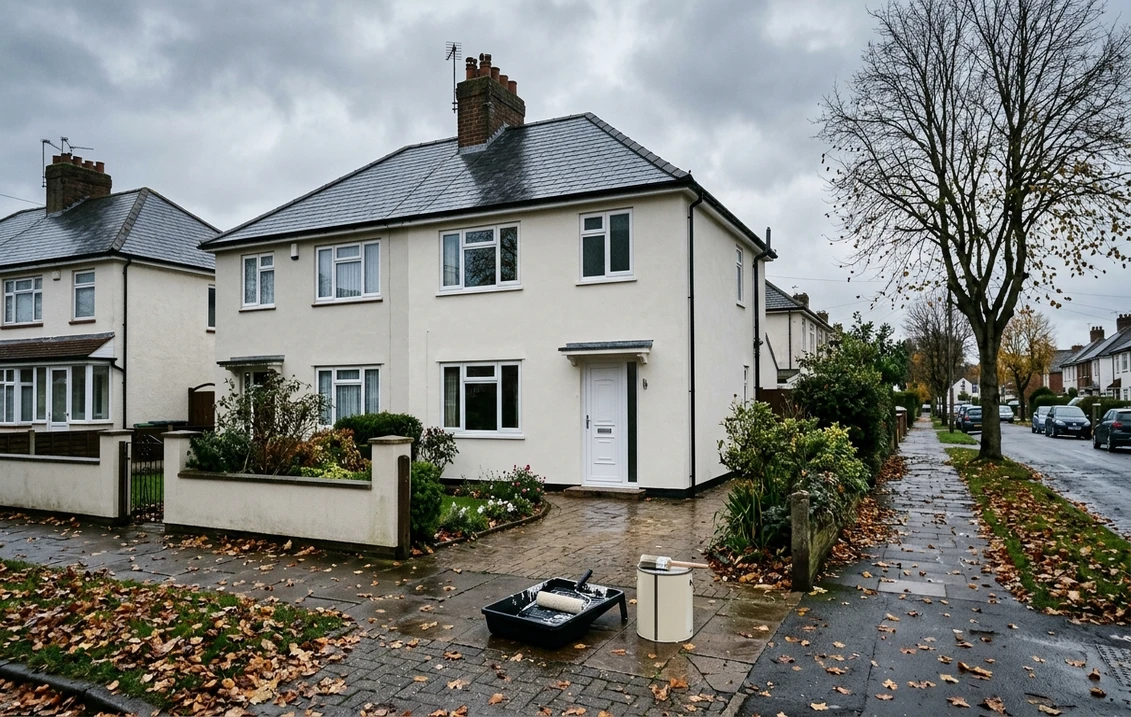
Try it on your house

In the UK, most water-based masonry and exterior paints should not go on below 7 to 10°C, and the limit applies to the whole drying period, not only the moment you start. Dulux Trade Weathershield Smooth Masonry stops at 7°C, Sandtex Microseal at 8°C, and the retail Dulux Weathershield Smooth Masonry and Farrow & Ball Exterior Eggshell at 10°C. A few products go lower: Johnstone's Trade Stormshield Smooth Masonry is listed from 2°C, and solvent-based Pliolite masonry paints from 0°C or below. Farrow & Ball also asks for a surface at least 3°C above the dew point. On Met Office averages, the typical UK afternoon stays under 10°C from November to March.
This guide answers the British version of the question, in Celsius, with the limits printed by the paint makers whose tins you find in UK merchants and DIY stores. It sets those limits against the Met Office climate record month by month, explains why the dew point matters as much as the air temperature in a damp country, and covers how long a fresh coat needs before rain. It does not pick a colour or a brand for you: our masonry paint guide and our UK exterior paint brands comparison do that.
Every limit below was read on the maker's own page or data sheet on 9 November 2026. Product pages change, so the tin in your hand is the final word.
Waiting for a warm, dry week? Choose the colour now
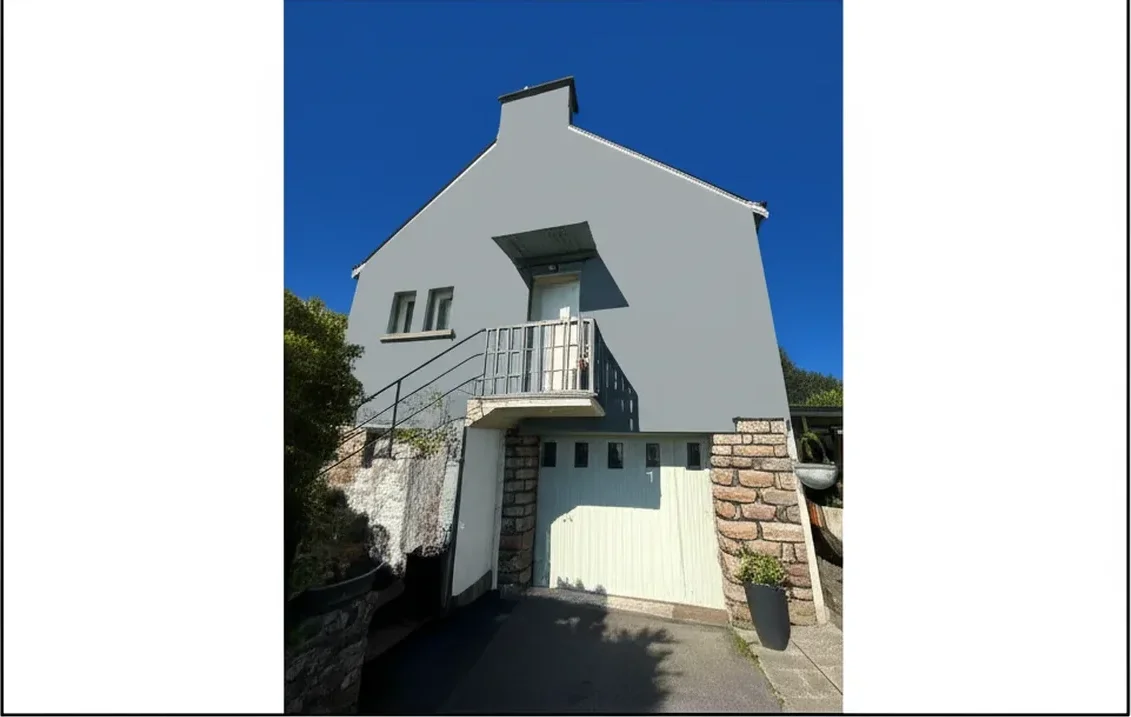
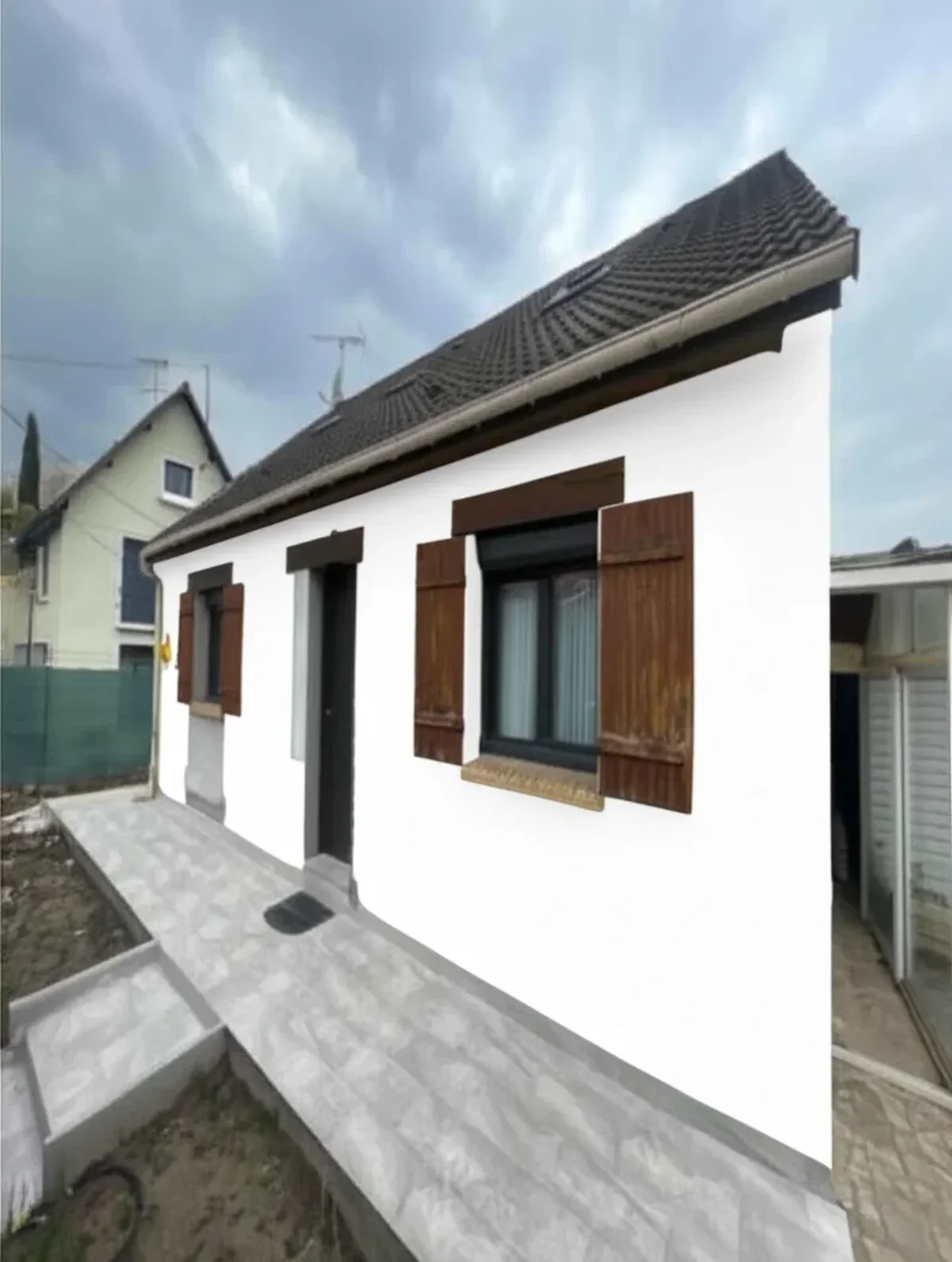
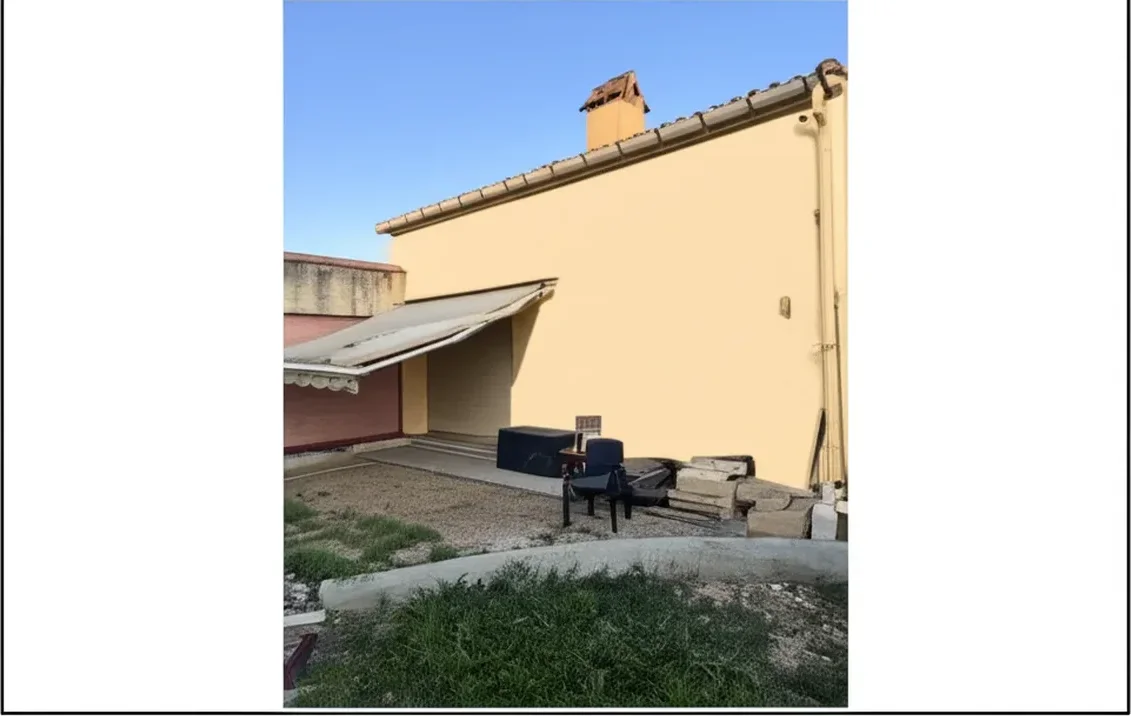
Upload a photo of the front of your house and try masonry colours on your own walls today, so you are ready to paint the moment the weather allows.
Upload a photo of my houseMinimum temperatures printed by UK paint makers
There is no single legal minimum. Each maker sets the limit for its own product, from 10°C for some water-based finishes down to minus 10 for a solvent-based masonry paint.
| Product | Base | Lowest temperature | Other conditions on the page |
|---|---|---|---|
| Dulux Weathershield All Weather Protection Smooth Masonry (retail) | Masonry paint | Above 10°C | Dry conditions only, no bad weather forecast |
| Farrow & Ball Exterior Eggshell | Water-based | 10°C (and not above 30°C) | Under 80% RH, surface 3°C above dew point, no direct sun |
| Dulux Trade Weathershield Quick Dry Exterior High Gloss | Water-based | 10°C | Not straight after rain, fog or frost, or when they are forecast |
| Sandtex Microseal Smooth Masonry | Masonry paint | 8°C, including during drying | Masonry must be dry; no risk of rain or frost |
| Dulux Trade Weathershield Smooth Masonry | Masonry paint | 7°C | Not in rain, fog or above 80% relative humidity |
| Dulux Trade Weathershield Exterior High Gloss | Solvent-based | 5°C, as BS 6150 recommends | Protect from frost |
| Johnstone's Trade Stormshield Smooth Masonry | Masonry paint | 2°C (range 2 to 35°C) | Rain resistance figure tested at 23°C and 50% humidity |
| Dulux Trade Weathershield All Seasons Pliolite Smooth Masonry | Solvent-based | 0°C | Wall surface must be above freezing |
| Sandtex Trade 365 All Weather Masonry | Solvent-based | As low as minus 10 degrees | Crown's page does not say whether air or surface |
Try it on your house
No photo? Try a sample
Three things stand out. First, the same brand can print two different floors: the retail Dulux Weathershield Smooth Masonry page says to apply above 10°C, while the Dulux Trade Weathershield Smooth Masonry page sets the extreme at below 7ºC. They are different products. Second, the Dulux how-to article on the Weathershield exterior system gives a general window of 8 to 25°C, a rule of thumb rather than a product limit. Third, the very low figures all belong to solvent-based Pliolite paints.
Where does 5°C come from? The Dulux Trade Weathershield Exterior High Gloss page says that, as with other solvent-based paints, it should not be used below 5ºC, as recommended by British Standard BS 6150, the code of practice for painting buildings. Farrow & Ball points to the same standard: its Exterior Eggshell sheet says the product should be applied in accordance with Annex C of BS 6150. We have not read the standard itself, which is sold by BSI, so this guide quotes only what the makers say about it.
The limit covers the drying period, not just the start
A thermometer reading of 9°C at ten in the morning does not make a day suitable. The Sandtex Microseal Fine Textured data sheet spells it out: do not apply if there is a risk of rain or frost, or if the temperature will fall below 8°C during drying. The Microseal Smooth product page adds that the masonry must be dry before you apply it. The re-coat time on the sheet is three to four hours in normal conditions, so a coat started at noon needs the temperature to hold until mid afternoon at the very least.
Drying times are always quoted for normal conditions, and a British winter day is not one. Farrow & Ball says its drying and recoat times are based on normal conditions and that drying may take longer in cooler or more humid air. Dulux Trade says its masonry paint is recoatable after two to four hours, dependent on temperature and humidity. Plan the day around the slow end of each range, not the quick one.
That is also why the time of day matters. The Farrow & Ball Exterior Eggshell advice sheet tells you to apply early in the day so the paint has time to dry before evening, when condensation can occur. In late autumn the window is short: wait for the overnight damp to leave the wall, and stop early enough for the last coat to dry.
Air, wall and dew point: the rule that catches British painters
The air temperature in the forecast is not the temperature of your wall. A north-facing elevation that has been in shade all day, or a wall that cooled overnight under a clear sky, can sit below the air temperature for hours. If the wall is colder than the dew point of the air around it, water condenses on it, and you are painting onto a film of moisture.
Farrow & Ball sets a clear margin. Its Exterior Eggshell sheet says exterior coatings should be applied only when air, surface and material temperatures are between 10 and 30°C, and that the surface temperature must be at least 3°C above the dew point to prevent condensation during application and curing. It names blistering, efflorescence, cracking and premature delamination as the failures that follow poor conditions such as high humidity or insufficient dew point separation. It sets application humidity below 80% RH, the same 80% ceiling as the Dulux Trade masonry page.
The 3°C margin is older than any paint tin. It appears in ISO 8502-4, the international standard on estimating the probability of condensation before painting. In the 1993 edition we read, written for steel surfaces, it says that unless otherwise agreed the surface temperature generally should be at least 3°C above the dew point. It also treats painting as critical from 85% relative humidity. For masonry and timber, follow your own product's sheet, and use the 3°C margin where it asks for it, as Farrow & Ball does.
Most weather apps show the dew point. The table gives approximate values for British autumn air: our calculations with the Magnus approximation, a guide rather than a measurement.
| Air temperature | Dew point at 60% RH | at 70% RH | at 80% RH | at 90% RH |
|---|---|---|---|---|
| 8°C | 0.7°C | 2.9°C | 4.8°C | 6.5°C |
| 10°C | 2.6°C | 4.8°C | 6.7°C | 8.4°C |
| 12°C | 4.5°C | 6.7°C | 8.7°C | 10.4°C |
| 15°C | 7.3°C | 9.6°C | 11.6°C | 13.4°C |
Read it like this. On a 10°C day at 80% humidity, the dew point is about 6.7°C, so a wall needs to be at roughly 9.7°C or more to keep the 3°C margin. A shaded wall that is still at 8°C fails the test even though the air passes the 7°C floor of the Dulux Trade masonry paint. At 90% humidity, which is common on a misty British morning, the margin almost disappears. Start once the wall has dried and warmed, not at first light.
UK weather month by month, against those limits
To see how often the British climate meets these limits, we averaged the Met Office's UK and regional climate series over 1991 to 2020: the mean daily maximum and minimum temperature, the number of days with at least 1 mm of rain, and the number of days with air frost. The figures below are our averages of the Met Office monthly values, not numbers the Met Office prints in this form.
| Month | UK mean daily max | UK mean daily min | England daily max | Scotland daily max | Days with 1 mm+ rain (UK) | Air frost days (UK) |
|---|---|---|---|---|---|---|
| January | 6.7°C | 1.2°C | 7.2°C | 5.5°C | 15.4 | 11.3 |
| February | 7.2°C | 1.1°C | 7.8°C | 5.9°C | 13.2 | 10.7 |
| March | 9.2°C | 2.2°C | 10.1°C | 7.6°C | 12.7 | 7.8 |
| April | 12.0°C | 3.8°C | 13.0°C | 10.3°C | 11.6 | 4.0 |
| May | 15.1°C | 6.3°C | 16.2°C | 13.4°C | 11.2 | 1.2 |
| June | 17.7°C | 9.1°C | 19.0°C | 15.6°C | 11.5 | 0.1 |
| July | 19.6°C | 11.0°C | 21.2°C | 17.3°C | 12.3 | 0.0 |
| August | 19.3°C | 11.0°C | 20.9°C | 17.0°C | 12.9 | 0.0 |
| September | 16.9°C | 9.0°C | 18.1°C | 14.8°C | 12.1 | 0.1 |
| October | 13.1°C | 6.4°C | 14.1°C | 11.3°C | 14.8 | 1.6 |
| November | 9.4°C | 3.6°C | 10.2°C | 8.0°C | 15.8 | 5.5 |
| December | 7.0°C | 1.4°C | 7.6°C | 5.8°C | 15.6 | 10.9 |
One caution before reading too much into it. These are areal series built from the Met Office's 1 km HadUK-Grid data, so they average every square of land, hills and moors included. A lowland street in the south of England will usually run warmer than the UK figure, and an exposed Highland glen colder. Use the table to compare months, and the local forecast to choose a day.
With that caution, the pattern is clear. From May to September the average afternoon is well above every limit in the first table, and air frost is close to zero. April and October sit in between: average afternoons of 13 to 14°C in England pass a 10°C floor, but nights are cool and October brings almost 15 rain days. From November to March the average UK afternoon stays below 10°C, and from December to February it stays below 8°C as well. Scotland's average afternoon is under 8°C from December to March and sits right on 8.0°C in November. The averages for Wales and Northern Ireland follow the UK line closely, between 9.3 and 9.9°C in November and March.

Painting outside between November and March
An average is not a ban. A mild, dry spell in November or March can give a few hours above 10°C, and a sheltered south-facing wall warms faster than the air. But in these months you pick the day, not the week, and the day needs to pass four checks:
- The floor holds all day. The forecast stays above your product's limit from the first coat until it is dry, not only at midday.
- No rain, fog or frost in sight. Dulux Trade says not to use its Quick Dry gloss straight after rain, fog or frost, or when they are forecast. With 15 to 16 rain days a month on average from November to January, this check fails most often.
- The wall is dry and above the dew point. At least 3°C above it where the sheet asks for it.
- Humidity is under 80%. Both Dulux Trade and Farrow & Ball use that ceiling for the products we read.
If the job cannot wait, the alternative is a product made for it. The Dulux Trade Weathershield All Seasons Pliolite Smooth Masonry page says it can be applied down to 0ºC, as long as the surface temperature of the substrate is above freezing. Crown's Sandtex Trade 365 All Weather Masonry page lists application temperatures as low as minus 10 degrees. Both are solvent-based, and both have longer recoat times than the water-based paints: six hours for the Dulux Pliolite and 16 hours for Sandtex Trade 365, on their own pages. Johnstone's Trade Stormshield Smooth Masonry is the other low figure we found, at 2°C. None of them changes the dew point problem: a wet wall is still a wet wall.
Two practical notes for cold-weather jobs. Store the tins indoors: the Sandtex sheet says not to store below 5°C, and the Dulux pages ask you to protect paint from frost. And if your wall shows damp patches that never dry, the weather is not the problem; our guide to damp proofing exterior walls covers what to fix before any paint goes on.
How long before rain? The rainproof claims compared
In Britain the question after "how cold is too cold" is "what if it rains this afternoon". Makers answer with very different figures, and the small print matters as much as the number.
| Product | Rain claim on the maker's page | Recoat |
|---|---|---|
| Dulux Trade Weathershield All Seasons Pliolite Smooth Masonry | Shower resistant within 15 minutes | 6 hours |
| Johnstone's Trade Stormshield Smooth Masonry | Rain resistant after 20 minutes, at 23°C and 50% humidity | Not stated on the page |
| Sandtex Trade 365 All Weather Masonry | Showerproof in 20 minutes | 16 hours |
| Dulux Trade Weathershield Smooth Masonry | Shower resistant within 30 minutes | 2 to 4 hours |
| Sandtex Microseal Smooth Masonry | Rainproof in 1 hour, when applied according to the instructions | 3 to 4 hours |
| Dulux Weathershield (retail system) | Only weatherproof once dry; no rain forecast on painting days | 4 hours (Smooth Masonry) |
The figures are only as good as their conditions. The Johnstone's Trade Stormshield page says its 20 minutes were measured at 23°C and 50% humidity, conditions a British November rarely offers. Sandtex ties its one hour to application in line with its instructions, which include the 8°C rule. The Dulux article is plainer: its paints are only waterproof after drying, so no rain should be forecast on the day you paint. A short rainproof time is a safety margin for a surprise shower, not a reason to paint with rain on the forecast.
Too hot as well as too cold
British summers now bring some very hot days, and the limits run both ways. Farrow & Ball says not to paint above 30°C and to avoid direct sunlight, warning that surfaces that are too hot or in direct sun dry too fast, which can cause cracking, lap marks and uneven sheen. Johnstone's lists its masonry paint up to 35°C, and the Dulux article gives 25°C as the top of its general window. On a hot day, follow the shade round the house: paint the west wall in the morning and the east wall in the afternoon.
Windows, doors and wood: separate limits
Timber and metal finishes carry their own limits, and they are often stricter than masonry paint. The Dulux Trade Weathershield Quick Dry Exterior High Gloss page says not to use it below 10°C, and Farrow & Ball Exterior Eggshell has the same 10°C floor. The solvent-based Weathershield Exterior High Gloss goes down to 5°C but needs 16 to 24 hours before recoating, according to its page. If you are painting walls and woodwork in the same week, plan around the strictest product. Our exterior window frame paint guide covers the full system for frames, and our exterior wood paint guide covers fences, cladding and doors.
Planning the rest of the job
Preparation does not need a warm day: washing down, scraping and filling can happen in the cold, as long as the wall dries fully before the coat. For the stages of a professional repaint, our exterior house painting cost guide sets out the job, and the masonry paint cost guide covers the materials. If a job may run into autumn, our Sandtex vs Dulux Weathershield comparison and the Sandtex Microseal guide set out each range in detail.
Use the cold months to choose the colour
If the calendar says wait, the waiting time is still useful. Colour is the decision that takes longest, and it is the one you can make indoors. Our paint visualiser lets you try masonry shades on a photo of your own house, so you can shortlist two or three colours over the winter. Then buy testers, paint a patch on a mild day, and look at it in morning and afternoon light before the main job in spring.
Try your colours on your own house
Upload a photo of your house, test masonry colours on the walls, and have your shortlist ready for the first dry week above 10°C.
Upload a photo of my houseSources and references
- Dulux Trade, Weathershield Smooth Masonry Paint: 7ºC, 80% humidity, 30 minutes shower resistance, recoat.
- Dulux Trade, Weathershield All Seasons Pliolite Smooth Masonry: 0ºC, substrate above freezing, 15 minutes, recoat.
- Dulux Trade, Weathershield Exterior High Gloss and Weathershield Quick Dry Exterior High Gloss: 5ºC and BS 6150, 10°C for Quick Dry.
- Dulux, Weathershield All Weather Protection Smooth Masonry Paint (above 10°C) and the Weathershield exterior system article (8 to 25°C).
- Sandtex, Microseal Smooth Masonry Paint (8˚C, rainproof claim) and the Microseal Fine Textured data sheet (8°C during drying, storage).
- Crown Paints, Sandtex Trade 365 All Weather Masonry Paint: minus 10 degrees, 20 minutes, recoat.
- Johnstone's Trade, Stormshield Smooth Masonry: 2 to 35°C, rain resistance and its test conditions.
- Farrow & Ball, Exterior Eggshell product advice sheet (PDF): 10 to 30°C, 3°C above dew point, humidity, BS 6150.
- ISO, ISO 8502-4:1993, guidance on the estimation of the probability of condensation prior to paint application (preview published by iTeh Standards): the 3°C margin for steel.
- Met Office, UK and regional series (HadUK-Grid), monthly maximum and minimum temperature, rain days and air frost days with the England and Scotland series: our 1991 to 2020 averages.
Frequently asked questions
What is the minimum temperature for painting outside in the UK?
What is the best temperature range for painting outside?
Can you paint outside in winter in the UK?
Is 30°C too hot to paint outside?
How long does exterior paint need before it rains?
Trademarks mentioned (Sherwin-Williams, Benjamin Moore, Behr, Caparol, Brillux, Sto, Alpina, Valspar, PPG, Glidden, Dulux, Crown Trade, Sandtex, Farrow & Ball, Johnstone's, Leyland) are property of their respective owners. FacadeColorizer is independent and not affiliated with any of them. Nominative fair use under Lanham Act §1125.