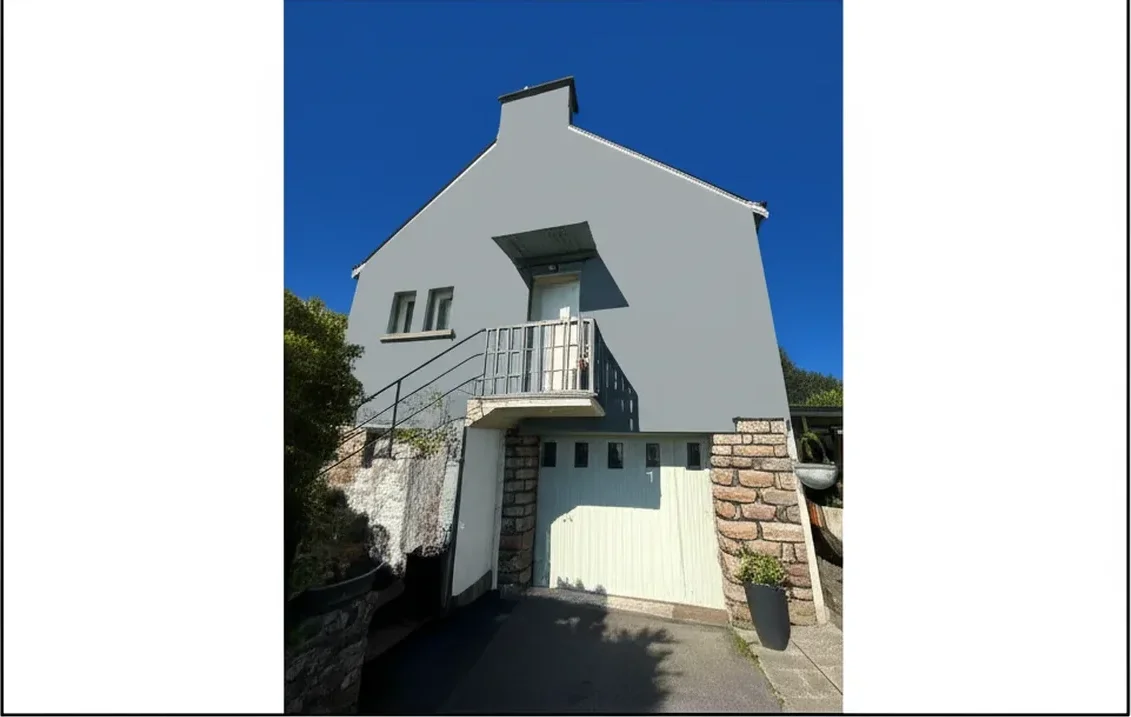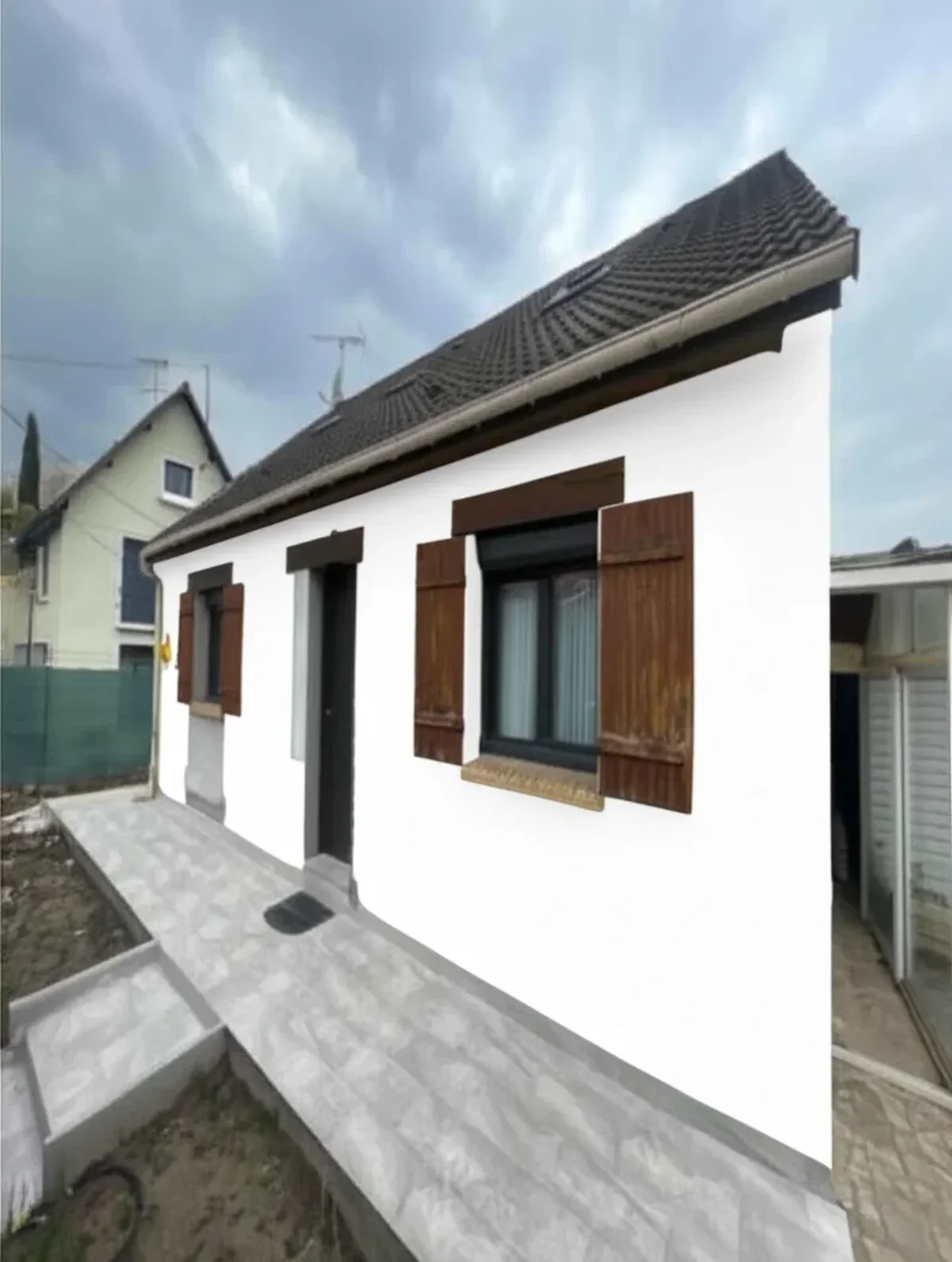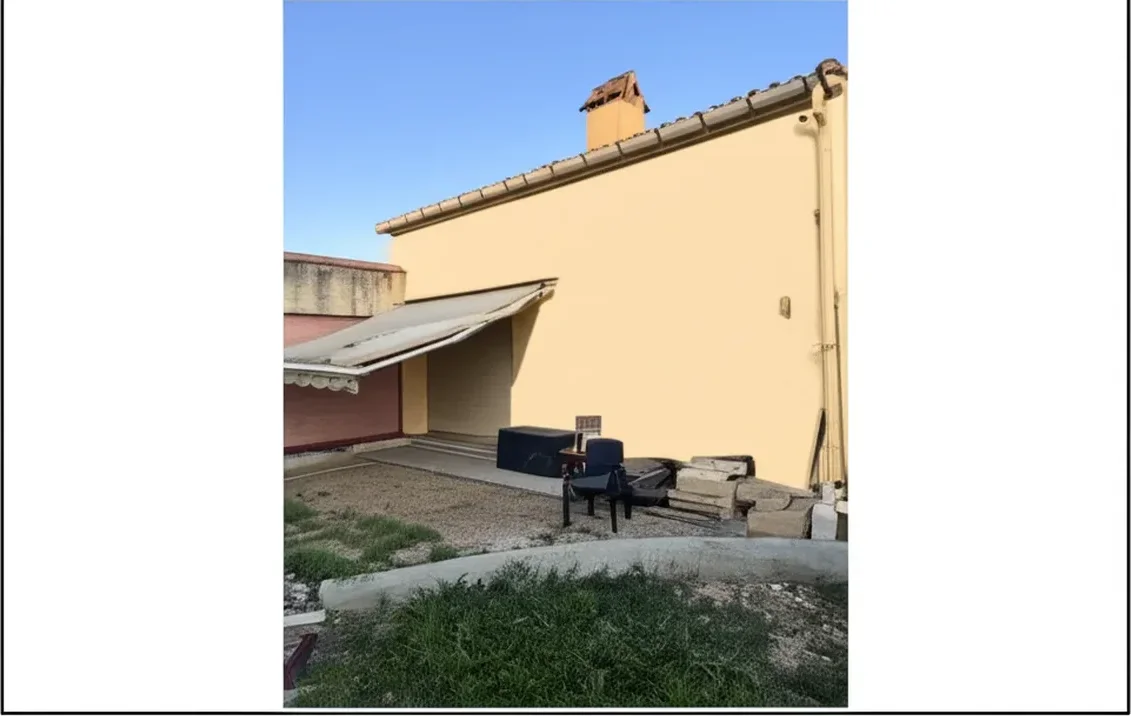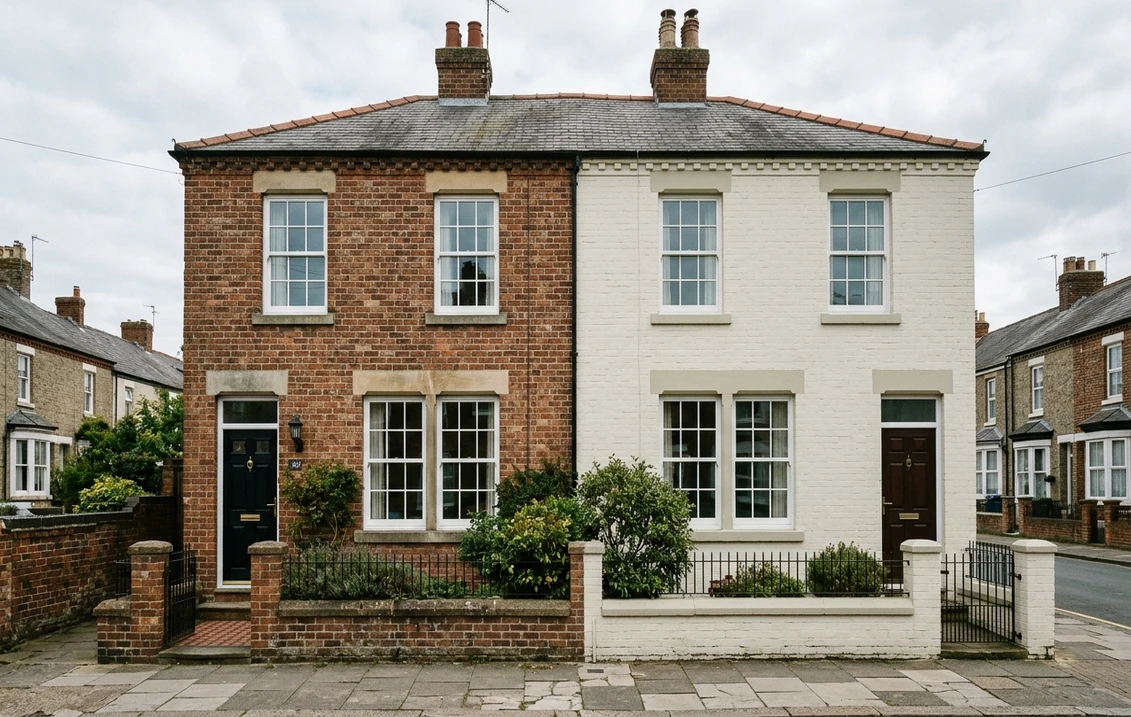
Try it on your house

Brick tinting, which many UK suppliers also call brick staining, colours brick with a thin, translucent mineral solution (iron oxide pigments in a silicate fixing agent) that soaks into the face and bonds with it, so the wall still reads as brick; masonry paint lays an opaque film over brick and mortar alike. In Britain, tinting is the tool for making new or replacement bricks match an existing wall, after an extension, a repair or paint removal; paint is for a complete change of colour. In England, painting, which the law defines as "any application of colour", is permitted development, but an Article 4 direction can bring the painting of brickwork under control, and a listed building needs consent for works that affect its character. On old solid walls, a vapour-open tint is the safer choice: a film-forming paint can hold moisture and salts in the brick.
Facts read in October 2026 in English planning law, Planning Portal and council guidance, Brick Development Association (BDA) guides and the literature of KEIM, Dyebrick and Dulux Trade. Our own calculations are labelled as such.
See a new brick tone on your own house first
Upload a photo of your house and compare your current brick with a deeper or lighter tone, or with a painted finish, before you pay for a sample panel.
Try our free colour visualiserTint, stain, colourwash or paint: what each one does to brick
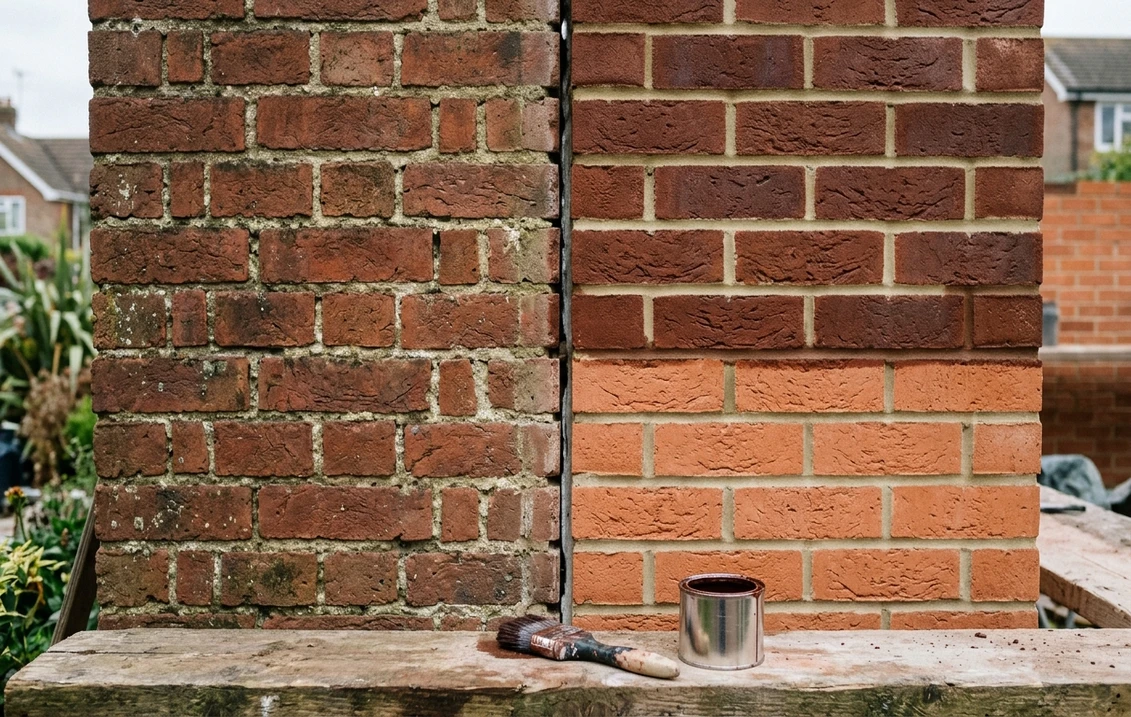
The words overlap. Homebuilding & Renovating describes brick tinting as staining bricks to match existing brickwork, with pigments combined with a fixing agent, "potassium silicate in the main"; KEIM calls its version a Lasur, a translucent colourwash. Whatever the name, the products UK makers describe fix a pigment into the brick instead of laying a coat on it. The film is what separates them from paint.
| Finish | What it is | Film on the brick face? | What you see afterwards |
|---|---|---|---|
| Brick tint or stain | Water-based mineral silicate with iron oxide pigments (Dyebrick) | No: the maker says it reacts with the masonry | A new brick colour, same texture, mortar untouched unless tinted too |
| Mineral colourwash (KEIM Lasur) | Potassium silicate binder and earth oxide pigments, made translucent | No: the binder penetrates and bonds | A unified surface that, in KEIM's words, does not appear painted |
| Silicate paint (e.g. KEIM Soldalit) | Opaque mineral paint | A thin opaque coat; high vapour permeability claimed | Solid colour; the brick shape shows, its colour does not |
| Acrylic masonry paint (e.g. Dulux Trade Weathershield Smooth) | Water-based exterior masonry paint | Yes | Solid colour over brick and joints |
Try it on your house
No photo? Try a sample
KEIM's booklet on Lasur finishes and colourwashes explains why watering down masonry paint does not work: conventional systems are usually acrylic, and diluting them into a colourwash weakens them until they no longer perform, whereas a potassium silicate binder penetrates the mineral surface and bonds chemically with it. Dyebrick, a UK maker of tinting kits, describes its product as a water-based solution of modified mineral silicates with iron oxide pigments conforming to BS EN 12878 (the standard the BDA cites for coloured mortar pigments), which forms no film and leaves the texture unchanged.
If what you want is an opaque colour, a white or a grey over the whole house, a tint is the wrong tool. Our guide to brick paint in the UK compares the masonry paints, and the masonry paint guide sets their data sheets side by side.
When tinting is the answer: extensions, repairs and "to match existing"
The typical brief for tinting is new brick that must match old. For a householder extension built under permitted development in England, paragraph A.3(a) of Class A of the GPDO 2015 requires exterior materials "of a similar appearance" to those of the existing house, as the Planning Portal repeats. Where permission is needed, a council can attach a matching condition; the model wording is in Appendix A of Circular 11/95, the only part of that circular kept since March 2014: model condition 63 says the external materials "shall match those used in the existing building", and model condition 64 requires samples to be approved in writing before work starts.
Finding that brick is hard. The BDA's Alteration and Repair of Brickwork guide (March 2023) notes that old bricks were often made locally, perhaps from clay dug on site, and are therefore unique, citing Kent grey stocks, East Anglian gaults and the blue headers of Sussex, Kent and Hampshire. A tolerable match usually exists but takes time to track down, and old bricks may not share today's standard size (215 x 102.5 x 65 mm in the BDA's Aesthetic Brickwork guide), which upsets the coursing. Even new bricks vary between batches, which is why the BDA asks for a reference panel and for bricks drawn from at least three packs.
Tinting takes over when no brick will do. Homebuilding & Renovating advises a new brick of the same size and finish, slightly lighter than the original because darkening is easier than lightening, laid in the same bond. Mortar matters too: the BDA calculates that joints make up over 17% of a stretcher-bond face and about 20% in English bond, and a dark mortar makes bricks look darker. KEIM says its Lasurs can tint individual bricks and mortar joints alike.
Imperial Bricks reports that at 80 Clerkenwell Road, in the Clerkenwell Green Conservation Area, new Reclamation Yellow Stock brickwork was tinted on site until the extensions became indistinguishable from the sooted façades. If your permission has a samples condition, submit the tinted sample panel with the samples rather than tinting afterwards.
Does brick tinting need planning permission?
In England the answer has three layers (Wales, Scotland and Northern Ireland have their own systems).
- An ordinary house, no special designation. Painting the exterior of any building is permitted development under Class C of the GPDO 2015, and paragraph C.2 says "painting" includes any application of colour. A tint applies colour, so we read it as painting: no application needed, as the Planning Portal's external walls guidance confirms for painting.
- An Article 4 direction. Royal Greenwich's Ashburnham Triangle Article 4 Direction, which replaced the 1994 direction on 21 May 2014, requires an application to paint brickwork (not windows and doors) because unpainted brickwork is a key characteristic of the area; the aim, the council said, was not to control colour but to prevent the painting of brickwork. Richmond lists painting and rendering brickwork among the works its conservation area directions control. Since the law treats any application of colour as painting, ask before tinting brick covered by a direction.
- A listed building. Section 7 of the Planning (Listed Buildings and Conservation Areas) Act 1990 forbids works that alter a listed building "in any manner which would affect its character" without consent, and section 9 makes a breach an offence. Changing the colour of facing brick, even translucently, is the kind of change a conservation officer will want to see first.
In a conservation area, the Planning Portal adds, cladding a house in render, stone, pebble dash, timber, plastic or tiles needs permission, so rendering over brick is no shortcut. Our guides to painting in a conservation area and painting a listed building explain how to approach the council.
Breathability: why old brick and film-forming paint do not always mix
Tendring District Council's painting booklet explains the principle: solid walls absorb moisture in damp weather and release it on dry days. Sealing them with alkyd masonry paints, cement paints or hard gloss, as owners have done since the 1950s, ignores the moisture made inside the house, and the booklet calls this one of the main causes of damp in older houses. It says painting previously unpainted brick is not normally encouraged, and that sealers trap moisture, which can then make the finish bubble or peel.
The BDA adds that soluble salts in saturated brick can occasionally crystallise inside it and spall the face, and that "applied coatings can trap these salts at the brick surface". Tint makers promise the opposite: Dyebrick's home page classes its stain as Class 1 vapour permeable, with an Sd value below 0.05 m (the equivalent thickness of still air: lower is more open), and KEIM calls the Restauro Lasur used at Devonshire House in Manchester "a breathable, colourfast system". The Dulux Trade Weathershield Smooth Masonry page claims 15 years' protection (BBA approved) but gives no vapour permeability class, so ask for the data sheet before painting a solid wall.
Colouring brick is not new: Tendring records 16th and 17th century red brick covered with ruddle, red ochre pigment in size, sometimes with a thin white line painted along the joints. What has changed is the binder.
Which bricks can be tinted, and which cannot
- Unpainted, unsealed, absorbent brick: the normal case, per Dyebrick, which says its tint is not suitable for painted or sealed brickwork.
- Water-repellent-treated brick: Homebuilding & Renovating says tints cannot go on brick treated with any waterproofing solution.
- Porous or heavily textured brick: results vary; textured faces cast shadows, so judge the colour from the main viewpoint.
- Painted brick: strip it first. The BDA's Cleaning of Clay Brickwork guide (April 2023) says paint is difficult to remove and penetrates deeper into handmade and textured bricks, and that "tinting of the bricks will often be required following paint removal".
- Floors and steps: Dyebrick does not recommend its tint for surfaces under foot traffic.
Homebuilding & Renovating says to avoid temperatures below about 4°C and driving rain; Dyebrick warns that absorbent bricks or hot sun can cut coverage by up to a factor of five.
How a tinting job is done, professional or DIY
A specialist starts with a trial mix made without the fixing agent, Homebuilding & Renovating explains, so it washes off with a pressure washer if wrong; once the colour is agreed, the fixer bonds the tint permanently. KEIM offers on-site trials. The work is then done brick by brick, or as an overall wash: at Devonshire House the brief was to turn the brick blue-black without it appearing painted.
For small jobs, Dyebrick's Brick Tinting Kit comes in three parts (pigment, fixing agent, carrier) and eleven standard colours that can be diluted or blended. Its method:
- Test a sample pot on your actual brick: colour, porosity and texture all change the result.
- Run the fixability test: leave a test patch at least 60 minutes; it should not come off on a finger.
- Practise with plain water and a two-inch brush to learn how much the brick draws without runs.
- Apply the matched dilution to clean, dry, absorbent masonry, building depth with extra coats, and check from the street.
Its lifetime guarantee supplies free product to re-stain areas that fade beyond normal tolerances, for as long as the masonry stays unaltered, on consumer use only.
What brick tinting costs in the UK, compared with painting
Published UK prices are scarce. Homebuilding & Renovating (June 2021) reported £450 to £550 plus VAT per day from most tinting companies, with one professional darkening 30 to 40 m² a day and lightening costing about double: 2021 figures, so get current quotes. Dyebrick listed its kit at £47.94 including VAT on 28 October 2026; its coverage page gives 10 m² per 600 ml at the strongest mix (its shop page says 15 m²).
Worked example, with our own arithmetic: a rear extension with 25 m² of new facing brick that came out a shade too bright.
| Option | What is treated | Our estimate from the sources above | Afterwards |
|---|---|---|---|
| Professional tint (darkening) | The 25 m² of new brick only | Under a day: £450 to £550 plus VAT (£540 to £660 with 20% VAT, 2021 rates), about £11 to £18 per m² before VAT; about double to lighten | No repainting cycle; still looks like brick |
| DIY kit | The 25 m² of new brick only | Two to three kits at the strongest mix, about £96 to £144, plus sample pots and your time | Result depends on your colour matching |
| Masonry paint | The whole elevation, old and new, so the colour is even | For a 70 m² elevation in two coats at up to 16 m² per litre (Dulux Trade Weathershield Smooth), about 9 litres of paint, plus labour | Brick hidden; repaint over time; hard to reverse |
A tint treats only the bricks that are wrong; paint must cover everything it has to match, and the BDA shows how hard it is to remove later. For painting labour, see our masonry paint cost guide and the wider guide to exterior house painting costs in London and the UK.
Tint, paint, limewash or mineral paint: which one for your wall?
| Your situation | Usual answer | Check first |
|---|---|---|
| New extension brick is the wrong tone | Tint the new brick, and the mortar if needed | Any samples condition on the permission |
| A few replacement bricks stand out | Tint brick by brick | Listed status |
| Old solid-wall house, you want a new colour | Limewash or silicate paint rather than a film-forming paint | Article 4 direction, listed building consent |
| Brick already painted | Repaint with a compatible system, or strip and then tint | Type of existing paint; test patch |
| Modern brick house, you want white or grey | Masonry paint | Article 4 direction; lease or covenant |
For the limewash route, our comparison of limewash and masonry paint on solid walls sets out coats, renewal and consent. If brick is already painted and chalky, start with our masonry primer guide. And if you would rather keep the brick bare and change only the joinery and front door, our Victorian terrace colour schemes show how far that goes.
One limit of a preview: our visualiser paints an opaque colour, so it shows a painted finish or a target brick tone, not the translucency of a real tint. Use it to choose the direction (deeper, lighter or painted), then fix the exact tint on a sample panel. More on our paint visualiser page.
Compare bare brick, a deeper tone and a painted finish on your house
Upload a photo of the front or rear elevation and try two or three wall colours side by side before you book a tinter or buy paint.
Upload a photo of my houseSources and references
- legislation.gov.uk, GPDO 2015, Schedule 2, Part 2, Class C: painting as permitted development, "any application of colour".
- legislation.gov.uk, GPDO 2015, Schedule 2, Part 1, Class A: condition A.3(a).
- legislation.gov.uk, Planning (Listed Buildings and Conservation Areas) Act 1990, section 7 and section 9: listed building consent.
- Planning Portal, Extensions: planning permission and External walls: planning permission: matching materials, cladding, painting.
- GOV.UK, Circular 11/95 and its full text: model conditions 63 and 64.
- Royal Borough of Greenwich, Ashburnham Triangle replacement Article 4 Direction letter (May 2014).
- London Borough of Richmond upon Thames, Article 4 Directions: conservation areas.
- Tendring District Council, Painting booklet: moisture in solid walls, ruddle.
- Brick Development Association, guides: Alteration and Repair of Brickwork, Aesthetic Brickwork, Cleaning of Clay Brickwork.
- KEIM Mineral Paints, Lasur Finishes and Colourwashes.
- Building Centre, KEIM case studies A novel solution for refreshing brickwork (2025) and Devonshire House, Manchester (2020) and Imperial Bricks case study 80 Clerkenwell Road (2017).
- Dyebrick, technical information, coverage rates, Brick Tinting Kit and guarantee: price read on 28 October 2026.
- Homebuilding & Renovating, Brick tinting: how to re-colour exterior brickwork (June 2021).
- Dulux Trade, Weathershield Smooth Masonry Paint.
Frequently asked questions
Is brick tinting the same as brick staining?
Do I need planning permission to tint or stain my brickwork?
Can brick tinting make an extension match the existing house?
Can you tint brick that has already been painted?
How much does brick tinting cost in the UK?
Is tinting better than painting for an old brick house?
Official sources
To verify the regulatory information in this guide at the primary source:
- GOV.UK : When planning permission is required
- Planning Portal : Planning permission and building regulations (England and Wales)
- Historic England : Listed buildings and conservation areas
External links. FacadeColorizer is not affiliated with these bodies and their guidance may change over time.
Trademarks mentioned (Sherwin-Williams, Benjamin Moore, Behr, Caparol, Brillux, Sto, Alpina, Valspar, PPG, Glidden, Dulux, Crown Trade, Sandtex, Farrow & Ball, Johnstone's, Leyland) are property of their respective owners. FacadeColorizer is independent and not affiliated with any of them. Nominative fair use under Lanham Act §1125.