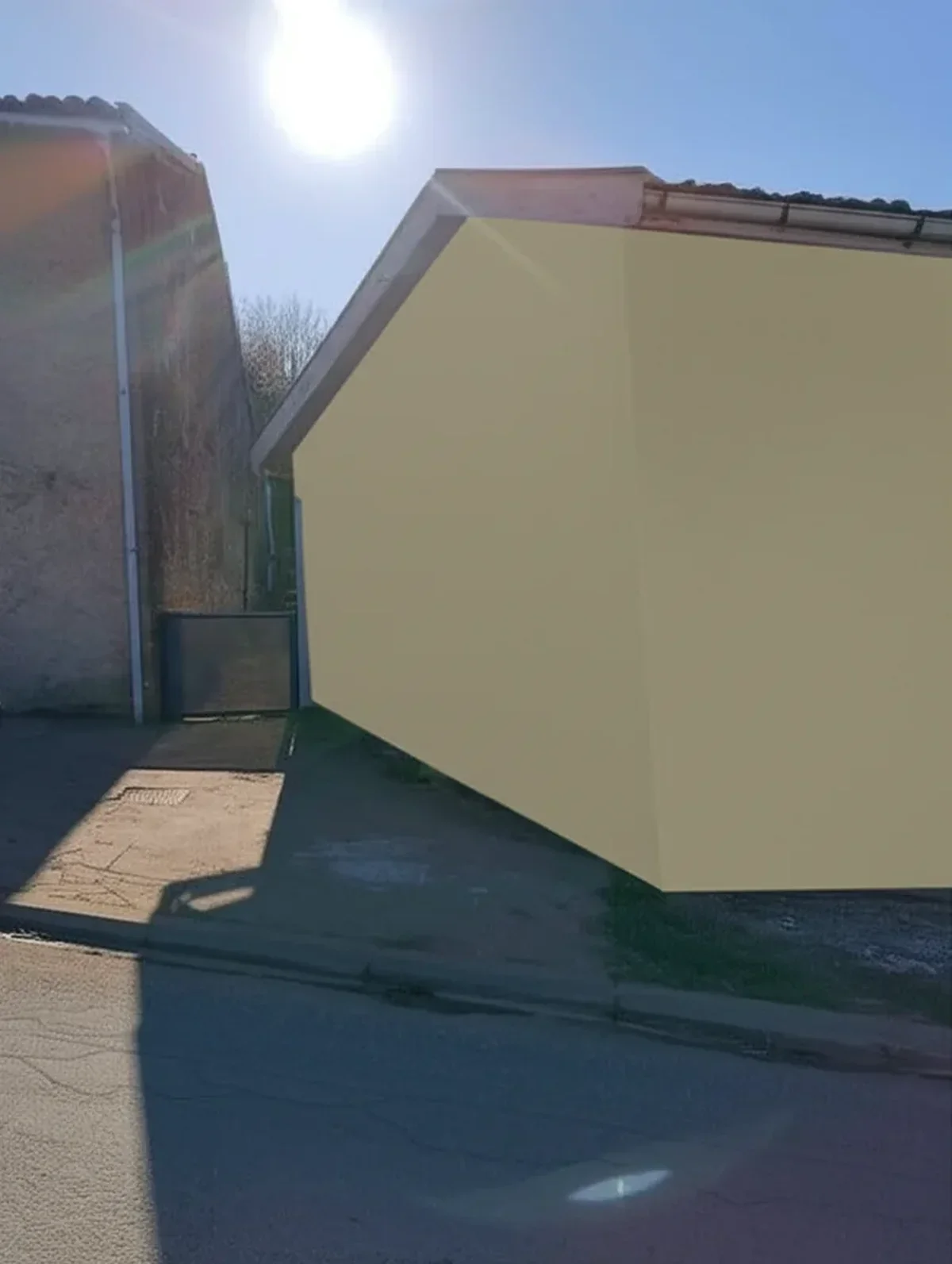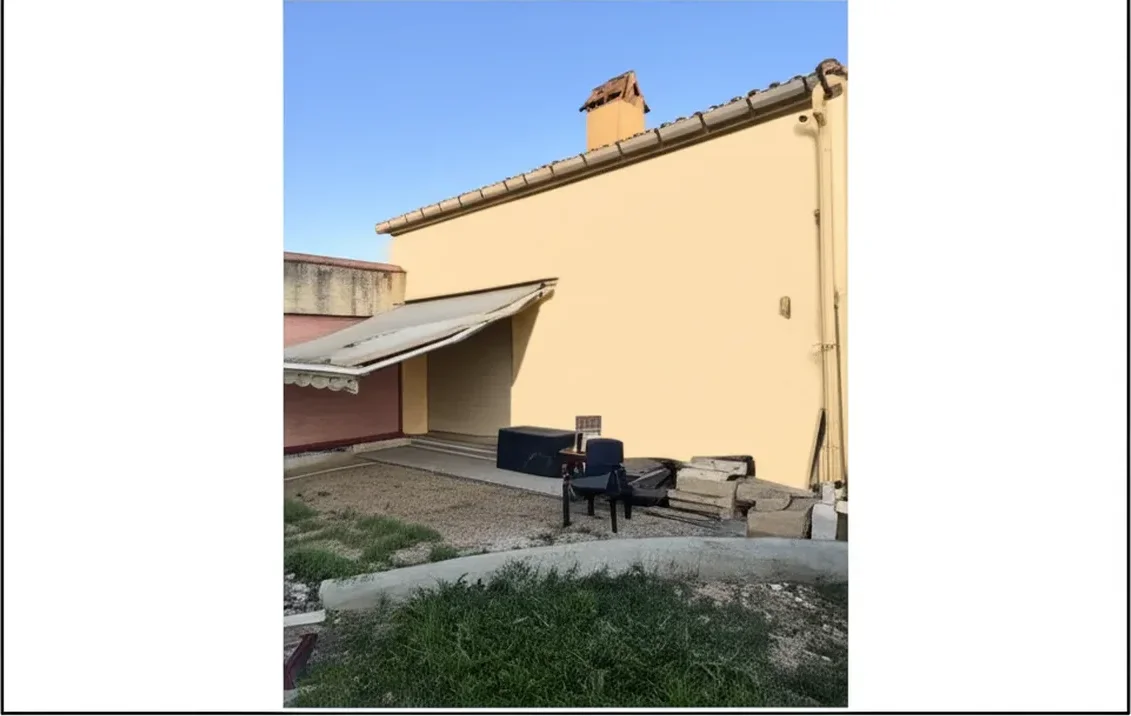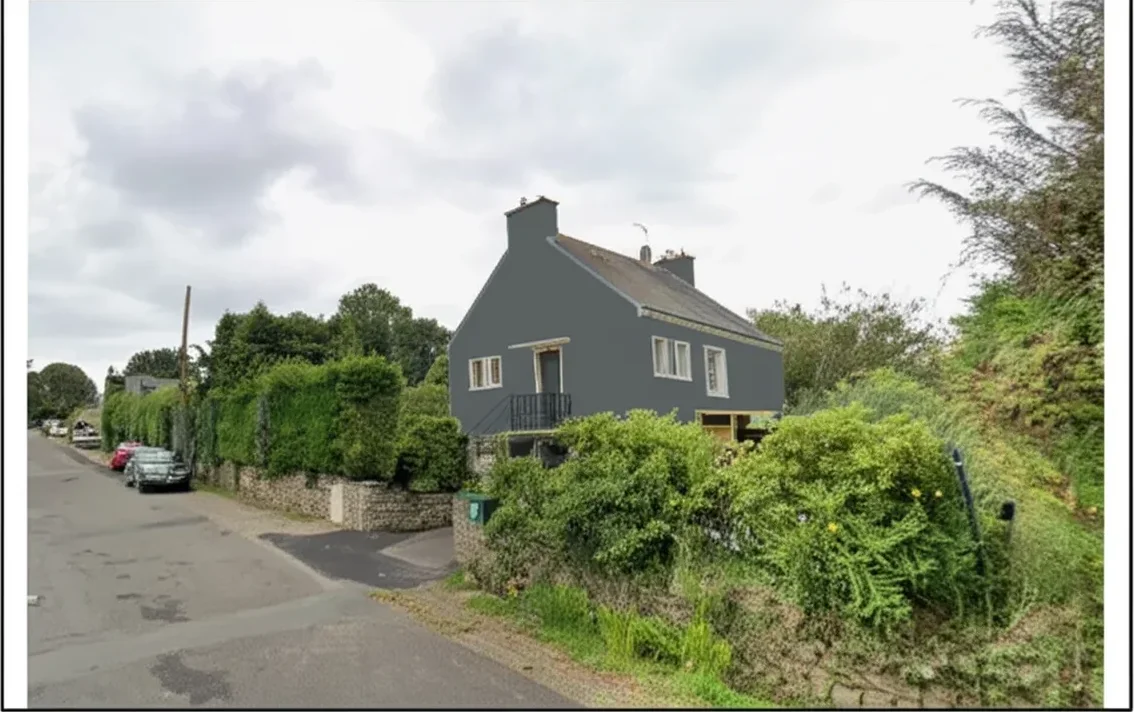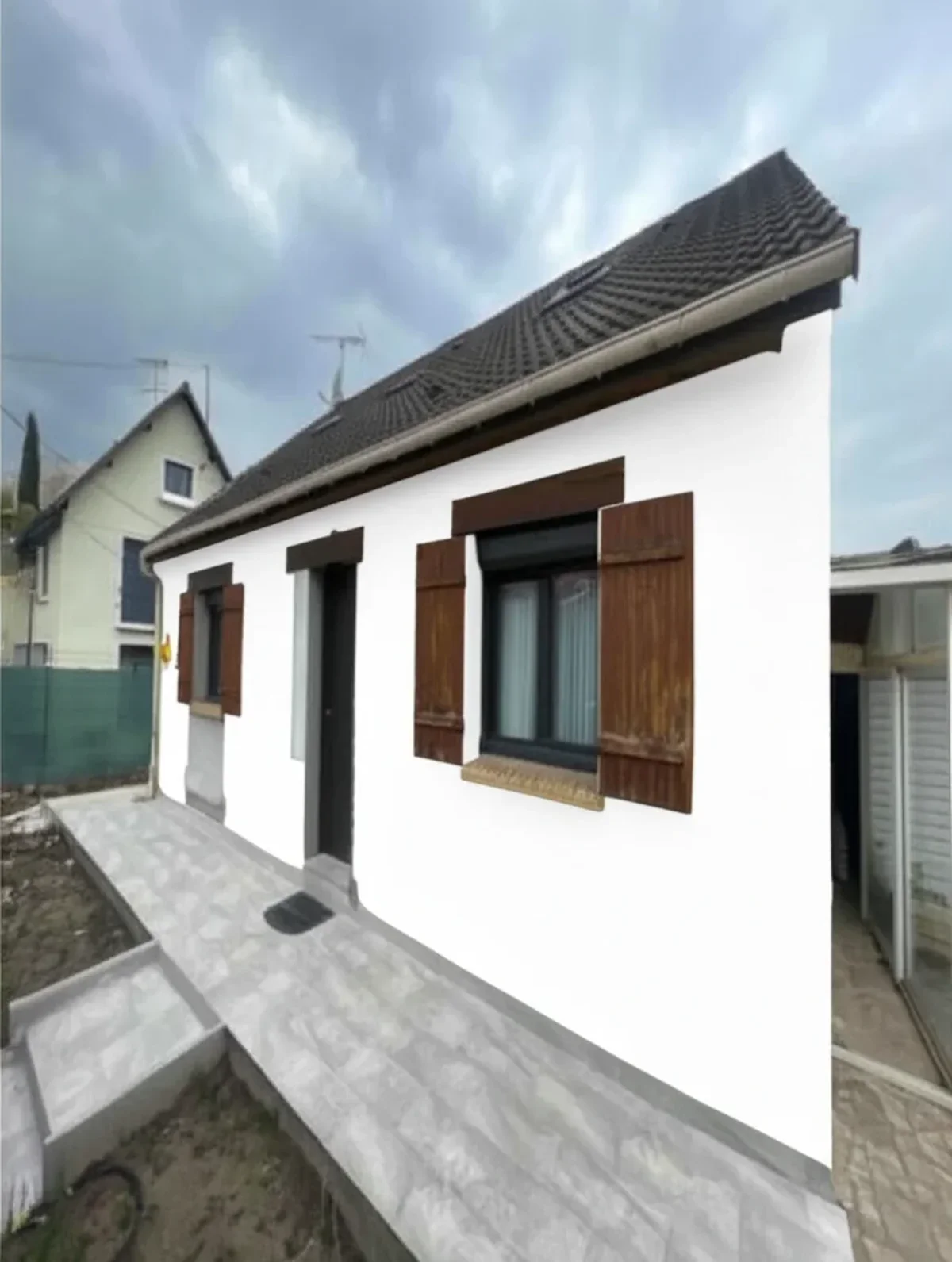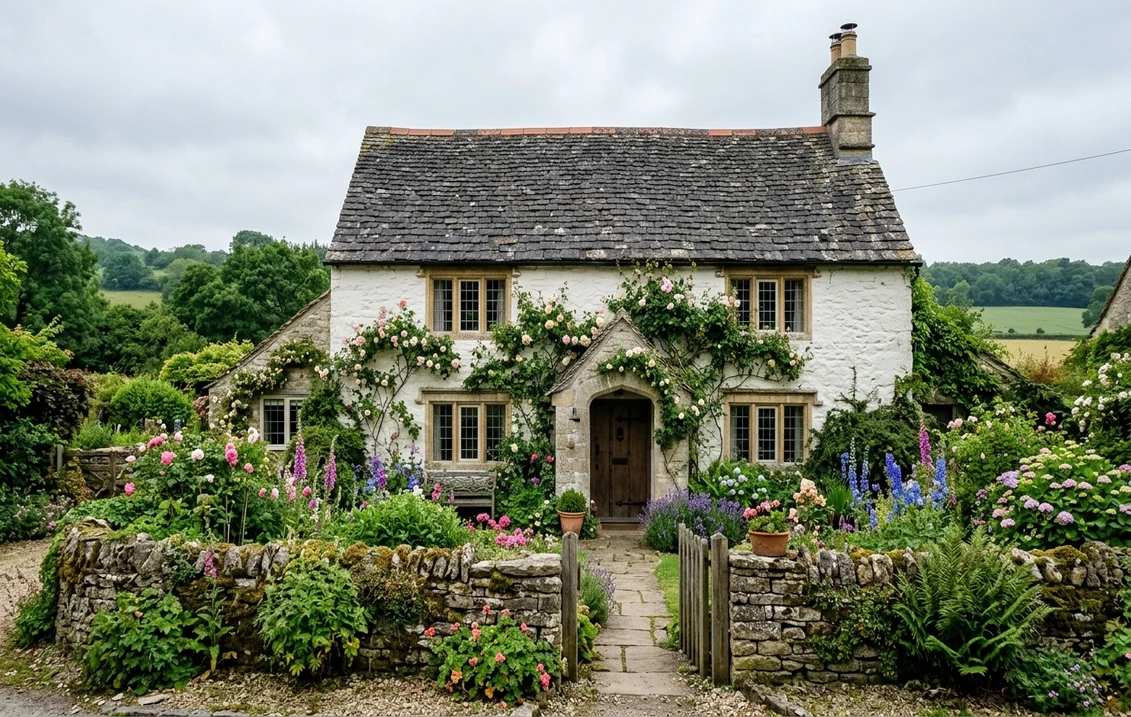
Try it on your house

On a modern cavity wall the choice between limewash and masonry paint is a matter of taste. On a solid wall, the kind that every pre-1919 cottage, terrace and farmhouse in Britain was built with, it is a matter of physics, and getting it wrong is one of the main causes of damp in old houses. Solid walls of soft brick, stone, cob and lime render manage rain by absorbing it and letting it evaporate again; a coating that stops the evaporation keeps the water in. This guide puts the two finishes side by side on the figures the conservation bodies and the manufacturers publish, explains the third option that most homeowners have never been offered, and sets out when repainting a listed or conservation-area house needs consent.
Why a solid wall changes the question
Cornwall Council's conservation advice puts the mechanism in one line: historic buildings need to let absorbed water evaporate, and "cement render and paint prevents this evaporation and can lead to internal damp" (Cornwall Council, advice for works to historic buildings). Tendring District Council's painting booklet says the same of the paint on its own: "Most modern external paints provide a water tight barrier which can have the same effect as using concrete render trapping water in walls which rely upon evaporation to prevent long term damp problems", and "preventing the building from breathing increases the build up of moisture in the walls and is one of the main causes of damp found in older houses" (Tendring District Council, painting booklet). The booklet calls limewash "the most breathable" exterior finish. That is the whole argument: on a wall that breathes, the finish must breathe too.
What limewash is, in the conservation officers' words
Babergh and Mid Suffolk's conservation advice, updated in October 2025, describes it plainly: "Limewash is basically lime suspended in water. It gives a good waterproof cover on rough plaster and fills surface cracks. It is the traditional protective coating for lime render/plaster and was also used on limestone, daub panels and cob/clay lump." It "allows a building to 'breathe', so that any damp may evaporate and not be trapped in the walls", it "is slightly antiseptic, preventing mould and discouraging insects and vermin", and traditional additives "include tallow, hard clarified animal fat, linseed oil, and casein, a dairy protein" (Babergh and Mid Suffolk, Limewash and Paints, 3rd edition, October 2025). The same guidance is honest about the drawback: "The main disadvantage of limewash compared with paint is that the former can sometimes be impermanent and can be rubbed off walls on unprotected parts of a building. Traditionally, walls were therefore limewashed annually."
The chemistry explains both the strength and the weakness. Limewash is slaked lime, kept wet as lime putty, which "hardens as it dries out by reacting with carbon dioxide in the air", as conservation architect Elizabeth Hirst wrote in The Building Conservation Directory: the coating turns back into a thin skin of limestone bonded to the wall, with "a vapour permeability of at least ten times that of modern resin paint" (Building Conservation Directory, Limewash and Distempers). Because it is a skin of mineral rather than a film of resin, it is also sacrificial: "external limewashes, which, in any case, have to be renewed regularly".
The figures: coats, coverage, renewal, and where limewash fails
Two manufacturer documents give the practical numbers. Farrow & Ball's product advice sheet for its limewash states that "Limewash will normally require 4 or more coats", that "lime rendered walls normally have a high pH and will need to breath so are not suitable for modern finishes", and, crucially, where limewash does not work: "Farrow & Ball Limewash is not suitable for use with impervious surfaces, such as hard cement renders, gypsum plaster or bricks and does not work well with sandstone"; it also warns that "colours in Limewash vary according to the surface they are applied to. Certain colours may appear up to 10 shades darker when wet" (Farrow & Ball, Limewash product advice sheet, via Brewers). Cornwall's advice agrees on the substrates: limewash "is unsuitable for impervious materials" such as flint and hard brick, and "is also not suitable on sandstone". The Welsh lime specialist Tŷ-Mawr gives the coverage on its limewash product page: 3 to 4 square metres per litre, so a 20-litre tub covers 60 to 80 square metres per coat; it recommends a shelter coat on poor surfaces to give a key, and raw linseed oil at about 100 ml per 20 litres for external work.
| Criterion | Limewash | Masonry paint (acrylic or silicone) | Mineral silicate paint |
|---|---|---|---|
| How it holds | Carbonates into a mineral skin bonded to the wall | Resin film on the surface | Potassium silicate bonds chemically with the mineral substrate |
| Breathability | At least ten times a resin paint (Hirst) | "Relatively unbreathable compared to limewash" (Mid Suffolk), even when marketed as breathable | "Similar breathability to limewash" (Mid Suffolk); Keim Soldalit sd ≤ 0.01 m, class V1 |
| Coats | 4 or more, thin (Farrow & Ball) | 2 (Dulux Weathershield, Sandtex) | Primer plus 2 coats, typically |
| Coverage | 3 to 4 m² per litre per coat (Tŷ-Mawr) | 12 to 16 m² per litre (Sandtex Microseal) | Per data sheet; lower than acrylics |
| Renewal | Regular; traditionally annual, several years in sheltered positions | 15-year claims on sound substrates | "Last for decades" (Hirst) |
| Not suitable for | Hard cement render, gypsum, hard brick, flint, sandstone | Lime render and soft solid walls that need to breathe | Previously painted (resin) surfaces without removal |
| Look | Soft, chalky, shows the wall's texture; colours shift as it dries | Solid, uniform, slightly glossier | Solid, very matt |
Try it on your house
No photo? Try a sample
What masonry paint does well, and what "breathable" on the tin means
Masonry paint earns its place on the right wall. Sandtex describes its Microseal Smooth Masonry as breathable and dirt resistant, with "15 years trusted durability", "rainproof in just 1 hour" and coverage of 12 to 16 square metres per litre in 45 ready-mixed colours (Sandtex, Microseal Smooth Masonry); two coats, a weekend, and a cavity-wall semi is protected for a decade and more. The word to read carefully is "breathable". A resin film can let some vapour through, and the better acrylics and silicone paints do, but the conservation officers' comparison stands: "Masonry paints tend to be relatively unbreathable compared to limewash, while mineral paints tend to have similar breathability to limewash" (Mid Suffolk). On a previously painted render in sound condition on a cavity wall, a breathable masonry paint is the sensible repaint, and our guide to the best masonry paint for UK walls compares the brands on their datasheets. On a lime-rendered or cob wall it is the wrong product, however good the brand.
The third option: mineral silicate paint
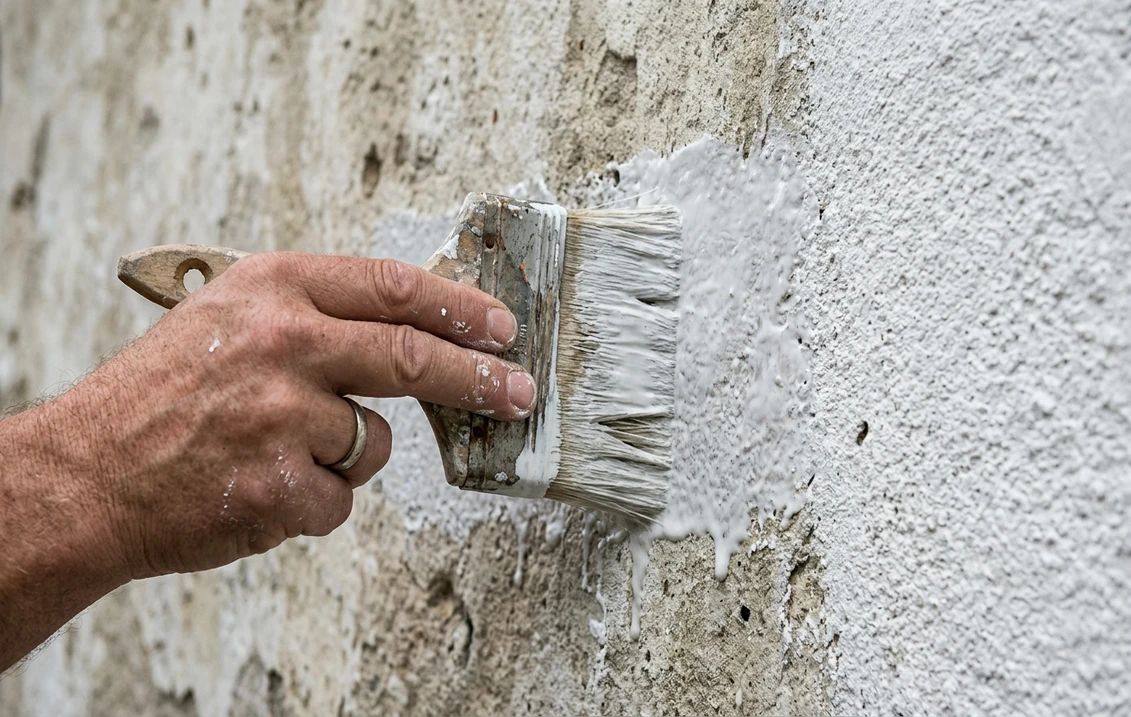
Between the annual limewash and the sealing film sits the finish most British homeowners are never offered: mineral silicate paint. Keim's Soldalit, the reference product, is "based on a binding agent combination of silica sol and potassium silicate" and forms a chemical bond with the substrate rather than a film; its data sheet gives a diffusion-equivalent air layer thickness (sd) of 0.01 m or less, class V1, the most vapour-open class, with water permeability under 0.1 kg/(m²√h), class W3 (Keim, Soldalit technical data sheet). Hirst's verdict in the Building Conservation Directory is that for external walls which have to be painted from scaffolding, silicate systems such as Keim "last for decades". The trade-offs: a higher price per litre than any masonry paint, a very matt, solid finish that loses the soft variation of limewash, and a substrate rule of its own, because silicate needs a mineral surface and will not bond to an existing resin paint without removing it. For a solid wall that has never been painted with a plastic paint, it is often the best long-term answer; for one that already carries decades of masonry paint, it rarely is.
Which finish for which wall
- Lime render, lime plaster, cob, clay lump, daub, soft limestone: limewash, or a silicate paint if you want a longer interval. Never a resin masonry paint. Our comparison of lime render and cement render explains why the render underneath has to match too.
- Soft, porous brick, previously limewashed: limewash again; it is the finish the brick was made for, and the Suffolk guidance regards a change from limewash to masonry paint on a listed building as "unlikely" to be acceptable because "masonry paint particularly is also likely to lead to moisture issues".
- Hard engineering brick, flint, hard cement render, sandstone: not limewash, which will not bond; a silicate paint on a clean mineral surface, or a breathable masonry paint if the wall is a cavity wall anyway.
- Solid wall already covered in masonry paint: the hardest case. Limewash and silicate will not hold on the resin film. Either strip the paint (slow, specialist, and on a listed building itself consentable) and go back to limewash, or stay with the most vapour-open masonry paint available and improve the wall's other defences: ground levels, gutters, pointing in lime.
- Cavity wall, cement render, post-war house: masonry paint, two coats, no debate; our guide to anthracite and dark masonry paints covers the one restriction that still applies, the render makers' reflectance limits.
Consent: listed buildings and conservation areas
The Suffolk guidance includes the clearest table a homeowner will find on when listed building consent is needed. Repainting or limewashing external walls "in same colour and type of paint": "Unlikely", with an exception for highly decorative paintwork. Repainting "in a different colour and/or type of paint": "Potentially", and the proposal should go first through a Change of Paint Form, "a shortened application process, negating the need for a full Listed Building Consent", with "details of the existing and proposed colours and types of paint, with manufacturer's details/RAL numbers". Painting "unpainted walls and features, external or internal": "Very Likely". Removing or stripping paint "to expose masonry or bare timber": "Very Likely". The general principle: "using the same type of paint as the existing is most likely to be acceptable". Outside the listed system, the Planning Portal's rule for everyone else applies: painting external walls is normally permitted development, except where an Article 4 direction has removed the right, common in conservation areas (Planning Portal). Our guides to painting a listed building and to conservation area painting rules go through the procedure.
Cost and labour: the honest comparison
Per tin, limewash is cheap and masonry paint is not; per decade, the order reverses. Take a cottage with 120 square metres of lime-rendered wall. In limewash, at 3 to 4 square metres per litre and four coats, that is 120 to 160 litres, six to eight 20-litre tubs, and four passes over every wall with a brush, since limewash is brushed thin and worked in; then a maintenance coat every few years, more often on the weather side. In masonry paint, at 12 to 16 square metres per litre and two coats, it is 15 to 20 litres and a roller weekend, repeated in a decade or so. In silicate, more paint than acrylic and a primer, once, with decades before the next scaffold. What the arithmetic cannot show is the cost of the wrong choice: the damp survey, the stripped paint and the replastered room that follow a sealed solid wall. Scaffolding and labour are the same for all three; our exterior house painting cost guide gives the decorator rates.
Applying limewash so that it lasts
- Check the substrate. Lime render, lime plaster, soft brick or stone with lime pointing: yes. Cement render, gypsum, hard brick, sandstone, or any resin paint: no, and no additive changes that.
- Clean and treat. Algae off with an algicidal wash, rinsed and dried; loose material brushed off; a shelter coat on friable surfaces to give a key.
- Dampen the wall. Limewash goes on to a damp, not wet, surface, or the wall sucks the water out before the lime can carbonate.
- Brush it thin, four or more coats. Each coat looks translucent and patchy as it goes on and whitens as it dries; thick coats craze and dust off. Allow each coat to dry before the next.
- Protect the cure. No frost, no hot sun, no driving rain for the first days; mist the wall lightly in dry weather so the carbonation completes.
- Expect the colour to move. Natural pigments read far darker wet than dry; judge the colour only once a sample patch has dried fully.
Colour, and testing it before you commit
Limewash colours are the earth pigments, ochres, umbers and the soft whites of chalk and lime, and they age with the wall rather than against it; a limewashed cottage looks right in a way a brilliant-white masonry paint rarely does on the same building. The conservation guidance on listed buildings also prefers colours "typical for the location and period", which is why our guide to paint colours for listed buildings and conservation areas starts from the local palette rather than a trend. Whatever the finish, test it twice: once on a photograph of the house, so you see the colour against the roof, the stone and the neighbours before buying, and once as a dried sample patch on the wall, because limewash in particular looks nothing like its wet colour.
Sources and references
- Cornwall Council, Advice for works to historic buildings: suitable and unsuitable surfaces for limewash, cement render and paint trapping moisture.
- Babergh and Mid Suffolk District Councils, Limewash and Paints, 3rd edition (October 2025, PDF): what limewash is, masonry versus mineral paints, the listed building consent table and the Change of Paint Form.
- Elizabeth Hirst, Limewash and Distempers, The Building Conservation Directory (2002): carbonation, vapour permeability at least ten times a resin paint, renewal, silicate systems.
- Farrow & Ball, Limewash product advice sheet (PDF, via Brewers): unsuitable surfaces, four or more coats, colour shift when wet.
- Tŷ-Mawr Lime, Limewash: coverage per litre, shelter coat, linseed oil addition.
- Keim, Soldalit technical data sheet (PDF): binder, sd value and classes V1 and W3.
- Sandtex, Microseal Smooth Masonry Paint: durability, rainproof time, coverage, colours.
- Tendring District Council, painting advice for listed buildings and conservation areas (PDF): modern paints as a watertight barrier, limewash as the most breathable finish.
- Planning Portal: permitted development, Article 4 directions, listed building consent.
Frequently asked questions
Is limewash better than masonry paint for an old house?
How many coats of limewash do you need outside?
Can you put limewash on cement render or hard brick?
Do I need listed building consent to repaint or limewash a listed house?
What is the alternative to limewash that lasts longer?
Official sources
To verify the regulatory information in this guide at the primary source:
- GOV.UK : When planning permission is required
- Planning Portal : Planning permission and building regulations (England and Wales)
- Historic England : Listed buildings and conservation areas
External links. FacadeColorizer is not affiliated with these bodies and their guidance may change over time.
Trademarks mentioned (Sherwin-Williams, Benjamin Moore, Behr, Caparol, Brillux, Sto, Alpina, Valspar, PPG, Glidden, Dulux, Crown Trade, Sandtex, Farrow & Ball, Johnstone's, Leyland) are property of their respective owners. FacadeColorizer is independent and not affiliated with any of them. Nominative fair use under Lanham Act §1125.