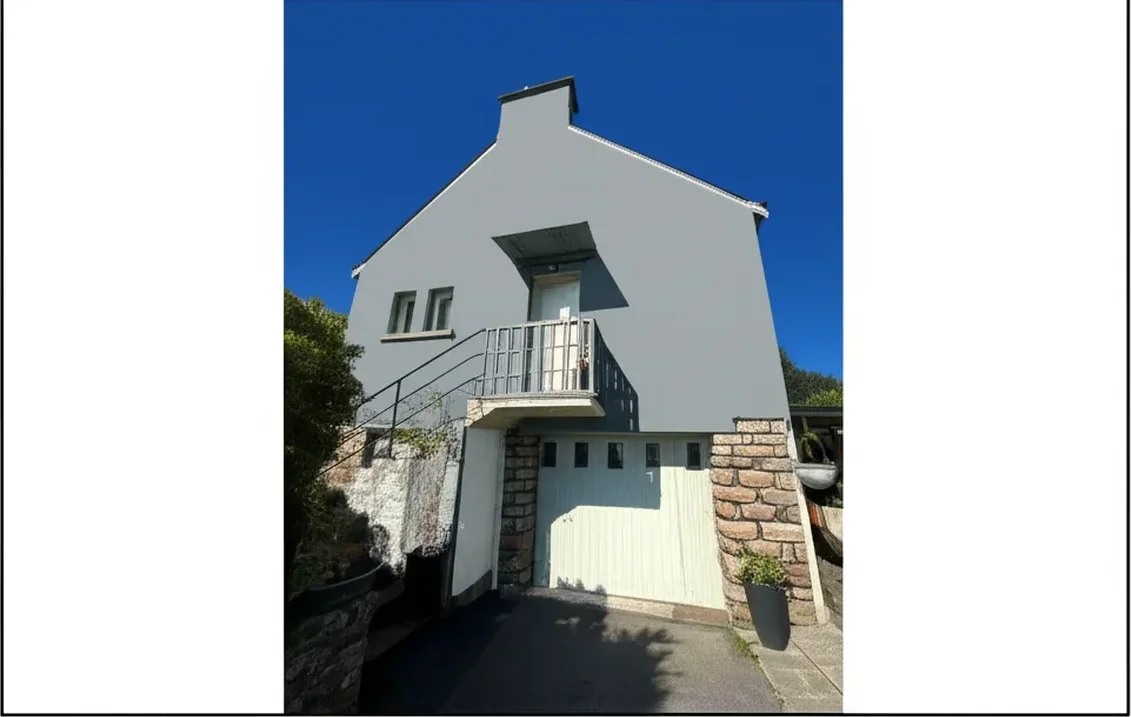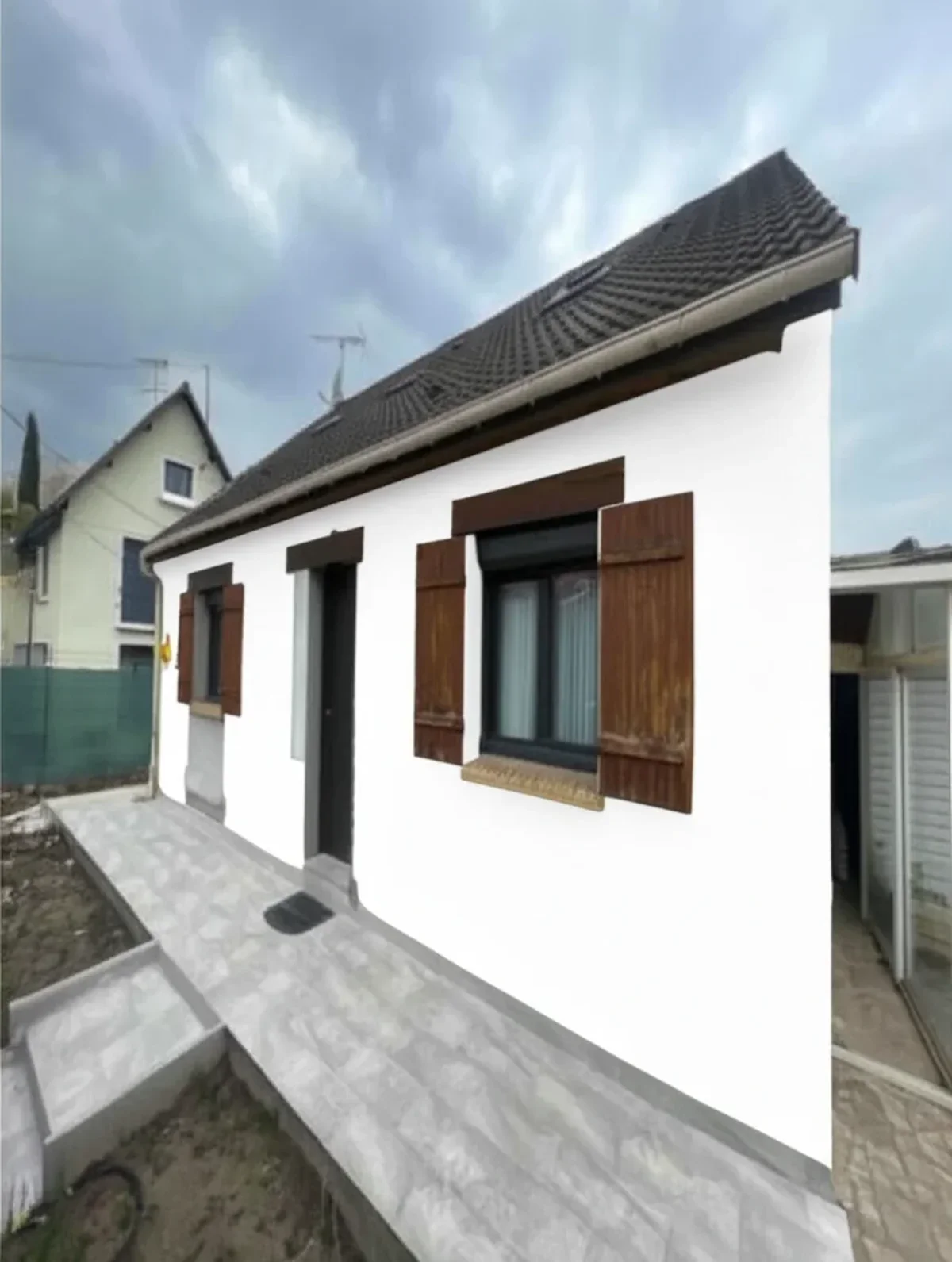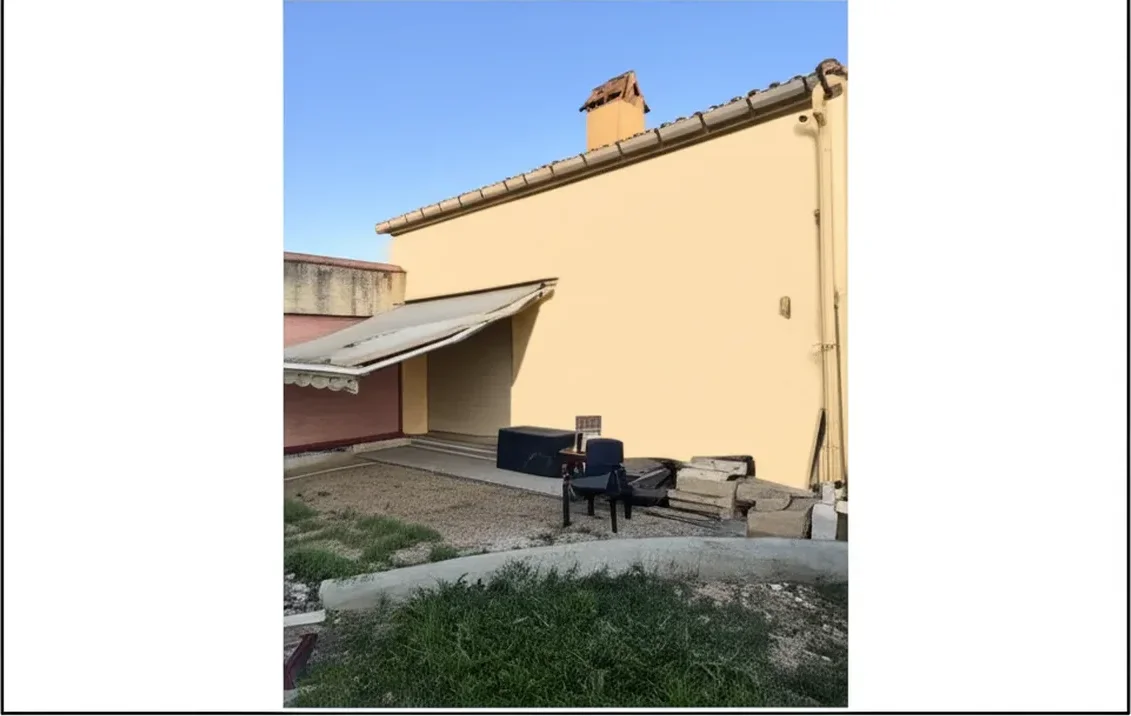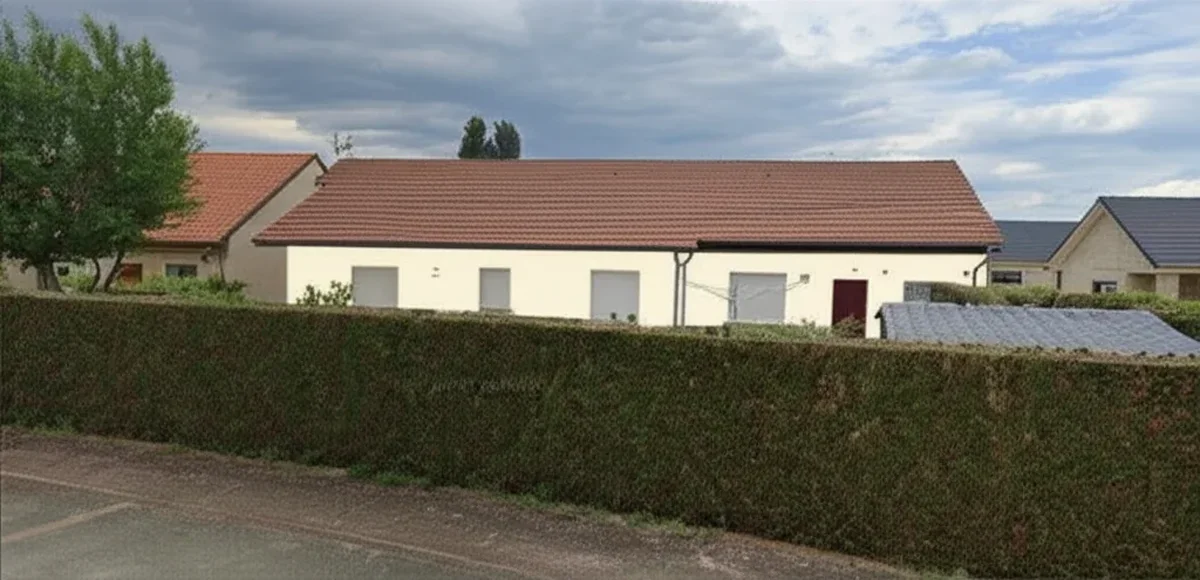
Try it on your house

White masonry paint is the single most-bought exterior coating in the UK, and the data on our visualiser confirms why. Across 16,983 facade previews generated by FacadeColorizer users, brilliant white, cornish cream, country cream and jasmine shades on render, pebbledash and fair-faced brick account for roughly one in every three exterior tests. This 2026 guide walks through every white masonry paint worth buying in the UK, from Dulux Weathershield Pure Brilliant White at the trade counter in Wickes down to cheap white masonry paint on supermarket shelves, with GBP prices for 5 L and 10 L tins, spread rates in square metres, BS EN 1062 ratings and which shades stay clean on a north-facing wall in Manchester rather than yellowing within two seasons.
Trying to decide between a brilliant white masonry paint, a softer cornish cream masonry paint or an honest off white masonry paint for a Georgian cottage in the Cotswolds? Upload a photo to the free AI Visualiser and preview Dulux Weathershield Pure Brilliant White, Sandtex Cornish Cream, Crown Trade Country Cream and Johnstone Jasmine on your own walls before a single 5 L tin leaves the shelf at B&Q or Screwfix.
Why white masonry paint is still the UK's default exterior in 2026
Three things keep white masonry paint ahead of every other colour family in the UK. First, the British housing stock is dominated by render, pebbledash and roughcast that were originally specified white or off-white, particularly the inter-war semis around London, Birmingham, Leeds and Bristol. Repainting white is the lowest-risk colour decision for a homeowner who does not want to fall foul of a Conservation Area rule or a neighbour's complaint about a sudden contrast change.
Second, white reflects solar gain, which in a country with milder summers than southern Europe still matters for the south and west elevations of un-insulated solid-wall properties. Third, modern silicone-enhanced and acrylic masonry coatings hold a true white far longer than the old cement-rich emulsions, which would chalk and grey within 18 months. A 2026 trade-grade brilliant white masonry paint realistically holds its colour for 8 to 12 years on a south-facing wall in the South East, and 10 to 15 years on shaded north walls if the substrate is sound.
The trade-off is that white shows every algae streak, every rust run from a downpipe bracket and every splash of organic growth from a leaking gutter. That is why the British market has split into two camps: pure brilliant white masonry paint for crisp modern facades, and warmer creams (cornish cream, country cream, county cream, jasmine white) for cottages, period properties and anyone who wants to hide a year or two of London road grime without an extra wash-down.
BS EN 1062, breathability and what to check on the tin
Every serious exterior masonry paint white sold in the UK should publish its BS EN 1062 classification. The standard rates exterior coatings on four parameters that matter directly to a white finish: water vapour transmission (V1 high to V3 low), liquid water permeability (W1 high to W3 low), crack-bridging (A0 to A5) and dry-film thickness. A genuinely good white masonry paint sits at V2 (breathable), W3 (water repellent) and at least A1 for hairline crack bridging.
Breathability matters more for white than for any other colour, because trapped moisture in a non-breathable film causes blistering and lifting that shows up as grey patches under a white coat within months. This is why Dulux Trade Weathershield Smooth Masonry and Sandtex X-treme dominate the UK trade: both publish full BS EN 1062 figures on the tin and on the technical data sheet, while supermarket and discount lines often duck the test entirely.
The other figure worth checking is the spread rate, given in m2 per litre. A white masonry paint on smooth render typically covers 8-12 m2 per litre per coat; on heavy pebbledash that figure can fall to 4-6 m2 per litre. Two coats is the minimum for white over any darker existing finish, and three coats is realistic if you are reversing a cream or a yellow to a true brilliant white.
10 UK white masonry paint brands compared (GBP, m2, BS EN 1062)
The table below collates 2026 high-street prices from B&Q, Wickes, Screwfix, Homebase and Amazon UK alongside published BS EN 1062 ratings where the manufacturer makes them available. Prices shown are for a 5 litre tin in standard brilliant white; cream and off-white shades are typically the same price or 1-2 GBP more on the trade counter and a tinting charge is common in store.
| Brand and product | 5 L price GBP | Spread m2/L | BS EN 1062 | Sold at |
|---|---|---|---|---|
| Dulux Weathershield Smooth (Pure Brilliant White) | 42 GBP | 10-12 | V2, W3, A1 | B&Q, Wickes, dulux.co.uk |
| Sandtex X-treme X1 (Pure Brilliant White) | 45 GBP | 8-10 | V2, W3, A2 | Wickes, Screwfix, sandtex.co.uk |
| Sandtex Cornish Cream Masonry | 39 GBP | 8-10 | V2, W3, A1 | B&Q, Wickes, Amazon UK |
| Crown Trade Sandtex Plus (Country Cream) | 38 GBP | 9-11 | V2, W3, A1 | Crown Decorating Centres |
| Johnstone's Stormshield (Jasmine White) | 36 GBP | 9-11 | V2, W3, A1 | Johnstone Decorating Centres |
| Leyland Trade Hardwearing Masonry (Brilliant White) | 32 GBP | 8-10 | V2, W3, A0 | Leyland branches, Screwfix |
| Wickes All Weather Smooth Masonry (Brilliant White) | 22 GBP | 8-10 | Not published | Wickes |
| B&Q GoodHome Outdoor Wall & Masonry (Brilliant White) | 21 GBP | 8-10 | Not published | B&Q |
| Homebase Smooth Masonry (County Cream) | 19 GBP | 7-9 | Not published | Homebase |
| Aldi Workzone Masonry (Brilliant White, seasonal) | 16 GBP | 6-8 | Not published | Aldi, seasonal |
Try it on your house
No photo? Try a sample
Three things stand out from the table. Trade-grade products from Dulux, Sandtex and Crown sit at 38-45 GBP per 5 L and almost always publish BS EN 1062 figures. Mid-range own-brand from Wickes, B&Q and Homebase trades roughly half on price but rarely publishes the standard. And the cheap white masonry paint tier (Aldi, Lidl, supermarket specials) is fine for a single-coat refresh on a sound substrate, but is not where you start a 10-year repaint over old pebbledash.
Brilliant white, cornish cream, country cream, jasmine: which white is yours
"White" is a family, not a single colour. UK manufacturers organise their white masonry paint shades into five broad sub-groups: pure brilliant white, soft white / off-white, cream (jasmine, magnolia, vanilla), warm cream (cornish, country, county) and limestone / stone white. Picking the right family matters more than picking the brand, because a misjudged warm cream on a modern grey-windowed extension can look yellow within a year of weathering.
The table below maps the most-searched UK white and cream masonry shades to a typical British use-case. Names are kept generic where possible; brand-specific shades are flagged in brackets.
| Shade family | Typical reference | Best on | Avoid on |
|---|---|---|---|
| Pure brilliant white | Dulux Pure Brilliant White, Sandtex X1 | Modern smooth render, anthracite joinery | North-facing damp walls without algae additive |
| Off white | Dulux Timeless, Crown Soft White | Inter-war semis, edwardian terraces | Pure white window frames (creates clash) |
| Magnolia / jasmine white | Johnstone Jasmine, Dulux Magnolia | 1980s render, suburbs, pebbledash | Heritage cottages in conservation areas |
| Cornish cream | Sandtex Cornish Cream | Cottages on the south west coast, granite belts | New-build estates with grey palette |
| Country cream / county cream | Crown Country Cream, Sandtex County Cream | Cotswold stone, period rendered farmhouses | Modern white-rendered townhouses |
If you are repainting a cottage, the cottage exteriors guide covers full palettes beyond the white family alone.
White masonry paint on render, pebbledash and brick: what changes
A 5 L tin of exterior masonry paint white behaves very differently depending on what you put it on. Smooth render takes coverage of 10-12 m2 per litre in two coats and gives the cleanest finish. Pebbledash drops that to 4-6 m2 per litre because the textured surface drinks paint, which is why two-coat coverage on a typical UK semi can take three or four 5 L tins rather than the two you would budget on render. Our pebbledash repaint guide goes deeper on this if you have a heavily textured property.
Brick is the awkward case. Fair-faced brick should generally not be painted at all (it traps moisture and removes a reversible finish), but where it has already been painted with a previous owner's white masonry coat, the only practical maintenance is to keep refreshing it with a breathable system. Sandtex X-treme and Dulux Trade Weathershield both hold up on previously-painted brick; cheap supermarket lines tend to peel within two seasons on the south and west elevations.
Stone is the other UK-specific case. Lime-rendered cottage walls in the Cotswolds, Cornwall and the Pennines should not be coated with a low-breathability acrylic at all; they need a breathable mineral or silicate paint with a V1 BS EN 1062 rating. Historic England's conservation principles are the right reference if your property is listed.
How much does a typical UK semi cost to repaint in white
The honest answer for a three-bed semi in the South East with around 110 m2 of paintable masonry: 350-650 GBP in paint alone if you do it yourself, 1,800-3,200 GBP all-in if you commission a decorator. The wide spread depends on substrate, choice of trade-grade vs. own-brand, and whether you bundle the fascia, soffit and rainwater goods in white gloss at the same time. The full UK exterior masonry cost breakdown goes line-by-line by region and substrate.
For DIY in white specifically, budget for roughly 11 litres of trade-grade white masonry paint per 100 m2 of smooth render in two coats, or 18-22 litres on pebbledash. At Dulux Trade Weathershield Smooth at 42 GBP per 5 L, that is 95-185 GBP in paint per 100 m2. Add a 5 L tin of stabilising primer for any chalky areas (around 28 GBP), a roller frame and microfibre sleeves (12 GBP), an extension pole (15 GBP) and trade-grade exterior filler (8 GBP) and you are comfortably under 300 GBP for a typical front elevation.
Scaffold or a tower hire is the variable that breaks budgets. A two-storey semi commonly needs either a 3 m alloy tower (60-90 GBP per week from Travis Perkins or HSS Hire) or full pavement scaffolding (350-650 GBP for a typical four-week hire). Many UK homeowners under-budget access by 200-300 GBP, which is why the all-in DIY figure climbs to 600 GBP even on a modest front facade.
Planning, listed buildings and conservation areas: the white question
Painting an unlisted house in white in England, Wales or Scotland is almost always permitted development and needs no planning application. The exceptions are listed buildings, conservation areas and Article 4 Direction zones, where even a like-for-like white repaint can require Listed Building Consent or written approval from the conservation officer. The Planning Portal is the right starting point; Scottish properties should refer to gov.scot guidance on listed buildings.
Two practical conservation-area rules show up repeatedly: changing from a render to a stained or coloured render usually needs consent (so a white-to-cream switch can be a discussion), and changing from an unpainted lime render to a painted finish is almost always a consent issue. A like-for-like white-to-white refresh in a sound modern acrylic coating system is the most boring case and almost never causes an issue. Our conservation areas painting guide works through the typical UK city examples.
Health and safety on access matters too. The HSE working at height guidance is the right reference if you are renting scaffold or using a tower above ground floor, even on a domestic job. Most decorator quotes already include the relevant PASMA certification for tower work; if you are quoting a job yourself, do not skip it.
Previewing white masonry paint on your own walls before you buy
The single biggest reason UK homeowners repaint within five years of a previous repaint is not paint failure, it is colour regret. A pure brilliant white that looked crisp on a Dulux colour chart can read cold and clinical against a slate grey roof on a north-facing Manchester semi. A jasmine that looked warm in the showroom can read yellow against a Cotswold stone porch in summer light. The honest fix is to preview the actual shade on the actual building before you commit.
Sample pots are the traditional answer and they still matter at the final-decision stage. But sampling six shades across a typical UK semi costs 25-40 GBP in pots, takes a weekend to apply, and you have to wait two dry days each time to see the cured colour. The AI visualiser shortcut is to upload a photo of your front elevation, apply Pure Brilliant White, Cornish Cream, County Cream, Jasmine White and an off white side by side in 30 seconds, narrow to two finalists, then sample only those.
Three to five sample pots after AI screening is the realistic UK workflow in 2026. The free tier covers one HD preview plus three free exports, which is enough for a single elevation; larger packs cover whole-house presets and rear elevations.
Common questions on white masonry paint in the UK
The questions below come from the most-asked queries on our UK customer support during 2026 and from the public search-data for white-family masonry shades. They are answered briefly here and fully in the FAQ schema at the bottom of the article.
What is the best brilliant white masonry paint in the UK in 2026? Dulux Trade Weathershield Smooth and Sandtex X-treme X1 are the two trade-grade choices most decorators specify; both publish full BS EN 1062 figures, both hold true white on south elevations for 8-12 years, and both are stocked at Wickes, Screwfix and the manufacturers' own decorating centres.
Does cheap white masonry paint actually work? On a sound substrate with no algae and no chalking, yes, for a 2-4 year refresh on the front elevation. The supermarket and Aldi Workzone tier is fine for a quick paint-and-sell tidy-up. For a 10-year repaint you would not start there. The full masonry brands comparison covers the rest of the colour palette in the same format.
All third-party brands cited (Dulux, Sandtex, Crown, Johnstone, Leyland, Wickes, B&Q, Homebase, Aldi) are the registered trademarks of their respective owners. FacadeColorizer is not affiliated with, endorsed by or sponsored by any of these brands. Prices in GBP are 2026 high-street references and vary by store and tin size.
Frequently asked questions
What is the best brilliant white masonry paint in the UK in 2026?
Is cheap white masonry paint worth buying for an exterior wall?
What is the difference between cornish cream, country cream and county cream masonry paint?
How much white masonry paint do I need for a UK semi?
Will jasmine white masonry paint yellow over time?
Do I need planning permission to paint my house white in the UK?
Can I preview white masonry paint shades on my own house before buying?
Trademarks mentioned (Sherwin-Williams, Benjamin Moore, Behr, Caparol, Brillux, Sto, Alpina, Valspar, PPG, Glidden, Dulux, Crown Trade, Sandtex, Farrow & Ball, Johnstone's, Leyland) are property of their respective owners. FacadeColorizer is independent and not affiliated with any of them. Nominative fair use under Lanham Act §1125.