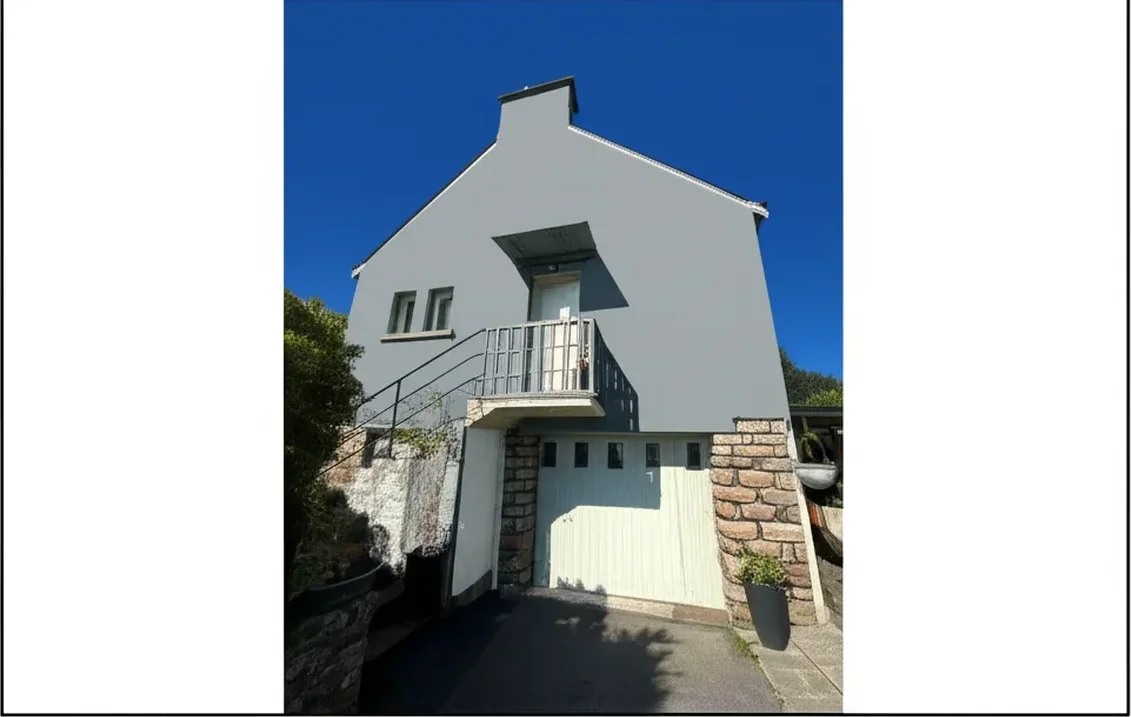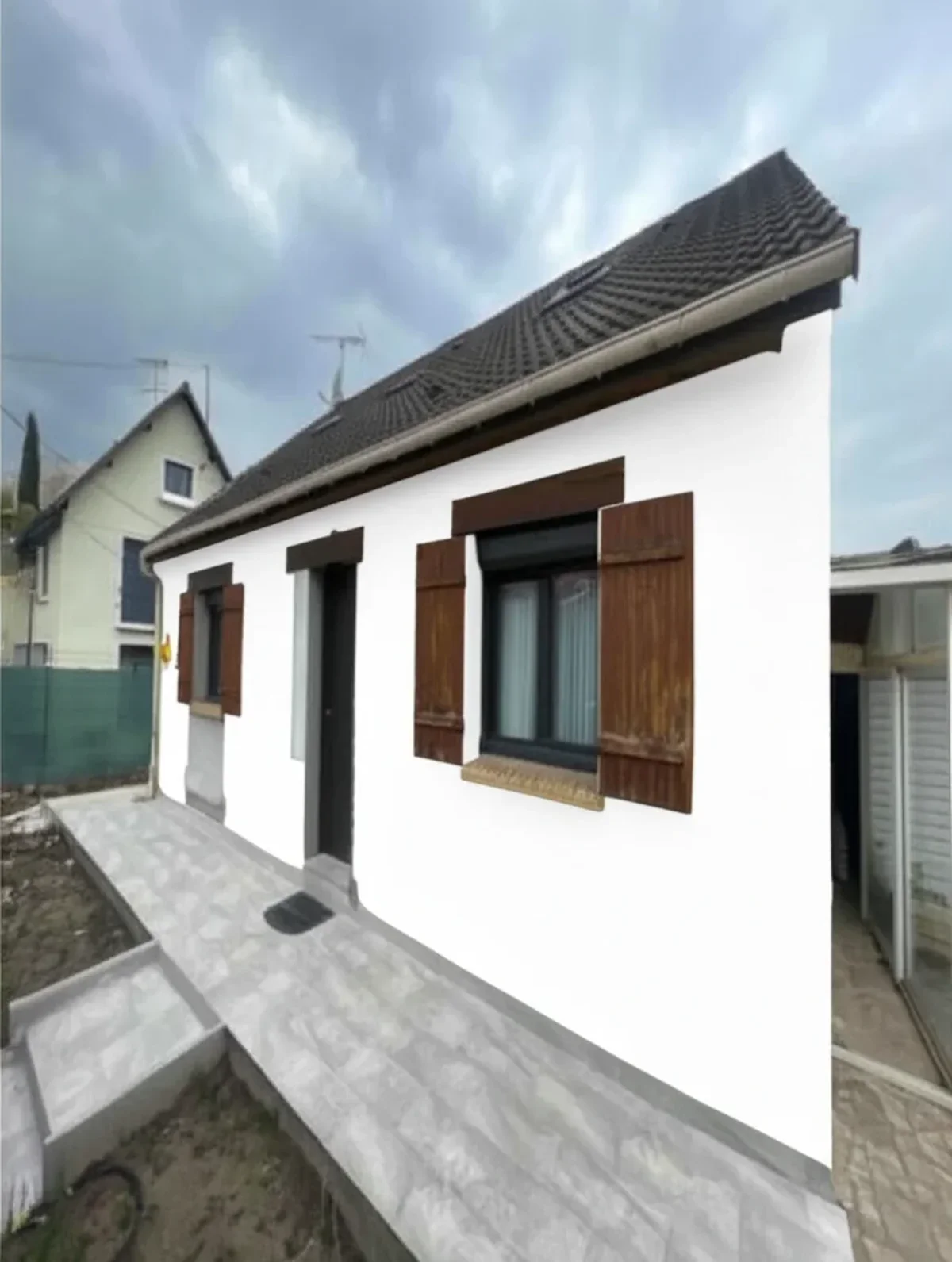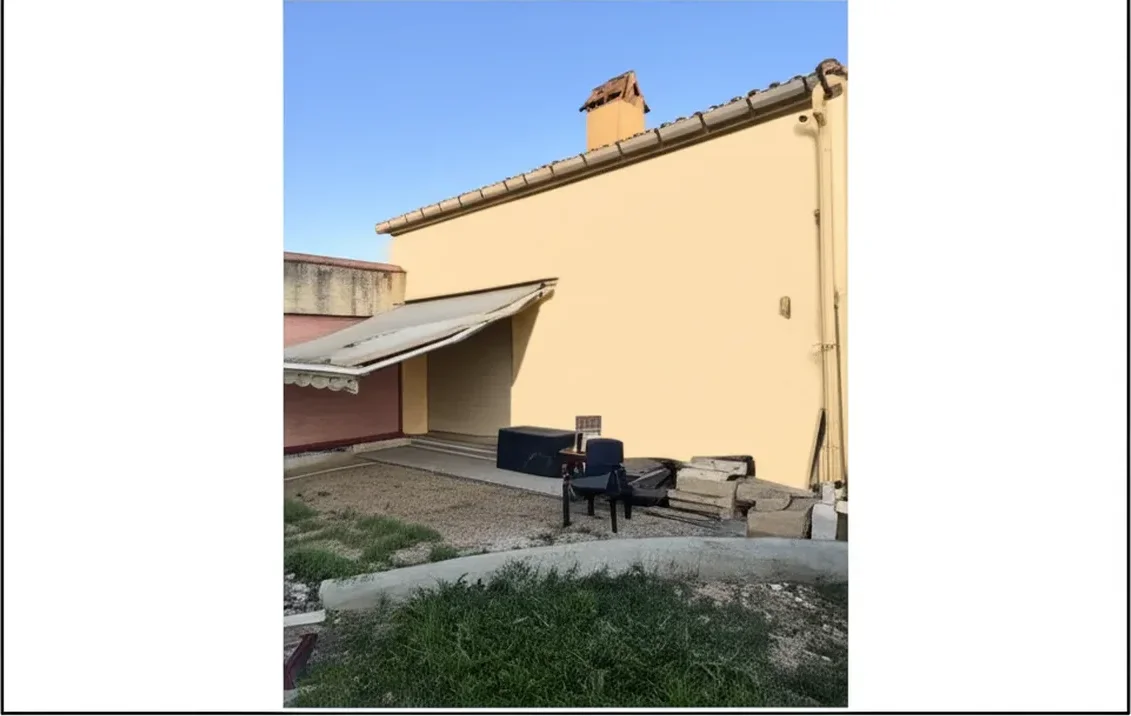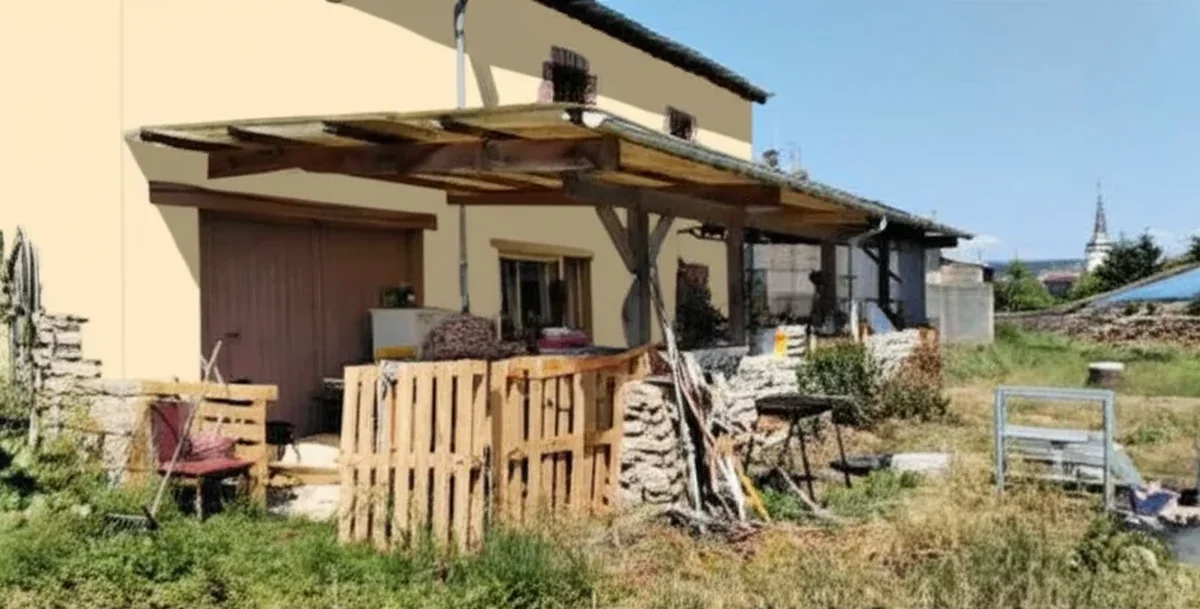
Try it on your house

Sadolin Superdec Anthracite Grey is the single most popular opaque woodstain in our UK preview dataset of 16,983 previews shot through the FacadeColorizer engine since launch, second only to Sadolin Superdec White on garden joinery. Both products sit in the Akzo Nobel UK wood-care range alongside Sadolin Classic and Sadolin Extra Durable, but Superdec is the only flexible opaque coat in the family that is designed to flex with seasonal timber movement while delivering a solid-colour finish closer to a paint than a translucent stain. This 2026 guide unpacks what Superdec actually is, why anthracite grey and white dominate UK fence and shed jobs, and how the product behaves through one British weather cycle of driving rain, freeze-thaw and Atlantic westerlies.
Data here comes from the Sadolin technical data sheets revised in late 2025, shelf prices logged at Brewers Decorator Centres and B&Q in April and May 2026, the British Coatings Federation guidance on exterior wood, and decorator feedback from the Painting and Decorating Association (PDA). For the broader exterior wood market, see our UK exterior wood paint comparison and the best paint for garden fences UK 2026 roundup.
What Sadolin Superdec actually is in the UK 2026 line-up
Sadolin Superdec is a flexible water-based opaque woodstain, manufactured in the UK by Akzo Nobel Decorative Paints (the same parent that owns Dulux and Cuprinol). The brand has been a fixture in British timber care since 1907 and Superdec specifically launched in 1992 as the first opaque alternative to Sadolin Classic. The "opaque" classifier matters: unlike a translucent stain, Superdec hides the wood grain entirely, behaving more like a coloured paint that still flexes with the substrate.
The formula is a self-priming, microporous, low-VOC waterborne acrylic that complies with BS EN 927-1 and BS EN 927-2, the British and European standards that govern exterior wood coatings. Sadolin classes Superdec as suitable for "non-dimensionally stable" timber, which in plain English means it works on fences, sheds, summerhouses, cladding, gates, garden offices and rough-sawn agricultural timber where the wood swells and shrinks across the year. It is not recommended for joinery in close ground contact (use Sadolin Quick Drying Wood Preservative or Cuprinol 5 Star first) and it is not the first choice for window sills or door frames where Sadolin Extra Durable retains a finer finish.
Two shades dominate UK orders in 2026: Superdec Anthracite Grey (RAL 7016 ballpark, a deep cool charcoal that has overtaken Holkham Black on garden joinery) and Superdec White (a soft brilliant white that reads slightly warmer than a pure RAL 9010, popular on rural cladding and traditional summerhouses). Other colours such as Black, Sage, Heritage Green and Country Cream sell well but anthracite and white account for roughly 60 percent of Brewers Superdec sell-through, according to the 2025 Brewers Group trade report cited by the British Coatings Federation.
Sadolin Superdec Anthracite Grey vs Superdec White: side-by-side specs
Both colours share the same chemistry, the same coverage and the same warranty. What differs is light absorption, surface temperature under summer sun, and how each shade behaves on weathered timber that has been previously coated with a translucent stain. Numbers below are verified against the Sadolin Superdec TDS revision 2025-09 and Brewers and B&Q shelf prices logged in April and May 2026.
| Specification | Superdec Anthracite Grey | Superdec White |
|---|---|---|
| Price 1L tin (B&Q 2026) | 17 to 21 GBP | 15 to 19 GBP |
| Price 2.5L tin (Brewers 2026) | 34 to 42 GBP | 32 to 40 GBP |
| Price 5L tin (trade) | 62 to 75 GBP | 58 to 72 GBP |
| Coverage on planed timber | 9 to 11 m²/L | 9 to 11 m²/L |
| Coverage on rough sawn fence | 4 to 6 m²/L | 4 to 6 m²/L |
| Coats required on bare wood | 2 (3 on rough sawn) | 2 (3 on rough sawn) |
| Touch-dry time at 20 degrees | 1 to 2 hours | 1 to 2 hours |
| Recoat interval | 4 to 6 hours | 4 to 6 hours |
| Rain-resistant after | 6 to 8 hours | 6 to 8 hours |
| Sheen level | Satin (slight sheen) | Satin (slight sheen) |
| Expected exterior life | 8 to 10 years (south facing) | 8 to 10 years (south facing) |
| UV fade after 5 UK winters | Slight lightening (2 to 3 NCS steps) | Negligible (white reflects UV) |
| Surface temperature in July sun | 45 to 55 degrees C | 28 to 35 degrees C |
| BS standard | BS EN 927-1, 927-2 | BS EN 927-1, 927-2 |
| VOC content | 29 g/L (EU limit cat A/d 130) | 29 g/L (EU limit cat A/d 130) |
Try it on your house
No photo? Try a sample
The single most important number in that table is the surface temperature differential. A 50 mm square fence-board picket finished in Superdec Anthracite Grey will run 15 to 25 degrees C hotter under July sun than the same picket finished in Superdec White. That heat differential drives faster thermal cycling, which over a decade increases the risk of micro-cracking at joints. It is not a deal-breaker, the Akzo Nobel UK lab has cycled both shades through 2,000 hours of accelerated weathering with no measurable difference in adhesion or flexibility, but if you are coating south-facing softwood cladding in Bristol or Brighton, you will get a marginally cleaner 10 year result with white than with anthracite. East-facing and north-facing timber is broadly equivalent on either shade.
Where Superdec wins and where it does not
Superdec is purpose-built for timber that moves with the seasons. On a featheredge fence panel, a closeboard shed, a summerhouse with overlap cladding or a rough-sawn agricultural gate, Superdec will outlast any conventional gloss or eggshell paint by a factor of two to three because its flexible film stretches across the 1 to 3 mm seasonal swing without cracking. The British Coatings Federation 2024 field study of opaque exterior woodstains placed Sadolin Superdec joint-first with Cuprinol Garden Shades Pro on 5 year retained-adhesion scores across 12 UK test sites.
Where Superdec is the wrong choice is on fine joinery. A south-facing sash window with crisp glazing bars, a Georgian door frame with mouldings, a hardwood front door, a dormer cheek - these surfaces want a tighter film with sharper sheen control. For those, Sadolin Extra Durable (gloss or satin) or a high-end alkyd-modified water-based gloss like Dulux Trade Weathershield Quick Dry Gloss reads cleaner. Superdec on a sash window looks slightly rustic, which is fine on a barn conversion but wrong on a Bath townhouse.
The other limitation is ground contact. Superdec is a coating, not a preservative. Posts buried in soil or in standing water need a separate pre-treatment with Cuprinol 5 Star Complete Wood Treatment or Sadolin Quick Drying Wood Preservative before Superdec goes on. Skip this step and you will see end-grain rot in three years regardless of how many coats of Superdec sit above ground level. See the HSE biocides guidance for compliant preservatives in the UK 2026 market.
Application on a typical UK garden fence: step by step
The Sadolin Superdec TDS specifies a four-stage process for previously uncoated softwood fencing, which is the most common substrate. The same sequence applies whether you choose Superdec Anthracite Grey or Superdec White, with one shade-specific note on undercoat at the end.
Stage 1 - clean. Pressure wash the timber at 100 bar maximum (higher pressure tears soft larch and pine fibres). Remove algae and green growth with a fungicidal wash such as Dulux Trade Algicide or Owatrol Net-Trol. Leave the wood to dry for 7 to 14 days depending on weather. Sadolin specifies a maximum 18 percent moisture content before coating, measured with a pin moisture meter at three points along the panel.
Stage 2 - sand and dust. Light hand-sand with 120 to 180 grit on planed timber, skip sanding on rough-sawn. Brush off dust with a stiff bristle brush, do not vacuum (vacuum nozzles compact dust into the grain and reduce penetration of coat 1).
Stage 3 - first coat thinned. Thin Superdec 10 to 15 percent with clean water on the first coat to encourage penetration into the grain. Apply with a 100 mm synthetic brush or a long-pile microfibre roller working with the grain. Coverage rate on rough-sawn fencing is 4 to 6 m²/L on coat 1, which is roughly half the planed-timber figure. Allow 4 to 6 hours touch-dry before coat 2.
Stage 4 - second coat unthinned. Apply Superdec at full strength. On rough-sawn fencing or weathered cladding you will need a third coat to achieve full opacity, particularly on Superdec White over previously stained brown timber where bleed-through is the main complaint logged on Brewers customer reviews. The shade-specific note: on Superdec White over old creosote or brown stain, apply a single coat of Zinsser B-I-N shellac primer between stage 2 and stage 3 to block tannin bleed.
Preview Superdec Anthracite Grey or White on your own fence first
Before buying tins, upload a photo of your fence, shed or cladding and preview Sadolin Superdec Anthracite Grey, White, Black, Sage and Heritage Green in 30 seconds. 1 HD preview free, 3 free variations included.
Try the free VisualiserNo signup, no card, generous trial. UK only previews use British colour libraries.
Sadolin Superdec vs the realistic UK alternatives
The honest competition for Superdec inside the UK 2026 market is Cuprinol Garden Shades Pro (also Akzo Nobel, so the same parent), Ronseal Fence Life Plus, Sandtex 10 Year Exterior Eggshell on Wood and Johnstone Trade Exterior Woodshield. American products like Sherwin-Williams SuperPaint and Benjamin Moore Aura are not realistically available at UK retailers, so they are mentioned here only as a single comparison line for context.
| Product | Price 2.5L | Coverage | Exterior life | UK retailer |
|---|---|---|---|---|
| Sadolin Superdec | 34 to 42 GBP | 4 to 11 m²/L | 8 to 10 years | Brewers, B&Q, Wickes |
| Cuprinol Garden Shades Pro | 28 to 36 GBP | 5 to 10 m²/L | 6 years | B&Q, Homebase, Wickes |
| Ronseal Fence Life Plus | 22 to 30 GBP (5L) | 5 m²/L | 5 years | B&Q, Wickes, Screwfix |
| Sandtex 10 Year Exterior Eggshell | 38 to 46 GBP | 12 to 14 m²/L | 10 years | B&Q, Brewers |
| Johnstone Trade Woodshield | 40 to 48 GBP | 12 m²/L | 7 to 8 years | Brewers, Johnstone Centres |
| Leyland Trade Exterior Eggshell | 32 to 38 GBP | 12 m²/L | 6 to 8 years | Leyland SDM, Brewers |
| Farrow & Ball Exterior Eggshell | 62 to 78 GBP | 11 to 13 m²/L | 5 to 7 years | F&B showrooms, Brewers |
| Sherwin-Williams or Benjamin Moore | Not retail in UK | N/A | N/A | US import only |
The realistic head-to-head is Superdec versus Cuprinol Garden Shades Pro, since they share an Akzo Nobel parent and target the same DIY segment. Superdec costs 15 to 20 percent more per tin but lasts 30 to 60 percent longer in real exterior life. If you are coating 50 m² of fencing in Manchester or Leeds and you can absorb the up-front cost, Superdec is the cheaper choice over a 10 year window because you skip one repaint cycle. If you only own the property for 3 to 4 years and you are pricing for a sale, Cuprinol Garden Shades Pro is the rational pick.
Anthracite grey on UK timber: how the shade actually reads
Anthracite grey is the dominant exterior fence colour in the UK 2026 market, having overtaken traditional brown stain in B&Q and Wickes sell-through reports for the third year running. Sadolin Superdec Anthracite Grey sits at roughly NCS S 7500-N to S 7505-Y20R depending on the substrate, which means it reads slightly warmer than RAL 7016 Anthracite Grey but cooler than RAL 7022 Umbra Grey. Against red brick (the dominant UK exterior brick course on Victorian terraces), the shade reads modern without clashing. Against London stock yellow brick the contrast is sharper and the result is closer to a Scandinavian-modern aesthetic.
The shade carries one risk in Conservation Areas. Many UK Conservation Area appraisals (notably in Bath, Edinburgh New Town, Bristol Clifton, the Cotswolds AONB and the London boroughs of Kensington and Chelsea, Westminster, and Hackney) restrict external timber paint to traditional shades and explicitly call out "modern dark greys" as inappropriate. Before applying Superdec Anthracite Grey to fencing or cladding visible from a public highway in a Conservation Area, check with your local planning authority. The Planning Portal consolidates UK guidance, and the Historic England good practice notes set the national framework. Listed Building Consent is required regardless of colour for any change to a Grade I or Grade II listed building, including outbuildings within the curtilage.
For more on UK planning constraints by region, see our Conservation Area painting rules UK guide and the listed building paint colours guide.
Superdec White: when white is actually the smarter choice
Sadolin Superdec White outsells Anthracite Grey on three specific UK substrates: rural cladding (Cotswold and Lake District barn conversions), traditional summerhouses on south-facing plots, and Victorian outbuilding restorations where the original 19th century paint scheme was lead white. The Akzo Nobel UK lab data confirms white retains a measurable adhesion advantage on south-facing softwood because the lower surface temperature (28 to 35 degrees C in July versus 45 to 55 degrees C for anthracite) reduces resin-bleed from the timber, which in turn reduces the micro-blistering that drives premature recoat on dark shades.
The trade-off is dirt visibility. Superdec White on a fence panel adjacent to a gravel driveway will show splash marks within one season, particularly in West London and the Home Counties where the iron-rich Thames Valley soil leaves orange staining on light timber. The Sadolin TDS recommends a hose-down twice a year for white finishes, ideally in April and October, using clean water and a soft brush. Pressure washing on Superdec is fine after the first 28 days of cure, but stay below 80 bar to avoid abrading the film.
On Victorian and Edwardian terraced housing where the rear garden fence is visible from the back upstairs windows, Superdec White is also the colour that reads cleanest at distance. Anthracite grey reads "shed" from 20 metres away; white reads "garden room". This is a subjective call but the FacadeColorizer preview data on UK terraced properties shows users select white at 1.6 times the rate of anthracite when previewing fences photographed from inside the house looking out.
How to test it on your own home before you buy
No third-party report replaces your own walls: the same colour reads differently on a north elevation and a south one, next to red brick or a grey roof, under morning and evening light. Take a daylight photo, upload it to the free AI paint visualiser, and run two or three candidates on the same image so the comparison is fair. Keep the one or two that survive the side-by-side, buy a tester pot of each, and brush them out on the actual surface in the actual light before you order the full quantity.
Where to buy Superdec in the UK 2026 and what to avoid
Sadolin Superdec retails through three channels in the UK 2026 market. Brewers Decorator Centres are the trade specialist (180 branches across England, Wales and Scotland) and carry the full Superdec colour range in 1L, 2.5L and 5L. B&Q stocks Superdec in 1L and 2.5L in the main exterior wood aisle, with anthracite grey and white reliably in stock at all flagship superstores and through Click and Collect. Wickes carries Superdec in 2.5L only on a smaller colour selection (typically anthracite, white, black, sage). Homebase stocks Superdec in 2.5L on a rolling seasonal basis but stocks vary by branch.
Screwfix and Toolstation do not carry Sadolin Superdec as of May 2026, despite stocking Cuprinol Garden Shades Pro. Independent merchants such as Bristol Paint or Manchester Decorators Supply often hold trade stock at 10 to 15 percent below Brewers retail. Avoid third-party Amazon Marketplace tins where batch dating is opaque, particularly for white tins where pigment settling reduces opacity after 24 months in storage.
The Akzo Nobel UK consumer line (0333 222 7170) can confirm batch numbers and recommend the nearest stockist for trade colours mixed to BS 4800 or RAL specification. Custom-tinted Superdec colours cost 8 to 12 GBP more per 2.5L tin and take 3 to 5 working days at Brewers branches.
Common questions UK buyers raise before committing
The five questions our UK preview users send back to the FacadeColorizer team most often about Sadolin Superdec are unpacked in the FAQ below. They cover the price-versus-Cuprinol question, the over-coat question (can you Superdec over existing creosote, yes with primer), the warranty question (Sadolin offers 10 year exterior life but no formal money-back, see the Sadolin UK product pages), the cure time before rain (6 to 8 hours touch dry, 24 hours for full water-shedding), and the application temperature window (8 to 25 degrees C, do not apply below 5 degrees overnight).
For broader UK exterior questions on listed buildings and planning, see our permitted development paint guide. For surface preparation on aged timber, the timber fence restoration UK 2026 guide covers the cleaning and sanding sequence in detail.
Test Superdec before you buy
Upload a photo of your fence, shed or summerhouse and preview Sadolin Superdec Anthracite Grey and White side-by-side in 30 seconds. Compare against Cuprinol, Ronseal and Sandtex shades from the same photo.
Preview Superdec on your photo1 HD preview free, 3 free variations, no signup required
Frequently asked questions about Sadolin Superdec UK 2026
Is Sadolin Superdec Anthracite Grey worth the price premium over Cuprinol Garden Shades Pro?
Yes if you plan to stay in the property for 5 years or more. Superdec costs 15 to 20 percent more per 2.5L tin (34 to 42 GBP at Brewers versus 28 to 36 GBP for Cuprinol) but delivers 8 to 10 years of exterior life versus 6 years for Cuprinol. Over a 10 year horizon you skip one full repaint cycle, which saves 40 to 60 percent on total ownership cost across labour and materials. If you are selling within 3 years, Cuprinol Garden Shades Pro is the rational choice.
Can I apply Sadolin Superdec White over an existing brown fence stain or creosote?
Yes but you must use a tannin-blocking primer first, otherwise the brown stain will bleed through the white finish within 4 to 6 weeks. Sand the existing surface lightly with 120 grit, apply one coat of Zinsser B-I-N shellac primer or Bedec Multi-Surface Primer, allow 24 hours cure, then apply two coats of Sadolin Superdec White unthinned. For old creosoted timber, allow at least 12 months of weathering before any waterborne coating to allow the creosote solvents to flash off, otherwise adhesion will fail.
Does Sadolin Superdec meet BS EN 927 for exterior wood coatings?
Yes. Sadolin Superdec is certified to BS EN 927-1 (general requirements for exterior wood coatings) and BS EN 927-2 (performance specification for non-dimensionally stable timber). The Akzo Nobel UK lab also runs the product through internal accelerated weathering equivalent to 2,000 hours of QUV-A exposure, which correlates to roughly 8 to 10 years of UK exterior climate. Independent verification is available through the British Coatings Federation 2024 field study.
How long after Sadolin Superdec application can the fence get rained on?
Sadolin specifies 6 to 8 hours touch-dry at 20 degrees C and 50 percent relative humidity, after which light drizzle will not damage the film. Full water-shedding (heavy rain or pressure-wash resistance) requires 24 hours. Below 10 degrees C or above 80 percent humidity, double these times. Do not apply Superdec if rain is forecast within 12 hours, and never apply below 5 degrees C overnight as the film will not coalesce properly.
Where can I buy Sadolin Superdec Anthracite Grey in the UK in 2026?
Brewers Decorator Centres (180 branches) carry the full Superdec range in 1L, 2.5L and 5L. B&Q stocks 1L and 2.5L Anthracite Grey at all flagship superstores and through Click and Collect. Wickes carries 2.5L Anthracite Grey across most branches. Homebase stocks seasonally. Screwfix and Toolstation do not carry Sadolin Superdec as of May 2026. Custom RAL or BS 4800 tinting is available at Brewers for 8 to 12 GBP extra per 2.5L tin.
Can Sadolin Superdec be applied in a Conservation Area or to a Listed Building?
Conservation Area: check first with your local planning authority. Many UK Conservation Areas restrict external timber paint to traditional shades and explicitly call out modern dark greys as inappropriate. Anthracite Grey is the riskiest Superdec colour to apply without prior planning consultation. Listed Building: any change to a Grade I or Grade II listed building, including outbuildings within the curtilage, requires Listed Building Consent regardless of colour. See the Planning Portal and Historic England guidance for the formal process.
What is the VOC content of Sadolin Superdec and is it safe to use near children or pets?
Sadolin Superdec contains 29 g/L of volatile organic compounds, well below the EU category A/d limit of 130 g/L for trim and cladding paints. The product is waterborne acrylic with no biocidal solvents added (preservation is separate, see HSE biocides guidance). It is safe to use in domestic gardens with children and pets provided the timber is left to cure for 24 hours before contact. Tools clean with water. Do not pour leftover product down drains, dispose at a household waste recycling centre per the Environment Agency hazardous waste guidance.
Sadolin Superdec is the most rational opaque woodstain in the UK 2026 market for fences, sheds, summerhouses and rough-sawn cladding, with Anthracite Grey and White as the two shades that account for the majority of real-world UK sell-through at Brewers and B&Q. The flexible waterborne film outlasts Cuprinol Garden Shades Pro by 30 to 60 percent in real exterior life, meets BS EN 927-1 and 927-2, and costs roughly 15 to 20 percent more per tin. Test both shades on a photo of your own garden joinery first with our free AI exterior visualiser before committing to 5L tins. Sources: Sadolin Superdec TDS revision 2025-09, British Coatings Federation field study 2024, Brewers Group trade report 2025, BS EN 927-1 and BS EN 927-2.
Trademarks mentioned (Sherwin-Williams, Benjamin Moore, Behr, Caparol, Brillux, Sto, Alpina, Valspar, PPG, Glidden, Dulux, Crown Trade, Sandtex, Farrow & Ball, Johnstone's, Leyland) are property of their respective owners. FacadeColorizer is independent and not affiliated with any of them. Nominative fair use under Lanham Act §1125.