Try it on your house

A fence paint colour chart is only useful if it tells you two things at once: which shades exist in the tin you can actually buy, and what that tin will do on rough sawn timber in British weather. This guide rebuilds the colour charts of the four fence treatments you will find in every B&Q, Wickes, Screwfix and builders' merchant, Cuprinol 5 Year Ducksback, Cuprinol Garden Shades, Ronseal Fence Life Plus and Ronseal One Coat, from the manufacturers' own product pages, then puts the shades side by side with coverage, drying time and the number of coats each one needs. Where a figure is quoted, it comes from the page linked next to it.
How to read a fence paint colour chart
Three things distort a fence colour between the chart and the garden. First, rough sawn timber drinks the first coat, so the colour on the swatch is the colour of the second coat, never the first. Second, Cuprinol warns on the Ducksback page that the colour in the tub may differ from the final shade when dry, which is normal for a water-based wood treatment. Third, the charts mix two product families: opaque colours that sit on the surface like paint (Garden Shades, Fence Life Plus) and semi-translucent wood tones that let the grain show (Ducksback, One Coat). The same name, Forest Green or Dark Oak, looks different across those two families, which is why the charts below are grouped by product rather than by hue.
Cuprinol 5 Year Ducksback colour chart
Ducksback is the wax-enriched fence treatment most people mean when they say "fence paint". The Cuprinol 5 Year Ducksback page gives the hard numbers: five-year colour and weather protection for rough sawn wood, a 5 L tin covering up to 24 m² with one coat or 8 fence panels and a 9 L tin up to 43 m² or 15 panels, showerproof in one hour, dry in 2 to 4 hours, two coats listed in the key information (the application notes say 2 to 3), 2 to 4 hours between coats and a recoat within 2 to 3 days, and no application below 5 degrees C. Performance is reduced on grey, weathered or smooth wood.
The shelf range in 2026 runs across traditional wood tones and a set of softer colours added in recent years. Names you will find on retailer shelves include Forest Green, Forest Oak, Autumn Gold, Autumn Brown, Harvest Brown, Rich Cedar, Silver Copse, Black, Woodland Moss, Herring Grey and Delicate Pine; Brewers' trade news on the new Cuprinol Ducksback colours records the addition of Delicate Pine, Dusted Aloe, Herring Grey and Misty Heathland. Stock varies by store, and Cuprinol's own page notes that the product is sold through selected stores rather than online.
| Ducksback shade | Family | Where it works |
|---|---|---|
| Forest Oak, Autumn Gold, Autumn Brown, Harvest Brown, Rich Cedar | Warm wood tones | Cottage gardens, red brick houses, close-board fencing you want to read as timber |
| Forest Green, Woodland Moss | Greens | Fences behind planting; the fence disappears and the border reads bigger |
| Silver Copse, Herring Grey, Misty Heathland | Greys | Rendered or painted houses, new-build plots, paving in grey sandstone or porcelain |
| Delicate Pine, Dusted Aloe | Soft greens | Small urban gardens where a dark fence would close the space in |
| Black | Dark | Contemporary schemes; makes foliage and pale paving pop, shows dust and algae sooner |
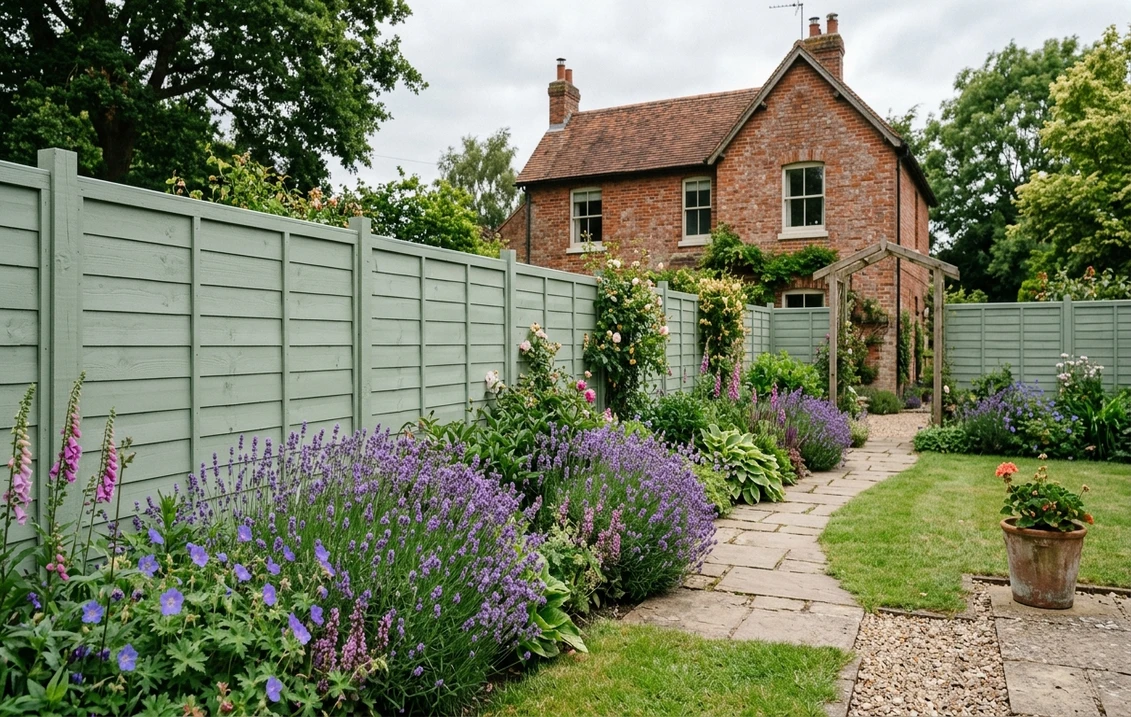
Try it on your house
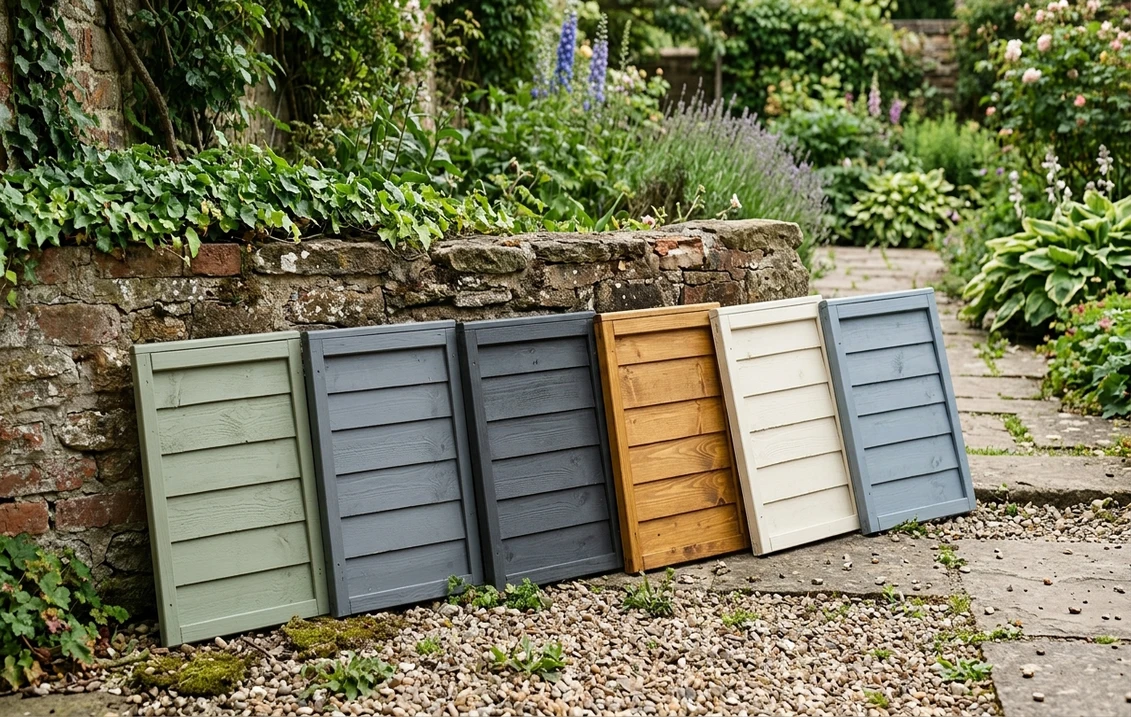
No photo? Try a sample
Cuprinol Garden Shades colour chart
Garden Shades is the opaque, matt option, and the one with the real colour chart: the Cuprinol Garden Shades tinting base page describes over 90 colours mixed to order in store, in 1 L and 2.5 L tins, with up to six years of protection. The page also publishes the number that changes everything on a fence: coverage on smooth planed wood is 10 to 12 m² per litre by brush, but on rough sawn wood it drops to 3 to 5 m² per litre by brush and 2 to 3 m² by spray. A minimum of two coats is required, the product is touch dry in about an hour in dry weather, it must be applied above 5 degrees C in dry conditions with no bad weather forecast, and it is not for decking. The colour families follow two Cuprinol palettes, Nature's Neutrals and Nature's Brights; the named shades most asked for on fences are the muted greens (Willow, Sage, Seagrass), the greys (Urban Slate, Natural Stone), the blues (Coastal Mist, Iris) and the creams (Country Cream, Pale Jasmine).
Because Garden Shades is paint rather than stain, the guide to coloured wood paint, stain and varnish explains what that means for maintenance: an opaque film peels where a translucent stain fades, so the sixth year looks different depending on which family you chose.
Ronseal Fence Life Plus colour chart
Fence Life Plus is Ronseal's opaque, matt fence paint for both rough sawn and smooth planed timber. The Fence Life Plus product page lists twelve colours: Charcoal Grey, Warm Stone, Forest Green, Dark Oak, Tudor Black Oak, Medium Oak, Harvest Gold, Red Cedar, Slate, Sage, Cornflower and Midnight Blue. Coverage is up to 6 m² per litre, it is showerproof in one hour and completely dry in four, the recoat time is four hours, rough sawn wood takes two coats and smooth planed wood three, it lasts up to five years, comes in 5 L, 9 L and 12 L, goes on by brush or sprayer, can be applied to damp (not dripping) wood, and must not be used on decking or garden furniture.
| Fence Life Plus shade | Family | Pairs with |
|---|---|---|
| Dark Oak, Medium Oak, Tudor Black Oak, Red Cedar, Harvest Gold | Wood tones | Brick and timber-clad houses, traditional lap panels |
| Forest Green, Sage | Greens | Hedging, mature borders, cream or white rendered walls |
| Charcoal Grey, Slate, Warm Stone | Greys and stone | Grey windows, composite decking, contemporary slatted screens |
| Cornflower, Midnight Blue | Blues | Coastal gardens, painted sheds, white or pale pink flowering borders |
Ronseal One Coat colour chart
The product sold for years as One Coat Fence Life now appears on Ronseal's site as One Coat Shed and Fence Protector, and it is the budget end of the chart: seven colours, Forest Green, Dark Oak, Tudor Black Oak, Medium Oak, Harvest Gold, Red Cedar and Charcoal Grey, at 6 m² per litre (5 L covers up to 6 panels), rainproof in one hour and dry in four, one coat on rough sawn timber in good condition, colour lasting up to two years, in 5 L, 9 L and 12 L. It is for rough sawn timber only and, like Fence Life Plus, not for decking, furniture or planed wood. The trade-off is plain on the two pages: one coat and two years, or two coats and five years.
The four products side by side
| Product (manufacturer's page) | Colours | Coverage on rough sawn wood | Coats and recoat | Protection claim |
|---|---|---|---|---|
| Cuprinol 5 Year Ducksback | Wood tones, greens, greys, black, soft greens | 5 L up to 24 m² (8 panels) per coat | 2 (to 3) coats, 2 to 4 h apart, recoat within 2 to 3 days | Up to 5 years |
| Cuprinol Garden Shades | Over 90 mixed in store | 3 to 5 m² per litre by brush | Minimum 2 coats, touch dry 1 h | Up to 6 years |
| Ronseal Fence Life Plus | 12 named colours | Up to 6 m² per litre | 2 coats rough sawn, 3 planed, 4 h recoat | Up to 5 years |
| Ronseal One Coat Shed and Fence Protector | 7 named colours | 6 m² per litre (5 L up to 6 panels) | 1 coat, 4 h if a second is needed | Colour up to 2 years |
Worked example for a typical boundary of ten 1.8 m panels, both sides: about 65 m² of rough sawn timber. At Ducksback's 24 m² per 5 L per coat, two coats need roughly 27 L, so three 9 L tins. At Fence Life Plus's 6 m² per litre, two coats need about 22 L, so two 12 L tins. At Garden Shades' 3 to 5 m² per litre, two coats need 26 to 43 L, which is why Garden Shades is usually chosen for a feature fence or a shed rather than a whole boundary.
Choosing the shade: house, paving and planting
- Red or orange brick: warm wood tones (Forest Oak, Medium Oak, Harvest Brown) or a deep green. Cool greys fight the brick.
- Render, white or cream: Charcoal Grey, Slate, Silver Copse or Herring Grey give the crisp contemporary line; Sage softens it. Our guide to the best exterior paint colours in the UK covers the wall colours these fences sit against.
- Grey paving or composite decking: match the undertone, not the depth. Warm Stone and Misty Heathland sit with sandstone; Slate and Charcoal with porcelain.
- Dense planting: Forest Green, Woodland Moss or Sage make the fence recede; black makes the leaves glow but needs more cleaning.
- North-facing, shaded fences: mid-tones hide algae longest; very pale and very dark shades both show it within a season.
Grey is the shade that divides households most, and the guide to grey wood paint outdoors goes shade by shade; for the timber on the house itself rather than the boundary, the exterior wood paint guide is the right page, since fence treatments are not formulated for planed joinery.
Applying fence paint in UK weather
- Clean first. Stiff brush for dirt and loose fibres; remove flaking old coatings. Ronseal and Cuprinol both want clean, dry (Fence Life Plus: at most damp) timber.
- Watch the thermometer. Cuprinol says not below 5 degrees C; Ronseal says a warm day above 10 degrees C with no rain forecast, and no strong direct sun.
- Use the showerproof hour. All four products are showerproof or rainproof in about an hour; a dry window of four hours covers the full drying time on the Ronseal pages and the 2 to 4 hours on Ducksback.
- Brush along the grain, avoid overlaps, and keep a wet edge panel by panel so laps do not show on dark shades.
- Second coat on time. Ducksback within 2 to 3 days of the first, Fence Life Plus after four hours, Garden Shades a minimum of two coats.
- Sprayer for volume. Both Ronseal products accept a sprayer; Cuprinol's spray coverage figures for Garden Shades are roughly half the brush figures, so buy accordingly.
Planning rules: when a fence needs permission
Painting a fence is not development, but building or replacing one can be. The Planning Portal's guidance on fences, gates and garden walls (England) sets the limits: no permission is needed if the fence would not exceed one metre next to a road used by vehicles or its footpath, two metres elsewhere, the height of an existing taller fence is not increased, no part of the site is a listed building or within its curtilage, the fence does not form a boundary with a neighbouring listed building, and the right has not been removed by an Article 4 direction. In a conservation area you may also need permission to take a fence down. On a listed property the colour itself can be a matter for consent; our guides to painting rules for listed buildings and conservation area painting rules explain when to ask first.
Common mistakes with fence colours
- Choosing from the tin lid. Cuprinol says the wet colour differs from the dry shade; test a panel and look at it after a day.
- Buying planed-wood coverage for rough sawn timber. Garden Shades drops from 10 to 12 m² per litre to 3 to 5 m² on sawn boards.
- Using a fence treatment on decking or furniture. Ducksback, Fence Life Plus and One Coat all exclude it on their pages.
- Painting one side only of a shared fence without talking to the neighbour; the far side is theirs to look at.
- One coat of a two-coat product. The five-year claims on Ducksback and Fence Life Plus assume the full system.
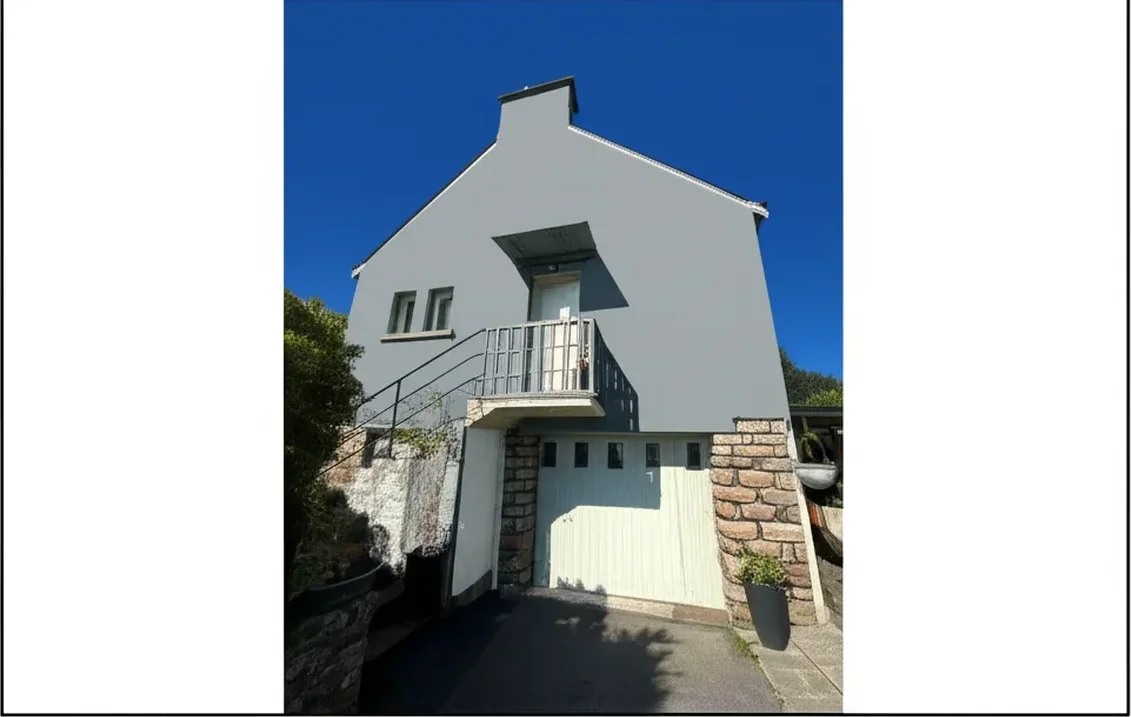
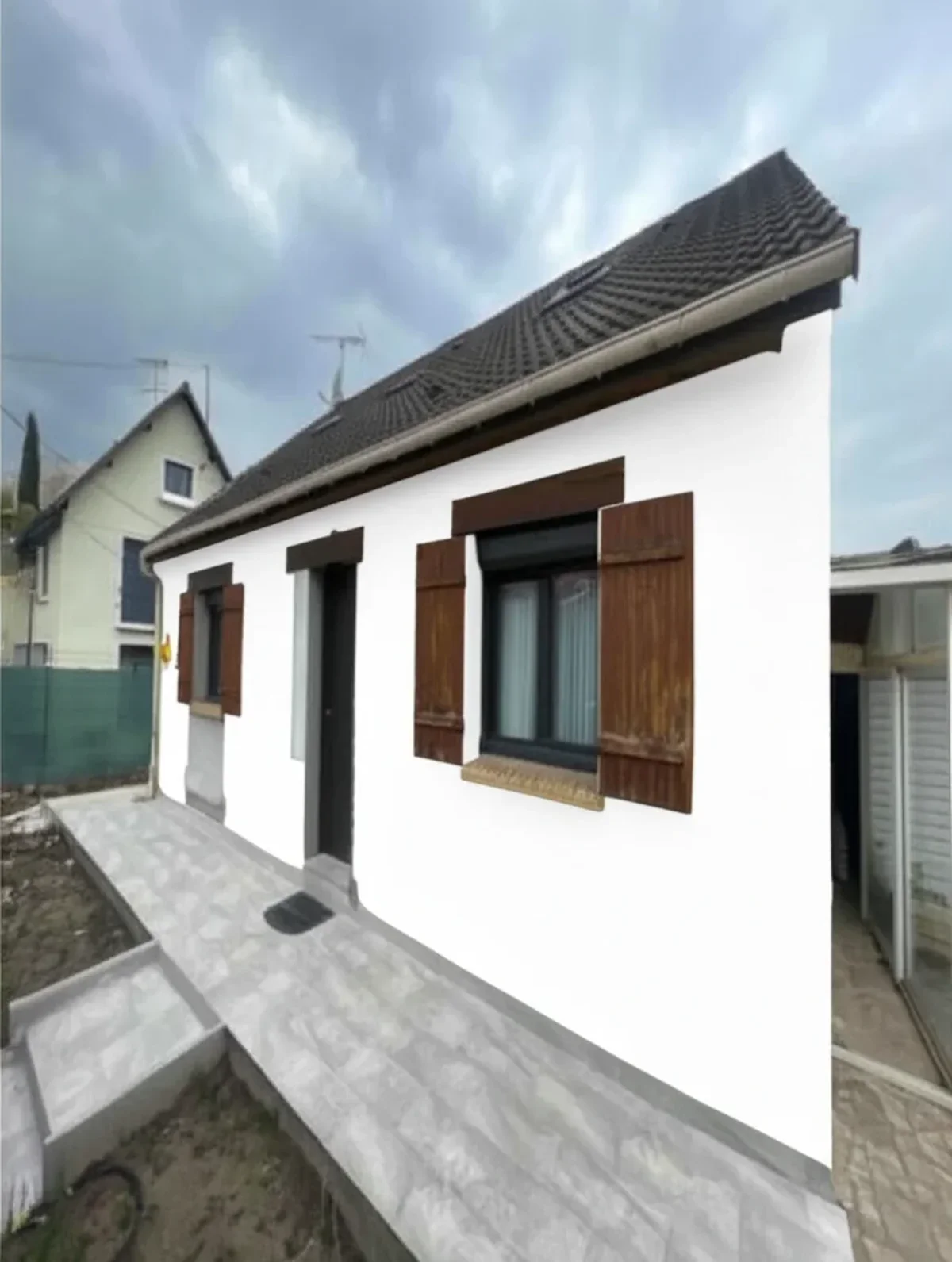
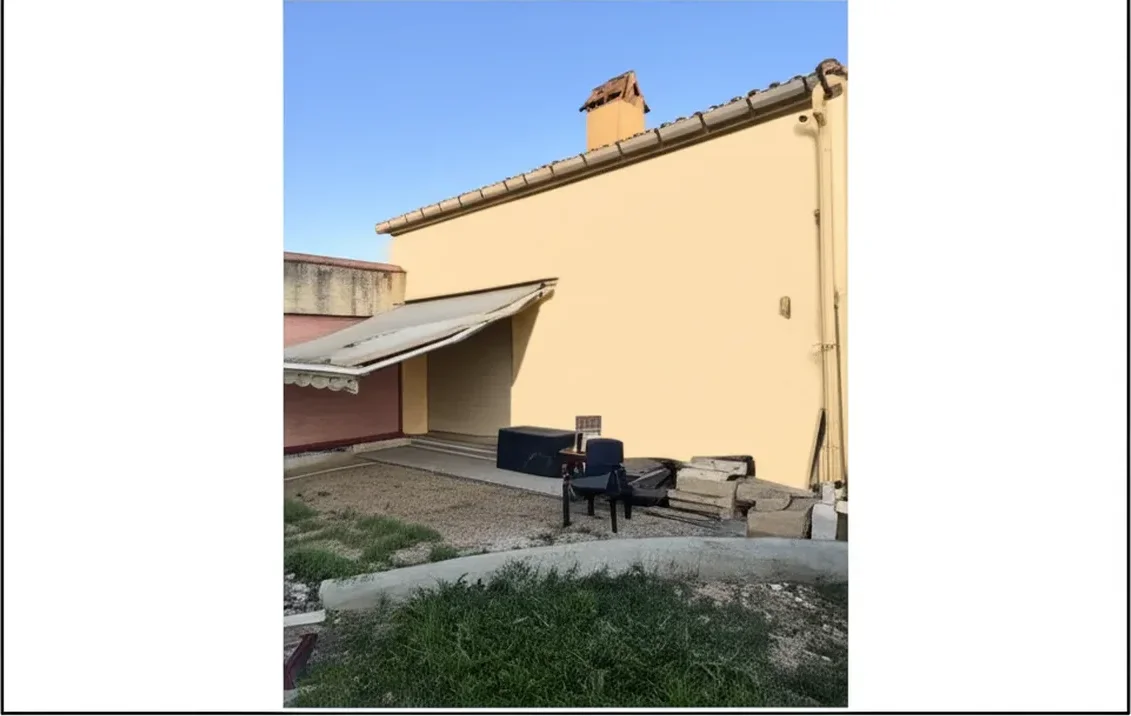
The last mistake is the one this chart cannot fix: liking a shade on a 2 cm swatch and disliking it on 30 metres of fence. Upload a photo of the garden to the paint visualiser, try two or three of the shades above, and buy the tins afterwards. For the house walls behind the fence, the exterior rendering cost guide covers the bigger job.
Sources and references
- Cuprinol, 5 Year Ducksback product page: 5 L up to 24 m² or 8 panels, 9 L up to 43 m² or 15 panels, showerproof in 1 hour, dry 2 to 4 hours, 2 to 3 coats, recoat within 2 to 3 days, not below 5 degrees C, rough sawn wood only.
- Cuprinol, Garden Shades tinting base product page: over 90 colours, coverage by surface and method, minimum 2 coats, touch dry 1 hour, above 5 degrees C, up to 6 years, 1 L and 2.5 L.
- Ronseal, Fence Life Plus product page: 12 colours, up to 6 m² per litre, showerproof 1 hour, dry 4 hours, 2 coats rough sawn and 3 planed, up to 5 years, 5 L, 9 L, 12 L.
- Ronseal, One Coat Shed and Fence Protector product page: 7 colours, 6 m² per litre, rainproof 1 hour, dry 4 hours, one coat on rough sawn timber, colour up to 2 years, above 10 degrees C.
- Brewers Decorator Centres, New colours for Cuprinol Ducksback: Delicate Pine, Dusted Aloe, Herring Grey and Misty Heathland added to the range.
- Planning Portal, Fences, gates and garden walls: planning permission (England): 1 m next to a highway, 2 m elsewhere, listed buildings, Article 4 directions, conservation areas.