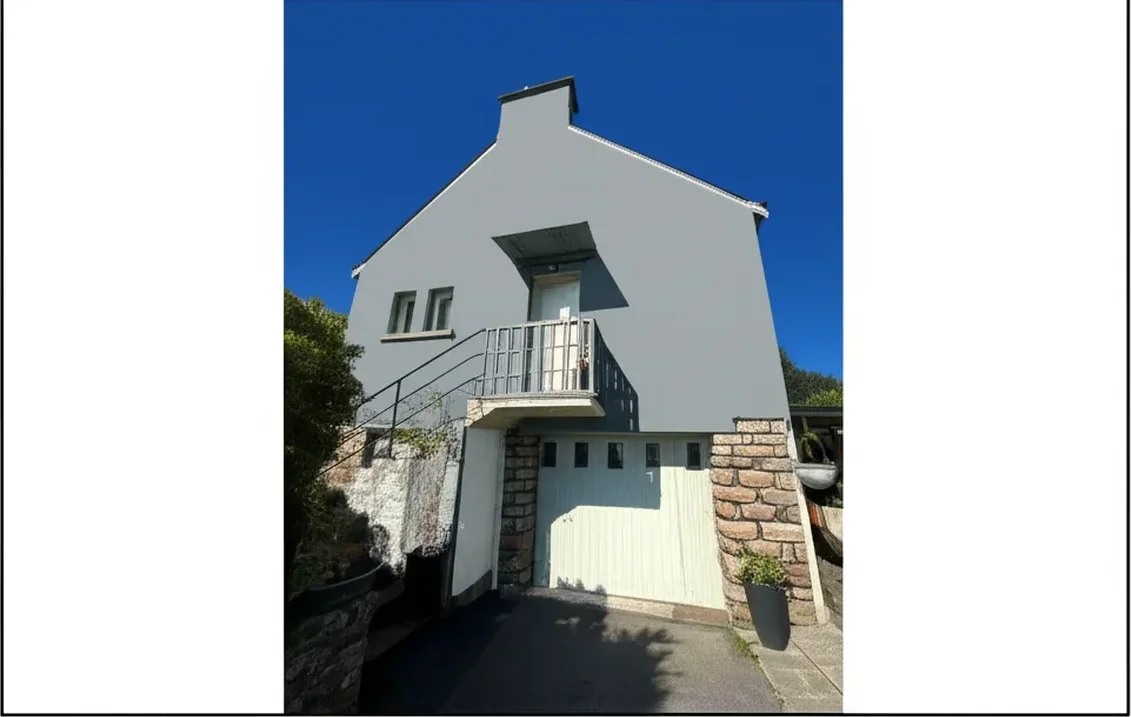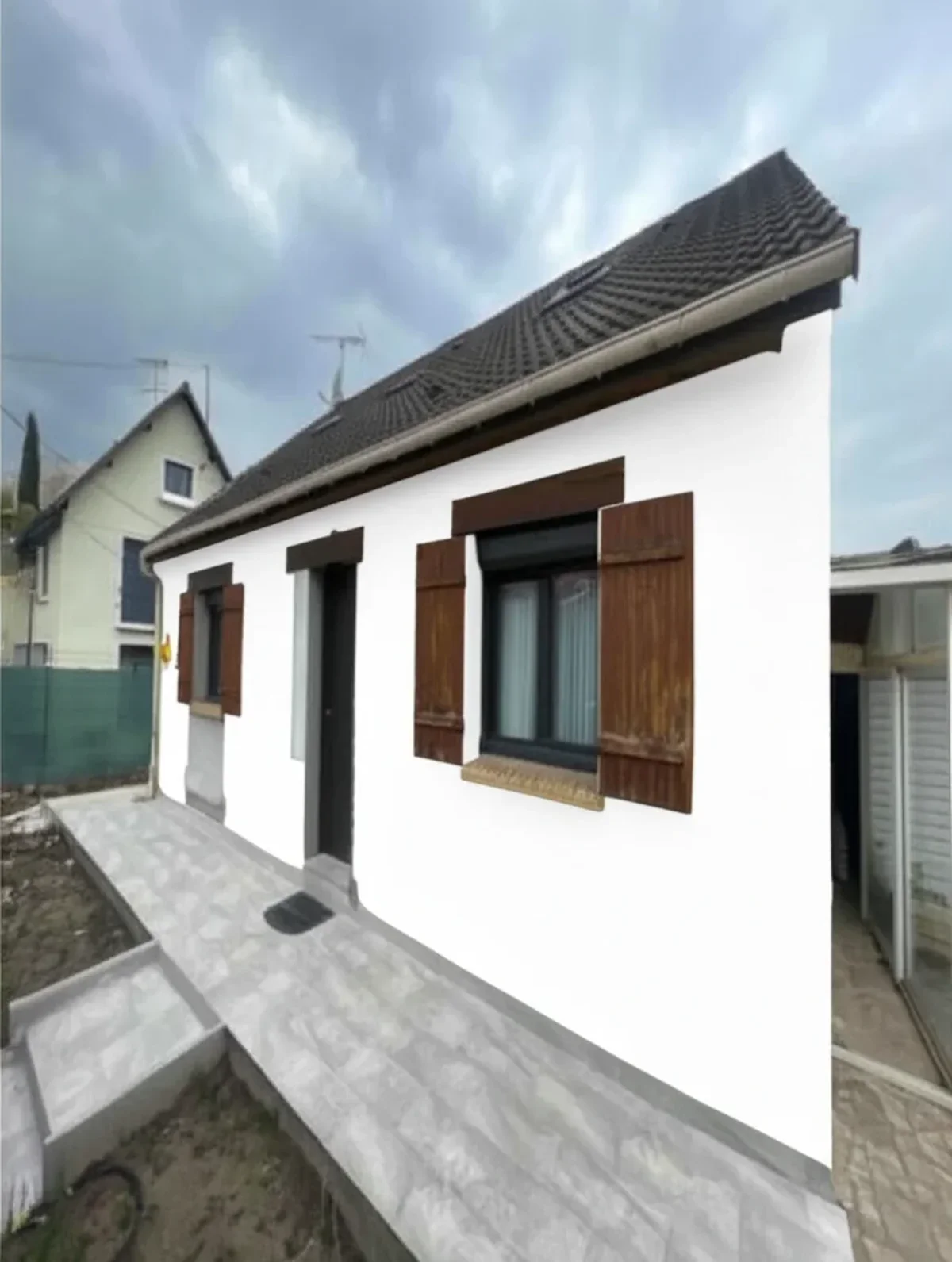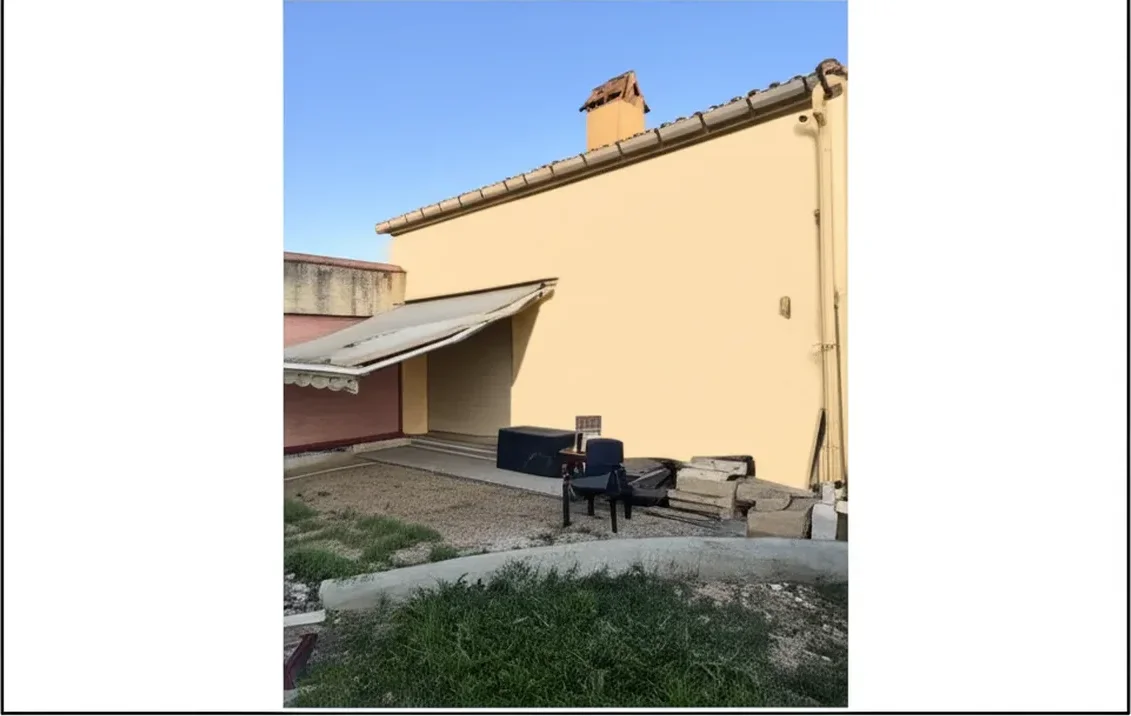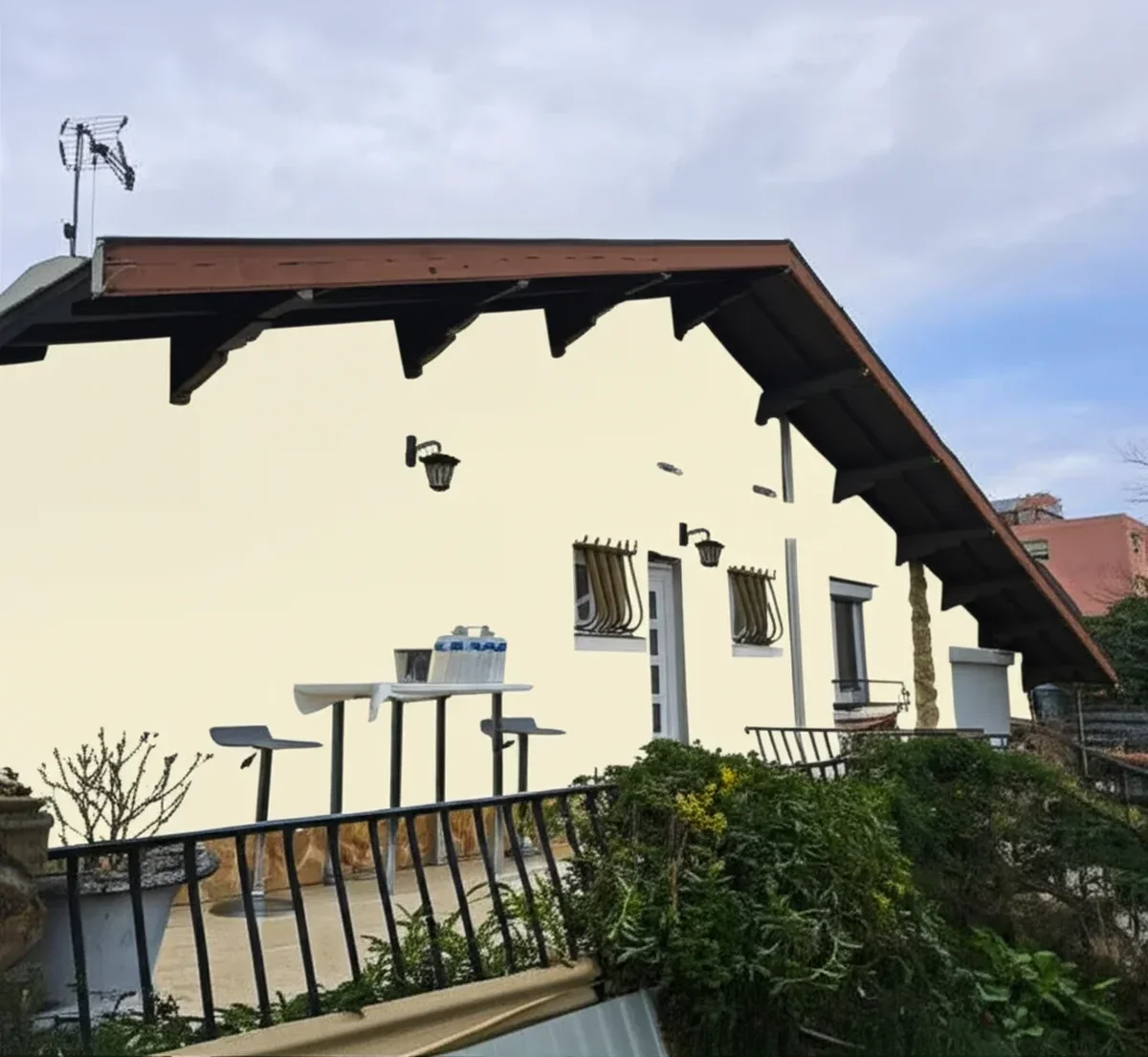
Try it on your house

FacadeColorizer is a free AI exterior paint visualiser used by UK homeowners, conservation architects and trade decorators across England, Wales, Scotland and Northern Ireland. Farrow and Ball remains the heritage benchmark in our 2026 dataset, with 16,983 real previews analysed across Georgian townhouses, Victorian villas, Edwardian semis and Cotswolds stone cottages. The farrow and ball exterior masonry paint line carries a price premium (roughly GBP 65 to 95 per 5L versus GBP 28 to 48 for Dulux Weathershield) but it remains the default specification on Listed Building Consent and Conservation Area applications across central London, Bath, Edinburgh New Town and the Cotswolds. This is the 2026 buyer guide for the UK owner about to spend GBP 300 to 900 on tins for a heritage repaint.
This guide covers the complete farrow and ball masonry paint proposition in British 2026 context: the Exterior Masonry product itself, the dozen most popular F&B colours on UK exteriors, coverage rates on smooth render versus pebbledash, the BS EN 1062 vapour permeability rating, conservation area implications, Listed Building Consent guidance, stockist mapping across Farrow and Ball showrooms, John Lewis, Wickes, and Dulux Decorator Centres (for colour-matched alternatives), and a free route to preview any Farrow and Ball masonry colour on your own home photo before you spend a penny on a 5L tin.
Official product specifications are published on the Farrow and Ball Exterior Masonry product page. For a like-for-like comparison against Dulux Heritage and the National Trust palette see our companion Farrow and Ball vs Dulux Heritage exterior comparison.
Farrow and Ball Exterior Masonry: what the product actually is
The farrow and ball exterior masonry paint is a water-based acrylic emulsion formulated specifically for masonry, render, brick, stone and pebbledash exteriors. It carries Farrow and Ball's full heritage colour card (currently 132 standard colours plus archive specials) and is rated to BS EN 1062-1 Class II for water vapour permeability, allowing damp British walls to breathe rather than trapping moisture behind a film. The product sheet quotes 15 years of weather protection on properly prepared substrates, which lines up with what Dulux Weathershield and Crown Trade Sandtex offer.
The key technical difference from supermarket masonry paints is pigment density and binder formulation. Farrow and Ball uses higher concentrations of single pigments and excludes black tinters from most colours, which is why a Farrow and Ball off-white shifts character through the day as British daylight changes from cool morning to warm late-afternoon. On a render reveal at 4pm in October, Slipper Satin looks distinctly different to Wimborne White, while a typical builder-grade off-white reads identical. That depth-of-colour is the practical reason heritage architects and conservation officers specify it.
Coverage is 10 to 12 square metres per litre on smooth render, dropping to 6 to 8 square metres per litre on pebbledash and roughcast. A typical 90 square metre semi-detached needs roughly 16 to 20 litres of paint across two coats, meaning four 5L tins. At GBP 79 average list price per 5L that is GBP 316 in paint alone, before primer, undercoat or trim. This is also why Farrow and Ball is rarely chosen for full-house repaints of large detached properties without conservation constraints.
Farrow and Ball masonry paint colours: the 12 most popular UK shades for 2026
The same colour cards serve the door: Hague Blue, Stiffkey Blue and Railings are offered in Exterior Eggshell as well as Exterior Masonry, so a door and a plinth can share a shade; our blue front door colours guide covers the eggshell side.
The mix skews heavily towards heritage off-whites and deep architectural greys, reflecting the actual conservation buyer profile rather than the brand's wider interior palette. Hex values are an approximate digital match for preview purposes only - always order a sample pot and test on the actual elevation before committing to 5L tins.
| Farrow and Ball colour | F&B number | Approx hex | Best on UK property type | UK preview share |
|---|---|---|---|---|
| Slipper Satin | No.2004 | #E9E3D2 | Georgian London townhouse, Bath terrace | 9% |
| Wimborne White | No.239 | #EFE9D9 | Edwardian render, Cotswolds cottage | 8% |
| Shaded White | No.201 | #E0DACA | Conservation Area Victorian villa | 7% |
| Strong White | No.2001 | #E4DFD1 | Modern Bath stone-effect render | 7% |
| Skimming Stone | No.241 | #D6CFBE | Edinburgh New Town stucco | 6% |
| Cornforth White | No.228 | #C9C5B8 | London stock brick render | 5% |
| Down Pipe | No.26 | #646566 | Sash window reveals, plinths, gable | 5% |
| Railings | No.31 | #262830 | Front doors, ironwork, fascia accent | 4% |
| Pavilion Gray | No.242 | #C0BAA8 | Smooth render new-build | 4% |
| Studio Green | No.93 | #3A4339 | Cotswolds front doors, gable detail | 3% |
| String | No.8 | #D7CDB1 | Lime render, rural Wiltshire | 3% |
| London Stone | No.6 | #A9967A | Stone-effect render, Yorkshire millstone | 3% |
Try it on your house
No photo? Try a sample
A read on the data. Shaded White (7%) and Skimming Stone (6%) are the rising stars - both have crept up roughly two percentage points since 2024 as Conservation Area officers across Edinburgh, York and Cheltenham have favoured warmer off-whites over the cooler greys that peaked around 2020-2022. Down Pipe and Railings together account for 9% of previews, almost always as trim and sash-reveal accents rather than full-elevation body colours.
Where to buy Farrow and Ball masonry paint in the UK: stockists and pricing
The farrow and ball exterior masonry paint distribution channel is narrower than mass-market masonry brands. Direct from Farrow and Ball (farrow-ball.com or one of the 60+ branded showrooms) is the primary route, with John Lewis, Heal's and selected independent decorators carrying limited ranges. Wickes carries a curated selection of around 32 F&B Inspired colour-match alternatives mixed in Wickes Trade base, but those are not genuine Farrow and Ball product. Dulux Decorator Centres can colour-match F&B numbers in Dulux Trade Weathershield base for roughly 60% of the retail F&B price, which is the route most decorators recommend to budget-conscious homeowners.
| Tin size | Farrow and Ball direct (GBP) | John Lewis (GBP) | F&B colour-match at Dulux Decorator Centre (GBP) | Wickes F&B Inspired (GBP) |
|---|---|---|---|---|
| 100ml sample pot | 7.50 | 8.00 | 5.50 | 4.00 |
| 2.5L tin | 52 to 58 | 54 to 60 | 28 to 34 | 22 to 28 |
| 5L tin | 79 to 95 | 82 to 98 | 42 to 52 | 32 to 42 |
| Lead time | 2 to 4 days direct | 3 to 7 days | Same day mix | In stock |
| Genuine F&B formula | Yes | Yes | No (colour-match in Dulux base) | No (Wickes own base) |
For Listed Building Consent or strict Conservation Area applications, you almost always need the genuine Farrow and Ball product because conservation officers can spot a colour-match through subtle differences in pigment depth on weathered render. For unrestricted properties outside Conservation Areas, the F&B colour-match at a Dulux Decorator Centre is the budget route most decorators run for repeat clients. Wickes F&B Inspired range is fine for garage walls, garden walls and outbuildings where the eye is forgiving.
Conservation Area and Listed Building rules for Farrow and Ball masonry
Roughly 2.2% of England's housing stock sits within a Conservation Area, and around 500,000 buildings carry Listed Building status. If your property falls inside either category, repainting masonry triggers a permission process under the Town and Country Planning Act 1990. Listed Buildings need Listed Building Consent for any change to external appearance, including colour. Conservation Area properties usually fall under Permitted Development for like-for-like repainting but Article 4 Directions in many central London boroughs (Westminster, Camden, Kensington and Chelsea, Islington) revoke that right and require full Planning Permission for colour changes. Always check first via Planning Portal or the relevant council's planning page.
Farrow and Ball maintains a Conservation palette of roughly 40 colours that conservation officers across England and Scotland generally pre-approve for vernacular property types. Slipper Satin, Shaded White, Skimming Stone, Cornforth White, Down Pipe and Railings are on most pre-approved lists. The exotic Studio Green or Babouche can trigger refusal in stricter Conservation Areas. For Scotland-specific guidance, gov.scot historic environment policy sets the framework. For Health and Safety on access scaffolding during external repaints, hse.gov.uk construction covers the working-at-height regulations.
For a full breakdown of Conservation Area rules see our conservation area painting rules UK guide. For Listed Building specifics see the cluster pillar on exterior paint brands UK 2026.
Application: preparation, primer, two-coat method for British weather
Farrow and Ball Exterior Masonry tolerates application between 10C and 25C air and substrate temperature. That window matters in the UK because British exterior repainting season is essentially May through September - apply below 10C and the cure cycle stretches from 24 hours to a week, increasing the risk of driving-rain damage before the film hardens. The product sheet recommends BS 7079 surface preparation standard for masonry: brush off loose material, treat any moss or algae with a biocide wash, fill cracks with exterior filler, prime chalky or porous areas with Farrow and Ball Exterior Wood Primer and Undercoat in white, then apply two coats of Exterior Masonry at the rate quoted above.
On pebbledash and roughcast in Manchester, Leeds, Glasgow or Cardiff (where rainfall and Atlantic westerlies are heavier), allow at least four to six hours between coats and ideally overnight. Pebbledash also benefits from a heavier first coat applied with a 19mm long-pile roller followed by a 12mm pile second coat. On smooth render in drier south-east England (London, Brighton, Norwich) the timeline tightens to roughly two to four hours between coats. Do not paint in driving rain, in direct hot sun above 25C, or when the dew point is within 3C of the substrate temperature.
Want to see Slipper Satin or Shaded White on your own elevation first?
Before committing GBP 300 to 900 on Farrow and Ball Exterior Masonry tins, upload a photo of your house and trial the top heritage off-whites side by side. 1 HD preview plus 3 free variations, no card required.
Open the free visualiserHow to test it on your own home before you buy
No third-party report replaces your own walls: the same colour reads differently on a north elevation and a south one, next to red brick or a grey roof, under morning and evening light. Take a daylight photo, upload it to the free AI paint visualiser, and run two or three candidates on the same image so the comparison is fair. Keep the one or two that survive the side-by-side, buy a tester pot of each, and brush them out on the actual surface in the actual light before you order the full quantity.
Farrow and Ball vs Dulux Heritage vs Little Greene: how to pick the right heritage masonry brand
Farrow and Ball is not the only premium heritage masonry option in the UK. Dulux Heritage (launched 2021) and Little Greene Intelligent Masonry both target the same Conservation Area buyer profile, with broadly comparable BS EN 1062 ratings, weathering claims and pigment depth. Choice usually comes down to colour preference, stockist proximity and budget. For a side-by-side breakdown of all three see our Farrow and Ball vs Dulux Heritage exterior comparison and our Farrow and Ball vs Little Greene interior comparison (the interior comparison still applies to brand DNA).
Briefly: Farrow and Ball wins on heritage prestige and on conservation officer acceptance for restoration-grade specifications. Dulux Heritage wins on price (roughly 35% cheaper at 5L) and on stockist convenience (Dulux Decorator Centres are nationwide). Little Greene wins on a slightly broader palette range and on the National Trust collaboration colours for stately home settings. For a Sandtex-style high-grip durability comparison, see our exterior masonry paint cost UK 2026 deep-dive.
When Farrow and Ball Exterior Masonry is not the right choice
Three scenarios where we routinely steer FacadeColorizer users away from Farrow and Ball Exterior Masonry towards Dulux Trade Weathershield Smooth Masonry or Crown Trade Sandtex 365. First, large detached properties outside Conservation Areas where total tin cost crosses GBP 600 - the cost-per-square-metre gap to mass-market masonry is rarely justified unless the owner specifically wants the F&B colour depth. Second, garage walls, boundary walls and outbuildings where the eye is forgiving and the cost case is weak. Third, heavily textured pebbledash where the F&B finish softens against the texture and the brand-recognition argument largely disappears.
That third case needs a different kind of substitute, not just a cheaper smooth emulsion. Pebbledash wants a texture-rated line, and the coverage economics change with it: a textured masonry tin gets roughly 6 square metres per litre into the aggregate valleys against about 11 on smooth render, so budget by wall area rather than by tin. Our Sandtex masonry paint colour chart pairs each shade with the line it is formulated for, which is the quickest way to check that the colour you want exists in a textured base at all.
In those cases the F&B colour-match in Dulux Trade Weathershield (mixed at any Dulux Decorator Centre via the F&B colour book) gives roughly 85-90% of the visual effect at 55-65% of the price, with the additional benefit of the 15-year Weathershield warranty backed by a high-street brand. For Conservation Area front elevations, listed terraces in Bath or Edinburgh New Town, or for Cotswolds cottages where the colour quality is the whole point - go genuine F&B every time.
Frequently asked questions about Farrow and Ball exterior masonry paint UK
Below are the questions UK homeowners, conservation architects and trade decorators ask most often about farrow and ball exterior masonry paint, taken from a mix of decorator forum threads, customer service transcripts and our own visualiser feedback box. For wider exterior planning see our best exterior paint colours UK 2026 guide and the cluster pillar on exterior paint brands UK 2026.
Still picking between Slipper Satin, Shaded White, Skimming Stone and Wimborne White?
Skip the F&B showroom trip. Upload your home photo, try the four most popular Farrow and Ball masonry whites side by side on your own elevation, and only order the 5L tins once you can see how each lands under your actual British light. 1 HD preview plus 3 free variations, email only, no card required.
Open the free visualiserDisclaimer: Farrow and Ball, Dulux, Dulux Heritage, Weathershield, Crown, Crown Trade, Sandtex, Johnstone, Johnstone Trade, Leyland Trade, Little Greene, B and Q, Wickes, Homebase, Screwfix, John Lewis, Sherwin-Williams and Benjamin Moore are trademarks of their respective owners. Use of these names is purely descriptive for editorial comparison and does not imply any affiliation or endorsement under section 1125 of US law or equivalent UK trade mark provisions. Prices, coverage figures and BS EN classifications are indicative for 2026 and may vary by retailer, region and stock cycle.
Trademarks mentioned (Sherwin-Williams, Benjamin Moore, Behr, Caparol, Brillux, Sto, Alpina, Valspar, PPG, Glidden, Dulux, Crown Trade, Sandtex, Farrow & Ball, Johnstone's, Leyland) are property of their respective owners. FacadeColorizer is independent and not affiliated with any of them. Nominative fair use under Lanham Act §1125.