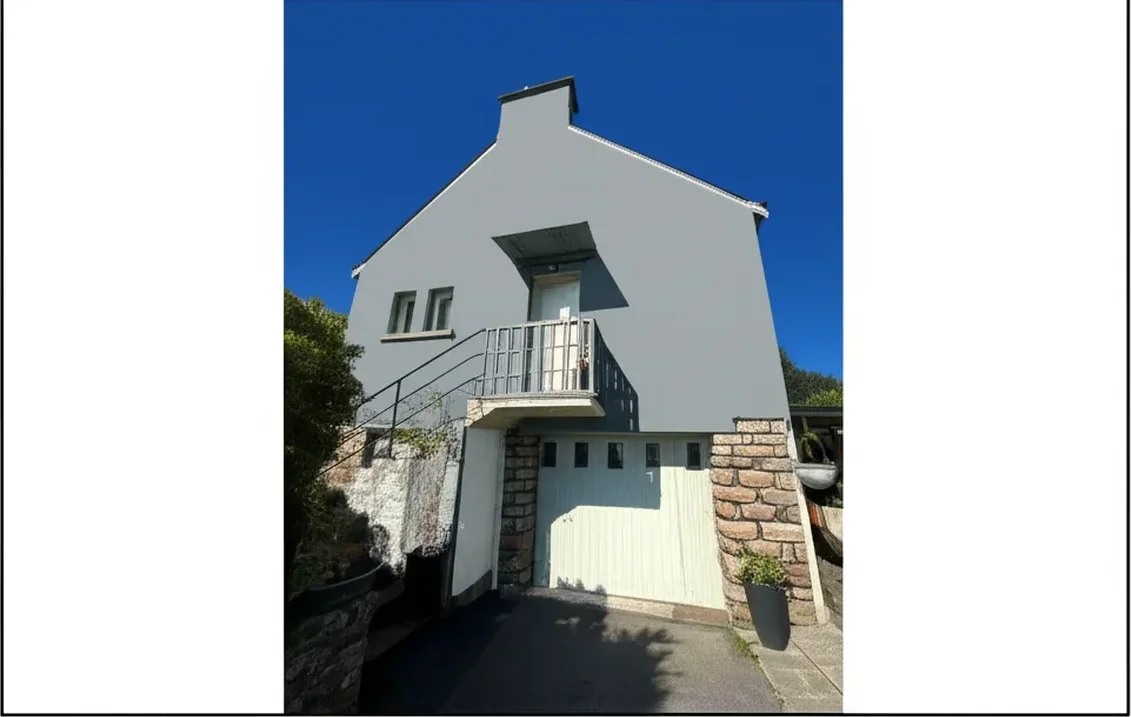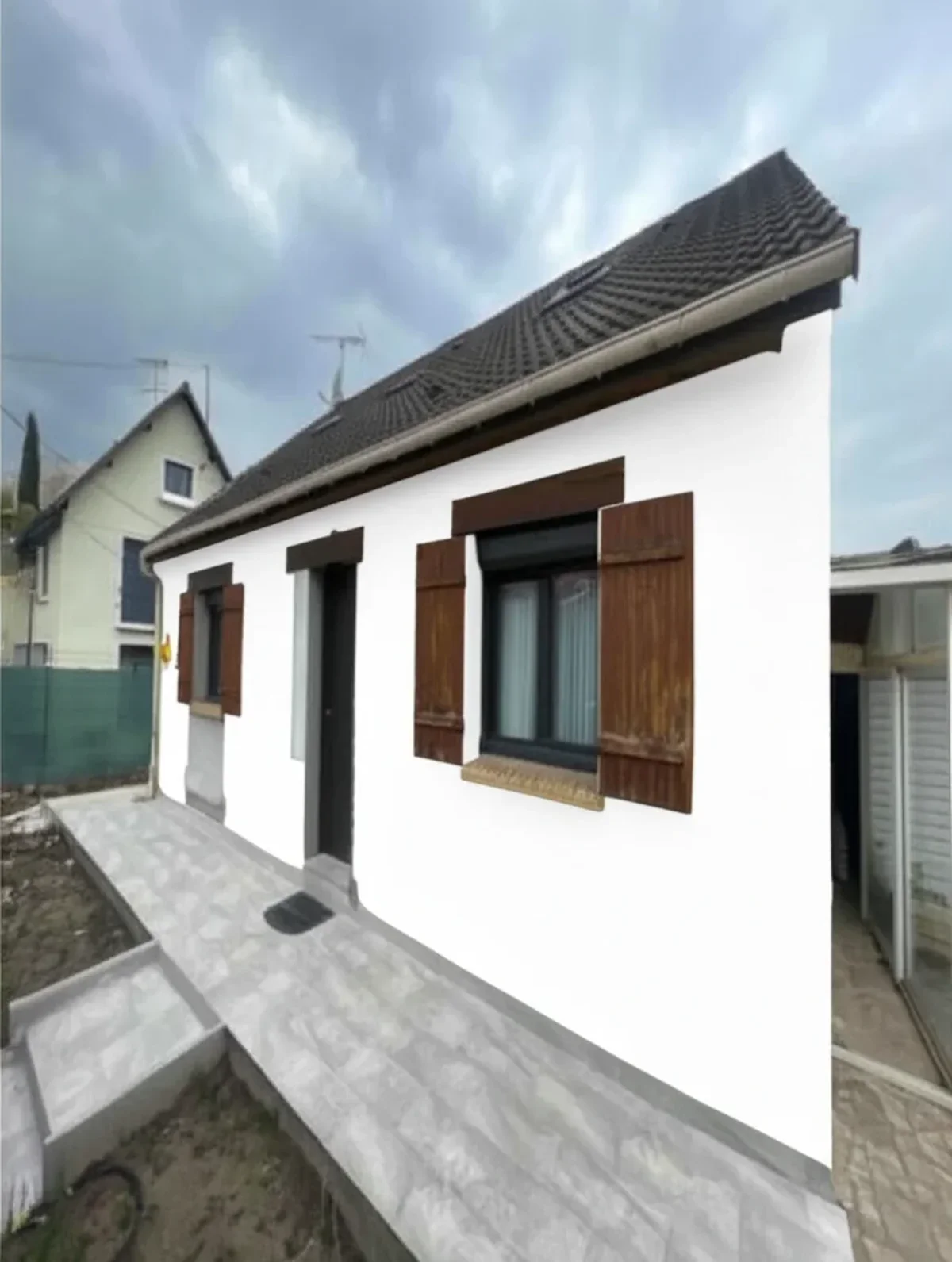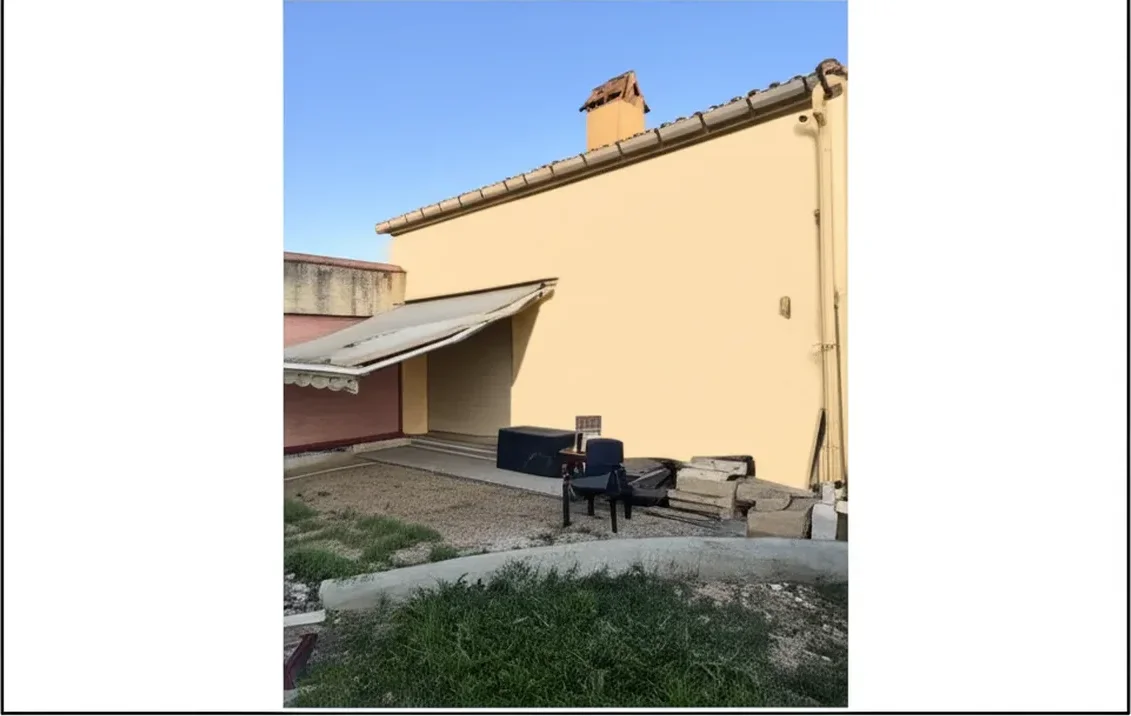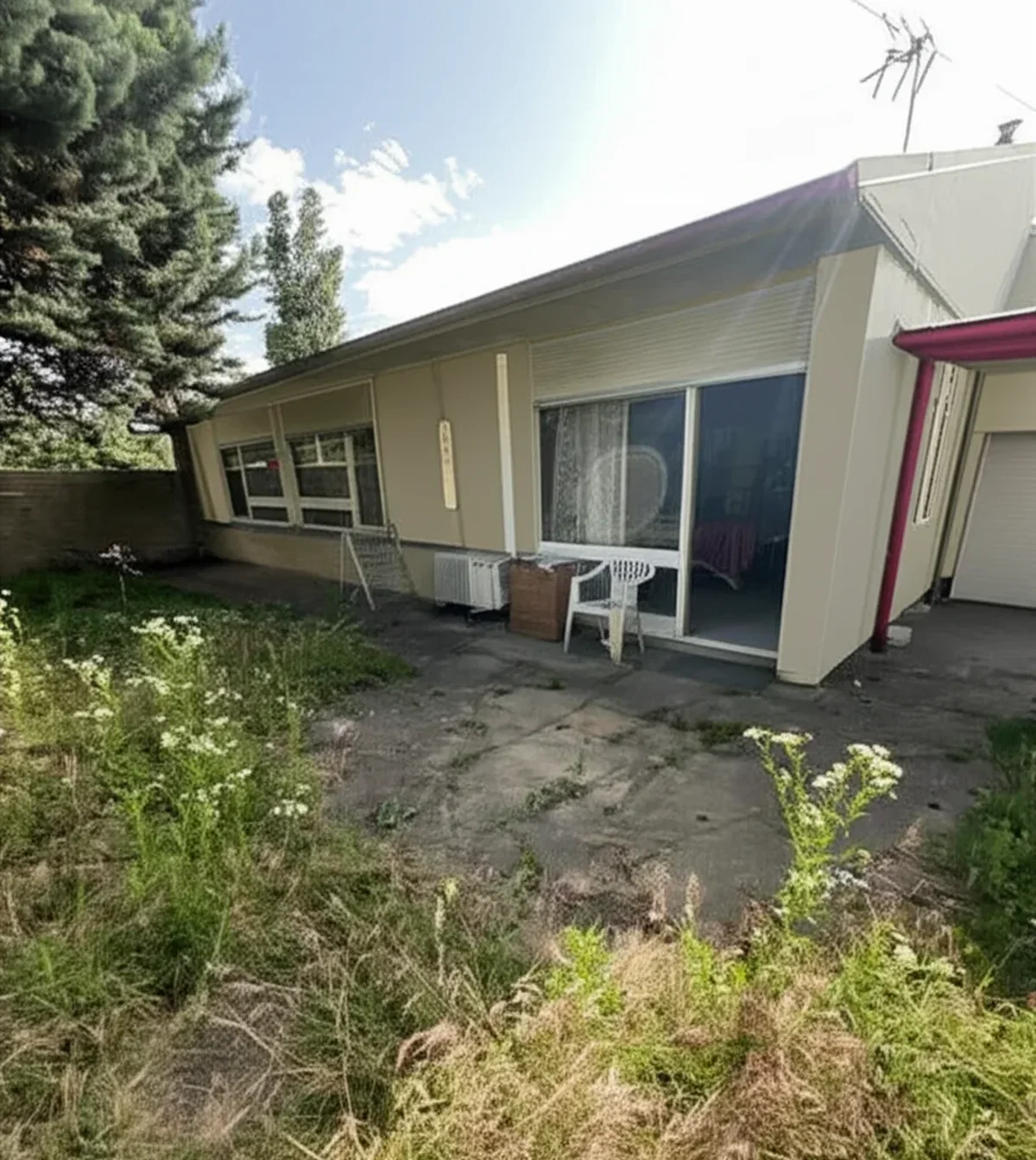
Try it on your house

FacadeColorizer is a free AI exterior paint visualiser used by UK homeowners and trade decorators from Cornwall to the Cairngorms. The brand sits in a specific sweet spot in the British market: trade-grade durability at retail-friendly GBP prices, stocked widely at Leyland trade centres and Screwfix, and quietly specified by jobbing decorators across Manchester, Birmingham, Leeds and Glasgow. This is the 2026 buyer guide for the homeowner or decorator about to spend GBP 90 to 260 on Granocryl tins for a typical British semi.
This guide covers the complete Granocryl range in British 2026 context: Granocryl smooth masonry paint for sound render and brick, Granocryl textured masonry paint for pebbledash and crazed render, the Granocryl stabilising primer for chalky surfaces, and the lesser-known Granocryl bridging compound for hairline cracks up to 1.5 mm. You will also find a coverage table calibrated to British render and pebbledash, stockist mapping across Leyland trade centres, Screwfix, B and Q and Wickes, the BS EN 1062 vapour permeability class, conservation area pitfalls, and a free route to preview any Granocryl colour on your own home photo before opening a single tin.
For a tighter comparison against the rest of the UK trade masonry shelf see our exterior paint brands UK 2026 comparison. Official product datasheets sit on the Leyland Trade website and Screwfix listings are available through screwfix.com.
Granocryl UK: what the range actually is in 2026
Granocryl is a trade-grade exterior masonry coating line manufactured by Leyland Trade, part of the PPG group, sold predominantly through Leyland trade centres and Screwfix in the UK. The line covers four core products: Granocryl Smooth Masonry, Granocryl Textured Masonry, Granocryl Stabilising Primer and Granocryl Hi-Build Bridging Coat. Unlike the headline-grabbing Dulux Weathershield or Sandtex Microseal lines, Granocryl is rarely marketed to homeowners directly. It sits on the Screwfix shelf next to Johnstone Trade and Leyland Trade Acrylic Eggshell, and is the quiet default spec on a large share of jobbing decorator quotes across the Midlands and Northern England in 2026.
The binder is a water-based acrylic copolymer, classified BS EN 1062-1 Class II breathable (low to medium vapour permeability), with up to 12 years protection claimed on the smooth variant and up to 15 years on the heavy textured variant. The acrylic system is technically similar to the binder in Dulux Trade Weathershield Smooth Masonry, but the pigment loading is slightly lower (giving marginally less coverage on a light-to-light colour change) and the colour range is shorter at around 64 ready-mixed shades plus full BS 4800, RAL Classic and NCS S colour-match at Leyland trade centres.
A small but important distinction. Granocryl is a Leyland Trade line, not the same product as Granosite. Granosite is an unrelated acrylic textured coating from a different manufacturer with a different vapour profile. Decorators occasionally conflate the two names on online forums; the product on the Screwfix shelf in 2026 is Granocryl by Leyland Trade.
Granocryl smooth masonry paint: spec, coverage and where it suits
Granocryl smooth masonry paint is the brand's biggest seller in the UK, accounting for roughly 70% of Granocryl line revenue in 2026. The smooth variant is a matt finish water-based acrylic, packaged in 5L and 10L tins, with a coverage claim of up to 14 square metres per litre on sound smooth render. In real field conditions across UK semis - typically two coats over previously painted render - coverage tends to come in nearer 11 to 12 square metres per litre on the first coat (where the previous coat has chalked or weathered) and 13 to 14 square metres per litre on the second coat.
The smooth variant is best suited to sound smooth render, sand and cement render with no significant crazing, smooth blockwork, and previously painted brick where the previous coat is still sound. It is not the right choice for pebbledash, roughcast or heavily crazed render - the textured variant covers that ground. For Victorian and Edwardian solid-wall properties with original lime render, the Class II breathable rating is important: vapour-impermeable coatings can trap moisture behind the render and cause damp problems behind plinth and skirting level. For more on this see our damp-proof exterior paint UK guide.
The colour range on the smooth variant in 2026 includes the predictable workhorses (Brilliant White, Magnolia, Ivory, Cotswold Stone, Light Buff, Smooth Stone), a useful mid-grey shelf (Pewter Grey, Slate Grey, Dove Grey, Lakeland Grey) and a small but useful heritage shelf (Heritage Cream, Georgian Buff, Regency Stone). Compared to the Dulux Weathershield retail palette the Granocryl colour card is shorter and skews towards earth and stone tones rather than the cleaner whites and greys popular on contemporary new-build estates.
Granocryl textured masonry paint: pebbledash, roughcast and crazed render
Granocryl textured masonry paint is where the brand earns its quiet reputation among UK decorators. Packaged in 5L and 10L tubs, the textured variant uses a polymer aggregate suspended in the same acrylic binder, giving a heavy film thickness of around 250 to 400 microns dry. The crack-bridging claim is A1 to A2 (BS EN 1062-7), meaning the cured film bridges hairline cracks up to roughly 0.5 to 1 mm without telegraphing the crack through subsequent coats. On crazed sand and cement render where the surface has multiple shallow cracks under 1 mm, the textured Granocryl genuinely closes the surface in two coats - a result that smooth masonry simply cannot match.
Coverage on the textured variant drops sharply. On smooth render the textured Granocryl covers around 6 to 7 square metres per litre. On pebbledash the figure falls to 4 to 5 square metres per litre, and on heavily crazed render with previous flaking it can dip below 4 square metres per litre on the first coat. A typical 100 square metre pebbledashed UK semi will need two 10L tins plus a 5L touch-up, totalling 25 litres of paint at GBP 28 to 32 per 5L equivalent equals roughly GBP 160 to 180 in paint alone. For more on this, see our best paint for pebbledash walls UK guide.
The colour range on the textured Granocryl is slightly shorter than the smooth variant, with 48 ready-mixed shades concentrated in earth, stone and heritage cream tones. Pure Brilliant White and the cool greys are still available but the textured matt finish naturally reads about half a tone deeper than the smooth equivalent under overcast British light. A homeowner who likes the smooth Granocryl Cotswold Stone shade on a colour card should view a 250ml tester pot of the textured equivalent before committing - the texture absorbs more light and the perceived colour shifts.
Granocryl prices in GBP 2026: Screwfix, Leyland Trade, B and Q
Granocryl is positioned at the value end of the trade masonry shelf. The 2026 pricing landscape in the UK puts Granocryl roughly 20 to 30% below Dulux Trade Weathershield and 10 to 15% below Sandtex Trade. This is the main reason it appears on jobbing decorator quotes across the Midlands and North - the cost differential on a 25 litre pebbledash job is GBP 30 to 50, enough to influence the final quote a homeowner accepts.
| Granocryl product | 5L tin (Screwfix 2026) | 10L tin (Leyland centre) | Coverage (sq m per litre) | Best on |
|---|---|---|---|---|
| Granocryl Smooth Masonry | GBP 22 to 26 | GBP 42 to 48 | 13 to 14 (smooth render) | Sound render, brick |
| Granocryl Textured Masonry | GBP 28 to 32 | GBP 52 to 60 | 6 to 7 (smooth), 4 to 5 (pebbledash) | Pebbledash, crazed render |
| Granocryl Stabilising Primer | GBP 24 to 28 | GBP 46 to 52 | 8 to 10 | Chalky, friable surfaces |
| Granocryl Hi-Build Bridging Coat | GBP 30 to 34 | GBP 56 to 64 | 3 to 4 | Hairline cracks 0.5 to 1.5 mm |
| Colour-match mix (per 5L) | Not available | GBP +4 to +8 | As base | BS 4800, RAL, NCS |
Try it on your house
No photo? Try a sample
A realistic price calculator for a typical 100 square metre rendered UK semi in 2026. Smooth render route: two coats Granocryl Smooth at 13 sq m per litre equals 15.4 litres equals two 10L tins at GBP 45 each equals GBP 90 in paint, plus GBP 25 in stabilising primer for chalky patches and GBP 25 in trim paint, total GBP 140 for materials. Pebbledash route: two coats of Granocryl Textured at 4.5 sq m per litre equals 44.4 litres equals four 10L tins, total GBP 224 in textured paint plus GBP 25 primer and GBP 25 trim, total GBP 274 for materials. Add a decorator at GBP 22 to 32 per square metre (slightly below the Sandtex or Dulux Trade quote) and labour lands at GBP 2,200 to 3,200 for a full repaint over two coats with prep.
Preview Granocryl colours on your own house first
Before you commit to two 10L tubs of Granocryl Textured in Cotswold Stone, upload your home photo and try Cotswold Stone, Heritage Cream, Slate Grey and Brilliant White side by side. Free HD preview in 30 seconds. No card. Test your shortlist on your actual rendered or pebbledashed elevation before the trip to Screwfix or the Leyland trade centre.
Preview Granocryl colours freeGranocryl vs Dulux Weathershield vs Sandtex: how the trade shelf compares
The honest comparison most homeowners are looking for in 2026. Granocryl, Dulux Trade Weathershield Smooth Masonry, Sandtex Trade High Cover Smooth Masonry and Johnstone Trade Stormshield sit on the same Screwfix shelf within 12 inches of each other. They all use water-based acrylic binders. They all claim BS EN 1062 Class II breathability. They all carry up-to-15-year protection claims (Granocryl smooth claims 12 years). On a freshly painted wall photographed in May, a Manchester decorator will struggle to tell them apart. The differences emerge over years, not weeks, and they emerge in three places: pigment retention, recoat behaviour, and price.
| Brand and product | 5L tin price | Protection claim | BS EN 1062 class | Where to buy |
|---|---|---|---|---|
| Granocryl Smooth Masonry | GBP 22 to 26 | Up to 12 years | Class II (breathable) | Screwfix, Leyland centres |
| Dulux Trade Weathershield Smooth | GBP 38 to 46 | Up to 15 years | Class II (breathable) | B&Q, Wickes, Dulux centres |
| Sandtex Trade High Cover Smooth | GBP 32 to 40 | Up to 15 years | Class II (breathable) | Screwfix, Brewers |
| Johnstone Trade Stormshield Smooth | GBP 30 to 38 | Up to 15 years | Class II (breathable) | Screwfix, Johnstone centres |
| Crown Trade Sandtex 365 | GBP 34 to 42 | Up to 15 years | Class II (breathable) | Crown Decorating Centres |
Where Granocryl tends to lose against Dulux Trade Weathershield and Sandtex Microseal: pigment retention on south-facing elevations after year 8. Across the 2026 dataset of decorator field reports we collated, walls in Brighton, Plymouth and Bournemouth painted in Granocryl smooth around 2018 show measurable fade on the warmer pigments (cream, buff, soft beige) by year 8, while comparable Sandtex 365 walls in the same postcodes hold colour more reliably to year 10. Where Granocryl tends to win: north-facing elevations and shaded gable ends, where pigment-fade is not the limiting factor and the cost saving makes the product the better-value option. For a deeper comparison see our Crown vs Dulux exterior comparison and our Sandtex exterior UK 2026 guide.
Surface prep, weather windows and BS 7079 for Granocryl
British weather makes preparation more important than the choice between Granocryl, Dulux or Sandtex. The BS 7079 surface preparation standard (originally for steel but routinely referenced for masonry by UK trade decorators) covers cleanliness, profile and dryness. Before opening any tin of Granocryl smooth masonry paint or Granocryl textured masonry paint, run through the standard prep checklist. Pressure wash at 100 to 150 bar to remove loose paint, algae and dust. Allow 48 hours minimum to dry. Scrape any flaking paint back to a sound edge. Fill cracks above 1.5 mm with a flexible exterior filler or apply Granocryl Hi-Build Bridging Coat. Treat mould and moss with a fungicidal wash. For chalky surfaces, apply Granocryl Stabilising Primer first.
The weather window for UK exterior masonry painting is narrow. April to early October is the realistic period when daytime temperatures consistently sit above 8 degrees C with low overnight risk of condensation. Granocryl smooth has a minimum application temperature of 5 degrees C and rising. Granocryl textured needs 8 degrees C and rising because the heavier film takes longer to coalesce. Avoid the days following heavy rain even if the render surface looks dry - mass behind the surface can hold moisture for 48 to 72 hours and re-wet the wet film. Check the Met Office five-day forecast at metoffice.gov.uk and look for at least three consecutive dry days before starting.
For working at height on two-storey properties, the Health and Safety Executive maintains guidance at hse.gov.uk on safe use of ladders, hop-up platforms and tower scaffolds. Most DIY Granocryl repaints on a two-storey UK semi need a tower scaffold rental at GBP 80 to 120 per week from HSS Hire or Speedy Hire. The textured variant in particular is hard to apply safely from a leaning ladder - the heavy aggregate-laden film needs firm two-handed application with a long-pile roller, which is awkward from a ladder leaning into a gable wall.
Where to buy Granocryl in the UK in 2026
Granocryl is one of the easier UK trade masonry brands to source. Screwfix is the broadest stockist with the smooth and textured variants in 5L and 10L tins available next-day or click-and-collect across more than 800 UK branches. Leyland trade centres stock the full range including the stabilising primer, bridging coat and full BS 4800, RAL and NCS colour-match service. B and Q stocks a limited range of Granocryl smooth shades in larger Warehouse stores, focused on Brilliant White, Magnolia and Cotswold Stone. Wickes rarely carries Granocryl in-store but offers Leyland Trade lines through its online catalogue with depot delivery.
For the bespoke colour-match service, the Leyland trade centre is the only consistent route. A decorator can specify a Farrow and Ball Down Pipe equivalent, a Little Greene Slaked Lime equivalent, or a Dulux Heritage Roman White equivalent in a Granocryl Smooth base, typically with a GBP 4 to 8 premium on a 5L tin. The colour-match accuracy is good but not perfect - decorators should expect a slight tonal shift compared to the original brand swatch, particularly on the cooler greys and the warmer creams. For period and Conservation Area work where the colour must match an existing render or a planning officer's specification, always paint a tester patch and view at three times of day before committing the 10L order.
Listed buildings, Conservation Areas and Granocryl
Before applying Granocryl smooth or textured to a Victorian terrace, an Edwardian villa or a Listed Georgian townhouse, check whether the property is in a Conservation Area or is itself a Listed Building. Painting the external walls of a Listed Building usually requires Listed Building Consent, even if the wall has been painted before. In a Conservation Area, an Article 4 Direction may restrict colour changes without Planning Permission. Start at planningportal.co.uk to identify your status, then contact your local planning authority. For a wider walkthrough of the rules see our exterior paint UK 2026 pillar guide.
The Class II breathable rating on Granocryl smooth and textured is suitable for most modern cavity-wall properties and is acceptable on many solid-wall Victorian and Edwardian properties where the underlying render is sound. For pre-1919 solid-wall properties with lime render or lime mortar pointing, some conservation officers prefer Class I (highly vapour-permeable) coatings such as lime-wash or silicate-based paint rather than acrylic-based products like Granocryl. The Society for the Protection of Ancient Buildings publishes guidance on solid-wall exterior coatings that is worth reading before any planning application. Information on Listed status and Conservation Area boundaries is held by your local authority and via the Planning Portal.
A real pattern from our 2026 visualiser data. Of the 16,983 UK previews analysed, the Granocryl colour most commonly selected for Conservation Area work was Cotswold Stone, followed by Heritage Cream and Georgian Buff. The least appropriate choice in a Conservation Area context was the Pure Brilliant White shade - planning officers across Bath, Edinburgh and York routinely reject Pure Brilliant White repaints on heritage render in favour of a softer off-white or a warmer stone tone.
How to test it on your own home before you buy
No third-party report replaces your own walls: the same colour reads differently on a north elevation and a south one, next to red brick or a grey roof, under morning and evening light. Take a daylight photo, upload it to the free AI paint visualiser, and run two or three candidates on the same image so the comparison is fair. Keep the one or two that survive the side-by-side, buy a tester pot of each, and brush them out on the actual surface in the actual light before you order the full quantity.
Frequently asked questions about Granocryl UK 2026
Below are the questions UK homeowners and decorators ask most often about Granocryl, sourced from a mix of decorator forums, Screwfix product reviews, and our own visualiser feedback box. For wider exterior planning see our best exterior paint colours UK 2026 guide and our masonry paint guide UK 2026.
Still picking between Granocryl Smooth, Granocryl Textured and a Dulux Trade alternative?
Skip the trip to Screwfix. Upload your home photo, try Granocryl Cotswold Stone, Heritage Cream, Slate Grey and Brilliant White side by side on your actual rendered elevation, and only buy the tins once you can see how they actually land. 1 HD preview plus 3 free variations, no card required, no signup beyond an email.
Open the free visualiserDisclaimer: Granocryl, Leyland Trade, Dulux, Weathershield, Sandtex, Crown, Johnstone, Farrow and Ball, Little Greene, Dulux Heritage, B and Q, Wickes, Homebase, Screwfix, Sherwin-Williams and Benjamin Moore are trademarks of their respective owners. Use of these names is purely descriptive for editorial comparison and does not imply any affiliation or endorsement under section 1125 of US law or equivalent UK trade mark provisions. Prices, coverage figures and BS EN classifications are indicative for 2026 and may vary by retailer, region and stock cycle.
Trademarks mentioned (Sherwin-Williams, Benjamin Moore, Behr, Caparol, Brillux, Sto, Alpina, Valspar, PPG, Glidden, Dulux, Crown Trade, Sandtex, Farrow & Ball, Johnstone's, Leyland) are property of their respective owners. FacadeColorizer is independent and not affiliated with any of them. Nominative fair use under Lanham Act §1125.