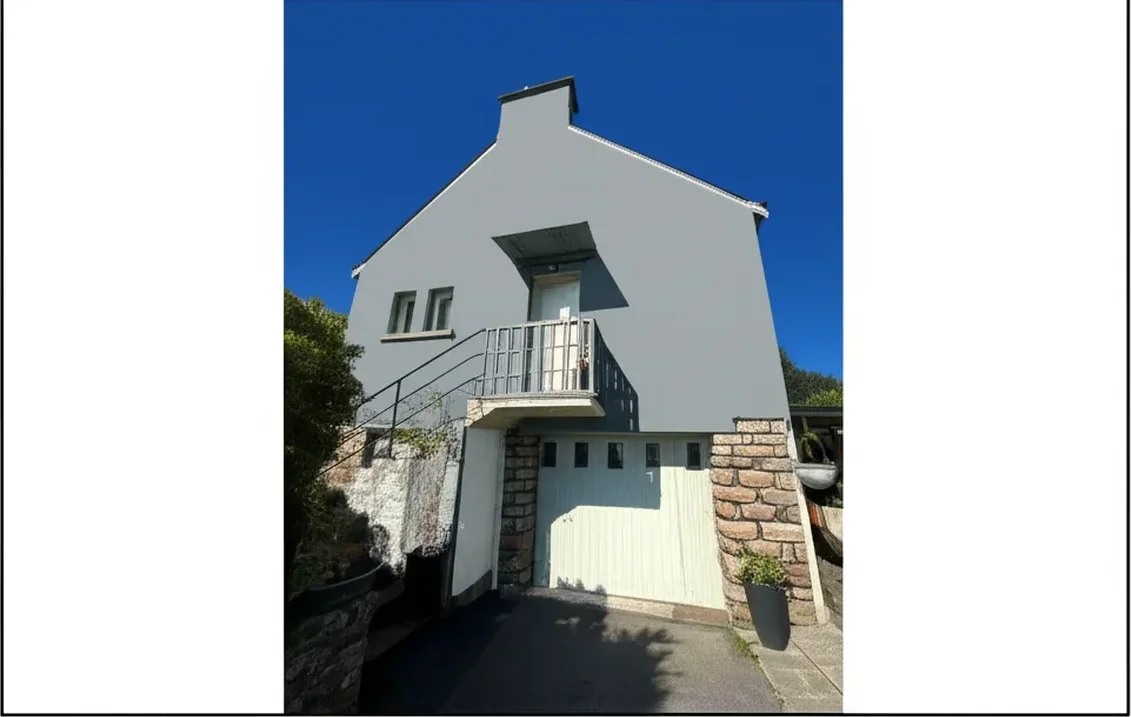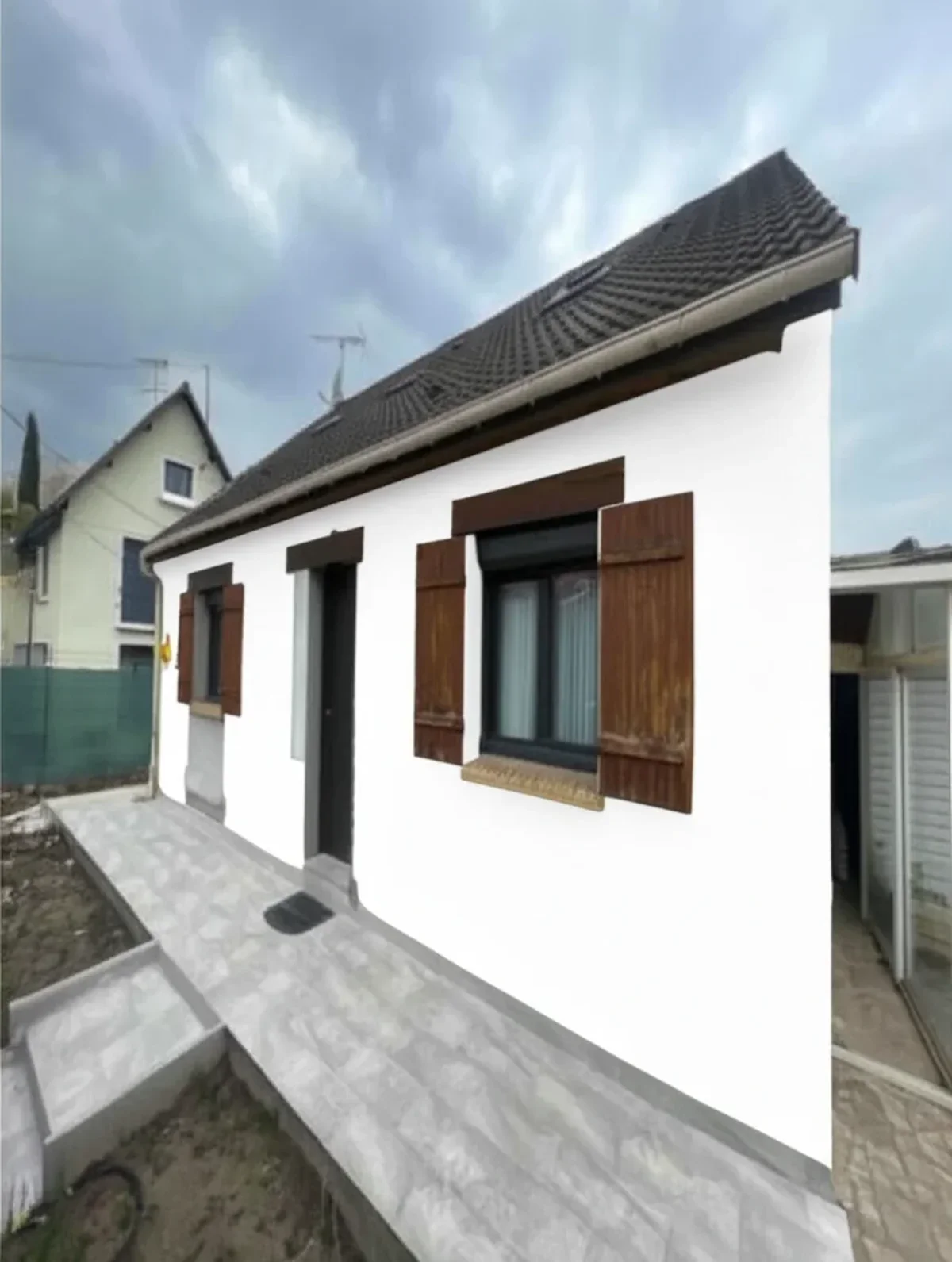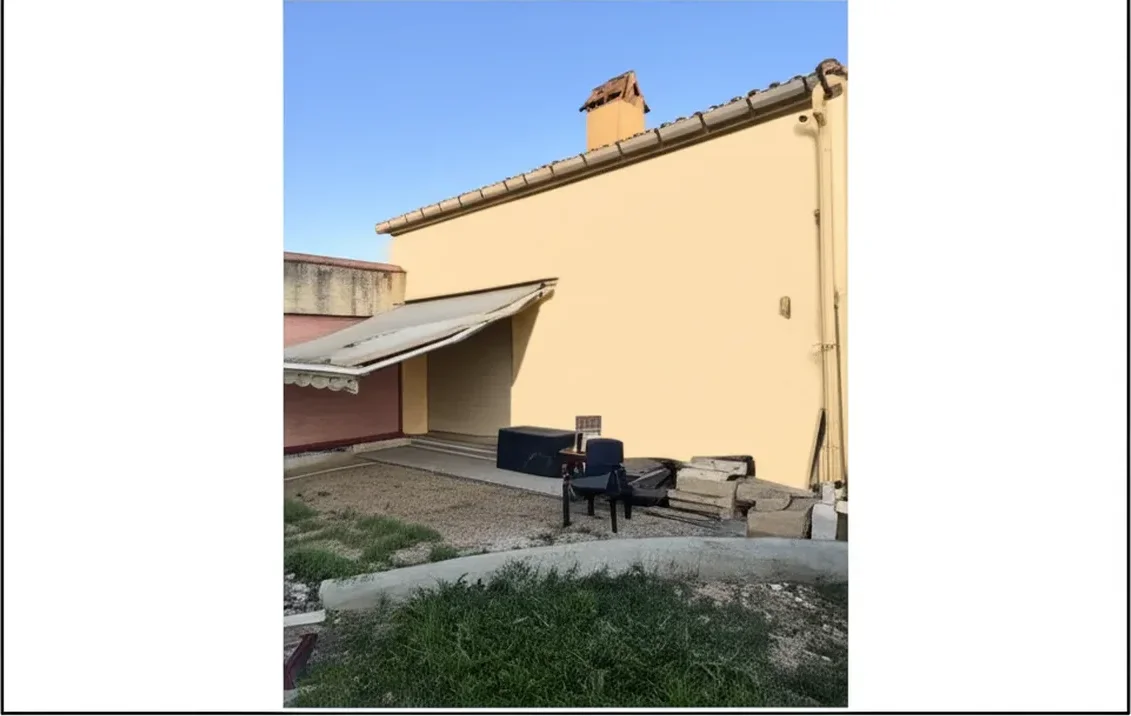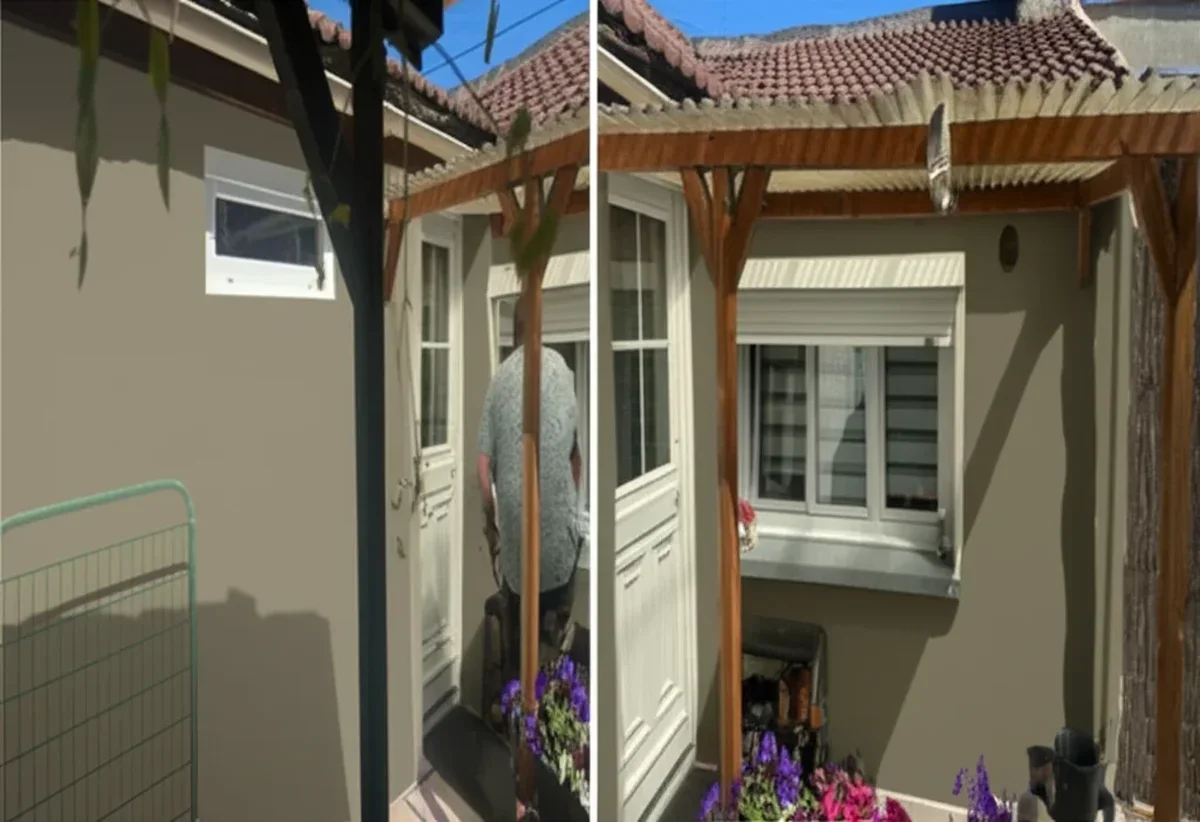
Try it on your house

FacadeColorizer is a free AI exterior colour visualiser for British homes. The five shades that dominate searches in 2026 are slate, gunmetal, warm greige, dove grey and pewter, with Dulux Weathershield Smooth Masonry, Sandtex 10 Year Exterior, Crown Trade Clematis and Johnstone's Trade Stormshield dominating shelf space at B&Q, Wickes, Homebase and Screwfix from 36 to 48 GBP per 5 litre tin.
This 2026 buyer guide compares the leading UK grey outdoor paint products across render, brick, pebbledash, timber fascia and metal substrates: opacity, weather resistance under driving rain and freeze-thaw, BS EN 1062 exterior coating classes, application advice for the British climate and real GBP pricing across the major DIY chains. You will find a dedicated section on cool grey versus warm greige undertones for north and south elevations, a five litre coverage table in square metres, Listed Building Consent and Conservation Area implications, plus a free route to preview every grey shade on your own facade in 30 seconds before you buy a 48 GBP tin. For broader colour planning see our UK exterior colours 2026 master guide.
Why Grey Outdoor House Paint Dominates UK Searches in 2026
Grey has been the dominant British exterior colour family for almost a decade, but the type of grey that homeowners reach for in 2026 has shifted noticeably. The cold, blue-tinged charcoals that defined late 2010s new-build estates in Reading, Milton Keynes and Northampton have softened into warmer, earthier tones. Greiges (grey beige), warm stones and dove greys now sit more comfortably against red London stock brick, natural Welsh slate roofing and the often-overcast British sky from Aberdeen to Penzance.
Three macro forces explain why grey outdoor house paint continues to outsell any other UK exterior colour family this year. First, planning policy: most new-build estates approved since 2020 specify a palette of off-whites, light greys and warm neutrals to blend with surrounding development. Second, kerb appeal data: estate agents in London, Manchester and Bristol report that grey rendered semis with a contrasting front door consistently attract more viewings than equivalent cream or magnolia properties. Third, weather durability: modern Class A1 grey masonry coatings (BS EN 1062-3) genuinely deliver the 15 year recoat intervals their tins advertise, far longer than the 5 to 7 years offered by pure white exterior masonry, which suffers visibly from atmospheric soot and algae in the British climate.
The 2026 grey palette breaks into two clear families. Cool greys (slate, gunmetal, anthracite, pewter) suit south-facing red brick semis in suburban Birmingham, Leeds and Sheffield where the warmth of the brick balances the coolness of the paint. Warm greys and greiges (Polished Pebble, French Grey, Dove, mid greige) suit north-facing rendered facades in Manchester, Edinburgh, Cardiff and Belfast where Atlantic-westerly grey light already cools every surface and a warm undertone keeps the house from reading as miserable.
Top 10 Grey Outdoor House Paint Shades Previewed on UK Homes
For the heritage end of this list the figures are the maker's: Farrow & Ball Exterior Masonry has a 2% sheen, covers up to 8 m² per litre per coat and is recoatable in 5 hours, and a 5 litre tin was listed at £108 by a UK stockist in October 2026. Its cool mid grey, Manor House Gray, is an Archive colour that has to be ordered in one batch.
The 10 shades below are the most previewed grey outdoor house paint picks in the FacadeColorizer 2026 dataset across English, Welsh, Scottish and Northern Irish postcodes. All are mainstream UK retail products available at B&Q, Wickes, Homebase, Screwfix or Dulux Decorator Centres in Spring 2026. Order a 250 ml tester pot before committing to a 5 litre tin; digital previews approximate, real pigments interact with the surrounding wall colour, your local light and the substrate texture.
| Shade | Brand / Range | Undertone | Best For | 5L Price (GBP) |
|---|---|---|---|---|
| Polished Pebble | Dulux Weathershield | Warm greige | North-facing render | 48 |
| French Grey | Sandtex 10 Year | Warm mid grey | Brick & render semis | 42 |
| Plymouth Grey | Sandtex 10 Year | Cool slate | Coastal & exposed | 42 |
| Gunmetal | Crown Trade Clematis | Deep cool grey | Modern extensions | 39 |
| Storm Cloud | Dulux Weathershield | Cool anthracite | Render bands & trim | 48 |
| Mid Greige | Leyland Trade | Warm beige-grey | Edwardian semis | 36 |
| Manor House Grey | Farrow & Ball Exterior | Deep neutral grey | Listed & heritage | 75 (2.5L) |
| Dove Grey | Johnstone's Stormshield | Soft warm grey | Pebbledash bungalows | 38 |
| Pewter Mug | Dulux Trade | Mid neutral grey | Render & smooth brick | 46 |
| Down Pipe | Farrow & Ball Exterior | Charcoal blue-grey | Sash windows & trim | 75 (2.5L) |
Try it on your house
No photo? Try a sample
Across this dataset, Polished Pebble and French Grey lead the warm-greige category, while Gunmetal and Plymouth Grey lead the cool-slate category. Manor House Grey and Down Pipe carry a 75 GBP per 2.5 litre premium because they meet conservation-area heritage palettes used by local authorities in Bath, Edinburgh New Town, Cheltenham and the Cotswolds. For specialist guidance see our Conservation Area painting rules UK guide and the official Farrow & Ball Manor House Grey product page.
Cool Grey vs Warm Greige: Choosing the Right Undertone for UK Light
The single most important decision before opening any tin of grey outdoor paint is undertone. UK daylight is famously cool, particularly in northern England, Scotland, Wales and Northern Ireland where overcast cloud cover sits low for 60% of the year. A grey that reads beautifully on a bright Mediterranean afternoon at the merchant's mixing counter will read flat, miserable and prison-like on a damp November morning in Leeds, Glasgow or Belfast.
Cool greys (slate, gunmetal, anthracite, charcoal) carry a blue or green undertone. They sing on a bright south-facing red brick semi in Birmingham, Bristol or south-east London where the warmth of the brick balances the coolness of the paint and the light is generous. On a north elevation under low cloud they read cold; many homeowners abandon a cool grey choice after testing it on an AI preview against their own facade photograph. The cool grey family pairs best with a warm yellow or brass front door (Farrow & Ball India Yellow, Dulux Sunshine Yellow) and brushed brass or polished chrome ironmongery.
Warm greys and greiges (Polished Pebble, French Grey, Mid Greige, Dove Grey) carry a beige, taupe or stone undertone. They flatter cooler British light, sitting well on north-facing rendered facades in Manchester, Edinburgh, Cardiff and Belfast. They also work beautifully on Cotswold limestone, Bath stone and the cream London stock brick that dominates parts of Hackney, Islington and Camden. Warm greys pair best with a sage green, deep teal or oxblood red front door and aged bronze or matt black ironmongery. For full door colour pairings see our best front door paint UK 2026 guide.
The 2026 trend, supported by our barometer data, is decisively away from the cold blue-greys of the late 2010s. Warm greiges have grown 38% year on year as the dominant grey preview choice, while pure cool charcoals have fallen 24%. Storm Cloud and Down Pipe remain popular but increasingly as contrast trim shades on render bands, fascia and downpipes rather than the dominant body colour. If you are unsure between cool and warm, test both undertones on your own home photo before purchasing tester pots: it saves an average of 26 GBP per project according to our 2026 sample data.
BS EN 1062 Weather Class: What Grey Masonry Paint Really Promises
British Standard BS EN 1062 is the European weathering classification that every reputable UK exterior masonry paint tin carries on its data sheet. The headline rating is BS EN 1062-3 (water vapour permeability) and BS EN 1062-7 (crack-bridging). For grey outdoor house paint, the rating you want on the tin is Class A1 for water vapour permeability (high breathability so trapped moisture escapes rather than blistering the paint) combined with Class A1 or A2 for crack-bridging (the film stretches over hairline render cracks rather than ripping). Dulux Weathershield Smooth Masonry, Sandtex 10 Year Exterior and Crown Trade Clematis all hit Class A1 / A1, justifying the 42 to 48 GBP per 5 litre price point.
For timber elements (fascia, soffit, sash window joinery, garage door, gable boards) the relevant British Standard is BS EN 927. Grey wood paint products such as Crown Trade Fastflow Quick Dry Satin, Johnstone's Trade Aqua Satin and Dulux Weathershield Exterior Satin meet BS EN 927-3 high durability classification. Metal railings, downpipes and balustrades fall under BS 7079 surface preparation guidance and require a direct-to-metal product such as Hammerite Smooth or Crown Trade Quick Drying Metal Primer with a grey topcoat. For full standards detail see the official UK gov.uk dwellings technical guidance and the HSE construction safety guidance for working at height on facades.
A common pitfall: BS EN 1062 Class A2 or A3 products (cheaper trade lines around 28 to 32 GBP per 5 litres) deliver only 6 to 8 year recoat intervals on the UK climate. If you live in Manchester, Glasgow, Belfast or Cardiff where annual rainfall exceeds 150 wet days, the 12 to 16 GBP premium for a Class A1 / A1 tin of Dulux Weathershield or Sandtex 10 Year is paid back twice over by year 9. Avoid budget interior emulsions repackaged as exterior masonry; they fail BS EN 1062 entirely and lift within 18 months. Use the data sheet, not the colour swatch, to validate the product before purchase.
Grey Outdoor Wood Paint: Fascia, Soffit, Sash Windows and Front Doors
Grey outdoor wood paint is a distinct product category from grey masonry paint. Timber expands and contracts through the British seasons (the moisture content of softwood fascia swings between 9% in August and 17% in February) and a rigid coating cracks within 18 months. The four products that dominate UK searches for grey outdoor wood paint in 2026 are Sandtex 10 Year Exterior Satin, Dulux Weathershield Exterior Satin, Crown Trade Fastflow Quick Dry Satin and Johnstone's Trade Aqua Satin.
Sandtex 10 Year Exterior Satin in Plymouth Grey at 38 GBP per 2.5 litres is the supermarket-aisle favourite for sash window frames, fascia and soffit. It dries in 4 hours, recoats in 6 hours and bridges minor timber cracks. Crown Trade Fastflow Quick Dry Satin in Stone Grey at 42 GBP per 2.5 litres is the trade decorator pick, particularly for high-end Victorian and Edwardian houses in Bath, Cheltenham, Edinburgh New Town and the Cotswolds where the finish quality must justify a 3500 GBP repaint quote. For garden sheds, fences and outbuildings in mid greige or dove grey, Cuprinol Garden Shades in Urban Slate at 32 GBP per 5 litres is the dominant retail choice at B&Q, Wickes and Homebase.
For metal grey elements (railings, downpipes, ironwork) use Hammerite Direct to Galvanised in Smooth Silver Grey at 34 GBP per 2.5 litres for galvanised steel, or Hammerite Smooth in Dark Grey at 26 GBP per 2.5 litres for cast iron rainwater goods. Avoid using exterior masonry paint on timber or metal; it cracks within 18 months on wood and flakes from zinc within a single year. For detailed wood paint guidance see our exterior wood paint UK 2026 guide and the official Sandtex UK product range.
Where to Buy: B&Q, Wickes, Homebase and Screwfix Compared
Grey outdoor paint pricing varies more than buyers expect across British DIY retailers, with seasonal promotions and click-and-collect offers adding another layer of complexity. The same 5 litre tin of Dulux Weathershield in Polished Pebble can range from 44 to 52 GBP depending on retailer, mixing service availability and bank holiday weekend offers. The table below shows the late May 2026 retailer matrix for the most-bought grey outdoor masonry paints in the UK.
| Retailer | Dulux Weathershield (5L) | Sandtex 10 Year (5L) | Crown Trade Clematis (5L) | Mixing Service |
|---|---|---|---|---|
| B&Q | 48 GBP | 42 GBP | 39 GBP | Free in-store |
| Wickes | 46 GBP | 41 GBP | 38 GBP | Free in-store |
| Homebase | 47 GBP | 42 GBP | Not stocked | Free in-store |
| Screwfix | 49 GBP | Not stocked | 38 GBP | Trade only |
Trade buyers should consider Brewers Decorator Centres for Farrow & Ball Exterior Masonry and Sikkens Rubbol Facade grey shades, which are rarely stocked at high-street DIY chains. Independent specialist retailers including Dulux Decorator Centres carry the full Dulux Trade grey range, Crown Trade exterior grey shades and the Johnstone's Trade Stormshield grey palette with delivery across England, Wales and Scotland in 2 to 3 working days. Always ring ahead to verify in-stock status on darker greys; gunmetal, anthracite and Down Pipe are typically mixed on demand rather than held on shelf. For Polished Pebble and Dove Grey, in-stock availability at B&Q is reliable across English and Welsh stores from March through October.
Application: Beating the British Climate on Grey Exteriors
Met Office records show that southern England averages 130 days of measurable rainfall per year, with Manchester, Glasgow, Belfast and Cardiff reaching 150 plus and the western Highlands and Snowdonia clearing 200. The application window for grey outdoor paint is therefore narrower than the data sheet implies. Manufacturers specify a minimum 6 hour rain-free interval after application, but in practice you need 48 to 72 hours of fair weather to be safe on a 60 square metre semi-detached frontage. Apply within an air temperature of 10 to 25 Celsius, avoid morning dew (start no earlier than 10am in spring and autumn), and follow HSE working-at-height guidance for any first-floor render band or fascia work.
Surface preparation should comply with the principles of BS 7079 for any metal substrates (railings, downpipes, ironwork), BS 8000-12 for paint application on building sites, and the BS EN 1062 series for the coating itself. Power-wash the masonry surface to remove algae, lichen and atmospheric soot deposits, allow 24 to 48 hours to dry to below 12% moisture content, treat any visible biological growth with a fungicidal wash such as Sandtex Fungicidal Wash or Dulux Trade Weathershield Fungicidal Wash, and rinse thoroughly. Mid greys reveal patches and lap marks less dramatically than deeper anthracites or warmer greiges; always work the wet edge along an entire elevation in a single session.
End grain on timber fascia, soffits and bargeboards needs an extra third coat, as this is where Atlantic-westerly driven rain attacks the timber first. Gable end walls on west-facing elevations in Cornwall, Devon, Cumbria and the west of Scotland take the brunt of UK weather and benefit from a brushed first coat (rather than rollered) to maximise paint penetration into the masonry surface. For deep dive damp guidance see our damp-proof exterior paint UK companion guide.
Listed Buildings, Conservation Areas and Grey Outdoor House Paint
Grey exterior paint sits squarely in the sensitive zone of UK planning policy in 2026. If your property is Listed (Grade I, Grade II* or Grade II in England, Wales and Northern Ireland; A, B or C in Scotland), changing the external colour of any element typically requires Listed Building Consent from your local authority. This includes the front door, the render colour, the fascia paint in some boroughs and even the colour of the downpipes. Always consult the official Planning Portal Listed Building guidance before purchasing grey outdoor house paint for a heritage facade.
If your home sits within a Conservation Area, your Permitted Development rights for repainting may be reduced under an Article 4 Direction. London boroughs such as Camden, Westminster, Kensington and Chelsea, Hackney and Islington have multiple Conservation Areas with Article 4 Directions covering colour changes. Brighton and Hove, Bath, Edinburgh, Bristol, Oxford and York operate similar regimes. Where Article 4 is in force, a switch from a cream render to a deep anthracite grey usually triggers a full Planning Application. That is the single most common refusal in the South West, where the documented historic finish is a warm limewashed cream rather than any grey: if you are weighing the two, our guide to Cornish cream exterior masonry paint sets out the Listed Building Consent position in Cornish Conservation Areas alongside the shade matches. Citizens advice on planning rights is summarised at Citizens Advice planning permission.
Heritage colour officers generally accept mid greys, dove greys, warm greiges and traditional shades such as Manor House Grey, French Grey and Polished Pebble as historically authentic on Victorian and Edwardian semis. Deep gunmetal, anthracite and modern slate greys are typically considered inappropriate on listed terraces in Bath, Edinburgh's New Town or the Cotswolds, where pale Cotswold limestone, lime render and historic cream tones dominate the visual character. For a Conservation Area refresh, mid greige or dove grey on render combined with a traditional sash window cream or off-white is usually a safe heritage-friendly compromise. Permitted Development rules vary materially between England, Wales, Scotland and Northern Ireland; the official Scottish guidance is at gov.scot planning and architecture.
Masonry vs Wood vs Metal: Coordinating Grey Across Substrates
Most British houses combine three exterior substrates in a single elevation: smooth or textured render (masonry), painted timber (fascia, soffit, sash window joinery, front door, garage door, gable boards) and metal (downpipes, gutters, balustrades, railings, ironwork). A successful grey exterior scheme uses different products on each substrate, often within the same grey family, rather than the same tin everywhere.
Masonry (render, brick, pebbledash): always use a true exterior masonry paint such as Dulux Weathershield, Sandtex Microseal, Sandtex 10 Year or Crown Trade Clematis in your chosen body grey (Polished Pebble, French Grey, Plymouth Grey, Dove Grey). These products breathe, releasing trapped moisture vapour rather than blistering. For pebbledash specifically see our deep-dive best paint for pebbledash walls UK guide. For grey masonry paint pricing strategy see our masonry paint grey UK 2026 comparison.
Timber (fascia, soffit, doors, fences): use a dedicated exterior wood paint such as Sandtex 10 Year Exterior Satin, Crown Trade Fastflow Quick Dry Satin or Johnstone's Trade Aqua Satin in a coordinating slightly deeper or slightly lighter grey than your render body colour. The classic British combination is mid-grey render plus pure white sash windows plus matt black front door; the 2026 update is warm greige render plus off-white sash windows plus a sage green or oxblood front door. Avoid using exterior masonry paint on timber; it cracks within 18 months.
Metal (downpipes, balustrades, garage doors): use a direct-to-metal paint such as Hammerite Smooth in Dark Grey, Rust-Oleum Mathys in Anthracite Grey, or Crown Trade Quick Drying Gloss in Down Pipe with a metal primer. Galvanised steel requires a galvanised primer or a direct-to-galvanised product such as Hammerite DTG; standard exterior paint flakes from zinc within a single year. For cast iron Victorian rainwater goods, two coats of Hammerite Smooth or Hammered finish in Dark Grey or Charcoal deliver a 10 year service life.
How to test it on your own home before you buy
No third-party report replaces your own walls: the same colour reads differently on a north elevation and a south one, next to red brick or a grey roof, under morning and evening light. Take a daylight photo, upload it to the free AI paint visualiser, and run two or three candidates on the same image so the comparison is fair. Keep the one or two that survive the side-by-side, buy a tester pot of each, and brush them out on the actual surface in the actual light before you order the full quantity.
Preview Your Grey Outdoor House Paint Free Before You Buy
A 250 ml tester pot of Dulux Weathershield or Sandtex 10 Year Exterior costs about 8 to 10 GBP, but you typically need to brush it on a small patch of render that does not match the colour, texture or weathering of the rest of your facade. The result rarely predicts what the full elevation will look like on a sunny May afternoon. Before committing to 48 GBP per 5 litre tin times two or three tins for a typical 60 square metre semi-detached frontage (a total spend of 96 to 144 GBP just on masonry paint, plus another 80 to 120 GBP on wood paint for fascia, soffit and front door), see the colour on your own home first.
Upload a photo, apply any of the ten 2026 grey outdoor house paint shades above, compare warm greige against cool slate against deep gunmetal side by side on your own facade, and share the result on your phone with a partner or local decorator before you drive to B&Q. It takes 30 seconds, the first preview is free and the AI engine handles smooth render, pebbledash, painted brick, fibre cement weatherboard and timber fascia. The free tier includes one HD preview plus three free variations, which is enough for most UK homeowners to lock in their grey shade with confidence before the next dry weekend.
For neighbouring colour planning beyond the grey elevation itself, browse our UK cottage exterior paint colours guide, our companion white outdoor paint for wood UK 2026 guide for trim coordination, and the best exterior paint colours UK 2026 deep-dive. For specific brand comparisons see our Crown vs Dulux exterior comparison.
Frequently asked questions
What are the most popular grey outdoor house paint colours in the UK in 2026?
What is the best grey outdoor wood paint in the UK?
How much does grey outdoor house paint cost in the UK in 2026?
How long does grey outdoor house paint last in the British climate?
Do I need planning permission to repaint my house grey in the UK?
Can I use grey outdoor house paint on pebbledash render?
What is the difference between warm greige and cool slate for UK exteriors?
Trademarks mentioned (Sherwin-Williams, Benjamin Moore, Behr, Caparol, Brillux, Sto, Alpina, Valspar, PPG, Glidden, Dulux, Crown Trade, Sandtex, Farrow & Ball, Johnstone's, Leyland) are property of their respective owners. FacadeColorizer is independent and not affiliated with any of them. Nominative fair use under Lanham Act §1125.