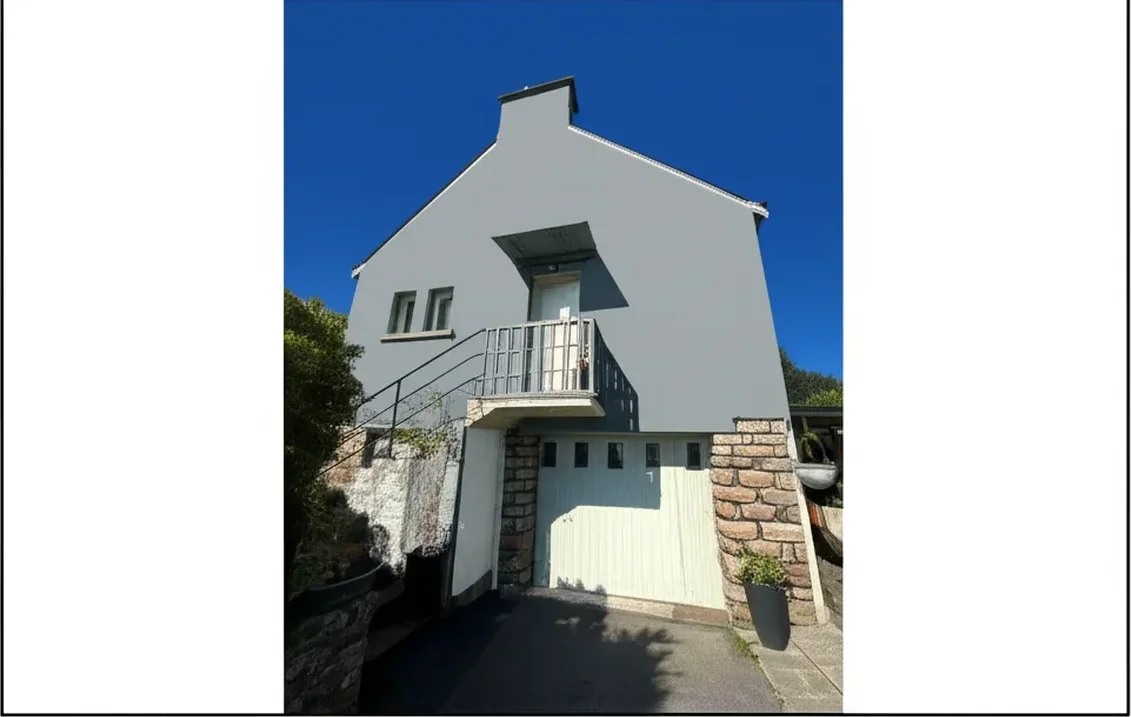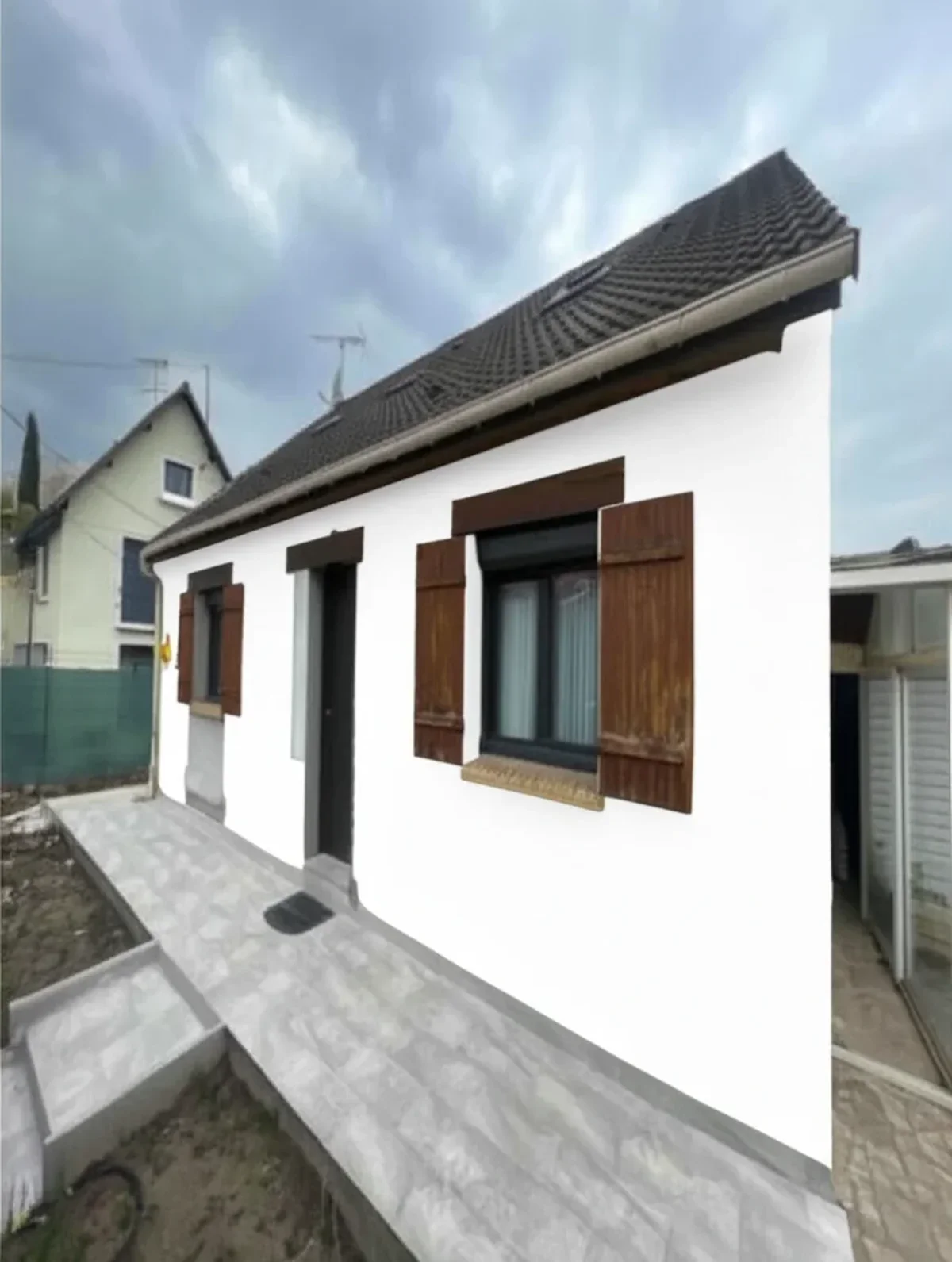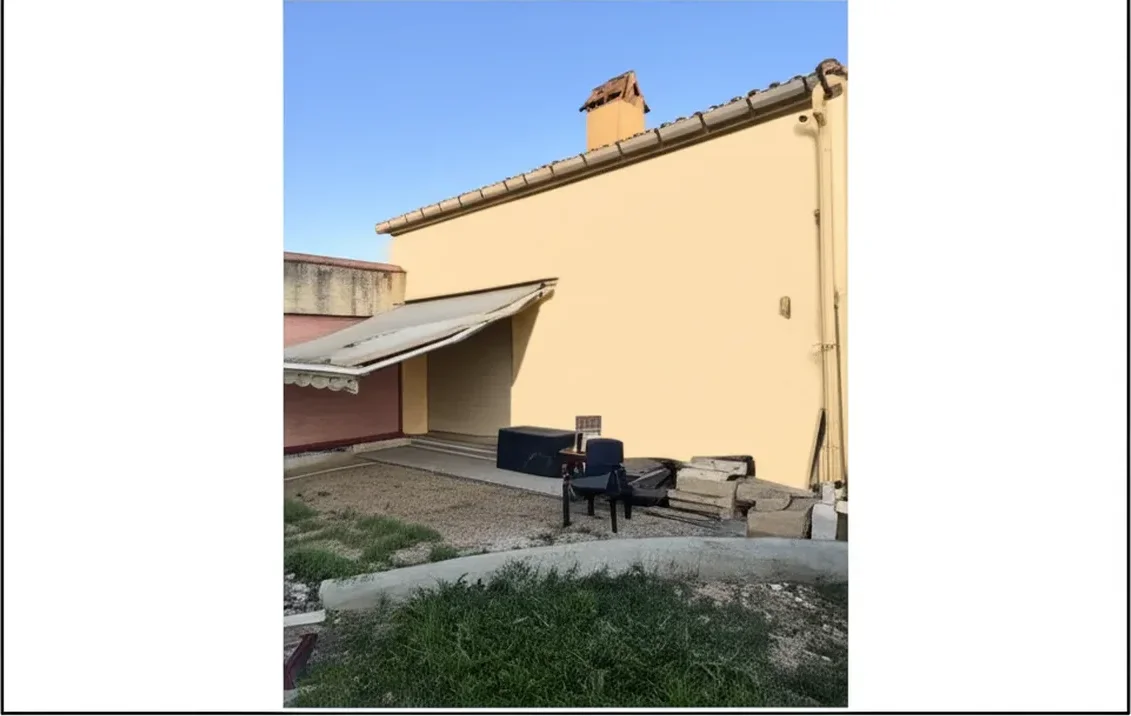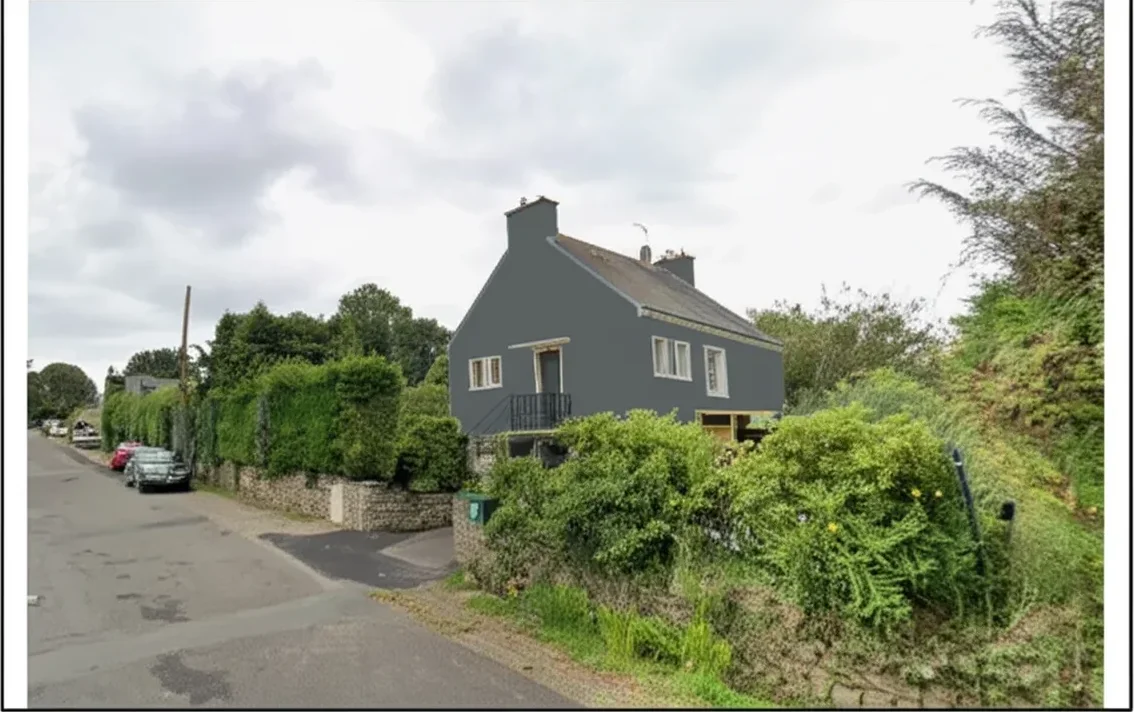
Try it on your house

FacadeColorizer is a free AI exterior paint visualiser used by UK homeowners and decorators across London, Manchester, Edinburgh and Cardiff. White outdoor paint for wood is the single most popular trim category on our platform, covering fascia boards, soffit, barge boards, sash window frames, garage doors, porch posts and timber gates.
In this 2026 UK buyer guide, written for the homeowner about to spend GBP 60 to 180 on three or four litres of exterior trim paint, you will find: the realistic finish choice between gloss, satin and eggshell, the difference between water-based acrylic and traditional oil-based alkyd, drying times in a typical damp British spring, BS EN 927 weathering classification, Listed Building Consent and Conservation Area implications, where to buy (B and Q, Wickes, Homebase, Screwfix, Dulux Decorator Centres), how Sandtex, Dulux Weathershield, Crown Trade and Johnstone's Trade exterior whites compare, plus a no-cost route to preview your white outdoor paint for wood choice on your actual house photo before committing to a tin.
For broader exterior colour planning see our UK exterior colours 2026 master guide, the Dulux Weathershield UK 2026 buyer guide, and the official Sandtex 10 Year Exterior Gloss product page.
White outdoor paint for wood UK: gloss vs satin vs eggshell in 2026
The first decision before opening any tin of white outdoor paint for wood is finish. UK weather is unforgiving: driving rain off the Atlantic, freeze-thaw cycles between November and March, salt spray on coastal homes in Brighton, Plymouth and Aberdeen, and prolonged damp in shaded north elevations. Each finish behaves differently under those conditions.
Gloss is the historic British trim finish, still dominant on Victorian and Edwardian fascia, sash windows and timber doors. It sheds water fastest, resists grime and wipes clean with a damp cloth. The trade-off is unforgiving cosmetics: every brush mark, every nail head, every slight ripple in old softwood shows. Modern water-based gloss, such as Dulux Weathershield Exterior Gloss and Sandtex 10 Year Exterior Gloss, dries faster and yellows less than traditional alkyd gloss, but the sheen is still bright. Many UK decorators in Manchester and Leeds now apply gloss only on doors and exposed sash horns, switching to satin elsewhere.
Satin (also marketed as satinwood in interior ranges) is the modern compromise: enough sheen to shed water and look freshly painted, but soft enough to mask minor surface defects on older fascia and soffit timber. Crown Trade Fastflow Quick Dry Satin and Johnstone's Trade Aqua Satin are popular trade picks. Most homes built since 1990 in Birmingham, Bristol or Cardiff carry satin trim by default.
Eggshell is rarer outdoors in the UK because of moisture penetration risk, but Farrow and Ball Exterior Eggshell holds a place on heritage properties where the local conservation officer insists on a chalkier, less reflective finish, particularly in Cotswolds villages, Bath and Edinburgh New Town. Expect a shorter repaint cycle: 5 to 7 years rather than 8 to 10 for satin or gloss.
Top 8 white outdoor paint for wood shades on UK homes
The whites previewed most often on FacadeColorizer for UK exterior timber are not pure white. British daylight is cool, often grey, and pure brilliant white can read cold-blue on a north elevation. The 8 shades below dominate our 2026 dataset for fascia, soffit, sash windows and front doors. Always order a 250ml tester before painting a full elevation - digital previews approximate, real pigments interact with the surrounding wall colour and your local light.
| White shade | Brand & code | Approx hex | Best on | UK preview share |
|---|---|---|---|---|
| Pure Brilliant White | Dulux Weathershield | #FBFBF8 | Modern PVC-free fascia, new builds | 18% |
| Brilliant White Gloss | Sandtex 10 Year | #FAFAF6 | Coastal sash windows, Brighton, Plymouth | 14% |
| Ashen White | Dulux Weathershield | #EDE7DA | Edwardian semis with soft cream render | 12% |
| Antique White | Crown Trade Fastflow | #F2EBDC | Cottage timber porches, Cotswolds | 9% |
| Wevet | Farrow and Ball No.273 | #EDE9DD | Listed buildings, Bath, Edinburgh | 7% |
| All White | Farrow and Ball No.2005 | #F4EFE3 | Heritage sash, conservation areas | 6% |
| Wimborne White | Farrow and Ball No.239 | #EFE9D6 | Period front doors, Georgian porches | 5% |
| Sundown | Johnstone's Trade Aqua | #F1EBDC | Garage doors, gates, Midlands stock | 4% |
Try it on your house
No photo? Try a sample
A few notes for British buyers. Pure Brilliant White against a red brick Victorian terrace reads as cold and dental. Ashen White or Antique White is usually a kinder pairing on red brick because the soft warmth in the white picks up the brick course mortar tones. Wevet and All White are the heritage standards: if your local conservation officer specifies a "soft chalky white", these two are the safe choice. Wimborne White carries enough yellow undertone to read warm against grey stone in Edinburgh and Yorkshire.
Water-based acrylic vs oil-based alkyd: the 2026 UK reality
Twenty years ago, all white outdoor paint for wood in the UK was oil-based alkyd gloss. It dried slowly, smelled strongly of white spirit, brushed beautifully and yellowed within 3 years. Water-based acrylic and hybrid acrylic-alkyd gloss now dominate the B and Q, Wickes and Screwfix aisles for one practical reason: they yellow much less. A south-facing Victorian sash window painted in modern Dulux Weathershield Quick Dry Gloss in 2023 will still read white in 2026; the same job done in traditional oil gloss would now look distinctly cream.
The trade-off is film hardness. Traditional oil-based alkyd films cure harder, hold up better against knocks on garage doors and gate posts, and self-level for that mirror finish many British decorators in Edinburgh and the New Town still prefer. Modern water-based films are slightly softer for the first 28 days, so avoid leaning ladders against newly painted fascia for at least a month.
VOC content is the other modern driver. Under UK regulations carried forward from EU Directive 2004/42/EC on decorative paints, exterior trim products must declare VOC content on the tin. Modern water-based whites typically declare 30 to 70 g/L; traditional oil-based gloss often exceeds 300 g/L. For homeowners with children, the lower-VOC water-based option is the standard recommendation from the Health and Safety Executive COSHH guidance.
Sandtex, Dulux Weathershield, Crown Trade, Johnstone's: 2026 spec comparison
This is the most practical question UK homeowners ask: which white outdoor paint for wood actually lasts? Below is a 2026 cross-check of the four trade-grade exterior whites stocked across B and Q, Wickes, Homebase, Screwfix and the Dulux Decorator Centre network, drawn from manufacturer datasheets and decorator field reports in London, Manchester, Bristol and Edinburgh.
| Spec | Dulux Weathershield Quick Dry Satin | Sandtex 10 Year Exterior Gloss | Crown Trade Fastflow Quick Dry Satin | Johnstone's Trade Aqua Satin |
|---|---|---|---|---|
| Price 750ml (B and Q, 2026) | GBP 28 to 32 | GBP 32 to 38 | GBP 35 to 42 | GBP 30 to 36 |
| Price 2.5L (Wickes, 2026) | GBP 78 to 88 | GBP 92 to 105 | GBP 95 to 110 | GBP 82 to 95 |
| Coverage (sq m per litre) | 14 to 16 | 12 to 14 | 15 to 17 | 14 to 16 |
| Touch dry | 1 hour | 4 hours | 1 hour | 1 hour |
| Recoat | 4 hours | 16 to 24 hours | 4 hours | 4 hours |
| Base | Water-based acrylic | Hybrid alkyd | Water-based acrylic | Water-based acrylic |
| BS EN 927-1 weathering | High (Class 1) | High (Class 1) | High (Class 1) | Moderate (Class 2) |
| Manufacturer life | 8 years | 10 years | 8 years | 6 to 8 years |
| Yellowing resistance | Excellent | Very good | Excellent | Excellent |
| Where to buy | B and Q, Wickes, Homebase, Dulux Decorator Centres | B and Q, Wickes, Screwfix | Crown Decorating Centres, Brewers | Screwfix, Toolstation, Johnstone's Decorating Centres |
For a typical UK semi with around 25 square metres of timber trim (fascia, soffit, two sash windows, one front door), a 2.5L tin of any of the four products above gives one comfortable two-coat run with a small reserve for touch-ups. Sandtex 10 Year holds a marginal lead on coastal exposure thanks to its hybrid alkyd film, but the water-based competitors close the gap on yellowing resistance, which matters more on south-facing elevations across the Midlands and South West.
See your white outdoor paint for wood in 60 seconds, free
Upload one photo of your fascia, sash window or front door, then test Pure Brilliant White, Ashen White, Antique White and Wevet side by side before you buy a tin.
Preview my white trim freeSurface prep: the step that decides whether white outdoor paint for wood lasts 3 or 10 years
No exterior white finish survives bad prep. The British Standard for surface preparation, BS 7079 (general surface preparation principles, adapted in trade for timber via BS EN 927-1), drives this section. Skip steps and even Sandtex 10 Year will fail in 24 months.
Step one is moisture. UK timber, particularly fascia and soffit on a north or east elevation, holds damp deep into spring. Test moisture content with a pin meter; above 18% by weight, do not paint. Decorators in Glasgow, Newcastle and the Lake District often delay exterior trim work until late May for that reason.
Step two is sound substrate. Strip flaking paint back to bare or sound previous coat using a scraper and 120 grit abrasive. Rotten softwood (common on Victorian fascia around the chimney flaunching and the gable end barge boards) must be cut out and replaced before any white outdoor paint for wood is applied. A repair filler such as Repair Care Dry Flex is the trade standard.
Step three is primer. Bare timber needs a stain-blocking exterior primer. Knots in softwood will bleed yellow-brown resin through any white topcoat within 6 months without a shellac-based knotting solution applied first, followed by an aluminium-pigmented or alkyd-based primer. Zinsser BIN and Tikkurila Otex are common trade picks across the South East and Midlands. Skip this step and your bright Pure Brilliant White fascia will show yellow knot ghosts by the following winter.
Listed Building Consent, Conservation Areas and Permitted Development
Painting external timber on most modern UK homes falls under Permitted Development; no consent is required. However, three categories of property carry restrictions and ignoring them risks an enforcement notice from your local planning authority.
Listed Buildings (Grade I, II* and II in England, A, B and C in Scotland) require Listed Building Consent for any change that affects the character of the building. Repainting a previously cream sash window in Pure Brilliant White on a Grade II Georgian terrace in Bath, Edinburgh New Town or central London will usually need consent because the colour change alters the historic appearance. Check the official register at Historic England's National Heritage List or the Scottish equivalent at Historic Environment Scotland.
Conservation Areas (around 10,000 across the UK) may carry an Article 4 Direction that removes Permitted Development rights for external alterations including paint colour. Article 4 is common in Cotswold villages, Bath, the Edinburgh World Heritage Site, central Cambridge and parts of Kensington and Chelsea. Check your status via Planning Portal or by phoning your local council conservation officer.
For an in-depth UK overview, see our Conservation Area painting rules UK guide and the Listed Building painting rules UK guide.
Cost to paint exterior white timber across UK regions in 2026
A realistic UK 2026 cost depends on three drivers: timber surface area, access (ladder or scaffolding) and regional decorator day rate. Day rates have climbed roughly 6% year on year since 2023 according to Citizens Advice cost-of-living reporting and trade body surveys. For a typical UK semi (fascia, soffit, two sash windows, one front door, total around 25 to 35 square metres of timber), expect the following all-in cost including paint, primer, prep and labour.
London and the South East run highest at GBP 950 to 1,400 for a two-storey semi where scaffolding is required for fascia and soffit access. Manchester, Birmingham, Leeds and Sheffield sit at GBP 700 to 1,050. Cardiff, Bristol and Newcastle cluster around GBP 750 to 1,100. Glasgow and Edinburgh range GBP 800 to 1,200, with Edinburgh tending to the upper end due to listed-building specification. Smaller market towns and rural Yorkshire decorators quote GBP 550 to 850 for the same job.
DIY is realistic on bungalows and ground-floor trim only. The white outdoor paint for wood itself runs GBP 60 to 180 in materials (one tin gloss or satin in 2.5L, one tin primer in 1L, one tin knotting in 250ml, brushes, abrasive, masking tape). Anything that requires a ladder above the first-floor sill line is genuinely safer for a CSCS-carded decorator with proper edge protection. Compare regional decorator costs in our painter decorator cost UK guide.
How to test it on your own home before you buy
No third-party report replaces your own walls: the same colour reads differently on a north elevation and a south one, next to red brick or a grey roof, under morning and evening light. Take a daylight photo, upload it to the free AI paint visualiser, and run two or three candidates on the same image so the comparison is fair. Keep the one or two that survive the side-by-side, buy a tester pot of each, and brush them out on the actual surface in the actual light before you order the full quantity.
Common mistakes UK homeowners make with white outdoor paint for wood
The five most expensive mistakes seen across our 16,983 UK preview dataset and decorator interviews: first, painting fascia in mid-November during a damp spell, when moisture is locked in the timber and the film delaminates by March. Second, skipping a stain-blocking primer over softwood knots, leading to brown bleed-through within 6 months. Third, choosing Pure Brilliant White against red Victorian brick when Ashen White or Antique White would integrate better with the brick course. Fourth, painting straight over previous flaking oil-based gloss with water-based satin without a degreasing wash and adhesion primer, causing edge-peeling. Fifth, ignoring Listed Building Consent on a Grade II property and receiving an enforcement notice that requires stripping back to the original colour.
For the rendered walls beside your fresh white trim, see our white masonry paint UK 2026 guide and the best exterior paint colours UK 2026 roundup.
Avoid the temptation to colour-match a competitor product through a generic mixing service. Sandtex, Dulux Weathershield, Crown Trade and Johnstone's Trade each formulate their own white pigment package and resin system. A "Sandtex Brilliant White" colour-matched in a Crown base will look correct on day one and drift visibly off-tone within 18 months because the resin yellows at a different rate. Stick with the original manufacturer's white tin for the longest-lasting result on UK exterior timber.
Brands referenced are trademarks of their respective owners. FacadeColorizer is an independent visualisation tool and is not affiliated with, endorsed by, or sponsored by Sandtex, Dulux, Crown, Johnstone's, Farrow and Ball, Sherwin-Williams, Benjamin Moore, B and Q, Wickes, Homebase, Screwfix or any retailer. Colour previews are digital approximations under Lanham Act 15 USC 1125 nominative fair use principles; always order a tester pot before committing.
Frequently asked questions
What is the best white outdoor paint for wood in the UK in 2026?
How much does white outdoor paint for wood cost in the UK in 2026?
Should I use gloss or satin white outdoor paint for wood in the UK?
Does white outdoor paint for wood meet BS EN 927 standards?
Do I need Listed Building Consent to repaint exterior white timber?
Why does my white outdoor wood paint yellow so quickly?
Can I preview white outdoor paint for wood on my own house photo?
Trademarks mentioned (Sherwin-Williams, Benjamin Moore, Behr, Caparol, Brillux, Sto, Alpina, Valspar, PPG, Glidden, Dulux, Crown Trade, Sandtex, Farrow & Ball, Johnstone's, Leyland) are property of their respective owners. FacadeColorizer is independent and not affiliated with any of them. Nominative fair use under Lanham Act §1125.