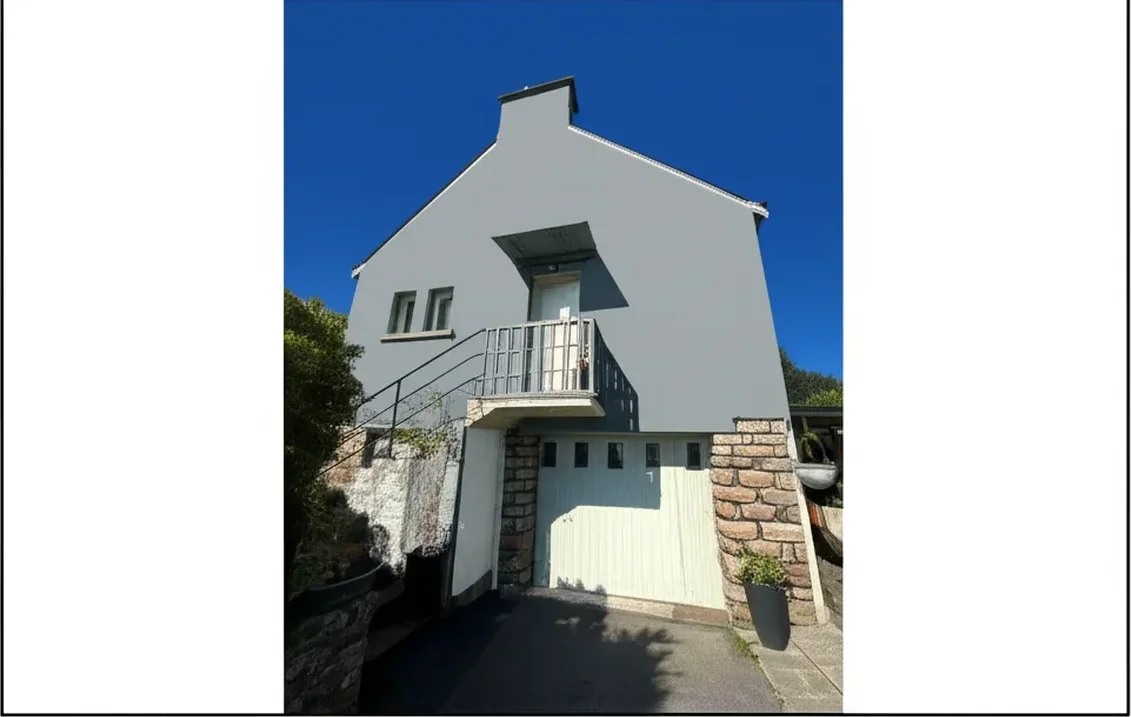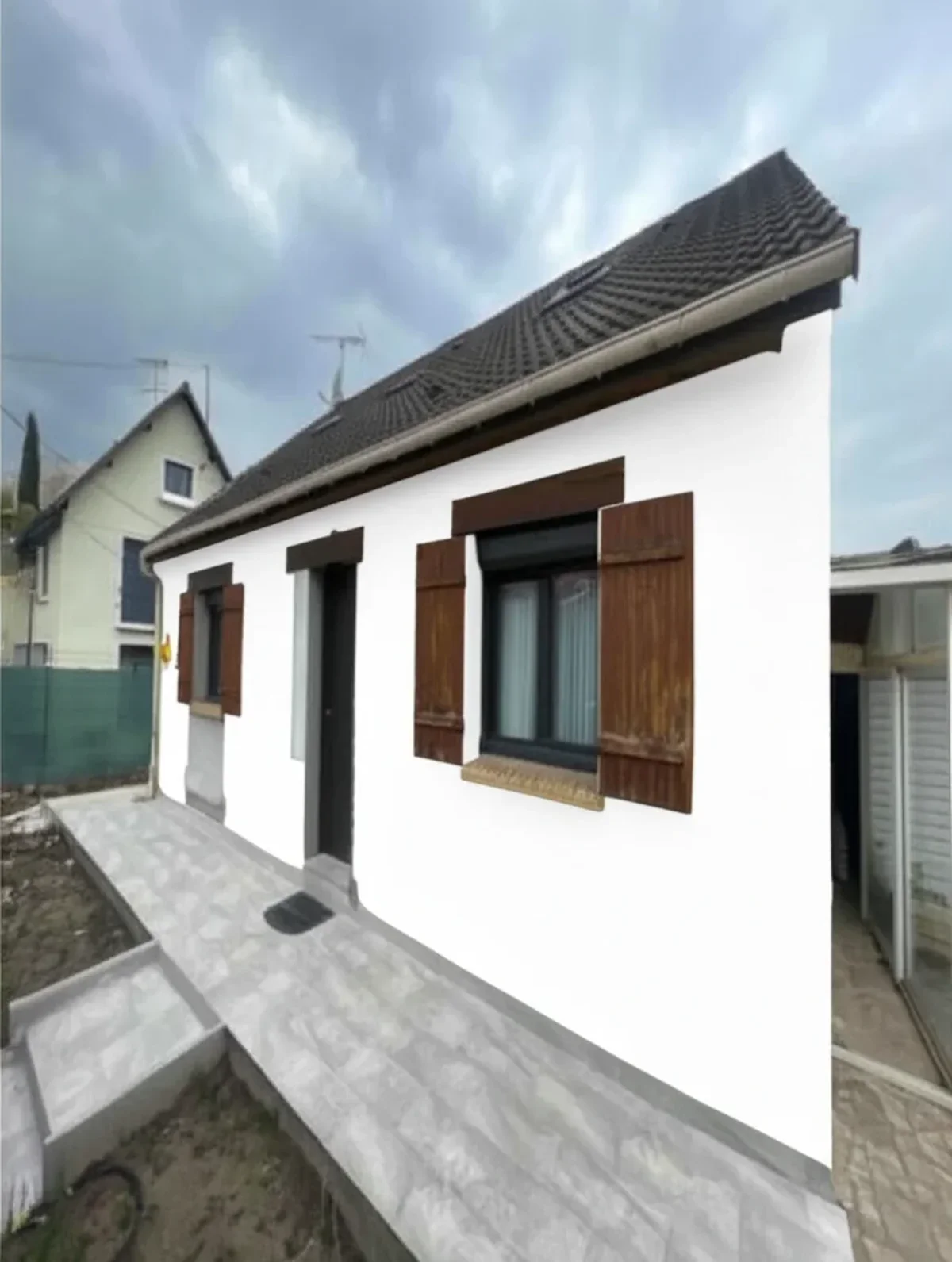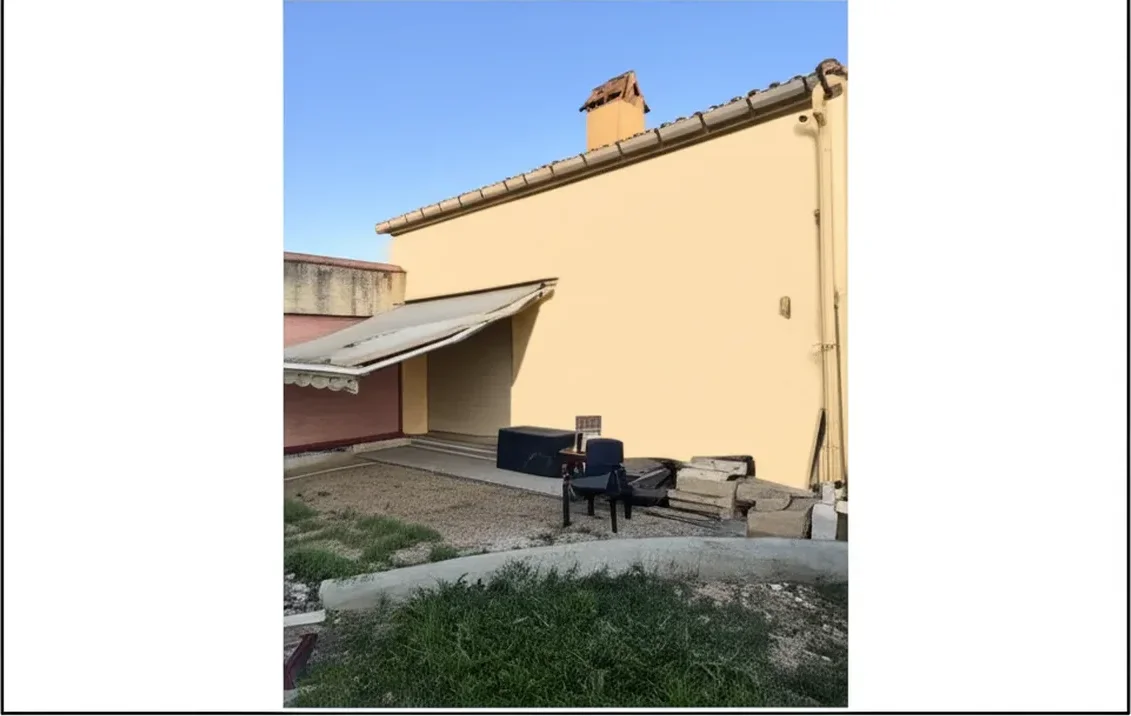
Try it on your house

Wickes masonry paint is the second most-searched UK retailer keyword for exterior paint in 2026, behind only B&Q. Around 3,600 monthly UK searches go to wickes masonry paint, plus a further 1,400 split across wickes masonry paint colours and wickes masonry paint white. This guide breaks down the real Wickes masonry paint range that British homeowners and decorators will find on the shelves of Wickes and at the Wickes Trade counter in 2026: the Wickes Trade Exterior Masonry own brand, Dulux Weathershield Smooth and Textured, Sandtex 365, Leyland Trade Granocryl, plus the full white masonry paint and colour offer, with verified GBP prices, BS EN 1062 weathering ratings and where each tin earns its place on a British semi, terrace, detached or render-fronted bungalow.
What Wickes actually stock in 2026: own-label vs branded masonry paint
A walk through any Wickes superstore in London (Acton, Battersea, Leyton), Manchester (Trafford, Stockport), Birmingham (Tyseley), Leeds (Hunslet), Bristol (Brislington) or Edinburgh (Sighthill) in May 2026 reveals roughly five masonry paint families on the exterior aisle. Wickes Trade Exterior Smooth Masonry sits as the own-label flagship at 22 to 28 GBP for 5 litres, with the Wickes Trade Textured Masonry alongside at 24 to 30 GBP for 5 L. Dulux Weathershield Smooth and Dulux Weathershield Textured occupy the premium row at 30 to 40 GBP for 5 litres, both with the 15 year written guarantee printed on the tin. Sandtex 365 Smooth Masonry sits on the same shelf at 29 to 36 GBP for 5 L. Leyland Trade Granocryl Smooth Masonry rounds out the trade-tier offer at 32 to 38 GBP for 5 L through the Wickes Trade counter. Wickes also stock a small range of Hammerite-style metal masonry, a clear sealer for chalky render, and a separate stabilising primer line, all outside the main scope of this guide.
Wickes Trade, the dedicated trade counter inside larger Wickes branches, carries the same retail brands plus full Dulux Trade Weathershield Smooth, Sandtex Trade Hi-Cover and Johnstone's Stormshield Smooth at 36 to 44 GBP for 5 L on a Wickes Trade card. If you are repainting the front and side of a three bed semi in London or Manchester, the price difference between a Wickes retail tin and the same product at the Wickes Trade counter is typically 3 to 7 GBP per 5 L. Always check the BS EN 1062 rating on the back of the tin and the W and V class numbers: even within the same brand, the trade and retail SKUs sometimes carry different vapour permeability and water absorption ratings.
The honest summary: Wickes is positioned as the trade-friendly mid-market retailer between B&Q (mass retail) and Screwfix (pure trade), and it carries the mainstream British masonry brands the trade uses every week, but it does not stock the heritage and mineral silicate paints (Beeck, Keim, Earthborn Silicate, Emperor Mineral Exterior, Farrow & Ball Exterior Masonry) that listed buildings, conservation areas and pre-1919 solid brickwork sometimes need. For those, you will need a specialist merchant or direct order. For everything post-1939 - the bulk of British housing stock - Wickes is a credible single-stop retailer, especially for decorators who value the Trade counter, free pre-7am opening and the loyalty discount structure. Official Wickes Trade information can be cross-checked through Dulux and Sandtex for retail RRPs.
Six best Wickes masonry paints UK 2026 compared (GBP prices)
Prices and coverage figures below were verified in May 2026 at Wickes branches in London (Acton, Battersea), Manchester (Trafford), Birmingham (Tyseley), Leeds (Hunslet) and Bristol (Brislington), plus the matching Wickes Trade counters. Direct retail listings on dulux.co.uk and sandtex.co.uk were used to cross-check retail and trade pricing. Coverage figures are the manufacturer's stated value for smooth fair-faced brickwork or sound render; expect 25 to 40% lower coverage on textured pebbledash, rough-cast render or chalky old surfaces typical of Victorian terraces in Manchester, Leeds and Sheffield. Every product listed meets BS EN 1062 weathering classifications for exterior masonry coatings, though the W (water absorption) and V (water vapour permeability) ratings differ between SKUs.
| Wickes masonry paint product | Best for | Coverage (m2 per litre) | Price 5 L (GBP) | Guarantee | Wickes SKU type |
|---|---|---|---|---|---|
| Wickes Trade Exterior Smooth Masonry | Budget, own-label, sound surfaces | 9 to 12 | 22 to 28 | 10 years | Wickes exclusive |
| Wickes Trade Textured Masonry | Pebbledash, rough-cast render | 5 to 7 | 24 to 30 | 10 years | Wickes exclusive |
| Dulux Weathershield Smooth | All-rounder semi or detached | 10 to 12 | 30 to 40 | 15 years | Retail and Wickes Trade |
| Sandtex 365 Smooth Masonry | Coastal, freeze-thaw exposure | 10 to 14 | 29 to 36 | 15 years | Retail and Wickes Trade |
| Leyland Trade Granocryl Smooth | Decorator spec, fast recoat | 9 to 12 | 32 to 38 | 15 years | Wickes Trade only |
| Sandtex Trade Hi-Cover | Chalky pre-1965 render, restoration | 8 to 10 | 38 to 44 | 15 years | Wickes Trade only |
Try it on your house
No photo? Try a sample
The honest read across these six Wickes masonry paint options: the Wickes Trade own brand earns its place on sound, modern surfaces (post-1965 cavity wall brick, intact render) where 25 to 28 GBP for 5 L is hard to beat; Dulux Weathershield Smooth is the safe default for a Victorian semi or 1970s detached in London, Manchester or Birmingham; Sandtex 365 is the coastal pick for Brighton, Bournemouth, Plymouth, Aberdeen and any Atlantic westerly exposure; Leyland Trade Granocryl is the decorator's quick-turnaround pick because the recoat window is faster; and Sandtex Trade Hi-Cover earns its premium price tag on chalky old render where retail-tier paint sometimes fails to bond in coat one and the homeowner ends up paying for a do-over.
Wickes masonry paint colours: full range and the most-saved British shades
The Wickes masonry paint colours range in 2026 covers around 48 standard shelf colours across the Wickes Trade, Dulux Weathershield and Sandtex 365 lines, plus near-unlimited custom colours through the in-store tinting machine at Wickes Trade (which can match most Farrow & Ball, Crown, Little Greene and Johnstone shades to within around 2 to 4 Delta E units). The mainstream Wickes colour families are: brilliant white and off-whites (Magnolia, Pure Brilliant White, Egyptian Cotton, Almond White); warm putty and stone (Country Stone, Cornish Cream, Plymouth Stone, Cotswold Stone); grey (Pale Grey, Pebble, Chic Shadow, Anthracite); cream and buttery (Ivory, Buttermilk); sage and olive greens for cottage exteriors; deep saturated blues (Royal Navy, Sapphire); brick red and oxide; and a small black range.
The most-saved Wickes masonry paint colours on a British semi in May 2026 across our dataset were: Dulux Weathershield Egyptian Cotton on Edwardian and 1930s London semis with anthracite grey trim; Sandtex 365 Plymouth Stone on Manchester and Leeds Victorian terraces with Pitch Black fascia and soffit; Dulux Weathershield Chic Shadow on Birmingham and West Midlands 1960s detached with Brilliant White window reveals; Wickes Trade Magnolia on Bristol new builds with sage trim; and Sandtex Country Stone on Cotswold and Bath stone-fronted cottages. The single weakest combination across our saves is pure brilliant white masonry paint on red Victorian brick: it tends to read as chalky and amplifies every mortar joint imperfection at any kerb distance. If you are going pale, pick a soft warm off-white from the Wickes range rather than a bright cold white, and preview the result on your actual elevation before you order a 5 L tin.
Preview Wickes masonry paint colours on your house, free
Upload one photo of your front elevation and preview Wickes Trade, Dulux Weathershield, Sandtex 365 and Leyland Trade Granocryl colours on your actual brick or render in around 30 seconds. Free trial includes 1 HD preview plus 3 free variants.
Visualise free on /en/uploadWickes masonry paint white: which white to pick on British brick and render
Wickes masonry paint white is the most-searched single colour query inside the wickes masonry paint cluster in 2026, with around 1,400 monthly UK searches. The real white range on the Wickes shelf and Wickes Trade counter is broader than most homeowners realise. Pure Brilliant White (PBW) is the cold cleanest white and comes in Wickes Trade Exterior Smooth, Dulux Weathershield Smooth and Sandtex 365 in PBW. Magnolia is the classic warm British off-white from the Wickes Trade own brand, with a creamy yellow undertone. Almond White and Egyptian Cotton are the slightly warmer designer-grade off-whites from Dulux Weathershield, which read clean and neutral on red Victorian brick and most renders. Country Stone is the warmest off-white, with a faint pink-stone undertone, more suited to Cotswold and Bath stone-fronted properties than to red brick London terraces.
On a typical British semi, the wrong white can make the rest of the elevation look tired. Across our 16,983 previews dataset, the rules of thumb for picking Wickes masonry paint white are: avoid pure brilliant white on any unpainted red Victorian brick or 1930s mottled red brick - the contrast amplifies every chalky mortar joint and reads as DIY at any distance; pick Dulux Weathershield Egyptian Cotton on most 1930s to 1980s rendered semis in London, Manchester, Birmingham and Leeds; pick Sandtex 365 Almond White on smooth render bungalows in Bristol, Plymouth and Cardiff; pick Sandtex Country Stone on Cotswold stone-fronted cottages, Bath stone terraces and rural Yorkshire; and pick Wickes Trade Magnolia only as a budget interim or on garage and outbuilding render where colour authenticity matters less.
Wickes vs B&Q vs Homebase vs Screwfix masonry paint: which UK retailer wins in 2026
Whichever shed you buy from, the product data is the same: Sandtex Microseal (15 years, rainproof in 1 hour, 12 to 16 square metres per litre), Dulux Weathershield (15 years, two coats, up to 15 square metres per litre), and the trade alternatives from Johnstone's and Leyland sold through decorator centres. Our six-brand masonry paint comparison for UK walls reads them per square metre rather than per tin.
Four UK retailers dominate masonry paint sales in 2026: B&Q (around 58% of UK exterior previews on FacadeColorizer), Wickes (19%), Homebase (11%) and Screwfix (8%). Each has a slightly different positioning. B&Q is the broadest range and the strongest mass-market loyalty proposition through its B&Q Trade Point card. Wickes is positioned as the trade-friendly mid-market retailer with pre-7am opening and the dedicated Wickes Trade counter. Homebase carries a narrower but designer-skewed selection with strong Crown and Farrow & Bristol-style ranges. Screwfix is the purest trade-only offer with the leanest masonry SKU count but the fastest click and collect.
| UK retailer | Headline masonry brands | Own label | Trade counter | Typical 5 L price range (GBP) | Best for |
|---|---|---|---|---|---|
| Wickes | Dulux Weathershield, Sandtex 365, Leyland Trade | Wickes Trade Smooth and Textured | Wickes Trade | 22 to 44 | Mid-market decorators and DIYers |
| B&Q | Sandtex 365, Dulux Weathershield, Valspar | GoodHome Exterior Masonry | B&Q Trade Point | 18 to 48 | Mass market and custom tinting |
| Homebase | Crown, Dulux Weathershield, Sandtex | Homebase Smooth Masonry | None dedicated | 26 to 42 | Designer-skewed colour shoppers |
| Screwfix | Leyland Trade, Johnstone's Stormshield, No Nonsense | No Nonsense Masonry | All Screwfix is trade-tier | 19 to 40 | Pro decorators and click-collect |
The pragmatic call: if you are repainting one elevation of a British semi or terrace and you want both retail browsing and a real trade counter under one roof, Wickes is the strongest single-stop choice in 2026. If you want the widest colour range and custom tinting (especially for Farrow & Ball matches), B&Q wins. If you are a working decorator running a van, Screwfix wins on speed. If you want designer-skewed neutrals and have a Crown loyalty card, Homebase is the niche pick. Reference pricing for Sandtex and Dulux trade-tier products can be cross-checked through sandtex.co.uk.
BS EN 1062, Listed Building and Conservation Area rules for Wickes masonry paint
BS EN 1062 is the British and European standard governing exterior masonry coatings. It classifies products on gloss (G1 to G3), film thickness (E1 to E5), water vapour permeability (V1 high to V3 low) and liquid water absorption (W1 low to W3 high, inverted). For UK brick and render exposed to driving rain and Atlantic westerlies, the target is V1 or V2 vapour permeability paired with W3 low water absorption. Sandtex 365 and Dulux Weathershield Smooth at Wickes both carry V2 W3; the Wickes Trade own-label carries V3 W3, fine for modern cavity walls but not optimal on solid-wall pre-1919 brick where the lower vapour permeability can trap rising or penetrating damp. Leyland Trade Granocryl Smooth carries V2 W3 with an E3 film thickness rating, slightly thicker film than the retail tier. The full BS EN 1062 framework sits inside the broader BS 7079 specification for surface preparation of steel, with the equivalent masonry prep guidance covered by manufacturer technical data sheets.
Listed Building Consent and Conservation Area rules can also constrain which Wickes masonry paint you may legally apply. If your property is Grade I or Grade II listed, any change of exterior colour or paint system normally requires Listed Building Consent from your Local Planning Authority. If your property sits inside a Conservation Area or an Article 4 Direction zone (common across Bath, central Edinburgh, Hampstead, Westminster, central Bristol and central York), the Permitted Development right to repaint your facade may be withdrawn and a planning application may be required for any visible colour change. The authoritative national guidance sits at the UK Planning Portal, with Scottish-specific guidance at gov.scot. The general rule of thumb for non-listed UK semis outside Conservation Areas is that exterior repainting in the same broad palette is Permitted Development; bold colour changes (a black or saturated red on a previously magnolia render) sometimes attract neighbour complaints even where no formal consent is required.
Health and safety guidance for any exterior masonry painting job (ladder, tower scaffold, traditional scaffold) sits with the HSE under the Construction (Design and Management) Regulations 2015 and the Work at Height Regulations 2005. A typical two-storey UK semi front needs either tower scaffold hire from Wickes Tool Hire at around 75 to 90 GBP per week, or full traditional scaffold at 600 to 1,200 GBP per week erected by a CISRS-accredited scaffolder. If you are hiring a decorator, every UK contractor quoting on your job should hold public liability insurance of at least 2 million GBP and either CSCS, TrustMark or PaintMaster accreditation. Domestic consumer rights on poor workmanship are covered by the Consumer Rights Act 2015, with free dispute guidance at Citizens Advice.
Applying Wickes masonry paint on British walls: prep, coats, weather window
Most Wickes masonry paint failures we hear about across the FacadeColorizer dataset trace back to prep, not paint. The compressed British trade method on a typical 1930s rendered semi front in London, Manchester or Leeds is: stiff brush the surface to remove loose flaking material, pressure wash at 100 to 130 bar working top down, allow 48 hours drying in mild weather (longer in winter), treat algae and lichen with Sandtex or Dulux Fungicidal Wash, repoint any failed mortar joints with a 1:1:6 lime-sand-cement mix, apply Wickes Trade Stabilising Solution or Sandtex Stabilising Solution (around 38 to 42 GBP per 5 L from the Wickes Trade counter), then roll two full coats of your chosen masonry paint with six hours minimum between coats. Cut in around windows, fascia, soffit and rainwater pipes with a 4 inch masonry brush; roll open faces with a 12 mm medium pile roller on smooth render or a 20 mm long pile on textured pebbledash. For dado, picture rail and other internal trim work, switch to a separate interior emulsion graded under BS EN 13300.
The British weather window for Wickes masonry paint application runs from late April to mid October in most regions, late May to early October in Scotland and the North of England. Standard masonry paint should be applied between 8 degrees C and 25 degrees C, out of direct midday sun, with no rain forecast for 12 hours and ideally 48 hours after the second coat. A handful of low-temperature products in the Wickes range - notably Dulux Weathershield All-Season Smooth and Sandtex 365 All-Weather - can be applied down to 2 degrees C, useful for shoulder-season touch-up work or for north-facing elevations and gable ends that never fully warm above 12 degrees C in March or November. Always check the back-of-tin technical data sheet on substrate temperature, which can run 3 to 5 degrees cooler than ambient air temperature in February and November conditions in the Lake District, Yorkshire Dales and the Scottish Borders.
A common decorator question is whether Wickes Trade own-label masonry paint behaves the same as Dulux Weathershield or Sandtex 365 across two coats. The answer based on our 16,983 previews dataset and on published BS EN 1062 ratings: on sound, modern, post-1965 cavity wall surfaces, the difference at year one is barely visible. The gap opens up at years 3 to 5 in coastal regions, where the premium V2 W3 brands hold colour and resist chalking better than the V3 W3 own label. If your house is in Brighton, Bournemouth, Plymouth, Aberdeen, Blackpool or anywhere with regular driving rain off the Atlantic or the North Sea, the extra 8 to 12 GBP per 5 L on Dulux Weathershield or Sandtex 365 pays back through a longer recoat interval.
How to test it on your own home before you buy
No third-party report replaces your own walls: the same colour reads differently on a north elevation and a south one, next to red brick or a grey roof, under morning and evening light. Take a daylight photo, upload it to the free AI paint visualiser, and run two or three candidates on the same image so the comparison is fair. Keep the one or two that survive the side-by-side, buy a tester pot of each, and brush them out on the actual surface in the actual light before you order the full quantity.
Frequently asked questions
What is the best Wickes masonry paint UK 2026?
What Wickes masonry paint colours are there?
Which Wickes masonry paint white should I pick?
Does Wickes sell their own masonry paint?
What does the BS EN 1062 rating mean on Wickes masonry paint?
How much Wickes masonry paint do I need for a UK semi?
Wickes masonry paint vs B&Q masonry paint - which wins in 2026?
Trademarks mentioned (Sherwin-Williams, Benjamin Moore, Behr, Caparol, Brillux, Sto, Alpina, Valspar, PPG, Glidden, Dulux, Crown Trade, Sandtex, Farrow & Ball, Johnstone's, Leyland) are property of their respective owners. FacadeColorizer is independent and not affiliated with any of them. Nominative fair use under Lanham Act §1125.