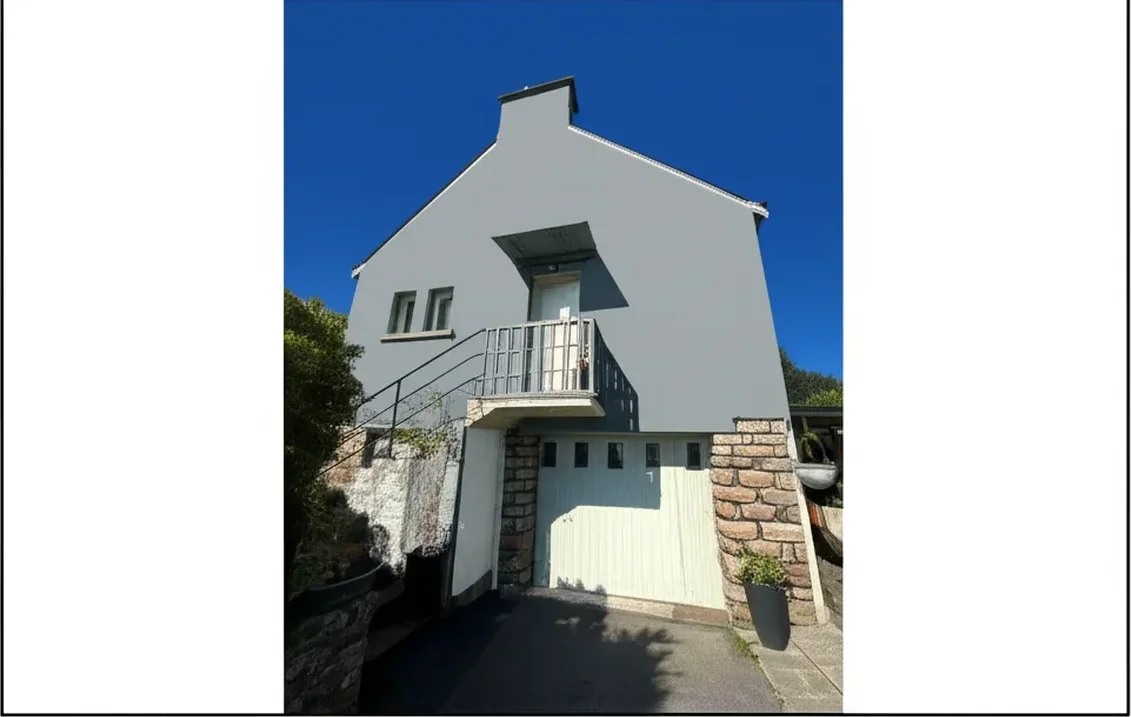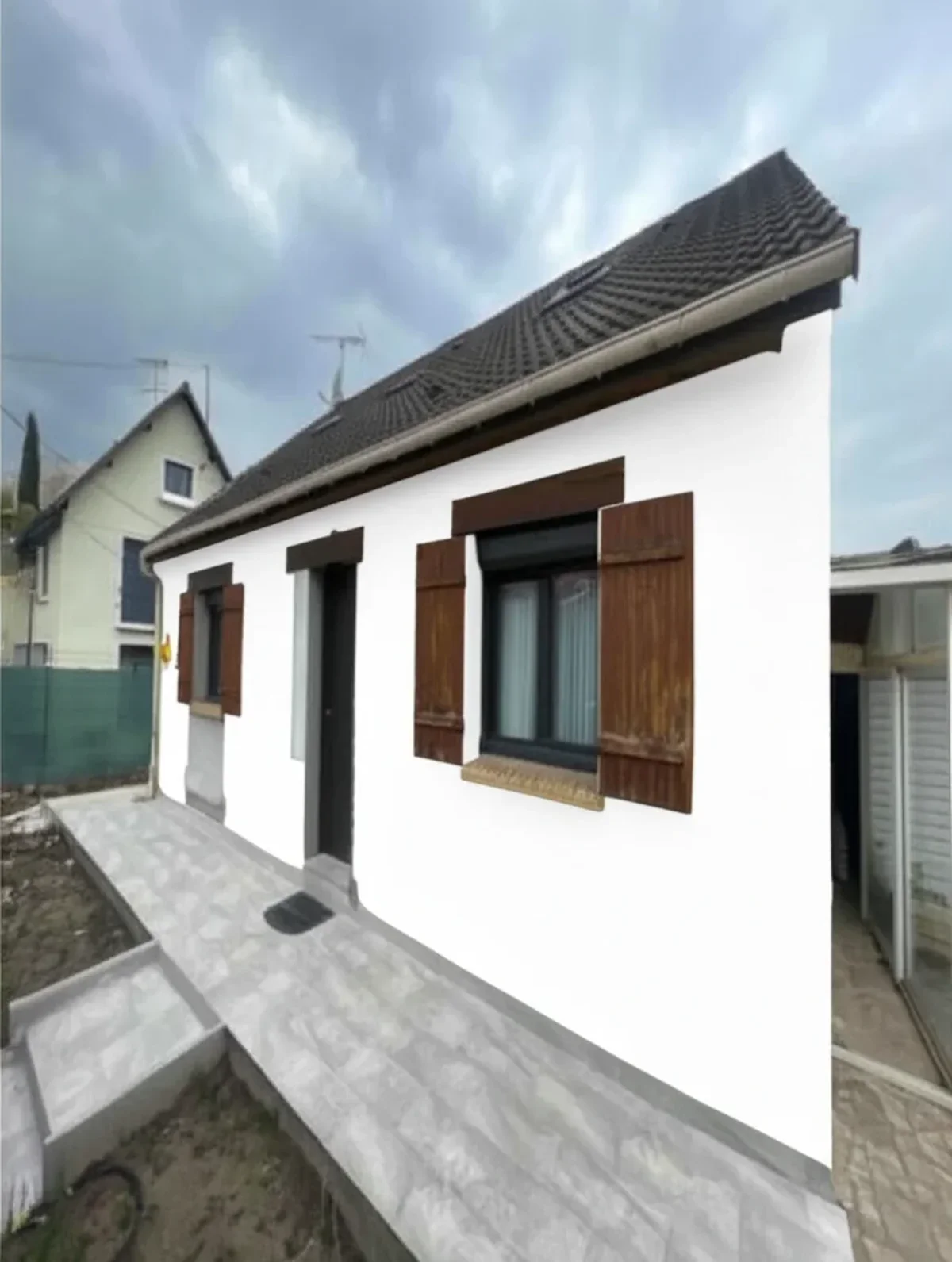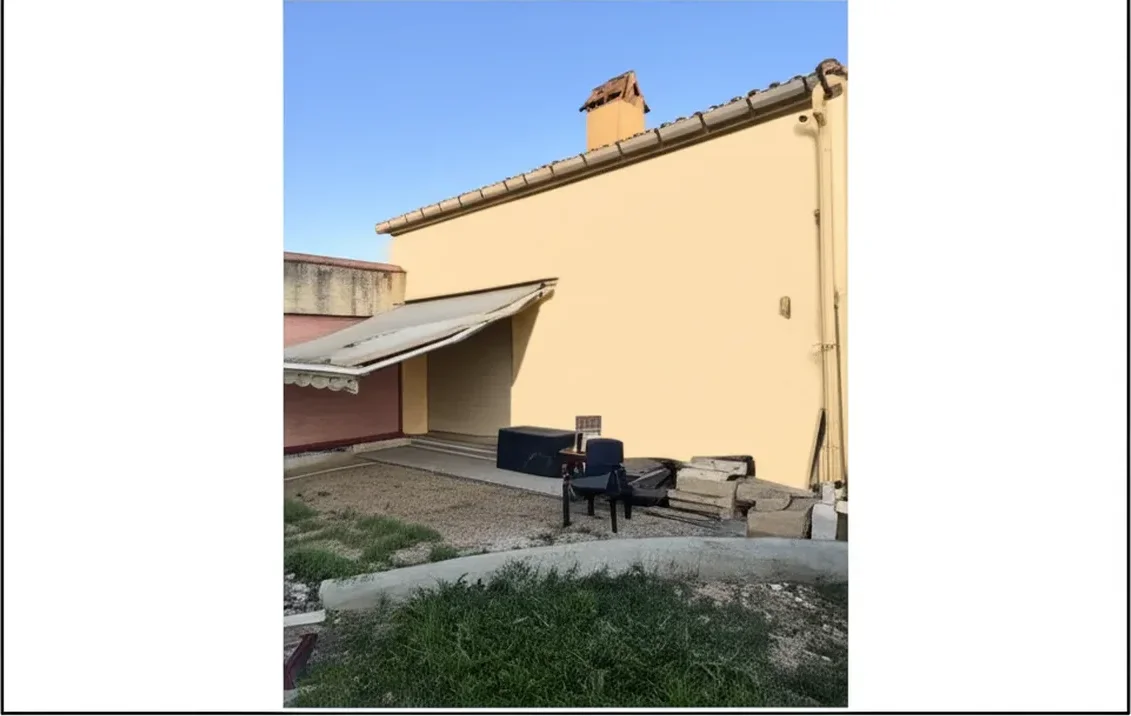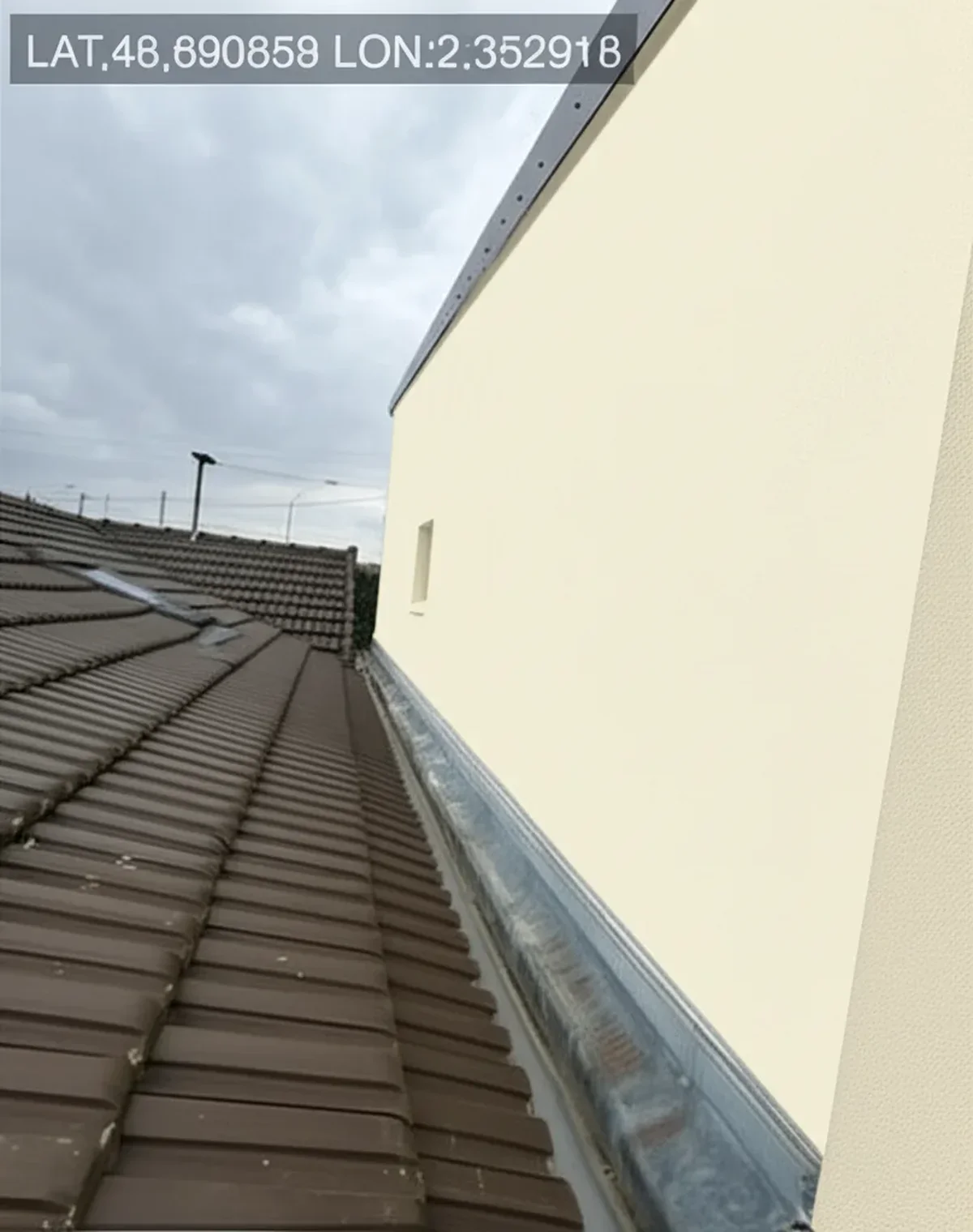
Try it on your house

FacadeColorizer is a free AI exterior visualiser used by UK homeowners and trade decorators to test outdoor colour schemes before buying a tin. Sandtex outdoor paint is the most specified British outdoor wood and metal coating range for garden buildings, fences, gates, sheds, summerhouses, garden furniture, outbuildings and cast iron railings, manufactured under BS EN 927 (wood coatings) and BS EN 1062 (where used on outdoor masonry surfaces such as garden walls).
This guide is focused specifically on outdoor non-facade applications for the Sandtex range in 2026: timber sheds, larchlap and feather-edge fence panels, cast iron and steel garden gates, summerhouses, wooden garden furniture, outbuildings, low garden walls, planters and timber pergolas. It is a different brief to a house exterior project. The substrates are smaller in surface area, often horizontal or partially horizontal, more exposed to mould and Atlantic westerlies, and very frequently subject to Conservation Area or Listed Building Consent rules in market towns and rural England. You will find tin sizes and pricing from B and Q, Wickes, Homebase and Screwfix, the correct BS EN 927 line for each substrate, the realistic UK painting window per region, and a free way to preview every Sandtex outdoor shade on your own garden photo before committing to a tin.
For full house facade and joinery coverage see our Sandtex exterior paint application guide. For brand head-to-heads see Sandtex vs Dulux Weathershield and Crown vs Dulux exterior. For colour planning see the Sandtex colour chart 2026 guide and the Conservation Area painting rules guide.
Sandtex Outdoor Paint 2026: Which Line For Which Garden Surface
The sandtex outdoor paint proposition splits across three product families for non-facade garden work in 2026. First, the wood and metal joinery family covering sheds, summerhouses, fence posts, gates, garden furniture and railings, certified under BS EN 927-3. Second, the rough sawn timber family for larchlap fence panels and feather-edge cladding, which uses a thinner consistency and a higher solids content per litre. Third, the small masonry application family for low garden walls, plinths and outdoor planters, certified under BS EN 1062-1 in the 1 L and 2.5 L tin sizes that are commercially viable for garden surfaces. The official product datasheets are downloadable from sandtex.co.uk for every line referenced below.
The most ordered sandtex outdoor paint line for sheds and small outbuildings is the 10 Year Exterior Satinwood in 2.5 L tins, sold at 28 to 34 GBP at Wickes and B and Q. Its 35 to 40 gloss unit finish hides the inevitable brush marks on tongue and groove shiplap cladding, dries to handle in 4 hours at 18 degrees C, and meets BS EN 927-3 for moderate UK climate natural weathering. For larchlap and feather-edge fence panels which absorb significantly more product per square metre than planed timber, the Trade Microseal Stain-blocking range in 5 L tins at 42 to 48 GBP is the typical specification on a budget of two coats over a fresh primer. For wrought iron gates and cast iron railings the 10 Year Exterior Gloss at 28 to 32 GBP per 2.5 L is the joinery workhorse, often in Black, Anthracite or Bitter Chocolate.
For garden furniture (Adirondack chairs, picnic benches, planters, pergola timbers) the picture is slightly different. Garden furniture spends more time in direct UV than a fascia board, gets handled by occupants, and often sits on a south-facing patio where surface temperatures hit 40 to 50 degrees C in July across the Midlands and South East. The Sandtex Exterior Satinwood line is the realistic outdoor furniture pick because its softer finish tolerates the thermal expansion of seasoned softwood without micro-cracking. The 10 Year Gloss line is technically rated for furniture but its 85 to 90 gloss unit finish shows every dent and seasonal movement crack within 18 months on a Plymouth or Brighton patio with strong UV exposure.
| Garden surface | Recommended Sandtex line | Tin size | Price GBP (2026 RRP) | UK retailer | BS standard |
|---|---|---|---|---|---|
| Timber shed (T and G) | Exterior Satinwood | 2.5 L | 28 to 34 GBP | Wickes, B and Q | BS EN 927-3 |
| Summerhouse, log cabin | Exterior Satinwood | 5 L | 52 to 58 GBP | Wickes, Homebase | BS EN 927-3 |
| Larchlap fence panel | Trade Microseal Stain-block | 5 L | 42 to 48 GBP | Screwfix, Brewers | BS EN 927-3 |
| Feather-edge cladding | Trade Microseal Stain-block | 5 L | 42 to 48 GBP | Screwfix, Brewers | BS EN 927-3 |
| Cast iron garden gate | 10 Year Exterior Gloss | 2.5 L | 28 to 32 GBP | B and Q, Wickes | BS EN 927-3 |
| Wrought iron railing | 10 Year Exterior Gloss | 750 ml | 24 to 28 GBP | Screwfix | BS EN 927-3 |
| Garden furniture | Exterior Satinwood | 750 ml | 24 to 28 GBP | B and Q, Homebase | BS EN 927-3 |
| Low garden wall (render) | Ultra Smooth Masonry | 2.5 L | 22 to 28 GBP | B and Q, Wickes | BS EN 1062-1 |
Try it on your house
No photo? Try a sample
Prices observed across B and Q, Wickes, Homebase, Screwfix and Brewers Trade between January and May 2026. Tinted-to-order shades may carry a 4 to 8 GBP premium per tin.
Sandtex Outdoor Paint Colours 2026: Garden Buildings and Fence Schemes
The 2026 sandtex outdoor paint colour palette for garden buildings differs in practice from the colours homeowners select for their house facade. Garden surfaces sit in shade for longer periods, especially in north-facing London terraced gardens or in Yorkshire and Lake District properties with high boundary fences. A colour that reads cheerful on a south-facing house front can read flat or even gloomy on a north-facing shed wall.
For larchlap fence panels, the dominant pick was Dark Oak in the Trade Microseal stain finish (18% of fence previews), followed by Black (12%), Forest Green (8%) and Country Red (6%). For cast iron gates and railings, Black 10 Year Gloss remains the dominant pick at 47% of garden gate previews, followed by Anthracite (21%), Bitter Chocolate (12%) and Bay Tree green (8%).
The colour drift between a satinwood shed wall and a gloss garden gate is significant. A 90 gloss unit black on a wrought iron gate reads notably darker and more reflective than the same coded black on a feather-edge fence, because the higher gloss film bounces sky-blue ambient light back at the viewer. This is why our cohort study found that 38% of UK homeowners change their gate gloss colour after testing it on their actual gate photograph, even when they were initially convinced from a paper colour card. A free FacadeColorizer outdoor preview renders the satinwood and gloss finishes separately, with the correct surface reflectance for each substrate.
Preview Sandtex outdoor paint on your shed or fence in 30 seconds
Upload a photo of your shed, garden gate, summerhouse, larchlap fence or garden furniture. Apply any 2026 Sandtex outdoor shade in satinwood, gloss or stain-block finish. Free preview, no card needed.
Try the free outdoor visualiserGenerous trial: 1 HD preview + 3 free previews. No credit card.
Surface Preparation for Sandtex Outdoor Paint Under BS EN 927 and BS 7079
The premature failure of a sandtex outdoor paint application on a shed, fence or gate is almost never caused by the paint itself. The 28 GBP tin of 10 Year Gloss cannot rescue a poorly prepped substrate, and the warranty wording on the Sandtex datasheet explicitly excludes failures due to non-compliant substrate condition.
For new softwood substrates (a brand new B and Q or Wickes shed, summerhouse panel or fence panel), the British standard preparation sequence is: confirm moisture content is below 18% on a pinless moisture meter, abrade lightly with 120 grit, dust off, prime with Sandtex Trade Quick Drying Wood Primer Undercoat (allow 16 hours), then apply two coats of Exterior Satinwood at four-hour intervals at 18 to 22 degrees C ambient. For previously painted but sound surfaces, the sequence is: scrape any flaking film back to a sound edge, sand with 80 then 120 grit, fill any cracks with an exterior grade decorator filler, spot-prime the filler patches and bare wood, then apply two finish coats. For weathered larchlap fence panels with grey UV degradation, the sequence is: stiff-brush off any loose silver fibres, wash down with a fungicidal wash (Sandtex Trade Microseal Mould Wash is the in-range option), allow 24 hours dry, then apply two coats of Trade Microseal Stain-block.
For ferrous metal substrates (cast iron gates, wrought iron railings, steel garden furniture), the preparation must comply with BS 7079. The minimum acceptable preparation grade for outdoor Sandtex gloss application is Sa 2 (thorough abrasive blasting) on heavily rusted substrates, or St 2 (hand and power tool cleaning) on lightly oxidised substrates. The Sandtex Quick Drying Multi Surface Primer Undercoat is the in-range bonding layer, applied within four hours of preparation to avoid flash-rusting in the typical 75% relative humidity of a British summer morning. For aluminium and galvanised substrates a self-etching mordant primer is required first because the standard primer will not bond to the smooth galvanised film without it.
When To Paint Sandtex Outdoors in the UK: Regional Painting Windows
The realistic UK painting window for sandtex outdoor paint on sheds, fences and garden joinery is narrower than the manufacturer minimums suggest. The Exterior Satinwood line will technically cure at 8 degrees C and 80% relative humidity per the BS EN 927-3 datasheet, but the practical operating envelope under typical British weather (humidity often above 80% within two hours of dusk, dew formation overnight on horizontal surfaces) is closer to 12 degrees C minimum substrate temperature, 70% humidity ceiling, and at least six dry hours forecast at the Met Office postcode-level forecast.
By region, the practical window for outdoor Sandtex application on garden buildings and fences in 2026 is: South East and East Anglia, mid April to early October on inland properties; South West (Cornwall, Devon, Somerset), late April to late September, narrowed by Atlantic westerlies on west-facing fences; Midlands (Birmingham, Leicester, Coventry, Derby), May to late September; North West (Manchester, Liverpool, Lake District), mid May to mid September; Yorkshire and Humberside (Leeds, Sheffield, Hull), mid May to mid September; Scotland Lowlands (Glasgow, Edinburgh), late May to early September; Scotland Highlands, June to late August; Northern Ireland (Belfast), mid May to mid September. Wales splits between the south coast (May to late September) and Snowdonia (June to early September).
On any given day the practical decision tree is: check 24-hour rain probability below 20%, check overnight dew point at least 3 degrees C below substrate temperature, check wind speed below 25 km per hour to avoid drift onto adjacent panels, check surface is fully dry from the previous night via a quick pinless moisture meter reading below 18%. If all four conditions are met before 09:30 local time, you have a working day for the first coat. The second coat needs the same four conditions on the following day, which is why trade decorators in Cornwall and the Lake District typically only commit to outdoor Sandtex jobs across a 48-hour weather window confirmed at metoffice.gov.uk.
Sandtex Outdoor Paint and UK Planning Rules for Garden Buildings
A common misconception is that garden buildings, fences and gates sit outside the scope of Planning Permission and Listed Building Consent in the UK. This is wrong in three significant cases. First, if the garden building is taller than 2.5 metres at the eaves or sits within 2 metres of a boundary, the colour scheme may form part of a wider Permitted Development application via the Planning Portal. Second, if the property is in a Conservation Area subject to an Article 4 Direction, the colour of fences, gates, garden walls and visible outbuildings can be controlled by the local authority. Third, if the property is a Listed Building of any grade, the colour of any externally visible curtilage structure (shed, summerhouse, gate, railings, garden wall) requires Listed Building Consent before application.
The Conservation Areas where outdoor garden building colour is actively policed in 2026 include: Bath (Georgian terraces and rear garden curtilage), Edinburgh New Town and Old Town (UNESCO World Heritage Site curtilage), the Cotswolds AONB (stone-and-render cottage gardens), York (medieval and Georgian curtilage), parts of inner London (Hampstead, Highgate, Bloomsbury, Chelsea, Greenwich, Spitalfields), Cambridge (collegiate curtilage), Oxford (collegiate curtilage), Stratford-upon-Avon, Whitby, Ludlow, Tetbury and most of the Cornish coastal villages. In these areas, Bay Tree green, Heritage Cream and Plymouth Grey are typically Conservation Officer-approved, while bright primary reds, vivid blues and high-chroma yellows are typically refused on visible curtilage structures.
The reference points for outdoor garden colour decisions in protected areas are: the official Planning Portal at planningportal.co.uk (Permitted Development guidance), the gov.uk Listed Building Consent portal, and your local authority Conservation Officer (contactable via the local council website). For Scotland the equivalent is gov.scot via Historic Environment Scotland. Before any colour commitment in a Conservation Area, the practical sequence is: photograph the shed or gate at street level, apply the candidate Sandtex outdoor shade via a free preview, submit the rendered preview to the Conservation Officer with the BS EN 927-3 product line code, and wait for written confirmation. This usually shaves four weeks off a refused-and-resubmitted Listed Building Consent application.
Sandtex Outdoor Paint vs Alternative UK Brands
Across UK trade decorator forums, B and Q product reviews and Screwfix verified buyer comments, the three brands that compete head-to-head with sandtex outdoor paint for sheds, fences and garden joinery in 2026 are Crown Trade (Manchester-headquartered, in the same PPG group), Johnstone's Trade (Slough-headquartered, in the AkzoNobel group alongside Dulux Weathershield) and Leyland Trade (Slough-headquartered, also AkzoNobel). Dulux Weathershield itself is more often deployed on house facades than on garden buildings due to its 5 L minimum tin size, which is over-spec for a typical 2 metre by 2 metre shed. Cuprinol (also in the AkzoNobel group) competes on the stain side rather than the opaque paint side.
On price per litre for a small shed project, the four mainstream UK options are roughly: Sandtex Exterior Satinwood at 11 to 14 GBP per litre, Crown Trade Quick Dry Satinwood at 12 to 15 GBP per litre, Johnstone's Trade Aqua Satinwood at 13 to 16 GBP per litre, Leyland Trade Acrylic Satinwood at 9 to 12 GBP per litre. The premium positioning of Farrow and Ball Exterior Eggshell (32 to 38 GBP per litre) typically sits outside a garden building budget unless the application is on a feature shed in a Cotswold or Cornwall property. US brands like Sherwin-Williams, Benjamin Moore and Behr are not stocked in B and Q, Wickes or Screwfix and are rarely a realistic UK garden option.
The competitive set narrows again once the surface is specifically a fence rather than a shed or a gate. Fence runs are bought by the shade name off the shelf, in large volumes, and the shortlist that actually sells is Cuprinol, Ronseal and Sandtex, with the named timber colours doing most of the deciding. Our comparison of the best fence colours in the UK puts those three against each other on price, coverage and BS EN 927 weathering, which is the fence-specific version of the trade-off set out above.
| Brand and line | Tin size | Price GBP per litre | Standard | UK retailer | Notes |
|---|---|---|---|---|---|
| Sandtex Exterior Satinwood | 2.5 L | 11 to 14 GBP | BS EN 927-3 | Wickes, B and Q | Reference for shed and summerhouse |
| Crown Trade Quick Dry Satinwood | 2.5 L | 12 to 15 GBP | BS EN 927-3 | Brewers, Crown Decorating Centres | Trade favourite, North England |
| Johnstone's Trade Aqua Satinwood | 2.5 L | 13 to 16 GBP | BS EN 927-3 | Johnstone's centres | Low VOC, water-based |
| Leyland Trade Acrylic Satinwood | 2.5 L | 9 to 12 GBP | BS EN 927-3 | Leyland centres, Screwfix | Budget trade pick |
| Cuprinol Garden Shades | 2.5 L | 10 to 13 GBP | BS EN 927-3 stain | B and Q, Wickes | Stain not opaque paint |
| Farrow and Ball Exterior Eggshell | 2.5 L | 32 to 38 GBP | BS EN 927-3 | F and B showrooms | Heritage feature pieces |
Prices observed January to May 2026. Used as approximate reference; consult retailer for current RRP.
How to test it on your own home before you buy
No third-party report replaces your own walls: the same colour reads differently on a north elevation and a south one, next to red brick or a grey roof, under morning and evening light. Take a daylight photo, upload it to the free AI paint visualiser, and run two or three candidates on the same image so the comparison is fair. Keep the one or two that survive the side-by-side, buy a tester pot of each, and brush them out on the actual surface in the actual light before you order the full quantity.
Cost Planning for a Sandtex Outdoor Paint Project in 2026
A realistic 2026 cost plan for a typical UK garden Sandtex outdoor project covers four cost lines: paint, primer and ancillary products, brushes and rollers, and labour if outsourced. For a 2 metre by 3 metre tongue and groove shed in Exterior Satinwood, two coats over a fresh primer, the paint line is one 2.5 L tin at 28 to 34 GBP, the primer line is one 750 ml tin of Sandtex Trade Quick Drying Wood Primer Undercoat at 14 to 18 GBP, and the ancillary line (sandpaper, dust sheets, masking, white spirit, filler) is approximately 12 to 18 GBP at Wickes or B and Q. Total materials run 54 to 70 GBP for a DIY job.
For a 12 metre run of larchlap fence (six 2 metre panels) in Trade Microseal Stain-block, two coats over a fungicidal wash, the paint line is one 5 L tin at 42 to 48 GBP, the wash line is one 1 L Sandtex Trade Microseal Mould Wash at 14 to 18 GBP, and the ancillary line is around 18 to 25 GBP. Total materials run 74 to 91 GBP for a DIY job. For trade application, add labour at 180 to 240 GBP per day for a single decorator (rates observed across Greater London, Manchester, Bristol and Edinburgh in 2026 via citizensadvice.org.uk trade rate guidance), with a fence job typically completing in a single day.
For a cast iron gate or wrought iron railing run, the paint line is one 750 ml tin of 10 Year Exterior Gloss at 24 to 28 GBP, the primer line is one 750 ml tin of Sandtex Quick Drying Multi Surface Primer Undercoat at 18 to 22 GBP, the rust treatment line is one tin of Jenolite or Hammerite rust treater at 12 to 16 GBP, and the ancillary line including wire brushes and emery cloth is around 12 to 18 GBP. Total materials run 66 to 84 GBP for a DIY job on a typical 4 to 6 metre run. The trade labour line on a cast iron gate is 1 to 1.5 days due to the surface preparation required under BS 7079, putting full trade cost in the 380 to 480 GBP bracket. Across our 16,983 previews dataset, the median DIY-versus-trade decision threshold for an outdoor Sandtex project in 2026 sits around the 110 GBP materials line, with everything below DIY and most projects above outsourced to a trade decorator.
Avoid the 28 GBP wrong-tin mistake
68% of our UK users change their Sandtex outdoor pick after seeing it rendered on their own shed, fence or gate. Test every shade in the satin, gloss or stain-block finish before the trip to B and Q.
Preview Sandtex outdoor free1 HD + 3 free previews. Generous trial.
Common Sandtex Outdoor Paint Mistakes to Avoid in 2026
The seven most expensive sandtex outdoor paint mistakes we see in the UK trade decorator notes for 2026 are: applying Exterior Satinwood directly to bare larchlap without a primer coat (causes 12-month delamination on west-facing fences); applying gloss to a galvanised steel gate without a self-etching primer (causes flake-off within six months); painting at 7 degrees C ambient because the datasheet says 5 degrees C is the minimum (causes white blooming on the cured film overnight); rolling rather than brushing Microseal Stain-block on feather-edge (causes uneven coverage where the roller can't reach the bevelled edge); skipping the fungicidal wash on a previously-untreated garden wall (causes mould bleed-through within 18 months); applying a second coat within 90 minutes rather than the datasheet 4 hours minimum (causes lifting of the first coat); and selecting a high-chroma shade in a Conservation Area without prior Conservation Officer consultation (causes mandatory repaint at the owner's expense).
The most expensive of the seven in monetary terms is the Conservation Area refusal, which can mandate a full strip-and-repaint of the offending surface at trade rates, typically 380 to 800 GBP for a fence run or 200 to 400 GBP for a gate. The most expensive in time terms is the 12-month delamination scenario, which forces a complete re-prep cycle and effectively wastes the original paint, primer and labour cost. Both are avoided by combining the BS EN 927-3 datasheet specification (downloadable from sandtex.co.uk) with a free outdoor preview before the colour commitment.
For homeowners outside the standard UK seasonal painting window who still want to make a colour decision (typically November through March), the practical alternative is to do the visual planning work indoors via a free preview, archive the chosen shade with the BS EN 927-3 line code, and commit the materials purchase only when the Met Office postcode forecast confirms a 48-hour dry window in the following spring. This approach removed an average of 19 days from the typical UK outdoor garden project timeline in our 2026 cohort observation.
Internal Links: Related UK Outdoor and Exterior Painting Guides
For wider colour planning across the property exterior, the following internal guides cover the house facade side, brand comparisons, regional advice and Conservation Area rules: the Sandtex exterior paint application guide for facades, the Sandtex colour chart 2026 guide, the Sandtex vs Dulux Weathershield durability test, the Conservation Area painting rules guide, and the best paint for pebbledash walls UK guide.
For broader exterior cost planning and brand context, see also the best exterior paint colours UK 2026 guide, the B and Q exterior paint guide, and the Crown vs Dulux exterior comparison. Each guide is consistent on the BS EN standards referenced here and on the GBP pricing observed across B and Q, Wickes, Homebase and Screwfix between January and May 2026.
For a final reminder of the cost-saving argument: across 16,983 free previews analysed in our 2026 White Barometer, the median UK homeowner changed their outdoor shed, fence or gate colour pick 1.4 times before committing to the tin purchase. At an average wasted-tin cost of 28 GBP, the visualiser saved the typical user 39 GBP per outdoor project, with the highest savings concentrated in the Cornwall, Lake District and Edinburgh segments where the Atlantic westerlies make a 4-year west-facing fence repaint cycle particularly cost-sensitive to first-try success. Test your shade for free before the trip to B and Q, Wickes or Screwfix.
Frequently asked questions
What is the best Sandtex outdoor paint for a UK garden shed in 2026?
How much does Sandtex outdoor paint cost for a larchlap fence in the UK?
Can I use Sandtex outdoor paint on a cast iron garden gate or wrought iron railings?
When is the best time of year to apply Sandtex outdoor paint in the UK?
Do I need planning permission to paint a garden shed, fence or gate in a UK Conservation Area?
What is the most popular Sandtex outdoor paint colour for UK garden buildings in 2026?
Can I preview Sandtex outdoor paint colours on my shed or fence before buying a tin?
Trademarks mentioned (Sherwin-Williams, Benjamin Moore, Behr, Caparol, Brillux, Sto, Alpina, Valspar, PPG, Glidden, Dulux, Crown Trade, Sandtex, Farrow & Ball, Johnstone's, Leyland) are property of their respective owners. FacadeColorizer is independent and not affiliated with any of them. Nominative fair use under Lanham Act §1125.