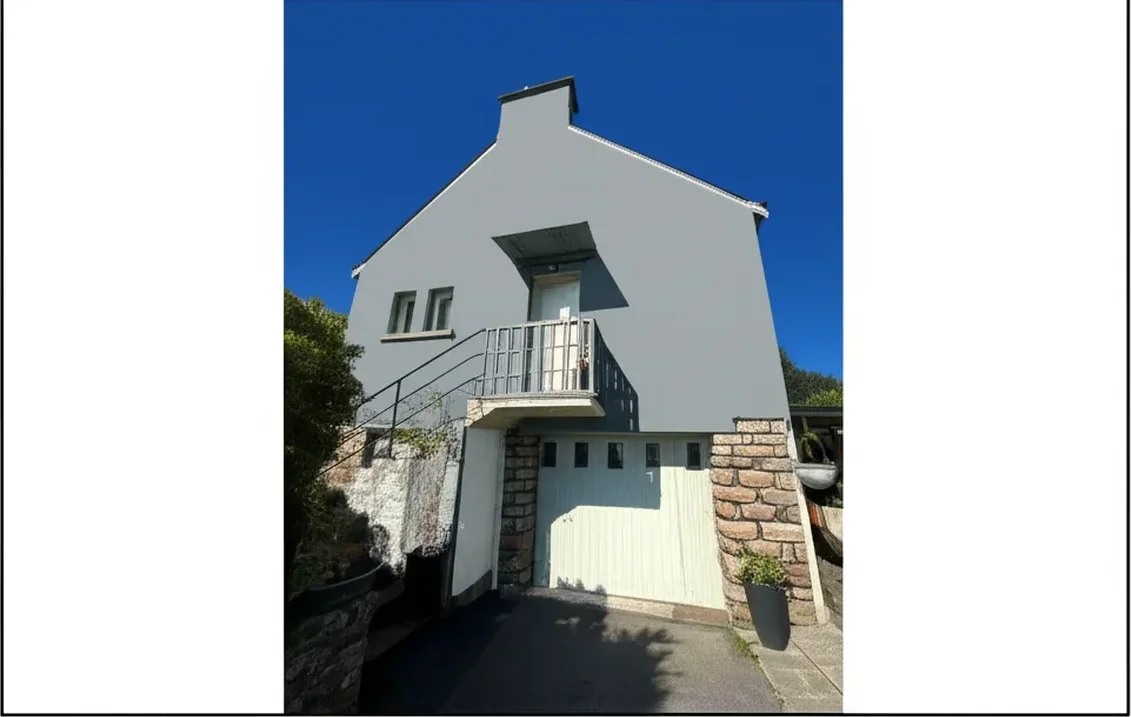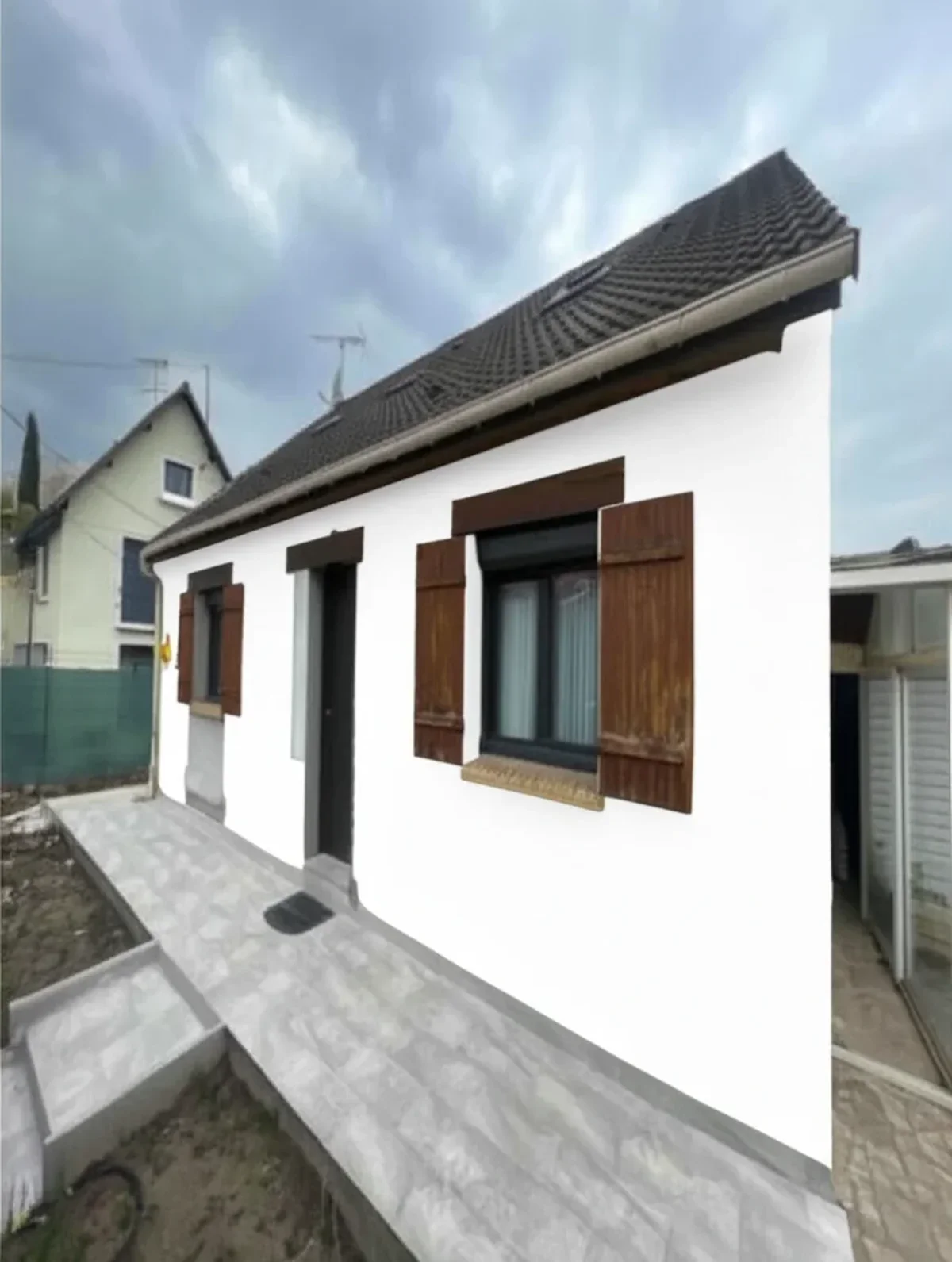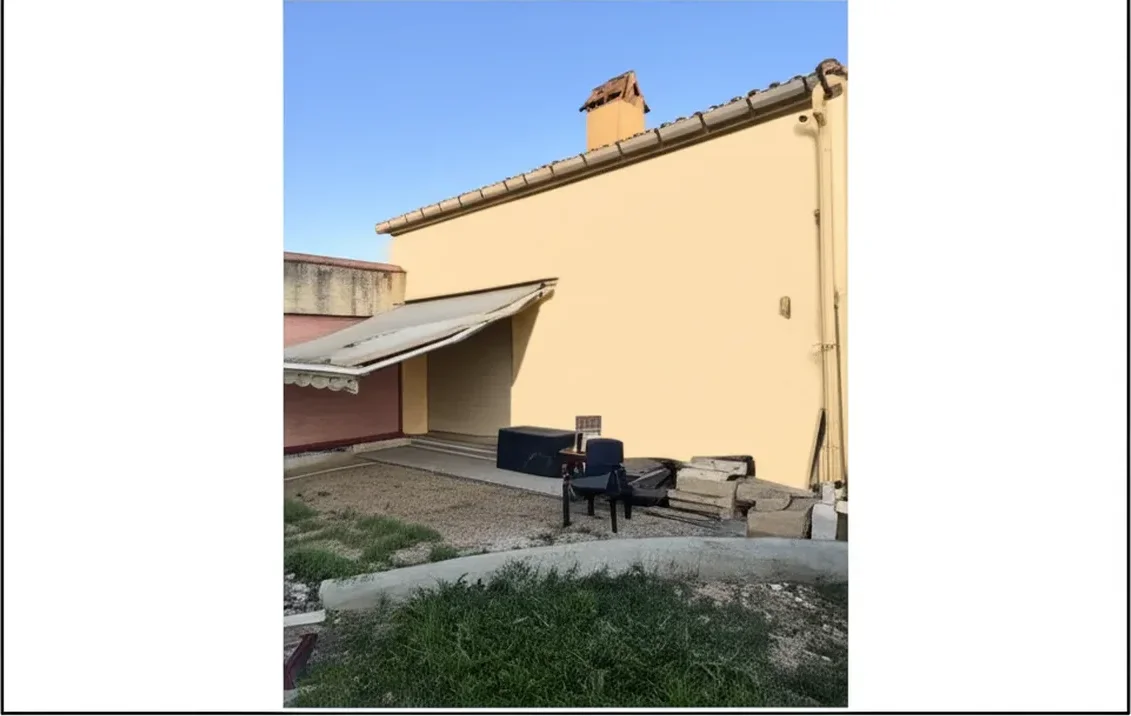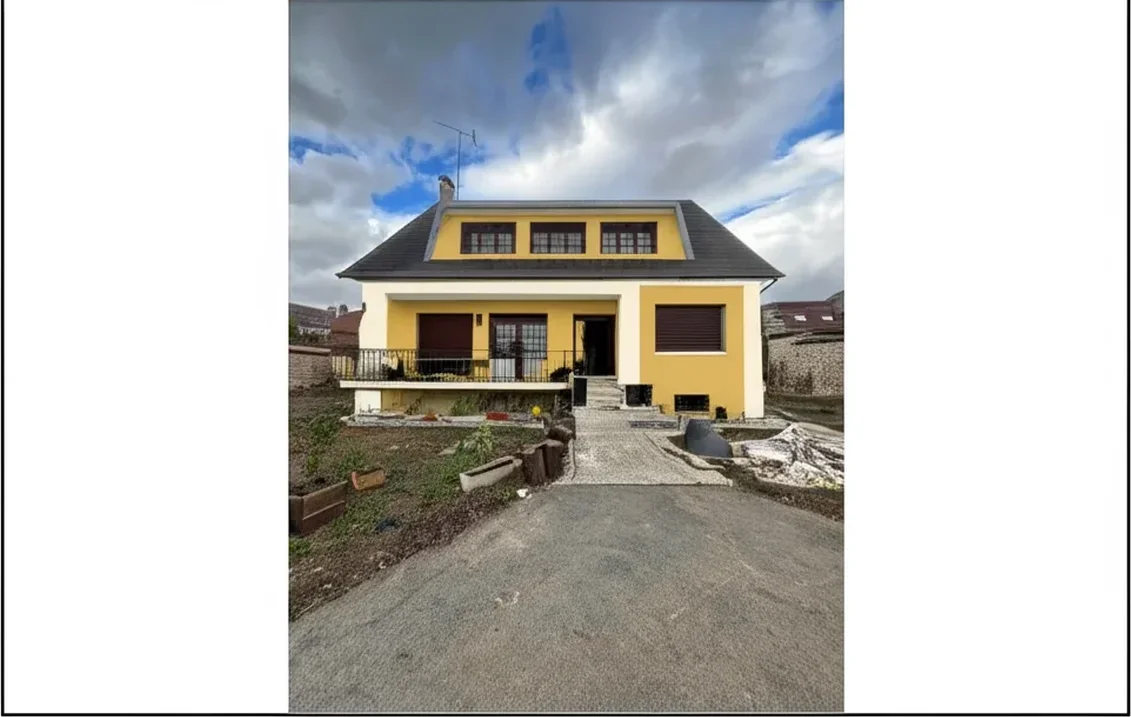
Try it on your house

FacadeColorizer is a free AI exterior paint visualiser used by UK homeowners, conservation architects and trade decorators from London terraces to Edinburgh New Town and the Cotswolds. Farrow and Ball remains the heritage benchmark of British exterior repaints, and across our 2026 dataset of 16,983 real previews the brand dominates the Listed Building Consent and Conservation Area pipeline. This complete guide focuses purely on farrow and ball exterior paint colours for UK property: the full chart distilled to the 15 most popular shades, GBP pricing per 5 litre tin from Farrow and Ball direct, John Lewis and Dulux Decorator Centres, BS EN 1062 vapour ratings, Conservation Area rules from Westminster to York and the climate-specific guidance British painters need before opening a tin in Atlantic weather.
Unlike a generic colour roundup, this is a UK-only buyer guide. Every price is GBP, every coverage figure is square metres per litre, every standard cited is the relevant British Standard, and every recommended retailer is a UK trade or DIY chain (Dulux Decorator Centre, John Lewis, Wickes, B and Q, Brewers, Crown Decorating Centres). Foreign brand mentions (Sherwin-Williams, Benjamin Moore, Behr) appear once as a global comparison reference and never as a substitute recommendation. The audience is the British owner about to spend GBP 300 to 900 on Farrow and Ball tins for a heritage repaint and the trade decorator pricing the job.
Official product specification, sample pots and the full 132 colour card sit on the Farrow and Ball Exterior Masonry product page. For a like-for-like brand comparison see our Farrow and Ball vs Dulux Heritage exterior comparison or the broader UK exterior paint brands 2026 comparison. If a colour just needs a coverage check on smooth render, our companion Farrow and Ball Exterior Masonry buyer guide covers tin-count maths for typical UK semis.
Preview any Farrow and Ball exterior colour on your own home (free)
Drop in one photo of your facade and try Slipper Satin, Shaded White, Down Pipe, Railings, Studio Green or any of 132 Farrow and Ball heritage shades before you spend GBP 7.50 on a sample pot. Free tier includes 1 HD render plus 3 free previews.
Try the free Farrow and Ball visualiserWhat makes Farrow and Ball exterior paint colours distinctly British
The farrow and ball exterior paint colours proposition was built in Dorset, manufactured in Wimborne, and tuned for the cool blue-grey daylight of the British Isles. The product line is Exterior Masonry (a water-based acrylic emulsion rated to BS EN 1062-1 Class II for vapour permeability) and Exterior Eggshell (for joinery, fascia, soffit, sash window reveals and front doors). Both carry the full F&B colour card of 132 standard shades plus archive specials, which is why a heritage colour mixed at a Farrow and Ball showroom in Marylebone looks subtly different to the same RAL or NCS code mixed elsewhere.
Technical differentiation rests on pigment density. Farrow and Ball uses higher concentrations of single pigments and almost never adds black tinter to off-whites, which is why Slipper Satin appears to shift character through the day as British daylight moves from the cool morning light of an east-facing London terrace to the warm late-afternoon glow on a Cotswolds south elevation. On a render reveal at 4pm in October, Slipper Satin reads distinctly different to Wimborne White; under the same conditions, a typical builder-grade off-white from a generic masonry tin reads identical. That depth-of-colour effect is the practical reason heritage architects and conservation officers across England, Wales and Scotland specify the brand for exterior repaints.
Coverage on the Exterior Masonry line is 10 to 12 square metres per litre on smooth render, dropping to 6 to 8 square metres per litre on pebbledash and roughcast. A typical 90 to 110 square metre UK semi-detached needs roughly 16 to 20 litres across two coats on smooth render, meaning four 5L tins at GBP 79 average list. The Exterior Eggshell line covers 12 to 14 square metres per litre on smooth joinery and runs GBP 38 to 46 for a 2.5L tin. For full pricing across all tin sizes see our Farrow and Ball Exterior Masonry buyer guide.
The 15 most popular Farrow and Ball exterior paint colours in UK 2026
On front doors, Farrow & Ball's own descriptions are the best guide: Hague Blue No. 30 is a deep blue whose green undertones mean it sits as happily outside as in, Stiffkey Blue No. 281 an inky navy, Railings No. 31 a soft black with blue undertones that the maker recommends in full gloss on a front door; our blue front door colours guide pairs them with house types and the Exterior Eggshell data sheet.
The mix is dominated by heritage off-whites, soft stones and a tight set of architectural greys for sash window reveals, ironwork and front doors. Hex values are approximate digital matches for preview purposes only; order a sample pot from a Farrow and Ball showroom before committing to 5L tins.
| Farrow and Ball colour | F&B number | Approx hex | Best on UK property type | 2026 UK preview share |
|---|---|---|---|---|
| Slipper Satin | No.2004 | #E9E3D2 | Georgian London townhouse, Bath terrace | 9% |
| Wimborne White | No.239 | #EFE9D9 | Edwardian smooth render, Cotswolds cottage | 8% |
| Shaded White | No.201 | #E0DACA | Conservation Area Victorian villa | 7% |
| Strong White | No.2001 | #E4DFD1 | Bath stone-effect render, Edinburgh stucco | 7% |
| Skimming Stone | No.241 | #D6CFBE | Edinburgh New Town stucco, Bristol terrace | 6% |
| Cornforth White | No.228 | #C9C5B8 | London stock brick render, Manchester semi | 5% |
| Down Pipe | No.26 | #646566 | Sash window reveals, plinths, gable end | 5% |
| Railings | No.31 | #262830 | Front doors, ironwork, fascia accent | 5% |
| Pavilion Gray | No.242 | #C0BAA8 | Smooth render new-build, Leeds suburb | 4% |
| Studio Green | No.93 | #3A4339 | Cotswolds front doors, Cornish coastal gable | 4% |
| String | No.8 | #D7CDB1 | Lime render, rural Wiltshire and Dorset | 3% |
| London Stone | No.6 | #A9967A | Stone-effect render, Yorkshire millstone | 3% |
| Hague Blue | No.30 | #26323A | Bristol harbourside, Edinburgh Georgian door | 2% |
| Card Room Green | No.79 | #7E8369 | Garden room, Cotswolds gable, sash reveal | 2% |
| Mizzle | No.266 | #A8AB9A | Lake District cottage, Welsh slate trim | 1% |
Try it on your house
No photo? Try a sample
A read on the 2026 data. Slipper Satin tops the F&B exterior chart at 9% preview share, reflecting near-default status on Listed Building Consent applications in Westminster, Kensington, Camden and the Bath World Heritage Site. Shaded White (7%) and Skimming Stone (6%) are the rising stars, both up roughly two percentage points since 2024 as Conservation Area officers across Edinburgh, York and Cheltenham have favoured warmer off-whites over the cooler greys that peaked around 2020 to 2022. Down Pipe, Railings and Studio Green together account for 14% of previews, almost always as trim, sash-reveal and door accents rather than full-elevation body colours. Mizzle and Card Room Green sit in the long tail and over-index in rural and coastal previews where green is climate-honest rather than fashion-driven.
Farrow and Ball exterior colours by UK property type
The right shade depends as much on the property type and the regional vernacular as personal taste. Across the 16,983 preview dataset we matched the most successful colour combinations against six dominant UK property types. Each pairing pulls from the F&B Architectural Colours card and reflects the choices that survived Conservation Area review without revision in 2026.
Georgian terrace (London, Bath, Bristol, Edinburgh New Town): Slipper Satin No.2004 or Shaded White No.201 on stucco body, Down Pipe No.26 on sash window reveals, Railings No.31 on the front door and railings, and Pointing No.2003 on the cornice and parapet. The combination reads as period-correct and survives any Article 4 Direction review in central London boroughs.
Victorian semi (Manchester, Birmingham, Leeds, south London): Cornforth White No.228 or Skimming Stone No.241 on render, Pavilion Gray No.242 on bay window reveals, Studio Green No.93 or Railings No.31 on front door, Wimborne White No.239 on fascia and soffit. Avoid pure brilliant whites on Victorian render; the period reads off and conservation officers usually push back.
Edwardian semi (Birmingham suburbs, Surrey, Edinburgh tenement upper floors): Wimborne White No.239 on smooth render, Down Pipe No.26 on timber bay and sash detail, Studio Green No.93 on front door, Off Black No.57 on cast-iron rainwater goods. Edwardian properties tolerate slightly cleaner whites than Victorian ones because original render was often lime washed rather than oil-painted.
Arts and Crafts cottage (Surrey, Sussex, Lake District): String No.8 or Wimborne White No.239 on render between half-timbering, Off Black No.57 or Tanner's Brown No.255 on the timber framing, Card Room Green No.79 on front door, Mizzle No.266 on garden gates. For a deeper dive see our Arts and Crafts exterior colours UK 2026 guide.
Cotswolds stone cottage (Burford, Stow on the Wold, Chipping Campden): Lime washed natural stone usually carries no body paint; F&B colours are reserved for joinery. Studio Green No.93 or Card Room Green No.79 on front door, Down Pipe No.26 on window sashes, Off Black No.57 on cast iron. Conservation Area rules in West Oxfordshire are strict; check our Cotswolds cottage exterior colours guide.
Modern render new-build (Cambridge, Milton Keynes, Leeds outer suburbs): Pavilion Gray No.242 or Strong White No.2001 on render body, Railings No.31 on front door and garage, Cornforth White No.228 on fascia. Modern render tolerates the cooler F&B greys that read flat on heritage stock.
Where to buy Farrow and Ball exterior paint in the UK: stockists and 2026 GBP pricing
Distribution for genuine farrow and ball exterior paint colours is narrower than mass-market masonry brands. Direct from Farrow and Ball is the primary route (farrow-ball.com plus around 60 branded showrooms across the UK, with flagship locations on Wigmore Street, Belgravia, Marylebone, Edinburgh, Bath, Bristol, Manchester and Glasgow). John Lewis carries a curated exterior selection at marginally higher prices. Brewers Decorator Centres stock the full range as trade. Wickes carries roughly 32 F&B Inspired colour-match alternatives mixed in Wickes Trade base, but those are not genuine product. B and Q does not currently stock genuine Farrow and Ball. Dulux Decorator Centres can colour-match any F&B number in Dulux Trade Weathershield Smooth Masonry base for roughly 55 to 65% of the retail F&B price, which is the route most UK trade decorators recommend to budget-conscious homeowners on unrestricted properties.
| Retailer / route | 5L Exterior Masonry (GBP) | 2.5L Exterior Eggshell (GBP) | 100ml sample pot (GBP) | Genuine F&B product? |
|---|---|---|---|---|
| Farrow and Ball direct (showroom or farrow-ball.com) | 79 to 95 | 42 to 48 | 7.50 | Yes |
| John Lewis | 82 to 98 | 44 to 50 | 7.50 | Yes |
| Brewers Decorator Centre (trade account) | 72 to 84 (trade) | 38 to 44 (trade) | 7.00 | Yes |
| Dulux Decorator Centre (F&B colour match in Dulux Trade base) | 42 to 52 | 26 to 32 | N/A (use Dulux tester) | No (95% colour match) |
| Wickes (F&B Inspired range) | 32 to 38 | 22 to 26 | N/A | No (limited 32-colour match) |
| B and Q | Not stocked | Not stocked | N/A | No |
| Screwfix | Not stocked | Not stocked | N/A | No |
The honest practical recommendation in 2026: for Listed Building Consent or strict Conservation Area applications go genuine F&B from a showroom or Brewers trade account. For unrestricted properties, mix at a Dulux Decorator Centre in Trade Weathershield base. For sample pots always pay the GBP 7.50 for the real product; the colour shift between a Dulux match and the F&B sample on a real elevation is significant enough to justify the small spend. Compare against Crown Trade Sandtex by reading our Crown vs Dulux exterior comparison.
Listed Building Consent, Conservation Areas and Article 4 Directions
Choosing farrow and ball exterior paint colours for a restricted property without verifying the planning constraints is the single most expensive mistake we see in the dataset. The hierarchy in England, Wales and Scotland is consistent. Listed Buildings (Grade I, II*, II in England; Category A, B, C in Scotland) always require Listed Building Consent for any external repaint, including a like-for-like colour. Conservation Area properties usually fall under Permitted Development for like-for-like repainting, but an Article 4 Direction in your borough revokes those rights and requires full Planning Permission. Article 4 Directions are common in central London boroughs (Westminster, Camden, Kensington and Chelsea, Islington, Hackney) and in heritage market towns (Bath, Chichester, Stamford, Saffron Walden, Whitby, Hebden Bridge).
The official starting point is the Planning Portal guidance on painting Listed Buildings and Conservation Areas, then a check on your specific address through your council planning page. Historic England publishes the National Heritage List for England at historicengland.org.uk if you are not sure whether your property is listed. For Scotland the equivalent is Historic Environment Scotland. For a deeper walkthrough by city see our London Listed Building painting guide, Bath guide and Edinburgh guide.
For Westminster, Kensington and Bath, the F&B colours that pass review consistently in 2026 are Slipper Satin No.2004, Wimborne White No.239, Shaded White No.201 and Skimming Stone No.241 on body, with Down Pipe No.26, Railings No.31 and Off Black No.57 on joinery. Bright modern shades such as Pitch Black, Hague Blue or Studio Green on a full elevation typically draw an objection unless there is documented historic precedent on the specific terrace. Our broader Conservation Area painting rules guide covers the nuance.
British Standards, climate and timing: getting the application right
The relevant British Standard is BS EN 1062 (exterior coatings for masonry and concrete). Farrow and Ball Exterior Masonry is rated to BS EN 1062-1 Class II for water vapour permeability, which matters in the UK because solid-brick Victorian and Edwardian walls need to release internal moisture. Trap moisture behind a non-breathable film and you get blown render, spalling brick and damp staining within two winters. Surface preparation rules sit under BS 7079, and the practical implication for UK painters is that masonry must be clean, sound, dry to less than 16% moisture content, and treated against algae or biological growth before the first coat. The HSE guidance on working at height and on COSHH for biocides is at hse.gov.uk.
The realistic UK application window for Farrow and Ball Exterior Masonry is May through September. Both air and substrate must sit between 10C and 25C, the dew point must be at least 3C below substrate temperature, and rain must be 4 hours or more away. Below 10C the cure cycle stretches from 24 hours to nearly a week, and driving Atlantic rain within that window strips the unbonded film off the render. Above 25C in direct sun the surface skins before the body cures, locking in solvent and producing visible lap marks. In Scotland and the north of England, the window narrows further to June through August. Our companion damp-proof exterior paint guide covers freeze-thaw and driving rain considerations in detail.
For pebbledash and roughcast textures, Farrow and Ball Exterior Masonry needs to be applied by long-pile (18mm) roller or by airless spray to fill the voids. Coverage drops from 10 to 12 square metres per litre on smooth render to 6 to 8 square metres per litre on pebbledash, which is why a typical pebbledash semi takes nearly 50% more paint and the GBP cost lands closer to 475 than 316 across two coats. Brush-only application on pebbledash will leave the deepest voids unfilled and the first winter of driving rain will show every miss. Our best paint for pebbledash walls UK guide compares F&B against Sandtex and Dulux Weathershield specifically for that texture.
How to test it on your own home before you buy
No third-party report replaces your own walls: the same colour reads differently on a north elevation and a south one, next to red brick or a grey roof, under morning and evening light. Take a daylight photo, upload it to the free AI paint visualiser, and run two or three candidates on the same image so the comparison is fair. Keep the one or two that survive the side-by-side, buy a tester pot of each, and brush them out on the actual surface in the actual light before you order the full quantity.
Final 2026 verdict on Farrow and Ball exterior paint colours in the UK
For Listed Buildings, strict Conservation Areas and any property where heritage character is the buying signal, genuine farrow and ball exterior paint colours remain the safe default in 2026. The product is technically sound under BS EN 1062, the colour card carries planning weight that supermarket masonry paints do not, and the resale and rental impact on heritage stock more than offsets the GBP 30 to 40 premium per 5L tin. For unrestricted modern properties and large detached homes where the elevation is not period-sensitive, the Dulux Decorator Centre F&B colour-match route delivers 95% of the visual outcome at roughly 55 to 65% of the cost.
The wider UK ecosystem matters too. Crown Trade Sandtex Highbuild and Dulux Weathershield Smooth Masonry are credible substrates for F&B colour matching, both rated to BS EN 1062 and both stocked at Brewers, Crown Decorating Centres and Dulux Trade Centres. Sandtex.co.uk and dulux.co.uk publish the full trade data sheets. For US visitors landing here by accident, the closest brand parallel is Benjamin Moore Aura Exterior, but the colour cards do not cross-translate cleanly because the British heritage palette is tuned for British daylight, British render textures and British architectural vocabulary; do not import US colour schemes wholesale to a UK Conservation Area without local sampling.
The single highest-leverage step before any F&B exterior repaint in 2026 is to preview the colours on a photo of your actual facade at a realistic time of day. Sample pots cost GBP 7.50 each and only show 200mm of the actual elevation; an AI visualiser shows the full house under realistic UK daylight in seconds. Our free FacadeColorizer visualiser covers the entire F&B exterior card plus the closest Dulux Trade, Crown Trade and Sandtex matches side by side. Generous trial: 1 HD render plus 3 free previews at no cost, then 8.90 GBP for a colour pack if you want unlimited resamples for the project.
Farrow and Ball, Dulux, Crown, Sandtex, Johnstone, Leyland, Sherwin-Williams and Benjamin Moore are trademarks of their respective owners. Colour swatches in this guide are approximate digital matches for preview purposes only and not affiliated with or endorsed by Farrow and Ball Limited. Always verify final colour against a genuine sample pot on the actual elevation before purchasing 5L tins.
Frequently asked questions
What are the most popular Farrow and Ball exterior paint colours in the UK in 2026?
How much does a 5 litre tin of Farrow and Ball exterior paint cost in the UK in 2026?
Which Farrow and Ball exterior colours suit a Georgian London townhouse?
Do I need Listed Building Consent or Planning Permission to repaint a UK property with Farrow and Ball?
Can I get Farrow and Ball exterior colours mixed in a cheaper UK masonry base?
What is the best Farrow and Ball exterior colour for a UK Victorian semi?
When is the best time of year to apply Farrow and Ball exterior paint in the UK?
Trademarks mentioned (Sherwin-Williams, Benjamin Moore, Behr, Caparol, Brillux, Sto, Alpina, Valspar, PPG, Glidden, Dulux, Crown Trade, Sandtex, Farrow & Ball, Johnstone's, Leyland) are property of their respective owners. FacadeColorizer is independent and not affiliated with any of them. Nominative fair use under Lanham Act §1125.