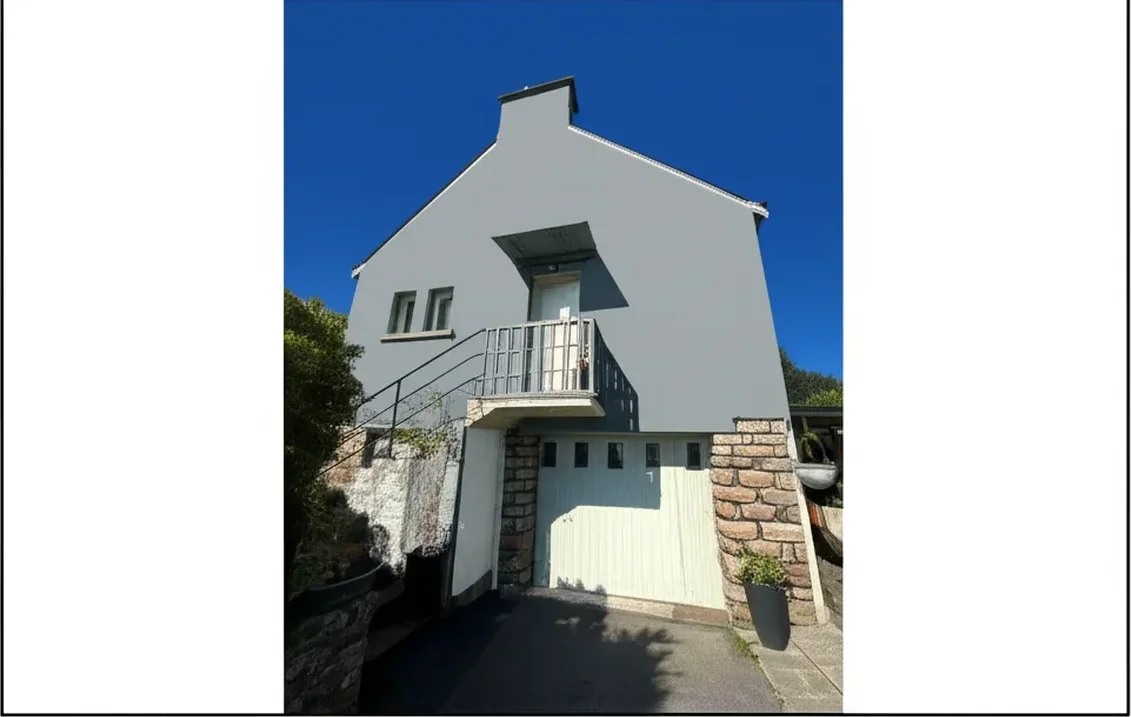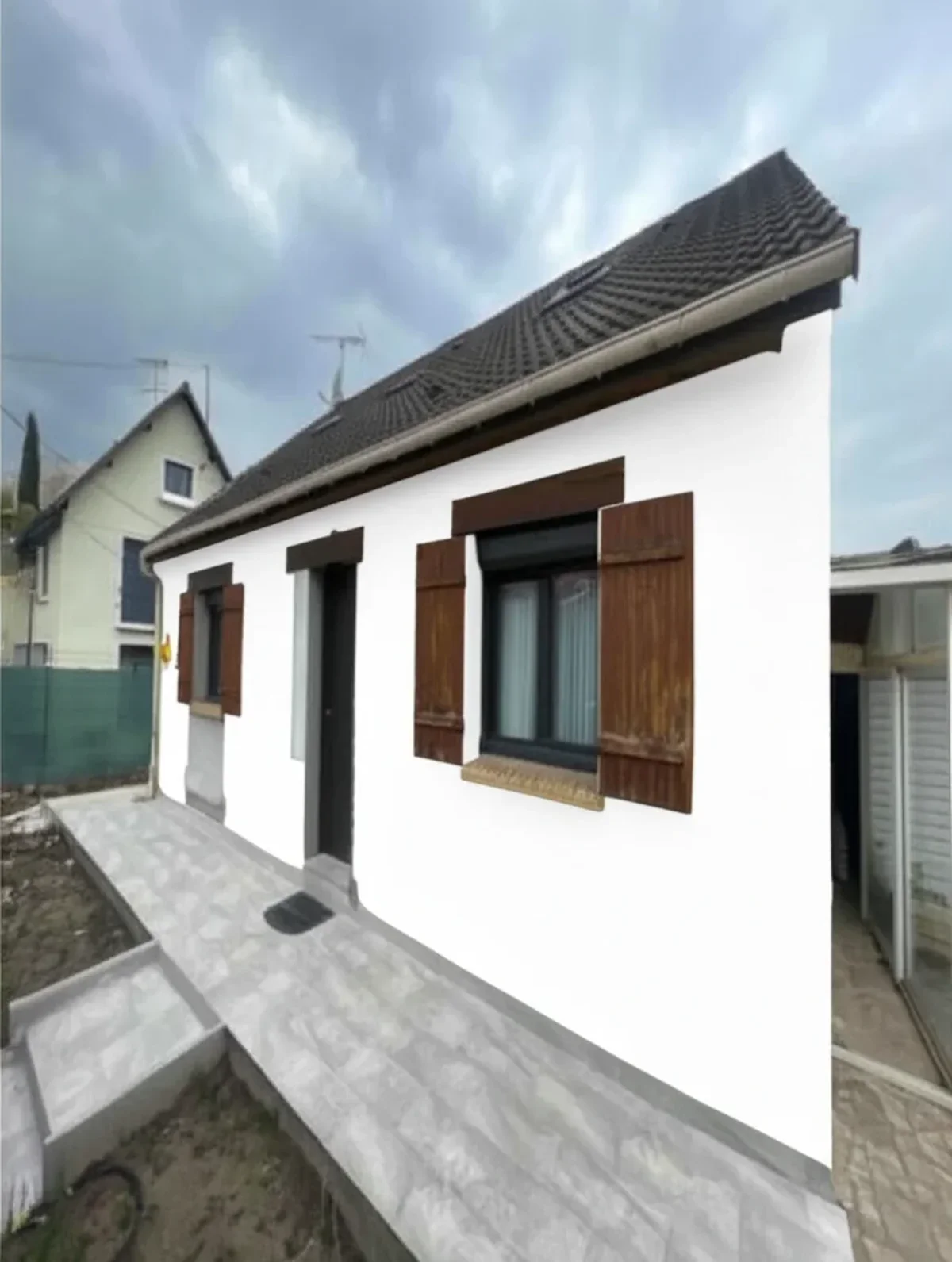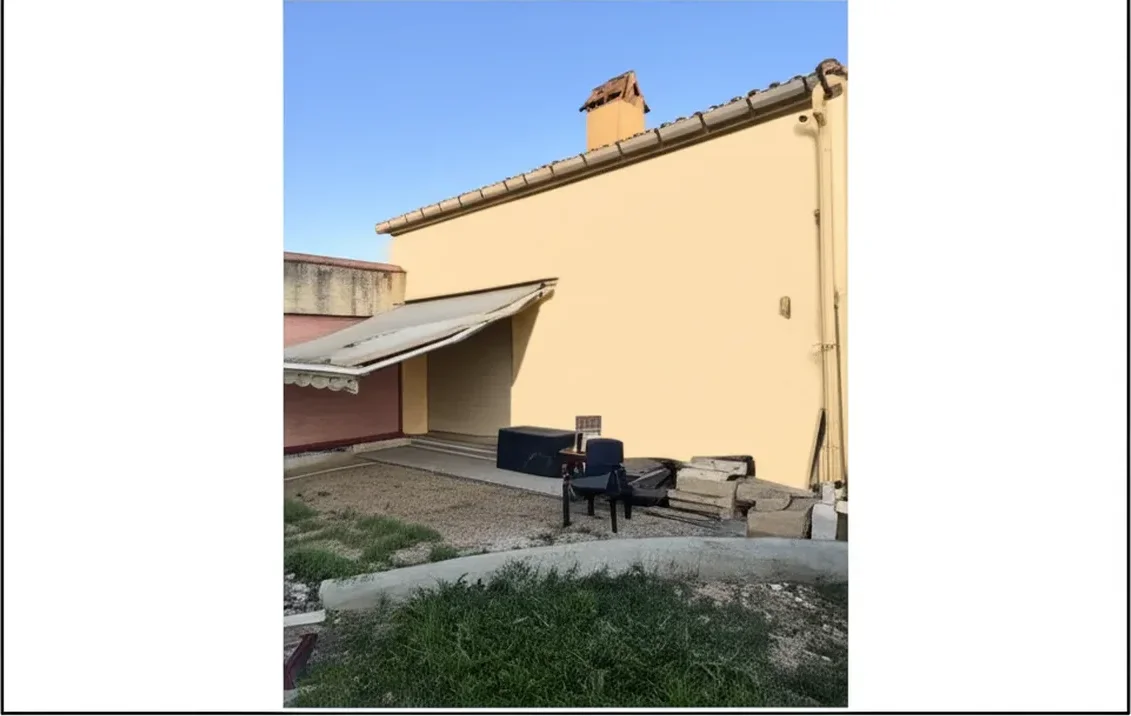
Try it on your house

Repainting outside metalwork is the most under-planned exterior job in British homes. Across 16,983 previews on FacadeColorizer, the most common exterior metal paint colours queries in 2026 come from London, Manchester, Edinburgh, Birmingham, Leeds and Bristol, and they group around railings, gates, garage doors, cast iron gutters and downpipes, fire escapes and steel front doors. This guide compares the outdoor metal paint products British decorators actually specify in 2026, sets out realistic GBP prices from B&Q, Wickes, Screwfix, Homebase and Toolstation, explains which BS EN ISO 12944 corrosivity class your project sits in, and shows you the metal paint colours UK homeowners are choosing right now for wrought iron, galvanised steel, aluminium and pre-painted factory finishes.
Why exterior metal paint is a different problem from masonry
Painting outside metal in the UK climate is not a colour decision, it is a corrosion decision first and a colour decision second. Where exterior masonry paint protects mineral surfaces against driving rain and freeze-thaw, exterior metal paint must defeat oxidation, salt deposition near coastal towns, condensation under fascia, soffit and box gutter details, and the constant flex of steel and aluminium across British summer and winter temperatures. A standard exterior emulsion applied to bare steel will flake within two seasons of Atlantic westerlies, while a properly specified outdoor metal paint system on a Victorian wrought iron railing in Edinburgh New Town or Hampstead can hold colour for ten to fifteen years.
British homeowners get caught out most often on three substrates. The first is galvanised steel (modern gates, fences, lintels, downpipes) which has a zinc layer that rejects most direct-to-metal paints unless an etch primer or T-Wash mordant solution is used first. The second is aluminium (garage doors, modern windows, gutters) which oxidises invisibly and needs a self-etching primer formulated specifically for non-ferrous metals. The third is pre-painted factory steel (Colorbond style, modern composite doors, powder-coated railings) which needs no primer if scuffed correctly but will reject most domestic acrylics unless a flexible exterior metal paint is selected. Choose the wrong system and the failure shows within twelve to eighteen months as fish-eye craters, blistering and rust bleed at fastener heads.
The good news is that 2026 outdoor metal paints in the UK have matured. Hammerite Direct to Rust now sits alongside Sandtex Trade Microseal Smooth Metal, Dulux Weathershield Multi Surface, Crown Trade Metalshield and Johnstone Trade Aqua Guard, and most are single-pack water-based or hybrid alkyd formulations that bond directly to lightly rusted metal without sandblasting. The pricing has stabilised at 18 to 42 GBP per litre at trade depots, with Hammerite typically the cheapest mainstream option and Crown Trade and Johnstone Trade the premium decorator picks.
Metal substrates on British houses: what you are actually painting
Before you buy any exterior metal paint, identify the substrate. On a typical British house you will encounter five different metals, each with its own paintability rating. Victorian and Edwardian railings, gates and balconies are usually wrought iron or cast iron, both very paint-friendly once derusted to BS 7079 St 2 or higher. Mid-century estate houses often have galvanised steel garage doors, fascia trims and cast iron rainwater goods that have been painted multiple times since 1955. Post-1985 builds frequently use uPVC fascia and soffits, where the metal element is limited to galvanised gutter brackets and the occasional steel lintel.
Modern 2010s-onwards estate homes use a mix of factory-painted composite front doors, powder-coated aluminium garage doors, anthracite grey aluminium gutters and downpipes, and occasionally Corten or weathering steel cladding panels. For these substrates the rule is simple: do not paint factory powder coat in its first ten years unless visible failure has begun, and when you do repaint, choose a paint chemistry that flexes with the substrate. For wrought iron and cast iron, traditional alkyd gloss systems still outperform water-based on edges and welds. For galvanised steel and aluminium, modern water-based hybrid alkyds (Sandtex Microseal, Dulux Weathershield Multi Surface) bond best.
A note on cast iron rainwater goods. Many British semis and terraces from 1880 to 1939 still carry original cast iron gutters, downpipes, hopper heads and gulleys. These are heavy, often listed as character features under Conservation Area policy, and command 400 to 900 GBP per length to replace. Repainting them every eight to ten years with a high-build Hammerite or Crown Trade Metalshield system extends their life by decades. The Society for the Protection of Ancient Buildings and the UK Planning Portal both note that maintaining original cast iron rainwater goods is the single best preservation investment a Conservation Area homeowner can make.
Six best exterior metal paint products UK 2026 compared (GBP prices)
Prices and coverage below were verified in May 2026 at B&Q Trade Point, Wickes, Screwfix, Homebase and Toolstation, plus direct trade pricing from Dulux, Sandtex, Crown Trade depots and Johnstone Trade depots. Coverage is the manufacturer figure on smooth, properly prepared metal; expect 25 to 40% lower coverage on cast iron with deep flute detail or on heavily pitted, derusted wrought iron. All products listed meet BS EN ISO 12944 atmospheric corrosivity protection requirements for the relevant class.
| Outdoor metal paint | Best for | Coverage (m2/litre) | Price 750 ml (GBP) | Guarantee | Where to buy |
|---|---|---|---|---|---|
| Hammerite Direct to Rust Smooth | Wrought iron railings, gates, garden furniture | 8 to 10 | 18 to 24 | 8 years | B&Q, Wickes, Screwfix |
| Sandtex Trade Microseal Smooth Metal | Galvanised steel gates, garage doors, fascia | 10 to 12 | 22 to 28 | 12 years | B&Q Trade Point, Brewers |
| Dulux Weathershield Multi Surface | Mixed metal and masonry, garage doors | 10 to 13 | 24 to 30 | 10 years | B&Q, Homebase |
| Crown Trade Metalshield Gloss | Cast iron rainwater goods, decorator spec | 12 to 14 | 28 to 36 | 10 years | Brewers, Trade Point |
| Johnstone Trade Aqua Guard Gloss | Low-odour water based, listed-friendly metal | 12 to 14 | 30 to 38 | 10 years | Johnstone depots, Toolstation |
| Rust-Oleum Combicolor 7300 | Heavy duty, industrial fences, gates, fire escapes | 8 to 11 | 34 to 42 | 12 years | Screwfix, Brewers, online |
Try it on your house
No photo? Try a sample
London, Edinburgh and Bath lean heritage with semi-gloss black railings, while Manchester, Leeds and Bristol new-build estates favour matt anthracite 7016 to coordinate with grey uPVC windows and composite front doors.
Try metal paint colours on your own railings, gates and gutters, free
See how Hammerite gloss black, Sandtex anthracite and Crown Trade Metalshield look on your actual property before you buy a tin. Free preview from your photo, no card, 30 seconds.
Visualise free on your photoBS EN ISO 12944 corrosivity classes: how to specify the right outdoor metal paint
BS EN ISO 12944 is the British and European standard that classifies exterior metal paint systems by the corrosion environment they are protecting against, not by the colour or chemistry. The standard splits atmospheric exposure into six classes from C1 (very low, dry interior) to CX (extreme, offshore platforms). Most British homes sit in C2 (low, rural inland), C3 (medium, urban and light industrial) or C4 (high, coastal and industrial). If you live within five miles of the British coast (Brighton, Blackpool, Aberdeen, Penzance, Margate) you should specify a C4 system. If you live in central London, Manchester, Birmingham or Glasgow you are at minimum C3 because of urban airborne sulphates and particulates.
The standard then sets a durability target in years per system: L (low, 2 to 5 years), M (medium, 5 to 15 years), H (high, 15 to 25 years) and VH (very high, over 25 years). For a typical British home repainting wrought iron railings or cast iron gutters, the realistic target is C3-M to C3-H. That translates in practice into a three-coat system of metal primer, intermediate coat, and topcoat, with a total dry film thickness of around 180 to 240 microns. Hammerite Direct to Rust at one or two coats is typically C2-M only. Crown Trade Metalshield as a full three-coat system reaches C3-H, and Rust-Oleum Combicolor 7300 with a Combiprimer 8780 base reaches C4-H, which is the level you want for coastal metal.
| BS EN ISO 12944 class | UK example | Recommended system | Repaint cycle |
|---|---|---|---|
| C2 low | Rural Cotswolds, Lake District inland | Hammerite Direct to Rust 2 coats | 8 to 10 years |
| C3 medium | London, Manchester, Leeds, Birmingham urban | Sandtex Microseal or Crown Metalshield 3 coats | 10 to 12 years |
| C4 high | Brighton, Blackpool, Aberdeen, Penzance coastal | Rust-Oleum Combicolor 7300 + Combiprimer 8780 | 12 to 15 years |
| C5 very high | Offshore, harbour-facing, industrial estuary | Two-pack epoxy zinc primer + polyurethane topcoat | 15 to 20 years |
For domestic British use, C3-M is the realistic baseline. The Health and Safety Executive guidance at hse.gov.uk details lead-paint risks on pre-1992 metal substrates, which is relevant if you are scraping back Victorian or Edwardian railings before repaint. Older railings often carry red oxide and white lead undercoats that require wet-stripping techniques and disposal at a licensed waste centre rather than dry sanding.
Exterior metal paint colours UK 2026: RAL, BS 4800 and the heritage palette
Most exterior metal paint manufacturers in the UK colour-match to three reference systems: RAL Classic and RAL Design (the German European standard), BS 4800 (the British paint colour standard, still used for window frames, doors and architectural metalwork) and NCS (Natural Colour System, used by some heritage paint makers). The default sees of British exterior metal colours are RAL 7016 anthracite grey (modern gutters and aluminium), RAL 9005 jet black (railings and gates), BS 00-E-53 garden green (Victorian Glasgow railings and Edinburgh gates), RAL 9010 pure white (cast iron rainwater on white-rendered semi), and BS 06-C-37 buttermilk (Cotswold cast iron). Farrow and Ball offer their own off-black exterior tones (Off Black, Pitch Black, Railings) which colour-match closest to RAL 9011 graphite black, slightly softer than RAL 9005.
The 2026 trend in British exterior metal paint colours is split by region. London and the South East lean heritage: traditional black or graphite black gloss railings, dark green Victorian park railings (BS 00-E-53), and matt black anthracite gutters on Victorian terraces from Islington to Wimbledon. The Midlands and the North continue to favour brighter combinations: white cast iron gutters on red brick semis, gloss racing green garage doors, and dark blue front gates. Scotland and Wales favour heritage greys, sage greens and dark navy blues that work with weather-stained sandstone and Welsh slate.
A practical note on colour and heat. Dark metal on south-facing elevations runs hot in the British summer (anything over 32 degrees C surface temperature on RAL 9005 black on a London August afternoon is normal) and can stretch lower-grade alkyd films past their elastic limit, causing micro-cracking around weld lines. If you choose deep black, very dark anthracite or dark blue for a south-facing garage door or large aluminium gate, specify a high-end flexible exterior metal paint such as Crown Trade Metalshield, Johnstone Trade Aqua Guard or Rust-Oleum Combicolor 7300, not a budget direct-to-rust product.
Prep, primers and application: BS 7079 surface prep on British metalwork
Every credible exterior metal paint system in the UK references BS 7079 for surface preparation grade. The four grades that matter for domestic work are St 2 (manual scraping and wire brushing to remove loose rust and scale, the realistic minimum for ladder-access wrought iron railing), St 3 (more thorough manual cleaning, bright metal patches visible, the standard for cast iron gutter and downpipe repaint), Sa 2 (light dry blast cleaning, used by specialist contractors on heavy-duty industrial railings) and Sa 2.5 (near-white metal blast, only realistic on professionally restored heritage railings off-site). For most British semis and terraces, St 2 to St 3 with a stabilising primer covers all domestic exterior metal paint scenarios.
The primer selection rule on outdoor metal paint is straightforward. Bare ferrous metal (steel, wrought iron, cast iron after derusting) takes a zinc phosphate primer or red oxide primer. Galvanised steel takes an etch primer such as Hammerite Special Metals Primer, Bedec Multi Surface Primer or a traditional T-Wash mordant. Aluminium takes a self-etching aluminium primer (Sandtex Trade Stabilising Solution does not work; you need a dedicated etch product). Pre-painted factory finishes take a light keying with 320 to 400 grit followed by a flexible adhesion primer. Skip the primer step and any exterior metal paint will fail within two seasons regardless of brand.
The application window in the UK is the same as for masonry paint: 8 degrees C minimum substrate temperature, 25 degrees C maximum, relative humidity under 85%, no rain forecast for 12 to 24 hours after application, and no direct early-morning condensation on the metal at the point of brush or roller contact. That gives most British painters a practical season from late April to early October, with a narrower window in Scotland and the North. A handful of low-temperature exterior metal paints (Dulux Weathershield All-Season, Crown Trade Frost-Free) are usable down to 2 degrees C and let decorators take on shoulder-season jobs in Yorkshire, Lancashire and the Scottish Borders.
Conservation Areas, Listed Buildings and Article 4: when metal paint needs consent
Most exterior metal paint repaints on an unlisted British home outside a Conservation Area fall under Permitted Development and need no application. Repainting a previously painted railing, gate, gutter or garage door in a similar colour is not a material change to external appearance and councils generally treat it as routine maintenance. The position changes sharply for Listed Buildings and Conservation Area properties. Painting bare cast iron railings or gates for the first time, changing a heritage railing colour from black to white or to a bright contemporary tone, or repainting decorative cast iron in a way that loses the original profile, can all trigger Listed Building Consent or Conservation Area Consent requirements.
In Article 4 Direction zones, especially in Bath, Edinburgh New Town, central London boroughs, Brighton, York and the major Conservation Areas of Manchester and Bristol, even a colour change on a previously painted gate or railing can require planning permission. The safest approach for a heritage British home is to (1) check the Historic England National Heritage List, the gov.scot historic environment policy and your local Conservation Officer before ordering paint, (2) repaint in the documented heritage colour for that street (most Conservation Areas publish character appraisals listing original railing, gate and gutter colours by terrace) and (3) document the existing colour with photographs before stripping back.
Citizens Advice publishes accessible guidance on Permitted Development and planning enforcement at citizensadvice.org.uk. Painting a listed metal item without consent is a criminal offence and councils can require the work to be undone at the owner's cost. For unlisted homes inside a Conservation Area, the worst case is normally an enforcement notice requiring a return to the previous colour. Either way, a single email to your council's planning team before you buy paint will save 200 to 800 GBP in correction costs and avoid a slow response from the conservation officer two summers later.
Preview every railing, gate and gutter colour before you order
Try Hammerite gloss black, Sandtex anthracite RAL 7016, Crown Trade Metalshield and Johnstone Trade Aqua Guard on your own house photo. No download, no card, 30 seconds.
Visualise freeHow to test it on your own home before you buy
No third-party report replaces your own walls: the same colour reads differently on a north elevation and a south one, next to red brick or a grey roof, under morning and evening light. Take a daylight photo, upload it to the free AI paint visualiser, and run two or three candidates on the same image so the comparison is fair. Keep the one or two that survive the side-by-side, buy a tester pot of each, and brush them out on the actual surface in the actual light before you order the full quantity.
Frequently asked questions
What are the best exterior metal paint colours UK 2026?
What is the best outdoor metal paint UK 2026?
Do I need planning permission to paint metal railings UK?
What does BS EN ISO 12944 mean on exterior metal paint?
Can I paint galvanised steel directly with Hammerite UK?
How much does it cost to repaint exterior metalwork on a UK semi?
Where can I buy exterior metal paint UK 2026?
Trademarks mentioned (Sherwin-Williams, Benjamin Moore, Behr, Caparol, Brillux, Sto, Alpina, Valspar, PPG, Glidden, Dulux, Crown Trade, Sandtex, Farrow & Ball, Johnstone's, Leyland) are property of their respective owners. FacadeColorizer is independent and not affiliated with any of them. Nominative fair use under Lanham Act §1125.