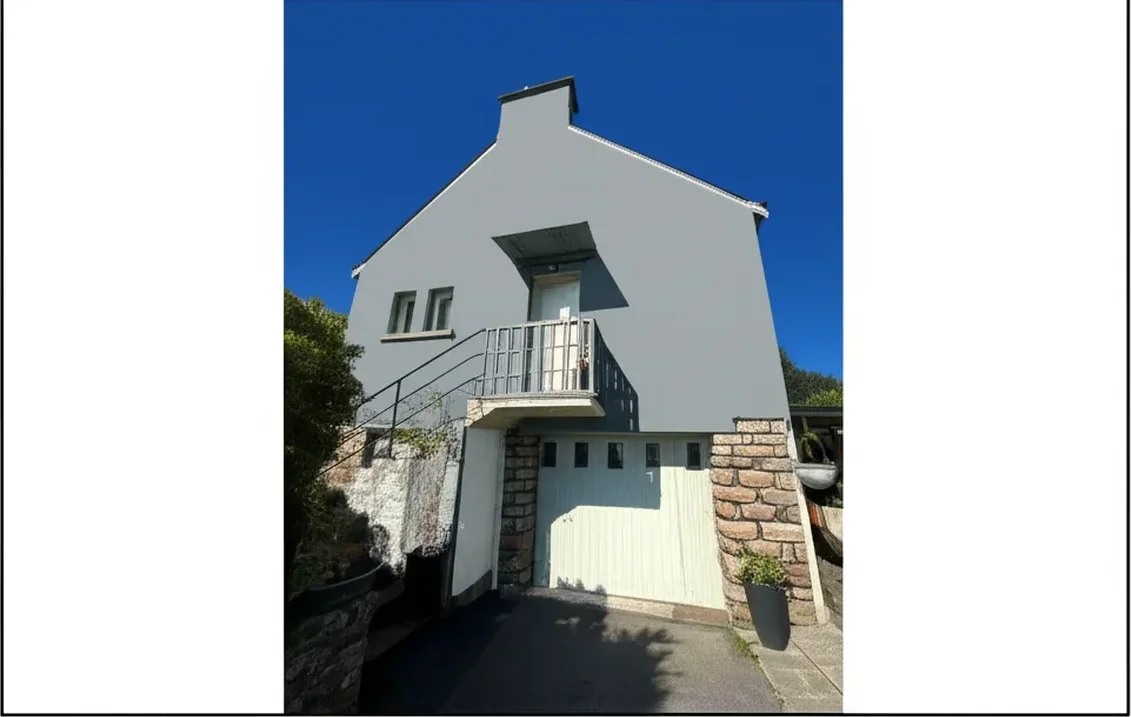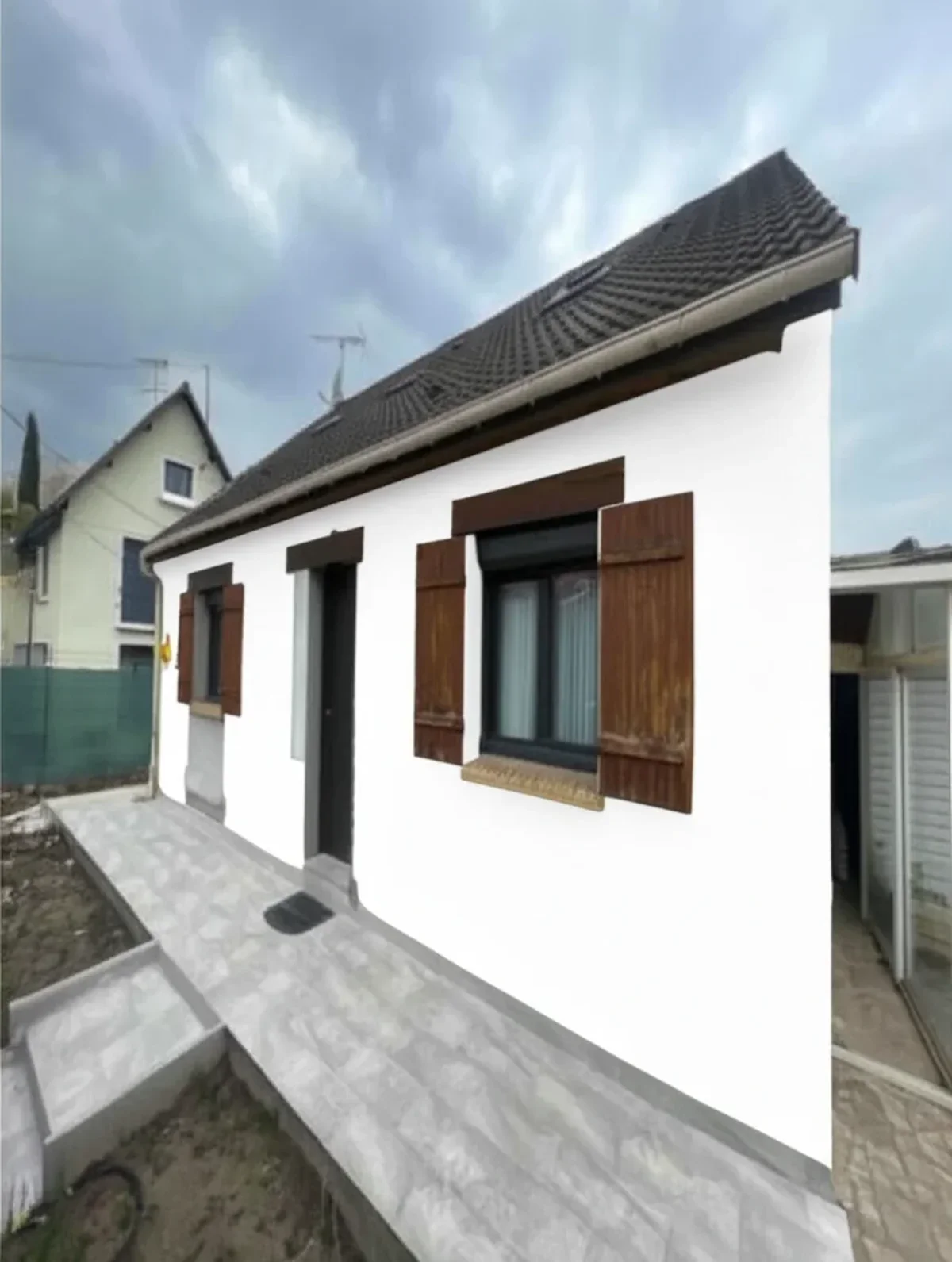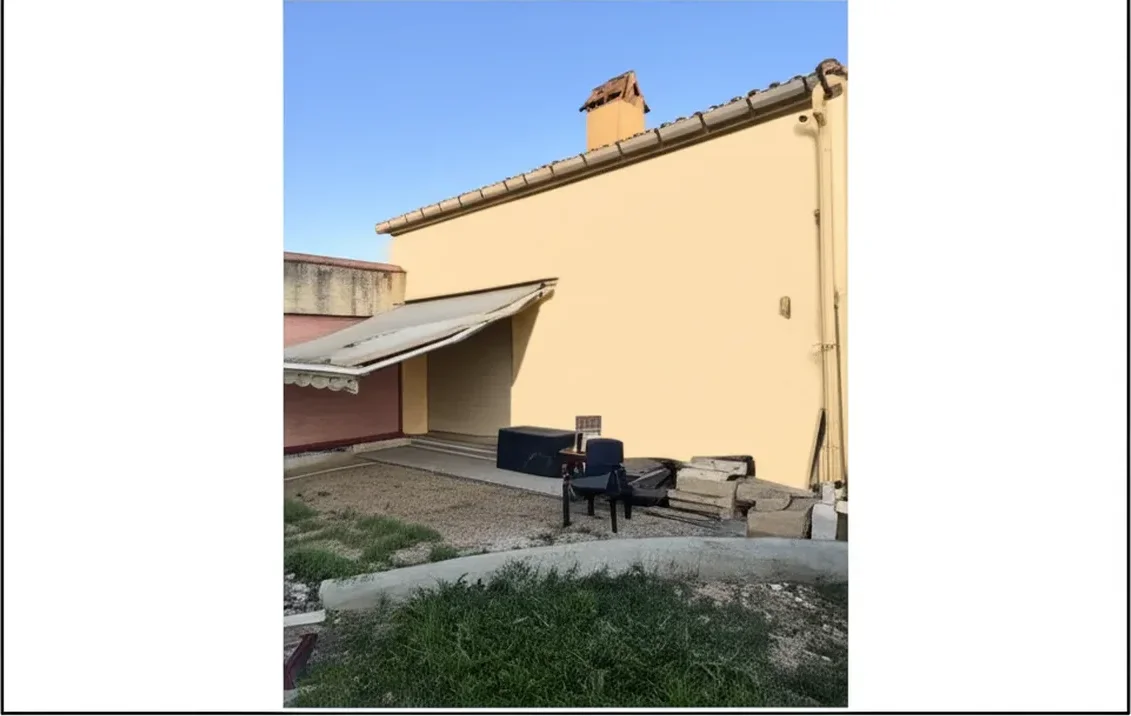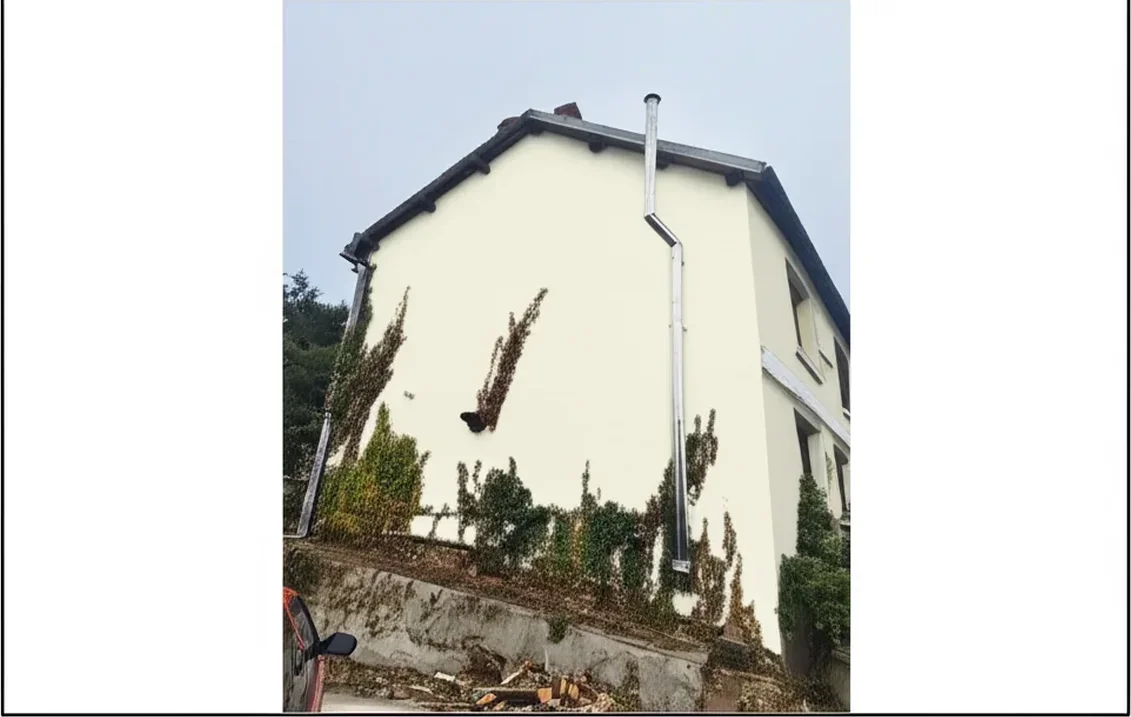
Try it on your house

Crown masonry paint sits in an awkward middle ground in 2026: better known to British decorators than to homeowners, less hyped than Sandtex 365 or Dulux Weathershield, and yet specified on more council, housing association and listed building exteriors than any other brand. Crown Paints, based in Darwen, Lancashire, has been making British masonry paint since 1777, and its trade arm runs around 130 Crown Decorating Centres across the UK. This 2026 guide breaks down the entire Crown masonry paint range - Crown Trade Clean Extreme, Solo, Glaze Coat, Stronghold and the retail Crown Solo Exterior - with verified GBP prices, BS EN 1062 ratings and where each one earns its place on British brick, render and pebbledash.
The Crown masonry paint range UK 2026: trade and retail tiers explained
Crown splits its 2026 masonry paint offering into two clear tiers. The Crown Trade range, available through Crown Decorating Centres and selected B&Q Trade Point counters, is what professional decorators in London, Manchester, Birmingham, Leeds, Bristol and Edinburgh actually buy. The retail Crown range, distributed through B&Q, Wickes, Homebase and Screwfix, targets DIY homeowners and weekend painters with simpler specification. Both tiers carry full BS EN 1062 classification, but the trade range has tighter quality control batch-to-batch and a wider colour-match capability through the in-store tinting system at Crown Decorating Centres.
The five core Crown masonry paints on UK shelves in 2026 are Crown Trade Clean Extreme Smooth Masonry, Crown Trade Clean Extreme Textured Masonry, Crown Trade Solo Masonry (one-coat product), Crown Trade Stronghold Stabilising Solution and the retail Crown Solo Exterior Masonry. The Glaze Coat clear sealant sits alongside as a finishing option for sandstone, limestone and exposed brick where you want weather protection without changing colour. Realistic 2026 prices in GBP run from 32 to 46 per 5 litre tin, depending on the SKU and whether you buy retail or through a Crown trade account.
The honest summary on positioning: Crown is the British decorator's quiet workhorse. It is rarely the cheapest option (the GoodHome own brand at B&Q undercuts it by 8 to 14 GBP per 5 L) and rarely the most premium (Farrow and Ball Exterior Masonry sits 15 to 25 GBP above it). It earns its place on technical specification - good vapour permeability for British solid walls, reliable batch consistency over multi-phase council jobs, and a Crown Decorating Centre network that gives same-day colour-match across the UK. For a single semi in Salford or Brighton, the practical difference between Crown Trade Clean Extreme and Sandtex 365 is small; for a 40-unit terrace repaint in Sheffield or Bradford, the Crown trade network advantage becomes obvious.
The Clean Extreme name carries indoors, which matters if you are pricing a whole-house job rather than a facade. Crown Trade Clean Extreme Scrubbable Matt is the interior sibling of the masonry line, and inside the house its rival is not Sandtex or Dulux but Farrow and Ball Modern Emulsion, at roughly 14 GBP per litre against 22. Our Farrow and Ball versus Crown interior comparison takes that face-off apart on price, coverage and colour range.
Six Crown masonry paint products UK 2026 compared (GBP prices)
Prices below were verified in May 2026 at Crown Decorating Centres in London (Wandsworth, Old Kent Road), Manchester (Trafford Park), Birmingham (Aston), Leeds (Hunslet) and Bristol (Brislington), plus retail listings on the official Crown Paints website. The coverage figures are the manufacturer's stated value on smooth fair-faced brickwork or sound render; expect 25 to 40% lower coverage on textured pebbledash, rough-cast render or chalky pre-1965 walls. Every product carries a BS EN 1062 classification on the back of the tin and a published technical data sheet.
| Crown masonry paint product | Best for | Coverage (m2 per litre) | Price 5 L (GBP) | BS EN 1062 | Where to buy |
|---|---|---|---|---|---|
| Crown Trade Clean Extreme Smooth | Render, brick, smooth surfaces | 10 to 13 | 38 to 46 | V2 W3 | Crown Decorating Centres |
| Crown Trade Clean Extreme Textured | Pebbledash, rough-cast render | 7 to 9 | 40 to 46 | V2 W3 | Crown Decorating Centres |
| Crown Trade Solo Masonry (one coat) | Pre-painted sound walls | 8 to 11 | 36 to 42 | V2 W3 | Crown Decorating Centres, B&Q Trade Point |
| Crown Solo Exterior (retail) | DIY, modern cavity walls | 8 to 10 | 32 to 38 | V2 W3 | B&Q, Wickes, Homebase |
| Crown Trade Stronghold Stabiliser | Chalky and friable surfaces | 8 to 12 | 36 to 44 | Primer, not classified | Crown Decorating Centres |
| Crown Glaze Coat Clear Sealant | Sandstone, exposed brick | 9 to 12 | 34 to 42 | V1 W3 | Crown Decorating Centres |
Try it on your house
No photo? Try a sample
The practical read across the six: Crown Trade Clean Extreme Smooth is the workhorse for the majority of British semi and terrace fronts where the render is sound and the brick is sealed; the Textured variant is the right call on pebbledash and rough-cast where you need a 7 to 9 m2 per litre coverage allowance and a thicker film. Crown Solo Masonry is the one-coat shortcut for repaints on already-sound surfaces, useful on shoulder-season turnarounds where you cannot wait 6 hours between two-coat applications. Stronghold is the British decorator's go-to primer for chalky friable render older than 25 years, and Glaze Coat is the only Crown product designed to keep traditional sandstone and limestone in conservation areas looking natural while still shedding driving rain.
One caveat if your walls are dashed rather than smooth: pebbledash is the surface where the brand decision matters least. Crown Trade, Sandtex 365, Dulux Weathershield and Johnstone's Stormshield land in a four-way tie there, near-identical coverage and the same 15 year written guarantee, so the deciding factor is usually which counter you can reach on a Saturday morning when a tin runs short. Only two products genuinely behave differently on dash: Bedec MSP, when a single elevation mixes pebbledash with PVC trim and cast-iron downpipes, and Emperor Masonry Creme, a silicone resin coating with a 25 year guarantee at roughly three times the litre price. Our guide to the best exterior paint for pebbledash sets all six side by side with the prep sequence each one needs.
Test Crown masonry paint colours on your home, free
Preview Crown Trade Clean Extreme and Solo masonry shades on your actual brick or render before you order a 5 L tin. No download, no card, 30 seconds.
Visualise free on your photoCrown masonry paint vs Sandtex 365 and Dulux Weathershield: which wins where
The three brands a British decorator will quote on the same job are nearly always Crown Trade Clean Extreme, Sandtex 365 and Dulux Weathershield. On paper all three carry a BS EN 1062 V2 W3 rating, all three publish 15 year written guarantees, and all three sit within 5 GBP per 5 L of each other at trade pricing. The real differences emerge in the colour range, the in-store tinting tolerance, the network density, and the surface-specific performance on pre-1939 versus post-1965 British housing stock.
Crown wins on three points. First, the Crown Decorating Centre network gives professional decorators a wider trade-tier colour range than any other British brand (around 1,800 colour-matched shades from the Crown Colour System), important on heritage and conservation work where you need to match an existing Victorian or Edwardian render. Second, batch consistency over multi-tin orders is tighter than the retail mass-market brands, important on terrace and council-stock jobs where 80 to 200 tins must read the same shade across three coats. Third, the Crown Stronghold primer is the most permeable stabilising solution in the UK trade range and sits more honestly on chalky pre-1965 surfaces than the Sandtex or Dulux retail-tier stabilisers.
Sandtex wins on retail breadth (you can pick up 365 Smooth Masonry in any large B&Q, Wickes or Homebase in the UK) and on coastal saltwater track record (the 365 range was originally formulated for coastal British exposure). Dulux Weathershield wins on consumer brand recognition and on the in-store tinting capability through B&Q Trade Point, where the Dulux Colour Match system can hit almost any swatch. For a DIY homeowner in Brighton or Plymouth on a single semi, all three brands will give 12 to 15 years of service on a sound surface; the practical choice often comes down to which retailer is closest. For a decorator quoting on a 40-unit estate refurbishment in Leeds or Bradford, the Crown trade network usually wins on logistics and batch consistency. The full breakdown sits in our Crown vs Dulux exterior comparison UK 2026 guide.
Crown masonry paint colours UK 2026: the full palette mapped
Crown masonry paint colours split into six practical UK families in 2026: brilliant white and soft off-white (around 26% of Crown previews on FacadeColorizer), warm putty and stone (24%), grey from pale to charcoal (38%), cream and buttermilk (5%), heritage sage and bottle green (4%), and saturated reds, blacks and blues (3%). The Crown Colour System holds around 1,800 colour-matched shades through Crown Decorating Centre tinting, but the off-the-shelf shortlist most decorators stock by default sits at around 24 core colours.
| Crown colour family | Specific Crown masonry shade | UK regional fit | Best on |
|---|---|---|---|
| Brilliant white | Crown Trade Pure Brilliant White | Devon, Cornwall, Plymouth | Smooth render, coastal semis |
| Soft white | Crown Almond White | London, Home Counties | Edwardian and 1930s semis |
| Warm putty | Crown Magnolia | Cotswolds, Bath, Yorkshire stone | Render on cottage and rural |
| Pale stone | Crown Country Cream | Bath, Lake District, Suffolk | Render with stone trim |
| Pale grey | Crown Cornforth (heritage) | Home Counties, Cotswolds | Brick and render semis |
| Mid grey | Crown Pebble Grey | London, Manchester, Bristol | Urban Victorian terraces |
| Charcoal grey | Crown Anthracite | Manchester, Leeds, Sheffield | Smooth render new builds |
| Greige | Crown Stone Grey | Edinburgh, Bristol, Leeds | Render with brick trim |
| Buttermilk | Crown Honey Cream | Cotswolds, rural Wiltshire | Cottage render, stone trim |
| Sage green | Crown Soft Sage | Rural Devon, Wales, period | Render, with sandstone trim |
| Heritage bottle green | Crown Bottle Green | Lake District, Highlands | Cottage exterior, garden walls |
| Heritage red | Crown Brick Red | Victorian terrace, period brick | Doors, brick course trim |
| True black | Crown Trade Mixed Pitch Black | Edinburgh, Bristol new builds | Smooth render extensions |
| Heritage navy blue | Crown Navy | London, coastal Sussex | Front doors, render reveals |
A practical warning on the Crown Colour System tinting at Crown Decorating Centres. The trade-tinted Crown Trade Clean Extreme base accepts up to around 60 mL of tinter per 5 L tin without compromising the BS EN 1062 V2 W3 rating; if you push tinting heavier than that to reach a deep saturated bottle green, true black or heritage red, the film thickness and gloss can shift, and the trade counter staff should warn you. For any deep colour beyond that tinter load, switch to a factory-pigmented product rather than a tinted retail base. This matters more on south-facing render in London, Birmingham and the Home Counties, where the surface heat absorption on deep colours can reach 60 degrees C on a still July afternoon.
BS EN 1062 and BS 7079 on Crown masonry paint: how to read the spec sheet
Every Crown Trade masonry paint product carries a printed BS EN 1062 classification on the back of the tin and a downloadable technical data sheet from the Crown Paints website. BS EN 1062 is the British and European harmonised standard for exterior masonry coatings, and it scores products on seven properties; for UK walls in 2026 the four classifications that decide whether your paint lasts five or fifteen years are gloss level (G1 to G3), film thickness (E1 to E5), water vapour permeability (V1 high to V3 low) and liquid water absorption (W1 low to W3 high, confusingly inverted). For most British solid-wall and cavity-wall properties you want V1 or V2 paired with W3, so that the wall can breathe outward while shedding driving rain off the Atlantic westerlies and the North Sea.
Crown Trade Clean Extreme Smooth and Textured both carry BS EN 1062 V2 W3, equivalent to Sandtex 365 and Dulux Weathershield on this technical scoring. Crown Trade Solo (one-coat) also carries V2 W3 but at a slightly lower film thickness rating of E3 versus E4 for the Clean Extreme two-coat system, which is why Solo is rated for sound pre-painted surfaces rather than chalky pre-1965 render. Crown Glaze Coat Clear Sealant uniquely carries V1 (high vapour permeability), making it the right choice for traditional sandstone and limestone in Conservation Area properties where the wall must breathe outward as much as possible. The HSE publishes safety guidance on solvent and primer products at hse.gov.uk, and the Planning Portal at planningportal.co.uk sets out which masonry repainting work needs Listed Building Consent or falls under Permitted Development.
Surface preparation standards under BS 7079 are referenced directly in the Crown Trade Clean Extreme and Solo technical data sheets. The four practical preparation grades for British masonry are: power wash and brush, abrasive blast clean, dry abrasive blast clean and acid etch. For a typical 1930s semi front in London, Manchester or Birmingham, the Crown spec call is power wash at 100 to 130 bar, allow 48 hours drying, apply Crown Trade Stronghold Stabilising Solution, then two coats Crown Trade Clean Extreme Smooth. If your TrustMark accredited decorator quote is silent on BS EN 1062 ratings and BS 7079 preparation, ask before you sign - it is a reasonable industry expectation in 2026.
Applying Crown masonry paint on British walls: prep, coats and weather window
The Crown Trade method on a typical 1930s British semi or 1960s detached follows a six-step compressed sequence. Step one: stiff brush and pressure wash the surface at 100 to 130 bar to remove loose paint, algae and lichen. Step two: allow 48 hours minimum drying time (longer in autumn and winter or on north-facing elevations that never warm above 12 degrees in March or November). Step three: treat any remaining algae or lichen with Crown Trade Sterilising Solution and rinse. Step four: repoint failed mortar joints and patch render cracks wider than 2 mm. Step five: apply Crown Trade Stronghold Stabilising Solution at 6 to 12 m2 per litre depending on absorbency, allow 16 hours minimum drying. Step six: roll two full coats of Crown Trade Clean Extreme Smooth or Textured with 6 hours minimum between coats and a 4 inch masonry brush for cutting in around windows, fascia, soffit and rainwater pipes.
The British weather window for Crown masonry paint runs from late April to mid October in most regions, late May to early October in Scotland and Northern England. Standard application temperature is 8 degrees C to 25 degrees C, out of direct midday sun and with no rain forecast for 12 hours minimum after the second coat. Crown does not currently publish a low-temperature variant of Clean Extreme, so for shoulder-season touch-up work in March or November on north-facing elevations, the Sandtex 365 All-Weather or Dulux Weathershield All-Season Smooth at 2 degrees C minimum is the cleaner specification choice. The standard Crown range will tolerate down to 5 degrees C surface temperature but the cure time extends and the cosmetic finish suffers.
Access to the work face matters as much as the paint specification. A typical two-storey UK semi front (around 45 to 60 m2 of brick or render face) needs either DIY tower scaffold hire at around 80 GBP per week from B&Q, Wickes or Homebase, or a traditional scaffold from a local contractor at 600 to 1,200 GBP per week for the duration of the job. Any UK decorator quoting on a Crown masonry job above 2 metres working height must comply with the Construction (Design and Management) Regulations 2015 and carry public liability insurance of at least 2 million GBP. Most professional Crown applicators in 2026 also hold a Crown Paint Approved Decorator accreditation, which can be cross-checked through your local Crown Decorating Centre.
Crown masonry paint cost UK 2026: what a British semi really costs to repaint
A typical three bed UK semi front elevation is around 45 to 60 square metres of brick or render face. At Crown Trade Clean Extreme Smooth coverage of 10 to 13 m2 per litre, two coats need roughly 8 to 12 litres for the front alone, which is two 5 L tubs at 76 to 92 GBP from a Crown Decorating Centre. Front and side elevations together (around 110 m2) need 18 to 22 litres, which is four 5 L tubs at 152 to 184 GBP. The full three-elevation house (around 165 m2) needs roughly 28 to 34 litres, or six 5 L tubs at 228 to 276 GBP, plus 5 L Crown Trade Stronghold Stabiliser at 36 to 44 GBP from a Crown Decorating Centre. Pebbledash and rough-cast surfaces need 25 to 40% more paint than smooth render, so add 1 to 2 additional 5 L tubs accordingly.
Labour cost on a UK Crown masonry repaint sits at around 1,500 to 3,200 GBP for a three bed semi front and sides if you hire a TrustMark accredited decorator. The full three elevation house typically lands at 2,800 to 5,500 GBP for labour, depending on surface complexity, scaffold requirement and regional rates (London and the South East lead at the top of the range, Yorkshire and the North East sit at the bottom). The all-in cost of materials plus labour for a complete Crown Trade Clean Extreme repaint on a 1930s semi in 2026 is realistically 3,000 to 5,800 GBP. For comparison, our exterior masonry paint cost UK 2026 guide breaks down the full cost picture across all major brands.
The DIY route on Crown masonry paint cuts the bill by around 60% but adds 4 to 7 weekends of work and around 250 GBP of scaffold or tower hire and additional brushes, rollers, sterilising solution and stabilising primer. For a homeowner in Bristol, Leeds or Manchester who has the time and the access, this is realistic; for a homeowner in London or Edinburgh juggling a full-time job, a quoted decorator is almost always the better economic and time call. The Citizens Advice guidance at citizensadvice.org.uk sets out the contractual rights and dispute routes if a quoted decorator does not deliver the agreed Crown specification.
How to test it on your own home before you buy
No third-party report replaces your own walls: the same colour reads differently on a north elevation and a south one, next to red brick or a grey roof, under morning and evening light. Take a daylight photo, upload it to the free AI paint visualiser, and run two or three candidates on the same image so the comparison is fair. Keep the one or two that survive the side-by-side, buy a tester pot of each, and brush them out on the actual surface in the actual light before you order the full quantity.
Frequently asked questions
What is the best Crown masonry paint UK 2026?
How does Crown masonry paint compare to Sandtex and Dulux Weathershield?
How much Crown masonry paint do I need for a UK semi?
Where can I buy Crown masonry paint in the UK?
What does the BS EN 1062 rating on Crown masonry paint mean?
Can Crown masonry paint be applied on pebbledash and rough-cast render?
Does Crown masonry paint need planning permission in a Conservation Area?
Trademarks mentioned (Sherwin-Williams, Benjamin Moore, Behr, Caparol, Brillux, Sto, Alpina, Valspar, PPG, Glidden, Dulux, Crown Trade, Sandtex, Farrow & Ball, Johnstone's, Leyland) are property of their respective owners. FacadeColorizer is independent and not affiliated with any of them. Nominative fair use under Lanham Act §1125.