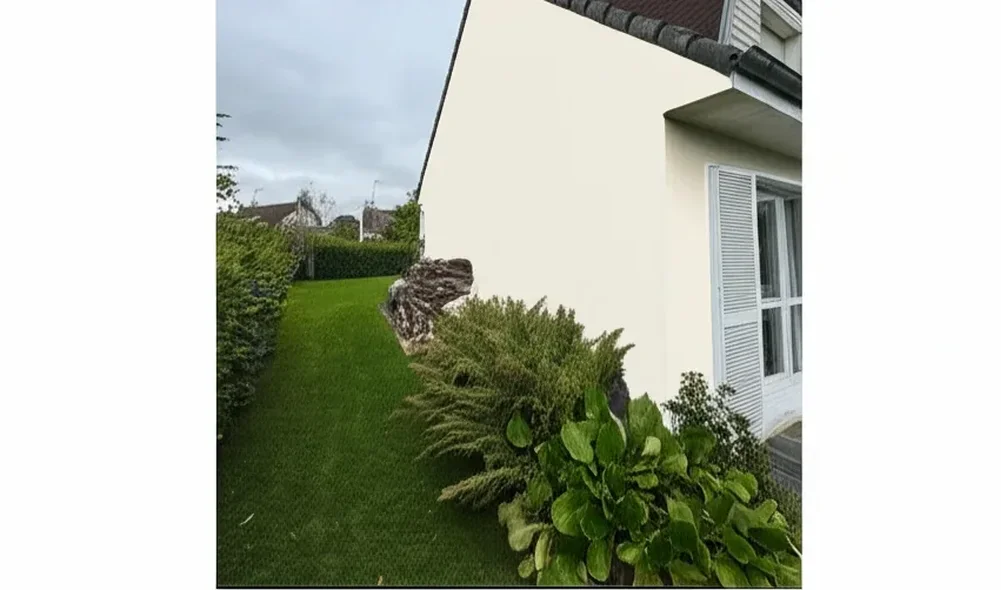
Try it on your house

Choosing the right concrete paint for outside walls in the UK in 2026 is not the same as buying a standard masonry paint. Cast concrete blockwork, board-marked concrete, exposed aggregate panels, garden retaining walls, garage bases and outbuilding plinths all behave differently to render or brick under British weather. After 16,983 facade previews through our AI colour visualiser, the pattern is clear: outdoor concrete walls suffer most from poor prep and from coatings that seal in alkaline moisture rather than letting it breathe. This 2026 guide compares the six brands UK decorators actually reach for at B&Q, Wickes, Homebase and Screwfix, with prices in pounds sterling, BS EN 1062 ratings, and practical advice for Victorian coal-bunkers, 1970s garage walls and modern board-marked concrete in Manchester, Bristol and Leeds.
Why concrete needs a specific paint for UK outside walls
Outdoor concrete in the UK sits in a peculiar position between brickwork and render. It is dense, alkaline, slow to dry, and prone to efflorescence when groundwater migrates up through unsealed footings. The Atlantic westerlies dump driving rain on west-facing garage walls from October to March, and freeze-thaw cycles in the Pennines, Yorkshire Dales and Scottish Borders open up hairline cracks every winter. A regular interior emulsion or even a basic exterior masonry paint will lift inside two seasons because the alkali in fresh or weathered concrete attacks the binder.
The British Standard that governs exterior coatings on concrete is BS EN 1062, the same one used for masonry. The ratings to look for on a concrete-specific product are W3 (low liquid water permeability, so the wall sheds rain), V2 (medium water vapour transmission, so trapped moisture can still escape), and A1 or higher for crack-bridging. Concrete panel walls with movement joints typically need A3 or A4 flexibility, which is where Bedec Extra Flex and Crown Trade Sandtex come in. The Building Research Establishment also publishes practical guidance for painting concrete in UK government technical notes on retrofit and external wall insulation, which is worth a read before you paint a structural concrete element.
Three practical attributes separate genuine outdoor concrete paint from generic emulsion: alkali resistance (so the binder does not saponify on new pours under three years old), opacity over grey or charcoal substrates (most domestic concrete in Britain is a cool mid-grey, so weak whites need three coats), and adhesion to smooth, low-suction surfaces. Trade-grade products from Dulux, Crown, Sandtex, Johnstone and Leyland publish these test results; budget supermarket tins generally do not.
Concrete paint for outside UK 2026: 6 brands compared
The table below lists the six concrete-suitable exterior coatings UK decorators specify most often in 2026. Prices are checked at B&Q, Wickes, Homebase, Screwfix and the Dulux Decorator Centre trade counter, all in pounds sterling per 5 litre tin. Coverage is for a single coat on a smooth, sealed concrete surface; expect to halve those numbers for board-marked concrete and rough-cast aggregate panels.
| Brand & product | 5 L price (GBP) | BS EN 1062 rating | Coverage (m2/L) | Best for |
|---|---|---|---|---|
| Dulux Weathershield Smooth Masonry | 38-42 GBP | W3 V2 A1 | 6 m2/L | Garage walls, cast plinths |
| Sandtex 365 Smooth Masonry | 36-44 GBP | W3 V2 A1 | 6 m2/L | Concrete block boundary walls |
| Crown Trade Sandtex X-treme | 40-48 GBP | W3 V2 A3 | 5-6 m2/L | Board-marked concrete, movement joints |
| Bedec Extra Flex Masonry | 42-48 GBP | W3 V2 A4 | 5 m2/L | Cracked concrete, retaining walls |
| Johnstone Trade Stormshield | 32-38 GBP | W3 V2 A1 | 6 m2/L | Trade re-decoration of garage units |
| Leyland Trade Granocryl Smooth | 18-24 GBP | W3 V2 A0 | 7 m2/L | Outbuildings, value rebuilds |
Try it on your house
No photo? Try a sample
Three observations from the field. First, Dulux and Sandtex retail prices fluctuate by 8-12 GBP between B&Q and Screwfix in the same week, so check both. Second, Crown Trade and Bedec are the only mainstream high-street brands rated A3 or A4 for crack-bridging, which matters on any concrete element with a movement joint. Third, Leyland Trade Granocryl is the genuine budget pick at 18-24 GBP per 5 L tin from Screwfix; it has no crack-bridging rating (A0), so reserve it for sound, low-stress concrete on outbuildings and garden boundary walls.
How to prepare a concrete wall outside before painting
Preparation is the single biggest determinant of how long your concrete paint for outside walls actually lasts. The standard that decorators in the UK reference is BS 7079, which covers surface preparation of structural elements. For domestic exterior concrete the procedure is more modest, but the principles are the same: remove contamination, neutralise alkali, fill cracks, stabilise dust, then prime.
Start by removing organic growth with a fungicidal wash (Sandtex Microseal, Dulux Trade Weathershield Fungicidal Wash or a 1:4 household bleach solution, applied with a stiff brush). Rinse with a low-pressure jet wash from at least 300 mm distance, never closer, because high-pressure jets can erode the cement matrix and open up new cracks. Allow the wall to dry for at least 48 hours of dry weather, longer if the wall faces north or sits below ground level. The Health and Safety Executive publishes guidance at hse.gov.uk on safe working at height which is worth reading before you tackle a tall gable end or a 2.4 metre boundary wall.
Once dry, fill hairline cracks with a flexible exterior filler (Toupret Touprelith F, Tetrion ExtFill or Polycell Polyfilla Exterior). Cracks wider than 3 mm need cutting back to a sound substrate, undercutting and refilling in two passes. Spot-prime any patches that look powdery or chalky with a stabilising solution (Zinsser Peel Stop or Sandtex Stabilising Primer) thinned 10 percent with water on the first pass. New concrete under three years old should always be primed with an alkali-resisting primer such as Dulux Trade Alkali Resisting Primer or Crown Trade Alkali Resisting Primer to neutralise the lime in the cement before the topcoat. Skip this step and you will see white efflorescence patches inside six months.
Concrete paint colours that work in the UK climate
UK light is cooler and softer than it is in southern Europe, so colours that look balanced on a sample card in B&Q often read 30 percent lighter on a real concrete wall in Manchester or Edinburgh. The colours that perform best on outdoor concrete in 2026 are mid-tones that hide grime: warm greys, soft stones, putties, anthracites and brick reds. Brilliant white and pure black both date quickly under British weather and show every algae bloom by the second autumn.
Our internal preview dataset across 16,983 simulations shows the five most popular concrete wall colours in the UK in 2026 are: Dulux Heritage Goose Down (warm light grey), Farrow & Ball Cornforth White (soft stone), Sandtex Anthracite (dark grey), Dulux Heritage Brick Red, and Crown Trade Granite (deep charcoal). For internal links and full colour family guides, see our companion articles on grey masonry paint UK 2026, black masonry paint UK 2026 and cottage exterior paint colours UK 2026.
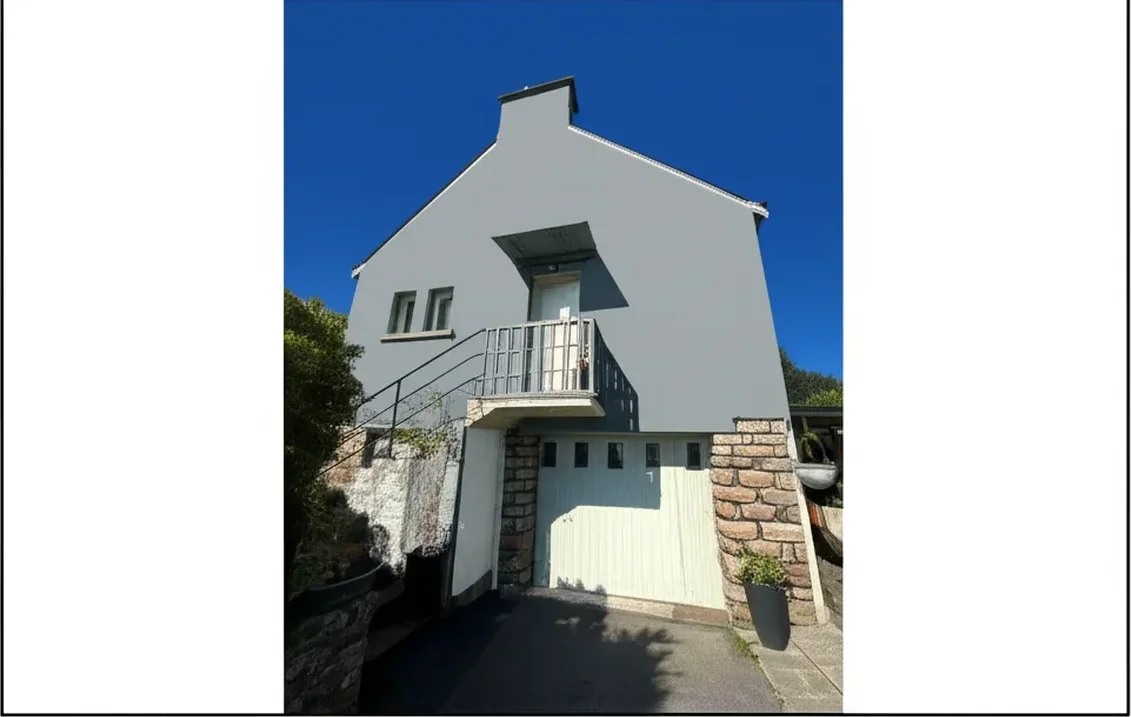
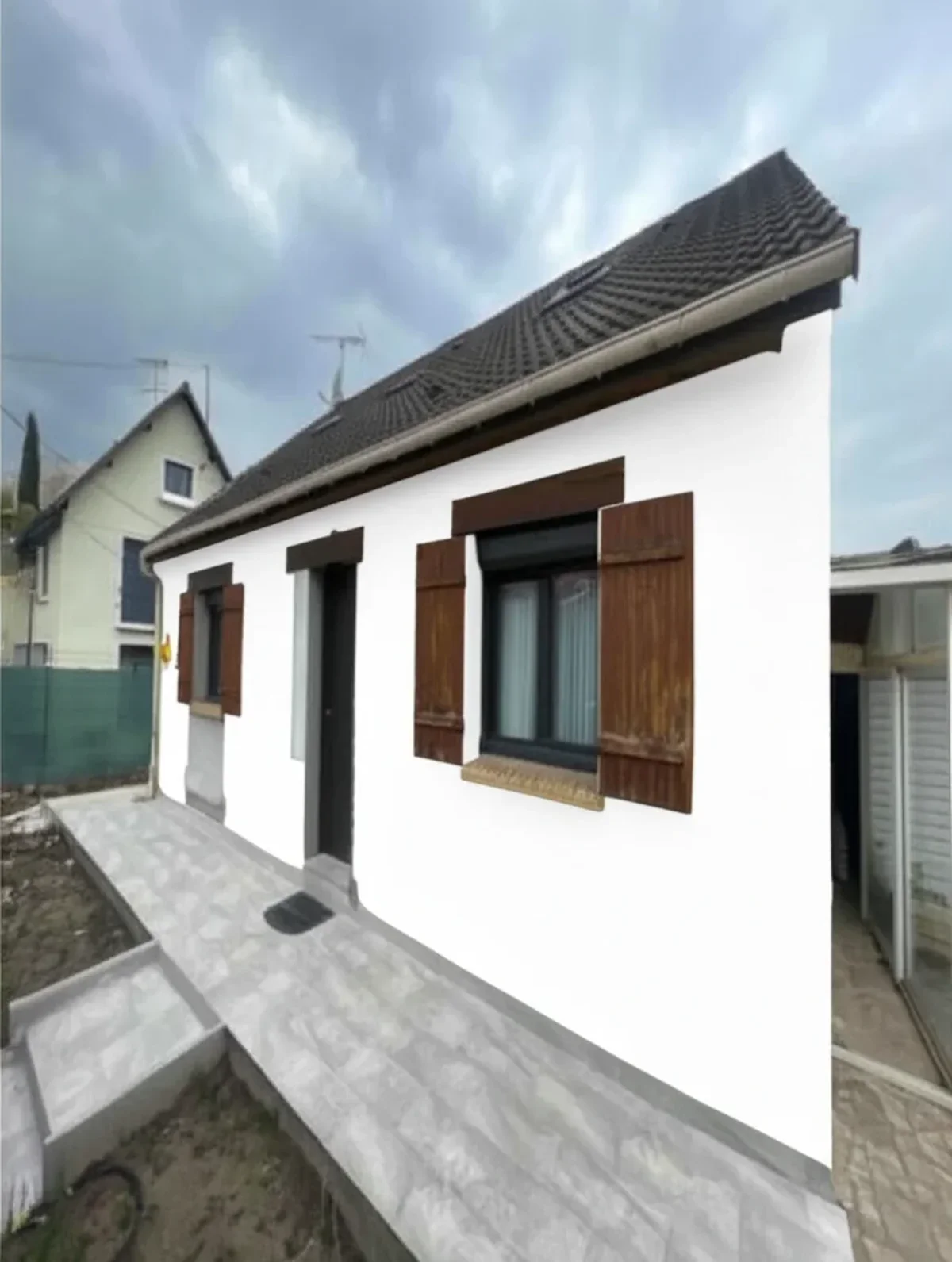
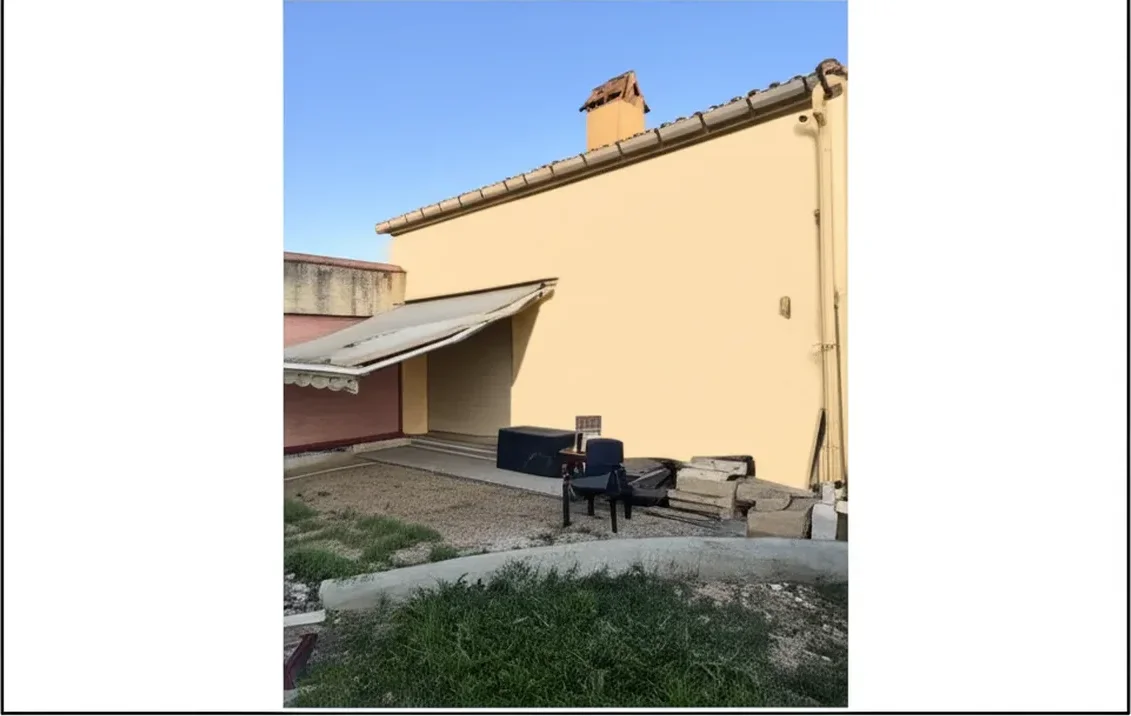
Before you commit to four 5 litre tins of Sandtex 365 in a charcoal, photograph the wall in soft midday light (north-facing if possible) and run the image through a colour visualiser. UK customers tell us this single step has saved them around 80-140 GBP in returned tins and re-coats. The free AI visualiser at FacadeColorizer renders concrete texture with the actual brand colour code on the image so you can compare three or four candidate shades on the same wall in 30 seconds.
How much does it cost to paint a concrete wall outside in the UK?
The full cost of painting an outdoor concrete wall in the UK in 2026 breaks down into materials, labour and access. A typical detached garage side wall of 18-22 m2 needs one 5 L tin of alkali-resisting primer (12-18 GBP) and two 5 L tins of topcoat (76-96 GBP for Dulux Weathershield or Sandtex 365). Labour for a self-employed decorator in London, Bristol or Manchester runs 220-380 GBP for a one-day job, depending on access and scaffold needs. Add 80-150 GBP if a tower scaffold is required for a wall above 4 metres.
| Job | Wall area (m2) | Materials (GBP) | Labour (GBP) | Total (GBP) |
|---|---|---|---|---|
| Garden boundary wall | 12-15 m2 | 55-85 | 160-240 | 215-325 |
| Detached garage (one wall) | 18-22 m2 | 90-130 | 220-380 | 310-510 |
| Concrete plinth + 2 elevations | 35-50 m2 | 160-240 | 420-680 | 580-920 |
| Outbuilding (full) | 55-80 m2 | 230-340 | 560-880 | 790-1,220 |
For a fuller breakdown by region, see our exterior masonry paint cost UK 2026 guide and the London-specific exterior house painting London cost guide. Decorators in Edinburgh, Glasgow and Belfast tend to come in 8-15 percent below London labour rates for the same square metre of concrete work.
Planning permission, Listed Building Consent and Conservation Areas
Painting an outdoor concrete wall in the UK is almost always Permitted Development if the property is not listed and not in a Conservation Area, which means you can change colour freely. If the building is Grade I, II* or II listed, you need Listed Building Consent before you paint a previously unpainted concrete element, even if the wall is in your back garden. The official source is the Planning Portal at planningportal.co.uk, which is run jointly by the UK government and English local planning authorities.
In a Conservation Area, an Article 4 Direction can also remove Permitted Development rights, which means certain colour changes (notably brilliant white, black and high-saturation reds) on visible elevations need formal Planning Permission. This is more common in central London, Bath, York, Edinburgh New Town and Cotswold villages. Check the published Article 4 schedule on your local council planning page before you commit. Our companion piece on Conservation Area painting rules walks through six worked case studies.
Five mistakes UK homeowners make with outside concrete paint
The first mistake is painting fresh concrete too early. Concrete needs to cure for 28 days minimum and ideally 90 days before any coating, because cement hydration continues to release alkali and water vapour for weeks. Paint a 14 day pour and you will see efflorescence and peeling inside the first winter. If you cannot wait, use a permeable mineral coating from Keim or Beeck instead of an acrylic masonry paint.
The second mistake is skipping the alkali-resisting primer on any concrete under three years old. The third mistake is using a low-VOC interior emulsion on an exterior concrete wall to save 12 GBP per tin; this will fail in one season under British rain and freeze-thaw. The fourth is pressure-washing too aggressively, which opens up micro-cracks and embeds water deeper into the matrix. The fifth, and the most expensive, is choosing a colour from a small sample card without testing it on the actual wall in real light.
FacadeColorizer Note: Of the 16,983 facade previews our visualiser has rendered, the single most common rework on concrete walls in the UK is a charcoal or anthracite that looked dramatic on the colour card and ended up reading as flat black under cool Manchester or Glasgow light. Customers who run two or three candidate shades through the AI visualiser before they buy tins are 4 to 5 times less likely to return paint at B&Q, according to feedback we collect from satisfied users.
Visualise concrete paint colours on your own UK wall
The fastest way to avoid the colour mistakes above is to upload a single photograph of your concrete wall and preview real brand colours on it in 30 seconds. FacadeColorizer is a free AI colour visualiser that supports Dulux Weathershield, Sandtex 365, Crown Trade, Farrow & Ball, Little Greene and Bedec colour codes natively. It works on garage walls, retaining walls, plinths, board-marked concrete and outbuildings; you get one full HD preview and three free variations on the free tier, which is generous trial credit for most homeowners. Compare it with manufacturer apps in our review of the Dulux visualiser vs alternatives 2026.
For a brand-by-brand comparison of which paint range goes best with which substrate, see Crown vs Dulux exterior 2026 and the dedicated Dulux Weathershield UK 2026 review. Both companion pieces extend the BS EN 1062 ratings and GBP price tables above with substrate-specific recommendations for render, brick, pebbledash and concrete.
Frequently asked questions
What is the best concrete paint for outside walls in the UK in 2026?
Can I use masonry paint on outdoor concrete in the UK?
How much does it cost to paint a concrete garage wall outside in the UK?
Do I need planning permission to paint a concrete wall in a Conservation Area?
What colour concrete paint works best on outside walls in UK light?
How long does outside concrete paint last in the UK?
Where can I buy concrete paint for outside walls in the UK?
Trademarks mentioned (Sherwin-Williams, Benjamin Moore, Behr, Caparol, Brillux, Sto, Alpina, Valspar, PPG, Glidden, Dulux, Crown Trade, Sandtex, Farrow & Ball, Johnstone's, Leyland) are property of their respective owners. FacadeColorizer is independent and not affiliated with any of them. Nominative fair use under Lanham Act §1125.