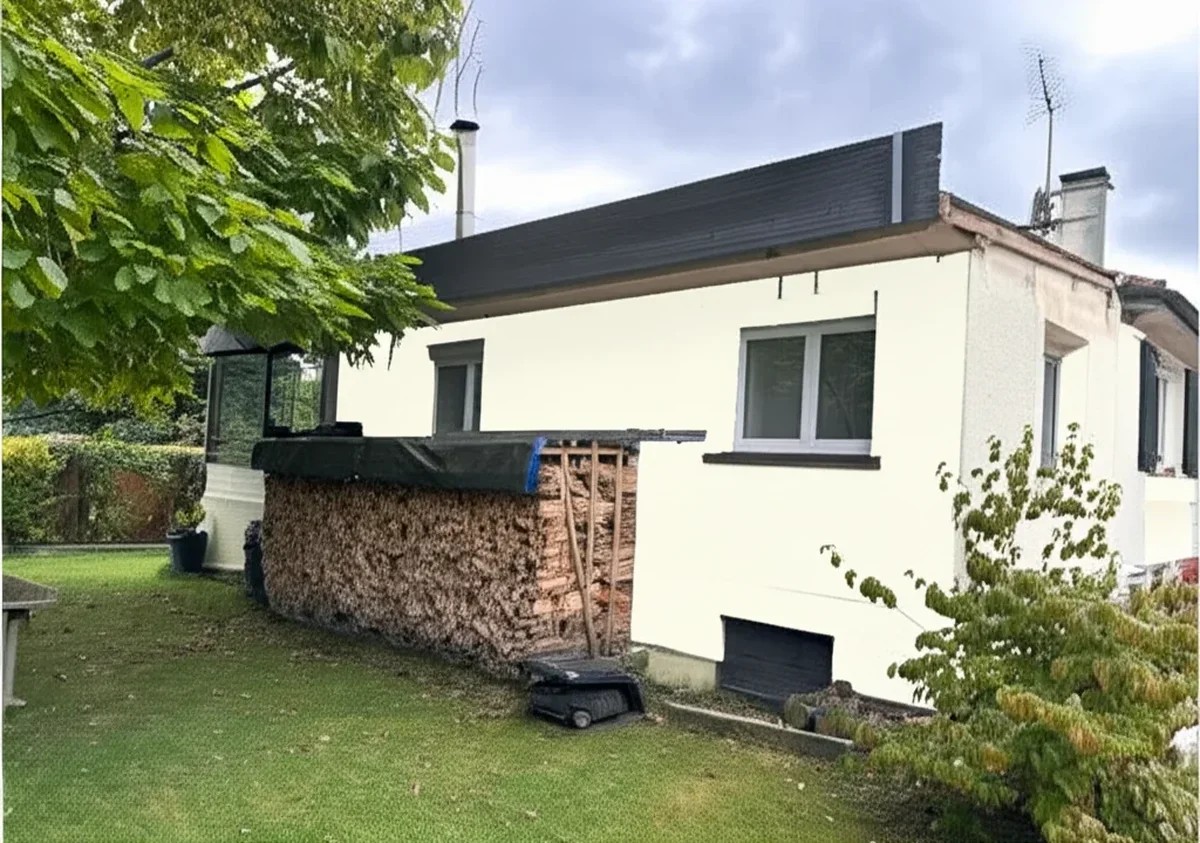
Try it on your house

Painting outside brick is one of the most divisive decisions in British homeownership, and it is also one of the most searched in 2026. Across 16,983 previews on FacadeColorizer, exterior brick paint queries from London, Manchester, Birmingham, Leeds and Bristol now sit in the top five exterior categories, with red brick paint and external brick paint each crossing 29,000 monthly UK searches. This guide compares the brick paint products British decorators actually specify, gives realistic GBP prices from B&Q, Wickes, Screwfix and Homebase, sets out which BS EN 1062 class you should look for on the tin, and explains the planning and conservation rules that decide whether you can legally paint your brickwork at all.
Should you paint brick at all in the UK?
British brick is not American brick. Most homes built between 1850 and 1939 use solid 9 inch brickwork without a cavity, while post-1945 stock uses 250 mm cavity construction with an outer leaf of facing brick. In both cases the brick is designed to absorb a small amount of rain and release it slowly through the day, a property called breathability. Apply the wrong paint for brickwork and you trap moisture inside the wall, which leads to spalling (frost-blown face shedding) on the next freeze-thaw cycle and to internal damp on the elevation that catches Atlantic westerlies hardest.
For that reason, the Society for the Protection of Ancient Buildings has long advised against painting traditional brick. But the 2026 reality is different: many post-1965 brick semis and 1980s estate houses use harder, denser bricks that take paint well, and many homeowners want to update a tired or mismatched extension to a single colour. If your brickwork is sound, free of efflorescence, and you choose a vapour-permeable masonry paint rated to BS EN 1062, painting outside brick can give you a 10 to 15 year refresh without the structural risk.
Before you buy a single litre, run a 24 hour absorption test on a hidden section. Wet a 30 cm square area, time how long the dark patch takes to dry. Under four hours means a hard, low-absorption brick that paints easily. Over eight hours means a soft Victorian stock brick that needs a breathable mineral paint or no paint at all. This single test prevents the majority of failed brick paint jobs in the UK.
Planning permission, Conservation Areas and Listed Building Consent
The legal position on painting outside brick depends entirely on where your house sits. For an unlisted home outside a Conservation Area, painting the outside brickwork normally falls under Permitted Development and needs no application. For a Conservation Area property, painting previously unpainted brick is usually classed as a material change to external appearance and may require planning permission from your local authority, especially in London neighbourhoods such as Highgate, Hampstead, Greenwich and Blackheath, and in Bath, Edinburgh New Town and Conservation Areas across Manchester and Bristol.
For Listed Buildings (Grade I, Grade II* and Grade II), painting any external brickwork requires Listed Building Consent under the Planning (Listed Buildings and Conservation Areas) Act 1990. Painting without consent is a criminal offence with unlimited fines, and councils can require removal at the owner's cost. If your house is even potentially listed, search the Historic England National Heritage List before you order paint, then consult the official guidance at the UK Planning Portal and your local conservation officer. The same applies under the Welsh Cadw register, the gov.scot historic environment policies and the Northern Irish Historic Environment Division.
Permitted Development rights have also been removed in around 240 Article 4 Direction zones in the UK. If you live in one, painting outside brick may need full planning permission even on a humble semi. Manchester, Birmingham, Liverpool, Bristol and most London boroughs publish Article 4 maps online, and most decorators in those areas will refuse to start work without sight of either a consent letter or written confirmation from the council.
Six best brick paint products UK 2026 compared (GBP prices)
Prices and coverage figures below were verified in May 2026 at B&Q Trade Point, Wickes, Screwfix and Homebase, plus direct trade pricing from Dulux, Sandtex and Crown Trade depots. Coverage is the manufacturer's stated figure for smooth or fair-faced brickwork; expect 30 to 50% lower coverage on textured stock brick or where the surface is dusty. All products listed meet BS EN 1062 weathering classifications for exterior masonry coatings.
| Brick paint product | Best for | Coverage (m2 per litre) | Price 5 L (GBP) | Guarantee | Where to buy |
|---|---|---|---|---|---|
| Sandtex 365 Smooth Masonry | Red brick, mass-market semis | 10 to 14 | 29 to 36 | 15 years | B&Q, Wickes |
| Dulux Weathershield Smooth | External brick paint, all surfaces | 10 to 12 | 30 to 40 | 15 years | B&Q Trade Point, Homebase |
| Crown Trade Clean Extreme | Painting outside brick, decorator spec | 8 to 12 | 38 to 45 | 15 years | Brewers, Trade Point |
| Johnstone's Stormshield | Outdoor brick paint, exposed elevations | 9 to 11 | 35 to 42 | 15 years | Screwfix, Toolstation |
| Leyland Trade Granocryl | Budget paint for brickwork | 10 to 14 | 28 to 34 | 10 years | Leyland SDM, Screwfix |
| Farrow & Ball Exterior Masonry | Heritage red brick, period homes | 8 to 10 | 95 to 110 | Not stated | F&B showrooms, online |
Try it on your house
No photo? Try a sample
Anthracite and charcoal grey are growing fastest in Greater Manchester and Leeds, while warm putty and stone shades dominate the Cotswolds and the Home Counties. If you are searching for the best paint for brick exterior elevations, the table above gives the British trade picks; if you want the best paint for brick for an internal accent wall, Crown Trade Clean Extreme Matt or Dulux Easycare Washable Matt are the matt acrylic emulsions decorators specify most often.
Try brick paint colours on your own house, free
See how Sandtex, Dulux Weathershield and Crown shades look on your actual brickwork before you buy a tin. No download, no card, 30 seconds.
Visualise free on your photoRed brick paint UK: keeping the heritage tone or covering it
Red brick is the defining material of the British Victorian and Edwardian terrace. Yorkshire and Lancashire red brick has the iron-rich Atlas Hill hue, London Stock is a softer purple-brown with cream flecks, and Accrington Nori red is the dense engineering brick used on Northern semis from the 1880s onward. If you want red brick paint that preserves the original tone but evens out efflorescence, mismatched repairs and decades of soot staining, look at Sandtex Brick Red, Dulux Brick Dust 2 and Crown Trade Brick Red. These shades aim to match the dominant brick face while letting mortar joints stay visible.
The trend in 2026 in Manchester, Sheffield and Leeds is towards heritage-respectful repaints that hold the red palette while sharpening trim and door colour. In London, by contrast, painted brick semis in Clapham, Tooting and Walthamstow trend pale: Egyptian Cotton, Cornforth White and Ammonite remain the three most popular off-whites.
Be cautious with bright modern reds. A pillarbox red on Victorian brick will look almost cartoonish, and lime mortar joints will read as off-white scars at any distance. If you want a saturated red statement on a contemporary brick build, restrict it to the front door, render reveal or fascia and soffit, and keep the brick body in a complementary muted brown or warm grey.
Breathability, BS EN 1062 ratings and mineral paint for brickwork
Every credible exterior brick paint product sold in the UK should carry a BS EN 1062 classification on the tin. The standard covers seven properties of exterior masonry coatings, but the four ratings that matter for brick are gloss level (G1 to G3), film thickness (E1 to E5), water vapour permeability (V1 high to V3 low) and liquid water permeability (W1 low absorption to W3 high). For solid-wall brick in a damp British climate you should look for V1 or V2 vapour permeability paired with W3 low water absorption. Plastic-feel acrylics with V3 ratings will trap damp on solid-wall Victorian and Edwardian stock and should be avoided.
Mineral paints based on potassium silicate, sometimes called silicate paints, chemically bond to the brick surface rather than forming a film over it. They give the strongest breathability (V1) and outlast acrylics on solid-wall brick by five to ten years in real UK use. Specialist British and German brands such as Beeck, Keim Soldalit, Earthborn Silicate and Emperor Mineral Exterior cost more (around 50 to 70 GBP per litre) but justify the premium on listed brick or on damp-prone north-facing elevations facing Atlantic westerlies. The Society of Chartered Surveyors and Historic England both recommend silicate paints over acrylics on traditional brick.
| BS EN 1062 property | Class to look for on brick | Why it matters | Typical product type |
|---|---|---|---|
| Vapour permeability | V1 (high) or V2 (medium) | Lets moisture escape the wall | Mineral silicate, silicone-modified |
| Water absorption | W3 (low absorption) | Sheds driving rain | Sandtex 365, Dulux Weathershield |
| Film thickness | E3 to E5 (thicker) | Bridges hairline cracks | Textured masonry, flexible coatings |
| Gloss level | G3 (matt) | Hides imperfections, period look | Most UK masonry paints |
Painting outside brick: the British trade method in seven steps
Painting outside brickwork is more about preparation than paint. Skipping prep is the single most common reason exterior brick paint jobs fail within three years. Surface preparation guidance under BS 7079 sets out the standard for masonry substrates. The compressed seven step method below is the version Sandtex Trade and Dulux Weathershield decorators follow on UK semis and terraces, and it is what your local Citizens Advice-recommended TrustMark accredited contractor will quote against.
Step 1 - Inspect and brush. Walk the elevations and mark every spalled face, blown render patch, cracked perp joint and powdery efflorescence area. Stiff-brush all loose material, dust and cobwebs. The brick must be sound; do not paint over crumbling face.
Step 2 - Wash the wall. Use a domestic pressure washer at 100 to 130 bar from 30 cm, holding the lance at a 30 degree angle. Wait 48 hours minimum for the wall to dry fully. Many British brick failures trace back to painting walls that were still damp from the wash.
Step 3 - Treat algae, moss and lichen. Apply Sandtex or Dulux Trade Fungicidal Wash diluted per the label. Leave 24 hours, then brush off green growth. North elevations and elevations under tree cover almost always need this step.
Step 4 - Repoint and repair. Cut out and replace any failed mortar joints using a lime-rich mix (1:2:9 cement:lime:sand) on pre-1919 brick and a stronger mix (1:1:6) on post-war brick. Replace spalled bricks where possible. Allow new mortar 28 days to cure before painting.
Step 5 - Apply stabilising primer. Brush or roller Sandtex Stabilising Solution or Dulux Trade Stabilising Primer (around 40 GBP per 5 L) into every brick face and mortar joint. This step is non-negotiable on any brick over 20 years old.
Step 6 - First coat. Cut in around windows, soffits and corners with a 4 inch masonry brush. Roll open faces with a 12 mm medium pile roller (or 20 mm long pile on textured stock brick). Paint between 8 degrees C and 25 degrees C, out of direct midday sun, and never if rain is forecast in the next 12 hours.
Step 7 - Second coat. Leave six hours minimum between coats (overnight ideally). The second coat is what gives BS EN 1062 W3 low water absorption performance and the manufacturer's written 15 year guarantee. Skipping the second coat voids the warranty on Sandtex 365, Dulux Weathershield and Crown Trade Clean Extreme.
How much does it cost to paint brick UK 2026?
For a typical three bed Victorian terrace front in London with about 45 m2 of brick face, expect materials of around 130 to 180 GBP (one tub of stabilising primer at 40 GBP, two 5 L tubs of Sandtex 365 or Dulux Weathershield at 60 to 80 GBP, brushes and sundries at 20 GBP). For a three bed semi front and side elevations totalling around 110 m2, materials run 220 to 320 GBP. Add scaffold hire of 600 to 1,200 GBP per week for safe two-storey access, or use a tower scaffold from Wickes hire for 80 GBP per week.
Hiring a decorator to paint outside brick fully (prep, prime, two coats, scaffold) typically costs 1,400 to 3,200 GBP for a semi in 2026, varying by region: Greater London and Edinburgh sit at the top end, while Manchester, Leeds, Sheffield, Birmingham and Bristol cluster in the middle, and the North East and South Wales sit at the lower end. Always insist on a written quote that specifies the brand, product, number of coats and BS EN 1062 rating. A vague quote that just says masonry paint is a red flag.
The HSE publishes guidance on safe working at height and on the Construction (Design and Management) Regulations 2015, which apply to any external brick paint job involving scaffold or work above 2 metres. Every UK decorator quoting on your job should hold public liability insurance of at least 2 million GBP and either CSCS or TrustMark accreditation. If they cannot show both, walk away.
How to test it on your own home before you buy
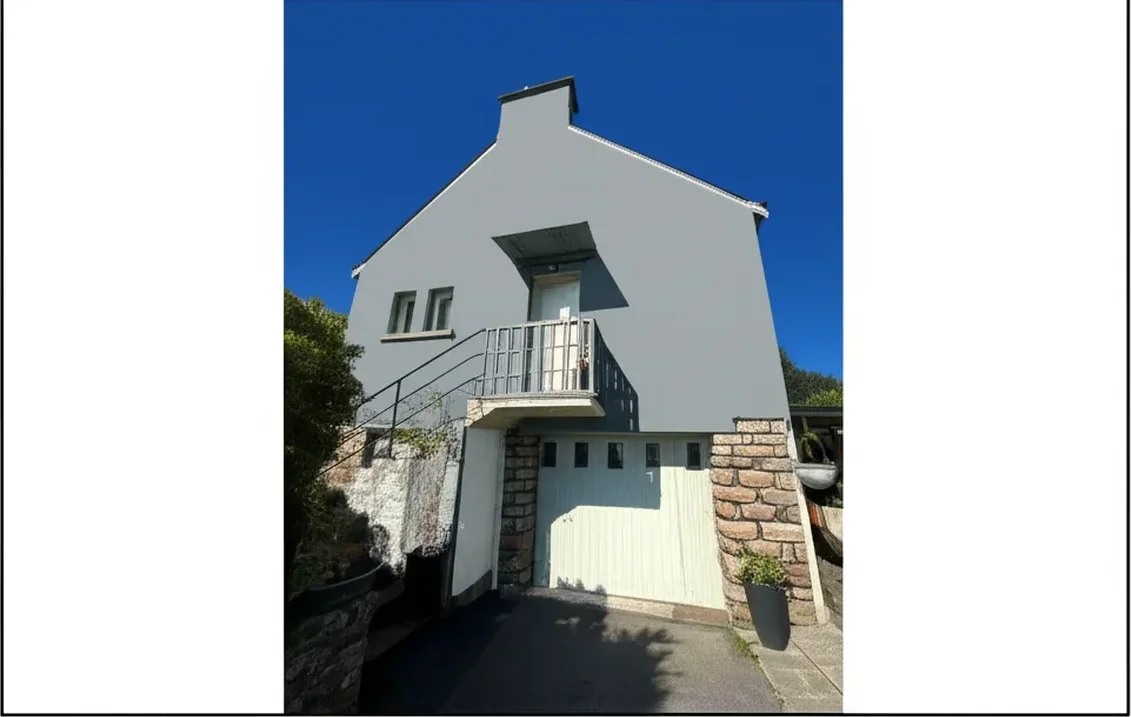
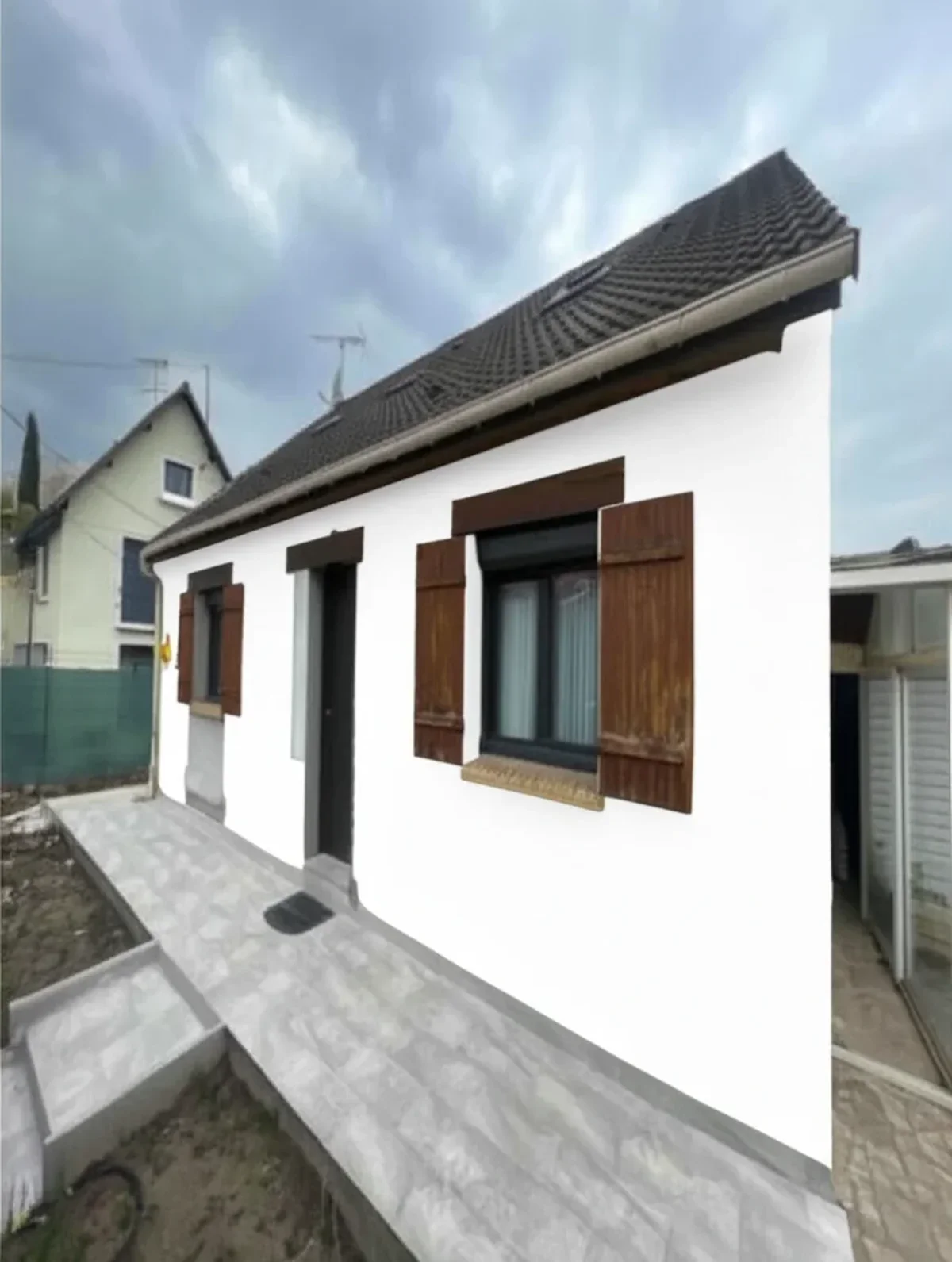
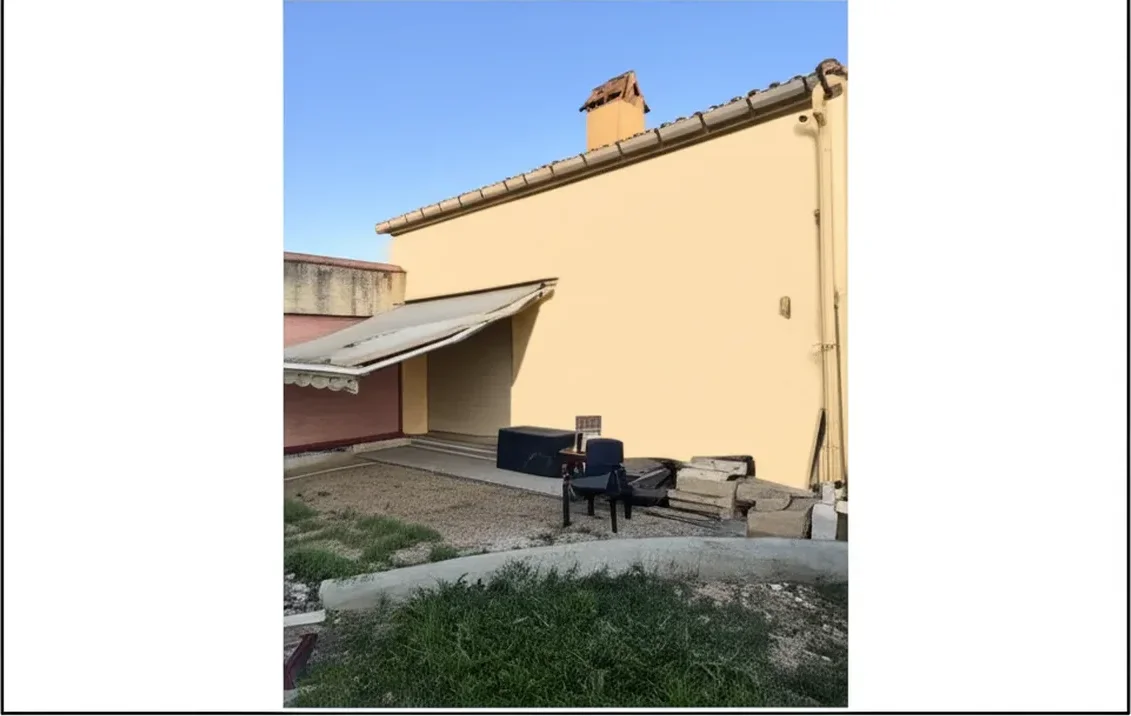
No third-party report replaces your own walls: the same colour reads differently on a north elevation and a south one, next to red brick or a grey roof, under morning and evening light. Take a daylight photo, upload it to the free AI paint visualiser, and run two or three candidates on the same image so the comparison is fair. Keep the one or two that survive the side-by-side, buy a tester pot of each, and brush them out on the actual surface in the actual light before you order the full quantity.
Frequently asked questions
What is the best brick paint UK 2026?
Can I paint outside brick without planning permission UK?
What is the best red brick paint UK?
How much does it cost to paint brickwork UK 2026?
What does BS EN 1062 mean on brick paint?
Can I use exterior paint on brick in winter UK?
Where can I buy brick paint UK?
Trademarks mentioned (Sherwin-Williams, Benjamin Moore, Behr, Caparol, Brillux, Sto, Alpina, Valspar, PPG, Glidden, Dulux, Crown Trade, Sandtex, Farrow & Ball, Johnstone's, Leyland) are property of their respective owners. FacadeColorizer is independent and not affiliated with any of them. Nominative fair use under Lanham Act §1125.