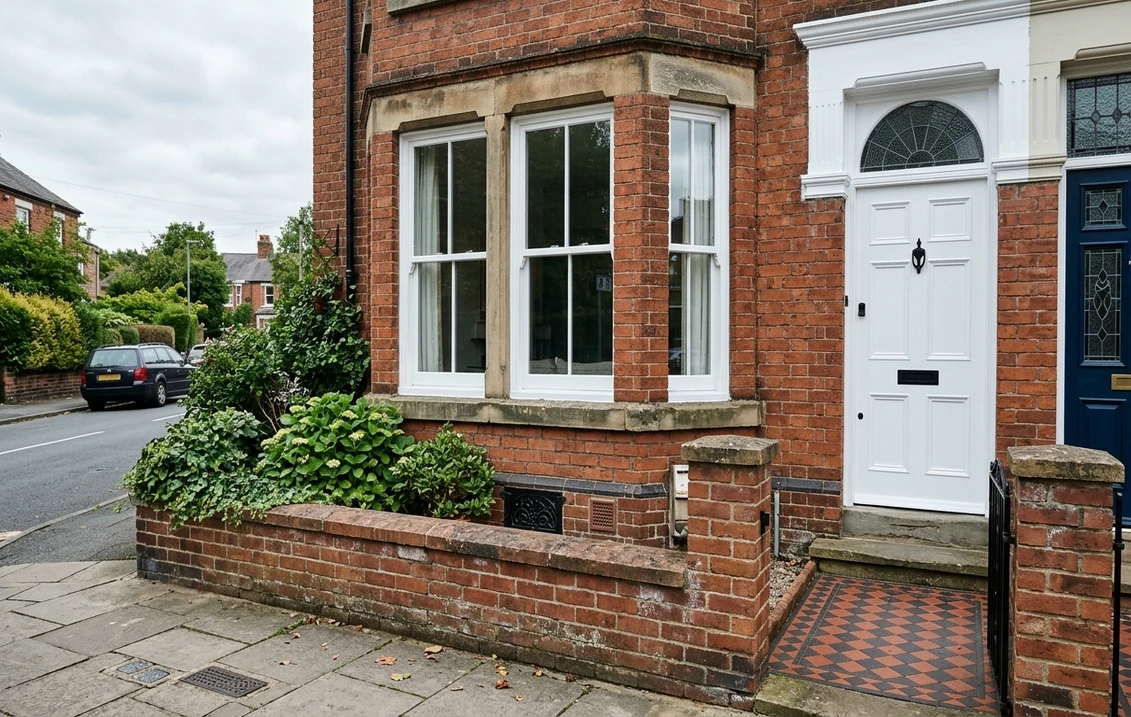
Try it on your house

Dulux Once Gloss is a solvent-based, high-gloss white for wood and metal that Dulux says gives "a perfect gloss finish on interior and exterior primed or painted wood or metal surfaces in just one coat, guaranteed", with no undercoat. It comes in one colour, Pure Brilliant White, covers up to 12 m² per litre, and needs 16 hours to dry. dulux.co.uk lists 750 ml, 1.25 litre and 2.5 litre tins (£29, £29 and £40 in October 2026) but sells it only through selected stores. Two caveats come from Dulux itself: outside, it recommends a primer underneath "for long term exterior protection", and inside, it warns that solvent-based paints "will discolour over time", faster where there is little natural light.
Everything below was read on the Dulux UK product pages and in the AkzoNobel safety data sheet in October 2026. Once Gloss suits a narrow job: white woodwork or metalwork that is already painted, sound and pale, where you want one coat instead of two. For a colour, bare timber or a long exterior guarantee, another Dulux product fits better, and this guide says which. If you are still choosing between white finishes for the outside of the house, our white exterior wood paint guide compares the main UK brands.
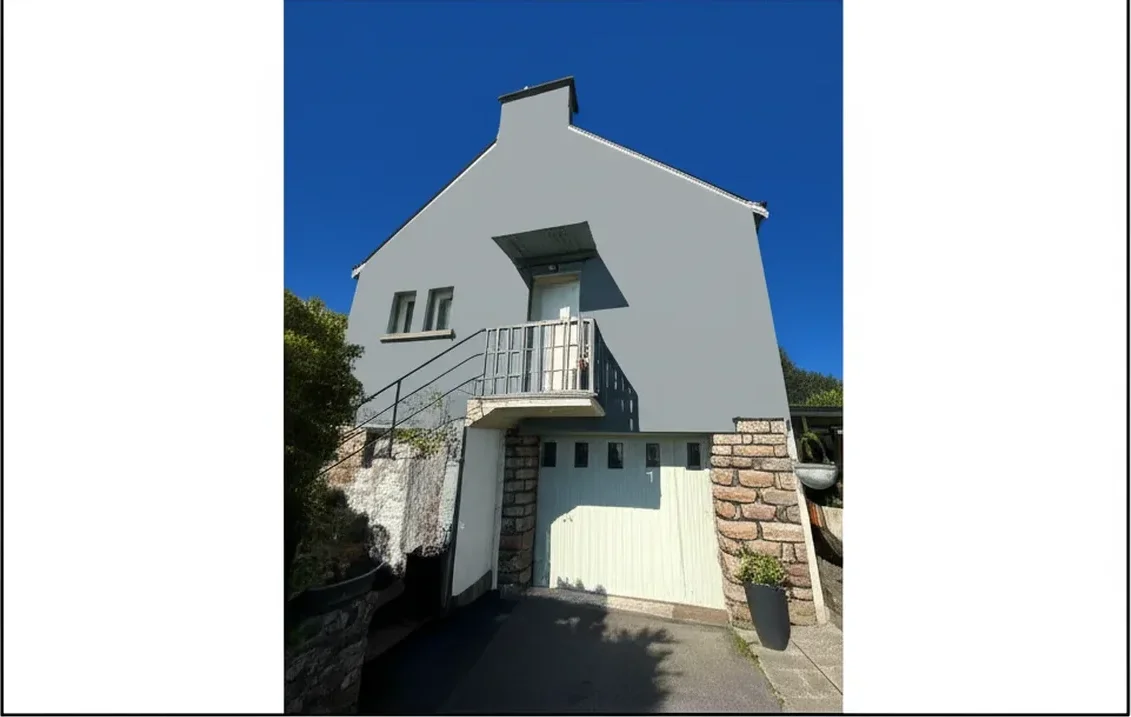
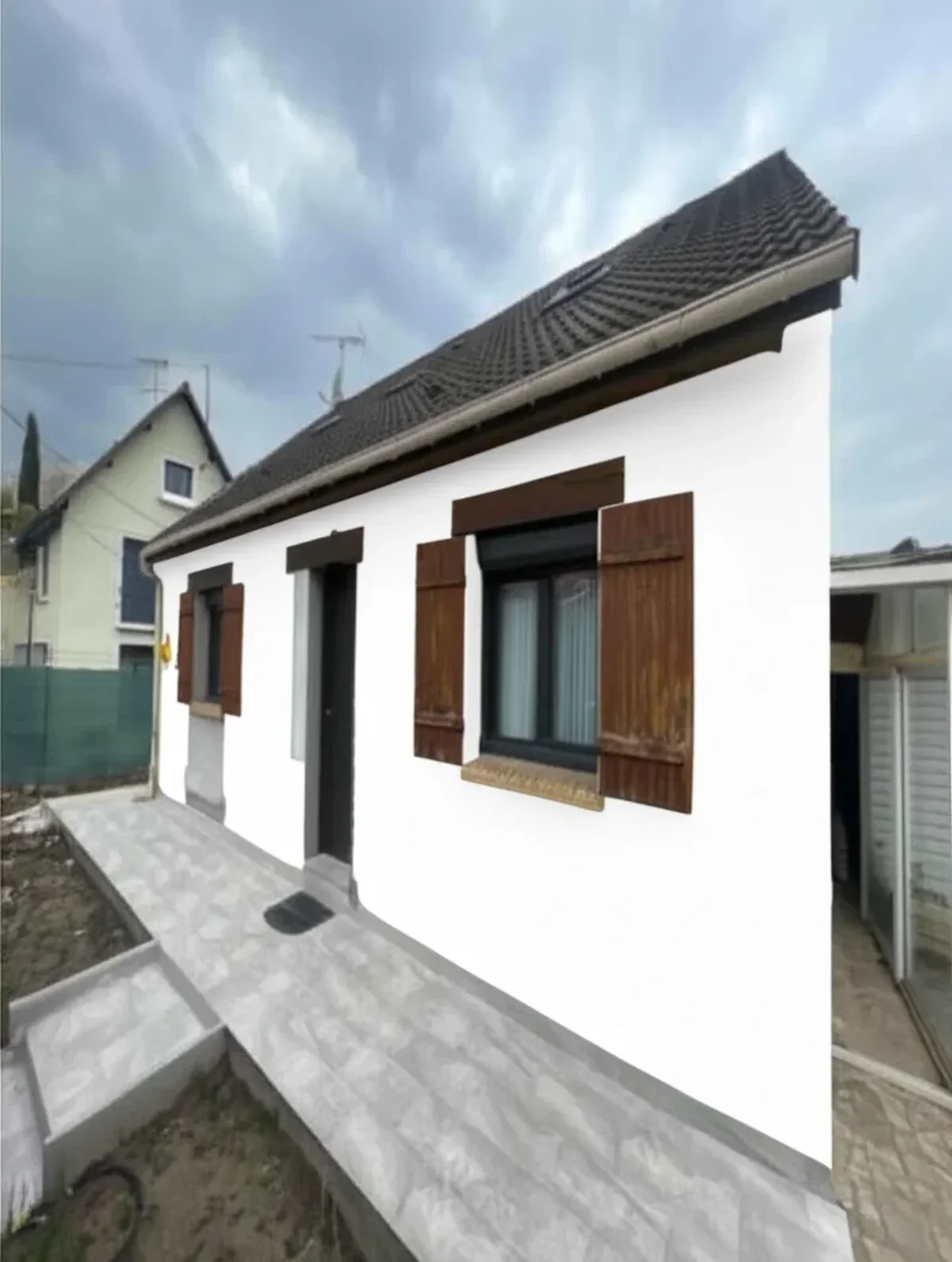
See a white gloss door on your own house first
Upload a photo of your house and repaint the front door in Pure Brilliant White, so you can judge it against your brick, render and window frames before you buy a tin.
Try a white front door on my photoDulux Once Gloss at a glance
The Once Gloss product page gives the working figures; the safety data sheet for Once Gloss Pure Brilliant White (issued 26 January 2024 by AkzoNobel in Slough) confirms what kind of paint it is.
| Specification | What Dulux states |
|---|---|
| Type of paint | "Solvent borne coating for interior and exterior use" (safety data sheet) |
| Surfaces | Interior and exterior wood or metal that is already primed or painted |
| Finish | High gloss |
| Coats | 1, no undercoat required |
| Coverage | Up to 12 m² per litre |
| Drying | Leave for 16 hours; keep newly painted doors and windows open and radiators off until fully dry; at least 16 hours before any second coat |
| Colour | Pure Brilliant White only |
| Tins and dulux.co.uk prices | 750 ml £29, 1.25 l £29, 2.5 l £40 (size table, October 2026); not for online sale, selected stores only |
| Hazards | Flammable liquid and vapour; may cause drowsiness or dizziness; may cause damage to organs through prolonged or repeated exposure; flash point 32°C (closed cup) |
| Cleaning tools | Brush cleaner, not water; solids and used cleaner to a hazardous waste facility |
Try it on your house
No photo? Try a sample
What "one coat" means in practice
The one-coat claim has conditions, and Dulux spells them out in its application notes. You apply "a thick even coat of paint taking care not to spread it too far", with "a clean, good quality brush". If you spread it thin, you "may require a second coat, particularly when painting over a darker colour with a lighter topcoat". In other words, Once Gloss is built to go on heavier than an ordinary gloss, and the 12 m² per litre figure assumes that heavier coat.
Three situations take the job outside the one-coat promise:
- Bare wood or bare metal. The product is for primed or painted surfaces. New timber, stripped sashes and rusty railings need a primer first.
- A dark colour underneath. Going from a black or racing green door to white is exactly the "darker colour with a lighter topcoat" case Dulux mentions. Plan for two coats, at least 16 hours apart.
- A glossy old surface. Dulux asks you to "sand down the surface to remove any sheen" and to remove flaking or defective paint first. Painting straight over shiny old gloss risks poor adhesion whatever the tin says.
The arithmetic shows why one coat appeals. Ten square metres of woodwork (a front door on both faces, its frame and a couple of window frames) takes about 0.83 litres of Once Gloss in a single coat at 12 m² per litre. The same area in two coats of a gloss covering 16 m² per litre, such as Dulux Quick Dry Gloss, takes 1.25 litres. The saving is a day of drying and about 0.4 litres of paint, if the surface is ready for one coat.
Once Gloss against the other Dulux glosses
Most people searching for Once Gloss end up choosing between five Dulux products. The figures below are copied from each product page on dulux.co.uk in October 2026; the prices are the ones in each page's size table.
| Product | Base | Where | Coats and coverage | Drying | 750 ml / 2.5 l |
|---|---|---|---|---|---|
| Once Gloss | Solvent | Interior and exterior, primed or painted wood and metal; white only | 1 coat, up to 12 m²/l | 16 h | £29 / £40 |
| Non Drip Gloss | Solvent | Interior and exterior wood and metal, including radiators; selected core colours | 1 or 2 coats, up to 12 m²/l; self-undercoating | 16 h | £27 / £39 |
| Quick Dry Gloss | Water | Interior wood and metal, including heated surfaces; "non-yellowing" | 2 coats, up to 16 m²/l; self-undercoating | 6 h, longer when cold and damp | £25 / £39 |
| Weathershield Quick Dry Exterior Gloss | Water | Exterior wood and metal; 6 year weather protection guarantee | 2 coats of Weathershield undercoat, then 1 or 2 of gloss, up to 16 m²/l | Touch dry 2 h, 6 h to dry; apply above 10°C | £33 / £56 |
| Once Satinwood | Solvent | Same uses as Once Gloss; white only | 1 coat, up to 12 m²/l | 16 h; glossy sheen settles to satin in 7 to 14 days | £29 / £40 |
Read across, the choice comes down to three questions. Is the woodwork inside or outside? Quick Dry Gloss is an interior product only, while Weathershield is the exterior system with a written guarantee; Once Gloss and Non Drip Gloss sit in between and are sold for both. Does the white have to stay white? Quick Dry Gloss is the one Dulux calls "non-yellowing"; the two solvent glosses carry Dulux's own warning about discolouration. Do you want colour? Once Gloss and Once Satinwood are white only, so a green or grey door means one of the other three. For a coloured front door, our Dulux front door colours guide sets out the Weathershield system and the colours Dulux itself recommends.
Why white gloss yellows indoors, in Dulux's words
The Once Gloss page carries a note that every buyer should read before painting skirting boards and interior doors: "the nature of solvent based paints means that they will discolour over time. The rate of discolouration is faster in areas with low natural or UV light. For long lasting whiteness we recommend the use of a water based formulation, available in the Dulux Quick Dry range". The Non Drip Gloss page carries the same paragraph.
That sentence tells you where Once Gloss belongs. The darkest places in a British house, such as the inside face of the front door in a narrow Victorian hallway, a north-facing landing or the skirting behind a sofa, are where white solvent gloss shows its age first. Outside, the same paint sits in daylight, which by Dulux's own account slows the discolouration. So the logical split, if you like the shine and the one-coat speed, is Once Gloss on the outside face of painted woodwork and a water-based Quick Dry finish indoors.
For the outside of the house, our white outdoor paint for wood guide compares gloss, satin and eggshell finishes across the main UK brands.
Using Once Gloss outside the house
Dulux sells Once Gloss for exterior wood and metal, but its product description adds a qualifier: "For long term exterior protection, we recommend using a suitable primer such as the Dulux Multi-surface Primer & Undercoat or one of the Dulux Weathershield equivalents, such as the Dulux Weathershield Quick Dry Exterior range." There is no exterior guarantee period on the Once Gloss page. Weathershield Quick Dry Exterior Gloss, by contrast, "guarantees 6 year weather protection for exterior wood and metal provided surfaces are in good condition before application".
That makes the outdoor decision fairly simple:
- Freshening up sound white paintwork on a door, window frames or a gate: Once Gloss does the job in one visit, provided you prepare the surface and any bare patches are primed.
- Repainting timber that has peeled, split or gone grey: the Weathershield system (primer, undercoat, gloss) is the one with a guarantee, and it is water-based, so it stays white.
- A coloured door or window: Once Gloss is not an option, since it is white only.
Timing matters more with a slow-drying solvent paint than with a quick-drying one. Dulux's drying note says newly painted doors and windows "should not be closed" until the paint is fully dry, and that takes 16 hours. On a front door that means a door left ajar into the evening, so start early on a dry day with no rain forecast overnight. Dulux also asks you to protect the paint from frost and extreme temperatures. For railings and other metalwork, our exterior metal paint guide covers the primers that bare or rusted metal needs before any gloss.
Old paint on British woodwork: check for lead before you sand
Once Gloss preparation starts with sanding, and on an older British house that is where the real risk lies. The British Coatings Federation's guide for the public, Lead in painted surfaces (HS 032, December 2015), says lead pigments "were taken out of most paints in the 1960s" and removed completely from decorative paints "by the early 1980s", and that "many wood or metal surfaces painted before the 1960s could contain significant levels of lead". On a Victorian or Edwardian door, the bottom layers are very likely to be that old.
The BCF's do's and don'ts translate directly into a Once Gloss job:
- Test the surface if you suspect lead, "especially if you are renovating an old house (> 40 years old)".
- Do not remove paint that is in sound condition: "overcoating is the safest option to prevent exposure". That suits Once Gloss well, since it is designed to go over existing paint.
- Where you must key or remove paint, use "chemical stripper or wet abrasive paper", never dry abrasive paper, and keep all debris wet.
- Do not use blow lamps or gas torches, and do not burn lead-containing waste.
Dulux's own instruction, to "sand down the surface to remove any sheen", is therefore best done with wet abrasive paper on any pre-1960s paintwork. The same caution applies indoors, which is one more reason the low-dust, low-odour water-based route suits a family hallway or a child's room; our nursery paint guide explains how VOC bands and solvent glosses fit into a baby's room.
VOC limits: what the UK rules allow in a tin of gloss
Solvent gloss is still legal in the UK, within a cap. The Volatile Organic Compounds in Paints, Varnishes and Vehicle Refinishing Products Regulations 2012, Schedule 2, set the maximum VOC content for "interior/exterior trim and cladding paints for wood and metal" at 300 g/l for solvent-borne products and 130 g/l for water-borne ones. The Once Gloss safety data sheet states that the provisions of Directive 2004/42/EC on VOC apply to the product and refers you to the label and technical data sheet for the figure, so check the back of the tin rather than relying on a retailer listing.
The practical consequences are the ones on the hazard panel: the solvent is a hydrocarbon blend, the paint is flammable, and the vapour "may cause drowsiness or dizziness". Open windows while you paint indoors, keep the tin and the brush cleaner away from naked flames and pilot lights, and take breaks in fresh air on a long job. Dulux asks for brushes to be cleaned with a brush cleaner, the clear liquid reused once the solids settle, and the solids and used cleaner taken to a hazardous waste facility; never pour solvent paint or washings down a drain.
Do you need permission to paint a door or window frames white?
Usually not. The Planning Portal's doors and windows guidance says you do not usually need permission for "repairs, maintenance, and minor improvements, such as repainting window and door frames". In England the legal basis is Class C of the General Permitted Development Order 2015, which permits "the painting of the exterior of any building or work" and defines painting as including "any application of colour".
The exceptions are the familiar ones. Where a council has made an Article 4 Direction withdrawing permitted development rights, repainting can need planning permission, and a listed building needs listed building consent "for any significant works - internal or external". In a conservation area, the council's own guidance is the document to read before changing the colour of joinery. Our guides to conservation area painting rules and listed building painting rules explain how to check before you start. Wales, Scotland and Northern Ireland have their own permitted development rules.
How much Once Gloss do you need?
The table works from Dulux's maximum of 12 m² per litre for one coat. The areas are worked examples, not standards: measure your own woodwork, and add a margin for mouldings and edges, which take more paint than flat panels.
| Job | Example area, one coat | Litres at 12 m²/l | Tin |
|---|---|---|---|
| Front door, one face (1.98 x 0.84 m) plus frame | About 2.2 m² | 0.18 l | 750 ml, with plenty left |
| Same door, both faces, plus frame and edges | About 4 m² | 0.33 l | 750 ml |
| Skirting, 40 m run at 15 cm high, in a through lounge and hall | 6 m² | 0.5 l | 750 ml |
| Front door as above plus four window frames, outside faces (about 1 m² each) | About 8 m² | 0.67 l | 750 ml with little to spare; 1.25 l if a second coat is likely |
| Eight interior doors on both faces (1.98 x 0.76 m), their frames and 80 m of skirting | About 44 m² | 3.7 l | 2.5 l plus 1.25 l (or a water-based Quick Dry gloss, see above) |
Remember the second coat over dark colours: turning a black door white is likely to take two, which doubles the door line in the table. And since dulux.co.uk listed the 750 ml and 1.25 litre tins at the same £29, the 1.25 litre tin gives two thirds more paint for the same money there (stores set their own prices).
Painting a front door with Once Gloss, step by step
The steps follow Dulux's instructions on the product page, with the lead precautions from the BCF guide added where an older door needs them.
- Check the weather and the calendar. You need a dry day, a door that can stay open until the paint is fully dry, and no frost.
- Check for lead on any door painted before the 1960s, and follow the wet methods above if the result is positive.
- Remove flaking or defective paint, then sand to remove the sheen from the old gloss. Wash off dirt and grease and let the door dry.
- Prime bare patches. Once Gloss is for primed or painted surfaces; outside, Dulux recommends a primer such as its Multi-surface Primer & Undercoat or a Weathershield equivalent for long-term protection.
- Take off or mask the ironmongery: knocker, letter plate and handles.
- Apply one thick, even coat with a clean, good-quality brush, "taking care not to spread it too far". Work the panels and mouldings first, then the flat timber around them, so the wet edges meet on the flat surfaces.
- Leave it for 16 hours with the door open. If it needs a second coat (white over a dark colour, or thin patches), wait at least 16 hours from the first.
- Clean up with brush cleaner, reuse the clear liquid, and take solids and used cleaner to a hazardous waste facility. Unwanted paint can go to a Community RePaint scheme through recyclenow.com.
If the door is only part of a wider exterior job, the cost of having the whole front painted is in our exterior house painting cost guide, and the front door colours guide covers the case for a white door against the colours that suit each type of British house.
White, or a colour after all?
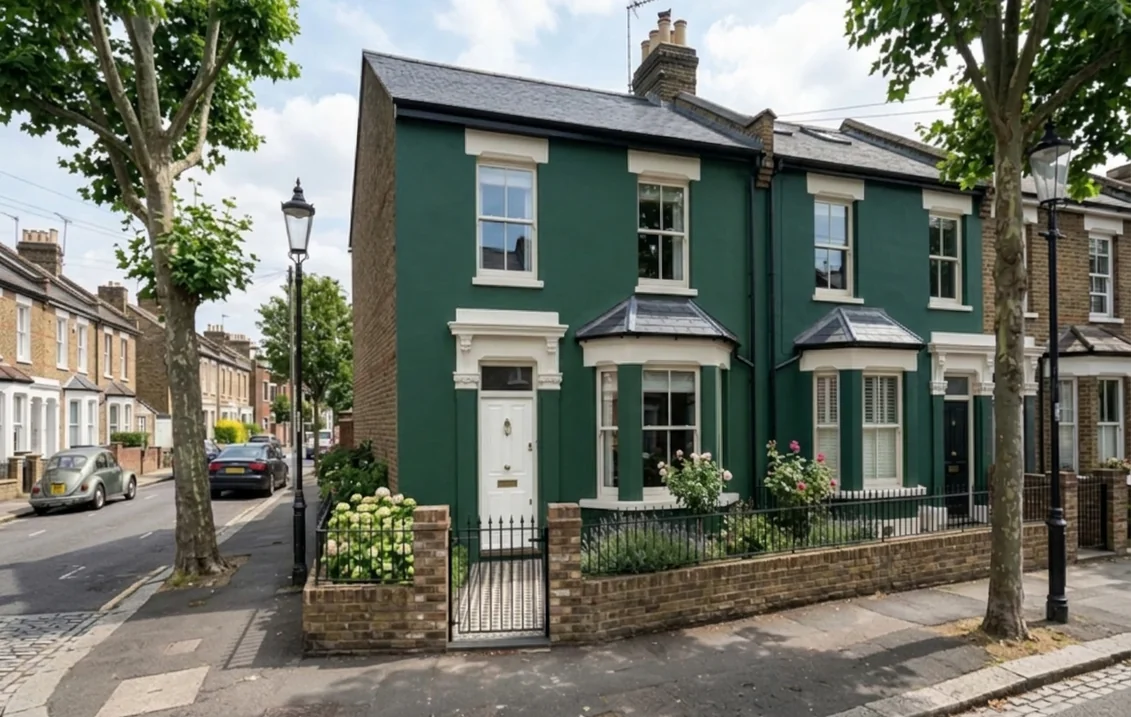
Upload a photo of your front and compare a Pure Brilliant White door with a deep green, a navy or a grey in seconds, before you choose between Once Gloss and a Weathershield colour.
Compare door colours on my houseSources and references
- Dulux UK, Dulux Once Gloss product page: description, surfaces, coverage, coats, drying time, colour, sizes and prices, exterior primer recommendation, discolouration warning, preparation and cleaning instructions, hazard statements.
- AkzoNobel, Safety data sheet, Once Gloss Pure Brilliant White (issued 26 January 2024): solvent-borne coating for interior and exterior use, flash point, VOC Directive reference.
- Dulux UK, product pages for Non Drip Gloss, Quick Dry Gloss, Weathershield Quick Dry Exterior Gloss and Once Satinwood: base, uses, coats, coverage, drying times, guarantee, sizes and prices for the comparison table.
- British Coatings Federation, Lead in painted surfaces: repainting and removal, guide for the general public (HS 032), hosted by the Painting and Decorating Association: dates of lead removal from paint, do's and don'ts for sanding and stripping.
- legislation.gov.uk, SI 2012/1715, Schedule 2: VOC content limit values: 300 g/l solvent-borne and 130 g/l water-borne for trim and cladding paints for wood and metal.
- legislation.gov.uk, Town and Country Planning (General Permitted Development) (England) Order 2015, Schedule 2, Part 2, Class C: exterior painting as permitted development.
- Planning Portal, Doors and windows: planning permission: repainting frames, Article 4 Directions, listed building consent.
Frequently asked questions
Does Dulux Once Gloss need an undercoat?
Can you use Dulux Once Gloss outside?
How long does Dulux Once Gloss take to dry?
Does Dulux Once Gloss go yellow?
Is Dulux Once Gloss oil based?
What colours does Dulux Once Gloss come in?
How far does a tin of Once Gloss go?
Trademarks mentioned (Sherwin-Williams, Benjamin Moore, Behr, Caparol, Brillux, Sto, Alpina, Valspar, PPG, Glidden, Dulux, Crown Trade, Sandtex, Farrow & Ball, Johnstone's, Leyland) are property of their respective owners. FacadeColorizer is independent and not affiliated with any of them. Nominative fair use under Lanham Act §1125.