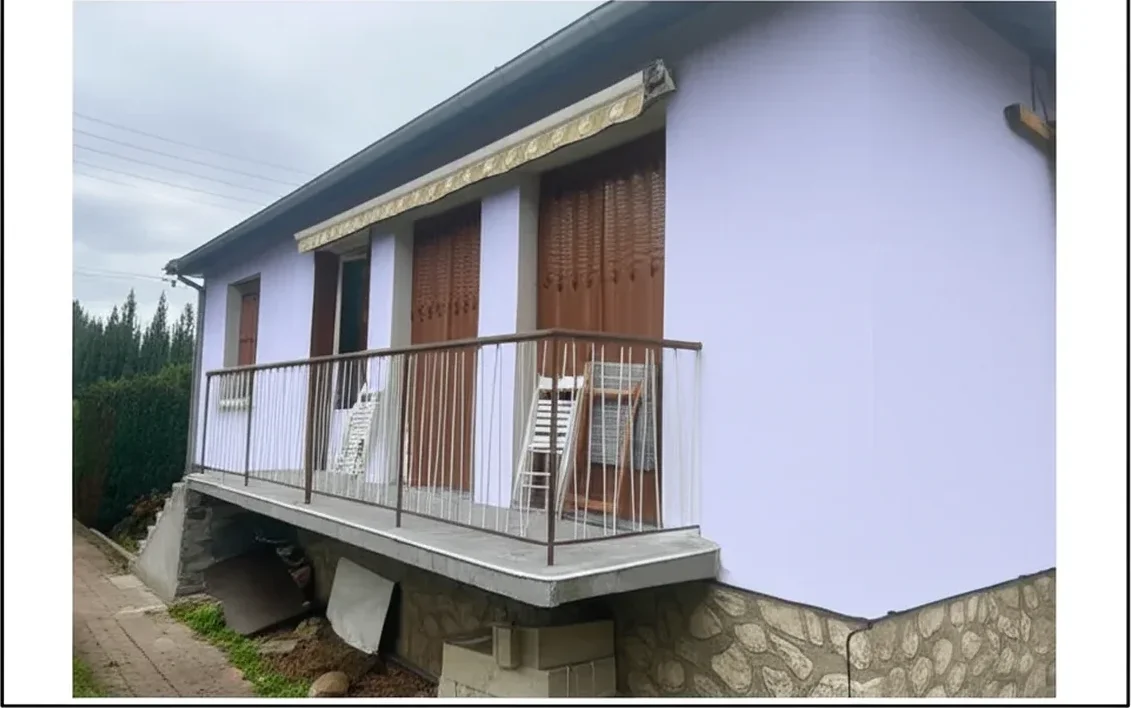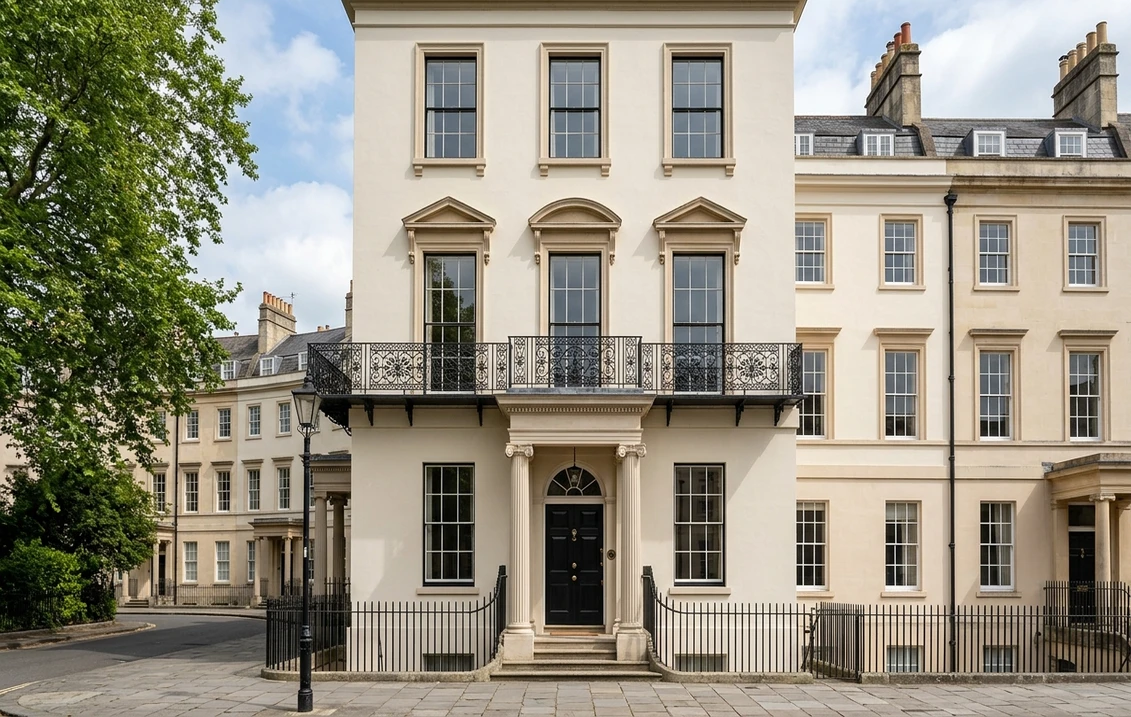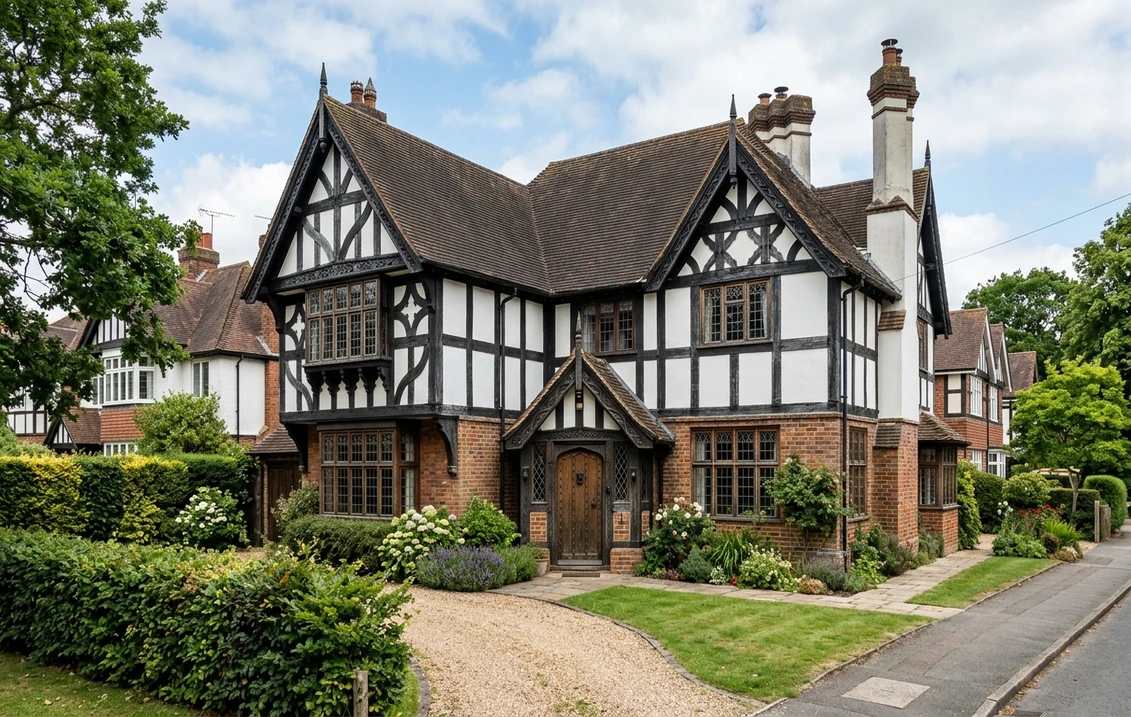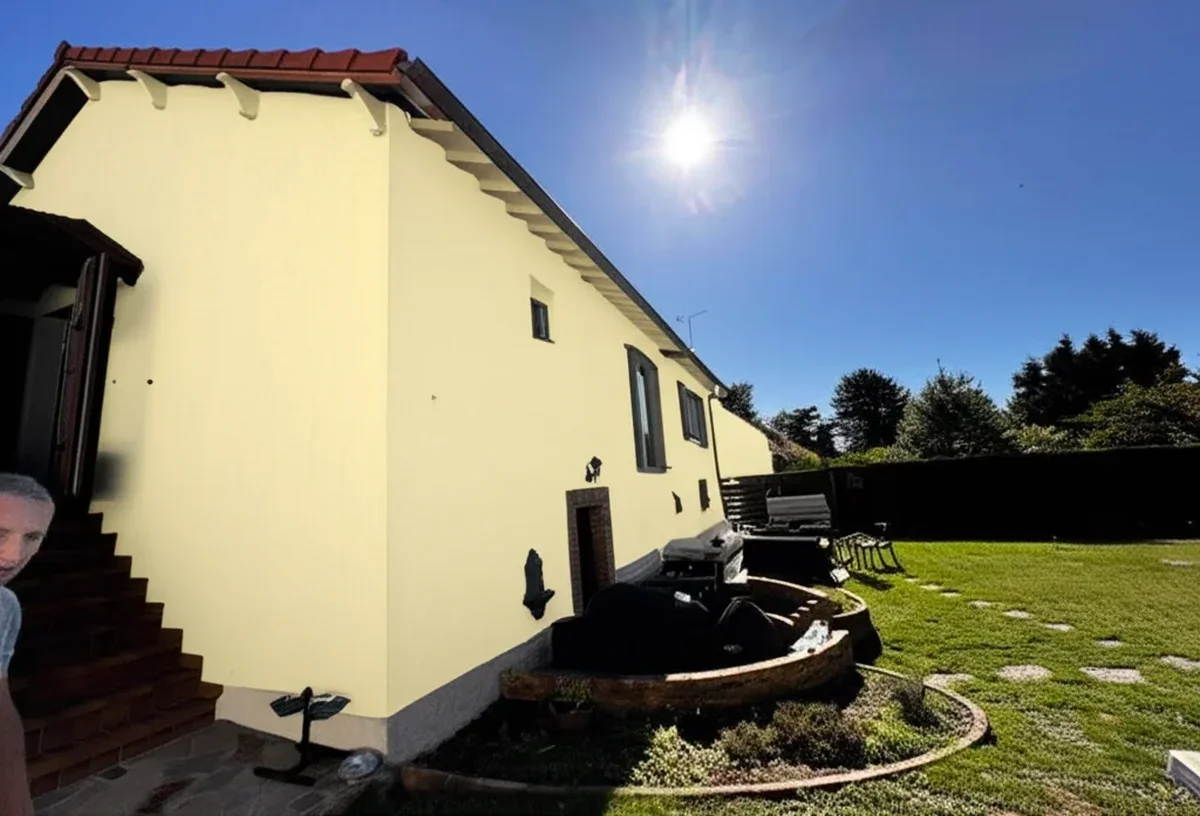
Try it on your house

Front door yellow paint is the surprise British kerb appeal story of 2026, and the FacadeColorizer dataset shows exactly why. Across 16,983 previews, a yellow front door colour now sits in the top six saved front door categories in the United Kingdom, with Farrow & Ball Babouche, Dulux Indian Ivory and Sandtex Trade Mellow Yellow leading saves from London, Edinburgh, Manchester, Bristol and Leeds. The cultural shift behind it is clear: with black and dark grey front doors saturating the market since 2018, British homeowners want a yellow front door paint that reads warm, optimistic and historically literate rather than imported from American kerb appeal palettes. This guide ranks the ten best yellow front door colours for UK homes in 2026, with exact Dulux Weathershield, Farrow & Ball Exterior Eggshell, Sandtex Trade and Crown Fastflow codes, BS EN 1062 W3 weather ratings, Conservation Area and Listed Building rules under the Planning (Listed Buildings and Conservation Areas) Act 1990, and realistic GBP prices from B&Q, Wickes, Screwfix and Homebase.
Why yellow front door paint suits British homes in 2026
Yellow is, historically, the warmth correction colour for British daylight. UK daylight is cool, diffuse and Atlantic-driven, which is why a Georgian Bath crescent, a Victorian London stock brick terrace and an Edwardian Edinburgh New Town townhouse all benefit from a warm-tone yellow front door more than they would from a saturated red or a cold black. From the original ochre-pigmented limewash on Cotswold cottages through the cream and primrose front doors of the Garden City movement in Letchworth and Welwyn to the buttery 1930s suburban semis of Manchester and Birmingham, a yellow front door colour has been a quietly recurring British choice for two centuries.
In 2026, three industry signals pushed yellow front door paint colors into the top kerb appeal positions for British homes. Farrow & Ball's 2026 Colour Card kept Babouche No.223, India Yellow No.66 and Citron No.74 at the front of its exterior collection. Dulux issued an updated Heritage palette with Indian Ivory, Cornish Cream and Buttermilk all positioned as recommended exterior shades. And the Royal Institute of British Architects retrofit survey for 2026 reported that 22 percent of period homeowners refurbishing in 2026 plan to swap black or dark grey front doors for a warm yellow within five years. That is a meaningful enough trend to take the colour seriously rather than dismiss it as a single-house statement.
The 10 best yellow front door colors UK 2026
The ten yellow front door colors below combine 2026 saves from the FacadeColorizer dataset, RIBA retrofit survey responses, and availability across every major UK paint merchant including B&Q, Wickes, Homebase, Screwfix, Toolstation and Brewers Decorators Centres. Each shade is given with its brand code, the closest sister shade across other British manufacturers and the architectural style it suits. Every recommendation is in exterior eggshell or satinwood, the correct British finish for an exterior timber or composite front door.
| Yellow front door colour | Brand & code | Undertone | Best UK setting |
|---|---|---|---|
| Babouche | Farrow & Ball No.223 | Warm mid-yellow | Victorian terrace, London stock brick |
| India Yellow | Farrow & Ball No.66 | Deep amber-mustard | Georgian door, Bath crescent |
| Citron | Farrow & Ball No.74 | Vivid green-yellow | Modern townhouse, Bristol, Edinburgh |
| Indian Ivory | Dulux Heritage | Soft warm buttercream | Edwardian semi, suburban London |
| Cornish Cream | Dulux Weathershield | Pale cream with yellow | 1930s semi, Manchester, Leeds |
| Buttermilk | Dulux Heritage | Soft warm buttermilk | Cotswold cottage, Bath limestone |
| Mellow Yellow | Sandtex Trade | Warm mid butter | Coastal cottage, Cornwall, Devon |
| Sunbeam Satin | Crown Fastflow | Saturated mid yellow | Budget refresh, semi-rural |
| Mister David | Little Greene 47 | Soft cool primrose | Arts & Crafts semi, Yorkshire |
| Marigold | Johnstone Trade | Deep saturated marigold | Listed townhouse, Bristol harbour |
Try it on your house
No photo? Try a sample
The single most saved yellow front door paint across the FacadeColorizer dataset in May 2026 was Farrow & Ball Babouche No.223 on red Victorian brick terraces with off-white sash architraves, accounting for almost one in three yellow door previews in Greater London. India Yellow No.66 dominated saves in Bath, Bristol and Edinburgh listed townhouses, while Dulux Heritage Indian Ivory led in 1930s suburban semis across Manchester, Leeds and Birmingham. If you are shortlisting yellow front door colors for your own British home, those three give you the safest mainstream UK envelope before you commit to a 30 to 95 GBP tin.
Yellow front door paint colors by UK house type
Yellow front door paint colors are the most light-sensitive choice on a British facade, which is why matching the shade to the architectural period and brick type is more important here than for green or blue. Yellow sits at LRV 55 to 80 on most British paint cards, high enough to bounce daylight back to the kerb but reactive enough to shift across the day. The right pairing makes a yellow front door read as historically literate; the wrong pairing makes it read as suburban paint chart.
For a Victorian terrace in London stock brick, specify Farrow & Ball Babouche No.223 or Dulux Heritage Indian Ivory in exterior eggshell. The warm mid-yellow lifts the London yellow stock brick without clashing with the soot-darkened pointing, and the eggshell sheen reads as historically accurate. For an Edwardian semi in red brick with white render gable end, switch to Cornish Cream or Buttermilk in Dulux Weathershield, both of which carry enough cream to sit alongside the white render reveal without competing with it. For a 1930s suburban semi in Manchester or Leeds with brown brick and bay window, Sandtex Trade Mellow Yellow at 38 to 50 GBP for 2.5 L gives the right warmth to bridge the brown brick and the white window frames without the door becoming a kerb mismatch.
On rendered or pebbledash homes in the South West, where Buttermilk and Mellow Yellow both perform well, expect to need about 15 percent more paint than the brand calculator suggests. Render and pebbledash front porches absorb noticeably more paint than smooth timber doors, especially if porch reveals and the door reveal are being painted in the same colour. Coverage from B&Q stock 2.5 L Farrow & Ball Exterior Eggshell is around 11 to 13 m2 per coat on smooth timber, dropping to 8 to 10 m2 per coat on render and pebbledash.
Yellow front door colors by undertone (UK guide)
When British decorators talk about yellow front door colors they classify them by undertone, not just hue, because undertone is what decides whether the yellow reads warm or cold against your brick, render or stone. There are five main undertones to know for the UK in 2026, and they map cleanly onto the major British paint manufacturers' yellow ranges.
- Buttercream (Indian Ivory, Cornish Cream, Buttermilk): the safest mainstream British envelope. Universally flattering on red brick, brown brick and white render from Victorian to 1930s suburban stock. Reads as 1930s Garden City suburban kerb appeal.
- Warm mid-yellow (Babouche, Mellow Yellow): historically accurate on Victorian and Edwardian terraces. Best on London stock brick and red Victorian brick. Avoid on cool blue-grey kerbstones without warming the trim colour.
- Amber-mustard (India Yellow, Marigold): deep, formal, historic. Best on Georgian and listed townhouses in Bath, Bristol and Edinburgh. Reads heavy on small semi-detached doors.
- Green-yellow (Citron): contemporary, sharp, urban. Best on modern townhouses, new builds and Conservation Area edge plots. Avoid against red brick where it can read clinical.
- Primrose (Mister David, Sunbeam Satin): cool, soft, Arts and Crafts. Best on cottage-style semis in Yorkshire, Cheshire and the Cotswolds; avoid in Bath where the cool undertone fights the warm limestone.
To pick between two close shortlisted yellow front door colours, paint each as a 1 m2 patch on a hidden section of the door or porch lining and view it under three lighting conditions: morning Atlantic light (8 to 10 am), midday with whatever direct sun the British weather permits, and dusk (around 7 to 8 pm in summer). Yellows shift more dramatically across British daylight than reds, blues or greys, and a buttercream that flatters at 11 am can read mustard at 6 pm. Better to learn that before you commit a 28 to 95 GBP tin to the door. The free AI front door colour visualiser on FacadeColorizer lets you preview Babouche, India Yellow, Indian Ivory and Mellow Yellow on your actual British home photo in 30 seconds before you buy any paint.
Preview yellow front door paint on your own British home, free
Upload one photo of your front door and preview Farrow & Ball Babouche, India Yellow, Dulux Indian Ivory and Sandtex Mellow Yellow on your actual British home in 30 seconds. No card required.
Visualise freeBS EN 1062 ratings and the UK weather question for yellow front doors
A front door faces driving rain, freeze-thaw cycles, ultraviolet, and the salt-laden Atlantic westerlies that dominate British weather from October to March. Yellow pigment is more UV-reactive than green or blue pigment, so weather rating matters more for a yellow front door paint than for almost any other colour family. The relevant British Standard is BS EN 1062, which classifies exterior coatings on seven properties. The four that matter for a yellow timber front door are gloss level (G1 to G3), film thickness (E1 to E5), water vapour permeability (V1 high to V3 low) and liquid water absorption (W1 low to W3 high; despite the numbering, W3 is the safest end). For a yellow British front door specify W3 low water absorption paired with V1 or V2 vapour permeability. Sandtex Trade Eggshell, Dulux Weathershield Exterior Satin and Farrow & Ball Exterior Eggshell all carry these ratings.
UK Building Regulations Part L and the requirements of the Health and Safety Executive on hazardous substances should also be checked if you are buying solvent-based gloss for older composite doors. Most 2026 yellow ranges have moved to water-based eggshell or satinwood, which keeps the VOC content well under 30 g/L and avoids the long drying times of traditional oil gloss. Crown Fastflow Quick Dry Satin and Sandtex Trade Quick Dry Eggshell both dry to recoat in four hours at 15 degrees C, which makes single-weekend yellow front door jobs feasible from April through October.
| Product (UK) | Tin size | GBP price 2026 | Where to buy |
|---|---|---|---|
| Farrow & Ball Exterior Eggshell (Babouche, India Yellow, Citron) | 2.5 L | 95-110 GBP | F&B showroom, Homebase |
| Dulux Weathershield Exterior Satin (Cornish Cream) | 2.5 L | 42-55 GBP | B&Q, Wickes, Homebase |
| Dulux Heritage Exterior Eggshell (Indian Ivory, Buttermilk) | 2.5 L | 60-72 GBP | Heritage stockists, Brewers |
| Sandtex Trade Eggshell (Mellow Yellow) | 2.5 L | 38-50 GBP | Screwfix, Brewers, Toolstation |
| Crown Fastflow Quick Dry Satin (Sunbeam Satin) | 2.5 L | 35-46 GBP | B&Q, Wickes, Screwfix |
| Little Greene Intelligent Exterior Eggshell (Mister David) | 2.5 L | 85-99 GBP | Little Greene showroom, online |
| Johnstone Trade Aqua Satin (Marigold) | 2.5 L | 28-38 GBP | Screwfix, Toolstation, Brewers |
Per litre, premium British yellow front door paint sits at 38 to 48 GBP, trade at 14 to 22 GBP. A typical 2 m by 0.9 m UK timber front door takes about 0.4 L for two coats, so even Farrow & Ball's premium pricing translates to 18 to 20 GBP of paint per door. The cost difference between trade and premium for a single front door job is therefore small in absolute terms; what you are paying for at the F&B and Little Greene end is depth of pigment, vapour permeability and the specific 18th and 19th century-derived yellow undertones that Sandtex and Dulux Trade do not match. American comparators such as Sherwin-Williams and Benjamin Moore are not stocked widely in UK trade outlets and shipping costs typically outweigh any savings.
Conservation Areas, Listed Buildings and Permitted Development for yellow doors
Painting your front door yellow is normally a permitted activity under Permitted Development rights for most British homes, provided the home is unlisted and not in a Conservation Area or Article 4 Direction zone. Permitted Development is the framework that lets you make minor exterior changes without applying for planning permission. The detail is set out on the Planning Portal, the official government planning guidance service for England.
If your home is Grade I, Grade II* or Grade II listed, painting a previously unpainted front door, changing its colour, or stripping back to bare timber will normally require Listed Building Consent under the Planning (Listed Buildings and Conservation Areas) Act 1990. The Grade II listing covers approximately 92 percent of all listed homes in England and Wales, and your Local Planning Authority will take a view on whether the proposed yellow is historically appropriate. India Yellow, Indian Ivory and Buttermilk are typically pre-approved on Georgian and Regency doors; saturated greens and reds like Citron or Marigold are usually refused on Grade I and Grade II* listed townhouses. If your home is in a Conservation Area but not listed, an Article 4 Direction may still apply and remove Permitted Development rights for door painting; check with your council planning department before buying paint.
Scotland operates a parallel system through Historic Environment Scotland and the Town and Country Planning (Scotland) Act 1997. Listed Building Consent in Edinburgh, Glasgow, Stirling and Aberdeen is administered by the local council, with HES providing statutory advisory input. Edinburgh New Town and the Bath UNESCO World Heritage Site are the two most restrictive zones in mainland UK for front door colour changes, and both maintain historic colour palettes from which you must choose. Both palettes include several historic yellows, with India Yellow and Indian Ivory almost always pre-approved on Georgian and Regency timber doors.
How to paint a yellow front door in the UK (step by step)
A correctly painted British yellow front door in 2026 should give you 8 to 12 years of weather performance before refresh, depending on exposure, latitude and aspect. South-facing yellow doors in the South East fade fastest from ultraviolet (yellow pigment is the most UV-reactive of the major hues); west-facing doors in the South West and Wales fail soonest from driving rain. Either way the process is the same.
Step 1 - Plan the weather window. You need 48 hours dry, with temperatures between 8 and 25 degrees C. The practical British painting season is April to October; in Scotland and the North East, May to September. Avoid painting between November and March; cold and damp slow cure and leave yellow tin marks streaky.
Step 2 - Remove ironmongery. Unscrew the letterplate, knocker, handle, escutcheon and number digits. Removing fixings rather than masking them is the single biggest difference between a professional and amateur yellow front door finish. Yellow shows up sloppy edges more than darker colours, so unmasked tape lines around a brass letterplate read poorly from the kerb.
Step 3 - Surface prep to BS 7079. British Standard 7079 covers surface preparation for protective coatings. Sand back to firm timber with 120 grit, then 180 grit. Fill checks and old screw holes with two-part wood filler such as Ronseal Multi Purpose Wood Filler from Wickes or Screwfix. Spot prime knots with shellac knotting solution; this matters more under yellow than under darker colours because tannin bleed-through reads as orange staining on a Babouche or Indian Ivory finish.
Step 4 - Prime. Apply Zinsser BIN white shellac primer or Sandtex Trade Exterior Primer to all bare timber and over all knots. Allow four hours to recoat. Do not skip primer on yellow front doors even on previously painted doors; yellow needs a uniform white base to read evenly.
Step 5 - First coat of yellow. Decant the yellow front door paint into a kettle and brush with a 50 mm Hamilton Perfection brush following the grain. Maintain a wet edge and brush off in long strokes. Do not roller a yellow front door if it has mouldings; the texture of the roller leaves marks that read poorly at the kerb. Yellow shows brush marks more than green or blue, so the first coat should be brushed out further than feels comfortable.
Step 6 - Second coat. Recoat after the manufacturer's stated drying time, typically 4 to 6 hours for water-based eggshell at 15 degrees C, 16 to 24 hours for traditional oil gloss. The second coat is what gives you the BS EN 1062 W3 performance. For deep yellows like India Yellow and Marigold a third coat may be needed if the LRV gap between primer (about 90) and topcoat (around 55 to 65) is too wide for two coats to fully cover.
Step 7 - Refit ironmongery. Wait 24 hours after the final coat before refitting the letterplate, handle and knocker. Polish or repolish the brass at the same time, because aged unlacquered brass against a fresh yellow eggshell is one of the strongest 2026 British kerb appeal envelopes and looks best when the brass is freshly polished.
How to test it on your own home before you buy
No third-party report replaces your own walls: the same colour reads differently on a north elevation and a south one, next to red brick or a grey roof, under morning and evening light. Take a daylight photo, upload it to the free AI paint visualiser, and run two or three candidates on the same image so the comparison is fair. Keep the one or two that survive the side-by-side, buy a tester pot of each, and brush them out on the actual surface in the actual light before you order the full quantity.
Cost to paint a yellow front door UK 2026
For a typical 2 m by 0.9 m timber British front door, materials for a yellow front door colour cost 35 to 85 GBP in 2026 depending on brand. That breaks down as one tin of 750 ml or 1 L exterior eggshell (28 to 65 GBP), a 250 ml tin of primer (8 to 14 GBP), a 50 mm Hamilton Perfection brush (12 to 18 GBP), 120 and 180 grit sandpaper (3 to 5 GBP) and a tin of shellac knotting solution (8 to 12 GBP). If your door is in good shape and you already own brushes, a fresh Babouche or Cornish Cream refresh in Sandtex Trade or Crown Fastflow can come in well under 50 GBP all-in.
Hiring a UK decorator to paint a yellow front door supply-and-fit typically costs 180 to 420 GBP in 2026, varying by region. London and Edinburgh sit at the top, Manchester, Leeds, Bristol and Birmingham cluster in the middle, the North East and South Wales sit at the lower end. That price includes ironmongery removal and refit, two-coat prep, primer, two finish coats and disposal. Always insist on a written quote that specifies the brand, exact code, number of coats and BS EN 1062 rating. A vague quote that just says yellow eggshell is a red flag. The decorator should also confirm they hold public liability insurance of at least 2 million GBP and either TrustMark or Painting and Decorating Association accreditation; check listings via Citizens Advice if you need to dispute a quote.
Further reading
- Best exterior paint colours UK 2026
- Conservation Area painting rules UK guide
- Green front door colours UK 2026
- Blue front door colours UK 2026
- Front door colours UK 2026: complete guide
See Babouche, India Yellow, Indian Ivory or Mellow Yellow on your actual British front door photo before you buy a single tin.
The best yellow front door paint for your British home in 2026 will depend on brick type, architectural period, planning constraints and trim colour. A buttercream yellow front door colour in Dulux Heritage Indian Ivory or Buttermilk is the safest mainstream choice; Farrow & Ball Babouche No.223 is the most-saved single yellow shade across 16,983 previews; India Yellow No.66 and Marigold are the right answers for Georgian and listed townhouses in Bath, Bristol and Edinburgh. Test every shortlisted yellow shade on your own door with our free AI front door colour visualiser before you commit. Sources: Farrow & Ball 2026 Colour Card, Dulux Heritage 2026, Sandtex Trade, Crown Fastflow, Little Greene, BS EN 1062, BS 7079, Planning Portal, Historic Environment Scotland.
Frequently asked questions
What are the best yellow front door colors UK 2026?
What is the best yellow front door paint UK?
Do I need planning permission to paint my front door yellow UK?
What yellow front door paint colors work on red brick UK?
How much does it cost to paint a yellow front door UK 2026?
What finish should I use for a yellow front door UK?
Where can I buy yellow front door paint UK?
Trademarks mentioned (Sherwin-Williams, Benjamin Moore, Behr, Caparol, Brillux, Sto, Alpina, Valspar, PPG, Glidden, Dulux, Crown Trade, Sandtex, Farrow & Ball, Johnstone's, Leyland) are property of their respective owners. FacadeColorizer is independent and not affiliated with any of them. Nominative fair use under Lanham Act §1125.