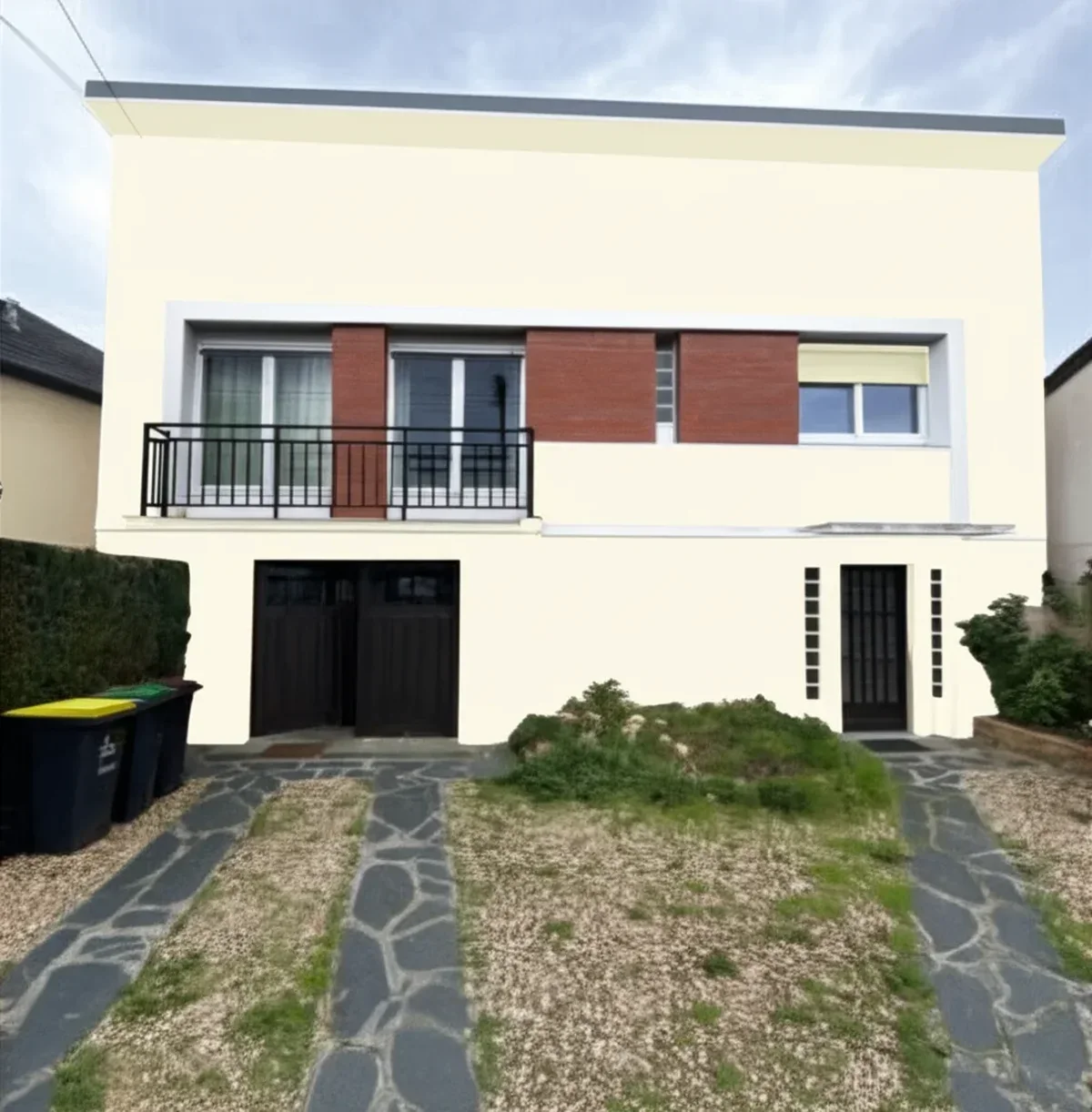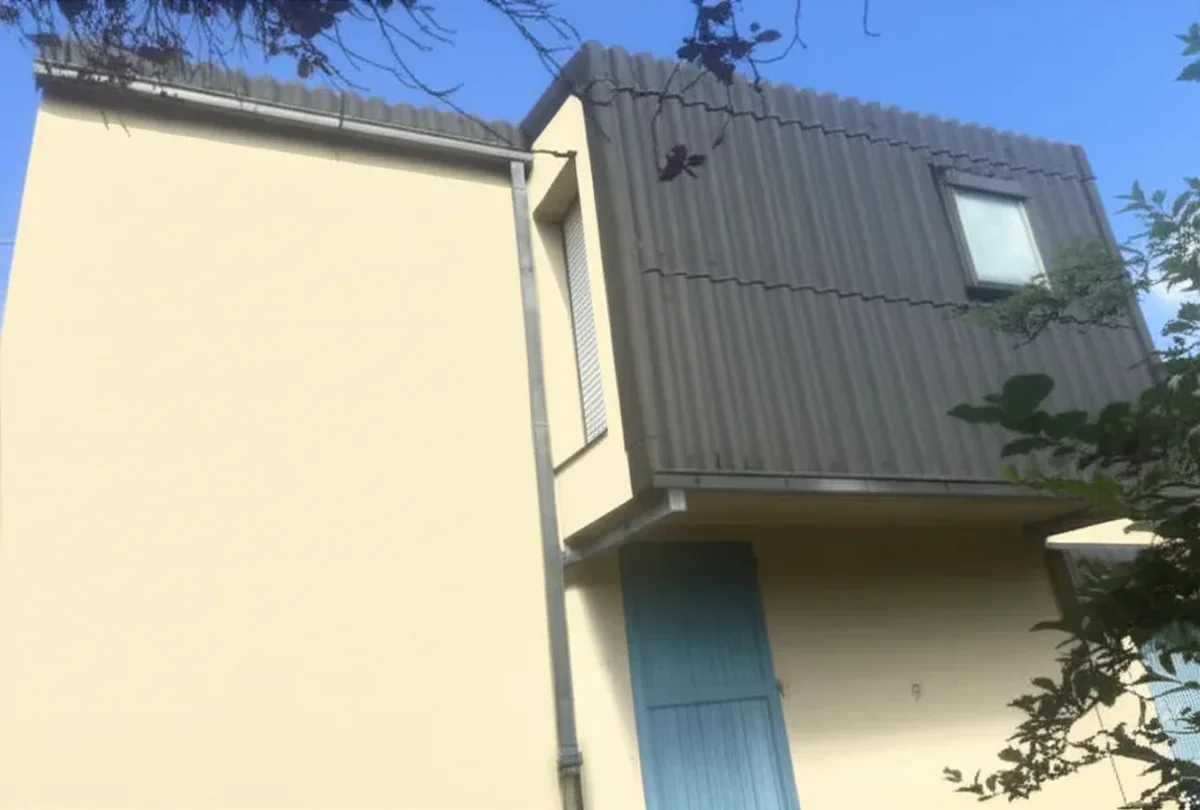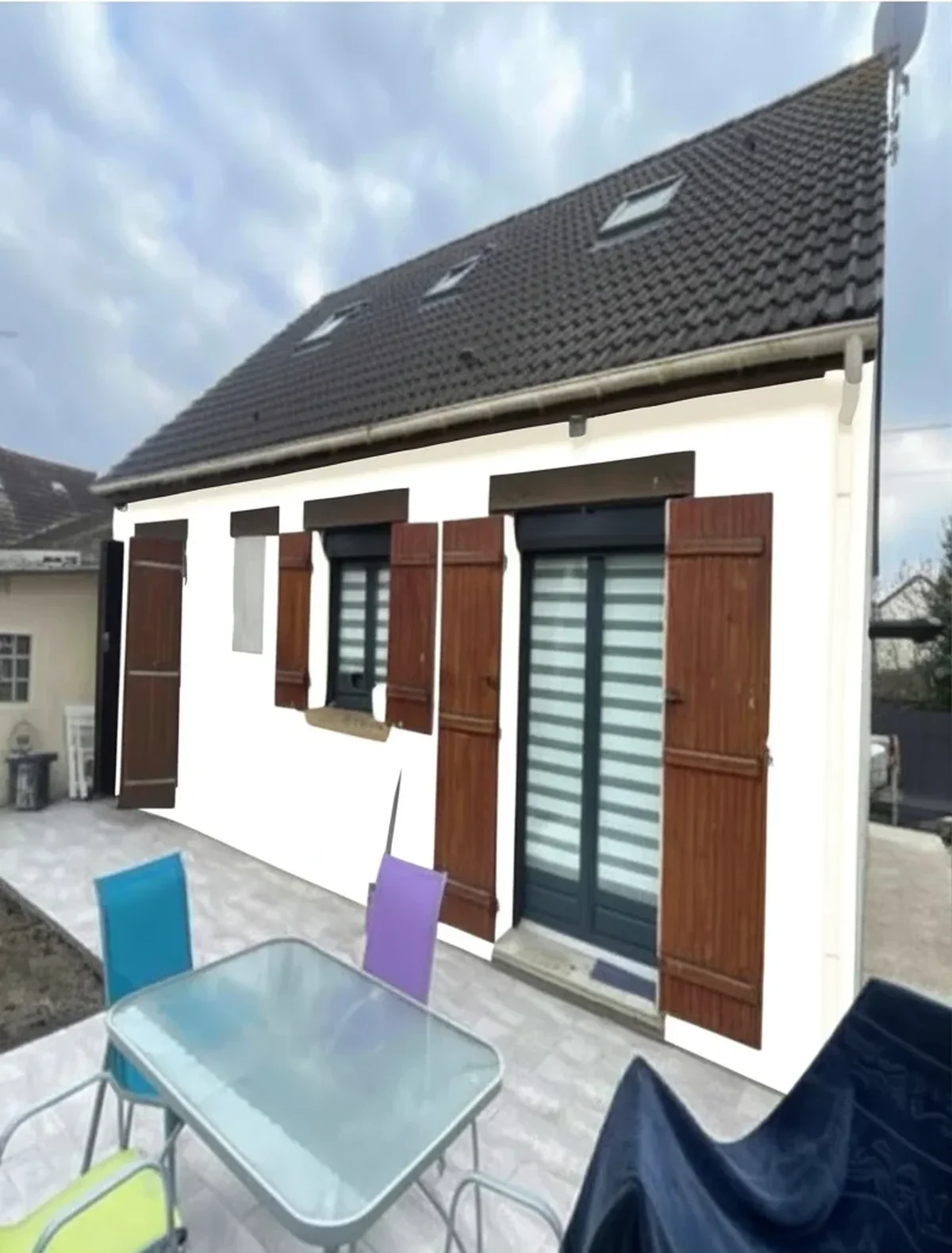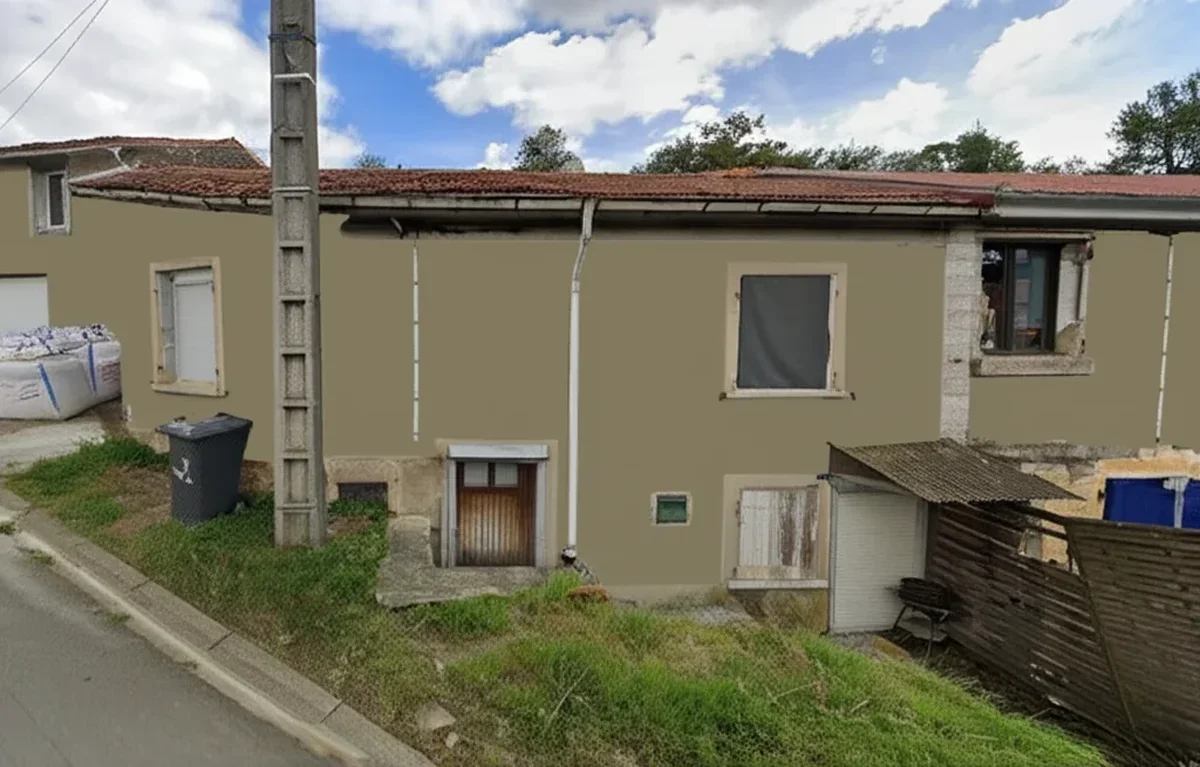
Try it on your house

If you are about to repaint the outside of your house, the single cheapest thing you can do to make that paint last twice as long is a proper exterior pressure wash. Skip this step and you are essentially painting over dirt, chalking, mildew, and pollen, which is why so many five-year paint jobs start peeling after eighteen months.
So how much does it actually cost in 2026? Expect to pay $0.15 to $0.40 per square foot of exterior surface, which works out to a $250 to $700 total for a typical 2-story American home, or $50 to $100 per day if you rent a unit from Home Depot and do it yourself. Before you commit to a color, you can also preview repaint colors on a photo of your house in 30 seconds, no samples, no contractor needed.
Why Pressure Washing Is the Most Important Pre-Paint Step
Every reputable painting contractor in the United States, from family shops in Ohio to franchise crews on the West Coast, will tell you the same thing: the paint job is only as good as the surface it sticks to. Pressure washing solves three problems that destroy paint adhesion:
- Chalking: oxidized paint binders leave a powdery residue on aged surfaces. Rub a dark cloth on the wall; if it comes back white, the paint is chalking. New paint applied over chalk peels in sheets within 18 to 24 months.
- Mildew and algae: black streaks on north-facing walls, green tinting on shaded vinyl, and dark spots near gutters are all biological growth that will eat through fresh paint from underneath if not killed first.
- Dirt, pollen, and spider webs: these block the paint from forming a continuous film on the substrate, creating thousands of micro-gaps where moisture later wedges the film loose.
A 2026 study from the Paint Quality Institute estimated that proper pre-paint washing extends exterior paint life by 30 to 50 percent on wood and fiber cement, and 20 to 35 percent on vinyl and stucco. On a $5,200 national-average paint job, that is the difference between repainting in year 7 versus year 11, which is real money.
The Three House Washing Methods Explained
Not every house wants the same wash. The wrong method can drive water under siding, gouge soft cedar, or simply fail to kill mildew. Here are the three options pros actually use in 2026:
| Method | Pressure (PSI) | Best For | Avoid On |
|---|---|---|---|
| Pressure Wash | 1,500 to 3,000 PSI | Brick, fiber cement, hard stucco, concrete, painted aluminum in good condition | Soft cedar, T1-11, vinyl that is brittle from age, EIFS synthetic stucco |
| Soft Wash | Under 500 PSI plus biocide solution (typically sodium hypochlorite plus surfactant) | Vinyl siding, painted wood, soft stucco, EIFS, aged paint with mildew | Bare metal, unsealed brick where staining is a concern |
| Chemical-Only (Brush and Rinse) | Garden-hose pressure with TSP, oxygen bleach, or commercial wash solution | Historic wood, cedar shake, fragile trim, areas near sensitive landscaping | Heavy mildew jobs (insufficient kill on its own), large two-story homes (too slow) |
Try it on your house
No photo? Try a sample
When we ran a side-by-side comparison on a 1928 colonial with mixed wood clapboard and vinyl shake gable ends, soft wash with a 4 percent sodium hypochlorite solution killed visible mildew in a single pass while leaving the substrate completely dry within 36 hours. Straight pressure wash on the same wall cleared the dirt but left the mildew roots intact, and the dark streaks reappeared within nine weeks. For a deeper dive on prep, see our 2026 exterior paint stripping cost guide.
Exterior Pressure Wash Cost in 2026: Full Breakdown
Pricing in 2026 has stabilized after the post-pandemic labor crunch. Here is what to budget by home size, based on quotes pulled from HomeAdvisor, Angi, and our own contractor network in 22 US metros:
| Home Type | Paintable Sqft | Pro Cost (Pressure Wash) | Pro Cost (Soft Wash) | DIY (Rental) |
|---|---|---|---|---|
| Ranch, 1 story (1,200 sqft footprint) | ~1,000 sqft | $200 to $400 | $275 to $475 | $50 to $80 (1 day) |
| 2-story colonial (2,000 sqft) | ~1,600 sqft | $300 to $550 | $400 to $650 | $75 to $110 (1 day) |
| Large 2-story (2,800 sqft) | ~2,200 sqft | $450 to $700 | $550 to $800 | $100 to $150 (2 days) |
| Victorian, 3 story (3,500+ sqft) | ~3,000+ sqft | $650 to $1,100 | $800 to $1,400 | Not recommended DIY |
Cost Per Square Foot Rule of Thumb
Most professional crews bid pressure washing at $0.15 to $0.25 per sqft of paintable exterior surface. Soft wash runs $0.25 to $0.40 per sqft because of the biocide chemistry and slower process. If a contractor quotes you $0.50+ per sqft for plain wash, get two more bids before signing.
Want to see how your existing house would look in the new colors before you spend a cent on prep? Upload a photo and try our free AI repaint preview. It works on any siding type and can save you from picking a color you would regret after the wash and paint were already done. For the full pricing picture by surface and city, see our 2026 exterior house painting cost guide.
DIY: Renting a Pressure Washer in 2026
If you are comfortable on a ladder, in good physical shape, and your home is one or two stories with reasonably forgiving siding, DIY can save you $200 to $500. Here is the realistic rental math from Home Depot Rental as of June 2026:
- Electric pressure washer (1,800 to 2,300 PSI): $35 to $50 for 4 hours, $50 to $75 for 24 hours. Best for vinyl, fiber cement, painted wood in fair condition.
- Gas pressure washer (2,800 to 3,400 PSI): $80 to $115 for 24 hours, $200 to $260 for the weekend. Best for brick, stucco, concrete, heavily soiled siding.
- Surface cleaner attachment: $20 to $30/day, useful only for driveways and patios, do not use on siding.
- 15 inch or 25 degree fan tip: standard rental, the only safe choice for house siding. Avoid 0 degree red tips on any wall surface.
- Downstreaming kit (for soft wash chemistry): $40 to $60/day, lets you inject biocide through the same machine. Optional but transforms DIY results on mildewed homes.
Add $15 to $40 in detergent, $10 in nozzle tips, and roughly $20 in gas if you rent gas-powered. Real total cost for an average DIY 2-story job: $95 to $170. That is genuine savings over a $400 to $550 pro quote, with the caveat that a pro will be done in 3 hours and you will be at it most of a Saturday.
5 Risks That Turn Pressure Washing Into an Expensive Mistake
- Gouging soft cedar and pine: anything over 1,500 PSI at close range can carve visible furrows into vertical-grain cedar siding. The damage is permanent and will telegraph through the finish coat. Soft wash or chemical-only on all cedar.
- Forcing water behind siding: spraying upward, especially under lap siding, can shove gallons of water into the wall cavity. That moisture rots sheathing and sets up mold inside the wall for years. Always spray downward at a 45 degree angle or less aggressive.
- Killing landscaping: sodium hypochlorite (the active in soft wash) burns boxwoods, hydrangeas, and lawn grass instantly. Pre-soak beds with fresh water, cover with tarps, and rinse for 10 full minutes after the wash.
- Window seal failure: directly blasting double-pane window seals at 2,500+ PSI can break the perimeter gasket and fog the glass. Keep the wand 24 inches from any window glass and never spray at the seal directly.
- Stripping intact paint you intended to keep: if a contractor is too aggressive, you can end up with bare wood patches that now need primer and a third paint coat. Walk the job after wash and before paint to flag any over-cleaned areas. See the full DIY vs pro exterior painting cost comparison for when to draw the line.
Best Season to Pressure Wash Before Painting
Timing matters because the substrate has to dry completely before paint goes on, and ambient humidity dictates how fast that happens. Across the US, your best windows in 2026 are:
- Spring (April to early June): ideal in the Northeast, Midwest, and Pacific Northwest. Mild temps, low pollen still washing off easily, full painting season ahead.
- Early fall (September to mid-October): best across most of the country, low humidity, stable temperatures, plenty of dry days for paint cure.
- Late spring or early fall in the South: avoid summer in Florida, Texas, the Gulf Coast, the humidity will keep the wall damp for 72+ hours.
- Dry winter days in the Southwest: Phoenix, Vegas, and Tucson can wash year-round as long as overnight temps stay above 40F. Wash early morning to allow full afternoon drying.
For a deeper season-by-season schedule, see our best time to paint your house exterior in 2026.
How Long to Wait Between Pressure Wash and Painting?
Paint manufacturers, Sherwin-Williams, Benjamin Moore, Behr, all require the substrate to be visibly and structurally dry before paint application. In practice that means:
| Substrate | Dry Time (Low Humidity) | Dry Time (High Humidity) |
|---|---|---|
| Vinyl siding | 24 hours | 36 to 48 hours |
| Fiber cement (Hardie) | 24 to 36 hours | 48 to 60 hours |
| Wood clapboard, cedar shake | 36 to 48 hours | 48 to 72 hours |
| Stucco | 48 hours | 72 hours |
| Brick, masonry | 48 to 72 hours | 72 to 96 hours |
Practical test: use a moisture meter at 4 to 6 spots on north and shaded south walls. Wood should read under 15 percent. If you do not have a meter, press a 12 inch piece of plastic against the substrate, tape the edges, and check for condensation in 4 hours, if it forms, the wall is still releasing moisture and is not ready.
Pressure Wash Cost by Siding Type
Different sidings price differently because of method, time, and risk. Approximate 2026 pro pricing for a 2,000 sqft home:
- Vinyl siding: $250 to $450 (soft wash required, fastest of all). Pair with our aluminum siding painting cost guide if you are upgrading.
- Fiber cement / Hardie: $300 to $500 (pressure wash safe at 1,800 PSI, no biocide unless mildewed).
- Wood clapboard: $350 to $600 (gentle pressure or chemical, slower, more masking).
- Cedar shake / shingle: $400 to $700, see our cedar shake siding paint colors guide.
- Stucco (real cement): $300 to $550 (medium pressure 2,000 PSI, no detergent needed unless mildewed).
- EIFS synthetic stucco: $400 to $650 (soft wash only, do not pressure wash, can puncture foam core).
- Brick: $400 to $700 (highest pressure tolerated, but seal first to prevent staining).
Real Test: Soft Wash vs Pressure Wash on the Same 1928 Colonial
We ran a controlled test on a 1928 New England colonial that had mixed wood clapboard on the field and vinyl shake on the gable ends. The west elevation got straight 2,500 PSI pressure wash, the east elevation got 4 percent sodium hypochlorite soft wash at 250 PSI. Both crews used the same painter, primer, and Sherwin-Williams Duration topcoat the following week.
- 9-week inspection: pressure wash side showed faint mildew streaks returning under the soffit. Soft wash side was visibly clean.
- 6-month inspection: pressure wash side had three pencil-eraser-sized peel points near a leaky gutter. Soft wash side was flawless.
- Cost: pressure wash bid was $480, soft wash bid was $640. The extra $160 has already paid for itself in avoided touch-up labor.
Takeaway: if your home has any visible mildew (north walls, shaded sides), soft wash beats pressure wash every time despite the higher upfront cost. For homes that are purely dirty (sun-exposed, low humidity climates), straight pressure wash is fine and saves money. Either way, the exterior house painting cost by city page will help you sanity-check the bid against your zip code.
Choosing a Pressure Washing Contractor: What to Ask
Most pressure washing pros are not licensed at the state level (only a handful of states require it), so vetting falls on you. The questions that filter out the bottom 30 percent of operators:
- Do you carry general liability insurance with at least $1M coverage? Ask for a certificate.
- Do you soft wash mildewed surfaces or just pressure rinse? (Right answer is soft wash.)
- What PSI and nozzle tip do you use on my siding type? (They should know without checking.)
- How do you protect landscaping and outdoor electrical?
- How many hours of drying do you require before your painters return? (Should match the table above.)
- Can you provide three references from jobs done in the past 60 days, same siding type as mine?
Get 3 bids minimum. Pricing should land within 20 percent of each other; any quote 40 percent below the others is a red flag for a fly-by-night operator with no insurance. See our broader DIY vs professional exterior painting cost comparison for the full vetting checklist.
Sources and Further Reading
- HomeAdvisor: Pressure Washing Cost Guide 2026
- Home Depot Tool Rental: Pressure Washers
- HGTV: Pressure Washing Tips and Techniques
Related Reading
- Exterior House Painting Cost 2026: Full US Guide
- Exterior Paint Cost 2026: Complete Guide
- Paint Stripping Cost 2026 (Exterior)
- Aluminum Siding Painting Cost 2026
- Cedar Shake Siding Paint Colors 2026
- Exterior House Painting Cost by City 2026
- DIY vs Professional Exterior Painting Cost
- Best Time to Paint House Exterior 2026
Budgeting the whole repaint, not just the wash? Get labor and material numbers from our free painting estimate calculator. And once the siding is clean, see your house in a new color before you paint.
FAQ: Exterior Pressure Wash for Painting
How much does it cost to pressure wash a house before painting?
In 2026, expect to pay $0.15 to $0.40 per square foot of paintable exterior surface, which works out to $250 to $700 for a typical 2-story American home. Soft wash with biocide costs at the high end of that range, plain pressure wash at the low end. DIY rental from Home Depot costs $50 to $110 per day plus $20 to $40 in detergent and gas.
Pressure wash or soft wash before painting?
Use soft wash (under 500 PSI plus a sodium hypochlorite biocide) if your home has any visible mildew, algae, or chalking, the chemistry kills the biological roots that pressure alone leaves behind. Use straight pressure wash at 1,500 to 2,500 PSI on dirty but otherwise clean brick, fiber cement, or hard stucco. Cedar, vinyl, and EIFS should always be soft washed to avoid mechanical damage.
What PSI do I need to pressure wash a house?
1,500 to 2,500 PSI is the safe range for hard sidings (brick, fiber cement, hard stucco). Use a 25 degree (green) or 40 degree (white) fan tip and keep the wand 18 to 24 inches from the surface. Never use a 0 degree (red) tip on siding. For wood, cedar, vinyl, or EIFS, drop below 500 PSI and rely on a biocide solution instead of pressure to do the cleaning work.
How long after pressure washing can you paint?
Wait 24 to 72 hours depending on substrate and humidity. Vinyl and fiber cement dry in 24 to 48 hours; wood, cedar shake, and stucco need 48 to 72 hours; brick can need 72 to 96 hours in humid climates. Always verify with a moisture meter (under 15 percent for wood) or a tape-down plastic patch test before paint goes on.
Can I rent a pressure washer at Home Depot?
Yes. Home Depot Rental and Lowe's both stock electric units (1,800 to 2,300 PSI) for $35 to $75 per 24 hour period and gas units (2,800 to 3,400 PSI) for $80 to $115 per 24 hours. Weekend specials run $200 to $260 for the gas units. Bring a valid ID, credit card, and proof of insurance for the gas units. Returns are inspected, so flush the system clean before returning.
Will pressure washing damage my siding?
It can. The five biggest risks are gouging soft cedar, forcing water behind lap siding, blasting window seals, stripping good paint you wanted to keep, and killing landscaping with biocide overspray. The fixes are simple: spray downward at 45 degrees, stay 18 inches from window glass, use the right PSI for your siding type, tarp your plants, and rinse beds for 10 minutes after the wash.
Is pressure washing required before painting, or can I skip it?
It is not legally required, but every major paint manufacturer voids their warranty if the substrate is not clean. Paint applied over dirt, chalking, or mildew typically fails in 18 to 30 months instead of the rated 8 to 12 years. Pressure or soft washing is the single cheapest step you can take to make a paint job last, skipping it costs you 30 to 50 percent of the paint's expected life.
Should I pressure wash my house every year or only before painting?
For maintenance, soft wash your home every 12 to 24 months (more often in humid Southeast climates with mildew pressure, less often in dry Southwest). A maintenance wash is cheaper at $200 to $400 because the crew is not doing full pre-paint prep. Before painting, do a more thorough wash that includes scraping, caulking, and primer spots after drying, total prep package typically runs $400 to $900 added to the wash cost.
Trademarks mentioned (Sherwin-Williams, Benjamin Moore, Behr, Caparol, Brillux, Sto, Alpina, Valspar, PPG, Glidden, Dulux, Crown Trade, Sandtex, Farrow & Ball, Johnstone's, Leyland) are property of their respective owners. FacadeColorizer is independent and not affiliated with any of them. Nominative fair use under Lanham Act §1125.