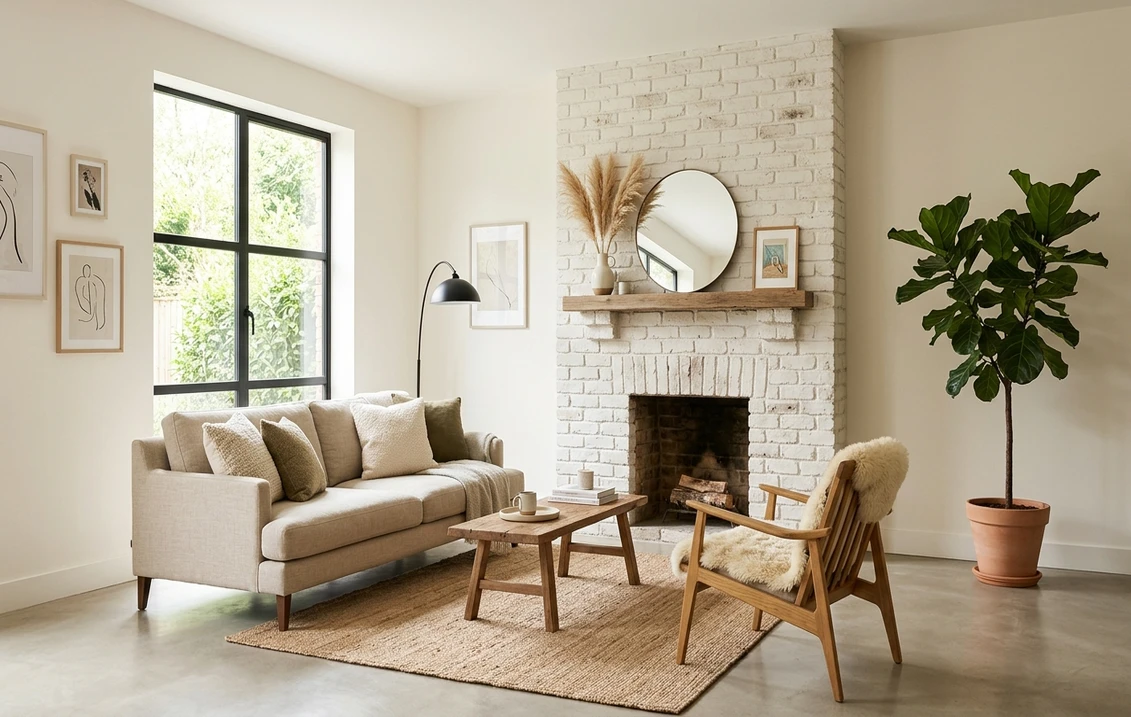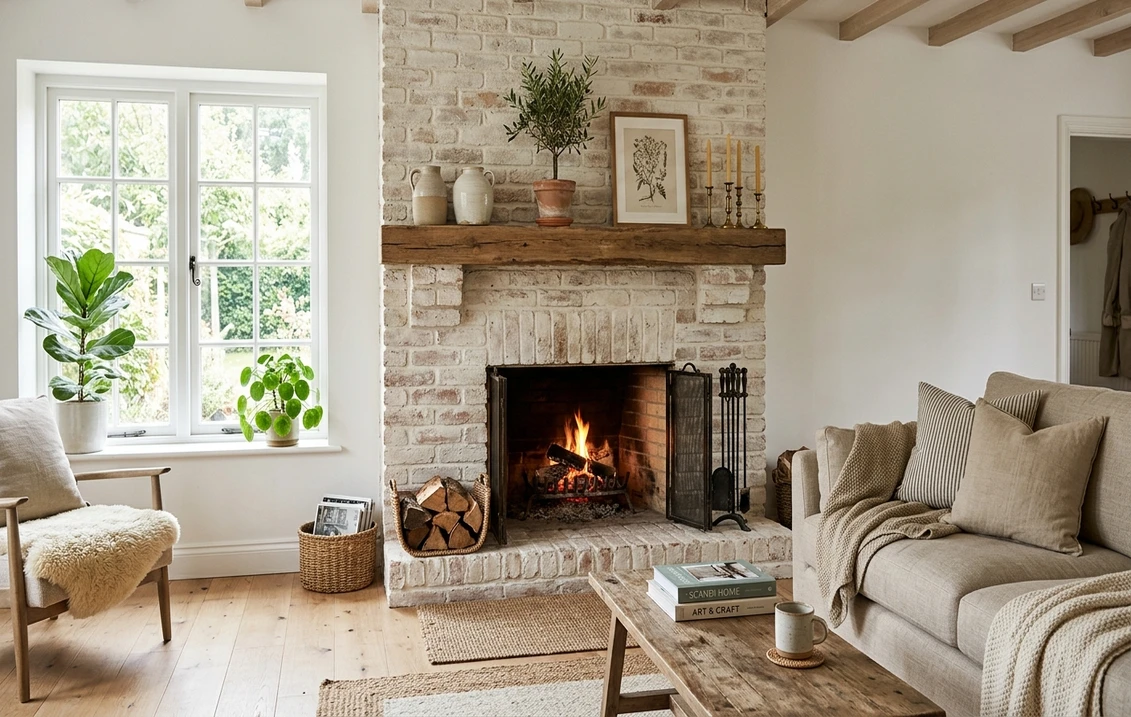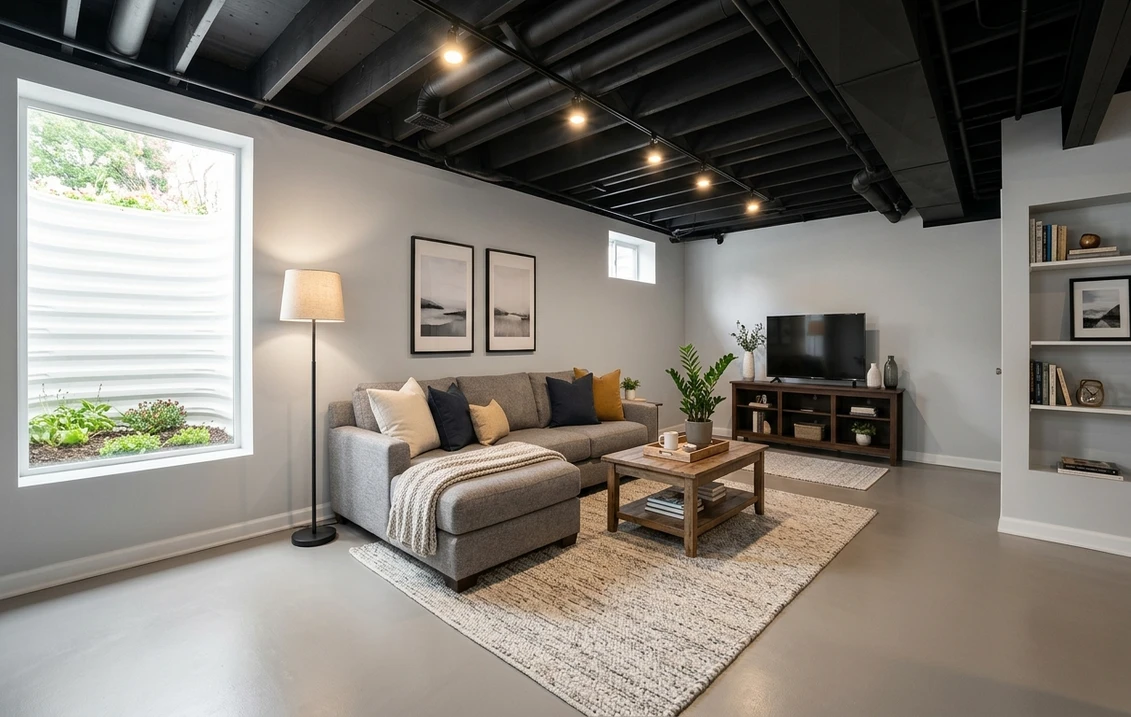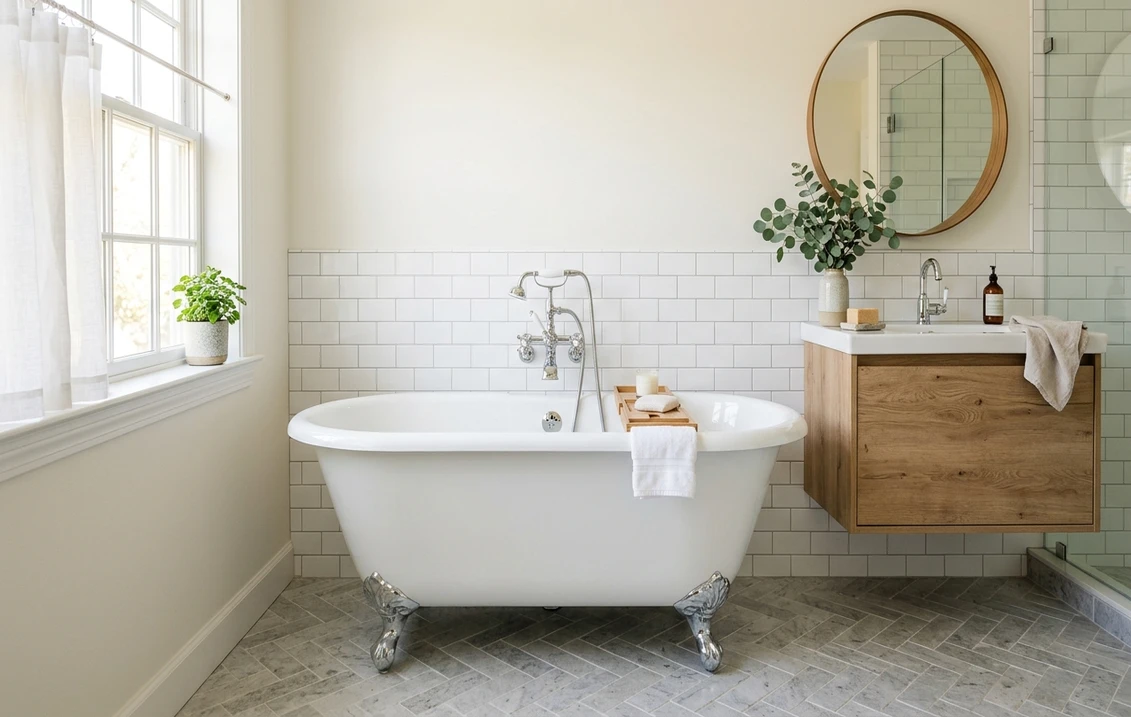
Try it on your room

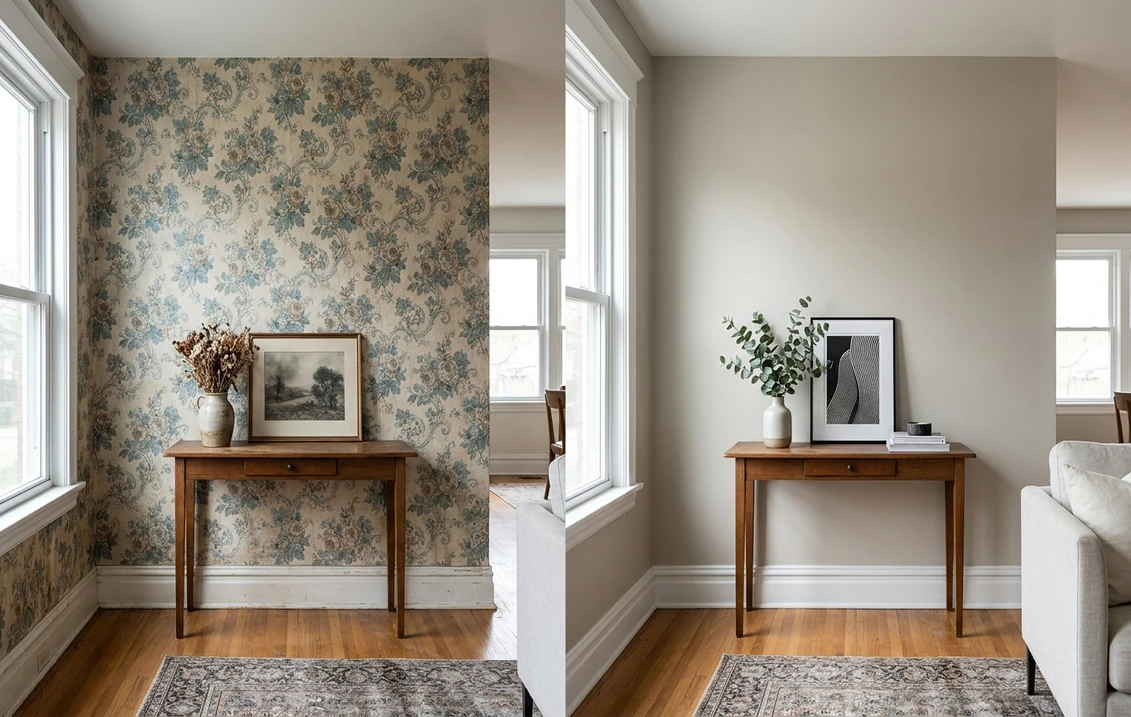
You have a room you hate, the wallpaper underneath is glued on like it was meant to outlive the house, and stripping it sounds like a week of steam, scraping, and gouged drywall. So the real question is not "can I paint over wallpaper" (you usually can), it is "what will it actually look like when I do." This is the before and after view: what paint over wallpaper before and after results really look like by paper type, what still shows through the new color, and where the finish reads as a fresh wall versus an obviously-papered one.
This is a results gallery, not a step-by-step. If you want the full prep, primer, and seam-sealing method, that lives in our hub guide linked below. Here we focus on the part people actually worry about: the look. Because the honest answer is that painting over wallpaper can land anywhere from "you would never know" to "that is clearly painted wallpaper," and which one you get depends almost entirely on the paper you are starting from.
Upload a photo of the room and preview the painted result in about 30 seconds, free, before you open a can.
The honest before and after, by wallpaper type
The single biggest variable in the after is what the wallpaper is made of and how busy it is. A smooth, well-stuck vinyl disappears under two coats. A deep-texture grasscloth or a heavy embossed pattern keeps showing its character no matter how much paint you pile on. Here is what to expect before you commit.
| Wallpaper type | Before | After painting (realistic look) |
|---|---|---|
| Smooth, flat vinyl | Subtle sheen, tight seams | Reads as a normal painted wall; seams may ghost if not sealed |
| Bold pattern (dark or high-contrast) | Strong color and motif | Pattern can bleed through light colors; needs a stain-blocking primer to vanish |
| Embossed / textured ("paintable") | Raised relief pattern | Texture stays fully visible by design; looks like a textured feature wall |
| Grasscloth / natural fiber | Woven, organic texture | Weave reads clearly through paint; looks rustic, not flat |
| Peeling or lifting paper | Loose edges, bubbles | Paint magnifies every lift; looks worse, not better, unless re-adhered first |
Try it on your house
No photo? Try a sample
The takeaway: smooth and tight paints out beautifully, texture stays texture, and pattern or peeling are the two that ambush you. A dark damask or a bold floral will telegraph through a single coat of pale gray, which is why a bold-to-light change almost always needs primer first.
What still shows through (and how visible it is)
Even a clean job leaves three tells. Knowing them up front means none of them surprises you in raking afternoon light:
- Seams. The vertical joints between wallpaper strips are the most common giveaway. Unsealed, they can swell or ghost as faint vertical lines once paint adds moisture. Skim-coating and sealing the seams before painting is what turns "painted wallpaper" into "wall."
- Texture and pattern relief. Anything raised (embossed motifs, grasscloth weave, faux-grasscloth vinyl) keeps its 3D shape under paint. Paint changes the color, never the topography. Sometimes that is the look you want; often it is not.
- Pattern bleed. Dark dyes and metallic inks can migrate up into a light topcoat over days, leaving a faint echo of the old print. A pigmented stain-blocking primer is the only reliable fix.
None of these is a dealbreaker, but they decide whether your after looks like a renovation or a quick cover-up. If you are also weighing the new color against existing wallpaper you are keeping elsewhere (say, a papered powder room next to a painted hall), that is a different job: matching paint to paper, not covering it. We cover that in wallpaper and paint color pairings, which is the companion read to this one.
See your room repainted on your own photo, free.
Which paint color makes the best after
Once you accept that texture and seams may read through, color choice does a lot of the heavy lifting. The goal is a color that either hides imperfections or makes the surviving texture look intentional.
- Mid-tone neutrals hide the most. A soft greige, mushroom, or warm gray disguises faint seams far better than a flat bright white, which spotlights every shadow line in side light.
- Matte and eggshell beat satin and semi-gloss. Lower sheen scatters light and softens seams and texture; glossier finishes act like a magnifying mirror for every flaw.
- Lean into texture with the right tone. If grasscloth weave is going to show anyway, a warm sand, clay, or olive makes it read as a deliberate organic feature rather than a mistake.
- Dark, moody colors can be your friend. A deep navy or charcoal over textured paper reads as a rich feature wall and hides relief shadows better than pale colors do.
Building the whole palette around that new wall? Our interior color schemes guide walks through how to pair the painted-over wall with trim, ceiling, and adjacent rooms so the change looks designed, not patched. And for warm-versus-cool decisions, the interior paint color families guide shows how undertones behave room to room.
Before and after scenarios people actually face
A few common starting points and how their afters tend to land:
Dated 1990s floral, painting a calm modern neutral
This is the most satisfying transformation. A busy, high-contrast print drops away under a primer plus two coats of a soft neutral, and the room reads instantly larger and quieter. The risk is pattern bleed: skip the stain-blocking primer and the old roses ghost back over a week. With primer, the after looks like a brand-new wall.
Builder-grade smooth vinyl, refreshing the color
The easiest case. Tight seams, no relief, light existing color. Two coats of your new shade and the result is genuinely indistinguishable from painted drywall, as long as you sealed the seams. This is where painting over wallpaper beats stripping it on both time and finish.
Grasscloth or heavy embossed, going moody
The texture is not going anywhere, so the smart after embraces it. A deep, low-sheen color turns the weave or relief into a tactile feature wall. Trying to bury that texture under pale paint is the version that disappoints; working with it is the version that photographs well.
Peeling paper in a damp room
The one honest "do not just paint over it" case. Moisture-lifted paper in a bathroom or kitchen will keep lifting under paint, and the after looks worse than the before. Here, re-adhering or removing first is the only path to a result you will like. Damp-room surfaces have their own rules, which our specialty surface painting guide covers alongside brick, tile, and floors.
See your before and after before you commit
The frustrating thing about painting over wallpaper is that you only see the real after once the paint is dry and the prep is done, which is exactly when it is too late to change your mind cheaply. A swatch on a busy patterned wall is almost useless, because the old print fights every test patch.
The low-stakes way to scout the after is digital. Upload a clear photo of the wallpapered room into our interior paint visualizer and preview the wall in a few candidate colors. It will not show you seam ghosting or texture relief (no preview can predict your specific prep), but it answers the question that actually stalls most projects: does this color work in this room. You get one HD preview plus three variations free, so you can line up a neutral, a greige, and a moody dark side by side before you decide whether to prime, strip, or commit.
1 HD preview plus 3 variations, no signup hoops, on your actual photo.
Frequently asked questions
What does painting over wallpaper actually look like when it is done?
It depends almost entirely on the paper. Smooth, tightly-stuck vinyl paints out to look like a normal drywall wall once the seams are sealed. Textured papers (grasscloth, embossed, "paintable") keep their relief and read as a textured feature wall. Bold or dark patterns can ghost through light paint unless you use a stain-blocking primer first. The color changes; the texture and seams do not.
Will the wallpaper seams show through the paint?
They can. The vertical joints between wallpaper strips are the most common giveaway and may ghost as faint lines, especially in side light or if the paper swells from the paint's moisture. Skim-coating and sealing the seams before painting is what removes them. Leave them unsealed and a careful color job can still betray its papered origin.
What paint color hides wallpaper best?
Mid-tone neutrals like greige, mushroom, and warm gray hide faint seams and texture far better than a bright flat white, which spotlights every shadow line. Lower sheen helps too: matte and eggshell scatter light and soften imperfections, while satin and semi-gloss magnify them. Over heavy texture, a deep moody color reads as a deliberate feature rather than a flaw.
Should I ever strip the wallpaper instead of painting over it?
Yes, in two cases. If the paper is peeling, bubbling, or in a damp room (bathroom, kitchen), paint magnifies the lifting and the result looks worse, so re-adhere or remove first. And if you want a perfectly flat, no-texture wall but you are starting from grasscloth or heavy embossed paper, paint will not flatten the relief, so stripping is the only path to that look.
Can I preview the painted result before I paint over wallpaper?
You can preview the color. Upload a photo of the room to an AI paint visualizer and see the wall in candidate colors before committing. A preview will not predict seam ghosting or texture relief from your specific prep, but it answers the question that stalls most projects, which is whether the color works in that room and light.
Preview your wallpapered wall in a fresh color before you prime, strip, or commit.
Note: FacadeColorizer is an independent paint visualization service. An AI preview approximates how a color may look in your room and cannot predict surface prep results such as seam ghosting, texture relief, or pattern bleed, which depend on the wallpaper type and the prep you do. Always confirm with a physical test patch and follow the paint and primer manufacturer's instructions for painting over wallpaper.