Try it on your room

The first time I watched a homeowner stand in a hardware aisle with eleven paint chips fanned out like a poker hand, I knew the problem was not the colors. Each chip was fine alone. Nobody had told her how they were supposed to work together. That is what interior color schemes really are: not a single favorite shade, but a small, deliberate set of colors that share a job. Get the relationship right and a plain room reads finished. Get it wrong and even tasteful colors fight on the wall. This guide is the hub for the subject, rules first, then the room-by-room playbook.
Here is the short version. A good scheme has three roles: a dominant wall and field color, a secondary supporting color, and a small accent for the spark. Those roles get split by a simple ratio, balanced by undertone, and steadied by a warm-or-cool decision. Everything else (monochrome, complementary, analogous) is just a different way of filling those three slots. Remember one idea from this page: you are casting roles, not collecting swatches.
Upload a photo of your room and preview a full base, secondary, and accent scheme under your own light in about 30 seconds, free.
The 60-30-10 rule, the backbone of any scheme
Interior designers lean on one ratio so often it has become a cliche, and it is a cliche because it works. The 60-30-10 rule splits a room into three proportions of color. It is the fastest way to stop a space from feeling flat or chaotic, and it is the spine that holds every color palette for house interior projects together.
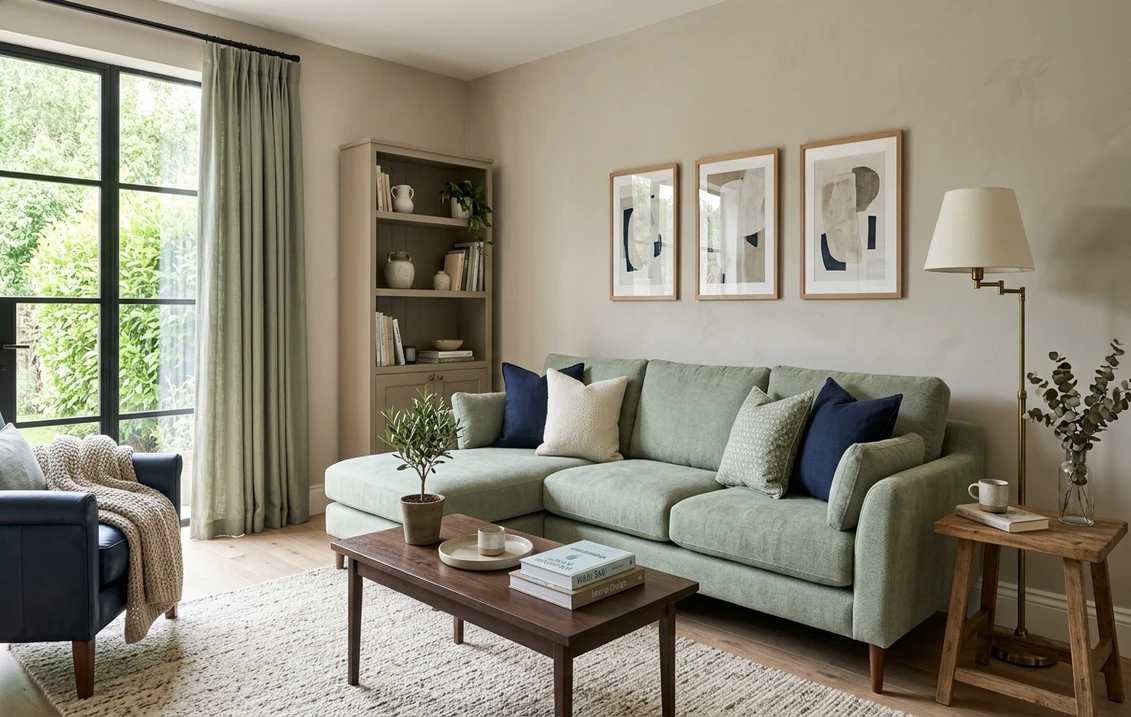
- 60 percent, the dominant color: the walls, the largest rug, the biggest pieces of furniture. This is almost always your calmest, most neutral choice because you live inside it. A warm greige, a soft white, a quiet gray.
- 30 percent, the secondary color: upholstery, an area rug, curtains, cabinetry, or an accent wall. It should contrast enough to be noticed but still belong to the same family as the base.
- 10 percent, the accent: throw pillows, art, a vase, a lamp, hardware. This is where you put the bold or saturated color you love but could not live with on every wall.
The mistake I see most often is flipping the ratio: painting all four walls the punchy color and saving the neutral for one pillow. The eye has nowhere to rest, and the room feels loud within a week. Keep the saturated color in the 10 percent slot and you can change it cheaply later. For a deeper map of which color families pair cleanly, our interior paint color families guide sorts neutrals, warms, and cools into groups you can mix with confidence.
Undertones decide whether two colors get along
This is the single most useful skill in the topic, and the one most people skip. Every paint color carries an undertone: a quiet bias hiding under the main color. A gray can lean blue, green, violet, or brown. A white can lean cream, pink, or icy blue. Two colors clash not because one is gray and one is beige, but because their undertones point in opposite directions.
To find an undertone without a color degree: put the chip next to a sheet of pure printer paper, and against two or three other chips in the same family. The bias jumps out by comparison. A greige that looked neutral alone suddenly reads green next to a true beige, or pink next to a true gray. That comparison is the whole game. Our breakdowns of light gray paint colors and their undertones and beige paint colors and undertones are built for this side-by-side step.
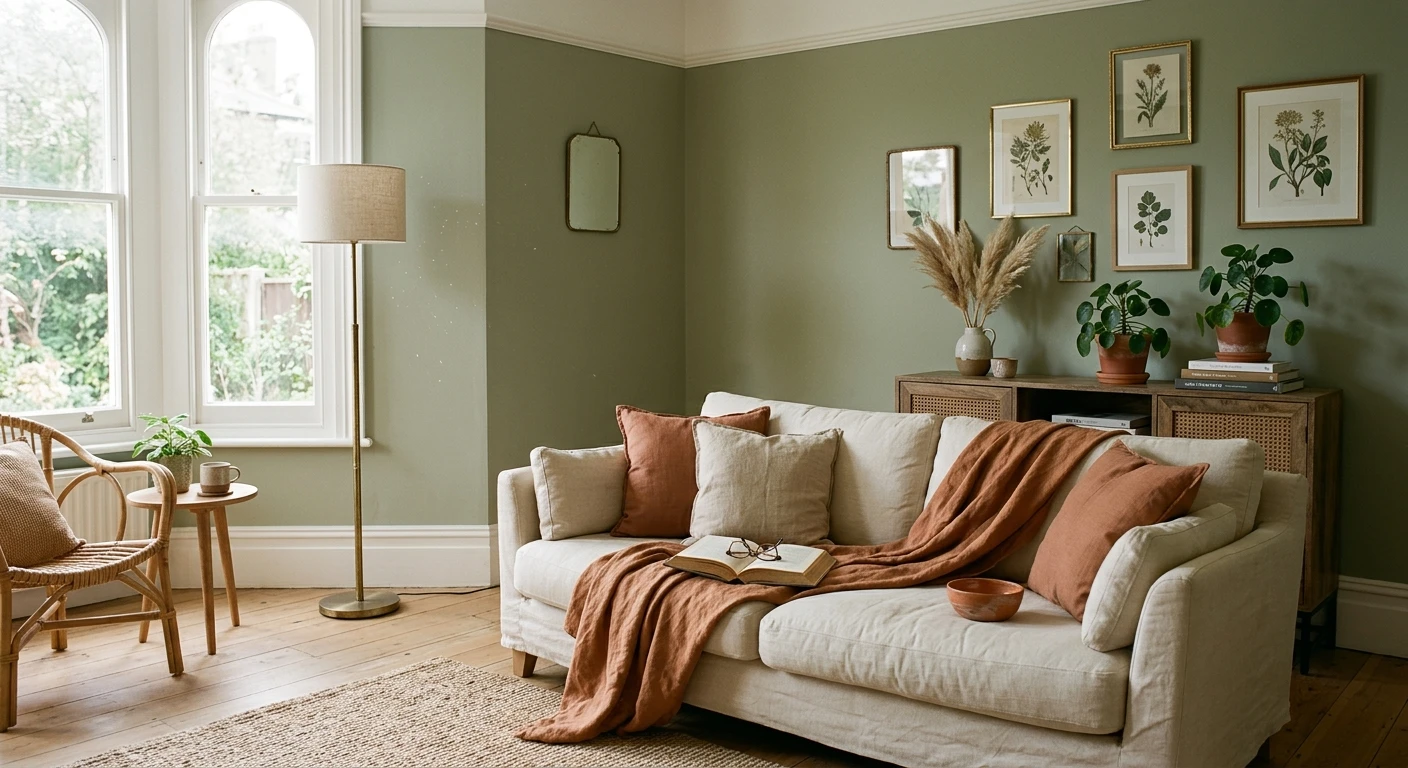
The practical rule for how to pair paint colors: keep undertones in the same temperature family unless you are making a deliberate contrast. A green-gray wall loves a green-leaning sage and a warm cream trim. Drop an icy blue-white trim next to that wall and the whole thing looks muddy. Undertone harmony is invisible when you get it right and unmistakable when you get it wrong.
Free AI visualizer. See how a color's undertone reads on your walls before buying a single sample pot.
Warm or cool: pick the mood first
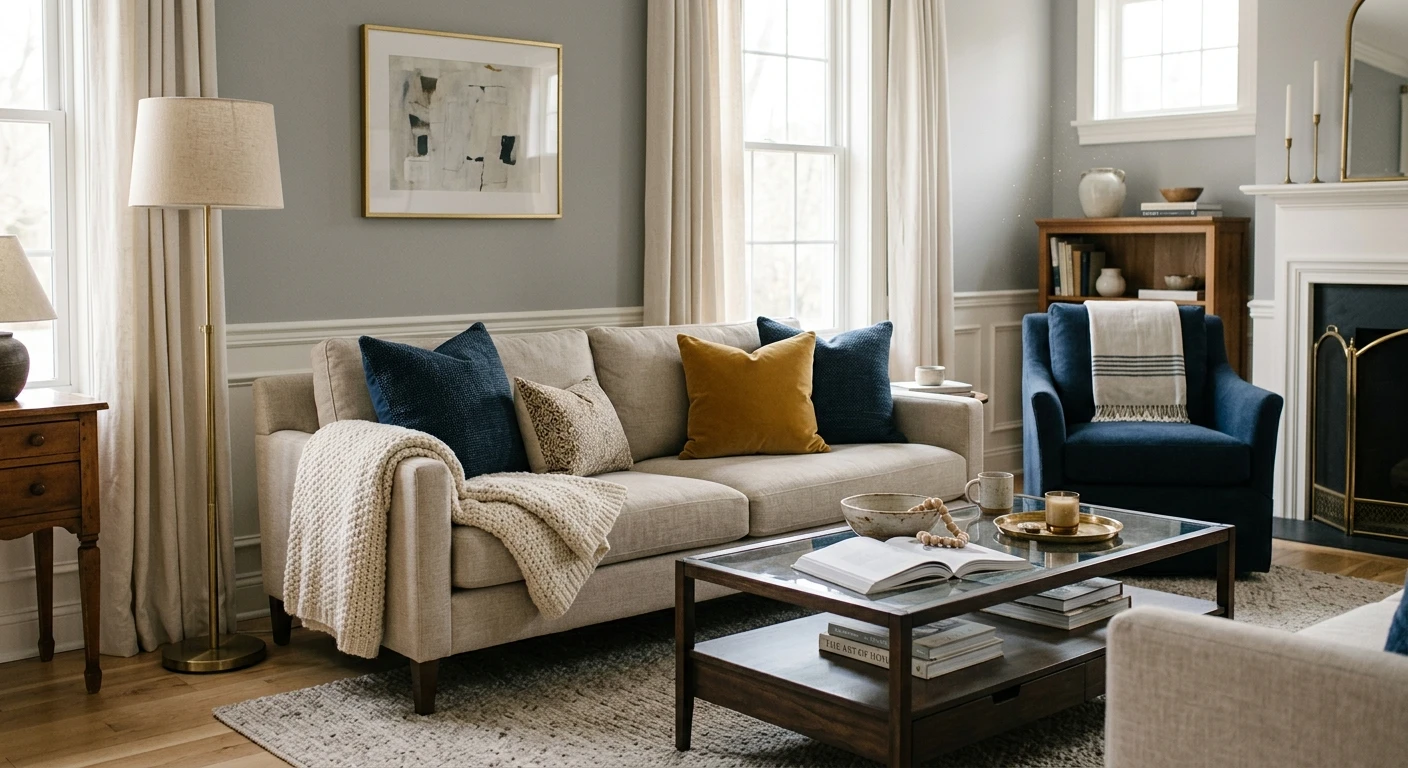
Before you choose a single color, decide the temperature of the room. Warm schemes (creams, tans, terracotta, warm whites, warm grays) feel cozy, social, and grounded, which is why they read so well in living rooms, dens, and dining rooms. Cool schemes (blue-grays, soft greens, crisp whites) feel calm, clean, and airy, which suits bedrooms, bathrooms, and home offices. A house need not commit to one, but each room reads best when it picks a side.
Light is the deciding vote, and people forget it constantly. A north-facing room gets cool, indirect light all day, so a cool gray in it can tip clinical and gray-blue. The same gray in a south-facing room reads soft and inviting. South and west rooms forgive cool colors; north and east rooms beg for warmth. Decide the temperature, then test it in real light, never under store fluorescents. Our guide to blue-gray paint colors and how they read by room shows how light flips a cool neutral from serene to cold.
The four scheme types, and when each one works
Once you have your ratio, your undertone sense, and your temperature, you choose a structure. There are really only four worth knowing for interiors. The table sorts them by difficulty, because some are genuinely hard to pull off and the internet rarely says so.
| Scheme type | How it is built | Feels like | Difficulty |
|---|---|---|---|
| Monochrome | One color, several shades and tints (light gray, mid gray, charcoal) | Calm, layered, sophisticated | Easy, very forgiving |
| Analogous | Neighbors on the color wheel (blue, blue-green, green) | Harmonious, restful, natural | Easy to medium |
| Complementary | Opposites on the wheel (navy and warm rust, green and terracotta) | Energetic, high contrast, confident | Hard, easy to overdo |
| Neutral plus accent | A neutral 60-30 field with one saturated 10 percent pop | Safe, flexible, timeless | Easiest of all |
Try it on your house
No photo? Try a sample
Sources: standard color-wheel theory; designer field reports and room schemes compiled by FacadeColorizer.
Monochrome, the most underrated
A monochrome scheme uses one color in different values: a pale gray on the walls, a mid gray sofa, a charcoal throw. It almost never fails because every element already shares the same undertone. The trick to keeping it from feeling flat is contrast in value and texture: matte walls, a nubby wool rug, a leather chair, a glossy ceramic lamp. If color makes you nervous, this is where to start.
Complementary, the one people botch
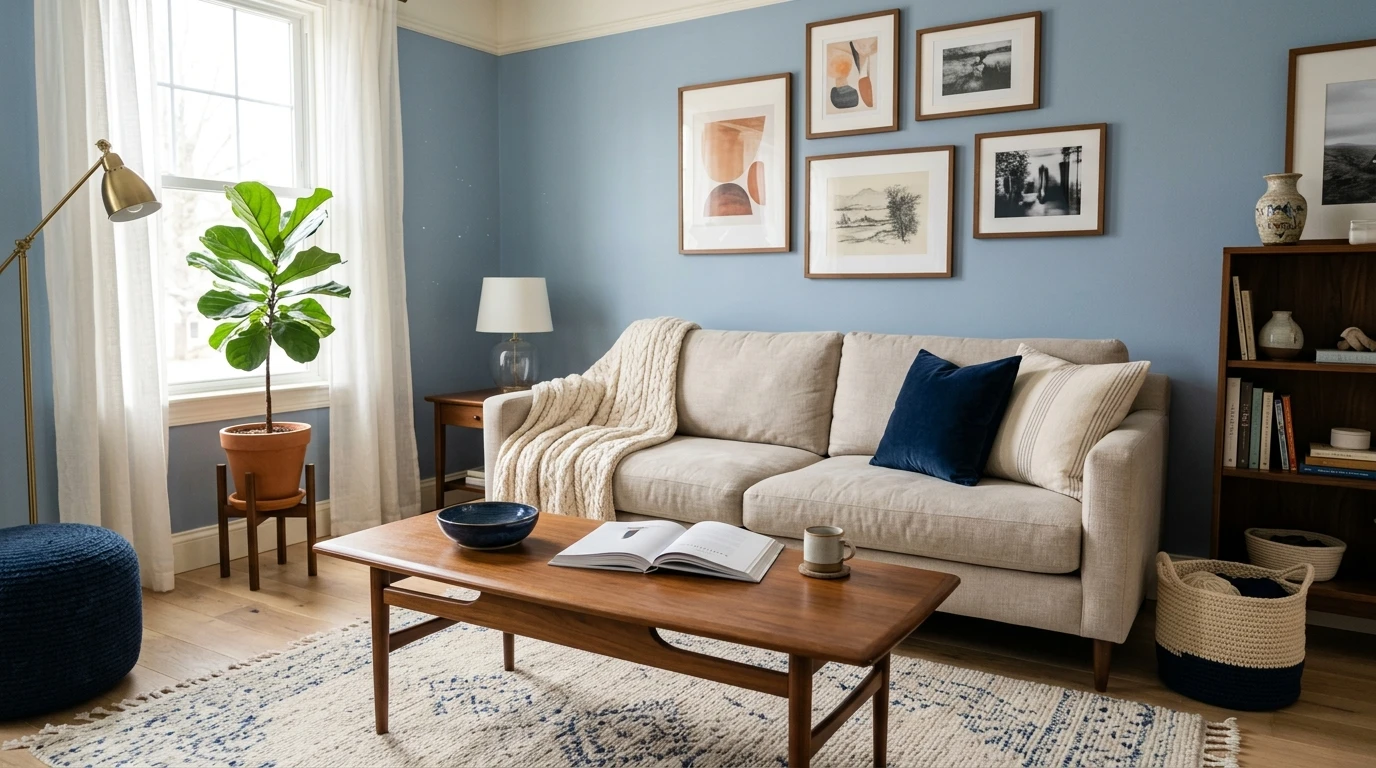
Complementary schemes put opposites together, and they are the hardest to control. The honest opinion: a full-strength pairing, bright orange against bright blue across equal areas, almost always looks like a kids' playroom in a grown-up house. It works only when you mute one side and shrink it to the 10 percent accent. Navy walls with a small dose of warm terracotta in the pillows: beautiful. Equal navy and equal orange: a headache.
A reliable five-step method for any room
This is the order I actually work in. It keeps color palettes for home interiors from collapsing halfway through, because each step locks the next one.
- 1. Anchor to something fixed. Start from a thing you cannot repaint: a sofa, a rug, a wood floor, a stone counter, a piece of art. Pull two or three colors out of it and your scheme is half built.
- 2. Choose the 60 percent neutral. Pick the wall and field color, biased to match the temperature you decided on. This is your dominant base.
- 3. Pick the 30 percent secondary. One step bolder, same family, for upholstery, cabinetry, or an accent wall.
- 4. Add the 10 percent accent. Your one saturated color, kept small and swappable.
- 5. Lock the whites. Match your trim and ceiling white to the scheme temperature: a warm white over warm walls, a crisp white over cool. A mismatched trim white undoes everything above it.
That fixed-element step saves more rooms than any color rule. Build a scheme out of the rug and floor you already own and it lands cohesive automatically, because those items carry their own internal harmony. For a wider tour of where to place these schemes, our room paint color ideas by room shows how the method shifts from a kitchen to a bedroom.
Schemes by base color and by room
The fastest way to a finished palette is to start from the neutral you already lean toward and build out. Below are the deep dives for the most common starting points, so you can jump straight to the colors that pair with yours.
- Starting from gray: the most popular base in American homes, and the one with the trickiest undertones. See colors that go with gray interiors for partners that flatter it.
- Starting from green: sage and olive are the warm neutral of the moment. Our colors that go with green interiors guide covers the woods, whites, and metals that suit them.
- Starting from beige or greige: the forgiving foundation. Our colors that go with beige guide keeps it from reading dated. Blue bases follow the same logic, warmed with wood and cream.
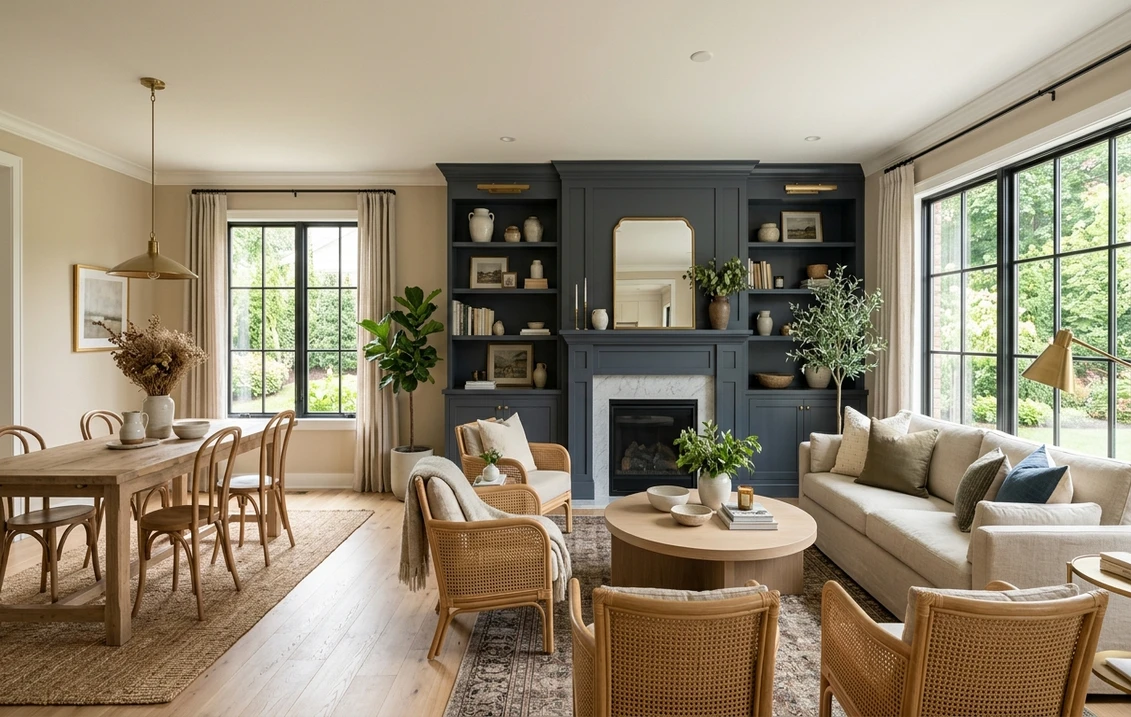
If you would rather start from the room than the color, the same casting method just shifts emphasis. A living room can carry more contrast and a touch of drama in its 30 and 10 percent slots; a bedroom usually wants the calmer, lower-contrast end of the same logic. Pick your base, then pull the secondary and accent toward bold or restful depending on the room's job. A patterned accent wall counts as a secondary or accent slot too, and our guide to pairing wallpaper with paint colors shows how to keep that pattern in the same undertone family as your field.
Common scheme mistakes (and the quick fix)
Most failed color schemes for inside house projects trip on the same handful of errors. None of them are about taste; they are about process.
- Too many heroes. Three or more saturated colors all fighting to be the star. Fix: demote all but one to a neutral or a small accent.
- Ignoring the undertone. A pink-beige wall under a green-gray sofa reads off and nobody can say why. Fix: line up undertones before you commit.
- Forgetting the fixed elements. A pretty palette that fights the existing wood floor or stone counter. Fix: build from the things you cannot change first.
- The wrong white. A cool, blue-white trim against warm walls makes the walls look dirty. Fix: match white temperature to the scheme.
- No test in real light. Choosing from a chip under store lighting. Fix: always preview or swatch in the room's own light, morning and night.
Preview your base, secondary, and accent on your actual walls before buying a single sample pot, free.
Frequently asked questions
What is the 60-30-10 rule for interior color schemes?
It is a ratio that splits a room into three proportions: about 60 percent a dominant neutral (walls and large furniture), 30 percent a secondary supporting color (upholstery, an accent wall, curtains), and 10 percent an accent (pillows, art, hardware). Keeping your boldest color in the small 10 percent slot stops a scheme from feeling flat or overwhelming and makes the room cheap to refresh later.
How do I know if two paint colors go together?
Compare their undertones, not just their main color. Hold each chip against pure white printer paper and against two or three other chips in the same family; the hidden bias (blue, green, pink, violet, brown) jumps out. Colors that share an undertone temperature pair cleanly. The clash you cannot quite name is almost always two undertones pointing opposite ways, such as a pink-beige next to a green-gray.
Should an interior color scheme be warm or cool?
Decide per room, guided by its light. Warm schemes (creams, tans, warm grays) feel cozy and suit living and dining rooms. Cool schemes (blue-grays, soft greens, crisp whites) feel calm and suit bedrooms, bathrooms, and offices. North and east rooms get cool light and read best with warmth; south and west rooms forgive cool colors. Pick the temperature first, then test it in the room.
What is the easiest color scheme for beginners?
A monochrome scheme or a neutral-plus-accent scheme. Monochrome uses one color in several shades, so every element shares an undertone and almost nothing clashes; you add interest through texture and value. Neutral-plus-accent keeps a calm 60-30 field and adds one saturated color in the 10 percent slot. Both are forgiving and easy to adjust later.
How many colors should a room have?
Three is the reliable target: a dominant base, a secondary, and one accent, which maps directly onto the 60-30-10 ratio. You can stretch to four or five by adding extra shades of colors already in the scheme, but a fourth fully separate hue is where most rooms start to feel busy. When in doubt, keep one color as the hero and let the rest support it.
Preview your base, secondary, and accent on your actual walls under your own light before buying a single sample.
Disclaimer: Color names and codes mentioned for illustration, including Agreeable Gray (SW 7029) and Repose Gray (SW 7015), are trademarks of The Sherwin-Williams Company, and Hale Navy (HC-154) is a trademark of Benjamin Moore & Co. FacadeColorizer is an independent paint visualization service and is not affiliated with, endorsed by, or sponsored by Sherwin-Williams or Benjamin Moore. Color reproduction on screens approximates the manufacturer's chip; always confirm with a manufacturer sample under your own light before purchase. Sources: standard color-wheel theory, designer field reports and room schemes compiled by FacadeColorizer.
Trademarks mentioned (Sherwin-Williams, Benjamin Moore, Behr, Caparol, Brillux, Sto, Alpina, Valspar, PPG, Glidden, Dulux, Crown Trade, Sandtex, Farrow & Ball, Johnstone's, Leyland) are property of their respective owners. FacadeColorizer is independent and not affiliated with any of them. Nominative fair use under Lanham Act §1125.