Try it on your room

You can roll Sherwin-Williams Agreeable Gray onto drywall and it will look great on day one and in year ten. Roll that same paint onto a brick fireplace, a basement concrete floor, or a chipped cast-iron tub and it will peel, powder, or simply slide off within a season. (For exterior brick, the film-free option is a mineral stain; see brick staining.) Specialty surfaces are not a paint problem, they are a chemistry and prep problem. Porous masonry drinks the binder, slick porcelain rejects it, and a damp slab pushes vapor straight through the film. This pillar is the map for those three jobs: what makes each surface different, which products are actually rated for it, and the color decisions that hold up once the chemistry is solved.
Think of it as a hub. Each surface below gets a quick framework here plus a link to the deep-dive guide that walks the full process step by step. If you already know which job you are tackling, jump straight to it. If you are budgeting the whole room around one of these features, our interior house painting cost guide puts real labor and material numbers next to the specialty add-ons.
Upload a photo of your fireplace, floor, or bathroom and see the finished color before you commit, free in about 30 seconds.
Why specialty surfaces break the normal rules
Standard interior latex is engineered for one thing: a sealed, primed, vertical drywall surface that stays dry and gets touched lightly. Move outside that envelope and three failure modes show up.
- Porosity. Brick, mortar, and bare concrete are sponges. They pull the liquid binder out of wall paint faster than it can cure, leaving a chalky, weakly bonded film. The fix is a masonry-rated bonding primer or a paint formulated to penetrate, not a second coat.
- Slickness. Porcelain, glazed tile, and the enamel on a cast-iron tub are deliberately non-porous so nothing sticks, including paint. These need either aggressive etching plus a bonding primer or a two-part epoxy that cures by chemical reaction rather than evaporation.
- Moisture and abrasion. A basement slab can pass several pounds of water vapor per 1,000 square feet per day. A floor takes foot traffic, furniture, and grit. A tub gets hot water, soap, and scrubbing daily. Ordinary wall paint has zero answer for any of that.
Three different surfaces, one rule. Match the product to the surface chemistry first, then choose the color. Skip that first step and the prettiest color in the fan deck fails anyway. Below, each surface gets its own section with the products that are genuinely rated for the work.
Painted and whitewashed brick
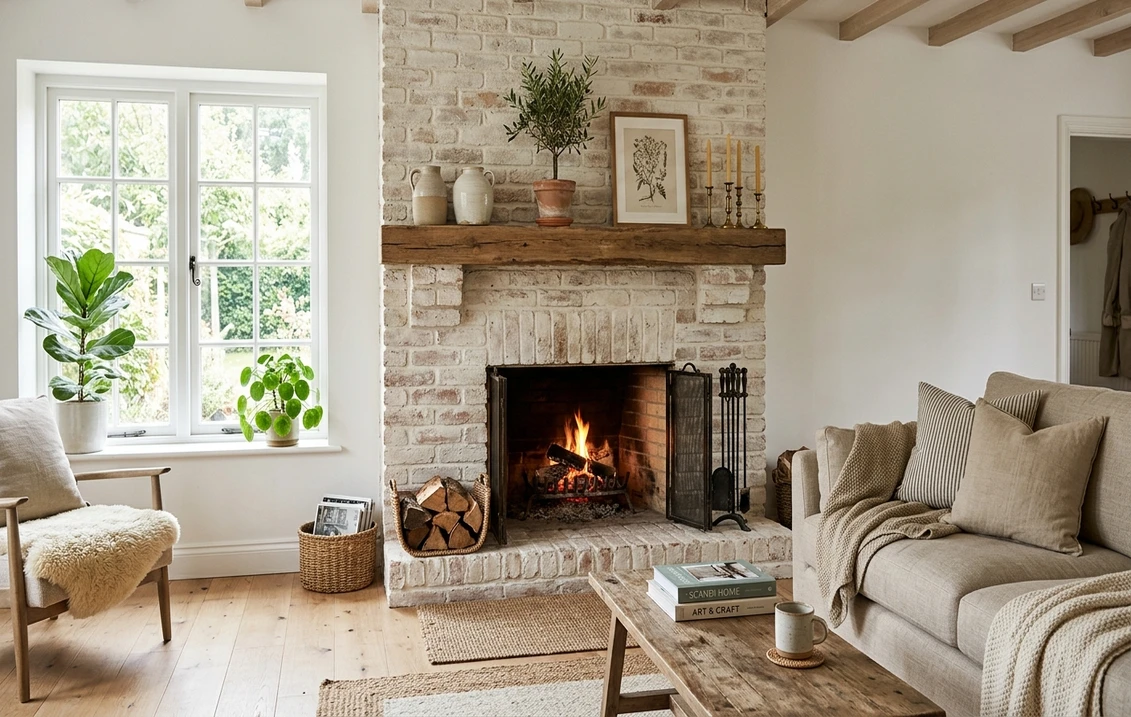
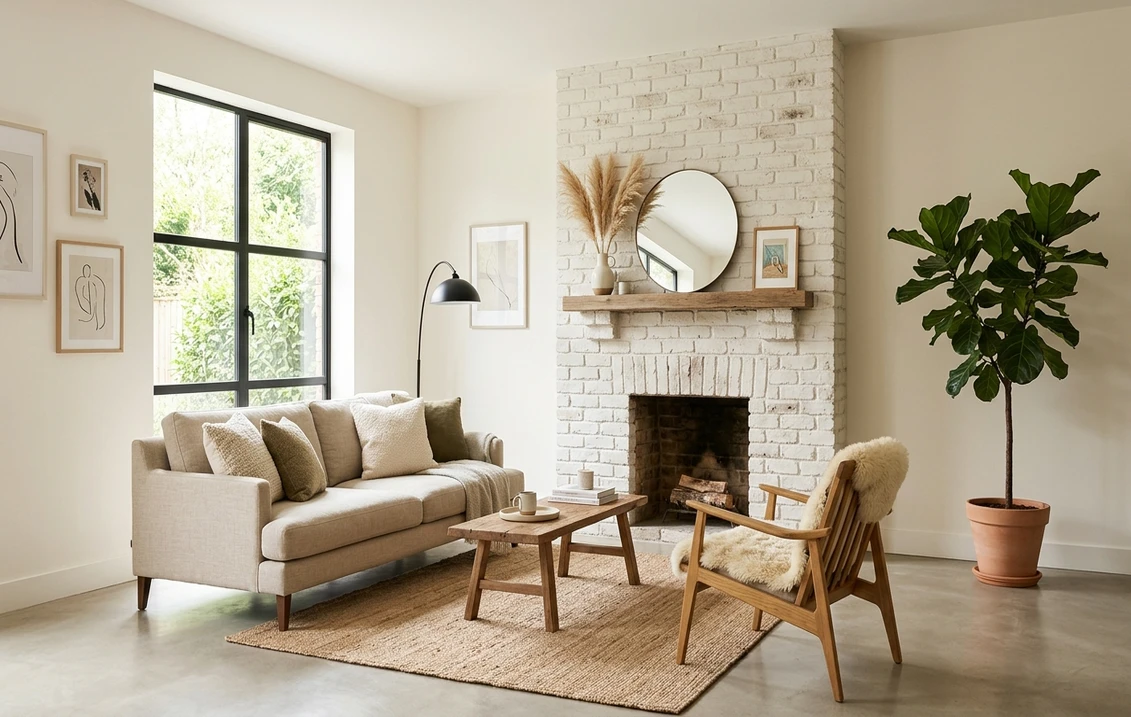
Brick is the most popular specialty paint project in US homes because a dated red-orange fireplace can swing a whole room from 1985 to current in a single weekend. There are three distinct finishes, and they are not interchangeable.
- Full paint (opaque). Primer plus two coats of a masonry-friendly interior paint such as Sherwin-Williams Emerald or Behr Masonry, Stucco and Brick. Total coverage, brick texture stays but the color is solid. This is permanent in practice, so commit before you start.
- Whitewash (translucent). Latex paint thinned roughly 1:1 or 2:1 with water, wiped on and partly wiped back so the brick tone reads through. Softer, more cottage, and reversible-looking. The full method, ratios, and color picks are in our dedicated how to whitewash a brick interior fireplace guide. For an opaque finish instead, the painted brick fireplace guide lists ten colors with their LRV and the stain-blocking primer sequence that keeps soot from bleeding through.
- German smear (mortar wash). A thin coat of joint mortar dragged over the face for an old-world European look. Not paint at all, but worth knowing it exists before you reach for a roller.
Color-wise, brick almost always goes white, off-white, or soft greige so the texture does the talking. The most-used picks are Sherwin-Williams Alabaster (SW 7008, LRV 82), Benjamin Moore White Dove (OC-17, LRV 85), and a warmer greige like Behr or BM Pale Oak when a stark white would feel cold against the firebox. If you want those whites and greiges explained side by side, the interior paint color families guide sorts every undertone into a usable map, and our Benjamin Moore interior colors hub covers the BM side specifically.
Prep that actually matters: a fireplace face must be scrubbed of soot with a trisodium phosphate (TSP) substitute, fully dried, and primed with a masonry or stain-blocking primer before any opaque coat. Skip the cleaning and soot bleeds through white paint in weeks.
Free AI visualizer. Upload your real fireplace photo and compare opaque white, warm greige, and a light whitewash before you open a can.
For the most common brick project, going white, the system decision deserves its own page: our guide to a white painted brick house works through acrylic paint, limewash and mineral paint with the Brick Industry Association's Technical Note 6 as the reference.
Concrete floors and basement slabs
Painting a concrete floor is the cheapest way to make a basement, garage, or laundry room feel finished, but it is also the job where DIYers fail most often, almost always because of moisture and almost never because of color. A slab on grade can wick groundwater vapor straight up through the paint film, blistering it from underneath.
The non-negotiable first step is a calcium chloride or plastic-sheet moisture test. Tape a 2-foot square of plastic to the bare slab, leave it 24 hours, and if condensation forms underneath you have a moisture problem to solve before any coating goes down. Once the slab passes, the product ladder runs from light duty to bulletproof:
| Product type | Best for | Durability |
|---|---|---|
| Acrylic latex floor paint | Low-traffic basement, laundry, utility | Light, recoat every few years |
| 1-part epoxy paint | Finished basement, hobby room | Medium, good scuff resistance |
| 2-part epoxy | Garage, workshop, high traffic | High, chemical and abrasion resistant |
| Concrete stain | Decorative, mottled natural look | Penetrating, will not peel |
Try it on your room
No photo? Try a sample
Sources: Sherwin-Williams ArmorSeal and H&C floor product data sheets 2026; Behr Premium 1-Part Epoxy Concrete and Garage Floor Paint technical sheet 2026; The Spruce concrete floor coating overview.
Whichever product you pick, the slab must be etched (with a masonry etching solution or a mechanical grinder) so the smooth, troweled surface gets enough tooth to grip. Color trends light and warm: soft grays, warm taupes, and creamy off-whites read as polished concrete, while charcoal hides garage stains best. The full moisture-testing protocol, etching steps, and a basement-ceiling color plan live in our concrete floor and basement ceiling paint guide.
One overlooked detail: a painted floor changes how every other color in the room reads. A cool gray floor pushes wall whites cooler and can expose green undertones, while a warm taupe floor flatters greiges. If you are picking wall and floor colors together, browse the room-by-room paint color ideas hub so the floor and walls are planned as one scheme, not two.
Bathtubs, tile, and porcelain
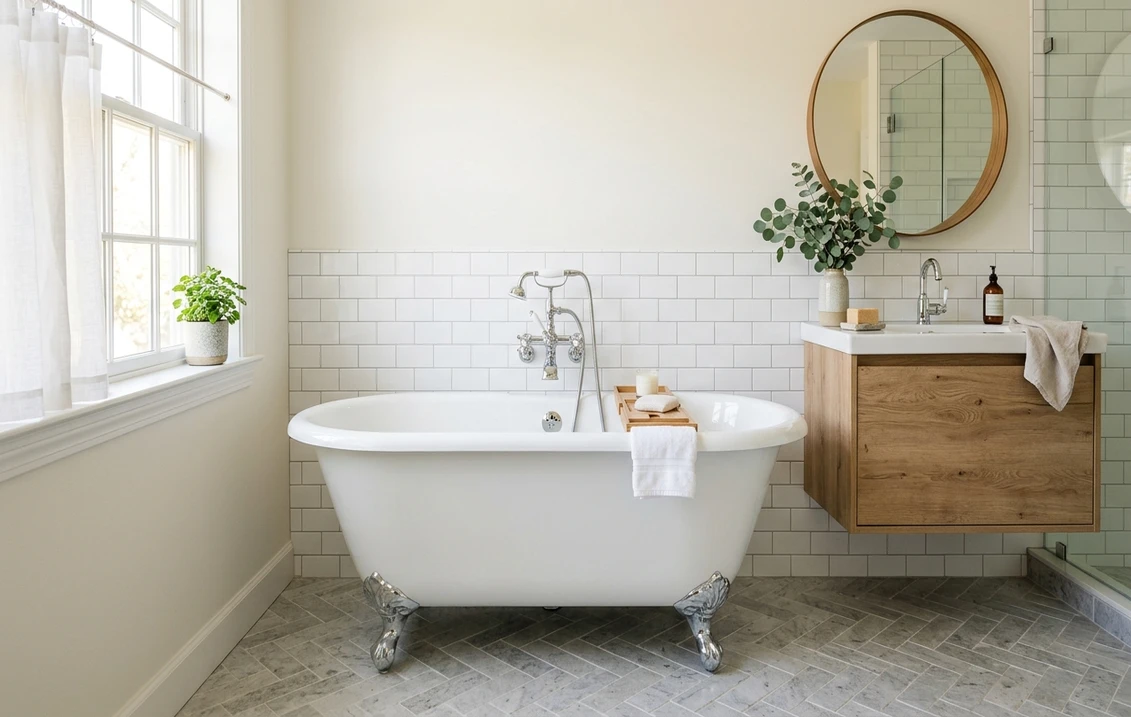
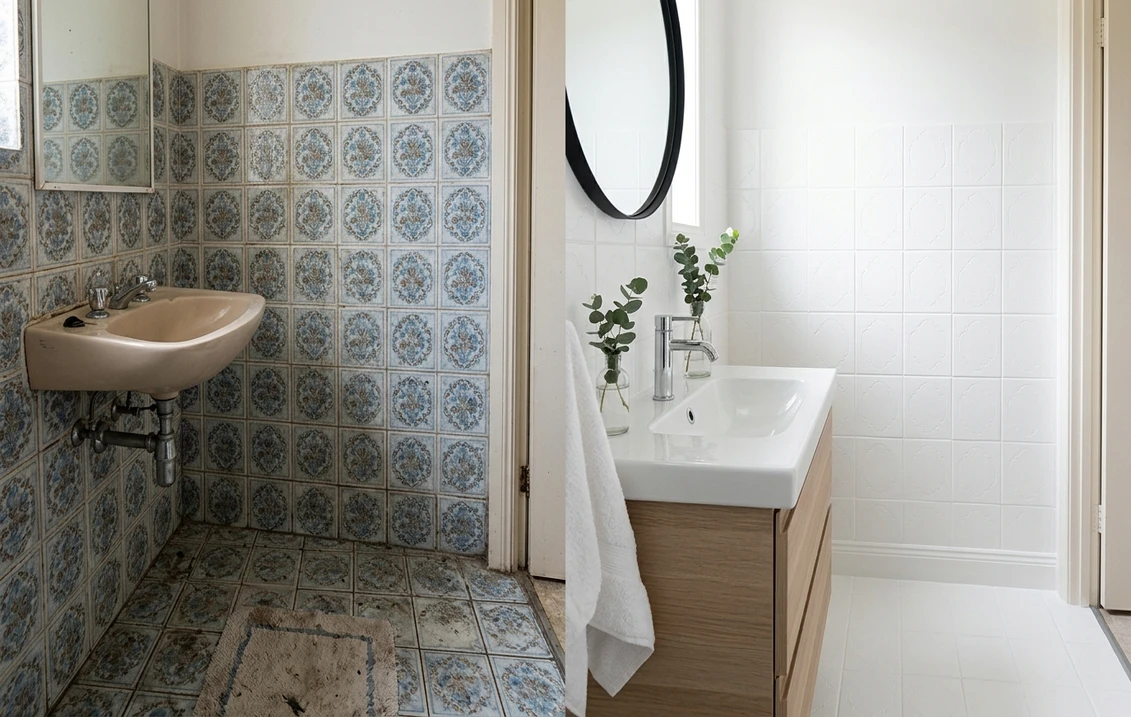
Refinishing a tub is the highest-stakes surface in this guide because porcelain and cast-iron enamel are engineered to be as non-stick as a frying pan, and the coating then has to survive standing water, hot showers, and daily scrubbing. This is the one job where ordinary paint is not just inadvisable, it is guaranteed to fail.
The two viable home routes are a DIY two-part epoxy refinishing kit (Rust-Oleum Tub and Tile and Homax Tough as Tile are the common ones) or a professional spray-applied acrylic urethane. Either way, it lives or dies on prep, and most homeowners badly underestimate how much:
- Deep clean and de-gloss. Every trace of soap film, body oil, and old caulk must go, then the glossy surface is etched with the kit acid or sanded so the new coating can mechanically bond.
- Ventilation and safety. Epoxy and urethane fumes are strong. An open window, a fan, and a respirator are not optional in a small bathroom.
- Cure time. A refinished tub typically needs 48 to 72 hours of cure before water touches it. Rushing this is the number-one cause of early peeling.
On color, the safe and resale-friendly choices are bright white and soft off-white, because a refinished tub should disappear into the bathroom rather than date it. Bolder homeowners do go for soft black, sage, or warm almond on a freestanding tub used as a feature. Our full process walkthrough, kit comparison, and the complete color shortlist are in the bathtub paint colors and refinishing guide.
Kitchen cabinets: the surface in between
Cabinets are a halfway case. No, they are not masonry or porcelain, but that slick factory finish plus the daily beating a kitchen hands out pushes them well past basic wall paint. They need a bonding primer (or a thorough de-gloss), a hard enamel topcoat, and patience. Because cabinets are their own large topic with dozens of color and finish decisions, the dedicated kitchen cabinet colors complete guide handles the full breakdown, from white and greige classics to the moody navies and greens trending in 2026.
It echoes the tub lesson. A slick, hard-wearing surface wants an enamel and a real bonding step. It will not settle for a quick coat of whatever wall color was left over from the living room.
Choosing colors that survive the prep
Got the chemistry sorted? Good. These surfaces still play by a few color rules of their own. Brick and concrete are textured and absorb light unevenly, so a flat or matte sheen reads more even and hides imperfection, while floors and tubs need the durability and washability of a satin, semi-gloss, or epoxy finish whether you want the shine or not. Undertone matters more here than on drywall because masonry and concrete bounce light in odd ways, so a white that looks clean in a fan deck can throw pink or green once it is on rough brick.
That is exactly why previewing on your own surface beats guessing from a chip. For the trending palettes designers are using on these features in 2026, see our best interior paint colors for 2026 roundup, and for a full Sherwin-Williams reference (Alabaster, Repose Gray, Tricorn Black and the rest) the Sherwin-Williams interior colors hub lists the codes and LRVs you will reach for on brick and floors.
Upload your space and preview real brand colors on brick, concrete, or a tub before buying primer and paint, free.
A simple decision order for any specialty job
Brick, floor, tub, or cabinet, one five-step order keeps you out of trouble. You will see it running quietly through every guide linked above:
- Identify the surface chemistry. Porous masonry, slick porcelain or enamel, or a moisture-prone slab. This decides the whole product list.
- Test and prep. Moisture-test concrete, soot-clean and prime brick, etch and de-gloss tubs and cabinets. Prep is 80 percent of the result.
- Match the primer to the surface. Masonry bonding primer, etching primer, or the self-priming epoxy that comes in the kit. Never skip it on a non-porous surface.
- Pick a product rated for the use. Floor paint or epoxy for floors, refinishing kit or urethane for tubs, masonry paint for brick, cabinet enamel for cabinets.
- Choose color and sheen last. Flat or matte to hide texture on brick and concrete, satin to semi-gloss for washable durability on floors, tubs, and cabinets.
Follow that order and the color choice is the fun part instead of the gamble. Skip it and even the best paint in the store cannot save the job. The same five steps hold outdoors on the most unforgiving specialty surface of all, a metal roof, where the chemistry step (galvanized zinc versus a factory Kynar finish) decides between an acrylic applied direct and a bonding primer first; the metal roof painting guide walks through that case, including the cool-roof color data that has no equivalent indoors.
Frequently asked questions
Can I use regular wall paint on brick, concrete, or a bathtub?
No. Each of these surfaces defeats ordinary interior latex for a different reason: brick and concrete are porous and pull the binder out of wall paint, leaving a chalky weak film, while a bathtub is non-porous porcelain or enamel that nothing sticks to without etching and a bonding or epoxy coating. Brick needs a masonry-rated paint over a stain-blocking primer, concrete floors need floor paint or epoxy over an etched and moisture-tested slab, and tubs need a two-part refinishing kit or a sprayed urethane. The right product is matched to the surface chemistry first, and color is chosen second.
Is painting a brick fireplace permanent?
An opaque, fully painted brick fireplace is permanent in practice. Once paint fills the porous brick and mortar, stripping it cleanly is extremely difficult and usually damages the brick, so treat the decision as one-way. If you want a more reversible-looking, softer effect, a thinned whitewash lets the brick tone read through and feels less final. Either way, the brick must be cleaned of soot and primed before an opaque coat, or stains will bleed through white paint within weeks.
Why does paint peel off my basement concrete floor?
Almost always moisture, not the paint. A slab on grade can wick groundwater vapor up through the coating and blister it from underneath. Before painting, tape a 2-foot square of plastic to the bare slab for 24 hours: if condensation forms under it, you have a vapor problem to address first. The second most common cause is a too-smooth, un-etched surface that gives the paint nothing to grip. Etch with a masonry etching solution or grind the slab, then use a floor-rated acrylic or epoxy, never a wall paint.
How long does a DIY refinished bathtub last?
A carefully prepped DIY two-part epoxy refinish typically holds three to five years, while a professional spray-applied acrylic urethane often lasts ten or more. The biggest variable is prep and cure: a thorough de-gloss, a meticulous clean, and a full 48 to 72 hour cure before any water contact make the difference between a coating that lasts and one that peels in months. Daily care matters too, so avoid abrasive scrubbing pads and harsh drain cleaners on a refinished surface.
See a painted brick fireplace, a finished concrete floor, or a refinished tub in your own space before you buy a single can.
Disclaimer: Sherwin-Williams, Benjamin Moore, Behr, Rust-Oleum, and Homax and their named products are trademarks of their respective owners. FacadeColorizer is an independent paint visualization service and is not affiliated with, endorsed by, or sponsored by any paint manufacturer. Always confirm a color with a manufacturer sample on your actual surface, and follow each product's technical data sheet for prep, primer, and cure requirements before purchase or application. Sources: Sherwin-Williams ArmorSeal, H&C, and SW 7008 Alabaster technical data sheets 2026; Benjamin Moore OC-17 White Dove technical data sheet 2026; Behr Masonry, Stucco and Brick and Behr Premium 1-Part Epoxy Concrete and Garage Floor Paint technical sheets 2026; Rust-Oleum Tub and Tile Refinishing Kit instructions 2026; The Spruce surface-painting overviews.
Trademarks mentioned (Sherwin-Williams, Benjamin Moore, Behr, Caparol, Brillux, Sto, Alpina, Valspar, PPG, Glidden, Dulux, Crown Trade, Sandtex, Farrow & Ball, Johnstone's, Leyland) are property of their respective owners. FacadeColorizer is independent and not affiliated with any of them. Nominative fair use under Lanham Act §1125.