Try it on your room

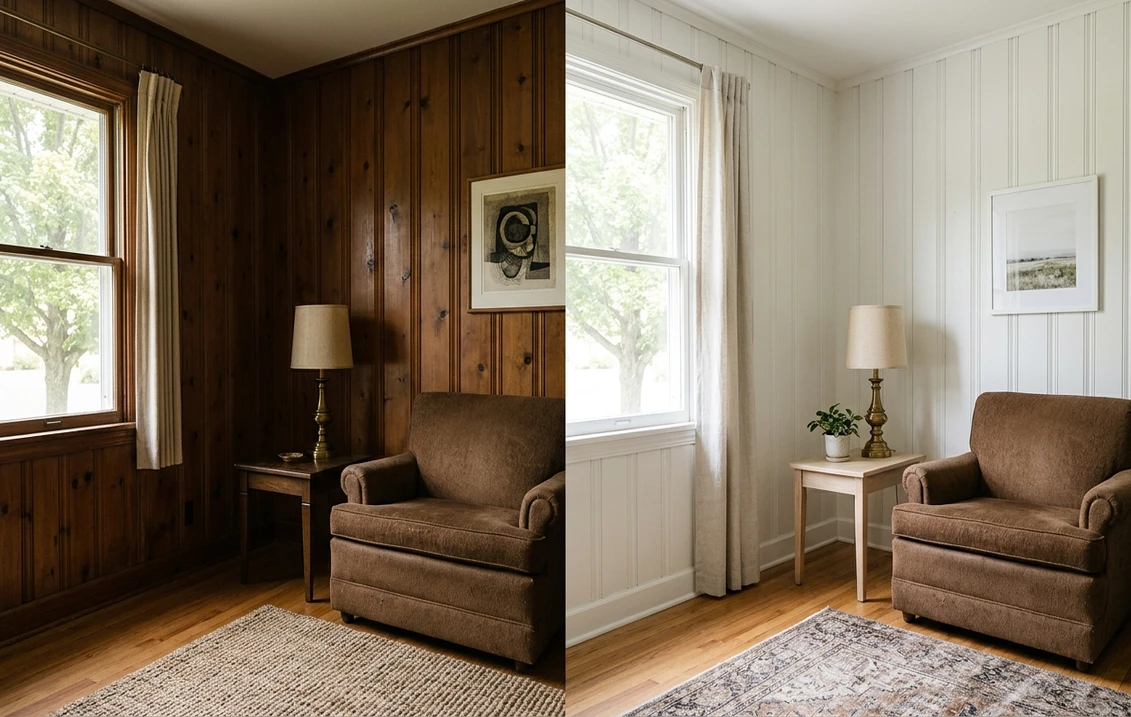
You inherited a room wrapped in 1970s wood paneling: orange-brown, grooved, and dark enough to make the whole space feel like the inside of a sauna. Tearing it out means drywall repair, dust, and a contractor. Painting it is the weekend version of a gut renovation, and the before-and-after photos are genuinely dramatic. The single biggest decision is not whether to paint, it is which wood paneling makeover direction to commit to, because the same grooved wall can read as crisp coastal white, warm modern greige, or moody library green depending on the color you pick.
This is a gallery of those directions, not a how-to (the prep, primer, and roller steps live in a separate guide linked below). The goal here is to help you see the after before you ever open a can: what each color family does to a paneled room, when grooves are your friend, and how to test the look on your actual walls in a couple of minutes.
Upload a photo of your paneled wall and preview a color in about 30 seconds, before you tape a thing.
Why painting paneling looks so different from painting drywall
A flat drywall wall reads as a single plane of color. Paneling does not. Those vertical grooves catch shadow, so a painted paneled wall keeps a subtle ribbed texture that a smooth wall never has. That texture is the whole reason the before-and-after is so satisfying: the room loses the heavy, dated tone but keeps a quiet architectural detail. Three things change once paint goes on:
- Light bounces instead of disappearing. Dark stained paneling absorbs most of the light hitting it. A lighter paint reflects it, and a small, gloomy room can gain what feels like a full extra window's worth of brightness.
- The grooves become a feature, not a flaw. Painted in one solid color, the vertical lines read as board-and-batten or shiplap-adjacent texture, which is firmly in style rather than dated.
- Sheen matters more than usual. Grooves and a higher sheen together can look plasticky. Most paneling makeovers land best in a matte or eggshell finish that softens the texture rather than spotlighting it.
Because the surface is glossy, sealed, and often factory-finished, real-world paneling needs a degreaser, a scuff sand, and a bonding primer before color. We cover that prep in full in the specialty surface painting guide. Everything below assumes that prep is handled and focuses purely on the color outcome.
6 painted paneling makeover ideas (before & after)
These are the six directions that consistently photograph well and hold up in real rooms. Each one starts from the same dark, orange-toned "before" and lands somewhere completely different.
1. Soft white: the bright, coastal reset
The most popular and most foolproof makeover. A warm-leaning white turns heavy paneling into a light, airy backdrop while the grooves keep it from looking flat and builder-bland. Before: a dim den that ate light. After: a room that feels twice the size. Whites that work well over a yellow-orange base lean slightly warm so they do not go cold and clinical: Sherwin-Williams Alabaster (SW 7008) and Benjamin Moore White Dove (OC-17) are the safe, room-warming defaults. Reserve a crisp, cool white like Chantilly Lace for north-facing rooms that already get plenty of daylight.
2. Warm greige: modern without going stark
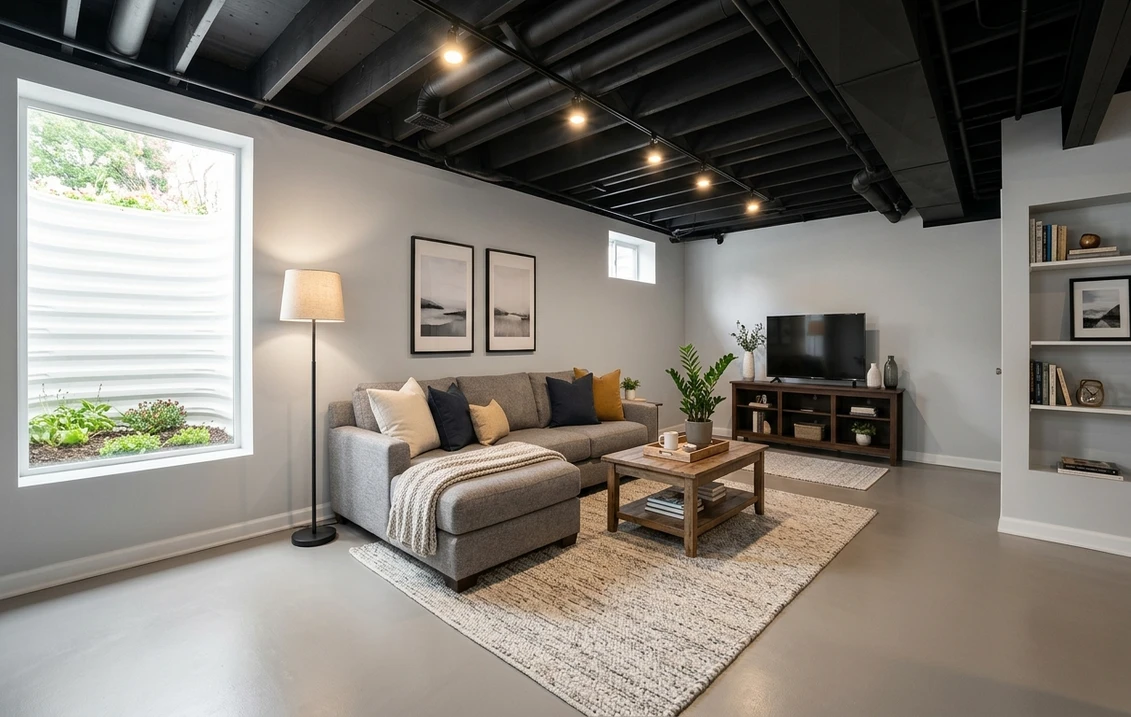
If full white feels too sterile for a cozy den or basement, a warm greige keeps the room grounded and current. It hides scuffs better than white (useful in a high-traffic family room) and reads as intentional and contemporary rather than "we covered up the wood." Agreeable Gray (SW 7029) and Accessible Beige (SW 7036) are the workhorses here. The grooves in a greige paneled wall give a quiet board-and-batten effect that suits a transitional or farmhouse room.
3. Moody green or navy: lean into the dark
The counterintuitive winner. Instead of fighting a dark paneled room, you double down and turn it into a deliberate, cocooning study, office, or media room. A deep green (Benjamin Moore Essex Green, or a softer sage like SW Evergreen Fog) or a saturated navy makes the grooves look like custom millwork, and the room reads expensive. This works best in spaces you want to feel intimate rather than bright: an evening den, a home office, a powder room. Pair it with brass hardware and warm lighting.
4. Two-tone with a painted accent wall
You do not have to commit the entire room to one move. Paint three walls a soft white or greige and let the paneled wall become a moody accent in a deep green, charcoal, or muted blue. The grooves give that accent wall genuine texture, which is exactly what a flat accent wall lacks. For the rules on which wall to choose and how to keep the contrast intentional, our accent wall color strategy walks through it room by room.
5. Greige walls, crisp white trim and grooves filled
For a cleaner, less rustic result, some makeovers fill the grooves with caulk or wood filler before painting, then finish in a single soft color so the wall reads as smooth drywall. This is the most "renovated" look and the most labor, but it erases the dated paneling entirely. Keep the trim a step crisper than the walls (a clean white against a greige field) to add definition without contrast that fights the room.
6. Warm earthy clay or muted terracotta
The 2026 trend pick. Rather than neutralizing the wood entirely, a muted clay, putty, or soft terracotta keeps a paneled room warm and enveloping while still modernizing it. It suits a sunroom, a reading nook, or a dining room, and it pairs beautifully with natural wood furniture and woven textures. Because it is a committed color, this is the one to preview most carefully before buying paint.
Which makeover fits your room?
| Your situation | Best direction | Why |
|---|---|---|
| Dim, north-facing room you want brighter | Soft white | Maximum light bounce; reclaims a room that was eating daylight |
| High-traffic family den or basement | Warm greige | Hides scuffs, stays cozy, reads modern not sterile |
| Office, study, or evening media room | Moody green or navy | Cocooning; grooves read as custom millwork |
| Want a feature without a full commitment | Two-tone accent wall | Textured accent on the paneled wall, calm neutrals elsewhere |
| Want the dated paneling gone entirely | Filled grooves, single soft color | Reads as smooth renovated drywall (most labor) |
| Sunroom, dining room, reading nook | Earthy clay or terracotta | Warm and enveloping; pairs with natural wood and woven decor |
Try it on your house
No photo? Try a sample
Color references: Sherwin-Williams and Benjamin Moore technical data sheets 2026. Shade behavior varies with the original wood tone, room light, and primer coverage.
See white, greige, and a moody shade on your own wall, side by side, free.
How the wood underneath changes your result
Two rooms can use the identical paint and land in different places, because what is under the primer matters. The "before" wood tone pushes through unless your primer fully blocks it:
- Orange-brown knotty pine (the classic 1970s panel): heavy warm tannins. Without a stain-blocking primer, the warmth bleeds and a cool white can yellow over a few weeks. A pigmented bonding primer is non-negotiable here.
- Dark walnut or mahogany-stained paneling: very low light reflectance. A single topcoat of a light color often looks patchy; plan on primer plus two coats for an even, bright result.
- Faux-wood or vinyl-wrapped panel (common in mid-century basements): slick and non-porous. The color outcome is fine, but adhesion is the whole game, which is why the prep guide matters more than the color choice on these.
This is the part that surprises people: the paint chip you taped to the wall lies, because it is sitting on bare wood, not on the primed, painted surface you will actually end up with. That gap between "swatch on dark wood" and "finished painted wall" is exactly where a digital preview earns its keep.
Match the makeover to the rest of the room
A paneled wall almost never lives alone. Once you have the makeover color, the trim, ceiling, and adjoining rooms need to agree with it. A few quick rules:
- Trim: if the paneling goes soft white, paint the trim and any built-ins the same white so the wall reads as one calm surface. If the paneling goes moody, a crisp white trim frames it.
- Ceiling: in a low-ceilinged basement, carrying a soft white up onto the ceiling makes the room feel taller. A dark paneled accent wall pairs well with a plain white ceiling.
- Flooring: warm wood or LVP floors anchor a white or greige makeover; a moody green or navy wall pops against lighter floors.
For choosing the color by the room's actual job (den, office, dining room, basement), our room-by-room paint color ideas guide pairs shades to each space, and the interior color families guide explains why a warm white behaves differently from a cool one over wood. Planning the budget for the whole room? The interior painting cost guide has per-room numbers, and prep-heavy surfaces like primed paneling sit at the higher end.
See the after before you commit
Painted paneling is a one-way door. Once the primer and color are on, the wood is not coming back without stripping, and repainting a grooved wall in a new color is a full redo. So the smart move is to see the result first:
- Look at your real room, not a magazine. The same white that glows in a sunny coastal photo can fall flat in your north-facing basement. Your light, your grooves, your furniture.
- Compare directions side by side. Soft white versus warm greige versus a moody green is a decision that gets obvious the moment you see all three on the actual wall instead of imagining them.
- Then buy one sample. Use the digital preview to kill the directions you would have regretted, then put a single physical sample of your finalist on the primed wall before committing to gallons.
The fastest version of that is to upload a photo of your paneled wall to our interior paint visualizer and preview the makeover colors right on your own grooves. It will not replace a physical sample for the final call, but it settles the big "which direction" question in minutes instead of weekends.
1 HD preview plus 3 variations, no sign-up wall, see the before and after on your own photo.
Frequently asked questions
What is the best color to paint dark wood paneling?
For most rooms, a warm-leaning white like Sherwin-Williams Alabaster (SW 7008) or Benjamin Moore White Dove (OC-17) gives the brightest, most foolproof before-and-after because it bounces light while the grooves keep the wall from looking flat. If you want cozy rather than bright, a warm greige such as Agreeable Gray reads modern without going sterile, and a deep green or navy turns a dim room into a deliberate, cocooning study. Choose by the room's job and its natural light, not by the magazine photo.
Should I fill the grooves in paneling before painting?
Only if you want the wall to read like smooth drywall. Filling the grooves with caulk or wood filler erases the dated look entirely but is significantly more labor. Many makeovers leave the grooves and paint over them in one solid color, which gives a board-and-batten or shiplap-adjacent texture that is in style. It comes down to whether you want texture (leave them) or a flat renovated wall (fill them).
Will the wood color bleed through the paint?
It can, especially with orange-brown knotty pine, which carries warm tannins that bleed through and can yellow a cool white over a few weeks. The fix is a pigmented stain-blocking bonding primer before any color, plus two topcoats over dark or walnut-stained paneling for an even result. With the right primer, the original wood tone stays buried and your chosen color holds true.
What paint finish works best on painted paneling?
A matte or eggshell finish suits most paneling makeovers. Grooves plus a high-gloss sheen can look plasticky and spotlight every imperfection, while a lower sheen softens the texture and reads more like modern millwork. Eggshell is a good middle ground for high-traffic family rooms because it wipes clean; matte is more forgiving on uneven older panels.
Can I see a paneling makeover on my own wall before painting?
Yes. Upload a photo of your paneled wall to our interior paint visualizer and preview makeover colors right on your own grooves, comparing white, greige, and a moody shade side by side. You get one HD preview plus three variations free, with no sign-up wall. It will not replace a physical sample on the primed wall for the final decision, but it settles the big "which direction" question in minutes.
Preview the before and after on your actual wall before you buy a single can.
Disclaimer: Sherwin-Williams, SW 7008 Alabaster, SW 7029 Agreeable Gray, and SW 7036 Accessible Beige are trademarks of The Sherwin-Williams Company. Benjamin Moore, OC-17 White Dove, OC-65 Chantilly Lace, and Essex Green are trademarks of Benjamin Moore & Co. FacadeColorizer is an independent paint visualization service, not affiliated with or endorsed by Sherwin-Williams or Benjamin Moore. Screen color approximates the manufacturer's chip, and painted results vary with the original wood tone, room light, primer coverage, and finish; always test a physical sample on the primed wall before buying gallons. Sources: Sherwin-Williams and Benjamin Moore technical data sheets 2026.
Trademarks mentioned (Sherwin-Williams, Benjamin Moore, Behr, Caparol, Brillux, Sto, Alpina, Valspar, PPG, Glidden, Dulux, Crown Trade, Sandtex, Farrow & Ball, Johnstone's, Leyland) are property of their respective owners. FacadeColorizer is independent and not affiliated with any of them. Nominative fair use under Lanham Act §1125.