Try it on your room

Rip out the old tub and you are looking at $1,500 to $5,000 once demolition, plumbing, and re-tiling are done. Refinishing the same tub with a two-part epoxy or polyurethane coating costs $350 to $650 and takes a day. That price gap is why bathtub refinishing has quietly become one of the most popular bathroom projects in the United States, and the first question every homeowner asks is the same: what color do I make it?
The honest answer is that bathtub refinishing is a near-white world, and that is a feature, not a limitation. Most refinished tubs are sprayed in some version of white because white reads clean, resells well, and hides the hard-water shadows that plague colored fixtures. But "white" is not one color, and the shade you pick (cool bright white, warm almond, soft gray, or a charcoal exterior) changes how the whole bathroom feels. This guide breaks down the real palette: undertones, light reflectance values, lighting behavior, pairings, and how to test a shade before a sprayer touches the cast iron.
Upload a photo and see white, almond, or gray on the tub and walls in 30 seconds, free.
Why refinished bathtubs live in the white family
Refinishing coatings (the trade calls it reglazing or resurfacing) are tinted at the shop, not mixed from a fan deck of 1,500 wall colors. The chemistry favors light bases: a white or off-white tub bounces light, makes a small bathroom feel larger, and disguises the etching that cleaners and minerals leave over the years. A saturated mid-tone tub telegraphs every soap film and water spot. That practical reality, not fashion, is why the catalog of bathtub paint colors is short and pale.
The shades below cover most of what refinishers actually spray in 2026. Each carries a distinct undertone, and the undertone decides whether your tub looks crisp and current or dated the day it cures. For the wider context of which surfaces take a coating well, see our pillar on specialty surface painting.
The 2026 bathtub refinish palette at a glance
| Refinish shade | Approx. LRV | Undertone | Best for |
|---|---|---|---|
| Bright white | 90 to 93 | Clean, slightly cool blue | Modern baths, white subway tile, full renovations |
| Soft / biscuit white | 84 to 88 | Warm yellow-cream | Matching older fixtures, warm-light rooms |
| Almond / bone | 78 to 83 | Warm beige-tan | Existing almond toilet and sink, 80s-era baths |
| Light gray | 62 to 70 | Cool, faint blue-green | Spa and contemporary schemes, gray tile |
| Charcoal / black (exterior) | 5 to 12 | Neutral to blue-black | Statement freestanding tubs, dark floors |
Try it on your room
No photo? Try a sample
LRV ranges are approximate, based on published reflectance values for comparable wall whites and refinisher color charts; the exact figure varies by coating brand and film thickness. Sources: The Spruce bathtub refinishing overview 2025, manufacturer technical data for two-part urethane tub coatings, designer fan-deck references.
Bright white: the default, and why it sometimes goes wrong
Bright white is the reflexive choice and, for a full renovation, usually the right one. With an LRV in the low 90s it reflects nearly all visible light, which makes a freshly reglazed tub look luminous. The catch is the undertone: most "pure white" coatings carry a faint cool, slightly blue base so they photograph crisp rather than yellow, which works against cool surroundings but fights warm ones.
Put bright white next to an almond toilet, a cream sink, or warm 4x4 tile and the tub reads stark and blue-ish by contrast, because the eye judges white relative to its neighbors. So if you are refinishing only the tub and the room stays warm, bright white is the shade most likely to disappoint. If you are gutting the bathroom and pairing it with cool white tile and chrome, it is exactly right and sits cleanly beside a wall like the ones in our 2026 best interior paint colors guide.
Free AI visualizer. See a white or almond tub against your real tile and fixtures before you book a refinisher.
Soft white and almond: the match-the-room shades
When the rest of the bathroom is staying put, the smartest move is often not bright white at all. Two warmer shades exist to blend in.
Soft white / biscuit
Soft white (refinishers also call it biscuit or linen) sits around LRV 84 to 88 with a gentle yellow-cream base. Still reads white. But it carries just enough warmth that cream tile and warm lighting never throw it off. In a windowless bath lit by 2700K bulbs, it stays inviting where a cool bright white turns clinical. When you cannot test in the actual room, soft white is the safe pick you forget about and never regret, which is exactly why warm off-whites win as the default on walls too.
Almond / bone
Almond (sometimes labeled bone or fawn beige) runs LRV 78 to 83 with a clear warm beige-tan undertone. It exists for one job: matching the almond toilets, sinks, and tile that filled American bathrooms from the late 1970s through the early 1990s. If those fixtures are staying, an almond tub disappears into a coordinated set; spray it bright white instead and you get a two-tone bathroom that reads as a mistake. Almond is a reactive choice, not aspirational: pick it to match, not for its own sake.
To know which warm shade you are matching, our interior paint color families guide walks through warm versus cool neutrals so you can name the undertone of your fixtures before committing the tub to one.
Light gray and charcoal: the design-forward options
Not every tub stays white. A small but growing share of 2026 jobs skip it on purpose, chosen to anchor a deliberate scheme rather than just freshen up a tired fixture.
Light gray (LRV roughly 62 to 70, cool with a faint blue-green cast) reads spa-like and contemporary, coordinating with gray porcelain tile and matte black fixtures. The trade-off is maintenance: gray shows mineral residue and limescale more readily than white, so it rewards softened water and punishes hard-water regions.
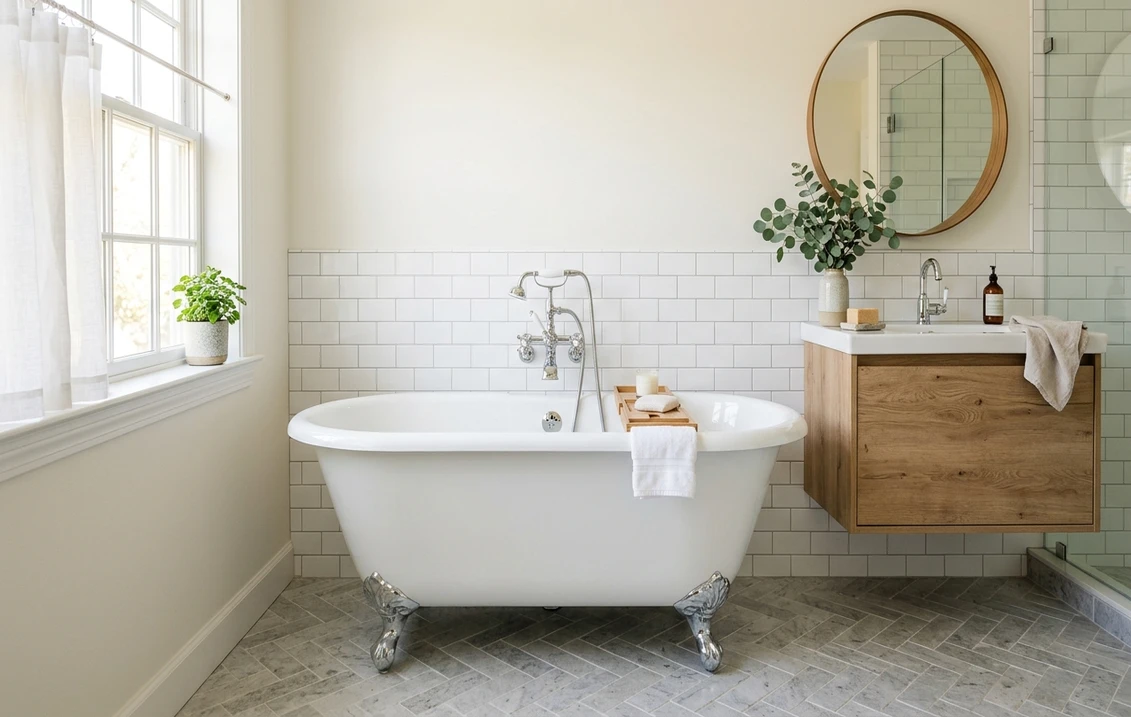
Charcoal or black is reserved mostly for the exterior of a freestanding or clawfoot tub, with a white interior basin. At an LRV in single digits it is a statement piece, pairing with dark wood floors, brass, and dramatic walls, though every water spot shows. The same cool-versus-warm gray decision shows up on floors and ceilings, covered in our concrete floor and basement ceiling paint guide.
How bathroom light changes the tub color
Bathrooms are the hardest room to color-match: small, often windowless, and lit by an overhead fixture and a vanity light at different color temperatures. A coating that looked perfect on the sample card behaves differently once it is the largest glossy surface in a 5x8 space.
- Warm bulbs (2700K to 3000K): the most common bathroom lighting, which pushes every shade warmer. Bright white softens toward cream (often a good thing), almond can edge toward peach, and soft white usually looks best.
- Cool / daylight bulbs (4000K to 5000K): common in newer vanity lights. They strip warmth, so almond can look muddy while bright white snaps to its crispest. With daylight bulbs, lean cooler.
- North-facing window: cool, indirect daylight that flatters cool gray and crisp white and can make almond look dirty.
- No window: the color is entirely at the mercy of the bulbs, so choose by bulb temperature and avoid the lowest-LRV shades.
- High-gloss finish: reglazed tubs cure to a hard gloss that amplifies whatever cast the room throws, so undertones read stronger than on a matte wall.
Pairing the tub with tile, walls, and trim
The tub is rarely the only white in a bathroom, and clashing whites are the most common refinishing regret. One rule sorts out most of it. A cool bright white tub belongs with cool white or soft gray walls and chrome; warm almond and soft white belong with cream walls and brass. A few more pairings:
- Match the tub to the fixtures, not the tile. The toilet and sink are the whites the eye compares the tub against most directly. Get those three to agree first; tile and walls can carry more contrast.
- Grout is a color decision. Bright white grout makes a soft-white tub look yellow; warm gray grout flatters it. Choose grout after the tub shade, not before.
- Trim stays close in tone. Keep painted vanities and trim within a few LRV points of the tub family so the room feels assembled, not mismatched.
The clash to watch for is two "whites" that do not agree, the same trap homeowners hit comparing brands: as our Sherwin-Williams vs Benjamin Moore comparison shows, one maker's white can read warm against another's cool, and a refinished tub follows the same rule beside its fixtures. Wall color is where most of the bathroom budget lives; our interior house painting cost guide breaks down labor and materials by room.
Test a refinished tub shade against different wall colors in one preview, free.
How to test a tub color before you commit
A refinishing job is permanent until the next one, so a sample card under shop lighting is the worst place to choose. Three steps de-risk the decision:
- Bring the refinisher's actual color chips home. View each one flat against your toilet and sink, under your own bulbs, at the times of day you use the room. The chip beside the fixture tells you more than any showroom.
- Check it at night. Most baths are used after dark, and a shade that reads clean by day can turn yellow or muddy under warm bulbs.
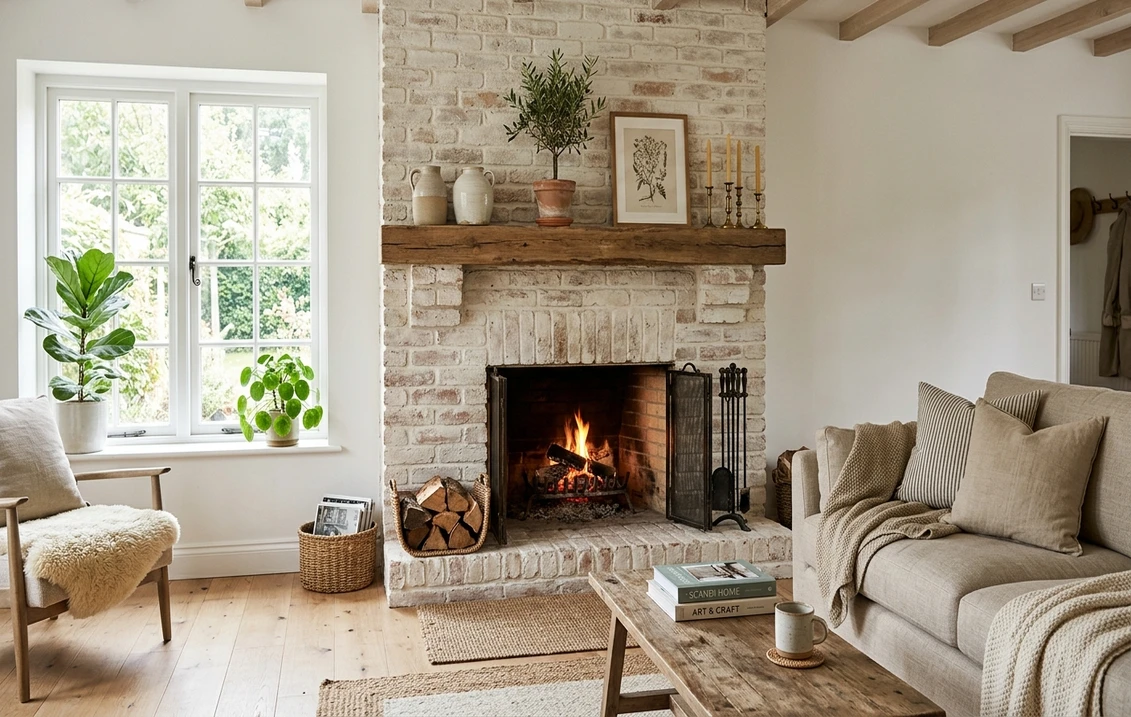
- Preview it digitally first. Before you request chips, upload a photo and try white, almond, and gray on the tub and walls virtually. The obvious misses fall away in seconds. The same trick carries over to our guide on whitewashing an interior brick fireplace, another finish where the undertone decides everything.
Preview white, almond, gray, and charcoal on your bathroom before booking a refinisher, free.
Frequently asked questions
Can you refinish a bathtub in any color?
Not quite. Refinishing coatings are tinted at the shop from a limited palette, so the practical range is whites (bright white, soft / biscuit white), almond / bone, light gray, and a charcoal or black exterior for freestanding tubs. You cannot get the 1,500-color freedom of a wall paint fan deck. The chemistry and resale logic both favor light, near-white shades, which is why the catalog is short.
What is the most popular bathtub refinish color?
Bright white, by a wide margin. It reflects the most light, makes a small bathroom feel larger, resells to the broadest range of buyers, and hides hard-water etching better than darker shades. Soft white and almond follow when the goal is matching existing fixtures rather than a full renovation. Gray and black remain niche choices.
Should I refinish my tub white or almond?
Match the rest of the room. If your toilet, sink, and tile are almond (common in baths from the late 1970s to early 1990s), choose almond so the tub blends in; a bright white tub beside almond fixtures looks mismatched. If you are renovating with cool white tile and chrome, choose bright white. The deciding factor is the fixtures the tub sits next to, not preference in the abstract.
Does a refinished tub color fade or yellow over time?
A quality two-part urethane or epoxy coating holds its color for years, but white coatings can yellow slightly with age, abrasive cleaners, or UV exposure in a sunny bathroom. Choosing a soft white rather than the coolest bright white makes any future yellowing far less noticeable, because the shade already carries a warm base.
See white, almond, gray, and charcoal on your bathtub and walls before a sprayer touches the cast iron.
Disclaimer: FacadeColorizer is an independent paint and color visualization service and is not affiliated with, endorsed by, or sponsored by any bathtub refinishing company, coating manufacturer, Sherwin-Williams, Benjamin Moore, or Behr. LRV figures are approximate, based on published reflectance values for comparable wall whites and refinisher color charts; exact values vary by coating brand and film thickness. Cost ranges are general US estimates that vary by region, tub material, and condition. Screen color approximates a physical sample; always confirm with the refinisher's actual chip in your own bathroom before committing. Sources: The Spruce bathtub refinishing overview 2025, manufacturer technical data for two-part urethane and epoxy tub coatings, designer fan-deck and undertone references.
Trademarks mentioned (Sherwin-Williams, Benjamin Moore, Behr, Caparol, Brillux, Sto, Alpina, Valspar, PPG, Glidden, Dulux, Crown Trade, Sandtex, Farrow & Ball, Johnstone's, Leyland) are property of their respective owners. FacadeColorizer is independent and not affiliated with any of them. Nominative fair use under Lanham Act §1125.