Try it on your room

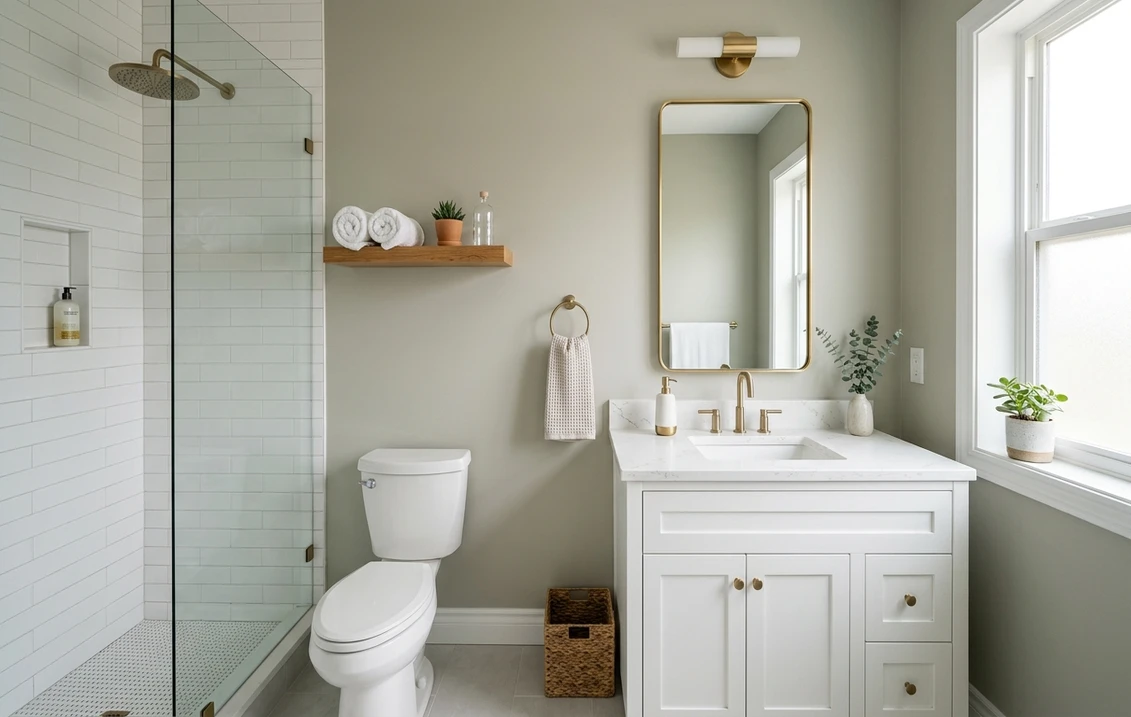
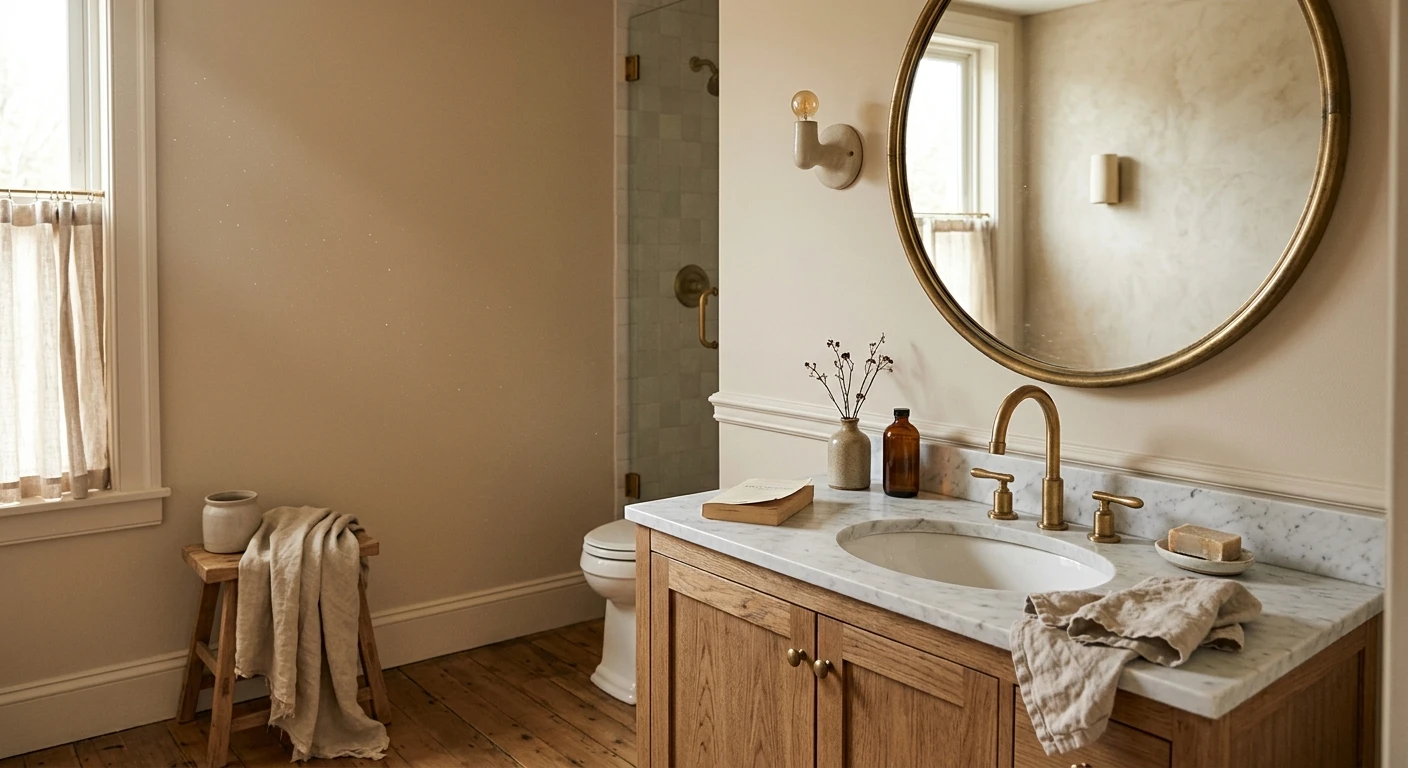
The first bathroom I ever repainted for a client was a windowless guest bath off a hallway, builder-white, lit by one frosted globe. We put a warm greige on the walls, kept the tile, and the room stopped feeling like a closet. That is the quiet superpower of a beige bathroom: it adds warmth and depth without darkening a space that almost never has enough daylight. Beige reads spa-calm next to white tile, it hides the water spots a flat gray shows off, and it flatters skin tone in the mirror at 7 a.m. Below are 14 looks, each with a real shade, its LRV, and how it behaves in the one room where light is always in short supply.
One ground rule before the gallery. A bathroom is a small box of hard, reflective surfaces (tile, glass, mirror, chrome), so the wall color bounces and concentrates. A beige that looks perfect in a living room can tip pink or yellow once it is surrounded by white subway tile and a 4000K vanity bulb. That is why every pick here lists its undertone, not just a pretty name. This guide sits inside our wider room-by-room paint color ideas hub, and it pairs with our broader guide to beige undertones if you want the full family map first.
Upload a photo of your actual bathroom and preview these shades under your own light in about 30 seconds, free.
Why beige works in a bathroom (and where it does not)
Beige earns its place in a bath for three concrete reasons. It carries warmth into a room that runs cold and bright, so the space feels finished instead of clinical. It has enough body to hide the inevitable: hard-water streaks, soap film, the faint cast a flat gray throws after a hot shower. And a warm neutral flatters the face in the mirror, while a cool gray can leave you looking washed out under task lighting.
Where it struggles: a south-facing bathroom flooded with afternoon sun can push a yellow-leaning beige toward gold or even a dingy mustard. And in a true windowless box, the wrong pink-based beige goes peachy under warm LEDs. The fix is matching undertone to light, which is the whole job of the table further down. For the lightest, smallest baths, lean toward a high-LRV off-white beige; for a mid-size room you can run a deeper greige and let it do more work.
14 beige bathroom ideas, by shade and undertone
Here are the 14 looks, grouped from lightest to deepest. Each note tells you the undertone to watch and the kind of bath it suits. All LRV and code values come straight from the manufacturer color data.
The barely-there beiges (LRV 70 plus)
- 1. Shoji White (SW 7042), LRV 74: a warm off-white with a soft greige-taupe undertone. The pick when you want a small bath to read almost white but still warm. Reliable in north light because it never goes cold.
- 2. Natural Linen (SW 9109), LRV 66: a gentle warm beige with the faintest green-gray to keep it from going yellow. Excellent in a windowless powder room under warm bulbs.
- 3. Swiss Coffee (BM OC-45): a creamy near-white beige, the classic for a cottage or coastal bath that should feel airy, not stark.
- 4. Manchester Tan (HC-81): a clean true tan-beige that holds its color next to white subway tile without graying out. The crispest beige on this list.
The everyday greige-beiges (LRV 55 to 65)
- 5. Accessible Beige (SW 7036), LRV 58: the workhorse. Warm greige that flatters wood vanities and white tile alike. The safe default for a family bathroom.
- 6. Edgecomb Gray (BM HC-173): a light greige that leans just enough beige to feel soft; pairs beautifully with brushed nickel and marble-look quartz.
- 7. Pale Oak (BM OC-20): a pale taupe-beige with a pink-violet whisper, lovely for a serene primary bath but test it under your bulbs, that pink can wake up.
- 8. Balanced Beige (SW 7037): a deeper, taupe-forward beige for a powder room that should feel cozy and a little dramatic.
- 9. Wheat Bread (Behr-style warm tan): a soft golden beige for a sunny bath that can take the extra warmth without tipping mustard.
The deeper, spa-mood beiges (LRV under 55)
- 10. Kilim Beige (SW 6106): a warm, slightly peachy beige that turns a tiled shower surround into a hammam-style retreat. Needs decent light.
- 11. Bleeker Beige (BM HC-80): a richer caramel beige for a half-bath you want to feel jewel-box snug at night.
- 12. Maison Blanche / mushroom taupe (deep greige-beige): a moody warm taupe for a primary bath with a freestanding tub and warm brass.
- 13. Beige walls with a charcoal vanity: not a single color but a scheme, light beige above, deep charcoal cabinetry below, which reads modern and grounded.
- 14. Two-tone beige and white: beige on three walls, a crisp warm-white on the wet wall behind the tub, so the tile pops and the room still feels warm.
If you are weighing two or three of these against each other, our broader bathroom paint picks roundup shows where beige sits next to greens, blues, and grays for the same room.
Free AI visualizer. Preview a warm and a cool beige side by side before you buy a single sample pot.
How each beige reads in real bathroom light
The same beige is three different colors across a windowless bath, a north-facing one, and a south-facing one. Here is the cheat sheet for the four shades shown above, plus what to expect from each:
| Shade | LRV | Undertone to watch | Best bathroom fit |
|---|---|---|---|
| Shoji White (SW 7042) | 74 | Greige-taupe | Small or north-light bath that should read warm-white |
| Natural Linen (SW 9109) | 66 | Faint green-gray | Windowless powder room under warm bulbs |
| Manchester Tan (HC-81) | ~64 | Green-yellow, stays clean | Any bath with lots of white tile |
| Accessible Beige (SW 7036) | 58 | Warm greige, slight green | Mid-size family bathroom, wood vanity |
Try it on your house
No photo? Try a sample
Sources: Sherwin-Williams and Benjamin Moore color data 2026; The Spruce bathroom-color coverage; designer field reports compiled by FacadeColorizer.
A practical rule from years of cutting in around mirrors and tile: in a windowless bath, install 2700K to 3000K warm bulbs and your beige will glow; switch to a cool 4000K vanity strip and the very same beige grays down and can read flat. Pick the bulb first, then judge the color.
Pairing beige bathroom walls with tile, trim, and fixtures
Beige is a team player, but the supporting cast decides whether the room looks designed or dated. The fast guide:
- Trim: a warm white such as BM White Dove or SW Alabaster keeps the contrast soft and intentional. Avoid a stark blue-white next to beige, it makes the walls read dingy by comparison.
- Tile: white subway and marble-look porcelain are the easy wins. With cream or travertine tile, push the wall a half-step cooler (a greige like Accessible Beige) so the room does not go monotone.
- Fixtures: brushed brass and matte black both look sharp against warm beige; chrome and brushed nickel read cleaner and more transitional. Beige is genuinely metal-agnostic, which is why it dates so slowly.
- Vanity: a natural wood or charcoal vanity grounds a light beige wall. A white vanity keeps things airy in a small space.
- One wall with texture: the usual complaint about beige is that four flat walls read monotone. Board and batten in a deeper tone, run about three-quarter height on the vanity wall, fixes that without touching the rest of the room. If you would rather not cut battens, painting the lower two-thirds darker and capping it with a thin picture rail gives most of the same effect with no carpentry. Both are covered in our bathroom accent wall ideas, along with which wall to pick.
- Floor: warm wood-look LVT or a sand-toned hex tile reflects warmth back up. A cool gray floor can leave a beige room feeling slightly off.
For full palettes built around this neutral, our colors that go with beige guide and our bathroom color schemes walk through trim, accent, and tile combinations in detail.
One accent worth naming, because two of the beiges above already point at it: Natural Linen and Accessible Beige both carry a faint green-gray, so a muted sage on the vanity or a single wall extends the palette instead of breaking it. Both colors sit at low chroma, which is why the pairing reads calm rather than contrasted. Our sage green bathroom ideas page covers the five sages worth using and the depth each one needs.
See walls, trim, and vanity together in one preview, free.
Beige in a small bathroom vs a primary bath
Room size changes the play. In a small or windowless bath, stay light and warm: Shoji White or Natural Linen keep the box feeling open while still adding the warmth a flat white misses. Run the same color on walls and ceiling to erase the corners and the room reads bigger. Our small bathroom color guide goes deeper on that trick.
In a larger primary bath with a window and a freestanding tub, you have room for a deeper greige like Accessible Beige or even a moody taupe behind the tub, paired with a wood or charcoal vanity. That is where beige stops being a backdrop and becomes the mood. If the vanity itself is the project, see our bathroom vanity paint colors for tones that sit well under beige walls. A deep olive or forest green is one of the few vanity choices that reads as a designed decision rather than a contrast for its own sake against a warm greige wall, and our green bathroom paint colors guide covers where those deeper greens hold up and where they need a window to survive.
A note on bathroom paint, not just color
Color choice is half the job; the other half is the right product on the wall. A bathroom needs a moisture-resistant finish, satin or semi-gloss, so steam and splashes wipe clean and mildew has less to cling to. Plan on a quality primer over any patch or new drywall, then two full coats for even color, the second coat is what kills the patchy look beige can show in raking light. Cut in carefully around the mirror, the tile edge, and the vanity backsplash, because those clean lines are what read as a professional finish in a small, close-up room.
Preview your top beige against a warmer and a cooler option, side by side, free.
Frequently asked questions
Is beige a good color for a bathroom?
Yes. Beige adds warmth to a room that usually runs cold and bright, flatters skin tone in the mirror, and hides hard-water streaks and soap film better than a flat gray. The key is matching the undertone to your light: a warm greige like Accessible Beige (LRV 58) suits a mid-size bath, while a lighter beige like Shoji White (LRV 74) keeps a small or windowless bathroom feeling open.
What is the best beige for a small bathroom?
For a small or windowless bath, stay light and warm. Shoji White (SW 7042, LRV 74) and Natural Linen (SW 9109, LRV 66) both keep the room feeling open while adding warmth a stark white misses. Running the same color on walls and ceiling blurs the corners and makes the space read larger. Avoid deep taupe-beiges in a tiny bath, they can close it in.
What trim and tile go with beige bathroom walls?
A warm white trim such as BM White Dove or SW Alabaster keeps the contrast soft and intentional; avoid a stark blue-white that makes beige look dingy. White subway tile and marble-look porcelain are the easiest pairings. With cream or travertine tile, shift the wall a half-step cooler toward a greige so the room does not go monotone. Brass, matte black, chrome, and nickel all work, which is why beige dates slowly.
Does beige make a bathroom look dated?
Only the wrong beige does. The dated look comes from heavy yellow-gold or pink-peach beiges, especially paired with cream tile and gold-tone everything. A balanced greige-beige (Accessible Beige, Edgecomb Gray, Manchester Tan) paired with crisp white trim, modern tile, and mixed metals reads current and timeless rather than builder-grade.
What paint finish should I use in a beige bathroom?
Use a satin or semi-gloss in a bathroom so steam and splashes wipe clean and mildew has less to grip. Prime any new drywall or patched area, then apply two full coats for even color, the second coat is what removes the patchy look beige can show in side light. Satin reads softer; semi-gloss is the most washable and best for high-moisture or shower-adjacent walls.
Preview these warm-neutral shades on your actual bathroom under your own light before buying a single sample.
Disclaimer: Sherwin-Williams, Accessible Beige (SW 7036), Natural Linen (SW 9109), Shoji White (SW 7042), Balanced Beige (SW 7037), Kilim Beige (SW 6106), and Alabaster are trademarks of The Sherwin-Williams Company. Benjamin Moore, Manchester Tan (HC-81), Edgecomb Gray (HC-173), Pale Oak (OC-20), Swiss Coffee (OC-45), Bleeker Beige (HC-80), and White Dove are trademarks of Benjamin Moore & Co. FacadeColorizer is an independent paint visualization service and is not affiliated with, endorsed by, or sponsored by Sherwin-Williams or Benjamin Moore. Color reproduction on screens approximates the manufacturer's chip; always confirm with a manufacturer sample under your own light before purchase. Sources: Sherwin-Williams and Benjamin Moore 2026 color data, The Spruce bathroom-color coverage, designer field reports compiled by FacadeColorizer.
Trademarks mentioned (Sherwin-Williams, Benjamin Moore, Behr, Caparol, Brillux, Sto, Alpina, Valspar, PPG, Glidden, Dulux, Crown Trade, Sandtex, Farrow & Ball, Johnstone's, Leyland) are property of their respective owners. FacadeColorizer is independent and not affiliated with any of them. Nominative fair use under Lanham Act §1125.