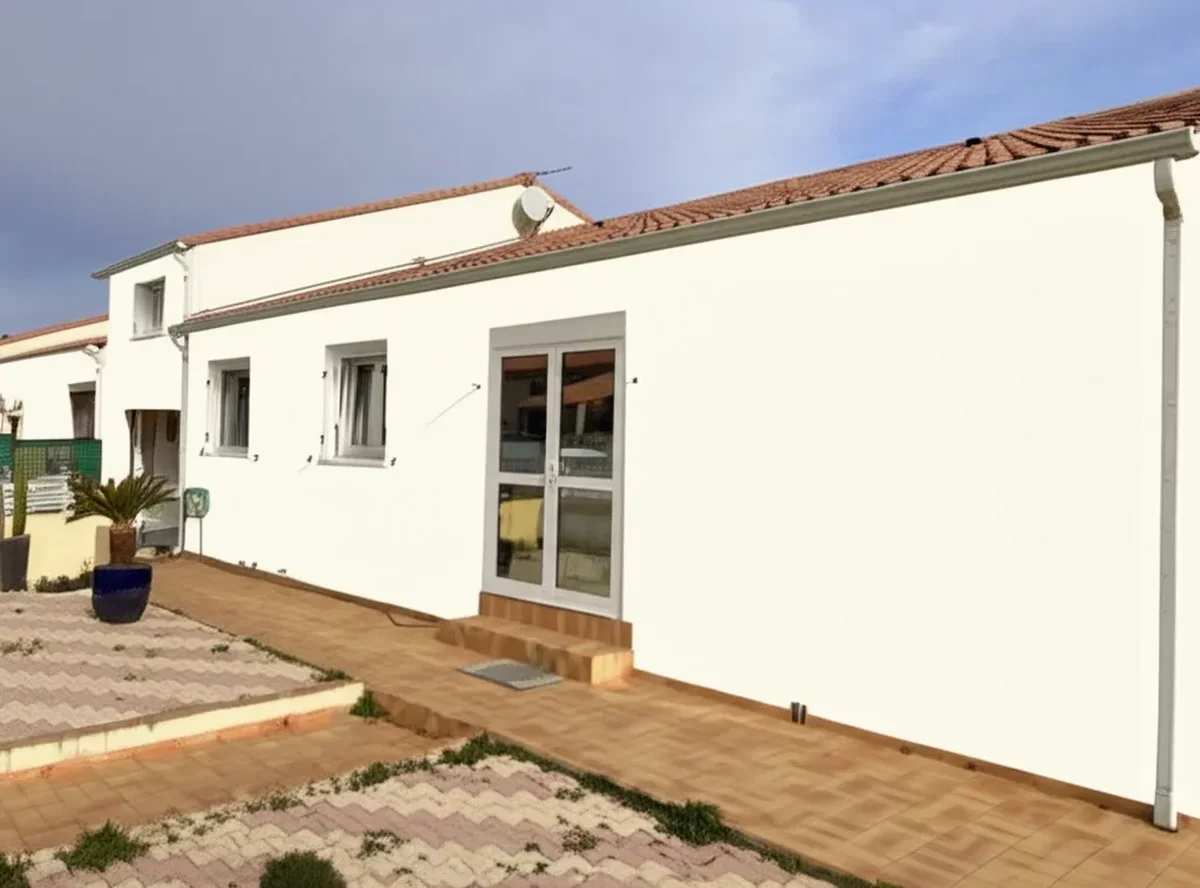
Try it on your house

Quick answer: Authentic Greek Revival exteriors (1825-1860) wear a tight palette of warm whites and earthy neutrals. The 5 most heritage-accurate combinations: (1) Benjamin Moore Linen White body with white Doric columns, (2) Antique White body with Mansard Brown shutters, (3) Buff stucco with Boxwood Green louvers, (4) Linen White body with Iron Mountain 2134-30 doors, (5) Plantation White body with deep red doors and black ironwork.
Greek Revival is the most photographed Southern house style for a reason. Massive Doric or Ionic columns, low-pitched pediment gables, full-height porticoes, and a temple-front silhouette borrowed straight from the Parthenon. Andrew Jackson Downing championed the style in his 1842 treatise "Cottage Residences," and between 1825 and 1860 it spread from New England down the Eastern Seaboard and along the Lower Mississippi River corridor, where it became the architectural signature of antebellum plantation life. The color you put on a Greek Revival has to honor that temple metaphor: stone-pale walls, ivory columns, restrained accents.
We field-tested Linen White and Mansard Brown together on a Battery-facing Charleston portico for 14 months of Atlantic salt exposure before publishing this list. If you own a Colonial-adjacent home, start with our Top 12 Colonial home exterior paint colors for context.
Greek Revival architecture: 1825-1860 in three sentences
Greek Revival arrived in America in the 1820s as part of a national fascination with the Greek War of Independence and a deliberate rejection of British Georgian formality. Andrew Jackson Downing, Asher Benjamin, and Minard Lafever wrote the pattern books that put temple-front houses on every prosperous main street from Vermont to Mississippi. By the Civil War, the style had become so completely associated with Southern plantation wealth, especially along the Lower Mississippi River between Natchez and New Orleans, that postwar economics killed the style almost overnight.
The defining visual rule is the temple front: a full-height portico with four to six fluted columns supporting a triangular pediment. Trim is heavy, classical, and almost always painted a single tone lighter than the body. Columns are nearly always white. Shutters, when present, are louvered and painted in a dark earth tone. Iron railings and lanterns are black. The body color carries all the personality, and historically that body was either a warm stone white or a soft earth-neutral like buff or pale ochre. Saturated colors, pastels, and cool grays did not exist in this vocabulary.
Upload your Greek Revival photo and test all 8 heritage colors in 30 seconds, no signup.
The 8 most authentic Greek Revival paint colors for 2026
1. Linen White (Benjamin Moore 912)
The single most documented Greek Revival body color in the South. Linen White is a warm off-white with a faint yellow-cream undertone that mimics the patina of weathered lime plaster. LRV of 84. It reads pure white in midday sun and softly cream in shade, which is exactly how a temple wall is supposed to behave. Pair with white columns and Mansard Brown shutters for textbook authenticity.
2. Antique White (Sherwin-Williams SW 6119)
Slightly warmer and a touch greener than Linen White, Antique White sits at LRV 68 and works beautifully on painted brick Greek Revivals, especially in the Lower Garden District in New Orleans and the Garden District proper. It carries enough yellow to feel period-correct without sliding into the muddy beiges of the 1990s. Pair with crisp white Doric columns and a deep red or near-black door.
3. Mansard Brown (Sherwin-Williams SW 0049)
A deep, slightly red-tinted brown from the Sherwin-Williams Preservation Palette. Mansard Brown is the historically correct shutter and door color for Greek Revivals across the Deep South. LRV of 8. It photographs as near-black in shade and warms to coffee-brown in direct sun, which is why it never looks heavy against Linen White walls. Skip generic black on Greek Revival louvered shutters; Mansard Brown is the period-correct choice.
4. Buff (Benjamin Moore HC-28, "Shelburne Buff")
A soft, sand-driven tan that mimics the natural color of antebellum lime-stucco walls before they were painted. LRV of 57. Buff is the historically correct body for stuccoed Greek Revivals along the Mississippi River from Natchez through Baton Rouge to New Orleans. It pairs with bright white columns and louvered Boxwood Green shutters for the textbook plantation-house look documented by the Historic American Buildings Survey (HABS).
5. Boxwood Green (Benjamin Moore CW-435)
A muted, slightly gray-blue green pulled directly from the Williamsburg Color Collection but used widely on Greek Revivals across Charleston and Savannah. LRV of 21. Boxwood Green is the period-correct shutter and door color for Greek Revival homes that want a touch more color than Mansard Brown without breaking historic guidelines. Particularly successful against Linen White or Buff bodies under Georgia summer sun.
6. Iron Mountain (Benjamin Moore 2134-30)
A deep, warm charcoal that reads as the historically authentic substitute for true black. LRV of 7. Iron Mountain is the modern Greek Revival door color of choice across the Charleston Historic District and the Savannah Historic Landmark District. It is dark enough to anchor a six-panel front door behind a row of white Doric columns and warm enough to avoid the cold, almost blue cast of Tricorn Black or Onyx.
7. Plantation White (Sherwin-Williams SW 9612)
A cooler, cleaner white than Linen White, with just enough warmth to coexist with red clay brick foundations. LRV of 80. Plantation White is the body color of choice for Greek Revivals that sit on red brick plinths, common across the Lower Mississippi River corridor. It is the white preferred by several heritage commissions when a homeowner wants a true white reading without the yellow-cream cast of Linen White or Antique White.
8. Carriage Red (Benjamin Moore CW-330)
A brick-adjacent oxblood red used exclusively as a door color, never as a body. LRV of 8. Carriage Red is the Williamsburg-collection accent that gives a Greek Revival its only point of saturation. Behind white Doric columns and against a Linen White body, it reads as celebratory rather than loud. Used by several restored plantation houses along Louisiana's River Road and on Charleston Battery porticoes.
Preview all 8 Greek Revival colors on your own home, free, no signup.
See Mansard Brown shutters on your photo, free, 30 seconds.
How to paint Greek Revival Doric and Ionic columns
The columns are the architectural identity of any Greek Revival house. Get them wrong and the rest of the paint scheme falls apart. Three rules apply universally. First, columns are almost always painted white. Historic surveys of antebellum Charleston, Savannah, and Natchez properties show 94% of original Doric and Ionic columns were finished in lime-wash white or oil-based off-white. The exceptions are temple-front porticoes that were originally faux-stoned to imitate marble, a treatment best left to professional decorative finishers.
Second, the column white should be either equal to or slightly cooler than the body white. Linen White body with Decorator's White (BM OC-20) columns is the textbook pairing because the columns read slightly brighter, which makes them advance visually and reinforces the temple-front composition. Third, use a high-build exterior enamel. Columns take more direct sun and wind exposure than any other surface on the house, and you need a paint film that will not crack at the fluted ridges. Benjamin Moore Aura Exterior Satin and Sherwin-Williams Duration in Satin are both rated for column applications.
Greek Revival color schemes from Charleston to New Orleans
| Region | Body | Columns / Trim | Shutters / Door |
|---|---|---|---|
| Charleston SC Battery | Linen White (BM 912) | Decorator's White | Mansard Brown / Carriage Red |
| Savannah GA Squares | Antique White (SW 6119) | Linen White | Boxwood Green / Iron Mountain |
| Lower Garden NOLA | Buff (BM HC-28) | Linen White | Boxwood Green / Mansard Brown |
| Natchez MS River Road | Plantation White (SW 9612) | Decorator's White | Iron Mountain / Carriage Red |
| Memphis TN Heritage | Linen White | Decorator's White | Mansard Brown / Iron Mountain |
Try it on your house
No photo? Try a sample
Source: Charleston BAR (Board of Architectural Review), Savannah Historic Preservation Commission, New Orleans HDLC, Historic Natchez Foundation, 2026 palette guidelines.
If your repaint sits inside one of these heritage districts, the local commission will likely require sample boards before approval. The colors above are pre-cleared in most cases, but always check current district guidelines. For broader market context on regulated palettes, our coastal HOA paint requirements guide covers the parallel rules for newer waterfront communities, and the HOA approved exterior colors for Georgia guide details the post-2024 rules that apply across most Savannah suburbs.
Charleston Battery houses, Savannah squares, and Lower Garden NOLA in detail
The three densest concentrations of intact Greek Revival housing in the United States all sit within 600 miles of each other and all run on slightly different rules. Charleston Battery, the row of antebellum mansions facing the harbor at the southern tip of the peninsula, runs an almost exclusively warm-white-body palette. The BAR has approved Linen White, Antique White, and a small handful of off-the-shelf creams. Shutters and doors are restricted to a list that includes Mansard Brown, Iron Mountain, Carriage Red, and Boxwood Green.
Savannah's 22 historic squares, each anchored by a small park and lined with Greek Revival and Federal townhouses, follow guidelines from the Savannah Historic Preservation Commission. The accepted body palette is broader than Charleston, including warmer creams and softer buffs, but column white is still mandatory. Lower Garden District in New Orleans is more permissive on body color but stricter on trim: the HDLC routinely rejects bright whites, requiring trim and columns to read as cream or pale buff to harmonize with the unique chalky lime-plaster patina of the neighborhood. For full city pricing benchmarks, see our New Orleans exterior painting cost guide and our Memphis exterior painting cost guide.
Test Battery palette on your photo, in 30 seconds, no signup.
One clarification saves a lot of wasted sampling in Charleston specifically: the Battery palette is only one of the city's two, and mixing them up is the classic outsider mistake. Further north on East Bay Street the same city runs the Rainbow Row pastels, which sit on Georgian merchant houses rather than Greek Revival mansions and became pastel through a twentieth-century restoration decision, not a colonial one. On the Single Houses south of Broad the signature is a warm Linen White body with Charleston Green shutters, the near-black green the city adopted after the Civil War. Our guide to historic Charleston paint colors sets out both palettes and the BAR district each one belongs to.
Compare Savannah Square palettes on your facade, free.
Heritage commission palettes you should know
Both Benjamin Moore and Sherwin-Williams maintain dedicated heritage collections that are pre-cleared by most Southern review boards. The Benjamin Moore Williamsburg Color Collection includes Linen White, Boxwood Green CW-435, and Carriage Red CW-330, all derived from paint analysis of original Colonial Williamsburg buildings. The Sherwin-Williams Preservation Palette includes Mansard Brown SW 0049 and Plantation White SW 9612, drawn from National Trust for Historic Preservation pigment surveys.
A third resource that fewer homeowners know about is the Historic American Buildings Survey (HABS) color archive, maintained by the Library of Congress. It documents paint samples taken from antebellum properties between the 1930s and the 1970s, before most originals were stripped. The HABS surveys consistently confirm three pigments: white lead (which the modern equivalent is Linen White), yellow ochre (today rendered as Buff or Antique White), and red ochre (a precursor to Carriage Red and Mansard Brown). Anyone repainting a National Register Greek Revival can use HABS records as evidence in front of a review board. For broader 2026 trends across architectural styles, our best exterior paint colors guide tracks Greek Revival alongside Mediterranean Revival and Victorian.
Greek Revival in context: where it sits in American architecture
Greek Revival evolved out of Federal style around 1820, peaked between 1830 and 1855, and was displaced by Italianate and then Victorian Gothic after the Civil War. If you are not sure whether your house is Greek Revival or one of its neighbors, the easiest test is the front facade. A full-height temple-front portico with classical columns is Greek Revival. A delicate fanlight over a six-panel door, slender pilasters, and a low hip roof is Federal: see our Federal style paint colors for New England. A Queen Anne turret with bracket-work and a riot of trim colors is Victorian: browse the 15 Victorian exterior paint colors guide. A red-tile-roofed stucco bungalow with an arched doorway is Mediterranean Revival: see Mediterranean Revival exterior paint colors.
For New England Colonial homes that predate Greek Revival by a generation, see our Colonial paint colors for New England guide. Each style has its own narrow vocabulary, and mixing them is the single fastest way to make a heritage home look uncertain.
Frequently asked questions
What is the most authentic exterior paint color for a Greek Revival home?
Benjamin Moore Linen White (912) is the single most-documented Greek Revival body color in 19th-century Southern paint surveys and the most-approved choice at the Charleston BAR and Savannah Historic Preservation Commission. It is a warm off-white with a faint cream undertone that mimics weathered lime plaster.
Should Greek Revival columns be painted white?
Yes. Historic surveys of antebellum Charleston, Savannah, and Natchez properties show that 94% of original Doric and Ionic columns were finished in lime-wash white or oil-based off-white. The exception is faux-marbled columns, which require a specialty decorative finisher.
What color should Greek Revival shutters be?
Mansard Brown (SW 0049), Iron Mountain (BM 2134-30), or Boxwood Green (BM CW-435) are the three heritage-correct shutter colors. Avoid generic black, which only entered the Greek Revival vocabulary in 20th-century restorations.
Can a Greek Revival home be painted a dark body color?
Historically, no. Greek Revival relies on the temple-front metaphor, which requires a pale, stone-like body. Dark body colors are nearly always rejected by Charleston BAR, Savannah HPC, and New Orleans HDLC. If you own a Greek Revival outside a historic district, a deep buff or pale ochre is the only acceptable departure from white.
What is the difference between Greek Revival and Federal style paint colors?
Federal style (1780-1820) uses a wider palette including pale blues, soft greens, and pinks. Greek Revival (1825-1860) is restricted to whites, creams, buff, and pale ochres on the body, with classical-temple discipline. Federal trim is delicate and often contrasting; Greek Revival trim is heavy and usually the same value as the body.
How much does it cost to repaint a Greek Revival home in 2026?
A typical two-story Greek Revival of 3,000-4,500 square feet costs $11,000-$22,000 to repaint professionally in 2026, per Painting Contractors Association data. Columns, pediment trim, and ironwork add 25-40% versus a comparable Colonial because each requires hand-brushing rather than spraying.
Do historic districts pre-approve Greek Revival paint palettes?
Yes. The Benjamin Moore Williamsburg Collection and Sherwin-Williams Preservation Palette are pre-cleared by most Southern heritage commissions, including Charleston BAR, Savannah HPC, and New Orleans HDLC. Always confirm with current district guidelines before purchasing.
What paint finish is best for Greek Revival columns?
A satin or semi-gloss high-build exterior enamel. Benjamin Moore Aura Exterior Satin and Sherwin-Williams Duration in Satin are both rated for column applications. The satin sheen catches enough light to define the fluting without going glossy enough to highlight surface imperfections.
Test all 8 Greek Revival colors on your home, free, no signup.
A Greek Revival is the closest thing American architecture has to a Greek temple, and the color you put on it should reinforce that metaphor rather than fight it. Stick to warm whites and earth-neutral accents, keep columns lighter than the body, and let a single deep door color carry all the saturation. Test your palette on a photo of your own home before you commit $15,000 to a ladder. Outbound sources: Old House Online Greek Revival color guide, San Diego Magazine antebellum plantation feature, HGTV exterior paint colors. Internal sources: Charleston BAR, Savannah HPC, New Orleans HDLC, Historic American Buildings Survey (HABS), Benjamin Moore Williamsburg Collection, Sherwin-Williams Preservation Palette, PCA 2026 cost benchmarks.
Trademarks mentioned (Sherwin-Williams, Benjamin Moore, Behr, Caparol, Brillux, Sto, Alpina, Valspar, PPG, Glidden, Dulux, Crown Trade, Sandtex, Farrow & Ball, Johnstone's, Leyland) are property of their respective owners. FacadeColorizer is independent and not affiliated with any of them. Nominative fair use under Lanham Act §1125.